What Are 5 Facts About The Alhambra?
Five verified facts about the Alhambra in Granada, from its UNESCO listing and Nasrid builders to its timed-entry rules and 2.7 million annual visitors.
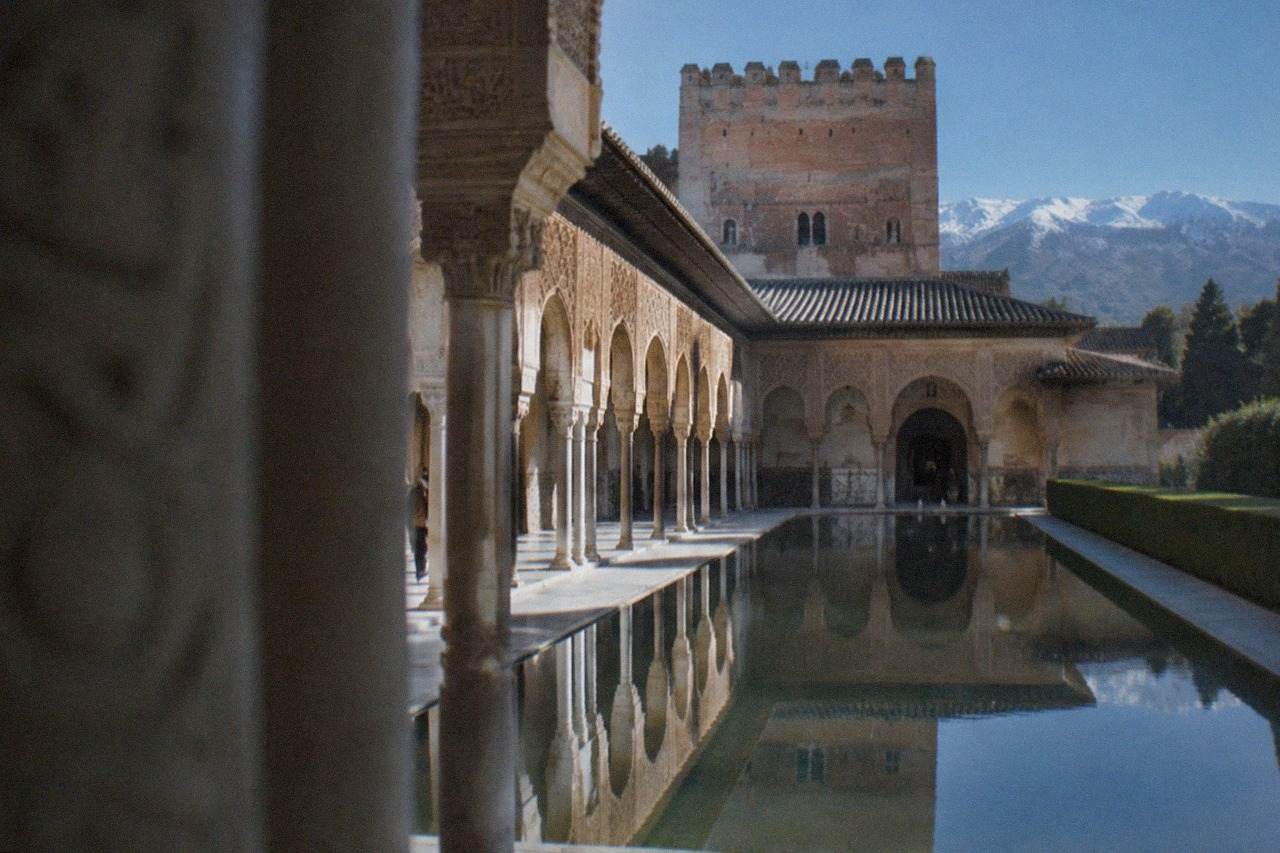
The Alhambra received 2,726,861 visitors in 2025, according to the Patronato de la Alhambra y Generalife's own annual report, a figure that lands within a whisker of the monument's annual capacity ceiling of roughly 2.763 million. That single number explains most of what a first-time visitor needs to know: this is not a monument you can treat casually. The rest of this page sets out five facts about the Alhambra that are checked against official sources, from the Patronato's own ticket pages to UNESCO's listing record, and each one changes how you should plan a visit. The Things To Do In Granada editors keep every figure here tied to a primary source, because the Alhambra attracts more folklore per square metre than almost any building in Spain.
What Are 5 Facts About The Alhambra?
The five facts are these: the Alhambra was built by the Nasrid dynasty, the last Muslim rulers of Granada; its name means "the red one" in Arabic; it was inscribed as a UNESCO World Heritage Site in 1984 together with the Generalife, extended in 1994 to include the Albaicin; it admitted 2,726,861 visitors in 2025, close to its legal capacity; and its Nasrid Palaces entry is controlled by a strictly enforced 30-minute timed slot with photo ID checks.
Each of those five facts carries a practical consequence, and the sections below unpack them one by one. If you only read one thing before booking, make it the section on timed slots and sell-out timing, because that is the fact that most often wrecks a Granada itinerary.
Who Built The Alhambra?
The Alhambra was built by the Nasrid dynasty, the last Muslim rulers of Granada, whose craftsmen produced the palaces, stucco decoration and water systems that give the complex its fame. Later Christian rulers, including Charles V, inserted their own palace into the site, so the monument you walk today layers Muslim and Christian construction side by side rather than one over the other.
The Nasrid Emirate was the final Muslim state on the Iberian Peninsula, and the Alhambra was its royal seat, a walled city on the Sabika hill containing palaces, barracks, baths, gardens and an irrigation system fed by the Darro river. The Alcazaba, the fortress at the western tip, guards the whole site; the Mexuar, Comares Palace and Palace of the Lions form the Nasrid Palaces that give the complex its fame. The answer to did the Muslims build the Alhambra is yes, in the sense that matters: the parts people queue for are Nasrid work, and the later Habsburg palace of Charles V sits alongside them rather than replacing them.
The craftsmanship is what the Nasrid builders are remembered for. The stucco walls carry geometric lacework, poetry and the dynasty's motto carved in plaster, with one phrase in particular repeating across the palaces thousands of times. Water, meanwhile, is engineered through the whole site: channels, basins and fountains run downhill from the Generalife's orchards through the palaces, a system still functioning on the hill's natural gradient.
Why Is It Called The Alhambra And What Does UNESCO Say?
The name Alhambra comes from the Arabic al-qal'a al-hamra, meaning "the red fortress", a reference to the reddish colour of the Sabika hill's clay and the walls built from it. UNESCO inscribed the Alhambra and the Generalife as a World Heritage Site in 1984 and extended the same listing in 1994 to include the Albaicin quarter across the valley, making it one listing with two inscription dates rather than two separate sites.
The colour is not decoration. The walls and towers take their hue from the local rammed earth and rubble masonry, and at sunset the whole hillside reads as a single red mass above the green of the Darro valley. The name and its meaning have their own fuller treatment elsewhere on this site.
The UNESCO record matters for how you plan. Because the 1994 extension folded the Albaicin into the same World Heritage property, the view from the Mirador de San Nicolas across to the Alhambra is protected in both directions: the palace hill from the Albaicin, and the Albaicin from the palace hill. Visitors who skip the Albaicin are seeing only half of one inscribed site.
How Many Visitors Does The Alhambra Get And Why Does It Sell Out?
The Alhambra admitted 2,726,861 visitors in 2025 per the Patronato's annual report, and daily capacity is capped at roughly 6,600-7,000 people, with the Nasrid Palaces limited to about 300 per 30-minute slot. Because tickets are nominative, released around three months in advance, and online sales close at 23:59 the day before the visit date, the General ticket routinely sells out one to two months or more ahead in peak season.
That is the fact that surprises people. A monument this popular is effectively a booking-first attraction, not a walk-up one, and there are no reliable same-day online sales. The Patronato de la Alhambra's own ticket page states the prices and the rules; the practical strategies for a sold-out date are laid out in what if Alhambra tickets are sold out.
The timed slot deserves emphasis because it is strictly enforced. Your ticket carries a specific half-hour window for the Nasrid Palaces specifically, photo ID is checked at entry because tickets are nominative, and arriving outside the window means losing the palaces. The rest of the complex, the Alcazaba and the Generalife, can be visited at any point during opening hours on the same ticket date. The comparison of which ticket type buys what is covered in which ticket is best for Alhambra, and the live official prices are in the table below.
| Ticket type | Official price | What it covers |
|---|---|---|
| Alhambra General (day) | EUR 22.27 | Nasrid Palaces, Alcazaba and Generalife, timed Nasrid slot |
| Gardens, Generalife and Alcazaba (day) | EUR 12.73 | Everything except the Nasrid Palaces |
| Night visit, Nasrid Palaces | EUR 12.73 | The palaces only, after dark, selected days |
| Night visit, Gardens and Generalife | EUR 8.48 | The gardens circuit after dark, selected days |
| Dobla de Oro General | EUR 30.48 | The Alhambra plus the city's Andalusi monuments |
| Children under 12 | Free | Ticket still required for entry control |
One caution on prices: a July 2025 press release announced lower figures effective 1 August 2025, but the live official ticket pages still show the higher prices above. Use what the official seller shows at booking time, not the press numbers.
When Is The Alhambra Open And How Long Does A Visit Take?
The day visit runs 08:30-18:00 from 15 October to 31 March and 08:30-20:00 from 1 April to 14 October, open every day except 25 December and 1 January. Night visits to the Nasrid Palaces run Friday-Saturday evenings in winter and Tuesday-Saturday in summer, and most visitors should budget around three hours on the hill, longer if the Generalife gardens are walked in full.
The seasonal split matters for slot planning: a winter morning slot at 08:30 means frosty light on the Sierra Nevada, while a summer afternoon slot can mean walking the gardens in heat that AEMET's climate data puts at an average July high of 34.8C in Granada. The Patronato de la Alhambra's opening-hours page is the authoritative source for the exact windows, and the question of how much time do I need to see the Alhambra has its own fuller treatment.
| Visit | Season | Hours | Days |
|---|---|---|---|
| Day visit, whole complex | 15 Oct - 31 Mar | 08:30 - 18:00 | Every day |
| Day visit, whole complex | 1 Apr - 14 Oct | 08:30 - 20:00 | Every day |
| Night visit, Nasrid Palaces | 15 Oct - 31 Mar | 20:00 - 21:30 | Fri - Sat |
| Night visit, Nasrid Palaces | 1 Apr - 14 Oct | 22:00 - 23:30 | Tue - Sat |
| Closed | 25 Dec and 1 Jan | - | - |
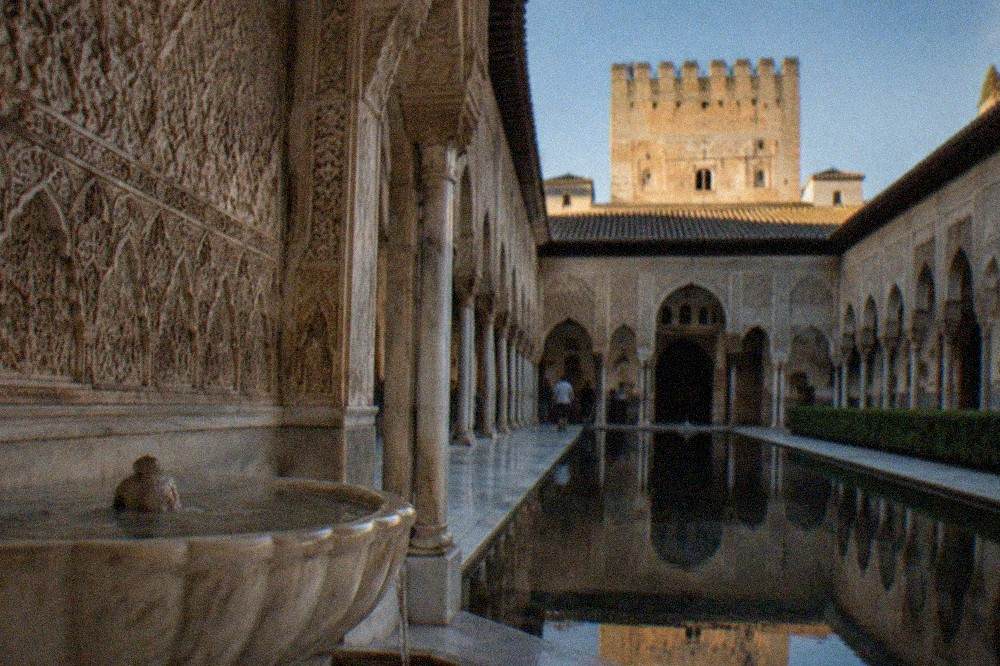
The night visit is a genuinely different experience rather than the same one in the dark, and whether it justifies a second ticket is weighed in is it worth visiting the Alhambra at night. Whichever you choose, book the date as early as your trip allows; the sell-out math in the previous section applies to night tickets too, though they can outlast daytime General tickets in availability.
What Else Should You Know Before You Go?
Three practical points complete the picture: the Generalife is part of the same monument and ticket, not a separate attraction; the Alhambra cannot be reached by metro, only by the LAC/C34 hillclimb bus lines, taxi or a steep walk; and a guided visit is optional but the audioguide or a tour is the only way to decode the iconography, since almost nothing inside the palaces carries English signage.
The metro point catches out visitors regularly. Metro de Granada runs north-south through the city and serves neither the airport nor the Alhambra; the monument sits on its hill above the city and is reached by the hillclimb bus or on foot up the Cuesta de Gomerez from the city centre. The full rundown of getting there and buying tickets lives in the Granada Alhambra tickets guide, and the monument's broader context is in the Alhambra attraction page.
Whether a guide earns its price is a fair question, and it has a dedicated answer in is a guided tour of the Alhambra worth it. The short version: the palaces are dense with reference, poetry and function that a casual walk leaves invisible, and the Generalife's water system makes sense only when someone explains the gradient. For visitors who prefer independence, the related option below pairs an entry ticket with an audioguide.
And if the Alhambra is only one stop on a wider Andalusian route, the rest of the city's offerings are catalogued in what else to do in Granada other than Alhambra, from the Albaicin's maze of lanes to the cave flamenco of Sacromonte.
Common Questions About The Alhambra
What are 5 facts about the Alhambra?
The Alhambra was built by the Nasrid dynasty, the last Muslim rulers of Granada; its Arabic name means "the red one"; it was UNESCO-inscribed in 1984 with the Generalife and extended in 1994 to include the Albaicin; it received 2,726,861 visitors in 2025, near its capacity ceiling; and its Nasrid Palaces operate on strictly enforced, nominative 30-minute timed slots.
How much does it cost to visit the Alhambra?
The official General ticket costs EUR 22.27 for the full daytime complex, a Gardens, Generalife and Alcazaba-only ticket costs EUR 12.73, and night visits cost EUR 12.73 for the Nasrid Palaces and EUR 8.48 for the gardens. Children under 12 enter free but still need a ticket.
Can you buy Alhambra tickets on the day?
No, not reliably. Online sales close at 23:59 the day before the visit date, tickets are released roughly three months ahead, and peak-season General tickets routinely sell out one to two months or more in advance.
Is the Generalife part of the Alhambra?
Yes. The Generalife, the Nasrid summer palace and gardens on the adjacent hill, is part of the same monument, the same UNESCO inscription and, on the General ticket, the same visit.
Who is buried in Granada's Royal Chapel?
The Catholic Monarchs, Ferdinand and Isabella, are buried in the Royal Chapel in the city centre, a separate monument from the Alhambra that charges its own EUR 7 individual entry fee.
How long should you spend at the Alhambra?
Around three hours covers the Nasrid Palaces, Alcazaba and Generalife at a normal pace; add time in high summer heat or if you want the gardens walked slowly, and remember your Nasrid Palaces half-hour window is fixed while the rest of the complex is flexible.