Did The Muslims Build The Alhambra?
Yes, Muslims built the Alhambra: the Nasrid rulers of Granada constructed the palaces, Alcazaba and Generalife, with later Christian additions like the Palace of Charles V.
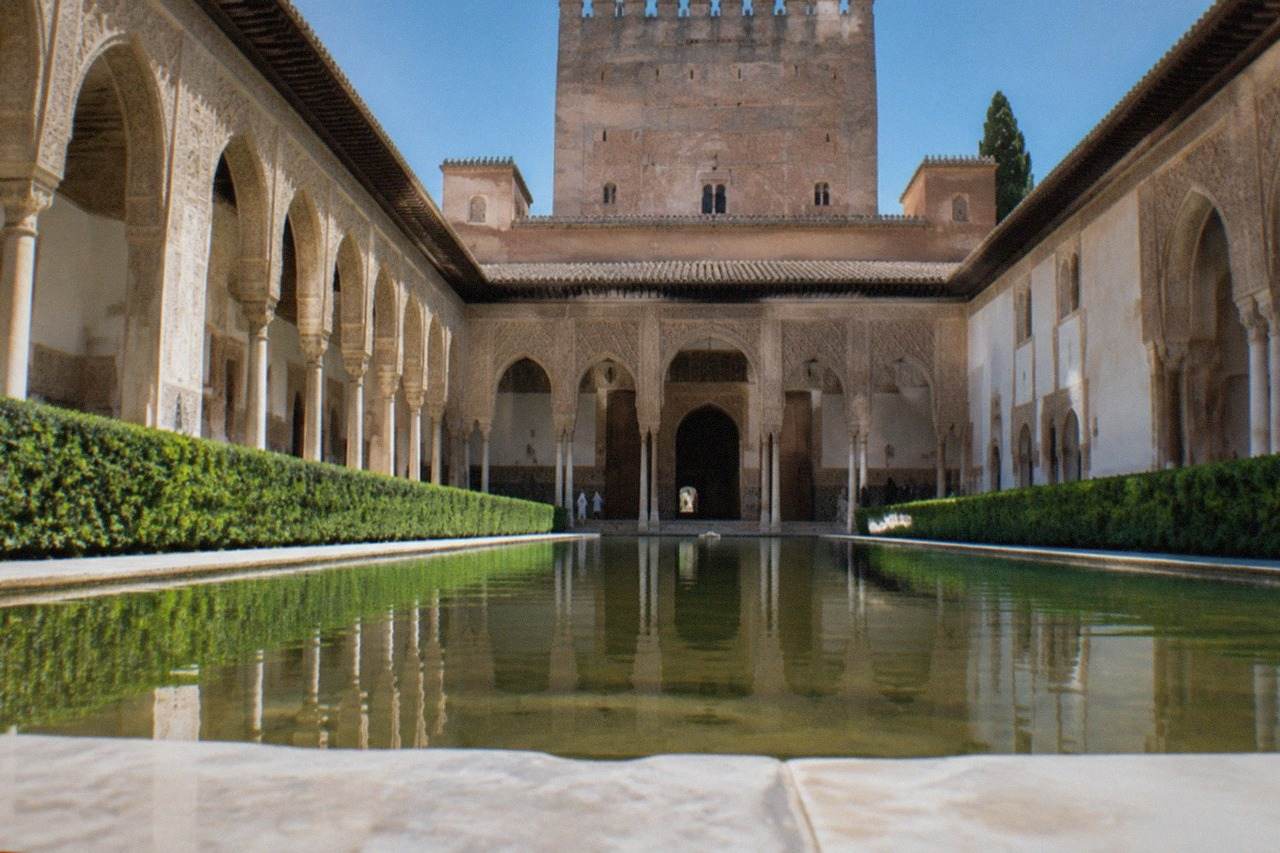
The Alhambra drew 2,726,861 visitors in 2025 according to the Patronato de la Alhambra's own annual report, and nearly all of them came to see architecture created by Muslim rulers. The complex standing above Granada today is the work of the Nasrid dynasty, the Muslim emirs who ruled the emirate of Granada, and it remains the most complete surviving royal Islamic city of its kind in Western Europe. Later Christian kings did add their own buildings inside the walls, most famously the Renaissance Palace of Charles V, but the palaces, courtyards, water systems and gardens that made the site famous are Nasrid work. Understanding who built what, and when, is the difference between seeing one monument and reading a whole layered history.
Did The Muslims Build The Alhambra?
Yes, the Alhambra was built by Muslims. The Nasrid dynasty, the last Muslim ruling house of the Iberian Peninsula, constructed the Alcazaba fortress, the Nasrid Palaces and the Generalife gardens as the royal seat of the emirate of Granada. Christian monarchs captured the city and later inserted their own buildings, including the Palace of Charles V, but the core monument that visitors travel to see is Islamic royal architecture, inscribed by UNESCO in 1984 together with the Generalife and extended in 1994 to include the Albaicin.
The name itself records the origin. "Alhambra" comes from the Arabic for "the red one", and the site's own name page on this site explains the etymology in detail: what the name Alhambra means in English. The red rammed earth and clay of the original walls gave the fortress-citadel its colour and its name, and that construction technique is part of the Islamic building tradition the Nasrids inherited from earlier Andalusi builders.
What often confuses visitors is that the complex is not one building from one moment. It is a walled city that grew over generations of Nasrid rule, then absorbed Christian chapels, a church, a monastery and a Renaissance palace after the Catholic monarchs took Granada. The Nasrid portions dominate the visit, but the site has been continuously occupied and altered for centuries. The UNESCO listing treats it as one property, the "Alhambra, Generalife and Albaicin, Granada", inscribed in 1984 and extended a decade later.
Who Built The Nasrid Palaces Inside The Alhambra?
The Nasrid Palaces were built by the sultans of the Nasrid dynasty as their ceremonial and residential seat, with successive rulers adding palaces, courtyards and halls across the dynasty's reign in Granada. The Comares Palace with its famous Pool of the Court of the Myrtles and the Court of the Lions with its lion fountain are the two great Nasrid palace ensembles, and both were royal Muslim spaces for reception, governance and living. No other dynasty on the Iberian Peninsula left a comparable surviving palace complex.
The palaces are the part of the visit most people picture: low horseshoe arches, carved stucco, muqarnas honeycomb vaults, inscribed poetry running along the walls, and water used as architecture, in channels, basins and fountains. The Court of the Lions is the architectural centrepiece, a courtyard ringed by slim columns with a fountain at its heart, while the Hall of the Two Sisters holds one of the finest domed ceilings in Islamic architecture anywhere.
Because the palaces are the scarcest ticket in the whole complex, entry is controlled tightly. The Patronato de la Alhambra's ticket page states that Nasrid Palaces tickets are nominative and carry a specific half-hour entry window that is strictly enforced, with photo ID checked at the door. The rest of the complex can be visited at any point during the day on the same ticket, but the palaces are timed. That scarcity is structural, not accidental: roughly 300 people per half-hour slot is the cap.
If you want the palaces explained rather than just seen, a guided option is worth weighing. The flagship Alhambra and Nasrid Palaces tour with tickets covers the route with a guide, and current dates and prices are on the operator's live listing.
What Did Christian Kings Change Inside The Alhambra?
After the Christian conquest of Granada, the Catholic monarchs and their successors took over the Nasrid palaces rather than demolishing them, living in and adapting the existing Muslim buildings. The biggest structural change came with the Palace of Charles V, a Renaissance palace built inside the complex on the orders of the Habsburg emperor, a circular courtyard structure that sits beside the Nasrid Palaces in deliberate contrast to them. A church and a monastery were also added inside the walls.
The Palace of Charles V is the clearest marker of the change in ownership. It is a Renaissance building, square outside and circular inside, designed in the Italianate manner that Habsburg Spain favoured, and it occupies a prominent position right at the heart of the complex. Its details are covered in the site's dedicated guide to the Palace of Charles V. The paradox visitors notice immediately is that the Christian palace is architecturally far plainer than the Muslim one beside it.
What saved the Nasrid work was partly admiration and partly neglect. The Catholic monarchs kept the palaces in use and later centuries left substantial parts of them standing, and by the romantic era the site had become famous across Europe as a picturesque ruin, a reputation sealed by Washington Irving's writing on the site. Restoration followed, and the modern Patronato now manages the monument, its tickets and its capacity. The result is a layered site where Islamic royal architecture and Christian imperial architecture sit within the same walls. The wider set of guides lives on Things To Do In Granada.
The same layering continues below the hill. The Granada Cathedral and the Royal Chapel, where the Catholic monarchs Ferdinand and Isabella are buried, sit in the city centre a short walk from the foot of the Alhambra hill, and the Royal Chapel charges EUR 7 individual entry per the official ticket site. The Christian city grew around the Muslim one, and both remain visible.
Is The Alhambra A Mosque Or A Church Today?
The Alhambra is neither a functioning mosque nor a single church. The original Nasrid Friday mosque inside the complex was replaced after the conquest by the Church of Santa Maria de la Alhambra, which still stands on the same spot, so the site's principal place of worship today is Catholic. The Nasrid Palaces themselves are secular royal architecture, palaces for living, ruling and receiving guests, not houses of worship, and the complex as a whole is a state-managed monument rather than an active religious site.
This matters for how you read the buildings. The most decorated spaces in the Nasrid Palaces, the Comares Hall and the Hall of the Two Sisters among them, were throne rooms and reception halls, spaces designed to overwhelm ambassadors and petitioners with the wealth and refinement of the Nasrid court. The inscriptions that run across the walls are largely poetry and dynastic praise, not liturgy. The famous repeated phrase carved through the palaces has its own explanation page: the phrase repeated 9000 times in the Alhambra.
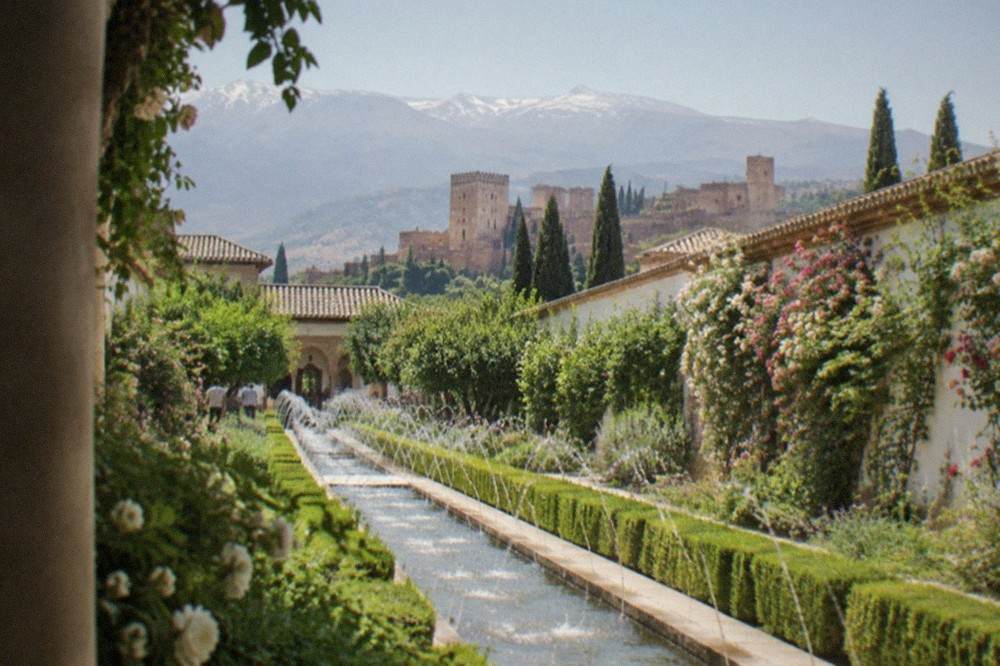
The Generalife, the summer estate on the neighbouring hill, was likewise secular: a country palace of gardens, water channels and viewing pavilions where the Nasrid court escaped the formal protocol of the main palaces. Its relationship to the rest of the site is explained in whether the Generalife is part of the Alhambra. Water engineering is the thread connecting everything, Muslim builders moved water uphill from the River Darro to feed fountains, pools and gardens across the whole hillside.
What Should You See Of The Muslim Alhambra On A Visit?
Plan your visit around three Nasrid-built areas: the Alcazaba, the military fortress with its Torre de la Vela watchtower; the Nasrid Palaces, the timed-entry royal heart of the site; and the Generalife, the hillside summer gardens. The General ticket at EUR 22.27 covers all three in one day, and the Patronato's live ticket page shows online sales close at 23:59 the day before your visit, with no reliable same-day online sales, so book well ahead.
The Alcazaba is the oldest standing part you can enter, a fortress of towers and walls at the tip of the complex overlooking the city, and it is the clearest reminder that the Alhambra began as a military position before it became a pleasure palace. From its towers the whole logic of the site is visible: a defensible hill, a river below, and a city spread beneath. The practicalities of getting there matter too, since the hill has no metro stop, the city's metro runs north-south and never reaches the monument, so the LAC/C34 hillclimb bus lines, a taxi or the walk up from Carrera del Darro are the options.
| Alhambra area | Who built it | What it was for | Ticket needed |
|---|---|---|---|
| Alcazaba | Nasrid dynasty | Fortress and watchtower over Granada | General, Gardens or Dobla de Oro |
| Nasrid Palaces | Nasrid sultans | Royal residence, throne halls, receptions | General EUR 22.27 or Granada Card 72h/48h |
| Generalife | Nasrid dynasty | Summer palace and gardens | General EUR 22.27, Gardens EUR 12.73 |
| Palace of Charles V | Habsburg era, after the conquest | Renaissance imperial palace, now museum | Included with monument entry |
| Church of Santa Maria | Christian era, on the Nasrid mosque site | Parish church inside the complex | Included with monument entry |
Timing and scarcity shape everything. The General ticket routinely sells out one to two months or more ahead in spring, autumn and holiday periods, and tickets release roughly three months in advance. The strategy pages on this site cover the contingencies: what to do if Alhambra tickets are sold out and how much time you need to see the Alhambra. The official buying route is explained in the site's guide to Alhambra tickets, and the deeper monument context sits on the main Alhambra attraction page.
For the Muslim city beyond the walls, the Albaicin directly opposite the Alhambra is the other half of the UNESCO inscription. The Albaicin was Granada's Muslim residential quarter, and the view of the Alhambra from the Mirador de San Nicolas at sunset is the classic closing image of any visit, the red palace glowing across the valley. A sunset walking tour of the Albaicin and Sacromonte covers that viewpoint with a guide, and current dates are on the operator's live listing.
How Do You Trace Nasrid Granada Beyond The Palace Walls?
The Nasrid legacy is not confined to the Alhambra hill. The Albaicin street plan, the surviving Andalusi monuments such as El Banuelo, one of the oldest surviving baths in Spain, and the Dar al-Horra palace in the Albaicin all predate or parallel the Alhambra, and the city's museums hold the artefacts. A dedicated Nasrid culture walking tour routes through these sites with a guide, and the free-tapa bars of the old town sit on the same medieval street grid the Muslim city laid out.
The Granada Beyond the Alhambra Nasrid culture walk is the tour built for exactly this question: instead of the palace, it takes the dynasty's city, its surviving monuments and its urban fabric as the subject. The listing shows it runs around three hours, and the price and current availability are on the operator's live listing. For readers deciding between guided and independent visits, the site weighs the question in whether a guided tour of the Alhambra is worth it.
The rest of the practical picture is on this site: five facts about the Alhambra for the short version, and the Things To Do In Granada editors keep the ticket and price figures on these pages tied to the live official sources, because the one thing the Alhambra does not forgive is arriving without a booking.
Common Questions About The Alhambra's Muslim Origins
Did the Muslims build the Alhambra?
Yes. The Nasrid dynasty, the Muslim rulers of the emirate of Granada, built the Alcazaba, the Nasrid Palaces and the Generalife as their royal complex. Christian additions such as the Palace of Charles V came after the Christian conquest of the city, but the monument's core is Islamic royal architecture, and UNESCO inscribed it in 1984, extended in 1994 to include the Albaicin.
Who were the Nasrids?
The Nasrids were the Muslim dynasty that ruled the emirate of Granada, the last Muslim state on the Iberian Peninsula. They made Granada their capital and the Alhambra their royal seat, building the palaces and gardens visitors see today.
Is the Alhambra a mosque?
No. The Nasrid Friday mosque inside the complex was replaced by the Church of Santa Maria de la Alhambra after the conquest. The Nasrid Palaces themselves were secular royal buildings, throne halls and residences rather than houses of worship.
What did Christians add to the Alhambra?
The Palace of Charles V, a Renaissance palace with a circular courtyard, a church on the site of the Nasrid mosque, and a monastery were all added inside the walls after the Christian conquest. The Nasrid palaces were kept and adapted rather than demolished.
Do I need tickets to see the Muslim-built parts?
Yes. The General ticket at EUR 22.27 on the live official pages covers the Nasrid Palaces, Alcazaba and Generalife, with the Nasrid Palaces on a strict timed half-hour slot. Tickets often sell out one to two months ahead in peak season, so book early.
Can I see Nasrid Granada outside the Alhambra?
Yes. The Albaicin, part of the same UNESCO listing, preserves the Muslim city's street plan and monuments such as El Banuelo and Dar al-Horra, and the view of the Alhambra from the Mirador de San Nicolas is the classic complement to a palace visit.