What Does The Name "Alhambra" Mean In English?
The name Alhambra comes from the Arabic for 'the red one', a reference to the reddish colour of the fortress walls on Granada's hill. Here is the full story behind the name, and what it tells you before you visit.
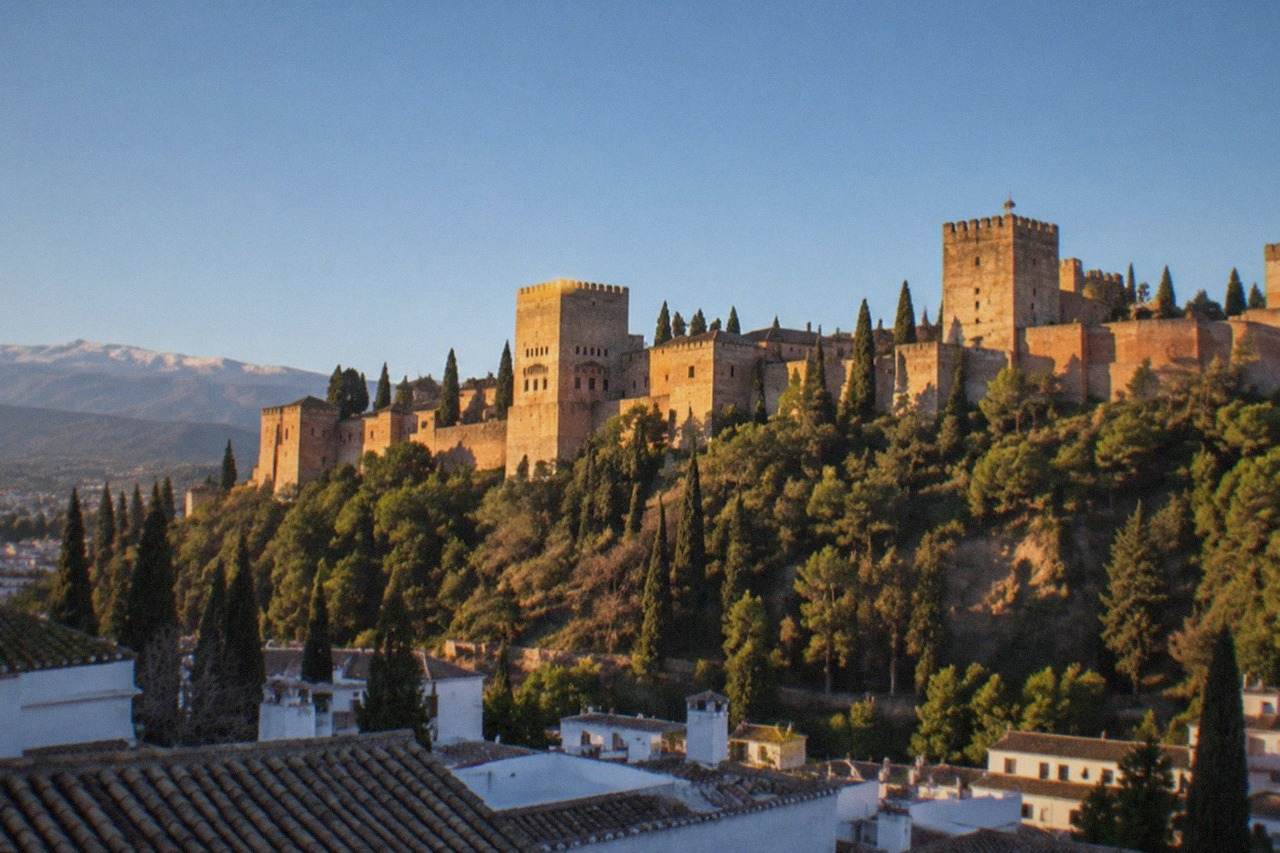
The Patronato de la Alhambra counted 2,726,861 visitors in 2025, and every one of them walked through a monument whose name is itself a small piece of linguistics. Alhambra is not a Spanish word at root. It is the Spanish pronunciation of an Arabic name, and once you translate that name the whole building reads differently: the colour of the walls, the hill it sits on, even the way the complex is laid out all connect back to two Arabic words meaning "the red one".
What Does The Name "Alhambra" Mean In English?
In English, the name Alhambra means "the red one" or, more fully, "the red fortress". It comes from the Arabic al-qal'a al-hamra, where qal'a is a fortress or citadel and hamra means red, so the full phrase translates as "the red fortress". Spanish adopted the name as Alhambra, and the reddish tint of the walls and towers is the reason the monument has carried this colour-based name for more than seven centuries.
The Arabic definite article "al" at the front of the name is the same "al" that appears in dozens of Spanish words borrowed from Arabic, from algodon (cotton) to alfombra (carpet). In the Alhambra's case the article attaches to hamra, the feminine form of the Arabic word for red, and the fuller phrase al-qal'a al-hamra' was the name medieval Andalusi writers used for the fortified palace complex on its hill above Granada.
The colour is not a poetic flourish. The walls, towers and ramparts of the Alcazaba were built from the rammed earth and rubble masonry typical of the region, and the local clay and aggregate give that material a distinctly reddish, pinkish tone, especially in the low light of early morning and late evening. Visitors standing at the Mirador de San Nicolas across the valley see exactly what the namers saw: a red-walled fortress silhouetted against the Sierra Nevada.
There is also a second layer to the story. The hill the complex sits on was already known in Arabic times as something like the red hill, so the fortress took its colour, and its name, from the ground it was built on. The name describes the site as much as the structure.
Why Is The Alhambra Called The Red Fortress?
The Alhambra is called the red fortress because its walls and towers were built from local reddish clay and rammed earth, materials that give the complex a permanent red-pink tone. The Arabic rulers of Granada named it al-qal'a al-hamra, "the red fortress", and the description was literal: the same local earth that colours the walls also coloured the hill itself, so the name recorded what any medieval visitor could see with their own eyes.
Rammed-earth construction, tapial in Spanish, was the standard building technique of the medieval western Islamic world. Workers compacted layers of earth, lime and aggregate inside wooden formwork, and in Granada the local soil produced walls that glow red-orange rather than the grey of stone castles farther north. The effect is strongest on the massive outer walls and the towers of the Alcazaba, the oldest military core of the complex.
The name also did practical work in a city full of fortifications. Granada's medieval rulers built, rebuilt and renamed defensive works constantly, and a colour-based name was an efficient way to single out one specific citadel on one specific hill. When later Christian Spanish writers described the city after the conquest they kept the Arabic name in its Hispanicised form, Alhambra, and it stuck.
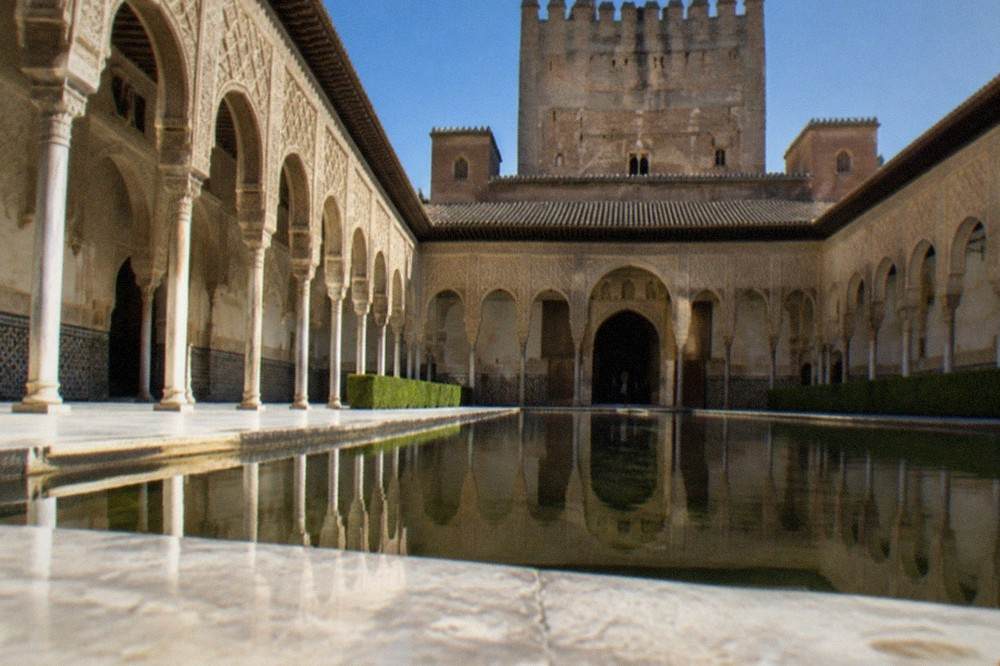
The contrast with the rest of the complex is worth noticing on a visit. The rough red military walls of the Alcazaba sit beside the Nasrid Palaces, whose interiors are covered in carved plaster, glazed tile and painted wood in white, green and blue. The name describes the outside of the fortress, not the jewel-like rooms inside it, which is one reason first-time visitors are so often surprised by the interior.
Who Built The Red Fortress And When?
The Alhambra as a palatine city was built by the Nasrid dynasty, the last Muslim ruling house of Granada, who made the city their capital and expanded the fortress and its palaces over more than two and a half centuries. The complex they left is the reason the Arabic name survives at all: UNESCO inscribed the Alhambra and the Generalife on the World Heritage List in 1984, and extended the listing in 1994 to include the Albaicin quarter across the valley.
The Nasrid Palaces, the part of the complex most visitors come for, are the dynastic heart of the monument, and their name preserves the same layering of languages: Nasrid from the Arabic name of the ruling family, palaces from the Spanish. The Generalife, the summer estate with its gardens and water channels, sits on a neighbouring rise and was inscribed alongside the main fortress in 1984.
The Arabic legacy in Granada did not stop at the Alhambra's walls. The Albaicin, the old quarter facing the fortress across the Darro valley, keeps its Moorish street plan, and its 1994 addition to the World Heritage inscription recognised that the fortress and the quarter facing it were built as one visual and urban pair. The name Alhambra is the most famous survivor of that Arabic-speaking world, but the whole city carries its traces, a story unpacked further in five facts about the Alhambra and in whether Muslims built the Alhambra.
How Much Are Tickets To The Red Fortress In Granada?
A full daytime Alhambra General ticket, covering the Nasrid Palaces, the Alcazaba and the Generalife, costs EUR 22.27 on the official ticket seller's live pages. A Gardens, Generalife and Alcazaba-only daytime ticket is EUR 12.73, a night visit to the Nasrid Palaces is EUR 12.73, a night visit to the Gardens and Generalife is EUR 8.48, and the combined Dobla de Oro General ticket is EUR 30.48. Children under 12 enter free but still need a ticket for entry control.
| Official ticket type | Official price (EUR) | What it covers |
|---|---|---|
| Alhambra General (day) | 22.27 | Nasrid Palaces, Alcazaba, Generalife |
| Gardens, Generalife and Alcazaba (day) | 12.73 | Generalife gardens and Alcazaba, no Nasrid Palaces |
| Night visit, Nasrid Palaces | 12.73 | Timed night entry to the palaces only |
| Night visit, Gardens and Generalife | 8.48 | Evening gardens circuit |
| Dobla de Oro General | 30.48 | Alhambra plus Granada's Andalusi monuments |
| Children under 12 | Free | Ticket still required for entry control |
One caution on prices: a July 2025 press release from the Patronato announced lower tariffs effective 1 August 2025, with the General ticket at EUR 21, but the live official ticket pages currently show the higher figures above. Use whatever price the official seller displays at the moment you book rather than either published figure treated as permanent.
The name may be ancient, but the ticketing system is unforgiving. Daily capacity runs at roughly 6,600 to 7,000 visitors, with the Nasrid Palaces capped at around 300 people per 30-minute timed slot. In peak season the General ticket routinely sells out one to two months or more ahead, tickets are released roughly three months in advance, and online sales close at 23:59 the day before the visit date, with no reliable same-day online sales. Nasrid Palaces tickets are nominative, photo ID is checked at entry, and the half-hour entry window printed on the ticket is strictly enforced. If this is the trip where you finally see the red fortress, the practical planning matters as much as the etymology, and what to do if Alhambra tickets are sold out is worth reading before you commit to dates.
Which Alhambra Tours Bring The Name And The Story To Life?
A guided tour is the most reliable way to hear the story behind the name while standing inside the monument it describes, and the Skip The Line Alhambra and Generalife Guided Tour is the strongest option on this site's roster: three hours with a guide through the Nasrid Palaces, the Alcazaba and the Generalife, from $231.11 per person, rated 4.1 from 3,962 reviews. A guide translates the Arabic inscriptions in real time, turning the name from trivia into a reading key.
The walls of the Nasrid Palaces are dense with carved Arabic calligraphy, and one phrase in particular repeats across the complex thousands of times, a detail covered in which phrase is repeated 9000 times in the Alhambra. A guide who can read that script turns every courtyard into a document, and that is the difference between seeing the red fortress and understanding it.
For travellers who want the view as well as the monument, the Albaicin and Sacromonte walking tours in the picks below pair well with an Alhambra visit: the Mirador de San Nicolas, inside the Albaicin, is the classic vantage point from which the red walls read most dramatically against the mountains. The Alhambra attraction guide covers the complex monument by monument for anyone planning the full circuit.
The same view that named the fortress is a short walk from the Albaicin's lanes, and sunset is when the red tone is at its most convincing, which is why the best time of day to visit the Alhambra matters for photographers as much as for crowd-avoiders. To go with the guided option, Check availability on the operator's live listing.
Common Questions About The Alhambra's Name
What does the name "Alhambra" mean in English?
The name Alhambra means "the red one" or "the red fortress", from the Arabic al-qal'a al-hamra. The fortress walls, built from local reddish clay and rammed earth, gave the monument its colour-based name.
Is Alhambra a Spanish word?
No, it is a Spanish adaptation of an Arabic name. Spanish kept the Arabic phrase al-qal'a al-hamra in Hispanicised form after the Christian conquest of Granada, and the name has been in continuous use since.
Why are the Alhambra's walls red?
The walls and towers were built with rammed-earth techniques using local clay and aggregate, materials with a natural red-pink tone. The hill the fortress sits on was itself known for its reddish colour in Arabic times.
Does the name refer to the palaces too?
The name originally described the fortress as a whole, especially its red outer walls and the Alcazaba. The interior of the Nasrid Palaces is decorated in white plaster, coloured tile and painted wood, so the "red" of the name is mostly an outside feature.
Do other places share the name Alhambra?
Yes, the name travelled widely, and buildings and towns named Alhambra exist across the Spanish-speaking world and beyond, almost all of them borrowing the prestige of Granada's red fortress rather than the reverse.
The red fortress earned its name from the earth it stands on, and seven centuries later that earth still does the talking every evening when the low sun lights the walls above Granada, a view Things To Do In Granada exists to help you reach.