Carrera del Darro
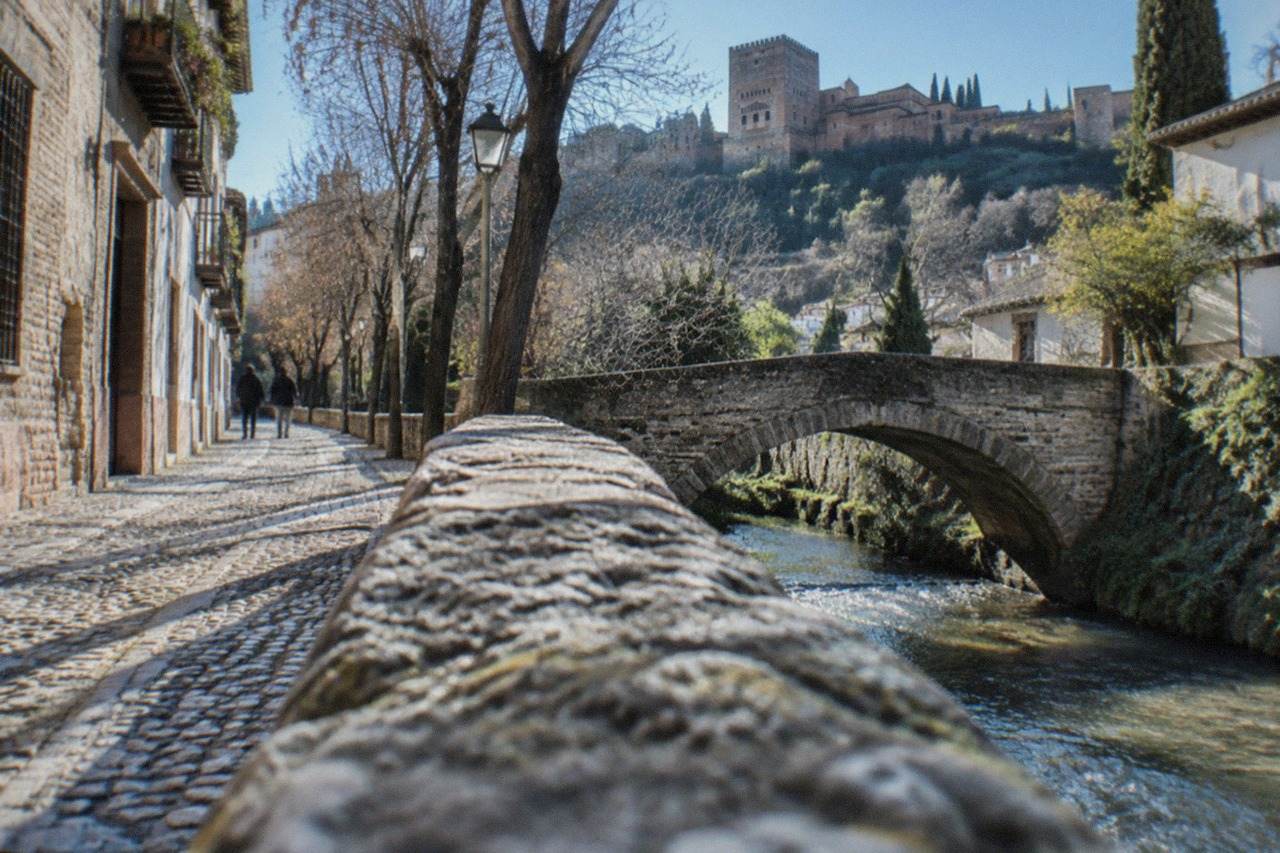
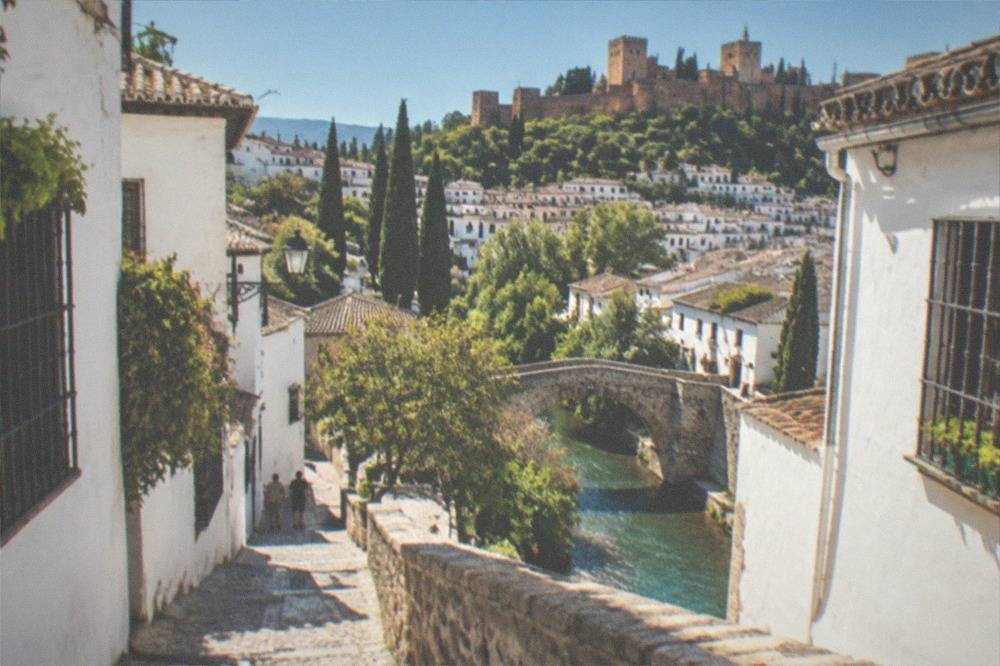
Carrera del Darro is the riverside street that links central Granada to the Albaicin, lined with stone bridges, an old Arab bath house and some of the clearest views of the Alhambra in the city.
Short answer
Carrera del Darro is a riverside street in central Granada that runs beside the Darro river between Plaza Nueva and the Paseo de los Tristes, passing the El Banuelo Arab baths, two surviving Moorish bridges and the foot of the Albaicin. It is free to walk at any hour and most visitors spend between 45 minutes and two hours on it.
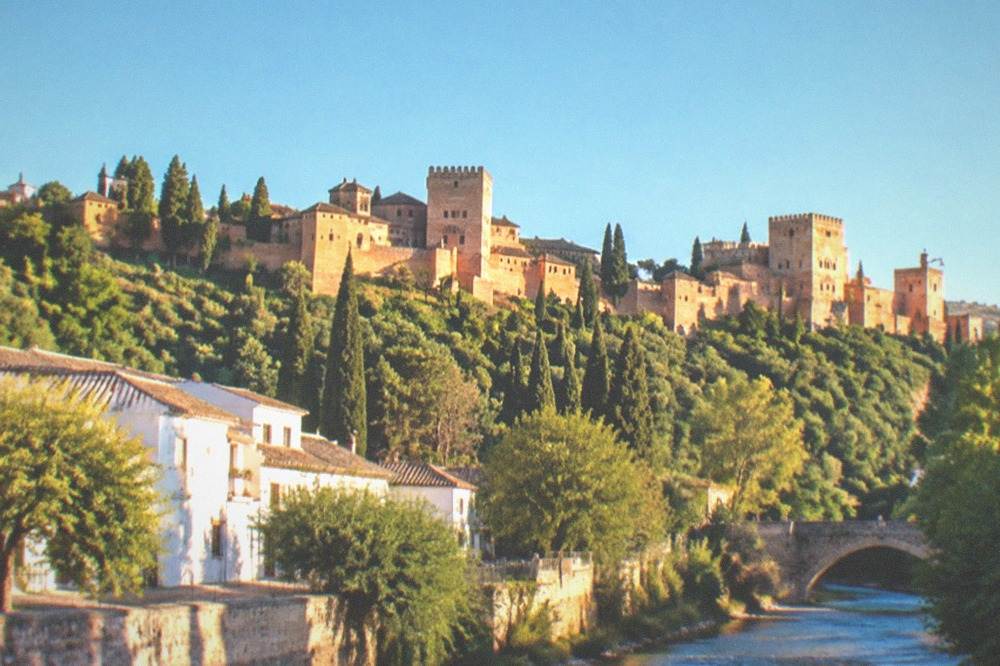
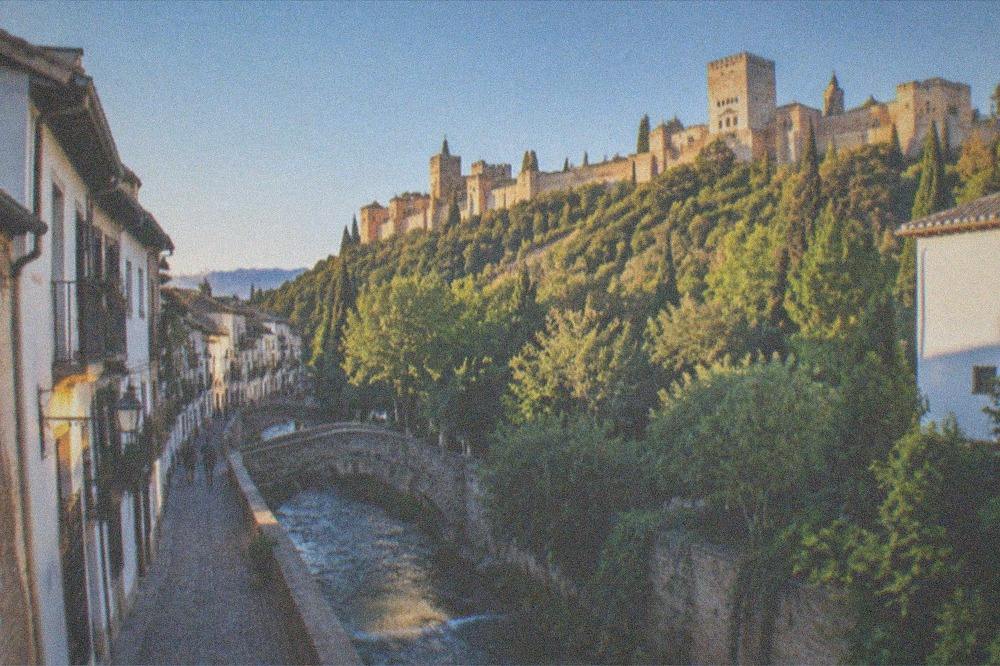
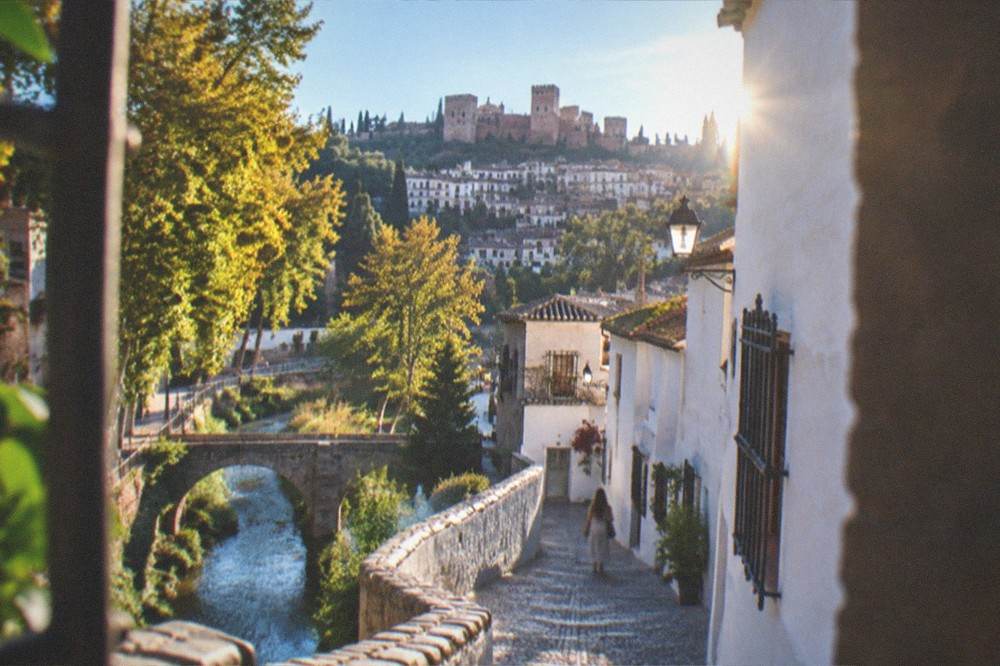
Carrera del Darro is the one street in Granada where the city's three historical layers sit in a single frame: the Darro river running at street level, the Albaicin climbing the hill on one bank, and the Alhambra rising over the wooded slope on the other. The street runs from Plaza Nueva at the edge of the old town to the Paseo de los Tristes below the Albaicin, and the Patronato de la Alhambra's own documentation counts the monuments along it, including the El Banuelo bath house, among the Andalusi heritage the UNESCO listing of 1984, extended in 1994 to include the Albaicin, was designed to protect. It is free to walk, open at all hours, and short enough that most visitors fold it into a route between Plaza Nueva and the Mirador de San Nicolas rather than treating it as a destination on its own.
This guide from the Things To Do In Granada editors covers what the street actually is, what sits along it, how to time a walk, where to eat, and how it connects to the bigger sights on both hills.
What Is Carrera del Darro?
Carrera del Darro is a riverside street in central Granada that follows the Darro river from Plaza Nueva to the Paseo de los Tristes at the foot of the Albaicin. It is the oldest continuously used thoroughfare in the city, laid out in the Moorish period, and it carries the only stretch of the Darro left open to the sky after the river was culverted beneath modern Granada elsewhere. Walking it costs nothing and takes most people under an hour without stops.
The name itself is descriptive rather than commemorative. "Carrera" in older Spanish usage means a road or running route, and the Darro is the small river that rises in the Sierra Nevada foothills and feeds the Alhambra's water system before disappearing under the city. In the Nasrid period this was the road that connected the commercial heart of Muslim Granada to the bath houses and bridges along the river, and several of those structures survived the Christian conquest of the city because they were useful rather than symbolic.
What surprises many first-time visitors is how much of the street's fabric is genuinely medieval rather than reconstructed. The Puente del Cadí, an 11th-century Zirid bridge whose single surviving arch now sits below modern street level, and the twin-arched bridge beside the Church of Santa Ana, Moorish in origin but rebuilt after the 1492 conquest, both stand as reminders of the city's medieval water crossings. The Church of Santa Ana itself, the Casa del Castril and the El Banuelo bath house all belong to the city's oldest standing fabric. The plane trees that shade the river channel today are a later addition, but the stone bridges, the retaining walls and the bath house are the real thing.
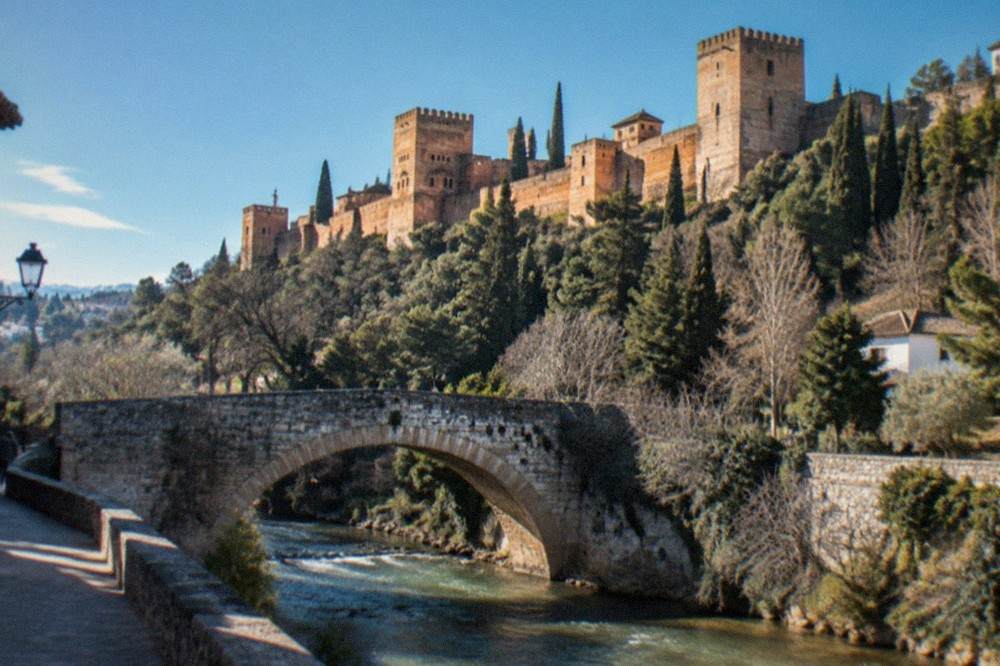
The street also functions as the practical hinge between the two halves of historic Granada. From Plaza Nueva you can walk it to the bottom of the Albaicin, climb to the Mirador de San Nicolas, and be looking at the Alhambra from across the valley within a short climb of leaving the city centre. Almost every walking tour of the old town uses it for exactly this reason, including the Granada in Full walk that covers the historic centre, Albaicin and Sacromonte in one route.
What Can You See Along Carrera del Darro?
The monuments on Carrera del Darro are, in order from Plaza Nueva: the Church of Santa Ana and its rebuilt Darro bridge, the Casa del Castril, the Puente del Cadí arch below street level, the Church of Pedro Antonio de Alarcon, and the El Banuelo Arab bath house, the only surviving complete Andalusi bath in Granada open to visitors. The street ends at the Paseo de los Tristes, a promenade under the Albaicin.
Most of these can be seen from the street for free, with El Banuelo the only one that charges entry.
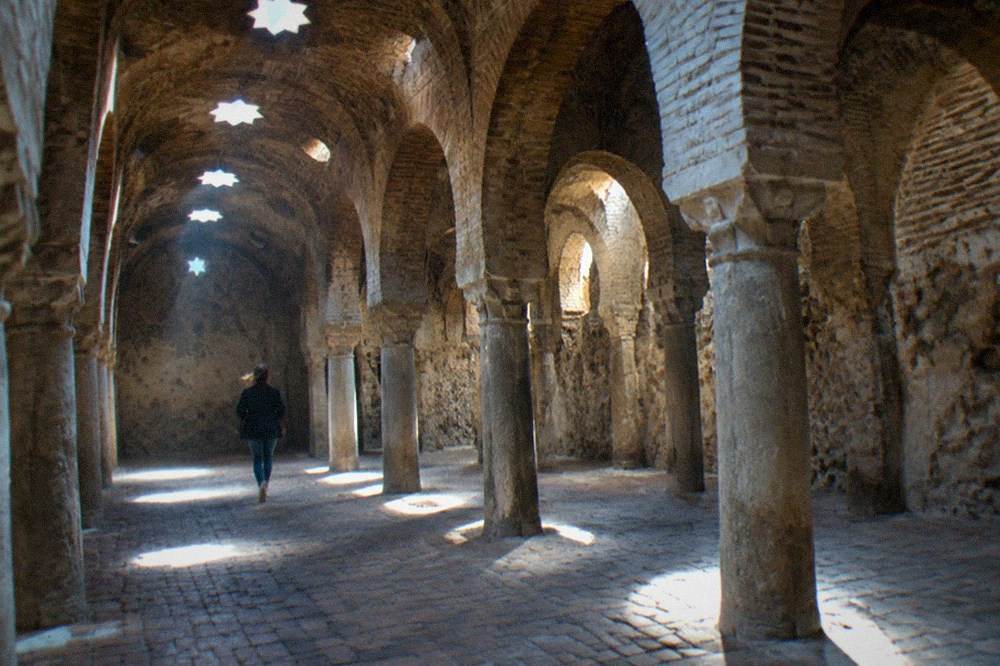
The density is unusual for a single street anywhere in Spain. El Banuelo, a hammam of the Andalusi era, is the headline piece: a small bath house with brick-vaulted chambers and skylights cut in star patterns, sitting directly on the riverbank. It is covered in detail in the site's dedicated El Banuelo guide. The bath house survived because it was converted to private use after the conquest and stayed in serviceable condition for centuries.
The bridges tell the engineering story. The Darro was crossed by a chain of Moorish bridges serving the bath houses along the bank, and two survive in visible form. The arch beside Santa Ana still carries foot traffic. The Puente del Cadí is more poignant: its single arch was buried when the river was channelled and the street level raised, so today you look down at it from the railing, a bridge that now sits below the road it once served.
The table below lists what sits along the street and what each stop involves.
| Monument on the street | Period | What you see today | Entry cost |
|---|---|---|---|
| Church of Santa Ana | Renaissance, on a Moorish site | Mudejar tower, riverfront facade, Moorish bridge beside it | Free to enter outside services |
| Casa del Castril | Renaissance | Carved plateresque facade on the Albaicin side | Viewed from the street |
| Puente del Cadí | Zirid era (11th c.) | Single buried arch below modern street level | Free, viewed from the railing |
| El Banuelo | Andalusi era | Complete Arab bath house, brick vaults, star skylights | Small entry fee, check at the door |
| Church of Pedro Antonio de Alarcon | Baroque | Church at the Paseo end | Viewed from the street |
| Paseo de los Tristes | Promenade | Cafe terraces under the Albaicin | Free |
One practical note on El Banuelo: it is a small monument with limited capacity, and it shares a ticketing family with the city's other municipal monuments. Check current hours at the door before planning a visit around it, because opening windows shift seasonally and it closes on some public holidays.
How Do You Walk Carrera del Darro From Plaza Nueva?
Start at Plaza Nueva, walk east past the Royal Chapel end of the square, and the street begins almost immediately at the Church of Santa Ana on your left. Follow the river bank on the same side for the bridges and the Casa del Castril, cross to the Albaicin side for the best Alhambra views, and finish at the Paseo de los Tristes, where the Cuesta del Chapiz climbs into the Albaicin.
The walk is flat, takes only a few minutes without stops, and most people stretch it with the monuments and photos.
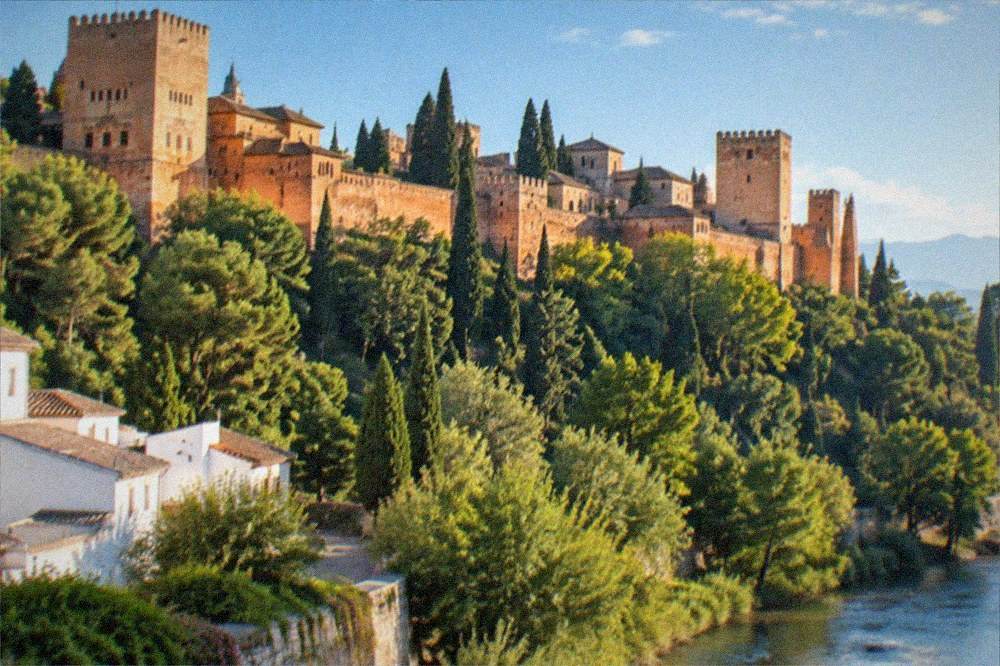
The direction matters less than the side of the river. The north bank, the Albaicin side, gives you the postcard angle: the Alhambra's towers rising over the poplars with the river in the foreground. The south bank keeps you closer to the monuments themselves, including El Banuelo's entrance. Most visitors cross the bridges more than once without noticing, because each one changes the composition of the view.
For the Alhambra itself, this street is the best free preview in the city, but it is not a substitute. The Patronato de la Alhambra's own ticket page states a General ticket at EUR 22.27, and the complex sells out: daily capacity runs to roughly 6,600 to 7,000 visitors, with the Nasrid Palaces capped near 300 people per half-hour slot, and in peak season the General ticket routinely sells out one to two months ahead. If the Alhambra is on your itinerary, book before you travel; the walking street will still be there whenever you arrive.
A guided option makes sense if you want the street explained rather than just walked. The Granada in Full: Historic Centre, Albaicin and Sacromonte tour covers this stretch as part of a single route through all three quarters, and it can be booked through the operator's live listing. For the Alhambra side of the valley, the Alhambra and Nasrid Palaces Guided Tour with Tickets bundles the entry that sells out with a guide who explains what you are looking at across the river.
Where Does Carrera del Darro Fit In A First Visit To Granada?
Carrera del Darro belongs on day one of any Granada itinerary, slotted between the Cathedral area and the Albaicin: Plaza Nueva and the Royal Chapel in the morning, the Carrera del Darro walk to the Paseo de los Tristes, then the climb to the Mirador de San Nicolas for the afternoon view, with Sacromonte beyond it if energy allows. It needs no ticket, no booking and no fixed time, which makes it the natural filler between the two sights that do need both.
The site's one day in Granada itinerary uses exactly this spine, and the logic is simple. The two big-ticket commitments in the city, the Alhambra and the Cathedral, are fixed by time slots. The Carrera del Darro walk is the flexible block that absorbs whatever time is left, and it sits geographically between the Cathedral quarter and the Albaicin, so it costs no extra travel.
For visitors with a second day, the street also anchors an evening route. The Paseo de los Tristes fills up after dark, the Alhambra is floodlit above the trees, and the walk back to Plaza Nueva under the plane trees takes on a different character. The Albaicin guide covers the hillside above it, including the climb to the viewpoint.
If you would rather have the route led, the Granada in Full walking tour covers the historic centre, this street and both hillside quarters in one outing, with free cancellation if your plans shift.
When Is The Best Time To Walk Carrera del Darro?
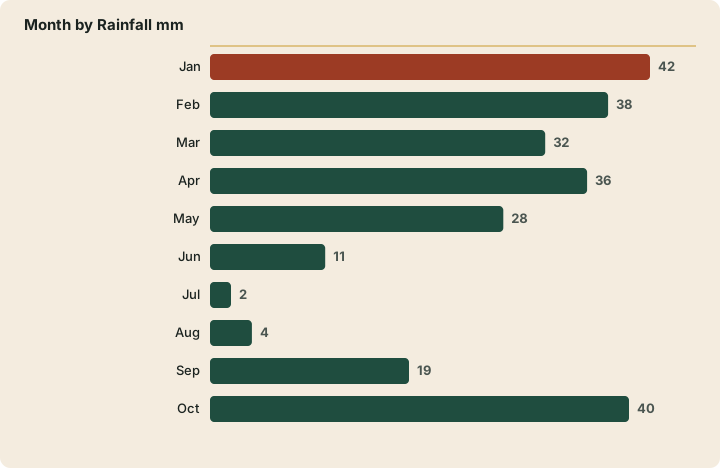
Early morning, between 08:00 and 10:00, is the quietest time on Carrera del Darro, before the tour groups arrive from Plaza Nueva; late afternoon, from about 90 minutes before sunset, gives the best light on the Alhambra across the valley. AEMET's climate data shows Granada averages 13.0C highs in January against 34.8C in July, so in midsummer the morning slot is not just quieter but genuinely cooler, while winter walks are possible at any hour of daylight.
The climate table below, from AEMET's 1981-2010 normals for the Granada Aeropuerto station, shows why the seasons change the experience so much. July is both the hottest and the driest month, with just 2mm of rain, while November and December are the wettest. The street is fully exposed on the river side, so summer afternoons are hot work and winter mornings can sit at or near freezing.
| Month | Avg high C | Avg low C | Rainfall mm |
|---|---|---|---|
| Jan | 13.0 | 0.0 | 42 |
| Feb | 15.4 | 1.6 | 38 |
| Mar | 19.0 | 3.8 | 32 |
| Apr | 20.6 | 6.0 | 36 |
| May | 25.0 | 9.4 | 28 |
| Jun | 31.0 | 13.6 | 11 |
| Jul | 34.8 | 15.7 | 2 |
| Aug | 34.2 | 15.5 | 4 |
| Sep | 29.4 | 12.8 | 19 |
| Oct | 23.2 | 8.7 | 40 |
| Nov | 17.0 | 4.2 | 54 |
| Dec | 13.4 | 1.7 | 56 |
Festival dates shift the calculus twice a year. Semana Santa processions pass through the streets around Plaza Nueva in the week of 29 March to 5 April 2026, and the Corpus Christi fair runs roughly 30 May to 6 June 2026. During both, the area is busier and noisier than any climate table can predict, which is either a reason to come or a reason to wait depending on your tolerance for crowds.
Where Do You Eat And Drink On Carrera del Darro?
The eating options cluster at both ends of Carrera del Darro: traditional bars around Plaza Nueva at the western end, and the cafe terraces of the Paseo de los Tristes at the eastern end, with a handful of riverside restaurants along the middle stretch. Granada's tapas custom means a drink order in many traditional bars comes with a complimentary small tapa, though this is a widely upheld local practice rather than a guarantee at every venue, and some bars have adjusted portions or prices.
The tapas tradition is the single biggest money-saver in the city and it applies here as much as anywhere. A round of drinks ordered in a traditional bar on or near the street typically arrives with a small plate, often scaling up with further rounds. The site's free tapas guide lists how the custom works and where it holds strongest, and the Granada food guide covers what to order once the plate lands.
For a sit-down meal with the view, the Paseo de los Tristes terraces are the classic choice, though prices run higher than the streets a block inland. The middle stretch of the Carrera itself has a mix of long-established restaurants and tourist-oriented rooms, and the difference between the two is usually visible in the menu: the traditional places list platos al montes and river-fish dishes, the tourist rooms list pizza.
| Eating spot on or near the street | Type | Typical role in a visit |
|---|---|---|
| Plaza Nueva bars | Traditional tapas bars | First drink and free tapa before the walk |
| Riverside restaurants, middle stretch | Sit-down dining | Lunch with the river beside the table |
| Paseo de los Tristes terraces | Cafe and terrace dining | Post-walk drink under the Albaicin |
| Albaicin side, up the Cuesta del Chapiz | Small bodegas and bars | Evening tapas after the viewpoint |
The best restaurants in Granada guide covers the city-wide shortlist if you want a specific booking rather than a walk-in.
How Does Carrera del Darro Connect To The Alhambra And The Albaicin?
Carrera del Darro sits in the valley between the two hills of historic Granada: the Alhambra rises directly above the south bank, and the Albaicin climbs from the north bank, with the Cuesta del Chapiz at the eastern end leading up toward the Mirador de San Nicolas.
Metro de Granada serves neither, since it runs north to south through the city and reaches neither the Alhambra nor this street, so the connections are on foot or by the LAC and C34 bus lines that climb to the Alhambra from the city centre.
The geography is the thing to internalise. You are in a river valley with a palace complex on one slope and the old Muslim quarter on the other, and this street is the floor of that valley. From the Paseo de los Tristes the Cuesta del Chapiz climbs into the Albaicin; from Plaza Nueva a different climb, the Cuesta de Gomerez, leads toward the Alhambra's entrance woods. Doing both hills plus the valley floor in one loop is the classic Granada day, and it is entirely walkable.
For the Alhambra itself, the ticketing reality matters more than the route. The live official prices are General EUR 22.27, Gardens/Generalife/Alcazaba-only EUR 12.73, night Nasrid Palaces EUR 12.73 and night Gardens/Generalife EUR 8.48, with the Dobla de Oro combined ticket at EUR 30.48. A July 2025 press release announced lower figures, but the live official ticket pages still show the higher prices above, so use what the official seller shows at booking time. Tickets are nominative, photo ID is checked, and the Nasrid Palaces half-hour window printed on the ticket is strictly enforced.
| Alhambra ticket type | Official price | What it covers |
|---|---|---|
| General | EUR 22.27 | Nasrid Palaces, Alcazaba and Generalife, day visit |
| Gardens, Generalife and Alcazaba | EUR 12.73 | Daytime visit without the Nasrid Palaces |
| Night visit, Nasrid Palaces | EUR 12.73 | Evening entry to the palaces only |
| Night visit, Gardens and Generalife | EUR 8.48 | Evening gardens circuit |
| Dobla de Oro General | EUR 30.48 | Alhambra plus the Andalusi monuments, including El Banuelo |
| Under 12 | Free | Ticket still required for entry control |
The Dobla de Oro line in that table is the one that ties the two halves of this article together: it bundles the Alhambra with the Andalusi monuments along this street and in the Albaicin, including El Banuelo. If you are walking the Carrera del Darro anyway, that combined ticket is the natural pairing.
Is Carrera del Darro Worth Visiting At Night?
Yes, and for many visitors the night version is better: the Alhambra is floodlit above the trees, the Paseo de los Tristes terraces stay open late, and the tour groups that fill the street by day are gone. The walk back to Plaza Nueva is lit and well used until late, and the Albaicin side carries its own evening life, though standard city caution applies on the darker lanes above the river, exactly as the site's Granada safety guidance describes for the old town generally.
The Alhambra's night visit adds another dimension if you have tickets. The Nasrid Palaces run evening slots on limited days, 22:00 to 23:30 from 1 April to 14 October and 20:00 to 21:30 from 15 October to 31 March, Fridays and Saturdays only in the winter window. Seeing the palaces by night, then walking down through the darkened woods to this street, is one of the strongest single evenings the city offers. Night tickets sell out too, though usually later than the daytime General.
For flamenco rather than monuments, the night route continues uphill. The Sacromonte cave venues sit above the eastern end of the street, and the site's Sacromonte cave flamenco guide covers which caves host shows and how the zambra tradition differs from the stage flamenco you may have seen elsewhere in Spain.
Between the walk and the show, a hammam session is the other classic Granada pairing. The Traditional Bath at the Palacio Nazari Hammam runs 90-minute sessions, and the city's hammam tradition is a direct descendant of the bath houses that once lined this very street, including El Banuelo. The site's Hammam Al Andalus guide covers the other main option.
What Do Most Visitors Get Wrong About Carrera del Darro?
The three most common mistakes on Carrera del Darro are treating it as a drive-through street when it is fundamentally a walking route, assuming El Banuelo is always open when its hours shift seasonally, and walking only the river bank without crossing to the Albaicin side, which is where the Alhambra photographs actually come from. A fourth, more expensive mistake is arriving in Granada without Alhambra tickets and expecting to buy them on the day, which in peak season does not work.
The street is not fully pedestrianised, and cars do use it in parts, but it is narrow, stone-set and slow by design. Walking it from Plaza Nueva rather than starting mid-way is what gives you the sequence: the modern city dissolving into the riverbank, the bridges appearing one by one, then the valley opening up under the Alhambra. Starting at the Paseo de los Tristes reverses the reveal and loses the effect.
The Alhambra mistake deserves its own emphasis because it catches so many people. Online sales close at 23:59 the day before the visit date, there are no reliable same-day online sales, and tickets release roughly three months ahead. The site's Alhambra tickets guide covers the full strategy, and the what if Alhambra tickets are sold out article covers the fallbacks, but the short version is: book before you fly.
| Common mistake | What happens | The fix |
|---|---|---|
| Driving the street instead of walking it | Narrow stone road, no parking, missed monuments | Walk from Plaza Nueva, end at the Paseo |
| Assuming El Banuelo is open all day | Seasonal hours, holiday closures | Check hours at the door or the municipal listing |
| Staying on one river bank | Missed Alhambra photo angles | Cross at both surviving bridges |
| No Alhambra booking | General ticket sold out 1-2+ months ahead in peak | Book roughly 3 months ahead online |
| Expecting metro access | Metro serves neither the street nor the Alhambra | Walk, or use the LAC/C34 bus for the Alhambra |
Common Questions About Carrera del Darro
Is Carrera del Darro free to walk?
Yes. The street itself is a public road open at all hours and costs nothing. The only monument along it that charges entry is the El Banuelo bath house, and even that is a small per-person fee checked at the door rather than a booked attraction.
How long does Carrera del Darro take?
The walk itself takes only a few minutes end to end without stops. Most visitors spend between 45 minutes and two hours, depending on how long they linger at the bridges, El Banuelo and the Alhambra viewpoints, and whether they stop for a drink at the Paseo de los Tristes.
Where does Carrera del Darro start and end?
It starts at Plaza Nueva, at the Church of Santa Ana end of the square, and ends at the Paseo de los Tristes below the Albaicin, where the Cuesta del Chapiz begins the climb into the old quarter.
Can you see the Alhambra from Carrera del Darro?
Yes, and from the Albaicin-side bank it is one of the best low-angle views in the city: the towers and walls rising over the wooded slope directly above the river. The higher, postcard panorama comes from the Mirador de San Nicolas at the top of the hill.
Is Carrera del Darro the same as the Paseo de los Tristes?
No. The Paseo de los Tristes is the promenade at the eastern end of the Carrera del Darro, where the street opens out under the Albaicin. The Carrera is the older riverside street leading to it; the two flow into each other and most visitors experience them as one continuous walk.
Is Carrera del Darro safe at night?
The street and the Paseo are lit and well used until late, and the walk back to Plaza Nueva is a normal part of Granada evening life. The standard city caution applies on the darker lanes climbing into the Albaicin above the river, as in any old-town area after dark.
Walk it once in daylight for the monuments, then once more after dark for the floodlit Alhambra, and Carrera del Darro will have earned its place as the stretch of Granada you remember in between the two big-ticket sights on the hills above it.