Granada Spain Food
Granada Spain food runs on a custom most of Spain has abandoned: order a drink in many traditional bars and a small plate of food arrives with it. This guide covers what to order, where to eat it, and how the free tapas tradition actually works in 2026.
Short answer
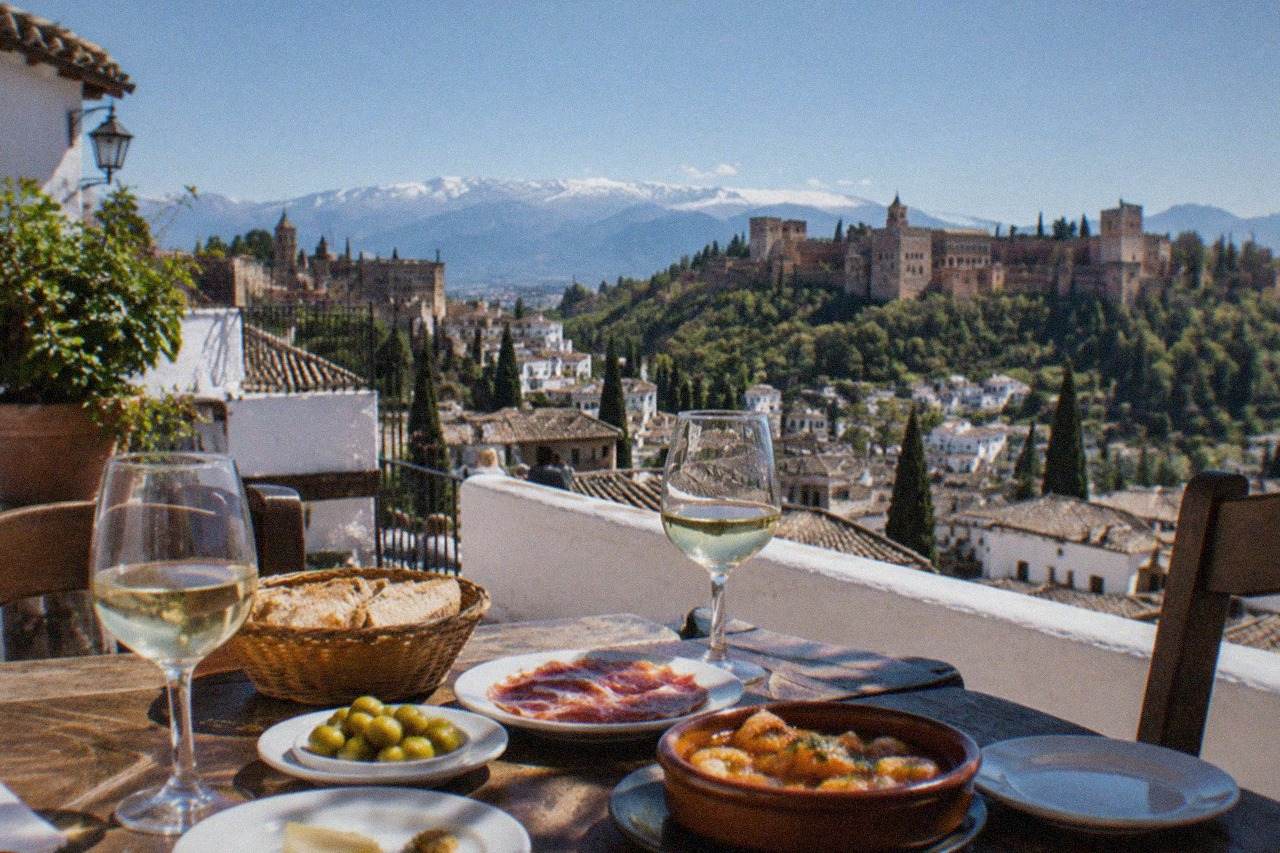
Granada Spain food means free tapas with drinks in traditional bars, hearty mountain dishes such as plato alpujarreño, jamón from nearby Trevélez, piononos from Santa Fe, and Arab-influenced pastries left over from the Nasrid city. Eat in the Albaicin, Realejo and along Calle Navas, order drinks rather than meals, and expect the complimentary tapa custom to be widespread but not guaranteed in every bar.
Granada Spain food starts with a custom the rest of the country has mostly let go: in many traditional Granada bars, a drink order arrives with a small plate of food at no extra charge. July 2026 reporting on the tradition describes it as widely upheld local practice rather than a legal requirement, with some venues adjusting portions or drink prices, so the free tapa is a strong local norm rather than a guarantee in every bar. That single fact shapes how the whole city eats. People order drinks, not big meals, and the kitchen sends out whatever the house is pouring its identity into that day.
The rest of the plate is Andalusian mountain cooking with an Arab inheritance. Granada sits under the Sierra Nevada, so the food is heavier than coastal Andalusia: cured pork and long-cooked stews, beans and spinach cooked with garlic and cumin, pastries made with honey and almonds that trace their roots to the Nasrid city that gave the Alhambra its name. This guide from the Things To Do In Granada editors covers the dishes worth ordering, the neighborhoods where each one is strongest, and the practical habits that make eating here cheap and good. For the short version of what the city is known for, see what food Granada is famous for, and for a checklist of specific orders, the traditional dishes to try in Granada.
What Makes Granada Spain Food Different From The Rest Of Spain?
Granada Spain food stands apart for three reasons: the free tapa with a drink survives here as a living daily custom, the cooking leans on Sierra Nevada mountain ingredients such as cured Trevélez ham, beans and sausages rather than coastal fish, and the Arab legacy of the Nasrid city still shows up in the pastries, honey, almonds and spiced dishes served across the old town.
The free tapa is the headline. In Madrid, Barcelona and most of Andalusia, a tapa is something you pay for. In Granada the tradition of a complimentary small plate arriving with each drink was still standard practice in many traditional bars as of 2026, often growing more generous with subsequent rounds. Some bars have trimmed portions or nudged drink prices to cover it, which is why the honest phrasing is "widely upheld local practice," never a promise. The practical effect is that a night out in Granada can double as dinner for the price of three or four drinks.
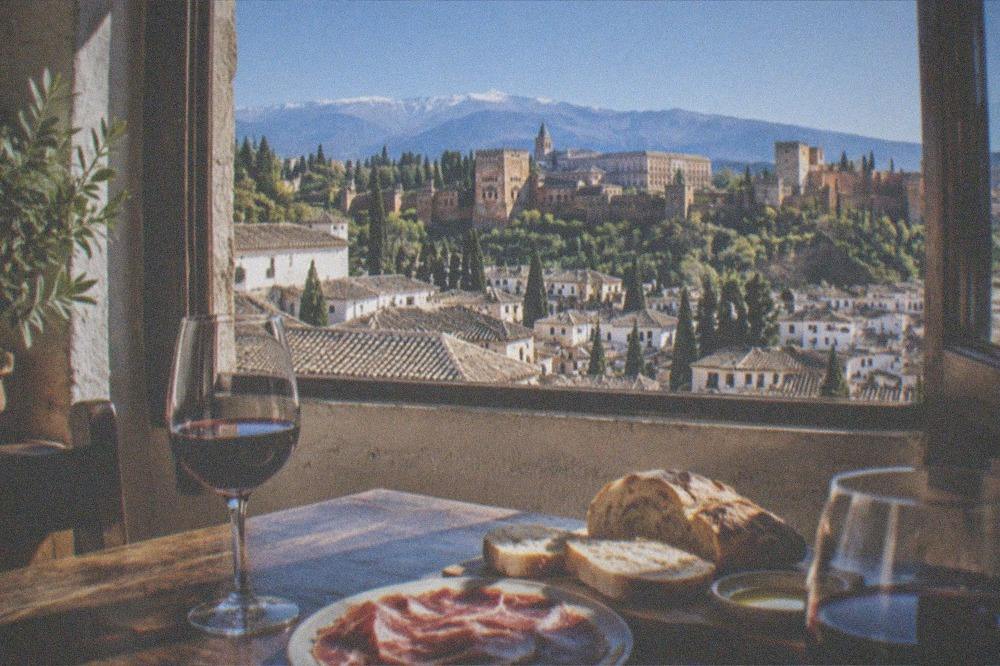
The mountain influence is the second difference. The Alpujarras, the valley villages on Granada's side of the Sierra Nevada, produce what is arguably Spain's most respected cured ham, jamón from Trevélez, and the region's signature dish plato alpujarreño is a plate of exactly the things those villages cure and grow: ham, chorizo, morcilla, egg, peppers and potatoes. You will find it on menus all over the city. The Alpujarras are worth a day trip in their own right, and a food-motivated visit pairs naturally with the Alpujarras guide.
The Arab inheritance is the third. Granada was the last Muslim kingdom on the Iberian Peninsula, and its sweet tooth still shows it: piononos, the cream-and-syrup pastries from nearby Santa Fe, honey-soaked almond pastries, and dishes of spinach, aubergine and spiced meat that echo the Nasrid kitchen. None of this is museum food. It is what the bakeries around the Cathedral and the bars of the Albaicin sell every day.
How Does The Free Tapas Custom In Granada Actually Work?
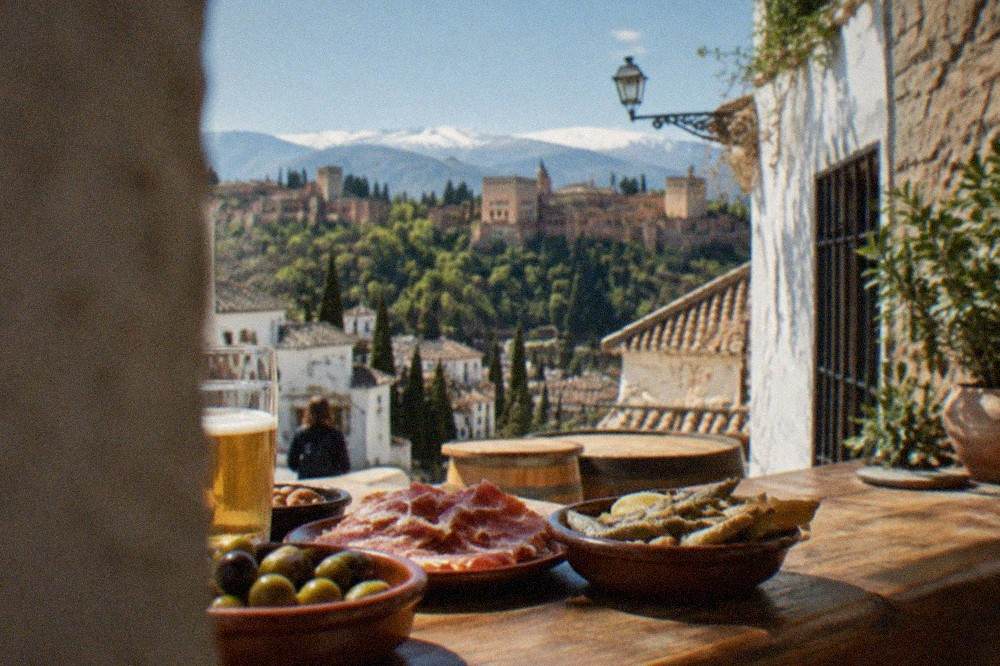
In a traditional Granada bar, each drink you order arrives with a complimentary small plate, and the plate usually improves with later rounds; you do not choose the first tapa, the kitchen decides, and the custom is widespread but not universal, so a bar that charges for every tapa is not cheating you. The mechanics are simple and worth knowing before your first round.
Order a caña (small beer), a tinto de verano or a glass of Rioja at the bar. The tapa arrives without being ordered or listed. Order a second drink and a second, different tapa arrives, often larger or better than the first, because the house rewards the regulars-in-the-making. What you get depends on the kitchen's mood and the day's ingredients: fried fish, albóndigas in sauce, a montadito, a spoonful of stew. Bars that run the tradition seriously are proud of it and the plate quality is part of their reputation.
Two honest caveats from the 2026 reporting on the custom. First, it is not a legal requirement, and some venues have adjusted portion size or pricing, so in tourist-heavy streets a few bars quietly charge for what others give free. Second, the tradition is strongest in traditional neighborhood bars and weakest in restaurant-style venues with full menus. The reliable strategy is to do what locals do: move between two or three bars, one drink and one tapa in each, and treat the crawl as the meal. The dedicated tapas in Granada guide breaks the custom down bar by bar.
| Situation | What typically happens | Practical move |
|---|---|---|
| Traditional neighborhood bar | Free tapa with each drink, often improving per round | Order drinks at the bar, not from a menu |
| Tourist-street bar | Tapas custom may be thinner or charged | Check whether plates arrive unasked before settling in |
| Restaurant with full menu | Free tapa often not the custom | Sit down and order a proper meal instead |
| Very busy night | Kitchen may simplify the free plates | Move on; the next bar is two doors away |
Which Dishes Should You Actually Order In Granada?
Order plato alpujarreño for the mountain plate, habas con jamón and espinacas a la granadina for the vegetable dishes, tortilla del Sacromonte for the local specialty omelette, piononos and pastel de la Alpujarra for dessert, and remojón, the orange and salt-cod salad, when you want something bright between the heavy plates. That list is the core of a Granada menu and every one of them is local rather than generic Spanish.
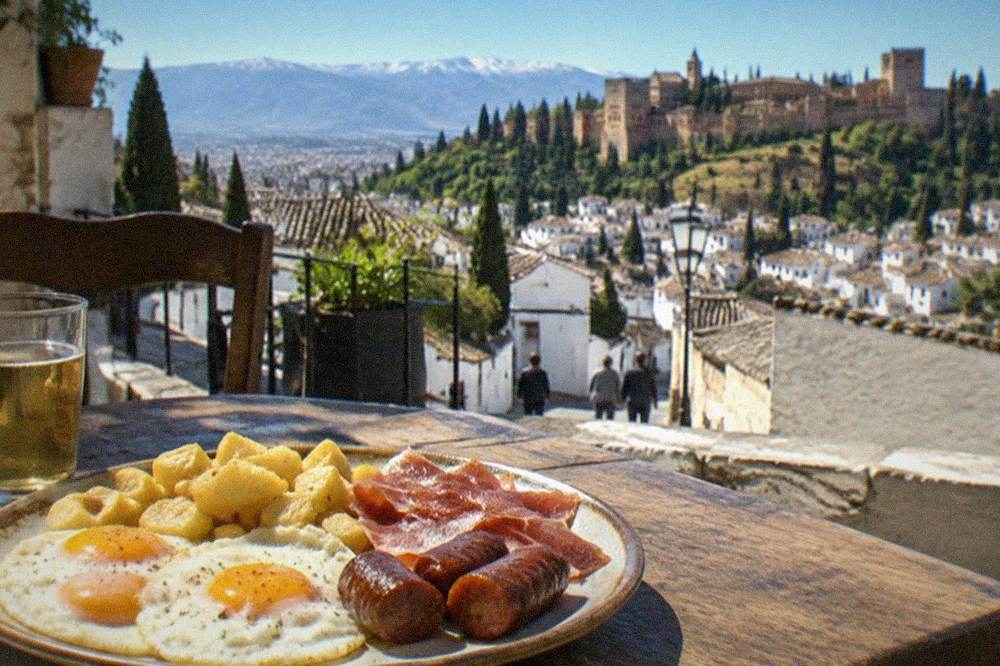
Plato alpujarreño is the one dish that can stand as a full meal: fried eggs over chorizo, morcilla blood sausage, cured ham, peppers and potatoes. Habas con jamón, broad beans stewed with ham, and espinacas a la granadina, spinach with garlic, cumin, raisins and pine nuts, carry the Arab spice cabinet into everyday cooking. Tortilla del Sacromonte is the old cave-quarter omelette, a local variant with offal and ham that most bars outside Sacromonte no longer make; inside the neighborhood it survives.
The sweets matter here more than in most Spanish cities. Piononos, small sponge pastries soaked in syrup with a cream cap, come from Santa Fe, the town beside Granada where the Capitulations were signed, and the best ones are still bought by the box. Pastel de la Alpujarra, a dense almond and honey confection, and the almond-and-honey pastries sold around the Albaicin round out the Arab inheritance. Between the heavy plates, remojón, salt cod with orange, olive oil and black olives, resets the palate.
| Dish | What it is | Where it is strongest |
|---|---|---|
| Plato alpujarreño | Eggs, chorizo, morcilla, ham, peppers, potatoes | City-wide; best near the Albaicin and in Alpujarra-linked kitchens |
| Habas con jamón | Broad beans stewed with cured ham | Traditional bars across the old town |
| Espinacas a la granadina | Spinach with garlic, cumin, raisins, pine nuts | Albaicin bars with Moorish-leaning menus |
| Tortilla del Sacromonte | Local omelette with ham and offal | Sacromonte, in the cave-quarter kitchens |
| Piononos | Syrup-soaked sponge with cream, from Santa Fe | Pastry shops near the Cathedral and around town |
| Remojón | Salt cod, orange, olive oil, black olives | Spring menus city-wide |
A food-focused trip does not have to be only food. The three options above pair eating with the other things Granada does best: a restorative hour in a traditional hammam, a sunset walk through the Albaicin and Sacromonte that ends near some of the best bars in the city, and a guided walking food tour that handles the ordering for you. All three are booked through the operator's live listing.
Where Do Locals Eat In Granada?
Locals eat along Calle Navas and the streets off Plaza de la Trinidad, in the Realejo's small bars, in the neighborhood kitchens of the Zaidin district, and in the Albaicin's lower streets, and the pattern is consistent: they stand or sit at the bar, order drinks rather than full meals, and rotate between two or three venues in an evening.
Calle Navas, the narrow pedestrian street a few minutes from the Cathedral, is the most famous concentration, a strip of bars where the free-tapa custom is competitive and the crowd is a genuine mix of locals and visitors. The Realejo, the old Jewish quarter on the Alhambra's western slope, runs smaller, quieter bars with strong kitchens. The Albaicin's lower streets around Calle Elvira and the Calderería, the tea-house street, lean Moorish: mint tea, pastries and spiced dishes. Zaidin, south of the center, is where few visitors go and where the tapa culture is at its most unperformed.
The honest division of labor: bars for tapas crawls, restaurants for the dishes that need a table, such as slow stews and whole plates of plato alpujarreño. The famous tapas street question has a direct answer, and it is Calle Navas that most conversations land on. For the sit-down end of the spectrum, the best restaurants in Granada guide covers the venues worth booking.
| Area | Character | Best for |
|---|---|---|
| Calle Navas | Dense strip of tapas bars near the Cathedral | A classic bar-to-bar crawl |
| Realejo | Small neighborhood bars, local crowd | Quieter free tapas of reliable quality |
| Albaicin lower streets | Moorish-leaning bars, tea houses on Calderería | Pastries, mint tea, spiced dishes |
| Sacromonte | Cave venues, flamenco plus food | Combining a show with dinner |
| Zaidin | Residential, few visitors | The custom at its least performed |
How Much Does Eating In Granada Cost?
Eating in Granada is cheap by western European standards: a tapas crawl built on three or four drinks can cost the price of the drinks alone since the plates arrive free in traditional bars, a sit-down main dish runs a mid-range restaurant price, and the city's overall cost level is one of the reasons visitors rate it as an affordable destination, though exact menu prices vary by bar and season.
The honest answer on numbers is that this site's research pack does not carry a verified bar-by-bar price list, so the guidance here is structural rather than a fake precision. What the pack does verify: the free tapa itself costs nothing when the custom is running, which converts a large share of a food budget into a drinks budget. A beer or a glass of wine in a neighborhood bar is priced like a drink, not like a meal, and three or four rounds across two or three bars is a realistic dinner structure. Sit-down restaurants charge for real cooking, and the Alpujarra plate or a slow stew is priced as a main course, not as a tapa.
Two levers keep costs down further. First, lunch: the menú del día, the fixed midday menu, is the standard Spanish value mechanism and Granada runs it like everywhere else in Andalusia, a multi-course lunch at a single price that undercuts anything on the evening menu. Second, location: the bars a five-minute walk off the main tourist axis run the same custom with lower drink prices. The Granada Card guide covers the sightseeing side of the budget, with tiers at EUR 60 for 72 hours, EUR 55 for 48 hours, EUR 50 for the 24-hour night Palaces variant and EUR 50 for the Jardines variant, effective 13 Nov 2025.
Can You Plan A Full Day Around Food In Granada?
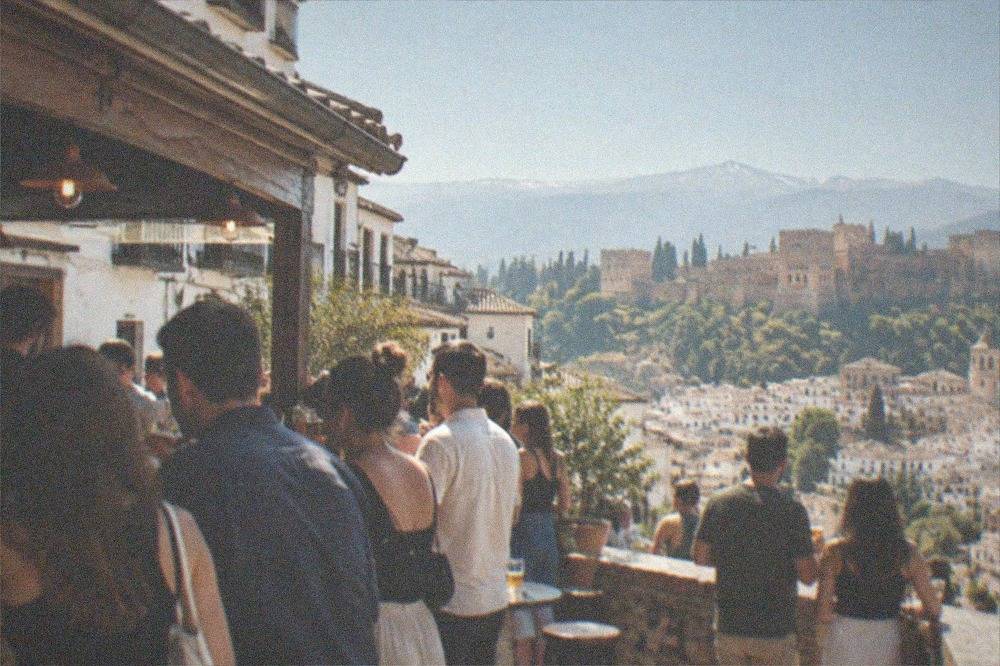
Yes, and the structure writes itself: morning churros or a pionono near the Cathedral, a midday menú del día or an Albaicin lunch of Moorish-leaning dishes, an afternoon tea house stop on the Calderería, and an evening tapas crawl through Calle Navas and the Realejo, with the free plates carrying the dinner load.
Morning belongs to the pastry shops. The area around the Cathedral and the Royal Chapel holds the densest concentration of bakeries selling piononos and the almond-and-honey pastries the city inherited from its Arab centuries, and churros with thick hot chocolate is the other standard opening. The Royal Chapel, where the Catholic Monarchs are buried, sits in the middle of this food geography, which makes the morning a two-for-one: the monuments are covered by their own guides, and the bakeries are around the corner.
Midday is the menú del día, or a proper sit-down plate of plato alpujarreño in the Albaicin. Afternoon is the Calderería, the tea-house street at the bottom of the Albaicin, where mint tea and pastries hold you until evening. The crawl starts after dark on Calle Navas or in the Realejo. If you want the crawl handled for you, a guided walking food tour does the routing and the ordering; the trio above includes one, and the Granada tours overview lists the rest.
The Granada: Walking Food Tour is the structured version of the crawl, from $81 per person and rated 4.9 from 590 reviews on the operator's live listing. It runs about 3.5 hours and covers the eating geography with a guide who handles the bar selection, which matters on a first visit when you cannot yet tell a traditional free-tapa bar from a tourist bar at the door.
Which Neighborhood Should You Eat In?
Eat in the Albaicin for Moorish-leaning dishes and views, in the Realejo for quiet neighborhood bars, on Calle Navas for the highest density of tapas bars, in Sacromonte if you are pairing dinner with a cave flamenco show, and in the old town around the Cathedral for pastry shops and sit-down restaurants, because each district's food character follows its history.
The Albaicin, the hill quarter facing the Alhambra, is the closest thing to eating in the Nasrid city: spiced spinach, aubergine, pastries and tea houses, plus terraces looking across at the palace. The Realejo is the locals' version of the same hill-city eating, with smaller bars and fewer cameras. Sacromonte's cave venues combine food with flamenco, and the choice of show matters when you are choosing a dinner-plus-show evening; the flamenco in Granada guide has the full picture.
The old town is the pastry-and-restaurants district, and Calle Navas is its tapas engine. For staying, the choice of base affects the eating more than visitors expect: the where to stay in Granada guide maps the districts. Staying in or beside the Albaicin puts the tea houses and the Moorish-leaning bars at your door; staying near the Cathedral puts you between Calle Navas and the bakeries.
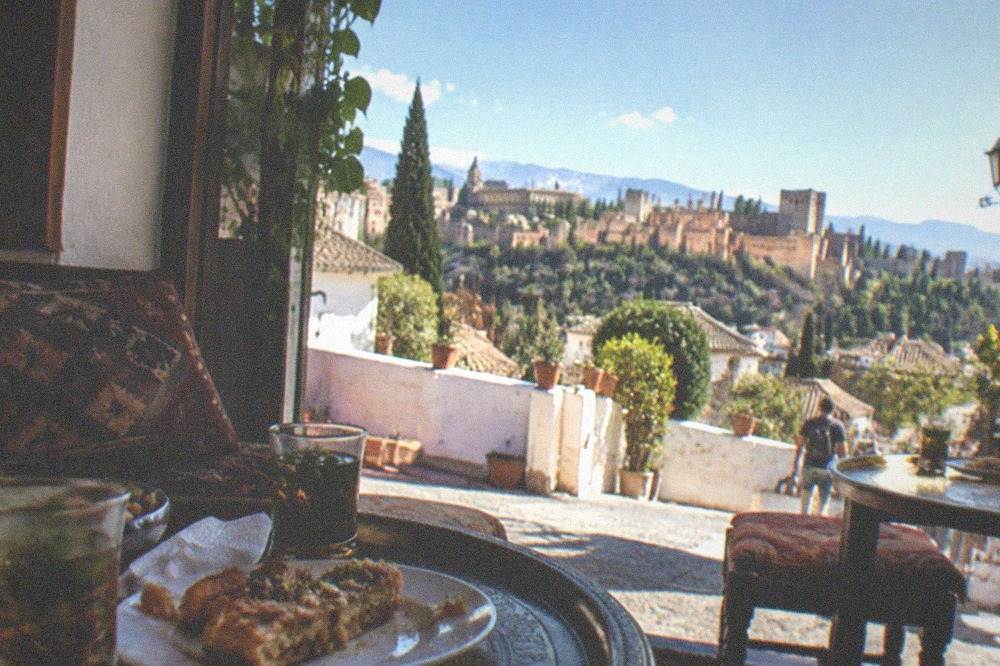
The Albaicín and Sacromonte Guided Sunset Walking Tour, from $17 per person and rated 4.9 from 3,533 reviews, runs about 2.5 hours and ends in exactly the district where the evening crawl should begin. It is the cheapest way to arrive in the Albaicin already oriented, with the Mirador de San Nicolas viewpoint stop built in.
When Is The Best Time Of Year To Eat In Granada?
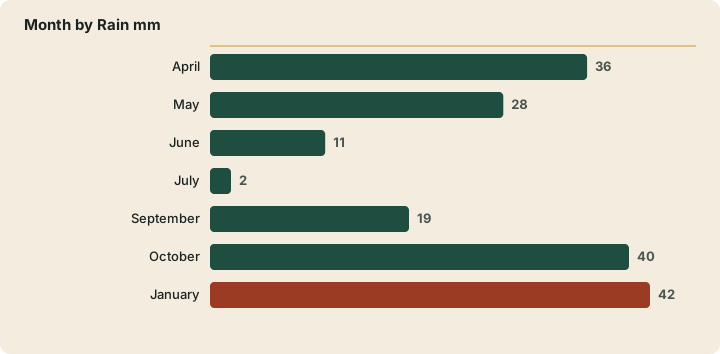
The best eating months in Granada are April, May, June, September and October, when AEMET's climate data shows average highs of 20.6C to 31.0C and rainfall of 11mm to 36mm per month, because terrace season, the free-tapa crawl's natural habitat, runs on dry evenings, while July and August average 34.8C and 34.2C highs and January nights average 0.0C.
The climate table for Granada Aeropuerto, from AEMET's 1981-2010 normals, is the honest basis for the answer. Spring and early summer give warm evenings without the furnace heat, and the crawl is a walking activity, so the numbers matter more than they would for a museum city. July is the driest month at 2mm of rain but also the hottest at 34.8C average high; August is barely cooler. September at 29.4C and 19mm of rain, and October at 23.2C and 40mm, are the connoisseur months, and the festival calendar adds reasons: Cruces de Mayo runs 1-3 May 2026, with neighborhood crosses, food stalls and bars spilling into the streets, and Corpus Christi brings the fair around late May to early June 2026.
Winter eating has its own logic: January nights average 0.0C, which is stew weather, and the mountain dishes are built for it. The Granada weather guide carries the full month-by-month table, and the best time to visit Granada weighs food against the Alhambra ticket calendar, which matters because the General ticket at EUR 22.27 routinely sells out one to two months ahead in peak season.
| Month | Avg high C | Avg low C | Rain mm | Eating character |
|---|---|---|---|---|
| April | 20.6 | 6.0 | 36 | Terrace season begins |
| May | 25.0 | 9.4 | 28 | Cruces de Mayo street food |
| June | 31.0 | 13.6 | 11 | Long light evenings for crawls |
| July | 34.8 | 15.7 | 2 | Hot; eat late and indoors at midday |
| September | 29.4 | 12.8 | 19 | Prime crawl weather |
| October | 23.2 | 8.7 | 40 | Quiet terraces, first stews |
| January | 13.0 | 0.0 | 42 | Cold nights, mountain dishes |
How Does Food Fit Around The Alhambra?
Plan the Alhambra first and the food around it, because the Nasrid Palaces ticket carries a strictly enforced half-hour entry window that cannot be moved, online sales close at 23:59 the day before, and the General ticket at EUR 22.27 often sells out one to two months ahead in peak season, so the palace dictates your schedule and the meals slot into the gaps.
The practical sequence: book the Alhambra slot first, then build the eating day around it. A morning Nasrid Palaces window means churros beforehand and an Albaicin or Navas lunch after. An afternoon window means a proper menú del día first, since the complex visit runs several hours on foot. The Alhambra tickets guide covers the official buying process, and the Alhambra tours guide the guided options.
The food connection is not only scheduling. The palace's own café options are functional rather than special, so eating properly before entry is the better strategy, and the walk down from the Alhambra through the Cuesta de Gomérez or up from the Carrera del Darro passes bars either way. The Carrera del Darro is the riverside street that connects the old town to the palace hill, and it is also one of the more atmospheric places to stop for a drink on the way back down.
What Should You Bring Home From Granada?
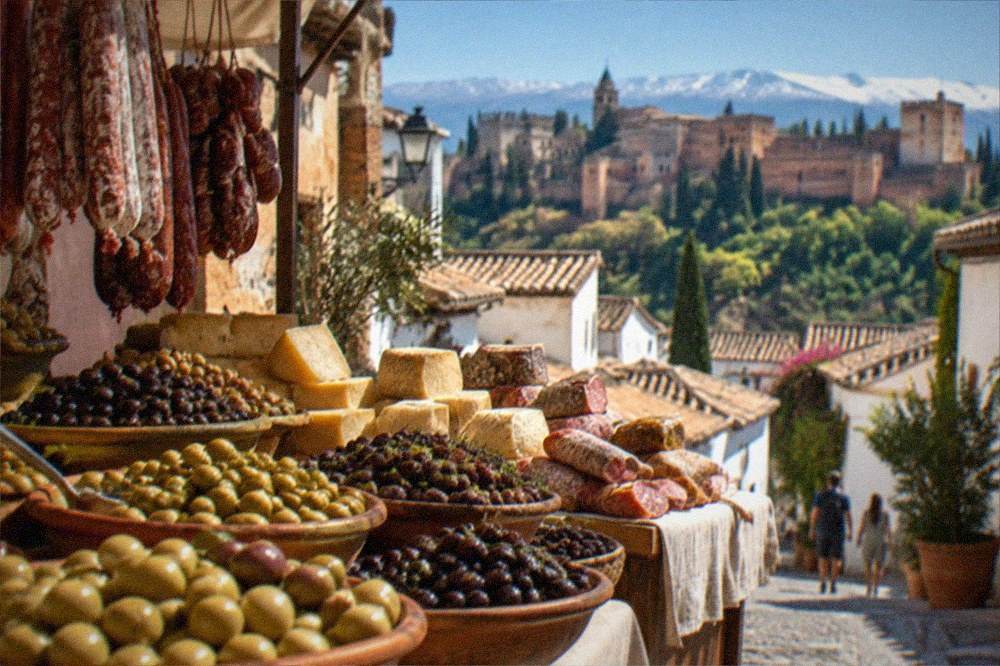
Bring home cured Trevélez ham and Alpujarra sausages if your customs rules allow, piononos from Santa Fe and almond-and-honey pastries if you are eating them within days, olive oil and local honey from the markets, and a hand-painted ceramic bowl or tea glass from the Albaicin's shops, which is the food-adjacent souvenir the city does best.
The shopping logic follows the eating logic. The Albaicin's shops along the Calderería sell the tea, the pastries and the ceramics; the markets sell the oil, the honey and the spices; the bakeries near the Cathedral sell the piononos by the box, which travel badly but are the most distinctively Granada thing you can carry.
For a food gift that survives the journey, olive oil and honey beat fresh pastries, and vacuum-packed cured ham is the standard export format where it is legal to take it. The Albaicin tea houses will pack tea in sealed bags on request.
The Traditional Bath at the Palacio Nazarí Hammam, from $51 per person and rated 4.6 from 1,180 reviews, is the city's most-booked hammam session on the operator's live listing. It is the standard answer to the afternoon gap between a long tapas lunch and an evening crawl, and the hammams in Granada guide compares it with the alternatives.
What Food Mistakes Do Visitors Make In Granada?
The three big mistakes are eating only on the main tourist streets instead of walking five minutes into the Realejo or the Albaicin, sitting down for full restaurant meals every night instead of running the free-tapa crawl that defines the city, and expecting the complimentary tapa as a legal right in every bar, when it is a widespread custom that some venues have adjusted.
The first mistake is geography. The bars closest to the biggest monuments price and portion for turnover; the bars a few streets in run the same custom for the locals. The second is structure: the crawl, two or three bars, one drink and one plate in each, is both the cheaper and the more local way to eat, and it is the format the tradition was built for. The third is expectation. The 2026 reporting is clear that the custom is widely upheld but not universal, so a bar that charges is running a different model, not breaking a rule.
A fourth, quieter mistake: ignoring lunch. The menú del día is the best-value meal in Spain and Granada is no exception, and skipping it in favor of a big breakfast and a crawl that starts too early leaves the evening rushed. A one-day itinerary sequences meals against monuments correctly, and a three-day plan stretches the same logic across a fuller visit.
Common Questions About Granada Spain Food
Does Granada still do free tapas?
Yes, as of 2026 the free-tapa-with-a-drink custom remains standard practice in many traditional Granada bars, with the plate often growing with later rounds. It is a widely upheld local custom rather than a legal requirement, and some venues have adjusted portion size or drink pricing, so it is not guaranteed in every bar.
What food is Granada famous for?
Granada is famous for the free tapas custom, plato alpujarreño, cured Trevélez ham, habas con jamón, espinacas a la granadina, tortilla del Sacromonte, remojón, and the Arab-influenced pastries, above all piononos from nearby Santa Fe.
What traditional food should I try in Granada?
Order plato alpujarreño, habas con jamón, espinacas a la granadina, tortilla del Sacromonte if you find it in Sacromonte, remojón for the bright salad course, and piononos or pastel de la Alpujarra for dessert, with mint tea on the Calderería between meals.
What is the famous tapas street in Granada?
Calle Navas, the pedestrian strip a few minutes from the Cathedral, is the street most conversations land on: a dense run of bars where the free-tapa custom is competitive and the crowd mixes locals with visitors.
Where do locals eat in Granada?
Locals eat along Calle Navas and the streets off Plaza de la Trinidad, in the Realejo's small bars, in the Albaicin's lower streets, and in the residential Zaidin district, typically standing at the bar and rotating between two or three venues in an evening.
Is it expensive to eat in Granada?
Eating in Granada is affordable by western European standards. The free tapa converts much of a food budget into a drinks budget, the midday menú del día is the standard value meal, and moving a few streets off the main tourist axis lowers prices further.