Sacromonte
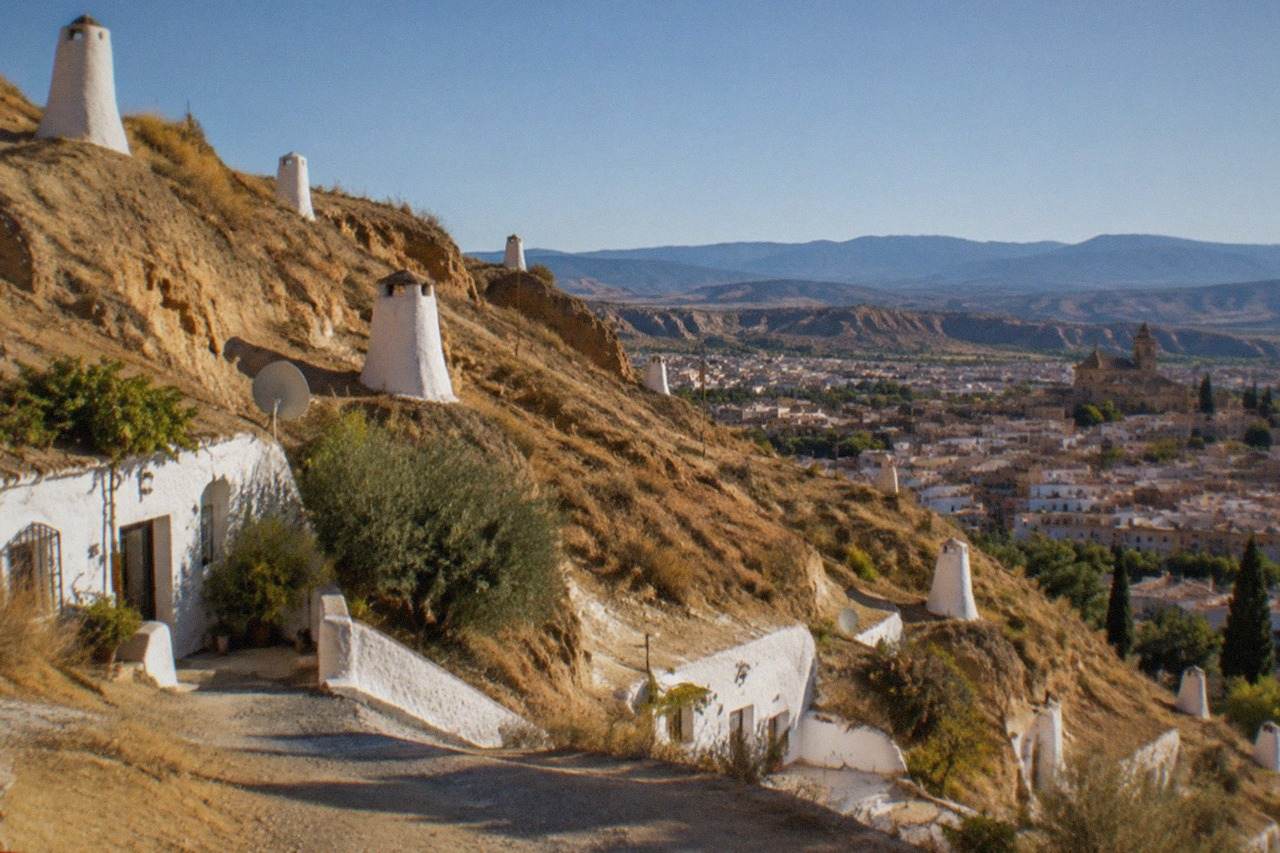
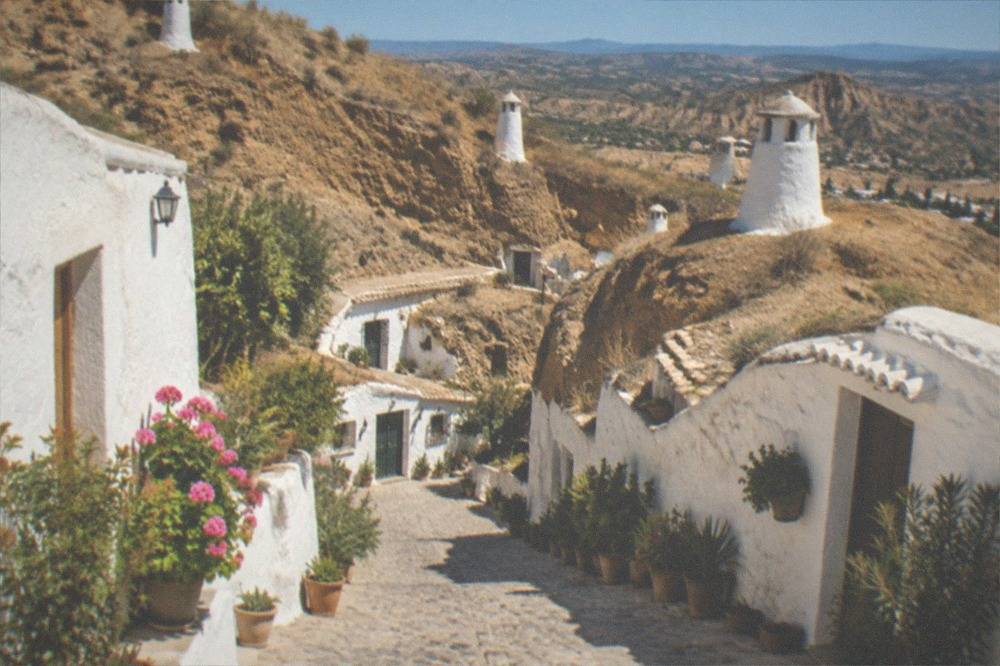
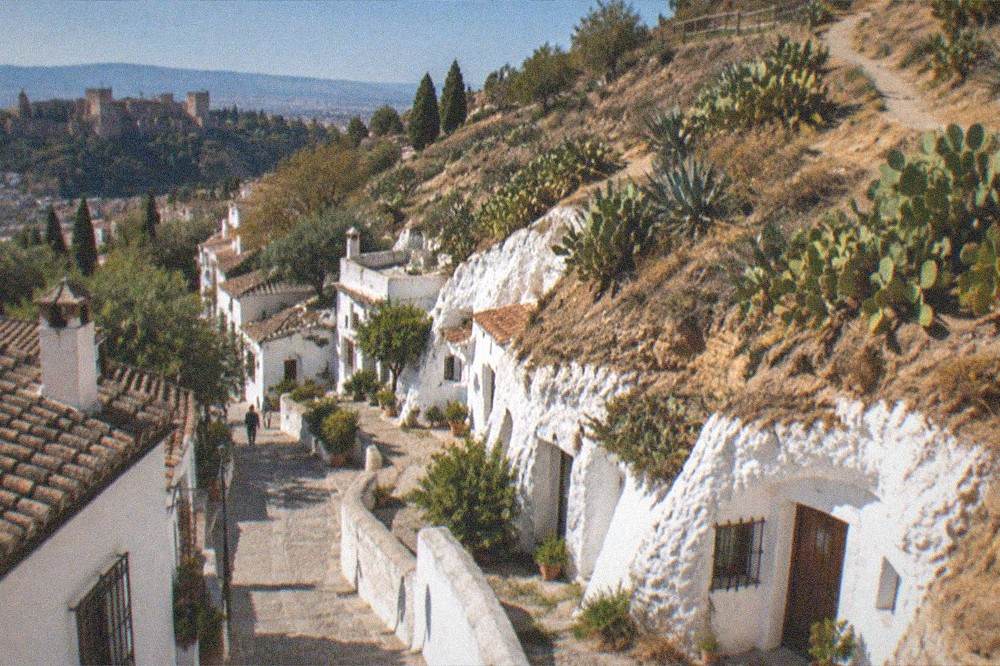
Sacromonte is Granada's cave district, the hillside east of the Albaicin where homes, museums and flamenco venues are carved into the soft rock, and where the city's gitano community shaped the flamenco style Granada is known for.
Short answer
Sacromonte is the cave quarter on Granada's eastern hill, famous for zambras (flamenco shows in caves), the Sacromonte Cave Museum, the Abbey and views across to the Alhambra. Most visitors spend an evening here for a flamenco show plus a sunset walk, often combined with the Albaicin.
Sacromonte rises on the eastern edge of Granada, a hillside of whitewashed cave houses dug into soft rock where the Darro river valley curves away from the Alhambra. The Patronato de la Alhambra's own figures put the palace complex at 2,726,861 visitors in 2025, and a large share of those people eventually look across the valley and ask what the hill opposite is. The answer is the district that gave Granada its flamenco identity, its most unusual museum, and some of the best Alhambra views in the city, all within walking distance of the Albaicin.
What Is Sacromonte?
Sacromonte is Granada's historic cave quarter, the hillside district east of the Albaicin where houses, flamenco venues and museums are carved directly into the rock. It takes its name from the Sacromonte Abbey, built after lead tablets said to record early Christian martyrs were found in the hill's caves, and it became the heart of Granada's gitano community, whose family celebrations in the caves evolved into the zambra, the city's own form of flamenco.
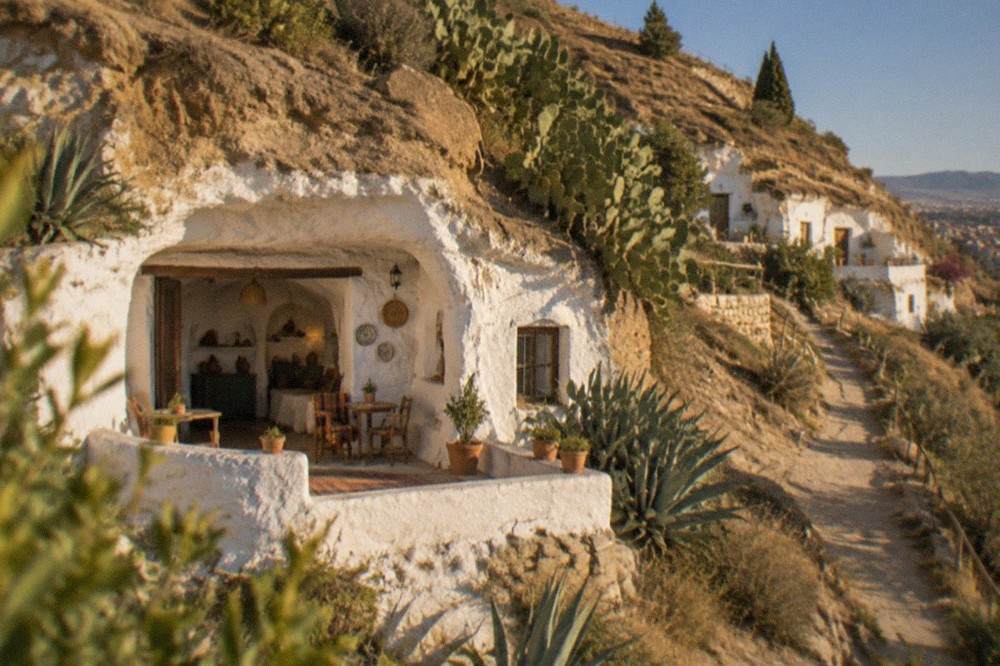
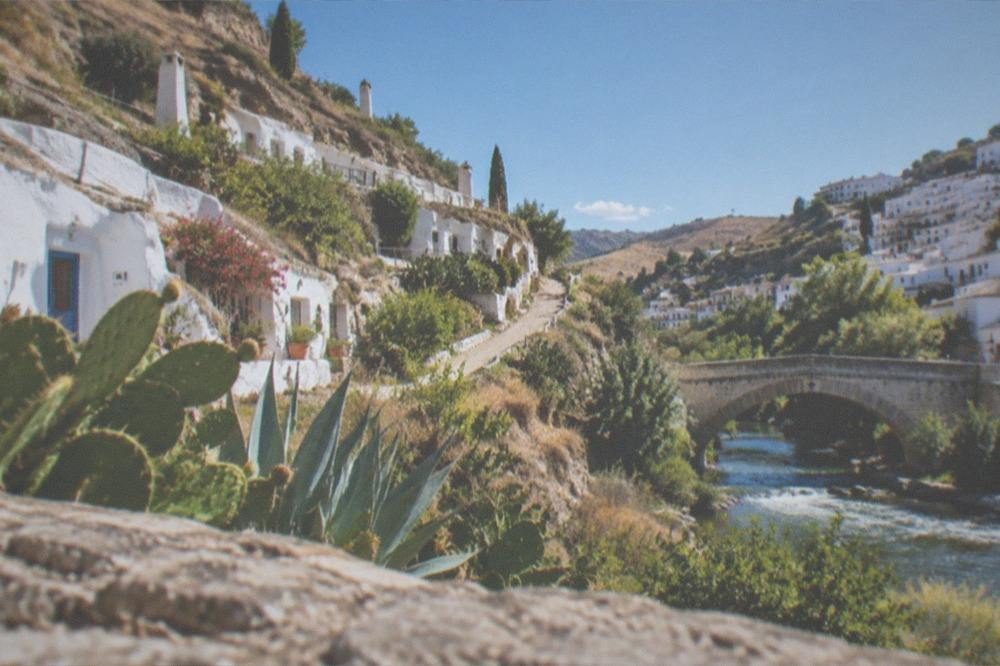
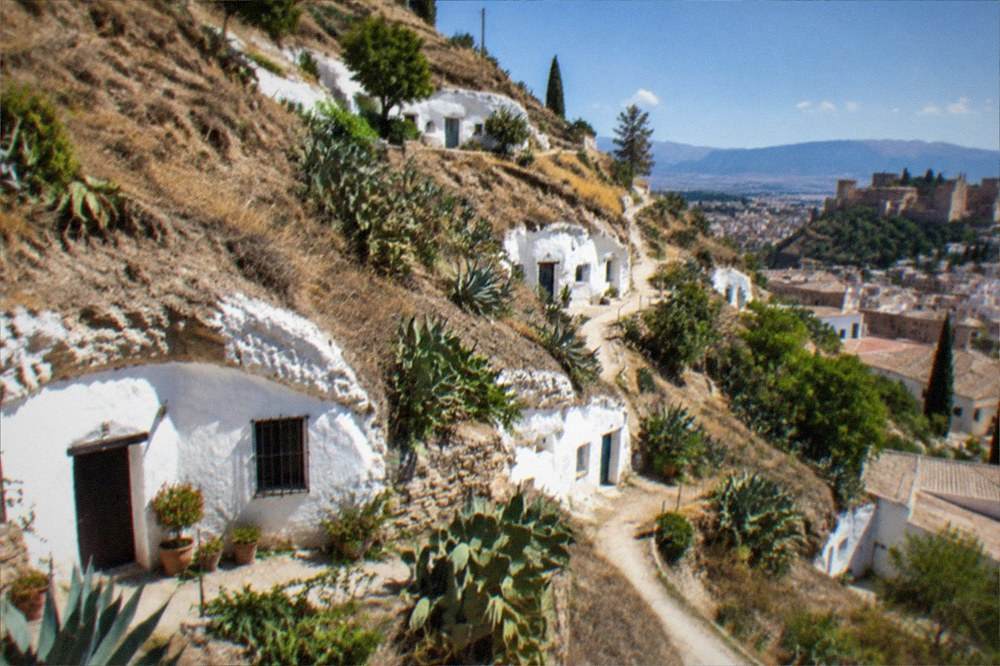
The name means "sacred mountain", and the sacred part came late. For centuries this was simply the cheap hillside where people who could not afford to build in the city dug homes into the soft stone instead. Cave dwelling in southern Spain is old, practical architecture: a carved cave holds a steady temperature year round, cool in Andalusian summers and warm in winter, and the Sacromonte hillside was honeycombed with them long before the district had a name of its own.
The gitano community of Granada settled here in numbers after the Christian conquest of the city, and the district's cultural weight comes from them. Family celebrations, weddings and christenings held in the caves used a slow, rhythmic style of song and dance rooted in Moorian wedding traditions. That style became the zambra, and the zambra became the signature flamenco form of Granada, distinct from the styles of Seville or Cadiz. When visitors ask why Granada's flamenco happens in caves, the answer is that the caves were simply where the families lived.
The discovery of the lead tablets, said to record the martyrdom of early Christians, transformed the hill's reputation. The Sacromonte Abbey was built to house the find, and the district took the abbey's name. The tablets were later judged to be forgeries, but the abbey remains, and the district kept the name.
What Can You See In Sacromonte Today?
The district's main sights are the Sacromonte Cave Museum, a reconstructed set of furnished cave homes on the Camino del Sacromonte; the Sacromonte Abbey itself, open for visits; the series of miradores along the ridge that look directly across at the Alhambra; and the working flamenco caves, the zambras, where shows run most nights of the week. The whole area is compact, and a visit normally combines a museum or abbey stop with a viewpoint walk and an evening show.
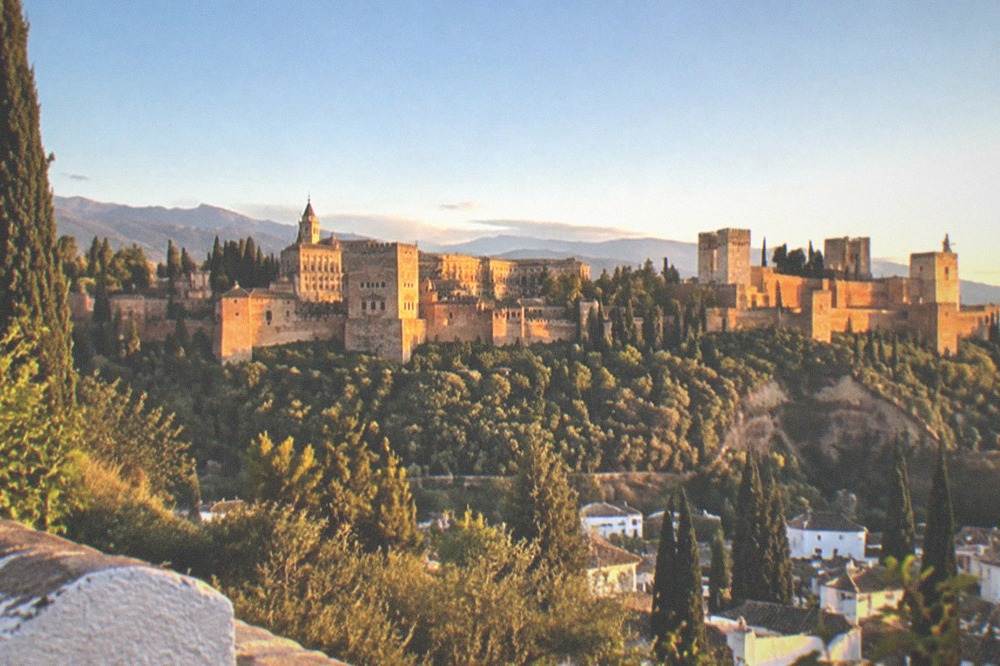
The Sacromonte Cave Museum is the best single stop for understanding how the district actually worked. It occupies a reconstructed group of cave dwellings, each furnished as it would have been in different eras, including a kitchen, a stable and a weaver's cave. The museum's hillside position also gives one of the clearest sight lines to the Alhambra of anywhere in the city, and the viewpoint question comes up constantly here: the ridge path between Sacromonte and the Albaicin delivers the palace, the Generalife gardens and the Sierra Nevada backdrop in one frame.
The abbey, at the top of the district, is a working religious building rather than a museum piece. The complex includes catacombs and a college, and visits are possible. It sits at the end of the Camino del Sacromonte, the cobbled lane that runs the length of the district and is the spine of any walk here.
A guided walk is the efficient way to absorb all of this, since the district's stories, the zambra tradition, the cave architecture, the tablet legend, are not visible on the walls. A small-group option such as the Sacromonte and Albaycin neighbourhoods walking tour covers both hillside quarters in one outing, and the roster lists it at from $50 per person, rated 4.6 from 141 reviews, 2h30m.
The wider context matters too. Sacromonte is usually visited as one half of a hillside pair with Albaicin, the Moorish quarter on the opposite side of the Darro valley, and the two districts face each other across the river with the Alhambra between them. A combined plan is the norm, and the two days in Granada itinerary puts the pair on the same evening for exactly this reason.
Where Do You Watch Flamenco In Sacromonte?
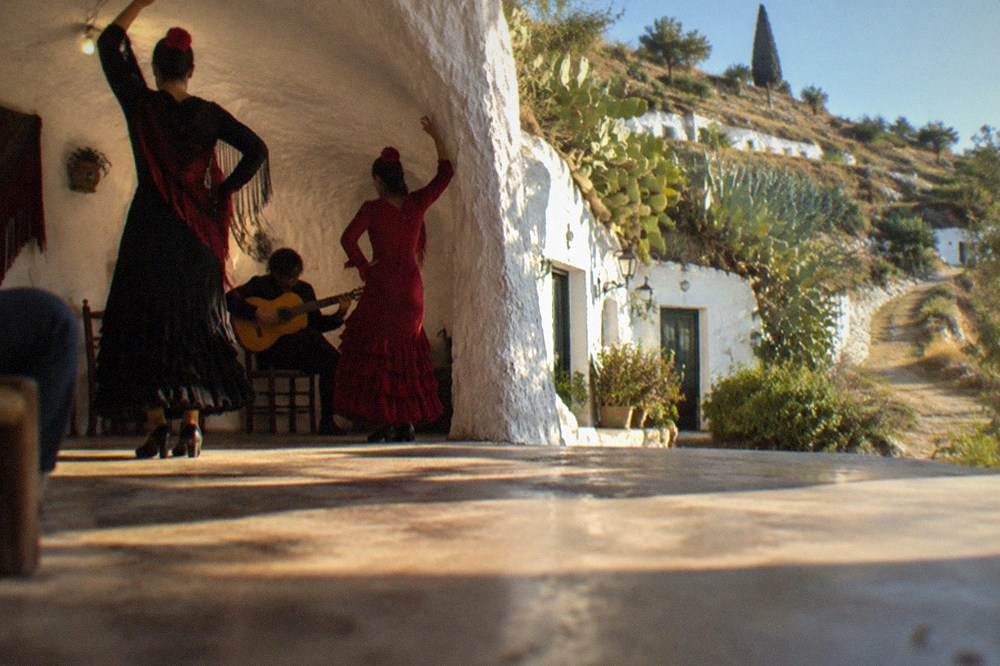
Flamenco in Sacromonte happens in the cave venues along the Camino del Sacromonte, where family-run zambras stage shows most nights of the week. The two tour products on this site's roster that cover Sacromonte flamenco are the Los Amayas cave show, from $28 per person and rated 4.7 from 1,706 reviews, and a cave restaurant show with dinner, from $35 per person and rated 4.4 from 686 reviews. Both run roughly 1.5 hours, and the show-only option leaves the evening free for a walk.
The zambra is not a theatre format. It grew out of family celebrations inside the caves, and the venues kept that scale: low ceilings, a handful of performers, an audience close enough to see the footwork. A show in a Sacromonte cave is the closest the visitor gets to the setting the music actually came from, which is the honest answer to whether the caves are worth visiting.
The comparison below covers the two Sacromonte flamenco products in the roster. Prices are the operator's live listing prices and can change; check the listing before booking.
| Show | Format | From (per person) | Rating | Duration |
|---|---|---|---|---|
| Los Amayas cave flamenco show | Cave venue, show only | $28 | 4.7 from 1,706 reviews | ~1 hour |
| Flamenco show in a cave restaurant | Cave venue, dinner option | $35 | 4.4 from 686 reviews | 1.5 hours |
Choosing between them is mostly a dinner question. The show-only ticket keeps the evening flexible: many visitors take the sunset walk along the ridge first, watch the Alhambra light change from the miradores, then descend to the Camino del Sacromonte for the performance. The dinner show folds the meal into the same cave, which suits anyone who wants the whole evening in one place and does not want to hunt for a restaurant afterwards.
One practical note: the caves are small and the popular venues fill up, so booking ahead is the norm in spring, autumn and festival weeks. Walk-up tickets on the night are a gamble rather than a plan.
Is Sacromonte Worth Visiting?
Yes, for most travellers Sacromonte earns its evening: it holds the city's most distinctive cultural experience, flamenco in the caves where the zambra was born, plus a museum, an abbey and the best close-range Alhambra views this side of the valley. The honest caveat is that it is a hillside district with steep cobbled lanes and a modest daytime sight list, so it rewards an evening visit more than a full day.
The value case depends on what a visitor wants from Granada. If the trip is Alhambra plus old town, Sacromonte adds the third layer: the living tradition rather than the monuments. The district's answer to the is Sacromonte worth it question is stronger for anyone with an evening free, and weaker for a one-night stop where the Alhambra and the cathedral eat the schedule.
The guided overview is the efficient route for a first visit. The Granada in full historic-centre tour covers the old town, Albaicin and Sacromonte in one walk, listed at from $23 per person and rated 5 from 28 reviews, and it is the product this site rates as the best fit for the district. Everything else covered here is indexed on Things To Do In Granada.
For independent visitors, the honest planning advice is to treat the district as a late-afternoon-and-evening destination. Arrive before sunset, walk the Camino del Sacromonte, stop at the museum or the abbey if the hours allow, watch the light hit the Alhambra from the ridge, then take in a show. The question of whether people still live in the caves has a real answer: some caves remain family homes, others became venues or were abandoned, and the museum documents the shift.
When Is The Best Time To Visit Sacromonte?
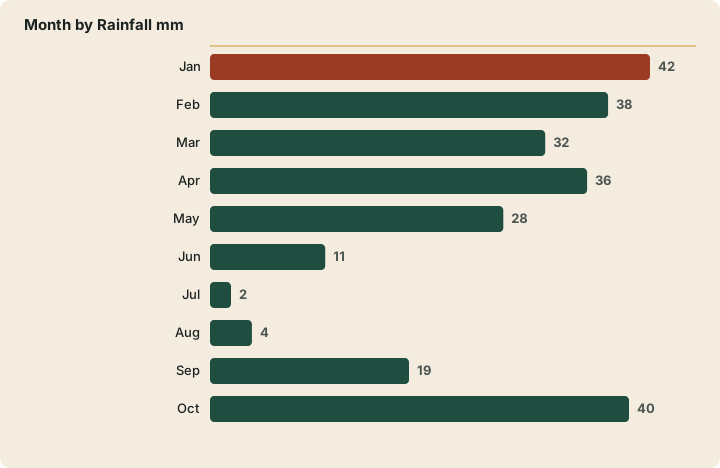
The best months for Sacromonte are April, May, September and October, when AEMET's Granada normals show average highs of 20.6 to 25.0 C and 23.2 to 29.4 C respectively with low rainfall, conditions that suit the district's steep lanes and open-air viewpoints. July and August average 34.8 C and 34.2 C highs, hot for the climb, while January nights average 0.0 C. Festival weeks change the calculus: Cruces de Mayo 2026 runs 1 to 3 May.
AEMET's climate data for the Granada Aeropuerto station, 1981-2010 normals, gives the full picture:
| Month | Avg high C | Avg low C | Rainfall mm |
|---|---|---|---|
| Jan | 13.0 | 0.0 | 42 |
| Feb | 15.4 | 1.6 | 38 |
| Mar | 19.0 | 3.8 | 32 |
| Apr | 20.6 | 6.0 | 36 |
| May | 25.0 | 9.4 | 28 |
| Jun | 31.0 | 13.6 | 11 |
| Jul | 34.8 | 15.7 | 2 |
| Aug | 34.2 | 15.5 | 4 |
| Sep | 29.4 | 12.8 | 19 |
| Oct | 23.2 | 8.7 | 40 |
| Nov | 17.0 | 4.2 | 54 |
| Dec | 13.4 | 1.7 | 56 |
The summer numbers deserve a caveat. July's 2mm of rainfall and 34.8 C average high make the midday climb up the Camino del Sacromonte punishing, but the caves themselves stay cool, which is exactly why people lived in them. An evening visit in summer is genuinely pleasant once the sun drops.
Granada's festival calendar touches the district directly. The dates below are from the verified festival research:
| Festival | 2026 | 2027 |
|---|---|---|
| Semana Santa | approx. 29 March to 5 April | approx. 21 to 28 March |
| Cruces de Mayo | 1 to 3 May | 3 May (local holiday) |
| Corpus Christi | procession approx. 4 June, fair approx. 30 May to 6 June | Thursday 27 May (local holiday) |
Festival weeks raise demand across the city, and the Alhambra constraint bites hardest then: the General ticket costs EUR 22.27 on the live official pages and routinely sells out one to two months or more ahead in peak periods, with online sales closing at 23:59 the day before the visit date. Anyone planning a Sacromonte evening around a festival week should book the flamenco cave and any Alhambra ticket well in advance.
How Do You Plan A Day Around Sacromonte?
The standard plan pairs Sacromonte with the Albaicin in a single late afternoon and evening: start in the old town or the Albaicin, cross to the Camino del Sacromonte before sunset, take the ridge viewpoints while the light is on the Alhambra, then descend for a cave flamenco show. If you are adding the Alhambra the same day, its live official ticket is EUR 22.27 for the General visit and it must be booked in advance, since it sells out well ahead in peak season.
The pairing works because of geography. The Darro valley separates the two hillside districts, and the walk between them, along the Carrera del Darro side and up through the Albaicin, is one of the most photographed stretches in the city. The Mirador de San Nicolas sits on the Albaicin side of the route and is the classic sunset stop; Sacromonte's own ridge gives a different angle, closer to the Generalife end of the palace.
For anyone folding the Alhambra into the same day, the live official ticket prices are:
| Alhambra ticket | Live official price |
|---|---|
| General (Nasrid Palaces, Alcazaba, Generalife) | EUR 22.27 |
| Gardens, Generalife and Alcazaba only | EUR 12.73 |
| Night visit, Nasrid Palaces | EUR 12.73 |
| Night visit, Gardens and Generalife | EUR 8.48 |
| Dobla de Oro General (Alhambra plus Andalusi monuments) | EUR 30.48 |
Two warnings travel with this table. First, a July 2025 press release announced lower prices, General at EUR 21, effective 1 August 2025, but the live official ticket pages still show the higher figures above, so use what the booking page shows. Second, Nasrid Palaces entry is nominative and timed: the ticket carries a specific half-hour window, photo ID is checked, and the window is strictly enforced, while the rest of the complex can be visited at any point on the ticket date.
The Granada Card is an alternative worth pricing for a multi-venue plan. Its tiers, effective 13 November 2025, are 72h at EUR 60, 48h at EUR 55, the 24h night-Palaces variant at EUR 50, the Jardines variant at EUR 50, and children aged 3 to 11 at EUR 13. The 72h and 48h tiers include the daytime General Alhambra visit, the Cathedral, the Royal Chapel, the Sacromonte Abbey among other monuments, plus nine urban bus trips and a tourist train loop. The Alhambra portion cannot be split across days once activated.
| Granada Card tier | Price | Alhambra inclusion |
|---|---|---|
| 72h | EUR 60 | Daytime General, Alcazaba, Nasrid Palaces, Generalife |
| 48h | EUR 55 | Daytime General, Alcazaba, Nasrid Palaces, Generalife |
| 24h (night Palaces) | EUR 50 | Night Nasrid Palaces only |
| Jardines | EUR 50 | Daytime Alcazaba and Generalife |
| Child (3-11) | EUR 13 | Same as the accompanying adult tier |
Whether the card pays off is arithmetic: the Cathedral is EUR 10 individual during the 2026 Kerygma exhibition, 8 May to 28 November 2026, dropping to EUR 7 from 29 November 2026, and the Royal Chapel is EUR 7 individual, EUR 5 reduced. Add the Alhambra General at EUR 22.27 and the abbey, and the 48h card at EUR 55 starts to compete, provided the Alhambra slot it books matches your dates.
For transport, one point of discipline: the Metro de Granada does not reach the Alhambra, the airport or either hillside district. It runs north to south through the city and metro area only. The airport connection is the Alsa Linea 245 bus at EUR 3.10 one way, roughly 40 to 45 minutes. Sacromonte itself is a walking district, reached on foot from the city centre or by taxi to the lower end of the Camino del Sacromonte; the lanes above are pedestrian territory.
Beyond the city, the same base supports serious hill time. The Sierra Nevada hiking products in the roster, including the high Sierra Nevada hike up to 3,000 meters at from $67 per person, rated 4.9 from 420 reviews, run from Granada, so a morning in the mountains and an evening in a flamenco cave is a realistic pairing. The ski season's 2026 to 2027 dates are not officially confirmed; the typical pattern is late November to early or mid April, weather dependent, so check the official site for this season's dates before planning a Sierra Nevada combination.
Common Questions About Sacromonte
Are the Sacromonte caves worth visiting?
For most visitors, yes. The cave venues host the district's flamenco zambras, the Cave Museum shows how cave families actually lived, and the ridge gives the best close-range Alhambra views in the city. The district rewards an evening visit more than a full day.
Do people still live in the Sacromonte caves?
Some caves remain family homes, while others were converted into flamenco venues, museums or holiday accommodation, and some were abandoned. The Cave Museum documents the transition, and the residential caves are private, so show venues and the museum are the places to go inside one.
Is Sacromonte Granada worth visiting?
Yes if you have an evening free. Sacromonte holds the zambra flamenco tradition, a distinctive cave museum, the abbey and the strongest sunset position facing the Alhambra. Travellers on a one-night schedule often prioritise the Alhambra and the old town instead, which is a reasonable trade.
Is there a flamenco show in the Sacromonte caves in Granada?
Yes. Cave venues along the Camino del Sacromonte stage flamenco shows most nights, including the Los Amayas cave show, listed from $28 per person and rated 4.7 from 1,706 reviews, and a cave restaurant show from $35 per person rated 4.4 from 686 reviews. Book ahead in peak season.
Is Sacromonte safe at night?
The main lanes and the flamenco venue strip are normal busy tourist territory on show nights, and the standard city-centre precautions apply on the quieter lanes above. The Camino del Sacromonte is the lit, populated spine of the district and the sensible route after dark.
How do you get to Sacromonte?
On foot from the city centre or the Albaicin, or by taxi to the lower end of the Camino del Sacromonte. The Metro de Granada does not serve the district; it runs north to south through the city only. The lanes above the lower road are pedestrian.
Sacromonte is the part of Granada where the city's living tradition, not its stonework, is the attraction, and one evening on the hill is enough to understand why the zambra, the caves and the view across to the Alhambra belong together.