Do People Still Live In The Sacromonte Caves?
Yes, some Sacromonte caves in Granada are still lived in today, though far fewer than in the past. Here is what that means for a visit, and what to see in the neighbourhood.
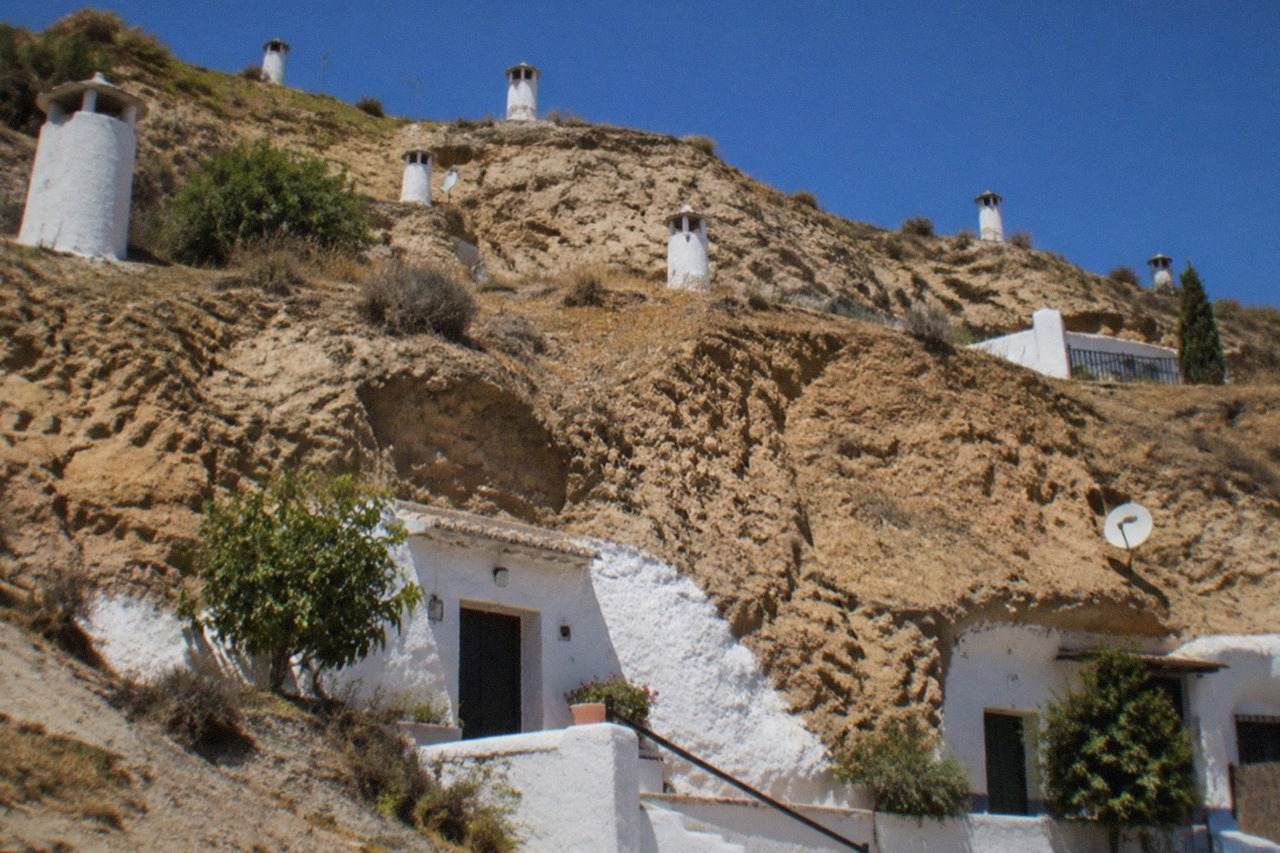
The Sacromonte hill rises behind the Albaicin, a stack of whitewashed cave facades cut into the golden clay slope, facing the Alhambra across the Darro valley. For centuries this was Granada's cave quarter, home first to Morisco families expelled from the city walls after the Reconquista and later to a settled Roma community whose zambras, the family flamenco sessions held inside the caves, gave the neighbourhood its musical reputation. Today the picture is mixed: some caves are still private homes, lived in year round, while others have become flamenco venues, museum spaces, holiday rentals or, in a few cases, abandoned shells. Understanding which is which, and how to behave around the ones that are genuinely somebody's house, is the difference between a good visit and an intrusive one.
Do People Still Live In The Sacromonte Caves?
Yes, a number of caves in the Sacromonte are still permanent homes, lived in by residents of the neighbourhood, though the community is far smaller than it was in the past. Many other caves have been converted into flamenco venues, museums, guest accommodation or workshops, and some stand empty. The hillside is therefore a working residential district as well as a tourist attraction, and the lived-in caves are private property that visitors should treat as houses, not exhibits.
That single fact shapes everything about how the neighbourhood works. The Sacromonte is not a theme park. Washing hangs across the lanes, scooters climb the Camino del Sacromonte, and the people sitting on a cave threshold in the evening are not performers, they are neighbours. The decline in resident cave households came in stages: flooding in earlier decades pushed many families down into modern housing on the plain, and the arrival of tourism and later property changes around the Sacromonte Abbey road reshaped who owned which cave. The families that stayed, and the newer residents who moved in because they love the architecture, keep the tradition of cave living alive in a way few European cities can still claim. The wider set of guides lives on Things To Do In Granada.
The cave house itself is a remarkable piece of passive architecture. Clay is a natural insulator, so a cave room stays cool through Granada's July and August heat, when AEMET's climate data shows average highs of 34.8C and 34.2C, and holds warmth through winter nights that the same station data shows dropping to an average of 0.0C in January. That thermal honesty is why cave living survived here long after it died out elsewhere in Andalusia. It is also why cave homes have been quietly desirable again in recent decades, a fact that cuts both ways for the old community, since demand from outside buyers and holiday-let operators has pushed up the value of properties that original families once abandoned as hardship housing.
What Happened To The Sacromonte's Cave Community?
The resident cave community shrank sharply over the past several decades, as floods, forced relocations and new housing on the plain moved many Roma families out of the hillside caves. Some families stayed in their caves, others returned or were succeeded by new residents, and part of the hillside was taken over by cultural venues and museums. The Sacromonte Cave Museum, on the Camino del Sacromonte, preserves ten reconstructed cave dwellings showing how the community lived, worked and celebrated.
The museum is the best single place to see what domestic cave life looked like without intruding on anyone's actual home. Its recreated dwellings include a kitchen cave, a forge, a stable and a zambra space, laid out along the hillside with the same views the residents had. It answers the question this page asks in museum form: yes, people really did live like this, in houses without windows on the street, and some still do. For practical details, opening arrangements and the Sacromonte Cave Museum's current visitor information, the museum's own channels are the source to check before going, since hours and guided-visit availability vary by season.
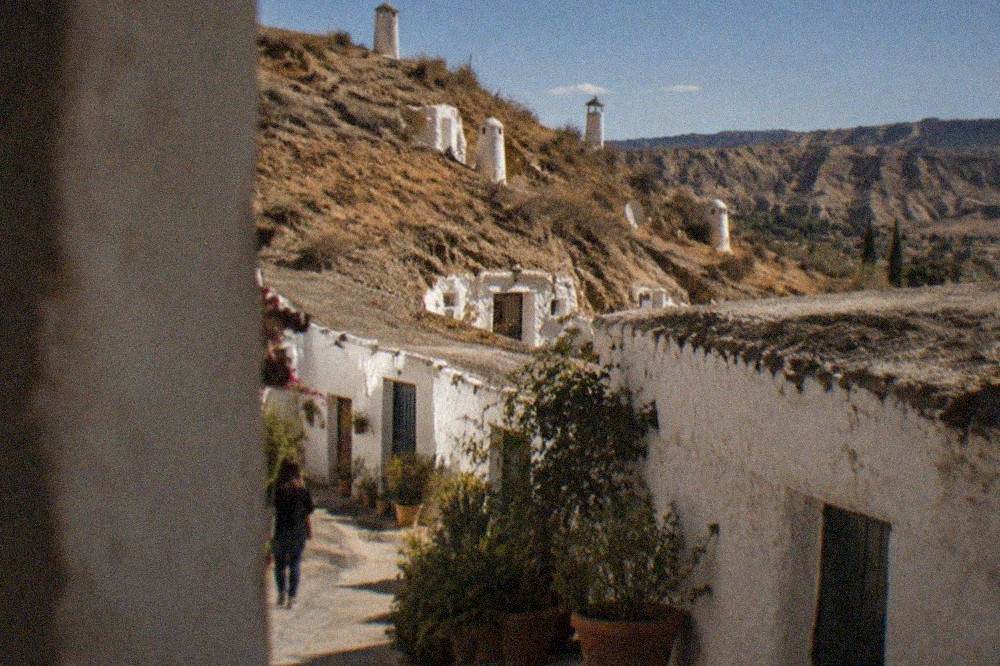
The social history matters for how you read the hillside today. The Roma families of the Sacromonte were central to Granada's flamenco identity, and the zambras performed in these caves were recognised as a distinctive Granada flamenco style in their own right. When the community dispersed, the venues remained, and today the caves that host flamenco shows are mostly commercial spaces, professionally run, some still family-owned. That continuity is genuine, but it is worth knowing the difference between a zambra venue and a private home, because the two sit side by side on the same lanes and look almost identical from the street.
How Do You Tell A Lived-In Cave From A Venue Or A Ruin?
A lived-in cave usually shows domestic signs: laundry, potted plants, a named doorbell, a dog, bicycles, satellite dishes or an occupied terrace, and it has no signage inviting visitors in. Flamenco venues and museums announce themselves with posted schedules, ticket information and lit entrances at show times, while abandoned caves sit open, unfurnished and dark. The safest rule is simple: if a cave does not publicly advertise visits or performances, it is a private home and should not be entered or photographed through the doorway.
Visitors sometimes assume the whole hillside is open to exploration because the terrain feels informal. It is not. The paths are public, the caves are not, and the residents have had decades of experience with tourists wandering in. A walk with a local guide solves this neatly, since guides know which doors belong to venues and which belong to families, and a guided walk through the Sacromonte and the Albaycin with a local guide covers exactly this ground, from the Darro river up through the cave quarter, with the history explained on the spot. Check availability if that structure appeals.
The table below sums up how to read what you see on the hillside:
| What you see | What it most likely is | How to behave |
|---|---|---|
| Laundry, plants, doorbell, dog, terrace in use | Private cave home | Pass by quietly, no photos through doors |
| Posted show times, ticket info, lit entrance | Flamenco venue (zambra) | Buy a ticket, arrive at the stated time |
| Museum signage, opening hours displayed | Museum or cultural space | Visit during published hours |
| Open, empty, unfurnished cave mouth | Abandoned cave | Do not enter, structure may be unsafe |
| Temporary stage equipment, chairs stacked | Venue between shows | Return at show time, not before |
Is The Sacromonte Worth Visiting If You Only Care About The Views?
Yes, because the Sacromonte's viewpoints over the Alhambra and the Darro valley are among the best in Granada, and they are free, public and best at sunset, when the palace walls catch the last light. The hillside lanes add cave architecture, flamenco venues and a living neighbourhood that the flat city centre cannot offer, so even visitors with no interest in shows tend to rate the walk itself as a highlight. The classic route pairs the hillside with the Albaicin's Mirador de San Nicolas in one evening loop.
The walk up from Carrera del Darro is steep but short, and the reward is a perspective on the Alhambra that most first-time visitors never get, the monument seen from across the valley at roof height, framed by cactus and cave walls. This is also the answer to whether Sacromonte is worth visiting as a destination in its own right: the combination of views, architecture and music makes it one of Granada's defining neighbourhoods rather than an add-on. The Sacromonte caves question usually comes from people who only know the flamenco venues, and the residential hillside is the part that surprises them.
What Should Visitors Know About Respecting The Neighbourhood?
Treat the Sacromonte as a residential district first and an attraction second: keep to public lanes, do not enter or photograph into private caves, keep noise down late at night, and book shows or museum visits rather than expecting open access. The residents who still live in the caves are the reason the neighbourhood still feels authentic, and their goodwill keeps the hillside open and welcoming.
There is also a safety dimension that is mostly about terrain rather than crime. The lanes are unlit in stretches, steep, and made of worn stone, so decent shoes and a phone torch matter more after dark than anything else. Booking a show, buying a museum ticket and eating in the neighbourhood all put money directly into the community you are walking through, which is the most useful thing a visitor can do here. For a fuller treatment of evening logistics, the question of whether the Albaicin is safe at night covers the adjacent hillside, and the same practical advice applies on the Sacromonte side of the valley.
A few planning points help:
| Situation | Good approach |
|---|---|
| Evening walk for the views | Go up before sunset, descend the same way you came |
| Want to see inside a cave | Book the cave museum or a zambra venue, not a private home |
| Want flamenco | Reserve a cave show in advance, arrive at the stated time |
| Walking with a guide | Choose a Sacromonte-focused route, not a generic city tour |
| Late dinner after a show | Eat in the neighbourhood to support local bars |
The tapas tradition is one more reason to linger. Many traditional Granada bars still bring a complimentary small tapa with a drink, a custom widely upheld across the city, and the bars around the Sacromonte and the lower Albaicin are among the places it feels most natural. The details of how the free tapas custom works, and how it varies from bar to bar, are worth reading before you order, because portion sizes and house rules differ and nobody is obliged to serve a tapa by law.
Common Questions About The Sacromonte Caves
Do people still live in the Sacromonte Caves?
Yes. A number of caves on the Sacromonte hillside remain permanent homes, lived in by long-standing residents and newer arrivals, though the resident community is much smaller than it was before the relocations of past decades. Other caves now serve as flamenco venues, museum spaces, rentals or stand empty.
Can you go inside a Sacromonte cave?
Only in caves that publicly invite visitors: the Sacromonte Cave Museum on the Camino del Sacromonte, and the flamenco venues that sell tickets for scheduled shows. Caves without signage are private homes and should not be entered or photographed through the doorway.
Why did people stop living in the caves?
Flooding in earlier decades, relocation to new housing on the plain, and later property-market changes moved many families out of the hillside caves. Some families stayed, and some caves passed to new owners who restored them as homes, venues or rentals.
Are the Sacromonte caves the same as the flamenco caves?
They overlap but are not the same thing. The flamenco venues are converted cave houses, some still run by families with deep zambra traditions, while most of the hillside's caves are ordinary homes or empty structures with no performance role at all.
Is it rude to photograph the cave houses?
Photographing the streetscape and the views is normal and expected. Pointing a camera into an open private doorway or at residents on their own terrace is intrusive. If a cave has a sign, a doorbell and laundry, treat it exactly as you would a house in your own street.
What is the best way to visit the Sacromonte?
Walk up from Carrera del Darro before sunset, see the Alhambra view from the hillside lanes, and either book a zambra show or visit the cave museum to see a cave interior legitimately. A guided walking tour with a local guide adds the history and shows you which doors are venues and which are homes.
The Sacromonte's caves are still a living part of Granada, and that is precisely what makes the neighbourhood worth the climb.