Mirador de San Nicolas
The Mirador de San Nicolas is a square at the top of the Albaicin that faces the Alhambra across the valley, and it is the single most photographed view in Granada.
Short answer
The Mirador de San Nicolas is a free public square in the Albaicin quarter with a direct view of the Alhambra and, on clear days, the Sierra Nevada behind it. It is open at all times, costs nothing, and is busiest at sunset.
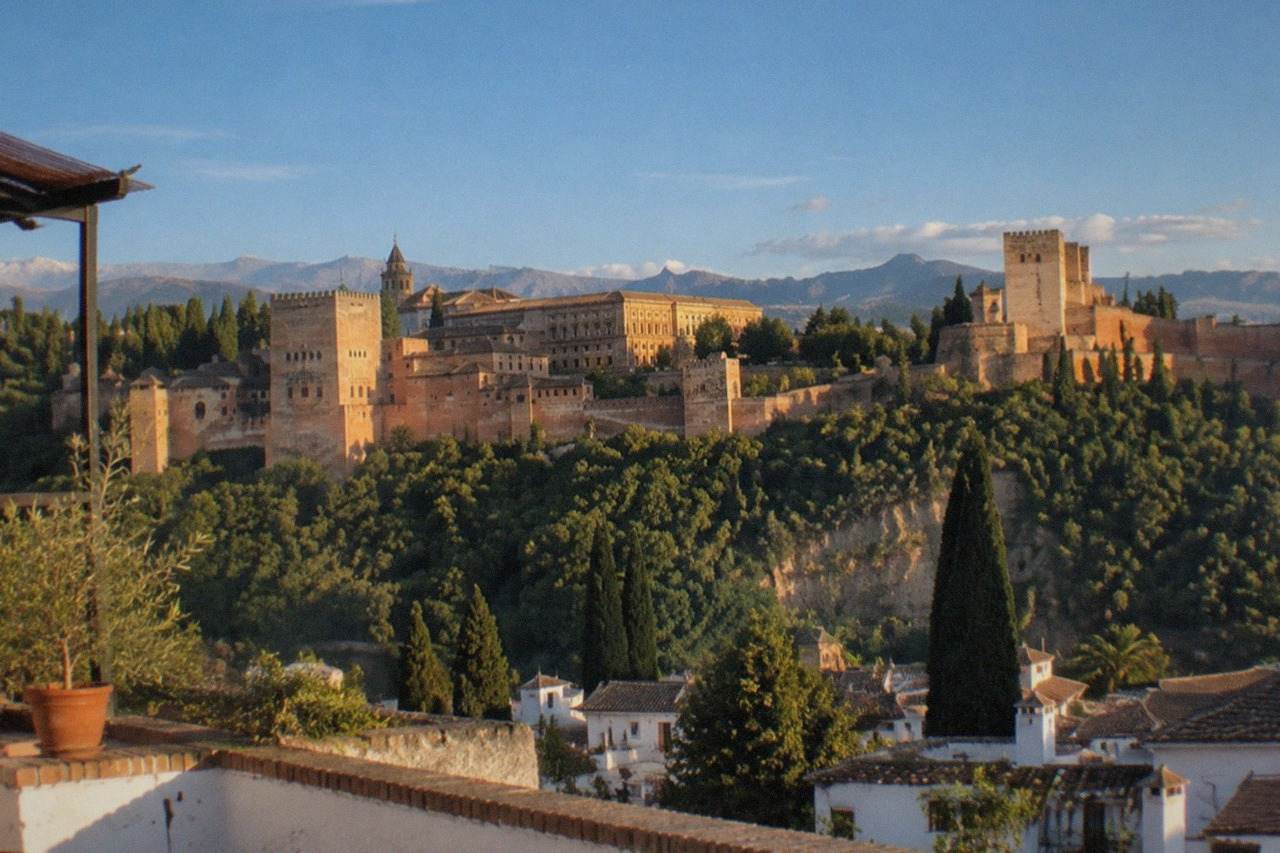
The Mirador de San Nicolas is a flat, stone-paved square on the western edge of the Albaicin, Granada's old Moorish quarter, and the view from its railing is the one that appears on postcards, guidebook covers and half the photos tagged to this city. The Alhambra sits directly opposite on its hill, the Nasrid Palaces catching the afternoon light, with the towers of the Alcazaba at the complex's western end and, when the air is clear, the snow line of the Sierra Nevada stacked behind the whole scene. The Patronato de la Alhambra's own figures put the palace complex at 2,726,861 visitors in 2025, and a large share of those visitors end their day standing here, looking back at what they have just walked through. The square itself costs nothing, never closes, and needs no ticket, which makes it one of the few headline sights in Granada with no planning attached. What does need planning is timing, because the sunset crowd is a real phenomenon, and the walk up through the Albaicin is easier to manage with a little foreknowledge. This guide covers all of it: the view itself, when to go, how to reach the square on foot and by bus, what the surrounding streets hold, and how the viewpoint fits into a first day or two in the city.
What Is The Mirador de San Nicolas?
The Mirador de San Nicolas is a public square and viewpoint on the high western edge of the Albaicin quarter of Granada, named after the adjacent Iglesia de San Nicolas, a Mudéjar church raised on the site of an earlier mosque. It faces the Alhambra across the Darro valley at roughly the same elevation, which is what makes the view unusual: most visitors see the palace from below, while this square looks straight at its walls. It is free, open around the clock, and functions as a neighbourhood plaza as much as a tourist sight, with the church on one side, a modest café terrace, benches under plane trees, and a low stone wall where the entire crowd gathers at sunset.
The square's name comes from the church that dominates its eastern side. The Iglesia de San Nicolas is a Mudéjar building, meaning Christian architecture constructed with Islamic techniques and decorative conventions, and it stands on the footprint of an earlier mosque, a pattern repeated all over the Albaicin after the Christian conquest of the city. The church is usually shut outside service times, and most visitors come for the square, not the building.
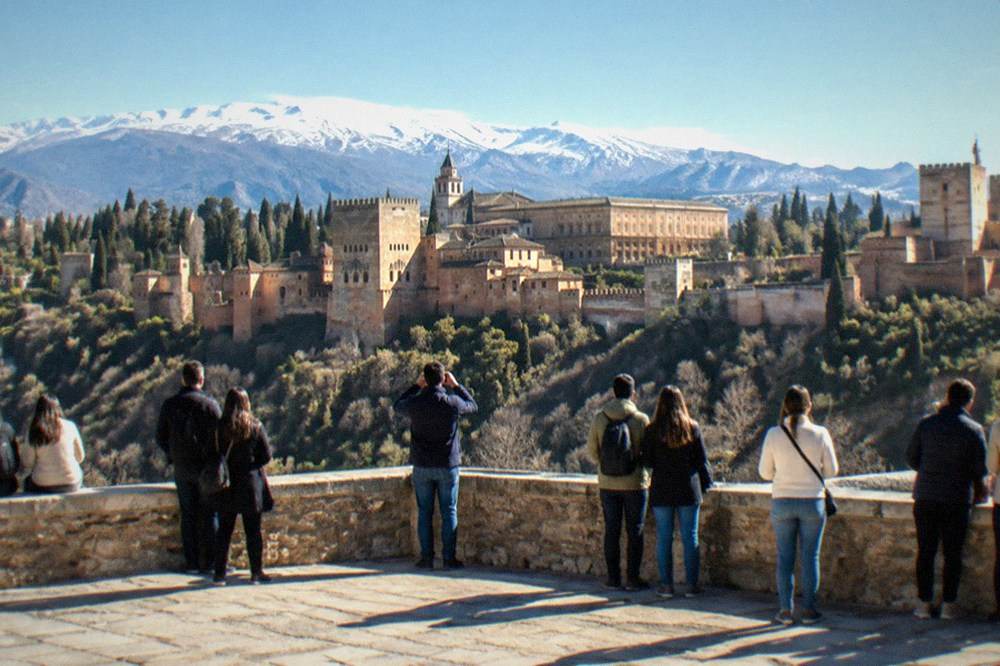
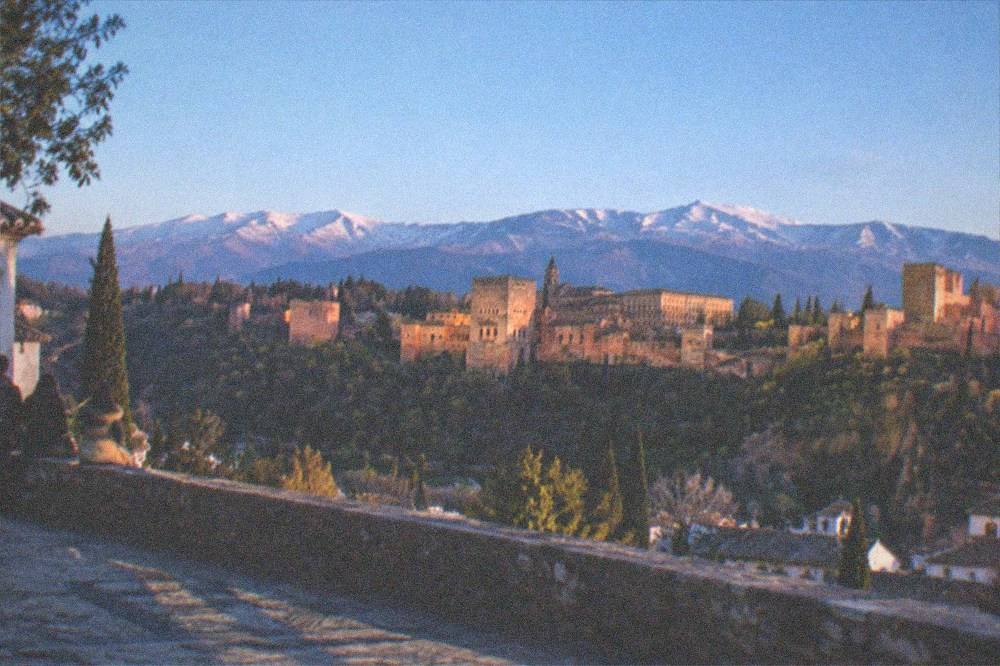
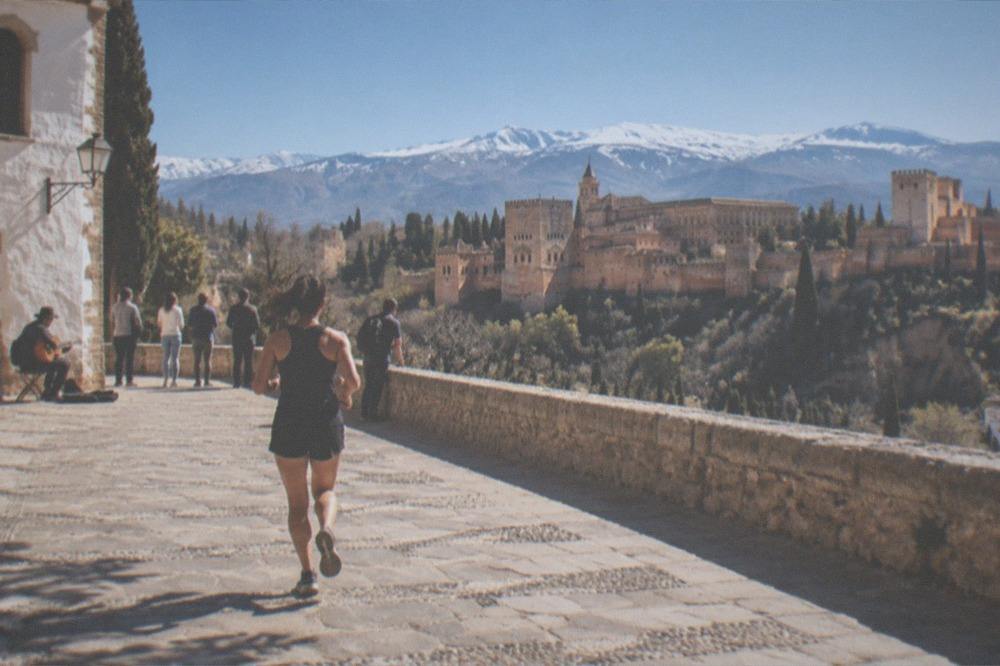
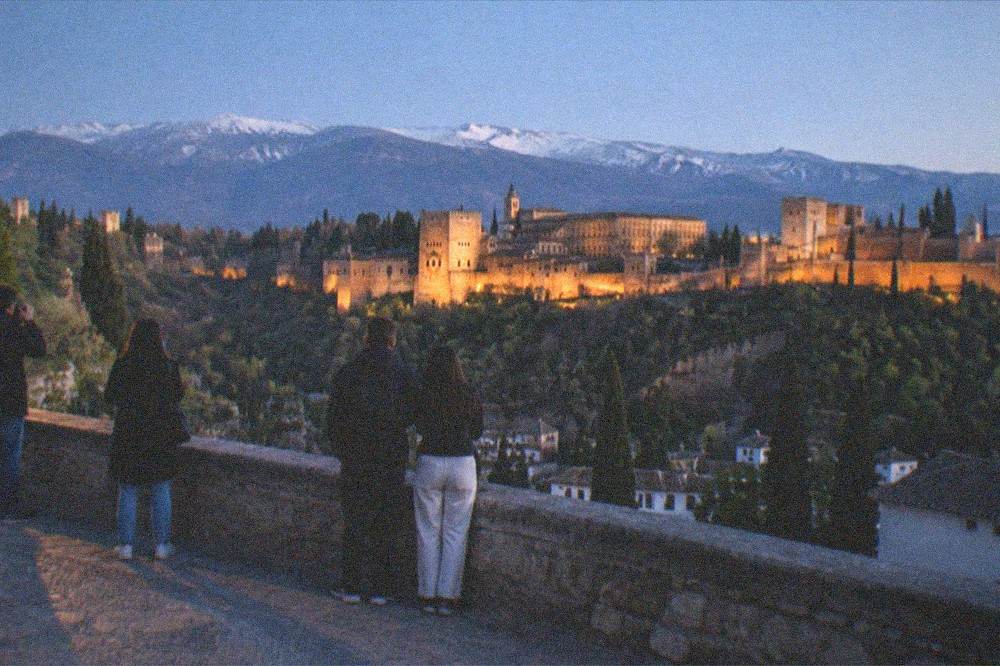
The view itself is the draw. From the railing the Alhambra fills the frame opposite: the Comares Tower of the Nasrid Palaces, the bulk of the Palace of Charles V inside the complex, the Alcazaba's watchtowers at the western tip, and the Generalife gardens climbing the next hill to the east. Behind all of it, on days when the clouds cooperate, the Sierra Nevada rises in a long white line. In winter the snow is close enough to look almost artificial, and the contrast between a palace built for a Mediterranean climate and a snowfield behind it is the reason photographers wait for this hour.
The square is also a working piece of the neighbourhood. Residents cross it on their way home, buskers set up in the evening, and the café on the terrace does steady business in coffee by day and beer by dusk. Treating it purely as a photo stop means missing the fact that it sits inside the Albaicin, a quarter the UNESCO World Heritage Committee added to its 1984 Alhambra and Generalife inscription in 1994 as one combined listing, precisely because the two hills only make sense read together.
When Is The Best Time Of Day To Visit The Mirador de San Nicolas?
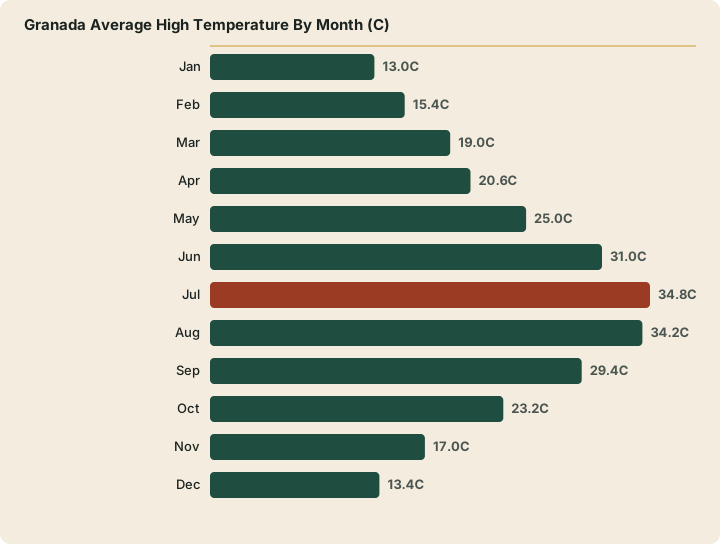
Sunset is the classic hour and the most crowded, with the sun dropping behind the Alhambra and turning the palace walls orange, but the square is quieter and the view nearly as good in the early morning, when the light comes from the east and hits the Nasrid Palaces front-on. Midday in summer is the worst combination: AEMET's climate data shows July averaging 34.8 degrees Celsius, and the square has almost no shade at that hour. The practical answer is to pick sunset for the famous photo and accept the crowd, or go twice, once at dusk and once in the morning, which costs nothing since the square is free.
The sunset crowd is not an exaggeration. On a clear evening in spring or autumn the wall along the western edge fills up an hour before the sun goes down, tour groups cycle through in fifteen-minute shifts, and the three guitarists who work the square take turns playing. The Albaicin and Sacromonte neighbourhoods walking tour, a 2.5-hour guided route rated 4.6 from 141 reviews, schedules the viewpoint as a stop, which tells you the square is on the standard circuit: a guided walk through both quarters covers the same ground as this guide's walking route but with a guide narrating the quarter's history, and the tour's own page on this site lists the full route.
| Time of day | Light on the Alhambra | Crowd level | Notes |
|---|---|---|---|
| Sunrise to 09:00 | Soft front light, palace fully lit | Very low | Cold in winter, January average low 0.0 C |
| 09:00 to 12:00 | Bright, slight haze risk | Low | Best for photos with no people in frame |
| 12:00 to 16:00 | Harsh overhead | Low in summer heat | July average high 34.8 C, little shade |
| 16:00 to sunset | Warm side light building to orange | Building fast | Wall spots go an hour before sunset |
| Sunset to dusk | Orange walls, then silhouette | Peak | Guitarists, tour groups, full railing |
| After dark | Floodlit palace, city lights | Medium | Pairs with a flamenco show in Sacromonte |
Season matters as much as hour. May, with an average high of 25.0 degrees Celsius and 28mm of rain, and September, at 29.4 and 19mm, are the comfortable shoulder months for standing outside. July and August are hot but nearly rainless, 2mm and 4mm respectively, so the sunset hour is bearable even when midday is not. November is the wettest month at 54mm, and a cloudy evening here delivers a grey palace and a disappointed crowd, so check the forecast rather than assuming.
How Do You Get To The Mirador de San Nicolas?
There is no metro station at or near the viewpoint: the Metro de Granada runs north to south through the city and does not serve the Alhambra or the Albaicin hilltop, so the realistic options are walking up from the centre, a steady uphill climb from Plaza Nueva, or taking a city bus along the Camino de San Nicolas, which stops within a two-minute walk of the square. A taxi from the city centre is the third option and the only sensible one for anyone with limited mobility, since the final approach streets are steep, cobbled and stepped.
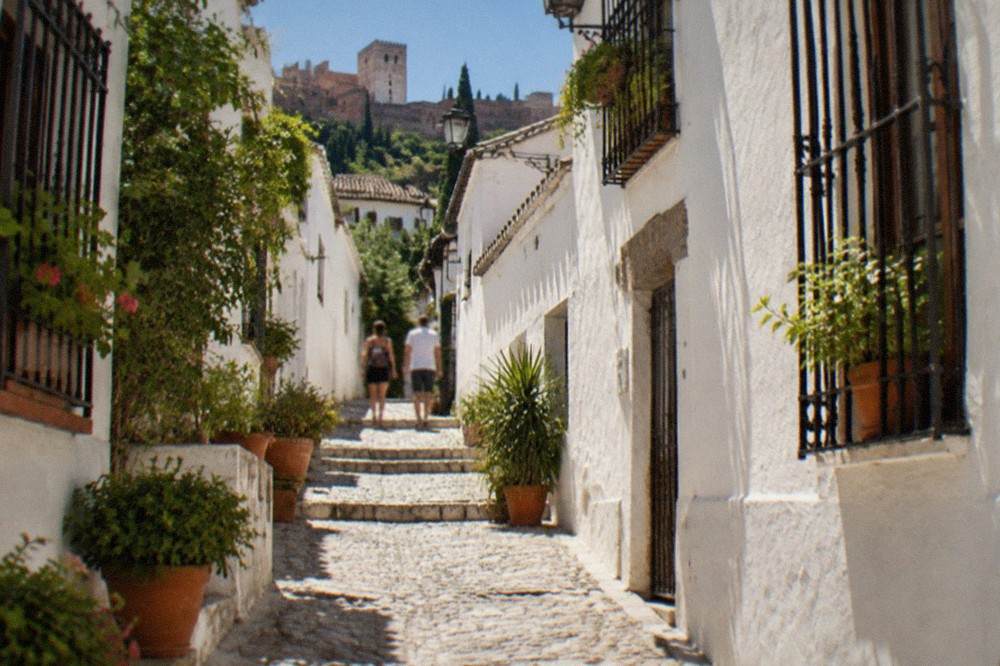
The walk is the standard route and the interesting one. From Plaza Nueva, take the Cuesta de Alhacaba, the long cobbled ramp that has been the Albaicin's main entrance since Moorish times, and follow the signs for San Nicolas. The route passes the wall of the historic El Bañuelo Arab baths on the Carrera del Darro side and climbs through streets that narrow, whiten and step upward until the church appears. Coming from the Carrera del Darro itself, the Paseo de los Tristes at its top end gives the steepest direct ascent, a short, sharp stair climb that lands you almost at the square. Anyone doing the full Alhambra in the morning can walk down the hill, cross at Puerta de las Granadas, and come up through the woods of the Alhambra hillside instead, a longer but shadier approach.
For a guided version of exactly this terrain, Check availability on the Sacromonte and Albaicin walking tour, or consider the free alternative: a GuruWalk tip-based walk of the Albaicin and Sacromonte, free to book with tips to the guide at the end, rated 4.99 from 913 reviews, which also finishes at the viewpoint at dusk.
The bus is the shortcut. City buses run along the Camino de San Nicolas, the road that traces the top of the hill, and the stop nearest the square is a short flat walk away. The Granada Card, the city's official tourist pass, includes nine urban bus trips plus one tourist-train loop, with tiers at EUR 60 for 72 hours, EUR 55 for 48 hours, EUR 50 for the 24-hour night-Palaces variant, EUR 50 for the gardens variant and EUR 13 for children aged 3 to 11, effective 13 November 2025, so anyone holding the card can ride up without a separate fare. The card's Alhambra component, on the 72h and 48h tiers, is a daytime General admission including the Nasrid Palaces, Alcazaba and Generalife, and cannot be split across days once activated.
| Route to the viewpoint | Starting point | Character | Best for |
|---|---|---|---|
| Cuesta de Alhacaba on foot | Plaza Nueva | Historic ramp, steady climb | First visit, daylight |
| Paseo de los Tristes stairs | Top of Carrera del Darro | Short and steep | Sunset approach from the river |
| Alhambra hillside path | Alhambra exit gates | Longer, shaded, wooded | After a morning Alhambra visit |
| City bus along Camino de San Nicolas | City centre stops | Flat arrival, two-minute walk | Heat, tired legs, groups |
| Taxi | Anywhere in the centre | Door-to-door, drops close by | Limited mobility, luggage, night |
Two warnings worth repeating. The Albaicin's streets are a maze even with a map, and the quarter's street plan predates the car by several centuries, so a wrong turn adds stairs rather than distance. And the walk down after dark is dimly lit in patches: the cobbles are worn and uneven, and a phone torch is not overcautious in the back lanes.
What Can You Actually See From The Mirador de San Nicolas?
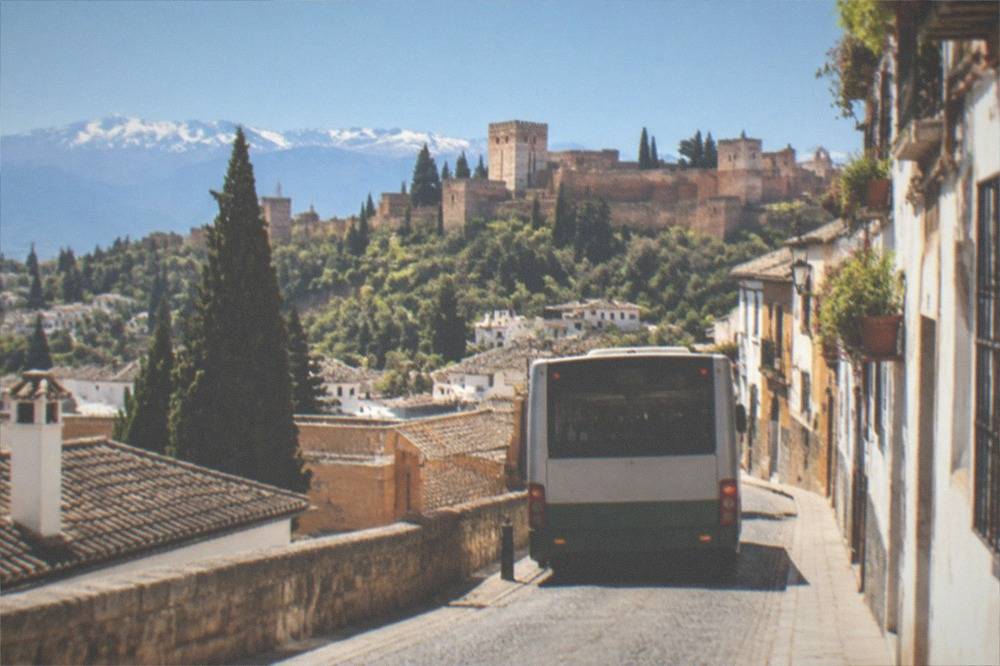
The full Alhambra complex sits directly opposite: from left to right along the hill you can pick out the Alcazaba's military towers at the western tip, the Comares Tower rising above the Nasrid Palaces, the Renaissance bulk of the Palace of Charles V, and the Generalife gardens on the next hill to the east, with the Sierra Nevada's snow line behind everything on clear days from October to May. Below the palace, the wooded Darro valley separates the two hills, and the green copper dome of Granada's cathedral pokes up from the city roofscape to the south.
Learning to read the view is what turns a photo stop into something better. The Alcazaba, the fortress core of the complex, is the oldest standing part and the most visible from here, its Torre de la Vela tower the square silhouette on the left. The Nasrid Palaces, the jewel of the complex and the part that requires a timed half-hour entry slot strictly enforced at the door, are largely hidden behind their own walls except for the Comares Tower, which is why the tower appears in so many paintings of this view. The Palace of Charles V, a Renaissance ring built inside the complex after the Christian conquest, announces itself with pale stone that contrasts with the reddish Nasrid masonry, and it is the easiest landmark to point out to a companion.
The Generalife, the summer palace and gardens on the opposite hillside, closes the frame to the right. Its terraces are visible as green steps climbing the slope, and the Nasrid Palaces and Generalife together make up the parts of the Alhambra most visitors travel for, which is why the ticket situation matters: the General ticket costs EUR 22.27 at the live official pages, and the Patronato's daily capacity of roughly 6,600 to 7,000 visitors, with the Nasrid Palaces capped at about 300 people per half-hour slot, means the General ticket routinely sells out one to two months or more ahead in peak season. Anyone planning to view the palace from this square in the afternoon and visit it the next morning should already have tickets in hand, because online sales close at 23:59 the day before the visit date and same-day online sales are not reliably available.
| Landmark in the view | Position from the square | What it is |
|---|---|---|
| Alcazaba and Torre de la Vela | Far left on the palace hill | Fortress core, oldest standing section |
| Comares Tower | Centre, tallest element | Tower over the Nasrid Palaces' Hall of the Ambassadors |
| Palace of Charles V | Centre-right, pale stone | Renaissance palace built after the Christian conquest |
| Generalife gardens | Far right, next hill | Nasrid summer palace and terraced gardens |
| Darro valley | Below, wooded gorge | River valley separating the two hills |
| Cathedral dome | South, above the city roofline | Green copper dome of Granada Cathedral |
| Sierra Nevada | Behind everything, clear days | Mountain range, snow line visible October to May |
The mountains deserve their own sentence. AEMET's data and simple geography combine here: the Sierra Nevada is close enough that its winter snow is a routine part of this view, and the contrast between a sunlit Andalusian plaza and a white ridge is the reason the viewpoint is busy even in January, when the city's average high is a mild 13.0 degrees Celsius but the peaks above hold snow.
Is The Mirador de San Nicolas Free?
Yes, completely: the square is public open space with no entrance charge, no ticket, no opening hours and no closing time, and the adjacent church, when open, is also free to enter. The only costs are optional: the café on the terrace, drinks bought from the kiosk, tips for the street guitarists, and any guided tour you choose to attach to the visit. This makes it one of the few headline experiences in Granada with a fixed price of zero, in a city where the main monument sells out months ahead and the cathedral charges EUR 10 during the 2026 Kerygma exhibition, running 8 May to 28 November 2026, before dropping to EUR 7 from 29 November 2026.
Free does not mean costless in every sense. The sunset hour costs you space: the wall fills, personal space shrinks, and the guitarists' repertoire repeats. The morning costs you warmth in winter, as noted above. And the walk up costs effort, which is the honest trade for the best free view in Andalusia. Everything else covered here is indexed on Things To Do In Granada.
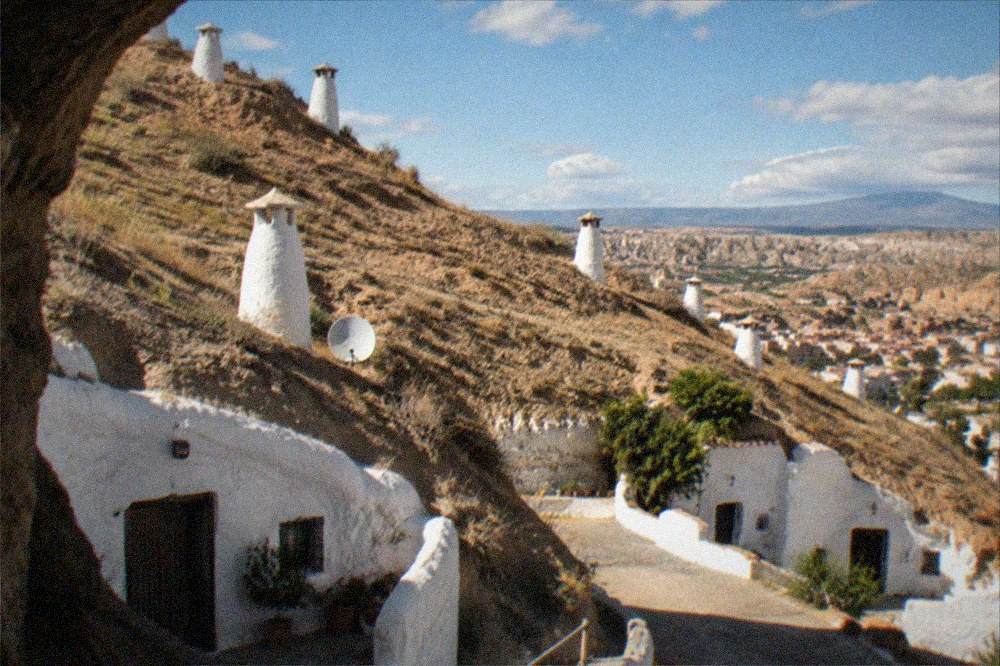
The viewpoint anchors a wider set of free things to do in the neighbourhood. The Albaicin quarter itself is an open-air monument of whitewashed lanes and Carmen gardens, and the walk between the viewpoint and Sacromonte passes cave houses, some still inhabited, that cost nothing to look at from the street. The Sacromonte abbey sits at the top of the next hill, and the whole ridge walk between the two quarters is free, public and spectacular at golden hour. For travellers assembling a budget day, the viewpoint, the Albaicin lanes, the Carrera del Darro river walk and the outside of the Alhambra's gates make a complete and genuinely free afternoon, with the paid Alhambra interior as the one unavoidable expense for anyone who wants the inside story.
What Is There To Do Near The Mirador de San Nicolas?
Within a ten-minute walk of the square you have the whole upper Albaicin: the Mudéjar church of San Nicolas itself, the smaller Mirador de San Cristóbal with a different angled view, the Carmen gardens and cisterns of the quarter's back lanes, the Sacromonte cave district uphill to the east, and the descent to the Carrera del Darro and the Paseo de los Tristes below. The viewpoint is best treated as the hinge of a two- or three-hour walk rather than a destination with a single photo.
The church of San Nicolas, when its doors are open, shows a plain Mudéjar interior worth five quiet minutes. The streets immediately north of the square hold some of the Albaicin's best-preserved Carmen houses, the walled garden properties unique to Granada, and the quarter's public cisterns, several still functioning, sit unmarked in side lanes. Heading east, the Camino del Sacromonte climbs past the cave-house façades for which the district is famous, and the Sacromonte Cave Museum sits further along, documenting the district's Romani and cave-dwelling history.
Two structured options cover this ground with a guide. The Sacromonte and Albaicin neighbourhoods walking tour, described above, is the daytime version. For the evening, the Los Amayas cave flamenco show in Sacromonte, from $28 per person and rated 4.7 from 1,706 reviews, pairs naturally with a sunset at the viewpoint followed by the ten-minute walk up to the cave district for the show. The two combined make the classic Granada evening: view first, flamenco after.
| Attraction near the square | Direction | Rough position in a walk |
|---|---|---|
| Iglesia de San Nicolas | On the square | Start or finish |
| Albaicin Carmen gardens and lanes | North and east | Middle of the loop |
| Mirador de San Cristóbal | North-east | Optional detour |
| Sacromonte cave houses | East, uphill | After the viewpoint |
| Sacromonte Cave Museum | East, further uphill | End of the ridge walk |
| Paseo de los Tristes | Below, south | Descent to the river |
| Carrera del Darro | Below, along the river | Flat finish back to Plaza Nueva |
Eating and drinking cluster in two zones. The square's own café terrace is convenient and priced accordingly, while the lanes between here and Plaza Nueva hold the traditional Granada bars where the free tapa custom still holds: a drink order in many traditional bars typically comes with a complimentary small plate, a widely upheld local practice rather than a guarantee, and portions often grow with subsequent rounds. The tapas and wine small-group tour, from $78 per person and rated 4.9 from 933 reviews, works this tradition across several bars for anyone who wants the neighbourhood's food explained rather than discovered by trial.
How Does The Viewpoint Fit Into One Day In Granada?
The standard first-day structure is Alhambra in the morning, Albaicin and the viewpoint at sunset, and tapas or flamenco after dark, and the sequencing works because the Alhambra's timed Nasrid Palaces slot dictates the morning while the sunset dictates the evening, leaving the middle of the day for the cathedral, the Royal Chapel and the streets between. Anyone with Alhambra tickets for an afternoon slot simply flips the halves: Albaicin and centre in the morning, palace after lunch, viewpoint to finish.
The morning Alhambra visit needs its own planning note. The Nasrid Palaces entry window printed on your ticket is strictly enforced, photo ID is checked, and the rest of the complex can be visited outside that window on the same ticket date. A morning arrival, walking the Alcazaba and Generalife first and entering the palaces at the printed half hour, leaves the whole afternoon free. The Alhambra and Nasrid Palaces guided tour with tickets, rated 4.9 from 1,262 reviews, bundles the entry and the guide, and booking a tour with tickets included is one way around the sell-out problem, since the operator holds allocation.
The afternoon belongs to the centre. The Granada Cathedral and the Royal Chapel, where the Catholic Monarchs lie buried, sit a few minutes apart, and the Alcaicería, the old Moorish silk market's lane, now holds souvenir shops between them. From there the walk up the Cuesta de Alhacaba to the viewpoint takes the rest of the afternoon at a sensible pace.
The evening is the viewpoint's hour. Arrive an hour before sunset, take a spot at the wall, let the guitarists do their work, and descend either to the Carrera del Darro for river-level tapas or up to Sacromonte for a cave show. The one-day itinerary on this site, one day in Granada, runs this exact spine in full, and two days in Granada splits it into a palace day and a quarters day for anyone who finds the one-day version too compressed.
| Time block | Activity | Why in that slot |
|---|---|---|
| Morning | Alhambra, timed Nasrid Palaces slot | Entry window strictly enforced, ID checked |
| Early afternoon | Cathedral and Royal Chapel | Both indoors, out of peak heat |
| Mid afternoon | Alcaicería and centre streets | Short stops, flexible |
| Late afternoon | Walk up Cuesta de Alhacaba to the square | Arrive before the sunset crowd |
| Sunset | Mirador de San Nicolas | The classic hour, wall spots go early |
| After dark | Carrera del Darro tapas or Sacromonte flamenco | Both within walking distance of the square |
Practical Tips For Visiting The Mirador de San Nicolas
Bring water in summer, a layer in winter, flat shoes always, and a phone torch for the walk down: the square has almost no shade between 12:00 and 16:00 in July when the average high is 34.8 degrees Celsius, January nights average 0.0 degrees, and the Albaicin's cobbles and steps are worn smooth and dimly lit after dark. None of the essentials cost money, which fits the square's price.
Pickpocketing is the one recurring complaint in this area, as it is across Granada's tourist zones, and the crowded sunset wall is the moment to be least casual with bags. The city's general safety picture is good, and the Albaicin at night is busier and calmer than its reputation suggests, but the standard city rules apply: nothing valuable in back pockets, and a bag worn to the front in the crush.
For photographers, the technical answer is that the best frame is not from the wall itself but from the small terrace of the church next door, where the crowd thins and the foreground gains a Mudéjar wall. A lens around 50mm takes in the Alhambra and the Sierra Nevada together; anything wider pushes the palace small. Sunset times swing widely across the year, and the square's crowd arrives on the sun's schedule rather than the clock's, so check the day's sunset time rather than assuming a Spanish dinner hour.
Why The Viewpoint Matters More Than The Postcard Suggests
The Mirador de San Nicolas is the one place where Granada's whole argument is visible in a single frame: a Nasrid palace on one hill, the Moorish street plan of the Albaicin on the other, a Renaissance city between them and a snowbound Sierra Nevada above, which is exactly the combined landscape UNESCO inscribed in 1984 and extended in 1994 as one listing covering the Alhambra, Generalife and Albaicin together. The square is not a viewpoint with a view of a monument; it is a viewpoint where two halves of one World Heritage site face each other across a river valley.
That framing changes how the visit reads. The Alhambra's 2,726,861 visitors in 2025, close to the Patronato's annual capacity ceiling of roughly 2.763 million, mostly see the palace from inside its own walls. This square is where the palace is seen as the Albaicin's residents have seen it for centuries, across the valley, as a neighbour rather than an itinerary item. The guitarists, the church, the café and the crowd are not distractions from the view; they are the same living quarter the UNESCO listing was extended to protect.
The last practical word is the simplest one: go twice. The sunset square and the morning square are different places, one communal and musical, the other quiet and cold, and the only cost of both is the climb. Anyone wanting the whole ridge explained along the way, from the Albaicin's gates to Sacromonte's caves, can add a guided walk, and the free GuruWalk tip-based tours of the quarter, free to book with tips to the guide, remain the cheapest guided option in the city. However you arrive, the square delivers what the postcards promise, and it does so without a ticket office, a queue or a closing time.
Common Questions About The Mirador de San Nicolas
Is the Mirador de San Nicolas free to visit?
Yes. The square is public open space with no entrance charge, no ticket and no closing time, and the adjacent church is also free when open. The only optional costs are the café, drinks and tips for the street musicians.
When is the best time to visit the Mirador de San Nicolas?
Sunset is the classic hour and the busiest, with the sun dropping behind the Alhambra. Early morning is much quieter and the light hits the Nasrid Palaces front-on. Avoid midday in summer, when July averages a high of 34.8 degrees Celsius and the square has almost no shade.
How do I get to the Mirador de San Nicolas?
Walk up from Plaza Nueva via the Cuesta de Alhacaba, climb the stairs from the Paseo de los Tristes, or take a city bus along the Camino de San Nicolas, which stops within a two-minute walk. There is no metro: the Metro de Granada does not serve the Alhambra or the Albaicin hilltop. A taxi is the best option for limited mobility.
Can you see the Sierra Nevada from the Mirador de San Nicolas?
Yes, on clear days the snow line of the Sierra Nevada sits behind the Alhambra in the same frame, and it is a routine part of the view from roughly October to May. In winter the contrast between the sunlit palace and the white peaks is the reason the square stays busy even in January.
Is the Mirador de San Nicolas safe at night?
The square itself is busy and generally calm at sunset and after dark, but pickpocketing is the recurring complaint in this area, so keep bags to the front in the crowd. The walk down through the Albaicin is dimly lit in patches with worn cobbles, so a phone torch and flat shoes are sensible.