Royal Chapel Granada
The Royal Chapel of Granada holds the tombs of the monarchs who conquered the city and chose to be buried here, sits directly beside the Cathedral, and charges EUR 7 for individual entry. This guide covers prices, hours, what to look for inside, and how to fit it into a Granada itinerary.
Short answer
The Royal Chapel of Granada costs EUR 7 for an individual ticket, EUR 5 reduced, and is free for children under 12. It opens Monday to Saturday 10:00-18:30 and Sunday 11:30-18:30, and it sits beside Granada Cathedral in the old town, a few minutes from the Alhambra on foot.
The Royal Chapel of Granada is the least predictable monument in the city. Visitors arrive expecting a side chapel of the Cathedral and find instead a separate Gothic building with its own entrance, its own ticket, and the marble tombs of Queen Isabella I and King Ferdinand II, the Catholic Monarchs who took the city from the Nasrid dynasty and chose to be buried in the city they conquered rather than in their native Castile. The official ticket site lists an individual price of EUR 7, reduced EUR 5, with children under 12 free, and the chapel keeps shorter hours than most of Granada's big monuments, closing at 18:30 on weekdays and opening late on Sundays. This guide from the Things To Do In Granada editorial desk covers the prices, the hours, what is actually inside, and how to combine the visit with the Cathedral, the Alhambra, and the rest of the old town.
What Is The Royal Chapel Of Granada?
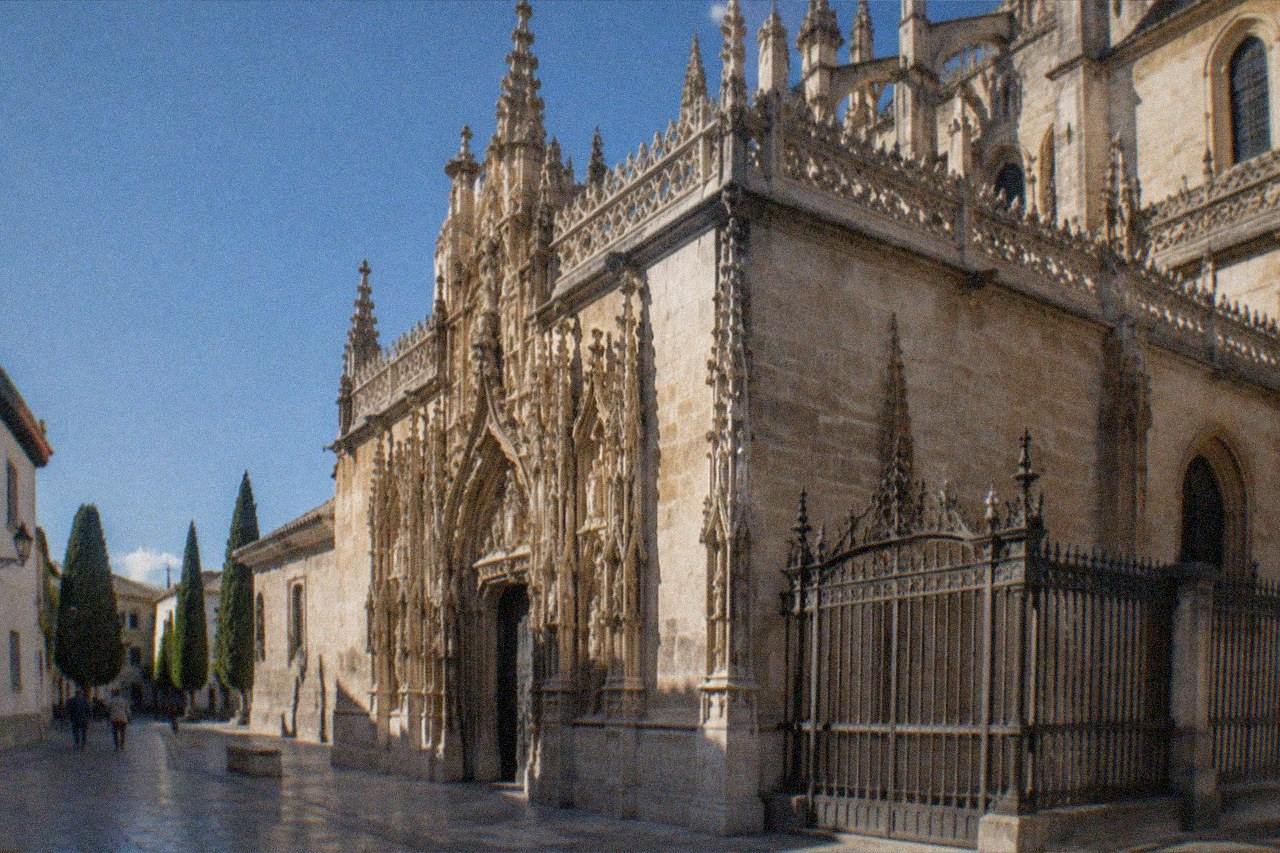
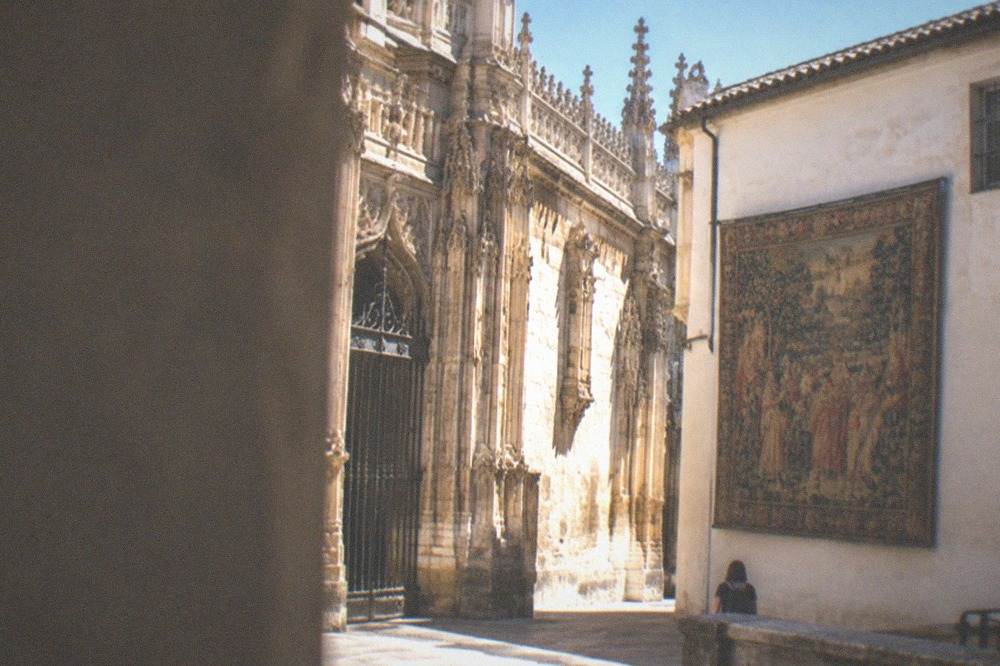
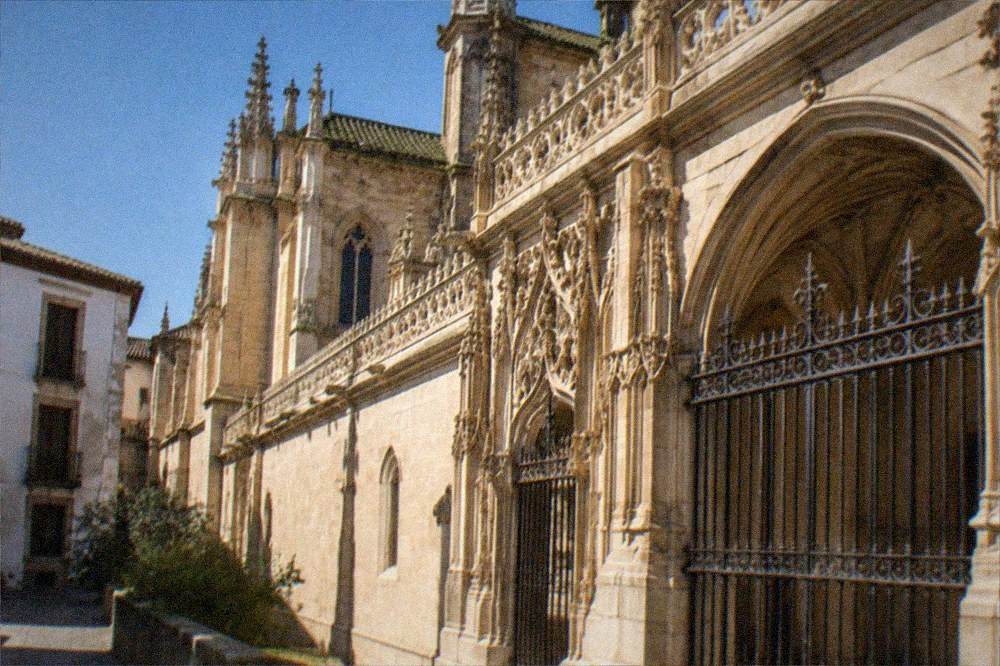
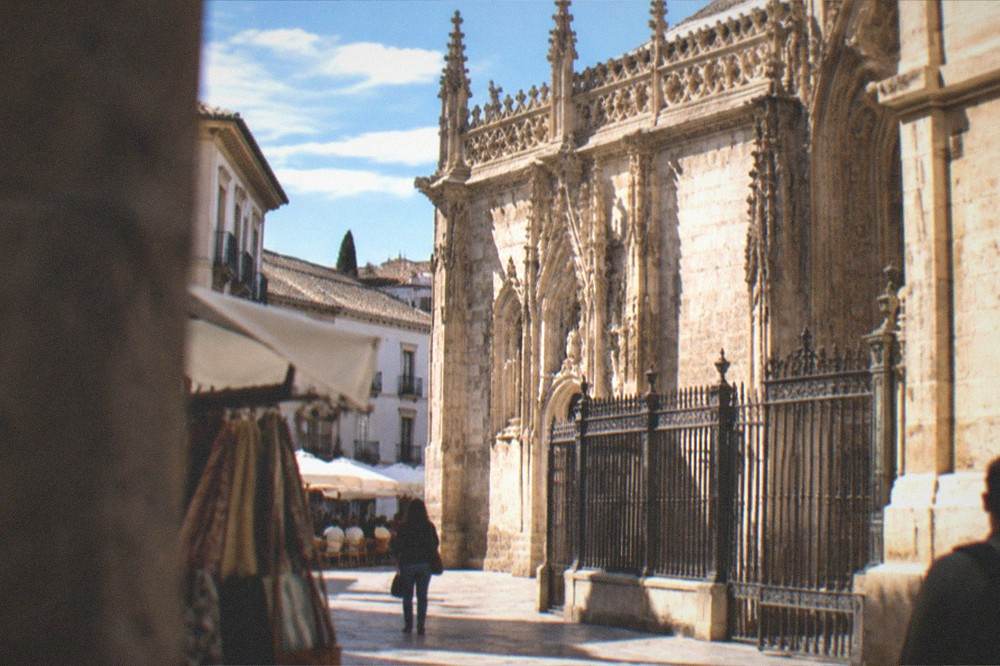
The Royal Chapel of Granada is a Gothic funerary chapel built on the orders of Queen Isabella I, who specified in her will that she be buried in Granada beside her husband King Ferdinand II. It is a free-standing monument attached to Granada Cathedral, with its own facade, entrance, and ticketing, and it holds the royal tombs plus a small museum of Flemish woven wall hangings, royal vestments, and Isabella's own art collection. It is not part of the Cathedral despite standing beside it.
The chapel exists because of a queen's posthumous instruction. Isabella and Ferdinand captured Granada, ending the Nasrid kingdom that had built the Alhambra, and the queen's will directed that her body rest in the city. Construction of the chapel began after her death under her grandson, Emperor Charles V, whose own Renaissance palace stands inside the Alhambra complex today, and the monarchs' remains were moved into the crypt once the building was ready.
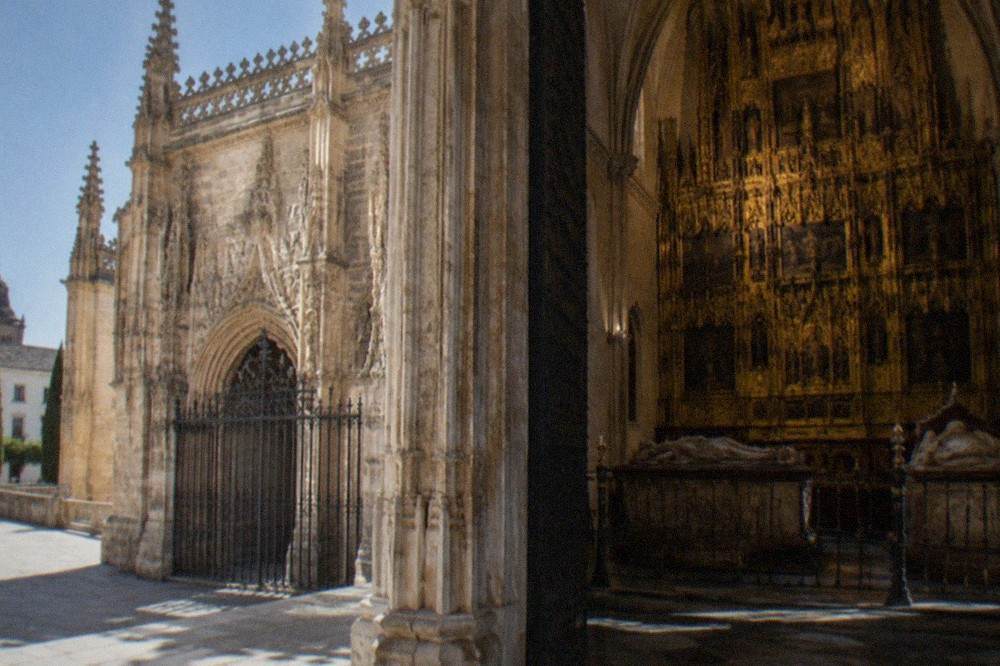
The building is one of the last great works of Spanish Gothic, a style the rest of Granada largely abandoned in favour of the Renaissance and Baroque. That contrast is part of why the interior lands so firmly: a rib-vaulted single nave, a gilded retable, and beneath the pavement, the lead coffins of the Catholic Monarchs, their daughter Juana, her husband Philip, and their grandson Miguel da Paz. The marble cenotaphs above the crypt depict the monarchs at prayer, and the lower crypt can be viewed from a small barred opening.
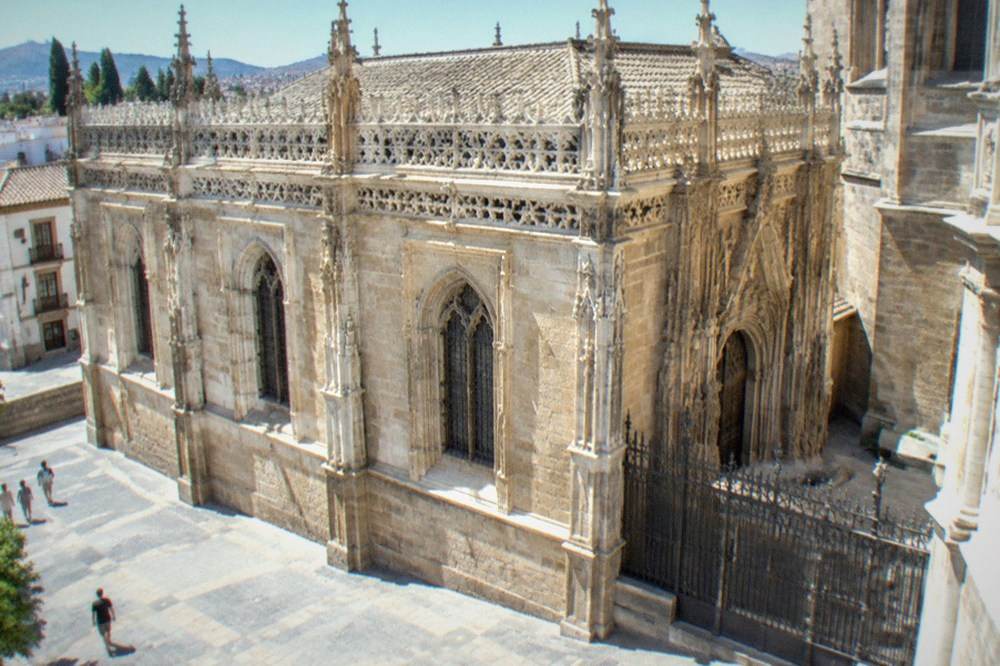
Visitors often ask whether the chapel is inside the Cathedral, and the answer is no, though the two share a wall and a plaza. The chapel has its own entrance on Calle Oficios, its own ticket, and its own hours, which differ from the Cathedral's. The question of whether the Royal Chapel is inside the Granada Cathedral comes up often enough that it has its own answer page on this site, and the practical consequence is simple: you buy two separate tickets if you want to see both monuments.
What Are The Royal Chapel Granada Tickets And Opening Hours?
The Royal Chapel of Granada charges EUR 7 for an individual ticket, EUR 5 for the reduced rate, and admits children under 12 free. It opens Monday to Saturday from 10:00 to 18:30 and Sunday from 11:30 to 18:30, with doors closing around 19:00. It is closed on Good Friday, 25 December, and 1 January, and it runs shorter hours on Corpus Christi. Tickets are bought on the official ticketing site or at the door.
The pricing is flat and simple, which is unusual in Granada, where the Alhambra layers its tickets across day, night, gardens-only, and combined variants. There is one adult rate, one reduced rate for students under 25 and visitors with a qualifying disability, and free entry for under-12s. The official ticket site for Granada's Christian monuments sells the tickets, and the chapel is small enough that advance booking is rarely necessary outside festival weeks, though Semana Santa and the Corpus Christi fair change the calculus entirely.
| Ticket type | Price | Notes |
|---|---|---|
| Individual | EUR 7 | Standard adult entry |
| Reduced | EUR 5 | Students under 25, disability, and similar qualifying groups |
| Under 12 | Free | No ticket price, entry control still applies |
| Audio guide | Via app | Offered through the chapel's own app rather than a handheld device |
The hours deserve attention because the chapel is one of the earliest of Granada's monuments to close. The Alhambra's daytime complex runs to 18:00 in winter and 20:00 in summer, and the Cathedral keeps cultural-visit hours into the evening, but the Royal Chapel finishes at 18:30 six days a week and does not open its Sunday doors until 11:30, after morning mass. Anyone planning a packed afternoon should put the chapel first and the Cathedral second.
| Day | Opening hours | Door closing |
|---|---|---|
| Monday to Saturday | 10:00 to 18:30 | approximately 19:00 |
| Sunday | 11:30 to 18:30 | approximately 19:00 |
| Good Friday | Closed | Closed |
| 25 December and 1 January | Closed | Closed |
| Corpus Christi | Shorter hours | Confirm on the official ticket site |
The closures matter more here than at Granada's other monuments. Good Friday falls inside Semana Santa, the week when the city's processions fill the streets and hotel demand peaks, and the chapel closes that day because the building sits directly on the processional route. The 2026 Holy Week runs approximately 29 March to 5 April, and anyone visiting Granada in that window should check the chapel's hours for every day of their stay, not just the day of arrival.
If the Alhambra is also on the list, and it should be, the booking pressure runs in the opposite direction. Alhambra General tickets routinely sell out one to two months ahead in peak season, with the Nasrid Palaces capped at roughly 300 visitors per half-hour slot and online sales closing at 23:59 the day before the visit. The Royal Chapel can be arranged on arrival; the Alhambra cannot. A guided Alhambra tour with tickets included removes the sell-out risk, and the three-hour Nasrid Palaces and Generalife Gardens option below is the one this site pairs most often with an old-town morning.
What Do You See Inside The Royal Chapel?
Inside the Royal Chapel you see the marble tombs of Isabella and Ferdinand in the nave, the lower crypt where the actual lead coffins rest, a large gilded Gothic retable, a grille separating the nave from the high altar, and a museum area holding Isabella's Flemish woven wall hangings, royal vestments, and part of her private art collection. The interior is one Gothic nave, and the whole visit runs shorter than the Cathedral's.
The cenotaphs are the reason most people come. The two marble monuments sit in the centre of the nave, with the monarchs depicted in prayer, their coats of arms carved into the sides. The pair sit low and plain against the gold of the retable behind them, which makes the composition feel more personal than dynastic. Below the pavement, the real burials lie in a simple crypt, visible through a small opening, with the coffins of Isabella, Ferdinand, Juana, Philip, and the infant Miguel da Paz arranged in order.
The retable behind the tombs is the chapel's other centrepiece, a gilded Gothic altarpiece in the Flemish style that Granada's royal patrons favoured. Isabella's collecting habits shaped the chapel's art: she acquired Flemish panel paintings and woven wall hangings throughout her reign, and a portion of that collection hangs in the chapel's side rooms alongside her personal effects, including vestments and liturgical objects used by the royal household.
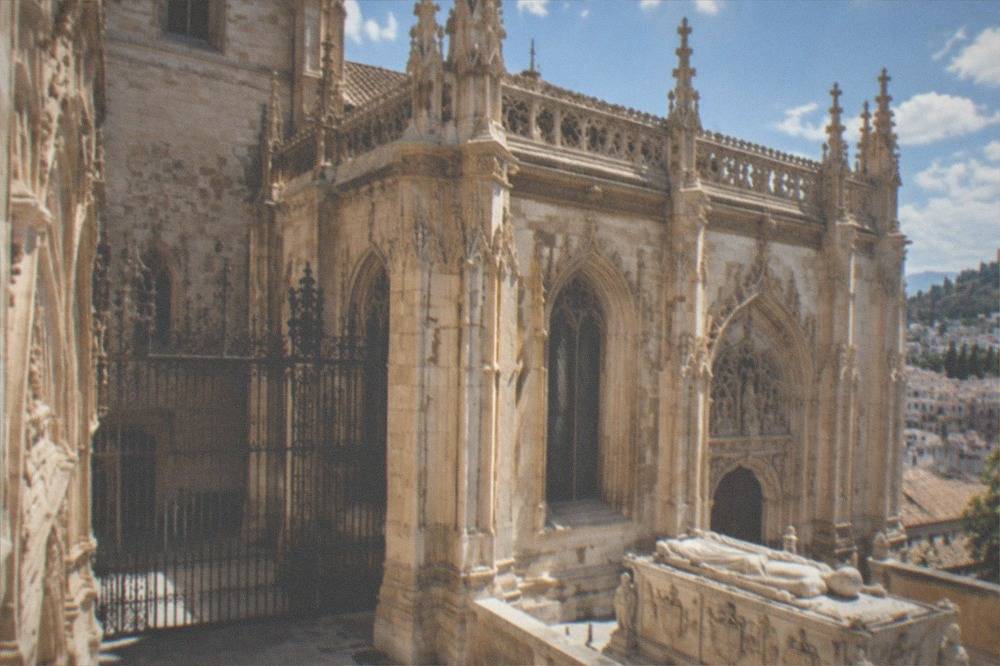
The visit is compact. The chapel is a single nave with side rooms, not a circuit, and the museum section adds depth rather than distance. Visitors who want the full context should read the panel information on the way in, which explains the will, the transfer of the monarchs' remains, and the construction history, because the building itself explains very little and the effect of the tombs depends on knowing whose they are.
The chapel also rewards visitors who arrive with the conquest story in mind. The monarchs buried here ended the Nasrid kingdom whose palace still stands on the hill across the river, and Granada is one of the few European cities where the conquerors and the conquered are memorialised within sight of each other. The Alhambra's own history pages on this site cover the Nasrid side of that story in detail, and reading both before the visit turns two separate monuments into one narrative.
How Does The Royal Chapel Compare To Granada Cathedral?
The Royal Chapel and Granada Cathedral are separate monuments with separate tickets, standing side by side in the same plaza. The Cathedral costs EUR 10 for an individual ticket during the 2026 Kerygma exhibition, which runs 8 May to 28 November 2026, dropping to EUR 7 from 29 November 2026. The Royal Chapel costs EUR 7 year-round. The Cathedral is far larger; the Chapel holds the royal tombs. Most visitors see both.
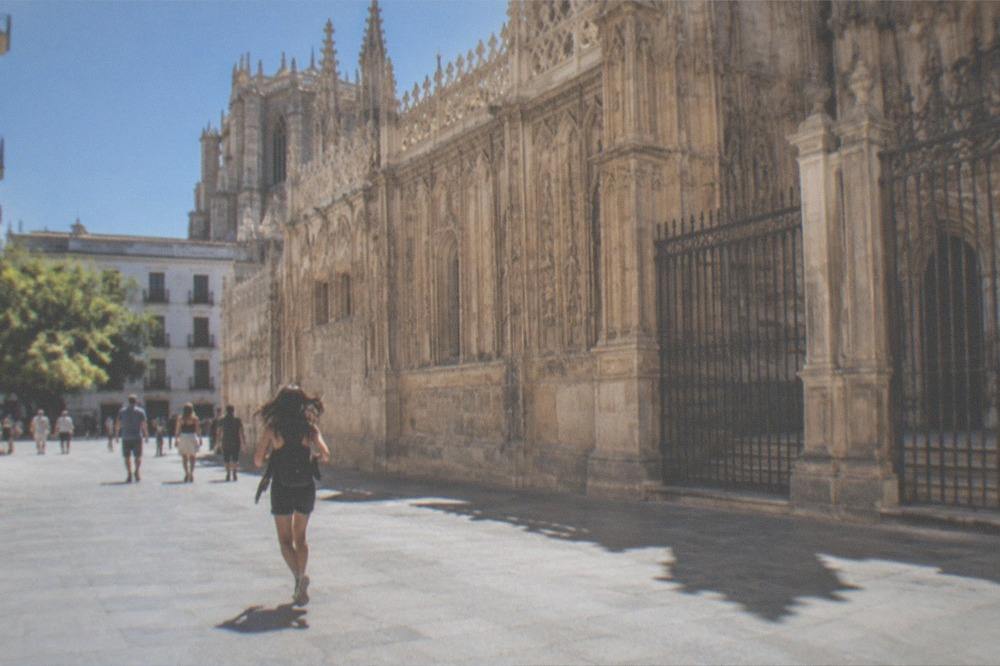
The pricing difference is small, but the experiences are not. Granada Cathedral is a Renaissance building with a vast circular coro at its heart, white stone throughout, and a scale that rewards slow circling. The Royal Chapel is Gothic, darker, gilded, and organised around a single idea: the burial of the monarchs who made Christian Granada possible. Visitors with time for only one should weigh whether royal history or Renaissance architecture matters more, and visitors with time for both should do the Chapel first, while legs and attention are fresh. More of these guides are collected on Things To Do In Granada.
| Feature | Royal Chapel | Granada Cathedral |
|---|---|---|
| Individual ticket | EUR 7 | EUR 10 during Kerygma (to 28 Nov 2026), EUR 7 from 29 Nov 2026 |
| Reduced ticket | EUR 5 | EUR 8 during Kerygma, EUR 5 after |
| Under 12 | Free | Free |
| Architecture | Gothic | Renaissance |
| Main draw | Royal tombs and Isabella's collection | Scale, coro, and the Kerygma exhibition |
| Hours (Mon-Sat) | 10:00-18:30 | approximately 10:00-20:15 |
| Sunday opening | 11:30 | approximately 15:00 |
The Cathedral's current pricing is date-tiered in a way the Chapel's is not. The Kerygma exhibition, running 8 May to 28 November 2026, lifts the individual price to EUR 10, and the standard EUR 7 rate returns from 29 November 2026. The Royal Chapel's EUR 7 has no exhibition surcharge, so during 2026 the two monuments cost the same only after the exhibition ends.
The pair also share a neighbourhood. Both stand at the edge of the old town, close to the Alcaiceria, the reconstructed Moorish silk market that now holds souvenir and craft stalls, and a short walk from the Plaza Bib-Rambla and the Calle Navas tapas strip. The Granada Cathedral guide on this site covers the Cathedral's own history and layout, and the two monuments are close enough that a single morning covers both with time to spare for the market.
Is The Royal Chapel Worth Visiting?
The Royal Chapel is worth visiting for anyone with a genuine interest in the story of the Catholic Monarchs, royal burial, or Spanish Gothic, and it is one of the least expensive major monuments in Granada at EUR 7. It is a short visit rather than a half-day, and visitors who only care about architecture at grand scale may prefer the Cathedral next door. For history-led visitors it is unmissable.
The honest case against is that the interior is small and the museum rooms are modest compared with Granada's headline acts. The Alhambra takes three hours minimum and delivers the Nasrid Palaces, the Alcazaba, and the Generalife gardens; the Cathedral delivers Renaissance scale. The Chapel delivers meaning, and meaning is what draws the crowds that gather around the tombs every day.
The honest case for is that EUR 7 buys the single most concentrated piece of Granada's founding story anywhere in the city. The monarchs in the crypt ended the Nasrid kingdom; the woven hangings were collected by the queen who financed Columbus. Every object in the chapel connects to the same era, and no other Granada monument does that.
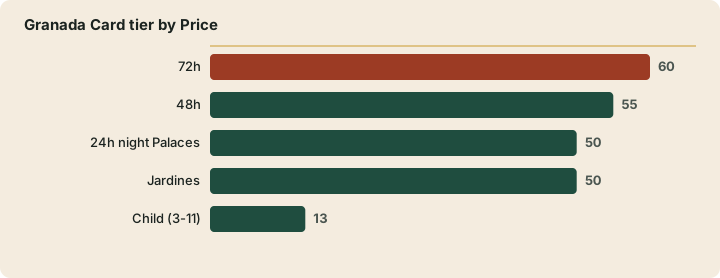
Families should note the under-12 free entry and the short visit length, which suits children better than the Cathedral's long circuit. Visitors with a Granada Card should check the card's inclusions: the 72h and 48h tiers include the Cathedral, the Royal Chapel, and Alhambra daytime access, with the 72h card at EUR 60 and the 48h at EUR 55, effective 13 November 2025. For an itinerary built around the Alhambra plus the old town's Christian monuments, the card's arithmetic can work in your favour.
| Granada Card tier | Price | Royal Chapel included | Other key inclusions |
|---|---|---|---|
| 72h | EUR 60 | Yes | Alhambra General daytime, Cathedral, Science Park, 9 bus trips |
| 48h | EUR 55 | Yes | Alhambra General daytime, Cathedral, museums |
| 24h night Palaces | EUR 50 | Yes (chapel portion) | Night Nasrid Palaces, Cathedral |
| Jardines | EUR 50 | Yes (chapel portion) | Alcazaba and Generalife daytime, Cathedral |
| Child (3-11) | EUR 13 | Yes | Same inclusions by tier |
How Do You Combine The Royal Chapel With Other Granada Sights?
The Royal Chapel combines naturally with Granada Cathedral, the Alcaiceria market, the Plaza Bib-Rambla, and the old town's tapas streets, all of which sit within the same walkable core. The standard pairing is the Chapel and Cathedral in one morning, followed by the Alcaiceria and lunch, with the Alhambra on a separate day because its timed Nasrid Palaces slot governs the whole schedule. The Mirador de San Nicolas makes a sunset finish.
The old town works as a single walking block. Start at the Royal Chapel when it opens at 10:00, cross to the Cathedral, then drift south through the Alcaiceria's stalls to the Plaza Bib-Rambla for a churros stop, and finish on the Calle Navas, where the free-tapa tradition still holds in many traditional bars: a drink order typically comes with a complimentary small plate, though the custom is a widely upheld local practice rather than a guarantee at every venue. The one day in Granada itinerary on this site sequences exactly this kind of morning.
The Alhambra needs its own planning block. Tickets are nominative, photo ID is checked at entry, and the Nasrid Palaces half-hour window printed on the ticket is strictly enforced, while the rest of the complex can be visited at any point on the same ticket date. Tickets release roughly three months ahead and the General ticket sells out one to two months or more in advance through the spring and autumn peak. Anyone combining the Chapel with an Alhambra day should book the Alhambra first and fit the old town around it, not the reverse.
| Suggested order | Sight | Why this order |
|---|---|---|
| 1 | Royal Chapel at 10:00 | Earliest closing major monument in the old town |
| 2 | Granada Cathedral | Longer hours, larger interior, same plaza |
| 3 | Alcaiceria | Market stalls between the Cathedral and Bib-Rambla |
| 4 | Plaza Bib-Rambla and lunch | Tapas streets open up from midday |
| 5 | Mirador de San Nicolas at sunset | Alhambra view across the Darro valley |
The sunset finish deserves its own note. The Mirador de San Nicolas looks across the Darro valley at the Alhambra with the Sierra Nevada behind it, and AEMET's climate data shows why the view is so reliable: July averages just 2mm of rain and a 34.8C high, while even November, the wettest of the shoulder months at 54mm, still delivers long clear evenings. The Albaicin walk up to the viewpoint is one of the city's signature experiences, and a guided sunset walk through the Albaicin and Sacromonte is among the most booked tours on this site's roster.
For visitors stretching to a second or third day, the options widen. The two days in Granada itinerary adds the Albaicin and Sacromonte properly, and the day-trip roster covers Cordoba, Seville, Ronda, Nerja and Frigiliana, the Alpujarras, and the Sierra Nevada. None of those can be squeezed into the same day as the Royal Chapel and the Alhambra, and none should be attempted that way.
Common Questions About The Royal Chapel Granada
Is the Royal Chapel inside the Granada Cathedral?
No. The Royal Chapel is a separate Gothic building attached to the Cathedral's flank, with its own entrance, its own EUR 7 ticket, and its own opening hours. You need two separate tickets to see both monuments, though they share a plaza and are visited in one stop.
How much does the Royal Chapel of Granada cost?
An individual ticket costs EUR 7, the reduced rate is EUR 5 for students under 25 and similar qualifying groups, and children under 12 enter free. The price is flat year-round, with no exhibition surcharge like the Cathedral's current Kerygma pricing.
Who is buried in the Royal Chapel of Granada?
Queen Isabella I and King Ferdinand II, the Catholic Monarchs, are buried in the crypt beneath the nave, along with their daughter Juana, her husband Philip, and the infant Miguel da Paz. The marble cenotaphs in the nave are monuments above the actual lead coffins below.
What are the Royal Chapel's opening hours?
Monday to Saturday 10:00 to 18:30, Sunday 11:30 to 18:30, with doors closing around 19:00. The chapel is closed on Good Friday, 25 December, and 1 January, and it runs shorter hours on Corpus Christi. Confirm hours on the official ticket site before visiting during festival weeks.
Can I buy Royal Chapel tickets on the day?
Yes, in normal circumstances the chapel does not sell out the way the Alhambra does, and tickets can be bought on the official ticketing site or at the door. During Semana Santa and the Corpus Christi fair, demand rises sharply and advance purchase is the safer choice.
How long does a visit to the Royal Chapel take?
The chapel is a single Gothic nave with side museum rooms, so a typical visit runs well under an hour even with the woven hangings and vestments examined carefully. Pairing it with Granada Cathedral next door makes a full morning of the stop.
The Royal Chapel of Granada is a small monument carrying a large story, and its EUR 7 ticket is one of the better values in a city whose headline monument requires booking months ahead. Visit in the morning, pair it with the Cathedral and the Alcaiceria, and let the tombs of the monarchs who ended the Nasrid kingdom close the circle that the Alhambra opens across the river.