Albaicin Granada
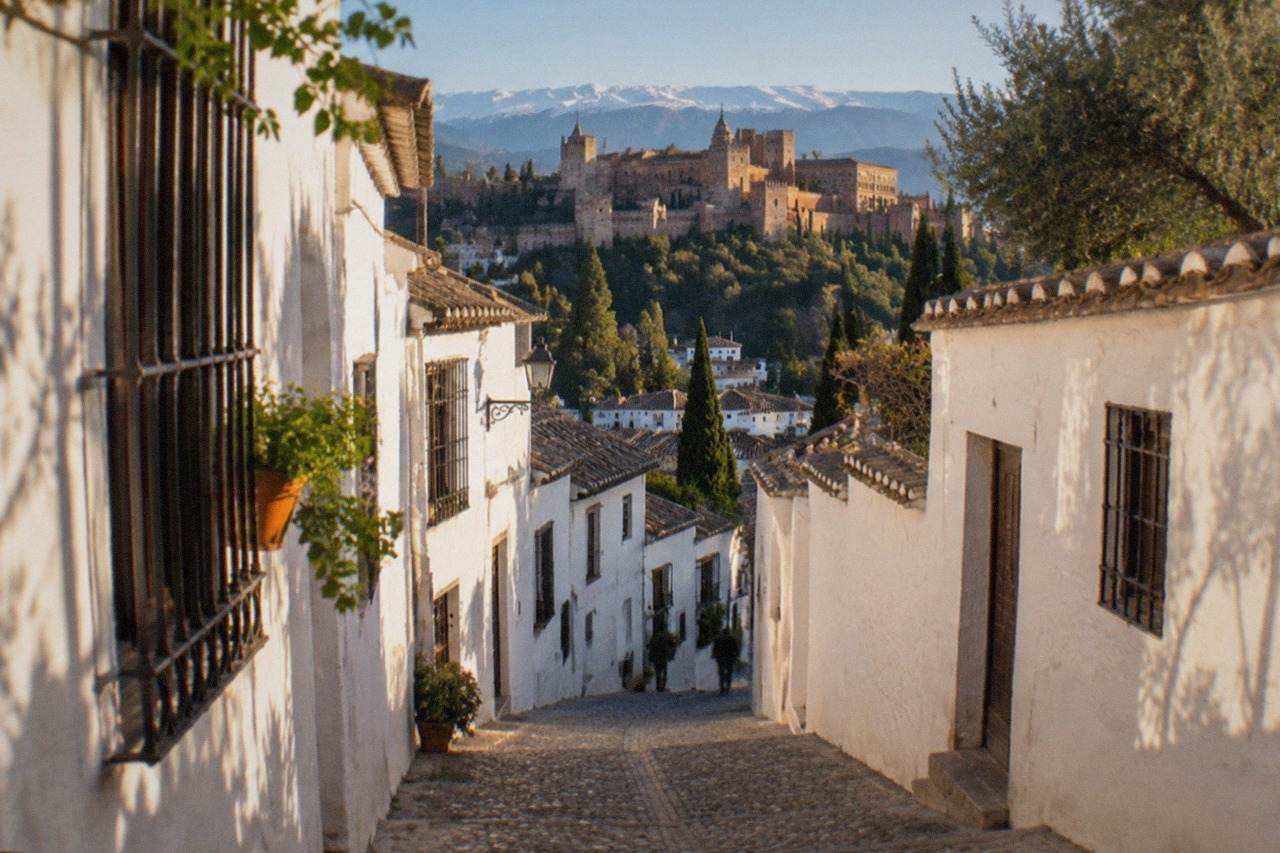
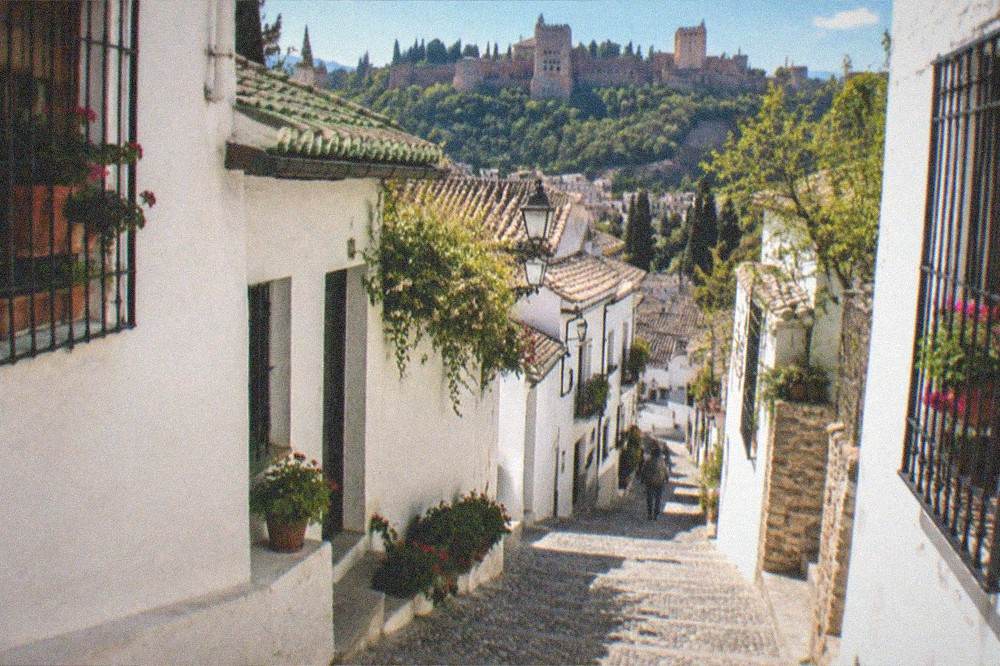
The Albaicin is Granada's oldest surviving neighbourhood, a UNESCO-listed hill of white lanes facing the Alhambra across the Darro valley, and the part of the city where the Moorish street plan is still intact.
Short answer
The Albaicin is Granada's historic Moorish quarter on the hill opposite the Alhambra, inscribed by UNESCO in 1994, best known for the Mirador de San Nicolas viewpoint, its surviving Nasrid-era houses and hammams, and a tapas tradition that still runs on the free-tapa custom.
The Albaicin is the hill that faces the Alhambra, and it has been doing so for the better part of a millennium. UNESCO inscribed the Alhambra and Generalife in 1984 and extended the listing in 1994 to include the Albaicin precisely because this quarter preserves the street plan, house type and water system of the Nasrid city. Where most of Granada was rebuilt around plazas and straight avenues, the Albaicin kept its narrow winding lanes, its cármenes (walled houses with gardens), and its sequence of miradores looking straight across the Darro valley at the palace walls. This guide from the Things To Do In Granada editors covers what to see in the quarter, where the best views are, where to eat, how to get up the hill, and what to expect after dark.
What Is The Albaicin In Granada?
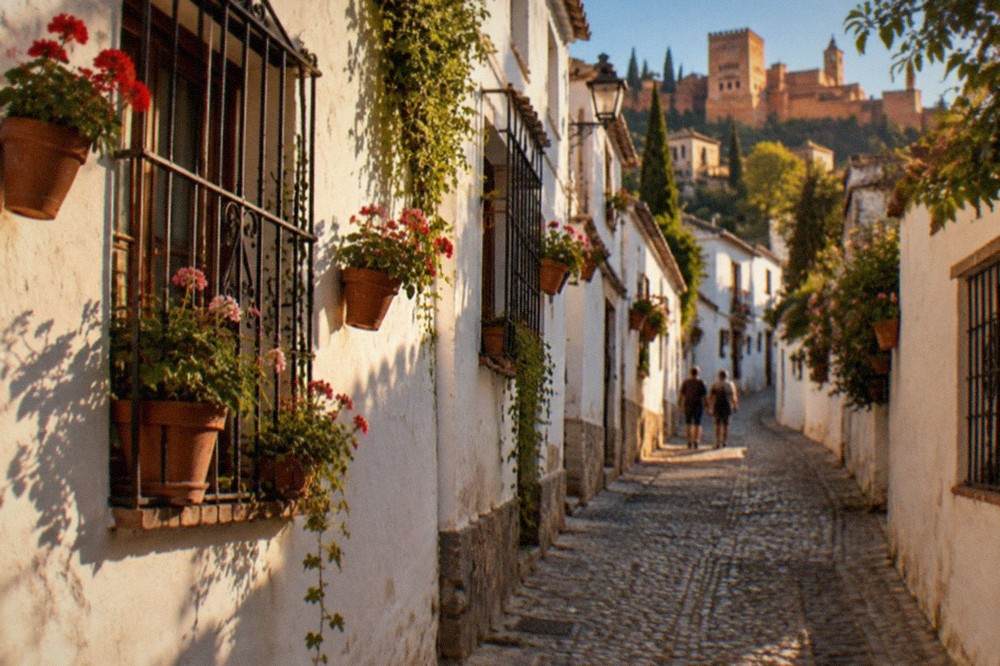
The Albaicin is Granada's oldest surviving residential quarter, a hillside maze of white lanes on the right bank of the Darro river, facing the Alhambra directly across the valley. UNESCO extended Granada's World Heritage listing in 1994 to cover it, a decade after the Alhambra and Generalife were inscribed in 1984, because its medieval Moorish street plan, house type and irrigation system survive largely intact. It was the city's main residential district under the Nasrid dynasty, and it remained a distinct quarter for generations after the Christian conquest before rebellion and expulsion emptied much of it. Today it is a lived-in neighbourhood of residents, not an open-air museum, which is why the lanes stay quiet in the mornings and fill with visitors around sunset.
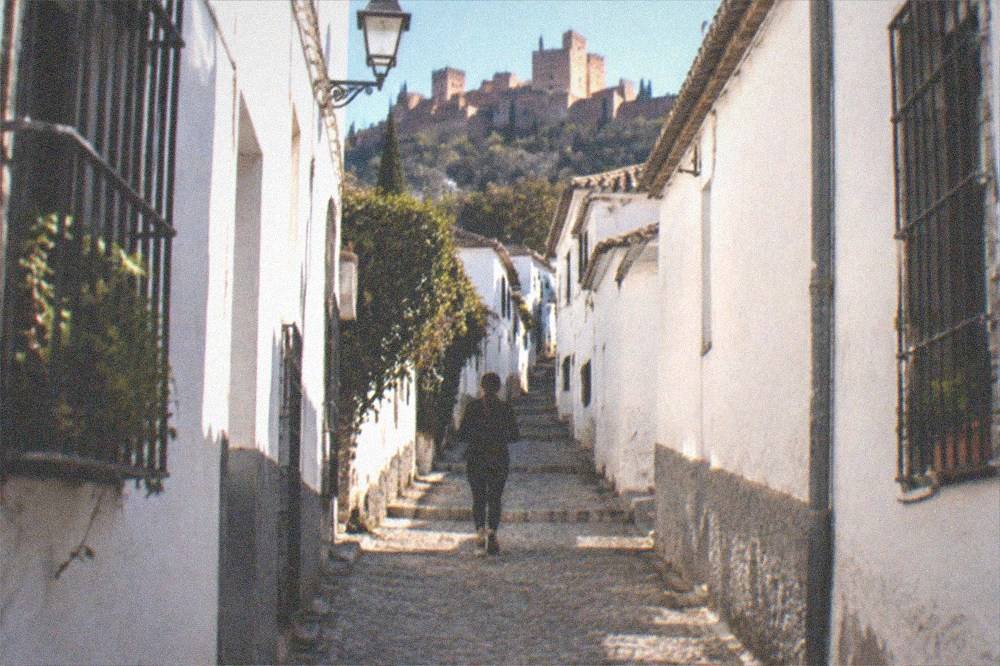
The quarter's name appears on maps and street signs in two spellings, Albaicin and Albayzin, and both are correct; the difference is transliteration, not meaning. The street grid is the real monument here. There is no grand single building to buy a ticket for, with the small exceptions covered below, and the standard way to see the quarter is on foot: up from the Carrera del Darro at the bottom, along the ridge to the Mirador de San Nicolas, and down again through the lanes. Our one day in Granada itinerary puts the quarter at the end of the afternoon, timed for the light on the Alhambra, and the two days in Granada itinerary gives it a full evening of its own.
What Are The Best Things To See In The Albaicin?
The essential sights inside the quarter are the Mirador de San Nicolas viewpoint, the church of Santa Ana at its foot, the surviving Nasrid-era bath El Banuelo on the Carrera del Darro, the Dar al-Horra palace, and the dense web of lanes around the Plaza Larga. Several of the smaller monuments, including El Banuelo, Dar al-Horra and the Corral del Carbon, are covered by the Granada Card, which costs EUR 60 for 72 hours or EUR 55 for 48 hours as of 13 November 2025. The quarter rewards wandering more than checklist-ticking, but a few fixed points keep a walk from becoming a circle.
The table below sets out the main stops in the order most walkers reach them coming up from the river.
| Sight | What It Is | Access |
|---|---|---|
| El Banuelo | Arab bathhouse on the Carrera del Darro | Paid entry, included in Granada Card tiers |
| Dar al-Horra | Nasrid-era palace, residence of the Sultan's mother | Paid entry, included in Granada Card tiers |
| Mirador de San Nicolas | Plaza viewpoint facing the Alhambra across the valley | Free, open at all hours |
| Plaza Larga | Neighbourhood square with morning market stalls and bars | Free |
| Church of Santa Ana | Church on Plaza Nueva's edge | Exterior viewable any time |
| San Cristobal viewpoint | Quieter ridge viewpoint east of San Nicolas | Free, open at all hours |
Guided walks solve the quarter's one real difficulty, which is orientation: the lanes are unlabelled, the shortcuts are invisible, and the history of what you are looking at is not obvious from the street. A guided option covers both hill quarters in two and a half hours, pairing the Albaicin with neighbouring Sacromonte, and Check availability on the operator's live listing for current departure times.
Where Are The Best Views Of The Alhambra From The Albaicin?
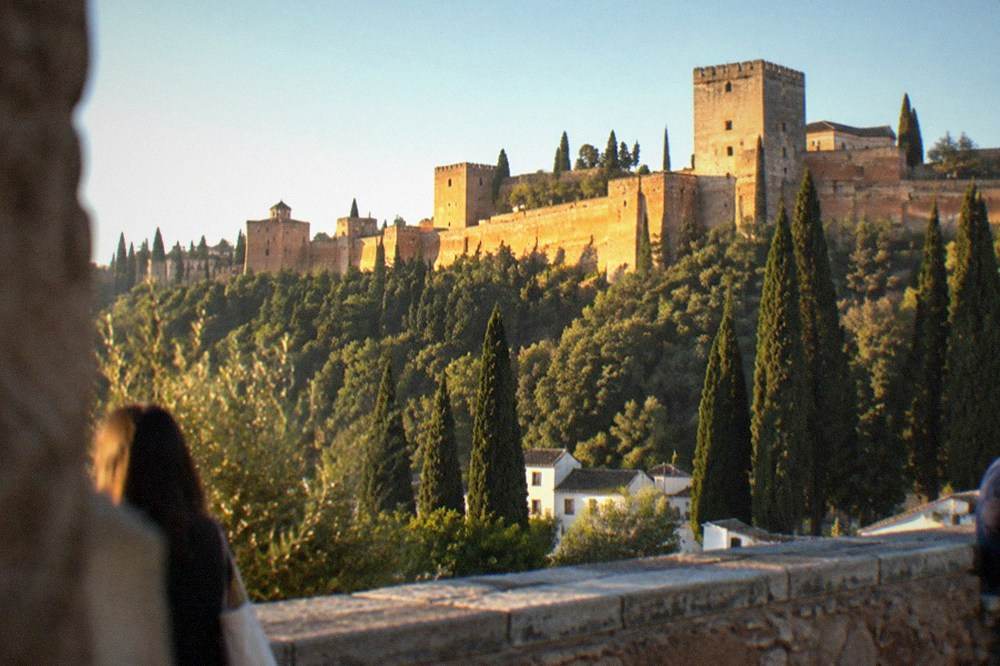
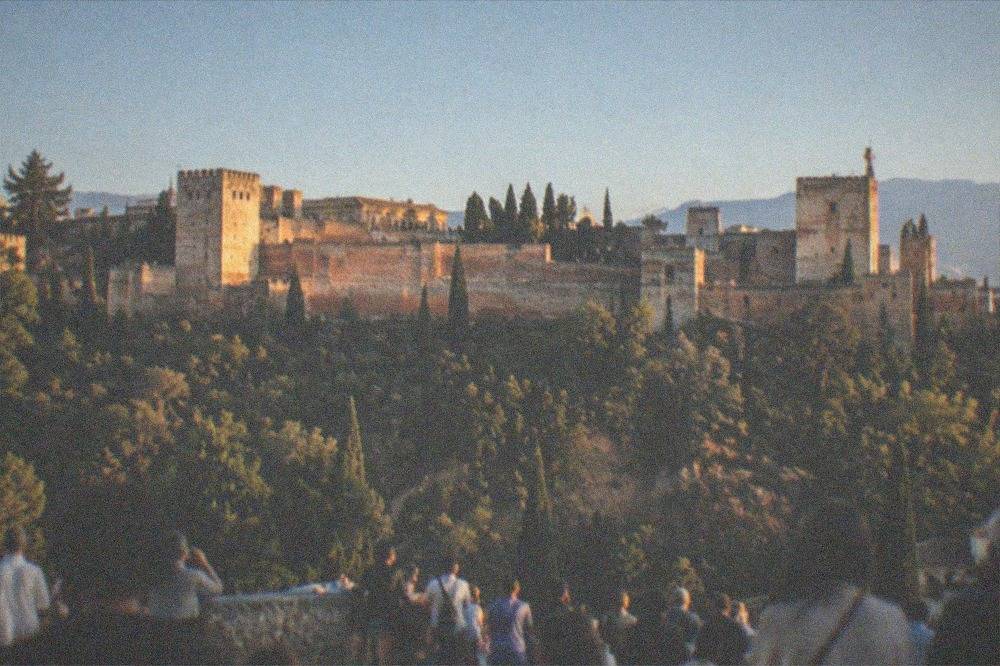
The Mirador de San Nicolas is the Albaicin's famous viewpoint, a small plaza on the ridge with a direct, unobstructed line across the Darro valley to the Alhambra's western façade, with the Sierra Nevada behind it in season. It is free, open at all hours, and it is the single most photographed spot in the quarter. Quieter alternatives with the same axis of view include the San Cristobal viewpoint further along the ridge and the terrace paths below the Sacromonte Abbey road. The classic time to stand at San Nicolas is the last hour of daylight, when the low sun hits the palace walls and the crowd, which is substantial, is part of the experience rather than an obstacle to it.
The Alhambra you see from the Albaicin is the military and palatial core: the Alcazaba towers and the western edge of the Nasrid Palaces complex. The Alcazaba is the fortress section, the oldest standing part of the complex, and from across the valley its watchtowers read exactly as they were meant to, as a defensive screen over the city. Our Nasrid Palaces guide explains what is behind those walls, and why entry inside is capped at roughly 300 people per half-hour slot, a limit that makes advance booking non-negotiable: the General ticket at EUR 22.27 routinely sells out one to two months ahead in peak season, tickets release about three months in advance, and online sales close at 23:59 the day before the visit.
| Viewpoint | Line Of Sight | Crowd Level | Best Light |
|---|---|---|---|
| Mirador de San Nicolas | Alcazaba and Nasrid Palaces façade | Heavy at sunset | Late afternoon to dusk |
| San Cristobal viewpoint | Eastern palace walls, wider valley | Light | Morning |
| Carrera del Darro riverside | Alhambra walls above the tree line | Moderate | Midday |
| Sacromonte Abbey road | Alhambra and Albaicin ridge together | Light | Late afternoon |
Is The Albaicin Safe At Night?
The Albaicin is generally a safe quarter at night in the areas visitors actually use: the Mirador de San Nicolas, the Plaza Larga, the Paseo de los Tristes along the Carrera del Darro, and the lanes between them carry steady foot traffic until late. The standard precautions for any hillside old quarter apply, since the lanes are dimly lit, steep and easy to mis-navigate, and pickpocketing rather than violent crime is the realistic risk. The short version of the safety picture: the sunset crowd at San Nicolas thins after dark, the quarter becomes quiet rather than threatening, and a taxi down the hill is a reasonable end to an evening if the lanes feel unfamiliar.
The quarter's evening economy is real, not just a daytime set. Flamenco in the Sacromonte caves starts late, dinner in Granada runs late by northern European standards, and the walk back down the Carrera del Darro to the city centre is lit and trafficked. The one genuinely disorienting scenario is leaving a mirador by an unfamiliar descent lane; the fix is to retrace the route you came up rather than guess at shortcuts. Our dedicated assessment of the question, Is The Albaicin Safe At Night, covers the specifics, and the same logic extends to the whole city.
Where Should You Eat And Drink In The Albaicin?
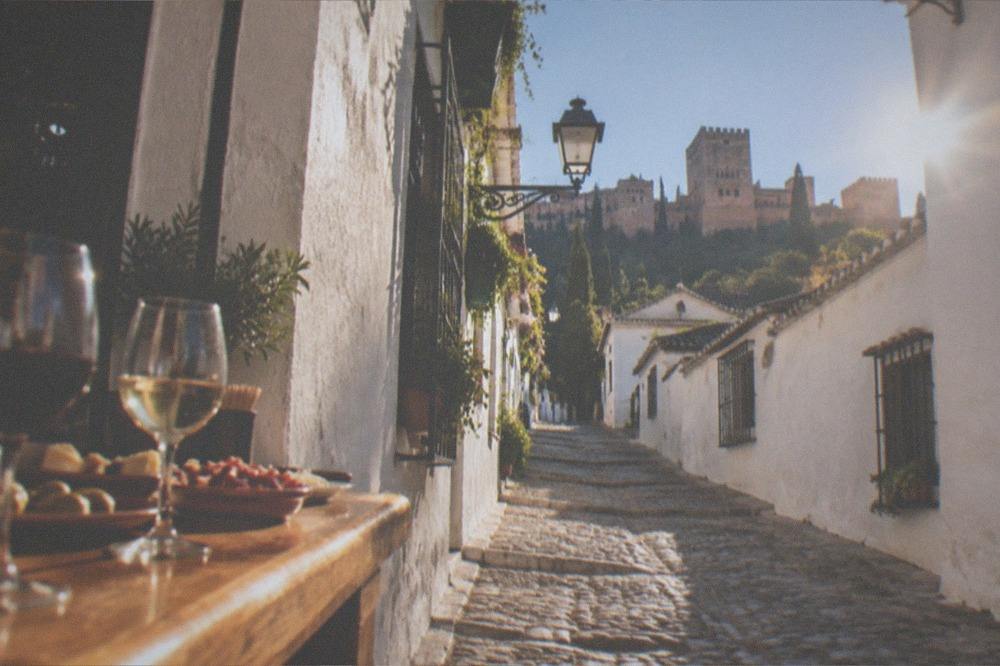
The Albaicin sits inside Granada's free-tapa zone: in many traditional bars across the city, a drink order comes with a complimentary small tapa, a custom that 2026 reporting confirms is still widely upheld in the quarter's traditional venues, though it is local practice rather than a legal guarantee. The quarter's eating geography splits between the Plaza Larga and Calle Elvira end, where residents actually drink, and the Paseo de los Tristes at the bottom, where the riverside terraces are. Portions often grow with successive rounds in the traditional spots, which is the custom working as designed.
The distinction matters for budgeting. Our free tapas in Granada guide explains the practice in detail, including which streets hold the custom strongest and how to read a bar that has moved to priced tapas instead. A guided option that handles the ordering is the Granada Walking Food Tour, which covers the old town's bars in three and a half hours and has current dates on the operator's live listing.
| Area Of The Quarter | What You Find | Price Reality |
|---|---|---|
| Plaza Larga and Calle Elvira | Neighbourhood bars, morning market stalls | Traditional free-tapa custom in many bars |
| Paseo de los Tristes | Riverside terraces below the Alhambra | Higher, terrace pricing |
| Carrera del Darro | Tourist-oriented restaurants along the river | Mixed, check menus |
| Upper lanes near San Nicolas | Small bars, some with Alhambra views | Varies, view carries a premium |
How Do You Get To The Albaicin?
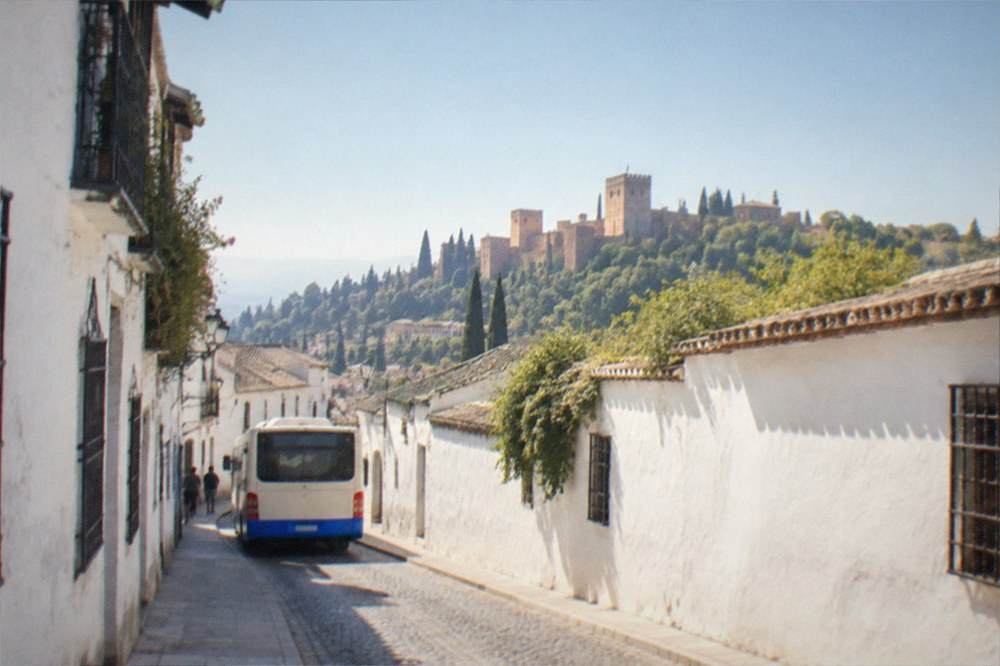
You reach the Albaicin on foot from Plaza Nueva up the Carrera del Darro or the Calle Elvira, or by the LAC/C34 hillclimb bus lines that serve the Alhambra's western approach and the quarter's edge; the Metro de Granada does not serve the Albaicin or the Alhambra at all, since it runs north-south through the city and metropolitan area only. From Granada Airport, the official connection is the Alsa Linea 245 bus at EUR 3.10 one way, roughly 40-45 minutes to the centre. The hill is the transport problem. The quarter rises well above the river, the lanes are stepped in places, and the bus exists precisely because of that.
The airport point matters because it is a common visitor mistake: people assume a metro exists from the airport because the city has one. It does not connect. The Granada airport guide covers the full transfer picture, including the Alsa Linea 245 fare of EUR 3.10 and its roughly 40-45 minute journey time, and the metro's own tariff page lists a per-trip fare of approximately EUR 0.49 with the reloadable card for the trips it does cover.
| Route | Mode | Cost | Notes |
|---|---|---|---|
| Plaza Nueva to Mirador de San Nicolas | On foot | Free | Steep climb through stepped lanes |
| City centre to quarter's edge | LAC/C34 bus | Standard urban fare | Serves the hill climb |
| Granada Airport to centre | Alsa Linea 245 bus | EUR 3.10 one way | About 40-45 minutes |
| Centre to Albaicin after dark | Taxi | Metered | Sensible for unfamiliar lanes |
When Is The Best Time To Visit The Albaicin?
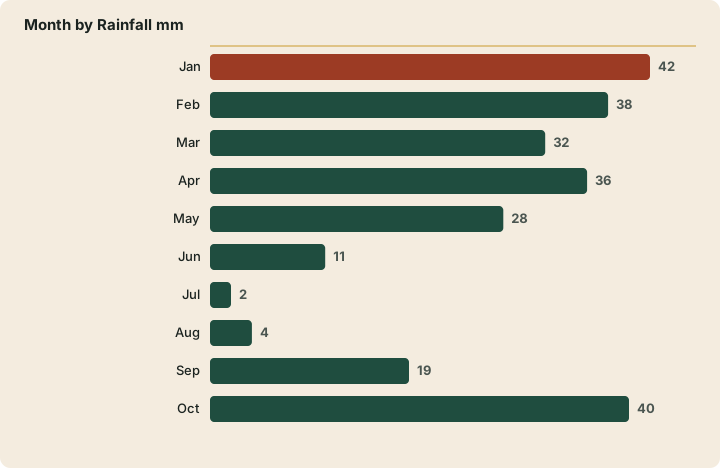
The best months to visit the Albaicin are April, May, October and the first half of November, when AEMET's climate normals for the Granada Aeropuerto station show average highs of 20.6C in April, 25.0C in May and 23.2C in October against modest rainfall, and the summer crowds have either not arrived or have gone. July and August average highs of 34.8C and 34.2C with almost no rain, which makes the quarter's unshaded stepped lanes a morning-or-evening proposition. The Albaicin is a hillside with a lot of stone and little shade, so the temperature table is not an abstraction here; it dictates the hour you walk.
The full monthly picture from AEMET's 1981-2010 normals:
| Month | Avg High C | Avg Low C | Rainfall mm |
|---|---|---|---|
| Jan | 13.0 | 0.0 | 42 |
| Feb | 15.4 | 1.6 | 38 |
| Mar | 19.0 | 3.8 | 32 |
| Apr | 20.6 | 6.0 | 36 |
| May | 25.0 | 9.4 | 28 |
| Jun | 31.0 | 13.6 | 11 |
| Jul | 34.8 | 15.7 | 2 |
| Aug | 34.2 | 15.5 | 4 |
| Sep | 29.4 | 12.8 | 19 |
| Oct | 23.2 | 8.7 | 40 |
| Nov | 17.0 | 4.2 | 54 |
| Dec | 13.4 | 1.7 | 56 |
Festival dates shift the calculus in specific weeks. Cruces de Mayo runs 1-3 May in 2026 and falls on 3 May in 2027, Semana Santa runs approximately 29 March to 5 April in 2026, and the Corpus Christi fair occupies roughly 30 May to 6 June 2026 with the main procession around 4 June. During those windows the quarter is at its most alive and its most crowded simultaneously. Our best time to visit Granada guide weighs the whole year.
For a free introduction, the Albaicin and Sacromonte free tour on GuruWalk, led by a local guide on a tip-based basis, is a way to learn the quarter's layout before exploring alone; the individual guide is named on the walk's own page.
What Monuments Inside The Albaicin Need A Ticket?
Only a handful of small monuments inside the quarter charge entry, and the Granada Card tiers priced from 13 November 2025 cover most of them: the 72h card at EUR 60 and the 48h card at EUR 55 include El Banuelo, Dar al-Horra, the Corral del Carbon and other Albaicin monuments alongside the Alhambra's daytime General visit, while the child card for ages 3-11 costs EUR 13. The Mirador de San Nicolas, the Plaza Larga and every lane in between cost nothing at all. That asymmetry, a free quarter wrapped around a few paid interiors, is why most visitors spend nothing inside the Albaicin itself and put their budget toward the Alhambra instead.
The paid interiors are small and quiet, and they are the quarter's best evidence of what the UNESCO listing protects. El Banuelo is a surviving Arab bathhouse whose vaulted chambers sit directly on the Carrera del Darro; Dar al-Horra is the Nasrid-era palace associated with the Sultan's mother; the Corral del Carbon is a former merchants' funduq near the old town end. The Granada Card's Alhambra portion cannot be split across days once activated, and validity runs two to four days from first use, tied to the booked Alhambra slot, so the card only makes sense if the monument days line up. Our Granada Card guide runs the arithmetic against buying individual tickets.
How Does The Albaicin Fit Into A Granada Trip?
Most visitors give the Albaicin half a day, either the late afternoon before an Alhambra morning or the evening of an arrival day, because the quarter's payoff is the sunset view from the Mirador de San Nicolas and the tapas that follow on the way down. The standard pairing is Alhambra in the morning, when the Nasrid Palaces half-hour entry slot is booked, and the Albaicin from mid-afternoon onward. The quarter also pairs naturally with the Sacromonte caves, which sit on the next hill east and are usually walked in the same outing, and the Realejo and the old town complete the city on foot for anyone staying a second day.
Booking order matters more than walking order. Alhambra tickets go first, because they sell out; the Albaicin needs no booking at all beyond an optional guided walk. Our Alhambra tickets guide covers the official channels and the sell-out timeline, and day trips from Granada extend a longer stay into the Alpujarras or the Sierra Nevada once the two hills are done.
Common Questions About The Albaicin In Granada
Is the Albaicin worth visiting?
Yes. The quarter holds Granada's oldest street plan, the city's most famous viewpoint at the Mirador de San Nicolas, and several surviving Nasrid-era monuments, and UNESCO extended the city's World Heritage listing to cover it in 1994. Our full answer to Is The Albaicin Worth Visiting goes into detail.
Is the Albaicin safe at night?
The areas visitors use, including the Mirador de San Nicolas, Plaza Larga and the Carrera del Darro, are generally safe and carry foot traffic until late. The lanes are dim, steep and easy to mis-navigate, so retracing your route up is the sensible way down.
How do I get to the Albaicin?
On foot from Plaza Nueva, or by the LAC/C34 hillclimb bus lines. The Metro de Granada does not serve the quarter or the Alhambra; it runs north-south through the city only.
Do bars in the Albaicin still give free tapas?
In many traditional bars, yes: a drink order typically comes with a complimentary small tapa, a custom widely upheld as of 2026 though not a legal guarantee, and some venues have adjusted portions or pricing.
How much time does the Albaicin need?
Half a day is the standard allocation, timed for late afternoon and sunset at the Mirador de San Nicolas, with tapas on the descent. A guided walk of the quarter and Sacromonte runs about two and a half hours.
The Albaicin is the half of Granada that needs no ticket, no booking window and no timed slot, which is exactly why it pairs so well with the Alhambra's strict regime: book the palace months ahead, then let the hill quarter take the evening as it comes.