Realejo Granada
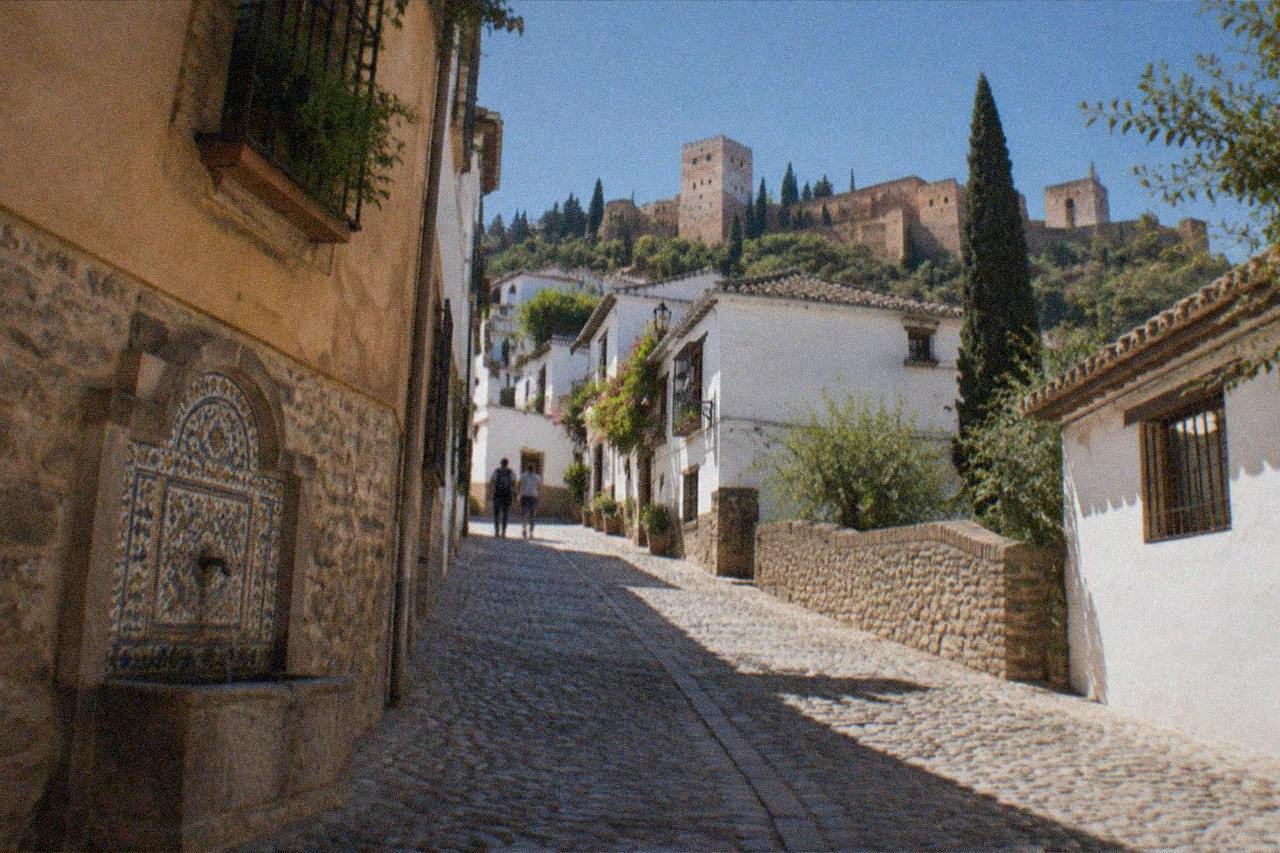
The Realejo is Granada's old Jewish quarter, draped across the hill directly below the Alhambra, and it is the quarter most visitors walk through without ever realising it has a name.
Short answer
The Realejo is the hillside neighbourhood south of the Alhambra, settled by Granada's Jewish community in the Nasrid era and reworked after the Christian conquest. Today it holds Campo del Principe, the Campo del Marte gardens, street-art-covered lanes, and some of the city's best tapas streets, all within a ten-minute walk of the Cathedral.
The Realejo is the quarter that most visitors to Granada pass through at least twice without ever learning its name: it is the hillside that fills the space between the Cathedral and the Alhambra, climbed on the way up and tumbled down on the way back. Before the Christian conquest it was the city's Jewish quarter, and the name itself is said to come from the "royal" status the community held under Nasrid rule. After the conquest the population was expelled or converted, churches replaced synagogues, and the neighbourhood settled into the quiet residential grid it still is: whitewashed lanes, cisterns, small squares, and views that open suddenly between houses straight onto the Alhambra walls above. This guide covers what the Realejo actually contains, how to reach it, what it costs to see the monuments around it, and how it fits into a Granada visit alongside the more famous Albaicin and Sacromonte. The Alhambra, Generalife and Albaicin together form one UNESCO World Heritage inscription, made in 1984 and extended in 1994, and the Realejo sits right on that heritage boundary, which is why the walk up from the centre is one of the most rewarding twenty minutes in the city.
What Is The Realejo In Granada?
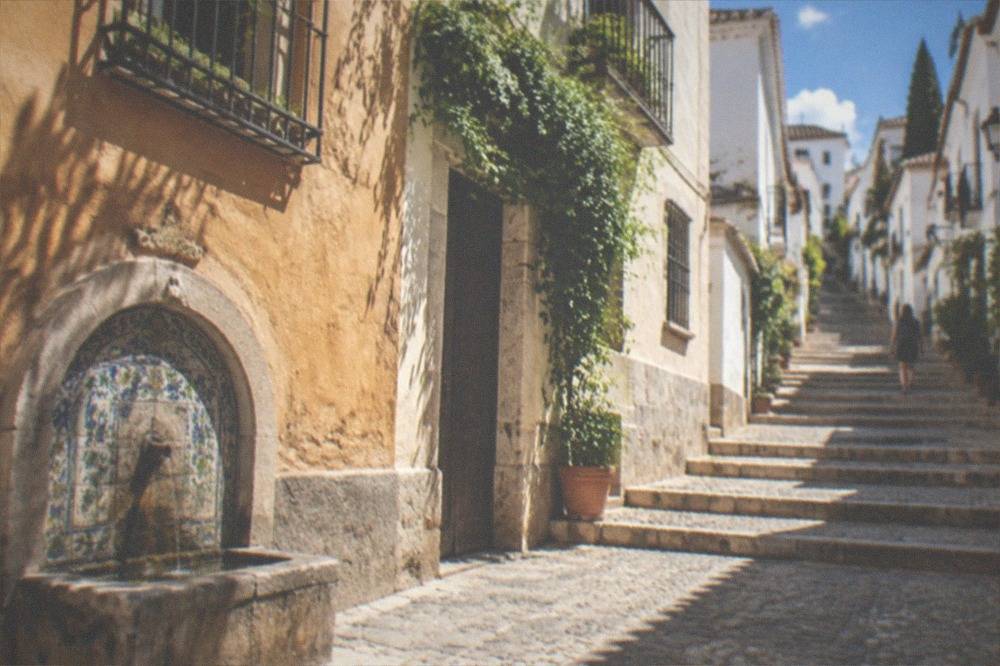
The Realejo is Granada's historic Jewish quarter, occupying the south-facing slope directly below the Alhambra between the Cathedral area and the Sabika hill. It was the city's main Jewish neighbourhood in the Nasrid period, was emptied and rebuilt after the Christian conquest, and today it is a largely residential district of narrow lanes, small squares, convents and street art, with Campo del Principe as its centre. Most of what visitors recognise as "the walk up to the Alhambra" is actually the Realejo.
The historical outline is simple and sobering. Under Nasrid rule Granada's Jewish community was concentrated on this slope, close to the palace but outside the walled royal compound, and the community was substantial enough that the district carried its own identity. The conquest ended that: the Jewish population was expelled or forcibly converted, and the quarter's institutions were replaced. Churches and convents went up, and the street plan we walk today is largely post-conquest, layered onto older foundations.
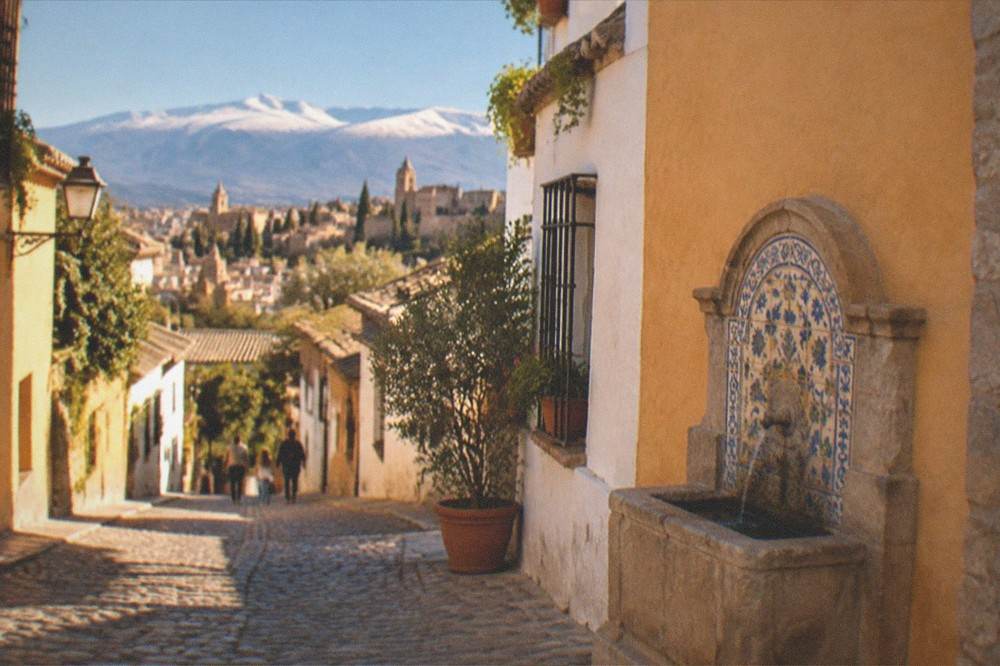
What survives is the geography rather than the buildings. The Realejo's lanes still follow the hill's contours, climbing from the Puerta Real end of the centre up toward the Alhambra's forest, and the views are the reason to come: the Alhambra's towers sit directly overhead, close enough that the Nasrid Palaces feel less like a monument and more like a neighbour's roofline. For orientation and history, the Granada old town guide places the Realejo in the wider city layout, and the Albaicin guide covers the quarter on the opposite side of the Darro valley.
The district's modern identity is quieter than the Albaicin's. There are fewer souvenir shops, fewer tour groups, and more ordinary Granada life: schools, workshops, laundry lines, and bars that exist for their regulars first and visitors second. That balance is exactly why it rewards a slow walk, and why a guide who knows the lanes adds more here than in the more scripted parts of the city.
What Are The Best Things To See In The Realejo Granada?
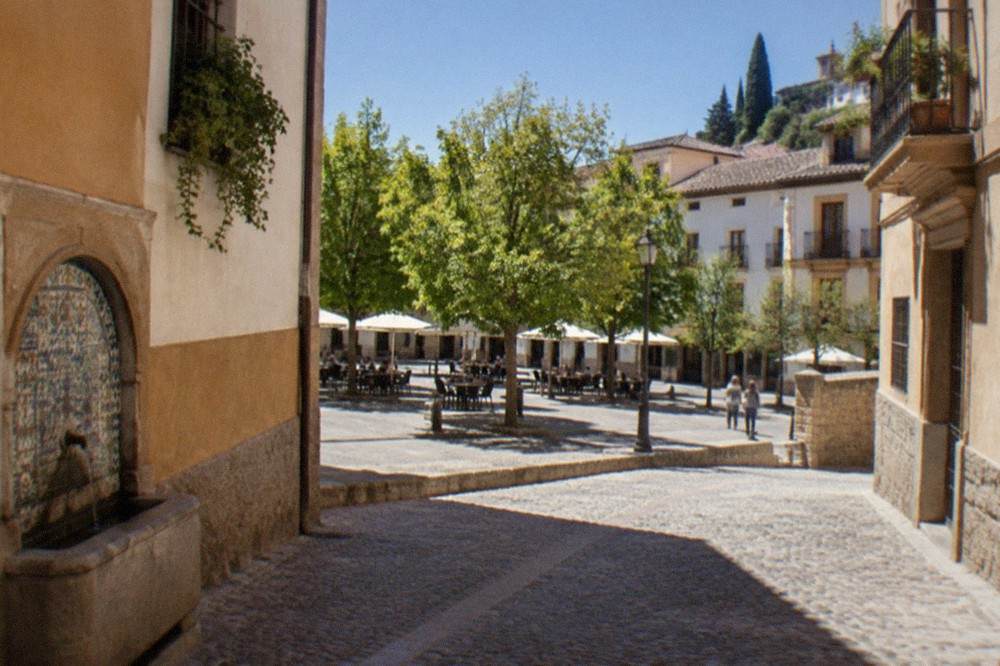
The essential sights in the Realejo are Campo del Principe, the district's historic main square; the Campo del Marte gardens on the Alhambra's lower slope; the Casa de los Tiros museum-building on Calle Rosario; the church of Santo Domingo; and the street-art-covered lanes around Calle Molinos and the Cuesta del Realejo. None of these requires a ticket except the Casa de los Tiros, and the quarter's real attraction is the connective tissue between them: lanes, lookouts and staircases.
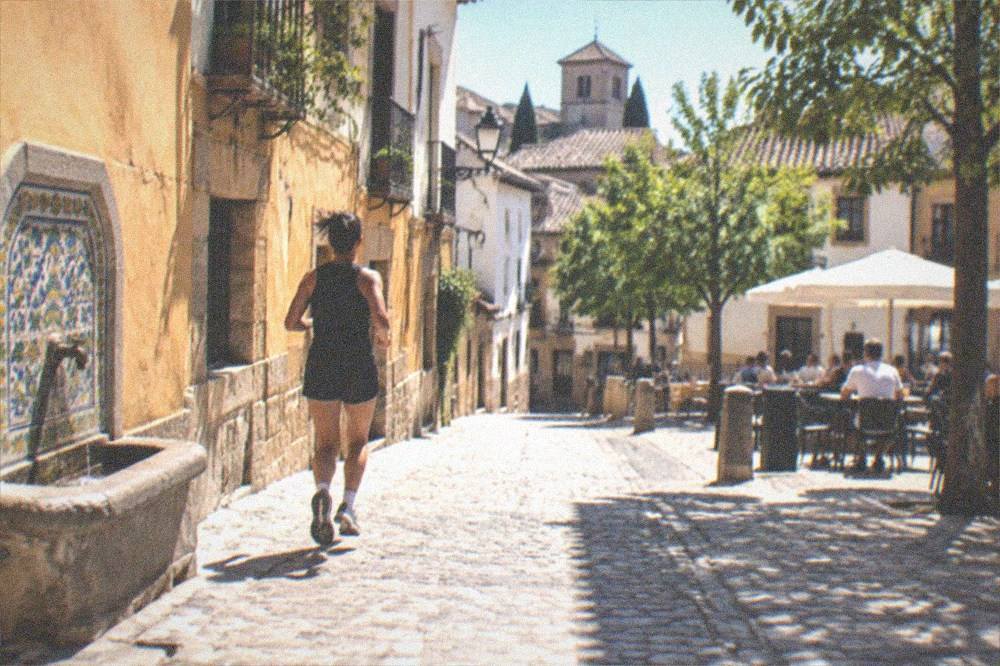
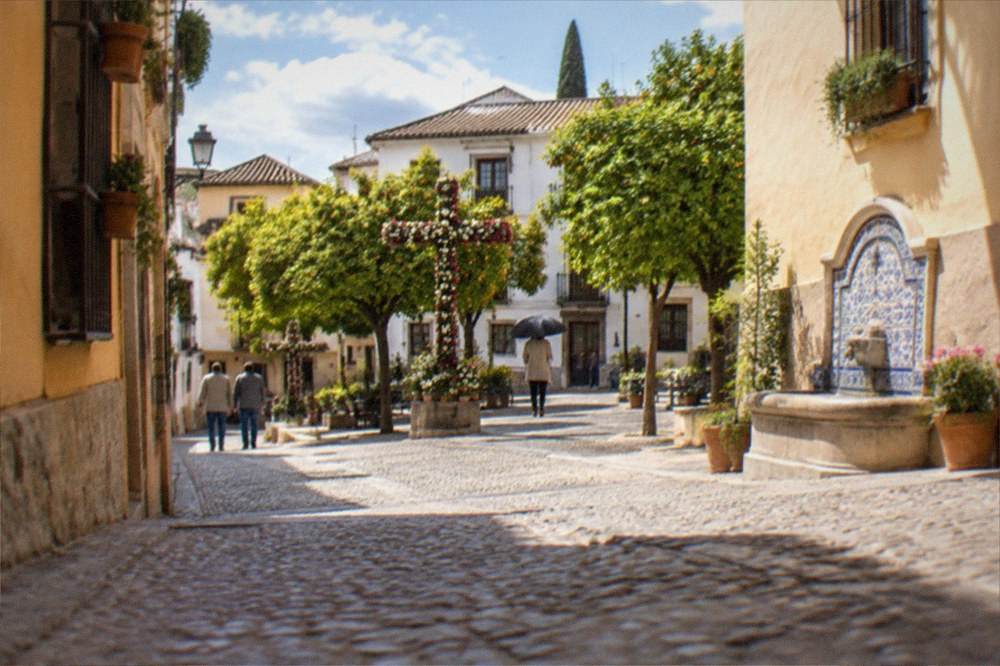
Campo del Principe is the natural starting point. It is an open, tree-shaded square at the heart of the district, ringed by bars and dominated by a stone cross, and it functions as the Realejo's living room. On any evening the tables fill with residents rather than tour groups, which in central Granada is a genuine distinction. The square's name and its role in local Holy Week processions tie it to the city's religious calendar; if you are visiting over Easter, the local procession routes pass right through these lanes, so check the programme for the year you travel.
From Campo del Principe the lanes climb toward the Alhambra's wooded slope. The Campo del Marte, the old military parade ground turned gardens, sits on this upper edge and gives one of the closest ground-level views of the Alhambra's western front, the towers of the Alcazaba rising straight above the trees. It is also the practical approach route to the Alhambra for anyone staying in the centre, and it connects to the Cuesta de los Chinos, the stepped path that runs up the hillside to the monument's eastern gate.
The Casa de los Tiros, on Calle Rosario, is the quarter's one museum stop, a historic house with a carved facade and a small collection inside; check opening details on site, as the pack does not carry a confirmed current entry price for it. Below it, the church of Santo Domingo anchors the lower Realejo, and the surrounding grid of lanes is where the district's contemporary reputation lives: in recent decades local artists have covered walls, shutters and electricity boxes with murals, and the result is an open-air gallery that changes year by year. The most celebrated figures in this scene are Granada street painters whose work appears across the Realejo's lower streets, and hunting the murals out lane by lane is half the pleasure of the walk.
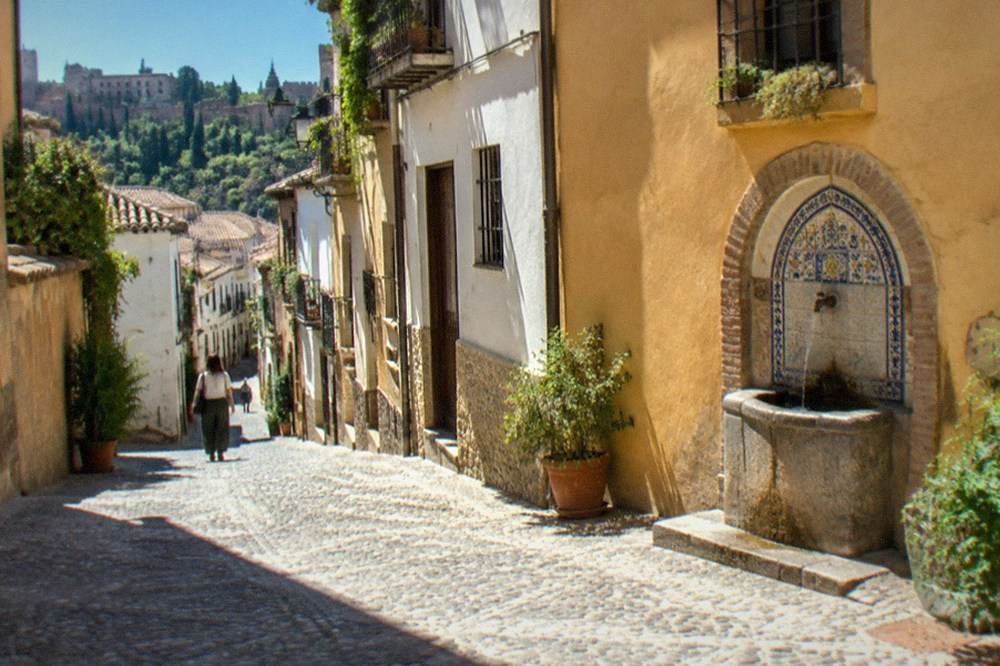
The practical way to see all of this is a loop: start at Campo del Principe, walk up through the Campo del Marte for the Alhambra view, descend through the street-art lanes toward Santo Domingo, and finish in the bars around the square. A private guided walk ties it together with the neighbouring quarters, covering the district in the context of the Albaicin and Sacromonte on the far side of the valley, and the operator's live listing shows the current schedule and availability.
If the Realejo's murals and squares fill an afternoon, the Alhambra above them deserves a full half-day of its own, and a private guide turns the palace complex from a beautiful blur into something legible. A dedicated private tour covers the Nasrid Palaces, Generalife and Alcazaba with a guide to yourself, and it is worth checking availability before finalising dates, since Alhambra entry is capacity-limited and the General ticket routinely sells out one to two months or more ahead in peak season.
How Do You Get To The Realejo From Central Granada?
The Realejo is reached on foot from the city centre in roughly ten minutes: from Puerta Real or the Cathedral, walk up Calle Recogidas or the Cuesta del Realejo and the district begins almost immediately. There is no metro station serving the Realejo or the Alhambra, since the Metro de Granada runs north-south through the city and never climbs the hill, so the practical options are walking, the urban bus lines that serve the Alhambra's hill, or a taxi to Campo del Principe.
The walking routes are the point. The Cuesta del Realejo, the stepped lane that climbs from near the Puerta Real, is the classic entrance, and the Cuesta de los Chinos on the upper edge links the Realejo to the Alhambra's gates through the wooded slope. Anyone coming from the Granada Cathedral or the Royal Chapel can be in the heart of the district within ten minutes of leaving them.
The metro point matters because it is the single most common transport mistake in Granada. The Metro de Granada is a light rail line running north to south through the city and metropolitan area; it does not serve the airport, and it does not serve the Alhambra or the Realejo hillside. Visitors staying near a metro stop sometimes assume the line climbs to the monument, and it does not: the Alhambra is reached by the hillclimb bus lines or on foot, and the Realejo is a walking district. For the airport connection itself, the Alsa Linea 245 bus runs from Granada Airport to the centre for EUR 3.10 in roughly 40 to 45 minutes, and the Granada airport guide covers the full transfer.
For a first visit that strings the centre, the Realejo and the Alhambra together, the one day in Granada itinerary sequences the walk in an order that avoids backtracking, and the Alhambra tickets guide handles the booking side, which is the part that actually needs planning.
Where Do You Eat In The Realejo Granada?
The Realejo's eating scene concentrates around Campo del Principe and the lanes dropping from it toward the centre, and it follows Granada's tapas custom: in many traditional bars a drink order comes with a complimentary small tapa, a widely upheld local practice rather than a guaranteed rule everywhere. The district's bars lean residential, which tends to mean honest portions and prices aimed at people who live here.
The tapas custom deserves its own sentence because it shapes every evening in the city. A drink order in many traditional Granada bars typically arrives with a free small plate, often growing more generous with subsequent rounds, and 2026 local reporting confirms the tradition remains widely upheld as part of the city's identity. It is not a legal requirement, and some venues have adjusted portion size or pricing, so treat it as the norm rather than a promise. The free tapas guide covers the custom in detail, including where it works best and where portions have thinned.
Around Campo del Principe the tables fill early, and the square is one of the few central places where an evening drink feels genuinely local. The lanes below, toward Calle Rosario and the Santo Domingo end, hold the smaller neighbourhood bars, and the district's sit-down restaurants sit mostly on its lower edge, within easy reach of the centre.
The Realejo's position also makes it the natural pre-Alhambra stop. Bars here are a short walk from the monument's gates, so a morning coffee or a post-visit late lunch in the district fits the Alhambra's timed-entry rhythm neatly: the Nasrid Palaces ticket carries a strict half-hour entry window, and the rest of the complex can be visited outside that window on the same date, so planning food around the slot matters.
| Eating situation in the Realejo | What to expect | Typical custom |
|---|---|---|
| Drink order in a traditional bar | A complimentary small tapa in many bars | Widely upheld local practice, not guaranteed everywhere |
| Subsequent drink rounds | Tapa portions often increase | Varies by venue |
| Campo del Principe tables | Residential evening crowd, outdoor seating | Fills early in warm months |
| Neighbourhood lanes below the square | Smaller bars, local prices | Cash still useful in some spots |
How Much Do The Monuments Around The Realejo Cost?
The monuments within and beside the Realejo are mostly free to walk past, and the paid entries nearby are the Cathedral at EUR 10 individual during the 2026 Kerygma exhibition (EUR 7 from 29 November 2026), the Royal Chapel at EUR 7 individual and EUR 5 reduced, and the Alhambra General ticket at EUR 22.27, with under-12s free at each. The Casa de los Tiros, the Realejo's own museum stop, should be price-checked on site, as the verified pack carries no confirmed current figure for it.
The Alhambra figures are the ones that need care, because they are in flux and misquoted constantly. The live official ticket pages currently show the General daytime ticket at EUR 22.27, the Gardens, Generalife and Alcazaba-only daytime ticket at EUR 12.73, the night Nasrid Palaces visit at EUR 12.73, the night Gardens and Generalife visit at EUR 8.48, and the Dobla de Oro combined ticket at EUR 30.48. A July 2025 press release announced lower prices effective 1 August 2025, but the live official pages still show the higher figures, so use the live price at booking time rather than either quoted number in isolation.
| Ticket | Official price (EUR) | Notes |
|---|---|---|
| Alhambra General, day | 22.27 | Nasrid Palaces + Alcazaba + Generalife |
| Gardens, Generalife and Alcazaba, day | 12.73 | No Nasrid Palaces access |
| Night visit, Nasrid Palaces | 12.73 | Selected evenings only |
| Night visit, Gardens and Generalife | 8.48 | Seasonal windows |
| Dobla de Oro General | 30.48 | Alhambra plus Andalusi monuments |
| Children under 12 | 0 | Ticket still required for entry control |
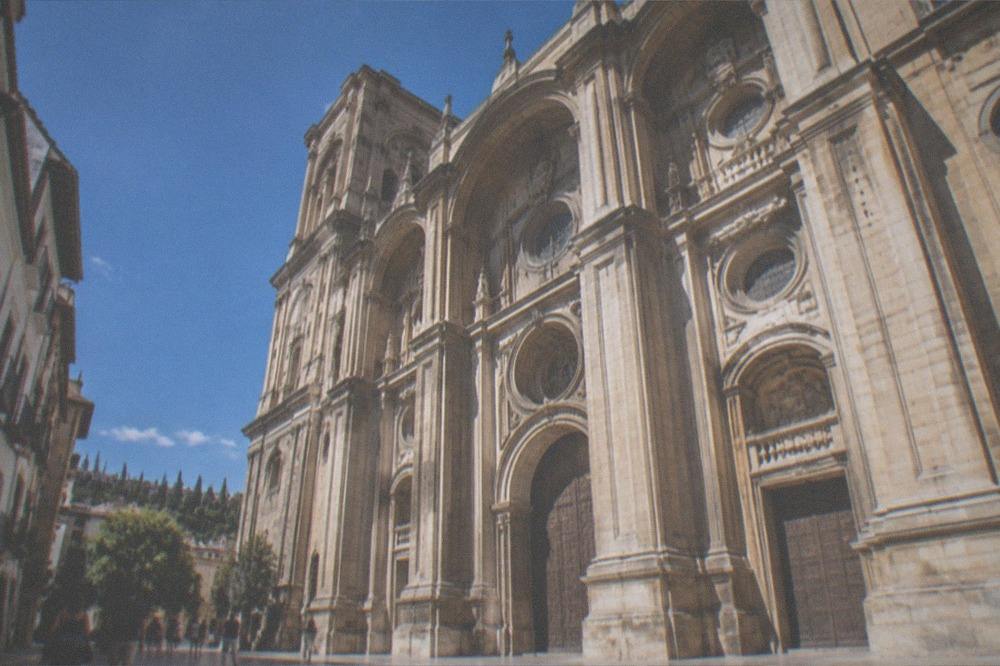
The Cathedral's price is date-dependent in a way most guides miss. During the Kerygma exhibition, running 8 May to 28 November 2026, individual entry is EUR 10 and reduced EUR 8; from 29 November 2026 it drops to EUR 7 individual and EUR 5 reduced, with under-12s free throughout. The Royal Chapel next door, where the Catholic Monarchs are buried, is EUR 7 individual and EUR 5 reduced year-round under the current tariff. Both are a short downhill walk from the Realejo, and the Granada Card guide explains when a pass makes sense: the card's tiers are EUR 60 for 72 hours, EUR 55 for 48 hours, EUR 50 for the 24-hour night-Palaces variant, EUR 50 for the Jardines variant, and EUR 13 for children aged 3 to 11, effective 13 November 2025.
| Monument near the Realejo | Individual price (EUR) | Reduced price (EUR) | Under 12 |
|---|---|---|---|
| Granada Cathedral, to 28 Nov 2026 | 10 | 8 | Free |
| Granada Cathedral, from 29 Nov 2026 | 7 | 5 | Free |
| Royal Chapel | 7 | 5 | Free |
| Alhambra General, day | 22.27 | varies by eligibility | Free (ticket required) |
When Is The Best Time To Visit The Realejo In Granada?
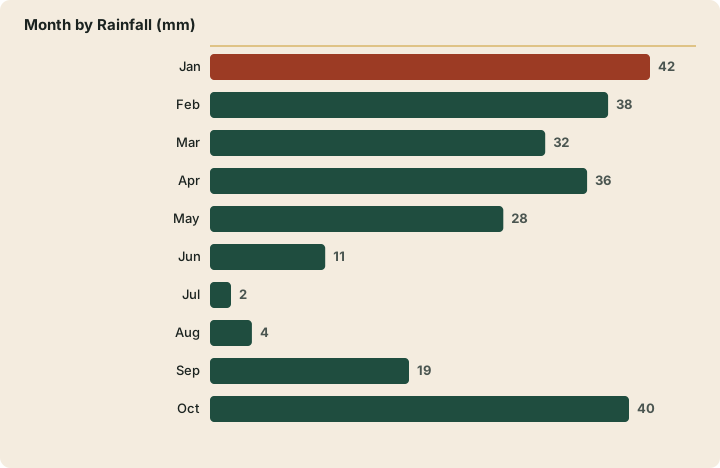
The most comfortable months to walk the Realejo are April, May, October and November, when AEMET's Granada normals show average highs of 20.6C, 25.0C, 23.2C and 17.0C respectively and rainfall stays moderate; July and August average 34.8C and 34.2C highs, which makes the district's unshaded stepped lanes punishing at midday, and winter brings nights that can fall to 0C in January. The district itself is open year-round, since it is a neighbourhood rather than a ticketed site.
Granada's climate is continental despite its southern latitude: the same city that sees 34.8C July averages also sees January nights at 0.0C, with snow visible on the Sierra Nevada from the streets in winter. The Realejo's lanes face south and hold heat, so summer walks are best moved to early morning or evening, when Campo del Principe's tables are full anyway. The Granada weather guide carries the full month-by-month picture and the best-time-to-visit question in depth.
| Month | Avg high (C) | Avg low (C) | Rainfall (mm) |
|---|---|---|---|
| Jan | 13.0 | 0.0 | 42 |
| Feb | 15.4 | 1.6 | 38 |
| Mar | 19.0 | 3.8 | 32 |
| Apr | 20.6 | 6.0 | 36 |
| May | 25.0 | 9.4 | 28 |
| Jun | 31.0 | 13.6 | 11 |
| Jul | 34.8 | 15.7 | 2 |
| Aug | 34.2 | 15.5 | 4 |
| Sep | 29.4 | 12.8 | 19 |
| Oct | 23.2 | 8.7 | 40 |
| Nov | 17.0 | 4.2 | 54 |
| Dec | 13.4 | 1.7 | 56 |
The festival calendar adds two further reasons to time a visit. Semana Santa in 2026 runs approximately 29 March to 5 April, and the Realejo's squares and processional routes are part of it; Cruces de Mayo follows on 1 to 3 May 2026, when neighbourhood crosses and decorated squares take over districts exactly like this one. Both dates also mean Alhambra tickets sell even further ahead than usual, so book the monument first and build the neighbourhood walks around it.
How Does The Realejo Compare With The Albaicin And Sacromonte?
The Realejo is the quieter, more residential of Granada's three hillside quarters: the Albaicin, across the Darro valley, holds the famous Moorish street plan and the Mirador de San Nicolas viewpoint, Sacromonte holds the cave houses and flamenco, and the Realejo holds neither the biggest views nor the biggest crowds, offering instead street art, local bars and the closest approach to the Alhambra on foot. Visiting all three in one day is not only possible but is the natural Granada circuit.
The comparison matters for planning. The Albaicin's lanes are the UNESCO-listed Moorish quarter, and its Mirador de San Nicolas is the city's signature sunset viewpoint, facing the Alhambra across the valley. Sacromonte, above the Albaicin, is the flamenco cave district. The Realejo, on the Alhambra's own hill, faces inward: its views look up at the palace rather than across at it, and its evening scene belongs to residents. The Sacromonte guide covers the eastern quarters, and a guided walk that links all three solves the logistics in one stroke.
For a two-day visit, the standard split works well: the Realejo and the Alhambra on one day, since they share a hill, and the Albaicin and Sacromonte on the other, since they share the far slope. The two days in Granada itinerary sequences exactly that, and the city's guided walking options cover the full circuit for visitors who would rather not navigate the lanes alone.
Once the city quarters are walked, the mountains beyond them are the next layer: the Alpujarras villages on the Sierra Nevada's southern flank make a full-day trip from Granada, and the Alpujarra mountain villages tour runs there from the city. Check availability for the dates in mind, and see the day trips from Granada guide for the wider range.
The Alpujarras option deserves its own word of context before you commit a day to it. The villages sit on the high southern slopes of the Sierra Nevada, a landscape of white hamlets, terraced farmland and irrigation channels inherited from the region's Andalusi past, and the full-day tour from Granada reaches them without needing a hire car on the mountain roads. It is a very different Granada province from the one the Realejo represents, and the contrast is precisely why it works as the day-trip layer of a city stay.
Is The Realejo Granada Worth Visiting?
The Realejo is worth visiting for anyone with more than a few hours in Granada, because it costs nothing to walk, sits directly on the route between the centre and the Alhambra, and delivers the city's most local evening atmosphere around Campo del Principe, plus street art and close-up Alhambra views the busier quarters cannot match. Visitors with only one Alhambra slot and no spare time can skip it without guilt; everyone else should give it at least an evening.
The honest verdict is that the Realejo is a supporting act, not a headliner. Nobody should choose it over the Alhambra, the Nasrid Palaces or the Albaicin's viewpoints. But it is the district that makes the rest feel connected: the walk up through its lanes is the best approach to the Alhambra from the centre, its bars are where the day's sightseeing winds down, and its murals give the visit a contemporary layer that the monuments do not. As Things To Do In Granada argues in its guide to what else the city holds beyond the Alhambra, Granada rewards exactly this kind of second-tier wandering.
Plan it around the Alhambra booking rather than the other way round. Secure the Nasrid Palaces slot first, because the General ticket sells out one to two months or more ahead in spring and autumn and online sales close the night before, then slot the Realejo walk before or after the monument visit: the Campo del Marte approach puts you at the gates, and the descent through the street-art lanes ends within ten minutes of the Cathedral. That single loop, done slowly with a stop at Campo del Principe, is the Realejo in its best form.
Common Questions About The Realejo Granada
What Is The Realejo In Granada?
The Realejo is Granada's historic Jewish quarter, on the south-facing slope directly below the Alhambra. It was the city's main Jewish neighbourhood in the Nasrid era, was emptied after the Christian conquest, and today it is a largely residential district of narrow lanes, small squares and street art, centred on Campo del Principe.
How Do I Get To The Realejo?
On foot from the centre in about ten minutes, up the Cuesta del Realejo from near Puerta Real or via the lanes behind the Cathedral. There is no metro station serving the Realejo or the Alhambra: the Metro de Granada runs north-south and never climbs the hill, so the options are walking, urban bus or taxi.
Is The Realejo The Same As The Albaicin?
No. The Albaicin is the Moorish quarter on the far side of the Darro valley, facing the Alhambra, and holds the Mirador de San Nicolas. The Realejo is on the Alhambra's own hill, between the centre and the palace, and is quieter and more residential. The two are linked by the Carrera del Darro and the valley paths.
Do Bars In The Realejo Serve Free Tapas?
In many traditional Realejo bars a drink order comes with a complimentary small tapa, following the custom that remains widely upheld across Granada as of 2026. It is a local practice rather than a guaranteed rule, and some venues have adjusted portions or pricing, so expect it as the norm without assuming it everywhere.
Can You Walk From The Realejo To The Alhambra?
Yes, and it is the standard approach from the centre. Lanes climb from Campo del Principe through the Campo del Marte gardens to the monument's gates, and the Cuesta de los Chinos path continues up the wooded slope. Remember that the Nasrid Palaces entry window printed on your ticket is strictly enforced, so leave time for the climb.
How Much Time Do You Need In The Realejo?
An unhurried loop of the district, taking in Campo del Principe, the Campo del Marte view and the street-art lanes, fits comfortably in two hours, with an extra hour or two if you stay for evening drinks. It pairs naturally with an Alhambra visit on the same morning or afternoon.