Granada Weather
Granada sits at the foot of the Sierra Nevada, and its climate shows it: scorching dry summers, cold nights in winter, and snow on the mountains while the city stays walkable. Here is what official AEMET data says about every month.
Short answer
Granada has a hot-summer Mediterranean climate with big day-to-night temperature swings. July averages 34.8C highs and just 2mm of rain; January averages 13.0C highs but 0.0C nights. Annual rainfall is about 365mm, concentrated in October to March.
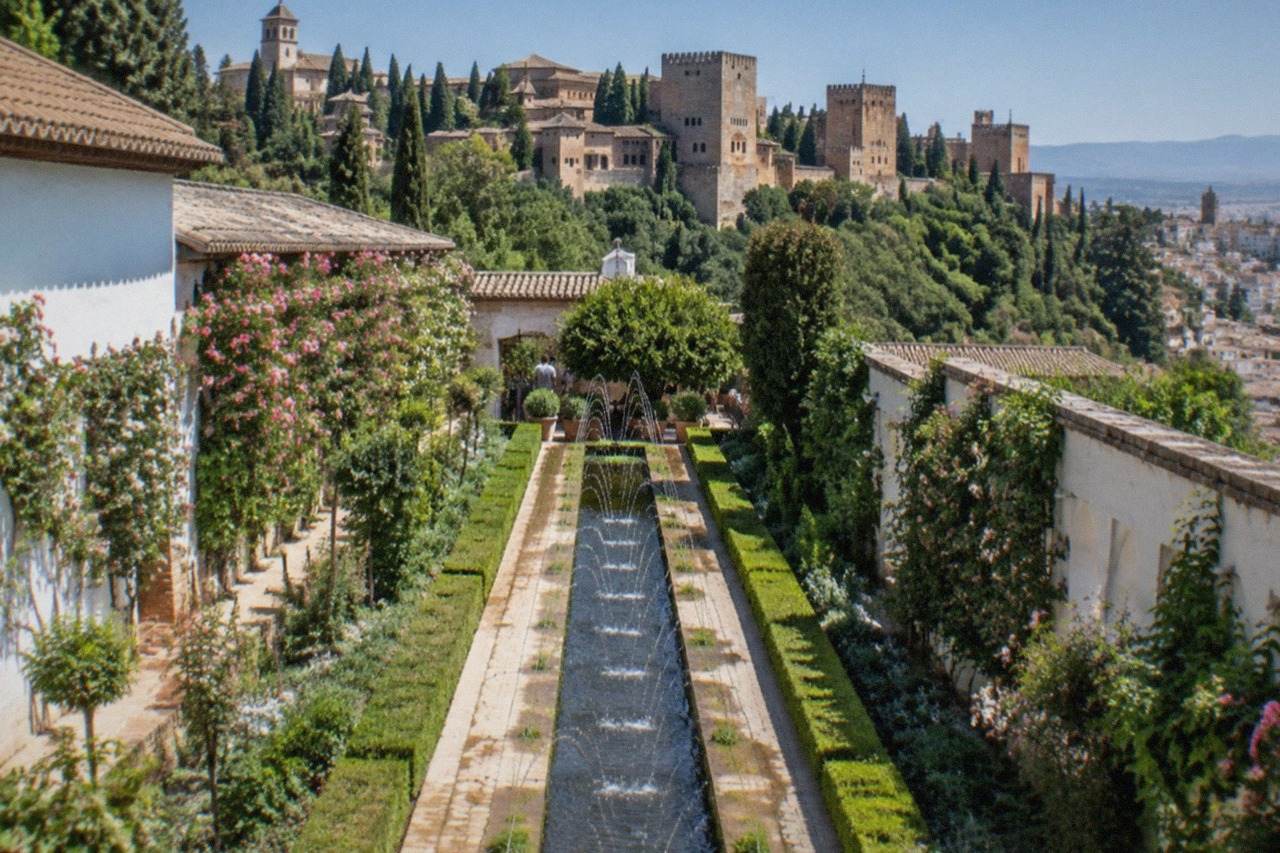
Granada's weather is a story of two neighbours: a city at the foot of a mountain wall that tops 3,000 metres. The result, according to AEMET's official climate normals for the Granada Aeropuerto station covering 1981 to 2010, is an annual mean of about 23.0C for daytime highs and 7.8C for overnight lows, with roughly 365mm of rain across the whole year. That is drier than most of coastal Andalusia, hotter in July than many visitors expect, and colder on January nights than almost anyone packing for "southern Spain" imagines. This guide walks through the official month-by-month numbers, what they mean for the Alhambra, the Albaicin and the Sierra Nevada, and how to plan around each season.
What Is The Weather Like In Granada Throughout The Year?
Granada has a hot-summer Mediterranean climate with sharp day-to-night temperature swings, driven by its inland elevation at the foot of the Sierra Nevada. AEMET's 1981-2010 normals for the Granada Aeropuerto station put July at an average high of 34.8C and an average low of 15.7C, while January runs 13.0C by day and 0.0C at night. Rainfall averages about 365mm per year, and it is heavily concentrated between October and March, leaving the summer months almost completely dry.
The swing between daytime and overnight temperatures is the single most under-appreciated feature of Granada's climate. On a typical July day the temperature falls nearly 20 degrees between the afternoon and the small hours. In winter the same pattern works in reverse: a January afternoon of 13.0C feels mild on a sunny terrace, then the mercury drops to freezing once the sun goes down. Visitors who pack only for the forecast high, or only for the forecast low, tend to regret it by day two.
The Sierra Nevada is the reason. The mountain range blocks much of the humid Atlantic influence that keeps Seville's winters milder at night and pushes summer rainfall off the table entirely, so Granada behaves more like a high plateau city than a Mediterranean coastal one. Snow sits on the peaks for much of the year and is regularly visible from the city centre, a sight that surprises first-time visitors in April and even May.
| Season | Typical daytime high | Typical overnight low | Rain pattern |
|---|---|---|---|
| Spring (Mar-May) | 19.0-25.0C | 3.8-9.4C | Light, tapering to 28mm in May |
| Summer (Jun-Aug) | 31.0-34.8C | 13.6-15.7C | Almost none, 2-11mm per month |
| Autumn (Sep-Nov) | 17.0-29.4C | 4.2-12.8C | Rising sharply to 54mm in November |
| Winter (Dec-Feb) | 13.0-15.4C | 0.0-1.7C | The wettest quarter, 38-56mm per month |
For a fuller discussion of when to time a trip around these patterns, the best time to visit Granada guide covers festivals and crowd levels alongside the climate picture.
What Is The Granada Weather By Month?
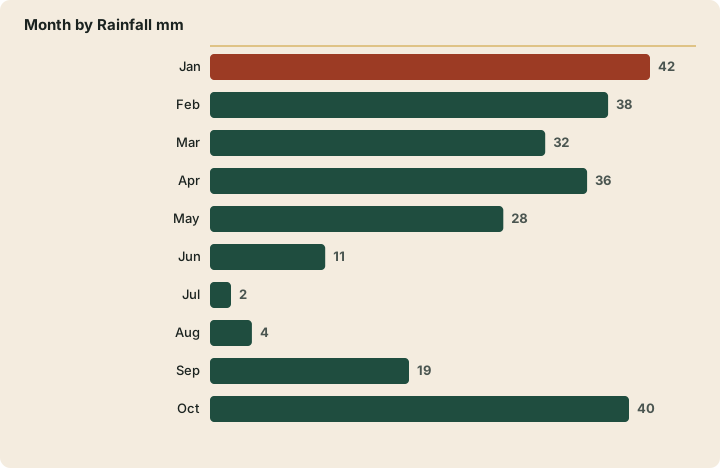
The official AEMET month-by-month normals show Granada warming from 13.0C daytime highs in January to 34.8C in July, then cooling steadily back to 13.4C in December, while rainfall peaks in November and December at 54mm and 56mm and collapses to just 2mm in July. Every figure in the table below comes from the AEMET normals for the Granada Aeropuerto station, 1981-2010, and no other source should be substituted for them.
| Month | Avg high C | Avg low C | Rainfall mm |
|---|---|---|---|
| Jan | 13.0 | 0.0 | 42 |
| Feb | 15.4 | 1.6 | 38 |
| Mar | 19.0 | 3.8 | 32 |
| Apr | 20.6 | 6.0 | 36 |
| May | 25.0 | 9.4 | 28 |
| Jun | 31.0 | 13.6 | 11 |
| Jul | 34.8 | 15.7 | 2 |
| Aug | 34.2 | 15.5 | 4 |
| Sep | 29.4 | 12.8 | 19 |
| Oct | 23.2 | 8.7 | 40 |
| Nov | 17.0 | 4.2 | 54 |
| Dec | 13.4 | 1.7 | 56 |
A few patterns are worth reading off the table rather than skimming past. June is nearly as hot as August by day, 31.0C against 34.2C, but with far fewer crowds at the Alhambra. September stays warm at 29.4C while rainfall begins to return, which is why early September often delivers the year's first thunderstorms after months of nothing at all. And the wettest months, November and December, are still only wet by Spanish inland standards: 54mm and 56mm respectively is less rain than many northern European cities see in a single autumn week.
March and April are close in temperature, 19.0C and 20.6C by day, but April carries slightly more rain, 36mm against 32mm, because spring showers build through the season before the summer drought sets in. May is the sweet spot for many travellers: 25.0C days, 9.4C nights and just 28mm of rain, with the Generalife gardens at their greenest.
Weather shapes what a day in the city can hold. A warm evening suits a Granada tapas crawl, while a cool clear winter morning is arguably the best light of the year for photographing the Alhambra from the Mirador de San Nicolas.
Is Granada Hot In The Summer?
Yes, Granada is genuinely hot in summer, with AEMET normals putting July at an average high of 34.8C and August at 34.2C, and overnight lows that only fall to the mid-15s, 15.7C in July and 15.5C in August. Rainfall is almost nonexistent, at just 2mm in July and 4mm in August, so the heat is dry rather than humid, which most visitors find more bearable than coastal Andalusian summer stickiness.
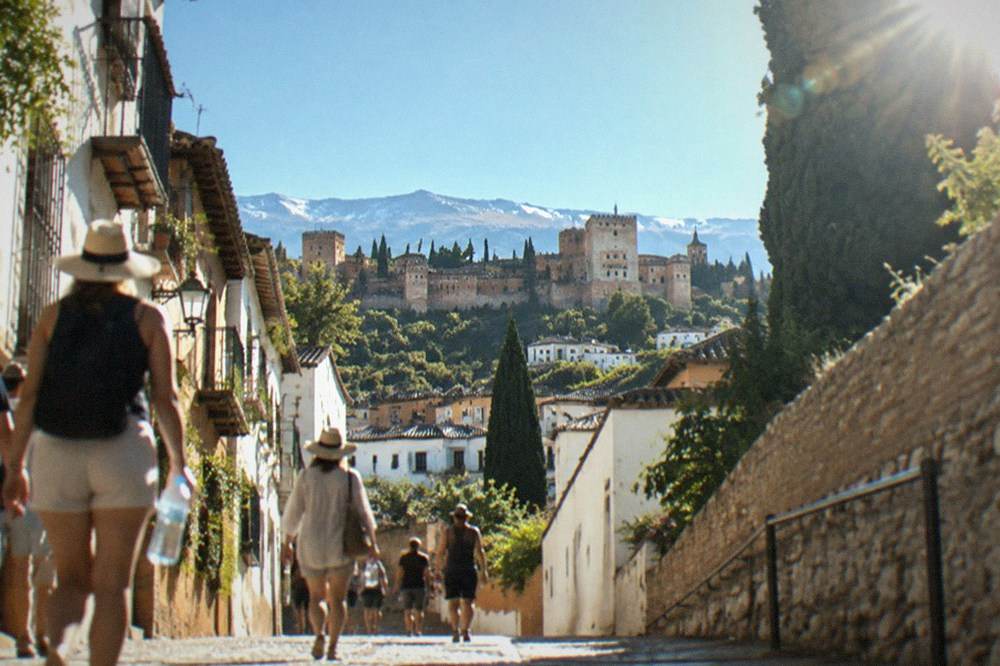
The dryness matters more than the raw number. Granada's summer heat is the desert-plateau kind: shade genuinely helps, evenings cool off fast once the sun drops, and the low of 15.7C means an 11pm terrace dinner is comfortable rather than a sweat-fest. That said, mid-afternoon between roughly 2pm and 6pm is not the time to climb the Cuesta de los Chinos to the Alhambra or wander the unshaded Albaicin lanes. Locals structure summer days around the heat, and visitors who copy them get far more out of the city.
The Alhambra deserves special mention. Its day-visit hours in summer run 08:30 to 20:00 (1 April to 14 October), so an 08:30 entry means touring the Nasrid Palaces before the worst of the heat. The Generalife gardens offer more shade than the Alcazaba, but the Nasrid Palaces themselves, carved stone interiors with limited airflow, are noticeably warmer inside than the courtyards suggest. Night visits to the Nasrid Palaces run Tuesday to Saturday at 22:00 to 23:30 in the summer season, a way to see them at 25C instead of 35C.
| Summer month | Avg high | Avg low | Rain | Practical read |
|---|---|---|---|---|
| Jun | 31.0C | 13.6C | 11mm | Hot days, cool nights, thin crowds early in the month |
| Jul | 34.8C | 15.7C | 2mm | Peak heat, shift sightseeing to morning and evening |
| Aug | 34.2C | 15.5C | 4mm | As hot as July, peak domestic holiday season |
For more on the seasonal timing question, including how summer heat interacts with Alhambra ticket availability, the Alhambra tickets guide covers booking windows and the Alhambra night visit guide covers the after-dark option in detail.
How Cold Does Granada Get In Winter?
Granada winters are mild by day and genuinely cold at night, with AEMET normals showing January at 13.0C daytime highs but 0.0C overnight lows, February at 15.4C and 1.6C, and December at 13.4C and 1.7C. Rainfall is at its annual peak, 42mm in January, 38mm in February and 56mm in December, though that still averages out to only a handful of wet days per month.
The freezing January night is the figure that catches people out. Granada is farther south than Seville, yet its elevation and inland position mean it regularly drops below 0C from late December through February, and frost on parked cars in the early morning is a normal winter sight in the city's outer neighbourhoods. Daytime is a different story: 13.0C under the Andalusian winter sun feels pleasant in a light jacket on a sheltered terrace, and Granada gets a large share of clear winter days.
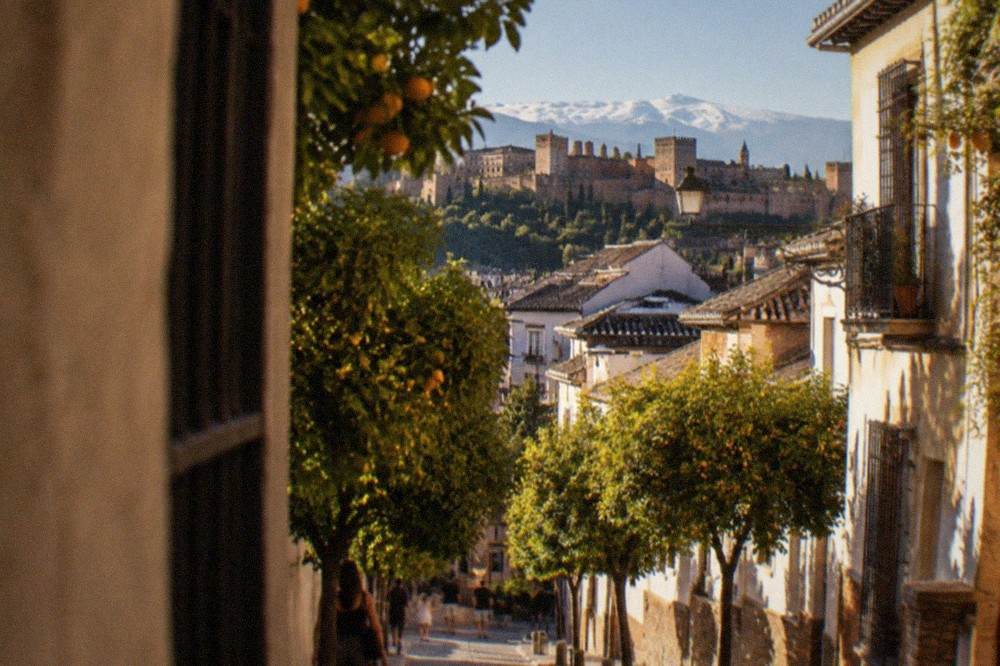
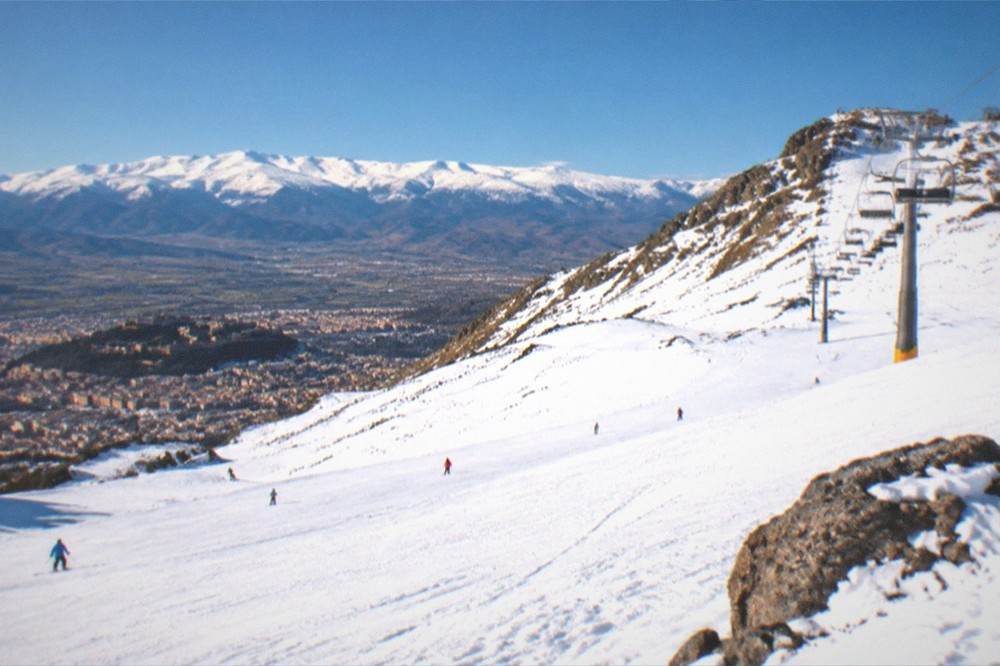
This is also the season when the Sierra Nevada does its best work. Snow on the peaks above the city is common from November through April and often visible from the Mirador de San Nicolas or even from lower streets in the Realejo, a striking contrast with orange trees still bearing fruit in the city below. The ski resort's season typically runs late November to early or mid-April, weather and snow dependent, and the official resort site had not published confirmed 2026-2027 opening or closing dates at research time, so check it for this season's dates.
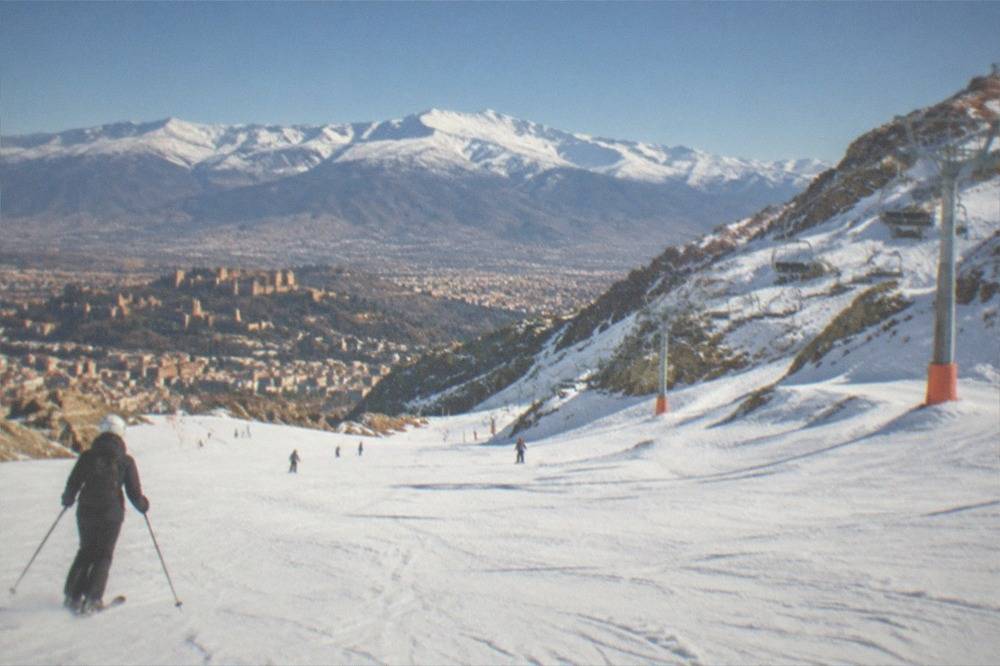
Winter is also when Granada's indoor attractions earn their keep. The Granada Cathedral and the Royal Chapel are comfortably visitable in any weather, and the hammams in Granada are arguably at their best when the evening air is close to freezing. A cold night followed by a warm bath house is a very old Granada tradition, and the Nasrid builders of the Alhambra would have recognised the logic.
| Winter month | Avg high | Avg low | Rain | Sierra Nevada snow |
|---|---|---|---|---|
| Dec | 13.4C | 1.7C | 56mm | Season typically opening late in the month |
| Jan | 13.0C | 0.0C | 42mm | Full ski season, coldest nights in the city |
| Feb | 15.4C | 1.6C | 38mm | Full ski season, often the best snow depth |
When Does It Rain In Granada?
Almost all of Granada's rain falls between October and March, with the wettest months being December at 56mm, November at 54mm and January at 42mm, while the summer is effectively rain-free at 2mm in July, 4mm in August and 11mm in June, according to the AEMET 1981-2010 normals. Total annual rainfall is approximately 365mm, low by Spanish inland standards and very low by northern European ones.
The rain that does fall tends to arrive in short, heavy bursts rather than long drizzle. Mediterranean-inland autumn storms can drop a whole day's worth of water in an hour, flood the lower stretches of the Carrera del Darro briefly, and then clear to sunshine by late afternoon. Planning around this is mostly a matter of timing rather than cancellation: a wet morning in November is very often followed by a bright afternoon, and the Alhambra in low cloud or just after rain, when the Nasrid Palaces' stone is darkened and the Generalife gardens gleam, is a photographer's gift. Other pages covering the same trip are gathered on Things To Do In Granada.
There is one weather interaction with the Alhambra that genuinely matters for planning: tickets. The General ticket routinely sells out one to two months or more ahead in peak season, tickets are released roughly three months in advance, and online sales close at 23:59 the day before the visit date, so a rainy-day swap is not usually possible at short notice. If rain is forecast for your only full day in the city, the indoor-heavy options, cathedral, Royal Chapel, the hammam, the Sacromonte cave museum, are the flexible ones. The what to do in Granada other than the Alhambra question is worth reading before any shoulder-season trip.
Does It Ever Snow In Granada Itself?
Snow falls in the city of Granada only occasionally, a handful of days in a typical winter, because the AEMET normals put average January lows at just 0.0C and daytime highs at 13.0C, which usually melts anything that lands. The reliable snow sits on the Sierra Nevada above the city, visible from Granada for much of November through April, while the ski resort's season typically runs late November to early or mid-April, weather and snow dependent.
When it does snow in the city, it is an event. A few centimetres on the Albaicin's white-walled lanes stops traffic and draws everyone with a camera uphill, and it usually vanishes within a day or two as the 13C daytime sun takes over. The last snow lying on the city streets is not something the climate data can promise for any given year, which is exactly why residents treat it as a spectacle rather than a nuisance.
The mountain snow is the dependable half of the equation. Sierra Nevada is mainland Spain's southernmost ski resort and Europe's most southerly serious one, and its season dates are not officially published far ahead: at research time the resort site showed only the advance ski-pass discount window of 15 September to 15 October 2026, with no confirmed 2026-2027 opening or closing dates. One third-party projection suggested a mid-November start, but that is an estimate, not an official date. The practical planning advice is to treat late November to early April as the window and check the resort's own site for the confirmed season. The Sierra Nevada skiing guide covers the resort in full.
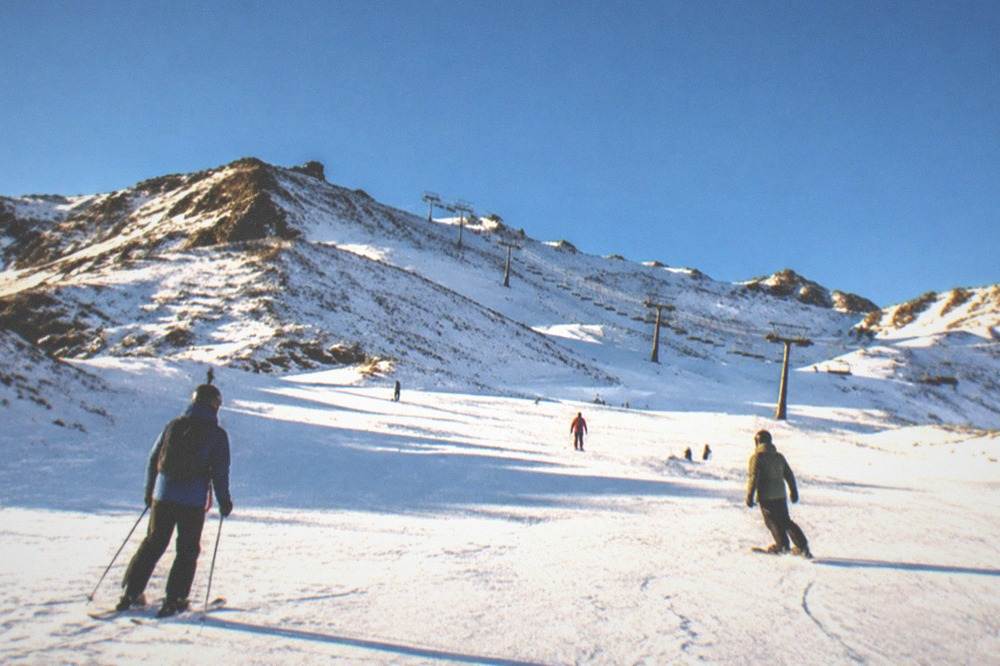
Hikers should note the mirror image: the same mountains that hold snow all winter are hikeable from late spring, and the Sierra Nevada hiking season runs roughly May through October at the lower and mid elevations. A single base in Granada genuinely serves both, one city, two seasons, an hour apart by road.
What Should You Pack For Granada Weather?
Pack for big day-to-night temperature swings rather than a single average, because Granada drops from 34.8C afternoons to 15.7C nights in July and from 13.0C days to 0.0C nights in January, so layers matter more in Granada than in almost any other Andalusian city. In summer that means sun protection and light clothing plus something warm for evenings and air-conditioned interiors; in winter it means a proper jacket and gloves for nights, with T-shirt-weather afternoons entirely possible.
| Visit period | Daytime reality | Night reality | Packing essentials |
|---|---|---|---|
| Jun-Aug | 31.0-34.8C, strong sun | 13.6-15.7C, pleasant | Hat, sunscreen, water bottle, light layer for evenings |
| Sep-Oct | 23.2-29.4C, warm | 8.7-12.8C, cool | Light layers, compact rain jacket for October |
| Mar-May | 19.0-25.0C, mild | 3.8-9.4C, cold mornings | Jacket for mornings and nights, umbrella in Mar-Apr |
| Nov-Feb | 13.0-17.0C, mild in sun | 0.0-4.2C, freezing | Warm coat, gloves, scarf, waterproof for Nov-Dec |
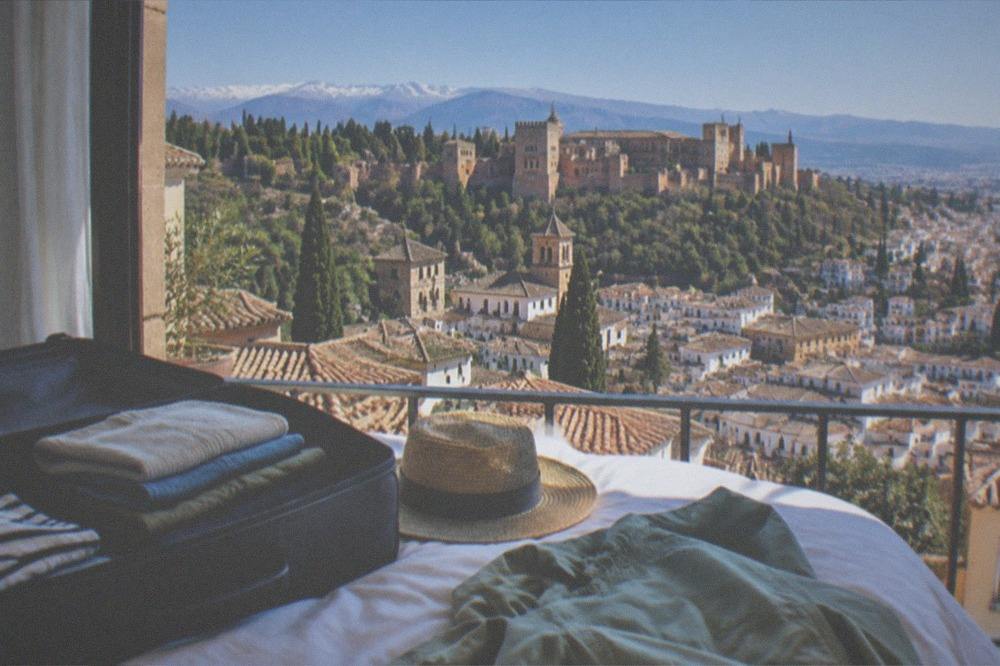
Footwear deserves its own note. Whatever the season, Granada is a city of hills and cobbles: the climb to the Alhambra, the slopes of the Albaicin and the stepped lanes of Sacromonte all punish thin-soled shoes. In summer, the stone streets hold the afternoon heat well into the evening, and in winter the shaded lanes below the Alhambra can hold frost into mid-morning, so grip matters as much as cushioning.
One packing item people forget for summer nights: the 15.7C July low means rooftop bars and cave flamenco shows in Sacromonte, where the caves hold a naturally cool temperature year-round, can feel genuinely chilly after a 34C day. A light layer earns its place in the day bag even in August.
How Does Granada Weather Affect Alhambra And Sightseeing Plans?
Weather changes what you see at the Alhambra more than whether you see it, because the complex is open every day except 25 December and 1 January, with day visits running 08:30-18:00 from 15 October to 31 March and 08:30-20:00 from 1 April to 14 October, per the Patronato de la Alhambra's own hours page. The one thing weather cannot fix is sell-out: the General ticket routinely sells out 1-2+ months ahead in peak season.
The timing logic is straightforward. In the hot months, the 08:30 entry slot is the prize: the Nasrid Palaces at 9am are a different building from the same halls at 3pm, and the timed half-hour Nasrid Palaces window printed on your ticket is strictly enforced, so the slot you book is the slot you get regardless of the forecast. In the cooler months, a mid-morning slot lets the sun get above the Alcazaba walls before you climb its towers, and the Generalife gardens, which hold their structure through winter, are far quieter in January than in May.
Clear winter days are the local secret. The combination of 13C sunshine and snow on the Sierra Nevada behind the red walls of the Alhambra, visible from the Torre de la Vela and from the Mirador de San Nicolas across the valley, is the single most photogenic weather configuration the city produces, and it belongs to the months when many visitors assume Andalusia is grey. AEMET's data backs the bet: even the wettest months average only 54-56mm of rain total.
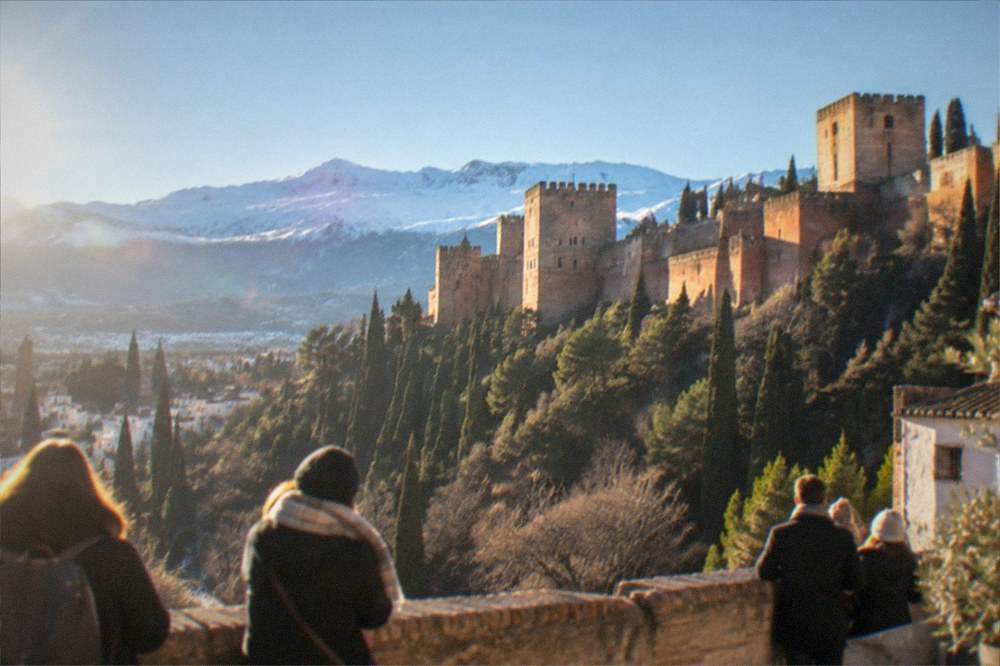
The rest of the city's sightseeing is similarly weather-tolerant with one caveat: the Albaicin and Sacromonte walks are steep and unshaded, so in July and August they belong to the evening, and in November and December their cobbles can be slick after a storm. The Albaicin guide covers the district's lanes and viewpoints, and the evening walk toward the sunset viewpoint is the classic Granada move in every season.
The full-city walking option above pairs naturally with the weather logic in this guide: the historic centre, Albaicin and Sacromonte route works as a morning walk in summer and an afternoon-to-sunset walk in winter, and the guided version handles the timing question for you.
Common Questions About Granada Weather
Is Granada hot in the summer?
Yes. AEMET's normals put July at 34.8C average highs and August at 34.2C, with overnight lows only falling to about 15.5-15.7C. The heat is dry, with just 2mm of rain in July, so shade and evening plans make it manageable.
Does it ever snow in Granada, Spain?
Snow falls in the city only occasionally, a few days in a typical winter, because January averages 13.0C by day. The reliable snow sits on the Sierra Nevada above the city, usually visible from November through April.
What is the rainiest month in Granada?
December, at 56mm of average rainfall per the AEMET 1981-2010 normals, closely followed by November at 54mm. Even so, both months are drier than most of northern Europe at the same time of year.
Is Granada cold in winter?
Cold at night, mild by day. January averages 13.0C daytime highs but 0.0C overnight lows, so a proper winter coat for evenings is essential even when afternoons feel spring-like in the sun.
When is the best month to visit Granada for good weather?
May is the strongest single candidate: 25.0C average highs, 9.4C nights and just 28mm of rain, with the gardens at their best. June and September are close behind for warm, dry, slightly quieter conditions.
Does the weather affect Alhambra visits?
The Alhambra is open every day except 25 December and 1 January, so weather changes the experience rather than the access. The real constraint is capacity: the General ticket routinely sells out 1-2+ months ahead in peak season, so book for your date and plan around the forecast.
Whatever the month on your booking, the same rule holds: check the AEMET forecast for the specific dates, pack layers for the drop after sunset, and treat the Sierra Nevada as a second destination whose season runs opposite to the city's beach-weather instincts. Granada rewards travellers who read its climate as part of the itinerary rather than a footnote to it.