Best Time To Visit Granada
AEMET's climate data for Granada shows a city of extremes: 34.8C July highs, near-freezing January nights, and barely 2mm of midsummer rain. Here is how to match those numbers, plus Alhambra sell-out patterns and festival dates, to the right weeks for your trip.
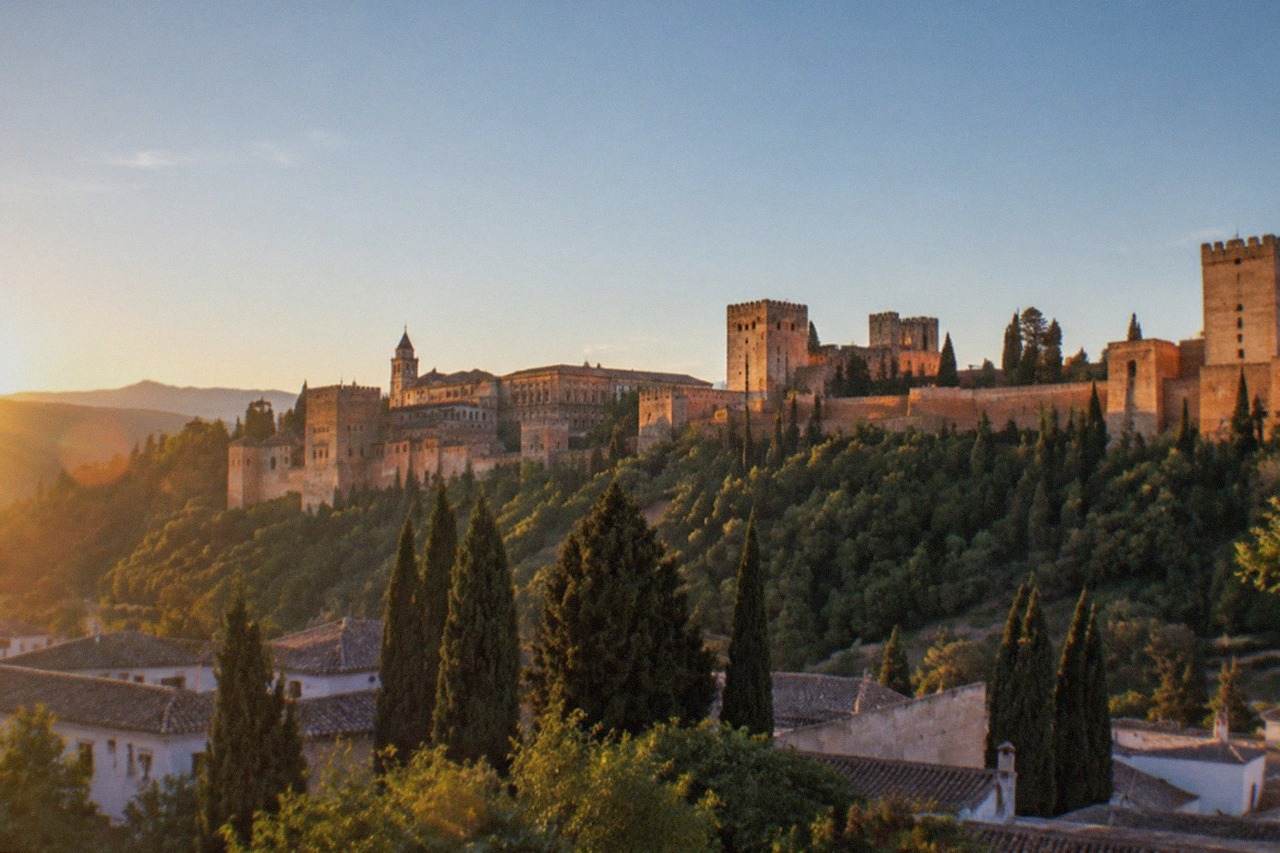
Short answer
Spring (April to early June) and autumn (late September to November) offer Granada's best balance of comfortable temperatures, manageable crowds and full Alhambra hours. May averages 25C highs with just 28mm of rain. Book Alhambra tickets roughly three months ahead whatever the season, because the General ticket routinely sells out one to two months in advance in peak periods.
AEMET's official climate normals for the Granada Aeropuerto station record a July average high of 34.8C and a January average low of 0.0C, a swing few European city-break destinations can match. Granada sits at the foot of the Sierra Nevada, high enough for genuinely cold winter nights and far enough inland for fierce summer afternoons, which makes timing matter more here than in coastal Andalusian cities. The Patronato de la Alhambra's own ticketing data adds a second variable: the General ticket routinely sells out one to two months ahead in peak season, so the best time to visit is partly a question of when you can still get in.
This guide works through the question the way a planner would: the raw climate numbers first, then crowds, then the Alhambra's own calendar, then festivals, heat and packing. Every temperature and rainfall figure below comes from AEMET's 1981-2010 normals table, and every ticket figure comes from the official seller's live pages. The editors of Things To Do In Granada have built it from primary sources rather than received wisdom, because the received wisdom about Andalusian weather gets Granada wrong surprisingly often.
When Is The Best Time To Visit Granada Overall?
The best time to visit Granada is mid-April to mid-June, with late September through October a close second. May averages 25C highs and 9.4C lows with only 28mm of rain across the whole month, and the Alhambra runs its long summer hours (08:30-20:00 from 1 April), giving you the fullest visiting day of the year. October offers 23.2C highs, 40mm of rain and thinner crowds than spring once the school holidays end.
Spring wins on one more count that the averages hide: the Sierra Nevada snowpack is still thick in April and May, so the view from the Mirador de San Nicolas carries a white backdrop that has melted away by July. The Generalife gardens are also at their best in these months, with the water channels running and the planting at full growth. The trade-off is demand. Semana Santa and the 1-3 May Cruces de Mayo celebrations fill the city in late March and early May, and Alhambra tickets for those weeks can vanish within days of release.
Autumn has the mirror-image trade-off. The light is softer, the tapas terraces are pleasant at sunset, and the Alhambra's 15 October switch to winter hours (08:30-18:00) trims the visiting day noticeably, so early October beats late October for a first visit. If your dates are flexible within a month, aim for the shoulder edge: mid-April rather than Easter week, late September rather than a mid-October holiday weekend.
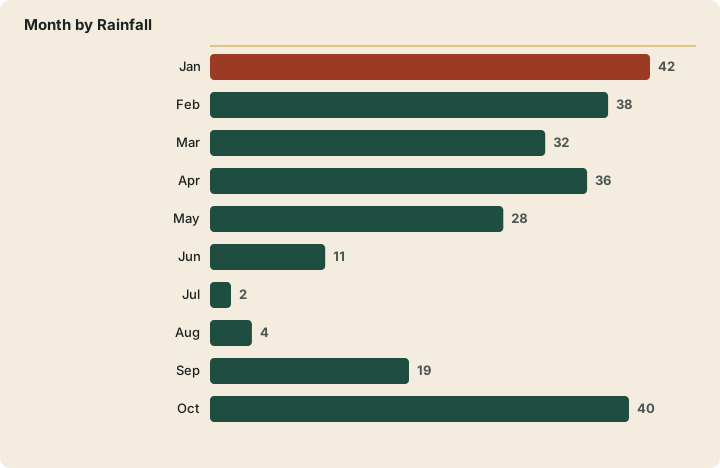
What Is The Weather Like In Granada Month By Month?
Granada's climate is continental despite its southern latitude: AEMET's normals show July at 34.8C average high with just 2mm of rain, and January at 13.0C high but 0.0C low with 42mm of rain. The hottest stretch runs June through August (31.0C, 34.8C and 34.2C highs), the wettest months are November (54mm) and December (56mm), and spring warms fast, from 15.4C in February to 25.0C in May. Annual rainfall totals roughly 365mm.
The full AEMET table, from the Granada Aeropuerto station and the 1981-2010 period, is the only month-specific set of figures worth planning on:
| Month | Avg High | Avg Low | Rainfall |
|---|---|---|---|
| Jan | 13.0C | 0.0C | 42mm |
| Feb | 15.4C | 1.6C | 38mm |
| Mar | 19.0C | 3.8C | 32mm |
| Apr | 20.6C | 6.0C | 36mm |
| May | 25.0C | 9.4C | 28mm |
| Jun | 31.0C | 13.6C | 11mm |
| Jul | 34.8C | 15.7C | 2mm |
| Aug | 34.2C | 15.5C | 4mm |
| Sep | 29.4C | 12.8C | 19mm |
| Oct | 23.2C | 8.7C | 40mm |
| Nov | 17.0C | 4.2C | 54mm |
| Dec | 13.4C | 1.7C | 56mm |
Two patterns in that table shape every Granada itinerary. First, the diurnal range is huge: even in August the average low is 15.5C, and in winter the city regularly drops to freezing overnight while afternoons reach the mid-teens. Layers are not optional here. Second, the rain comes in a solid block from October to January (40mm, 54mm, 56mm, 42mm), and when it rains in Granada it often does so seriously, because the same Atlantic fronts that soak Seville dump on Granada with less place to drain.
The altitude explains it. The city sits well above the Mediterranean coast, and the Sierra Nevada to the southeast both blocks moderating sea air in summer and feeds cold air drainage into the plain in winter. The practical consequence for visitors: a single day in April can call for a jacket at 09:00 and short sleeves by 15:00, and the same is true in October in reverse.
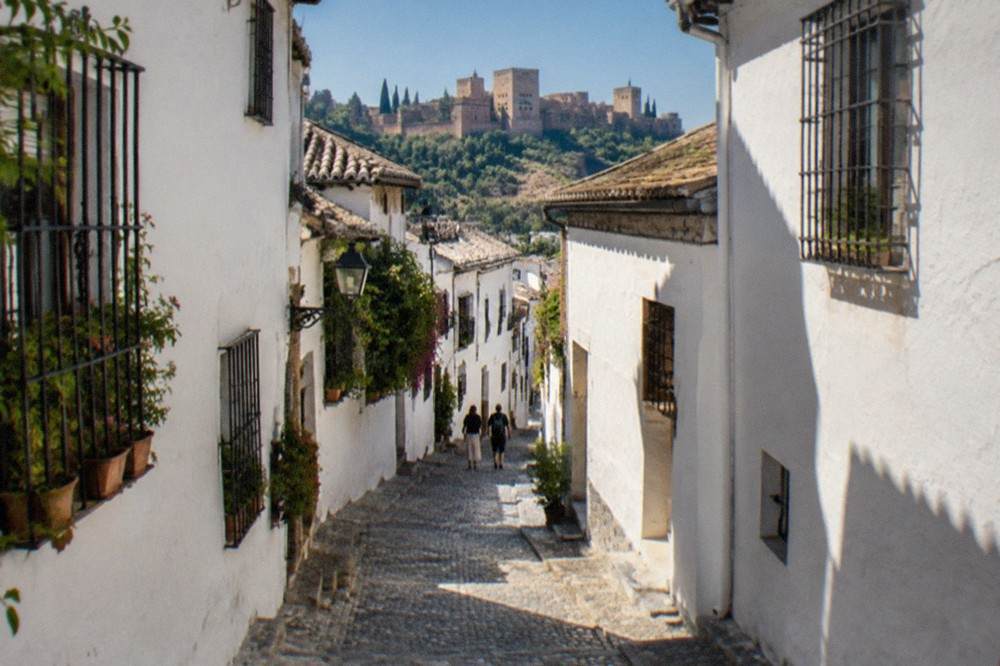
For a deeper treatment of the numbers and what they mean for day-to-day sightseeing, the companion Granada Weather Guide breaks the year down by season, and How Much Time Do I Need To See The Alhambra? covers how the hours you need change between the summer and winter opening schedules.
When Is Granada Least Crowded?
The quietest months in Granada are November (excluding any bridge weekend), January and the first half of March, when Alhambra demand drops far enough that last-minute tickets sometimes survive past the 23:59 day-before sales cutoff. The Alhambra received 2,726,861 visitors in 2025, close to the Patronato's own annual capacity ceiling of roughly 2.763 million, and that pressure is concentrated in April-June, September-October and the Christmas-to-Epiphany stretch.
Winter has real advantages beyond short queues. The low January sun makes the Nasrid Palaces' stucco glow in a way the harsher summer light does not, and the Albaicin's lanes are quiet enough to walk without the shoulder-to-shoulder flow of May. The compensations are the 08:30-18:00 Alhambra hours, earlier sunsets that cut into viewpoint evenings, and the possibility of rain: 54mm and 56mm fall in November and December respectively, the wettest pair of the year.
Mid-summer is a different kind of quiet. August is Granada's local-holiday month, when a share of the city's own residents leave and some neighbourhood bars close, but the Alhambra stays busy through it. The crowd pattern is really a double peak: Easter and May on one side, September and October on the other, with a smaller spike over the Corpus Christi fair (late May to early June in 2026, main procession around 4 June).
| Period | Crowd Level | Typical Alhambra Availability |
|---|---|---|
| Jan - mid Mar | Low | Usually bookable weeks ahead, sometimes days |
| Semana Santa (29 Mar - 5 Apr 2026) | Very high | Sells out fastest of the year |
| Apr - mid Jun | High | General ticket often gone 1-2 months ahead |
| Jul - Aug | Moderate-high | Still tight; heat deters some, not all |
| Sep - Oct | High | Book 2-3 months ahead for choice of slot |
| Nov - mid Dec | Low-moderate | Best late-booking odds of the year |
| 25 Dec - 6 Jan | High | Christmas-to-Epiphany spike, book early |
The booking mechanics matter as much as the calendar. Tickets release roughly three months ahead, and online sales close at 23:59 the day before the visit date, with no reliable same-day online sales. A February trip planned in December has slack; a May trip planned in April may find only the gardens-only or night-visit categories left. The Alhambra Tickets Guide covers the fallback options in detail, and What If Alhambra Tickets Are Sold Out? on the answers section walks through what still works on a sold-out date.
If a quiet-season trip appeals, a private walk of the two hillside quarters is the product that benefits most from empty lanes: runs a 2.5-hour route through the Albaicin and Sacromonte that is rated 4.6 from 9 reviews on the operator's live listing, and low season is when its guides can linger at viewpoints instead of keeping pace with the crowd.
When Is The Best Time To Visit The Alhambra?
Within any given month, the best Alhambra visit is a morning entry in the first slot after the 08:30 opening, because the Nasrid Palaces are capped at roughly 300 people per 30-minute window and the early slots distribute crowds before the day builds. The official day-visit hours are 08:30-20:00 from 1 April to 14 October and 08:30-18:00 from 15 October to 31 March, and the complex is closed only on 25 December and 1 January.
The time-of-day question interacts with the season question. In summer, the 08:30 start is not just about crowds: AEMET's July average high of 34.8C makes the unshaded Generalife terraces and the Alcazaba ramp punishing after midday, and the Nasrid Palaces' interiors, while cooler, hold their own warmth at peak occupancy. A morning Nasrid slot followed by gardens before 13:00 is the comfortable summer sequence, and the Best Time Of Day To Visit The Alhambra Palace answer page covers it slot by slot.
The night visit is the counterintuitive alternative. The official night Nasrid Palaces visit runs Fri-Sat 20:00-21:30 in winter and Tue-Sat 22:00-23:30 in summer, at EUR 12.73 versus the EUR 22.27 General day ticket, and the palaces under electric light with a fraction of the daytime numbers are a genuinely different experience. The Alhambra Night Visit Guide explains what the lighting does and does not show. One hard rule survives every season: the Nasrid Palaces half-hour window printed on your ticket is strictly enforced, and photo ID is checked because tickets are nominative.
| Alhambra Ticket | Official Price | Season Notes |
|---|---|---|
| General (day, all zones) | EUR 22.27 | Sells out 1-2+ months ahead in peak |
| Gardens, Generalife and Alcazaba (day) | EUR 12.73 | Good fallback when General is gone |
| Night visit, Nasrid Palaces | EUR 12.73 | Fri-Sat winter, Tue-Sat summer |
| Night visit, Gardens and Generalife | EUR 8.48 | Seasonal windows, check dates |
| Dobla de Oro General | EUR 30.48 | Adds the Andalusi monuments in town |
| Under 12 | Free | Ticket still required for entry control |
Note that a July 2025 press release announced lower prices (General EUR 21) effective 1 August 2025, but the live official ticket pages still show the higher figures above, so treat the live page at booking time as the truth. For visitors who want the palaces explained rather than just entered, the Alhambra Tours Guide compares the guided options, including a skip-the-line guided tour of the Alhambra and Generalife rated 4.1 from 3,962 reviews: .
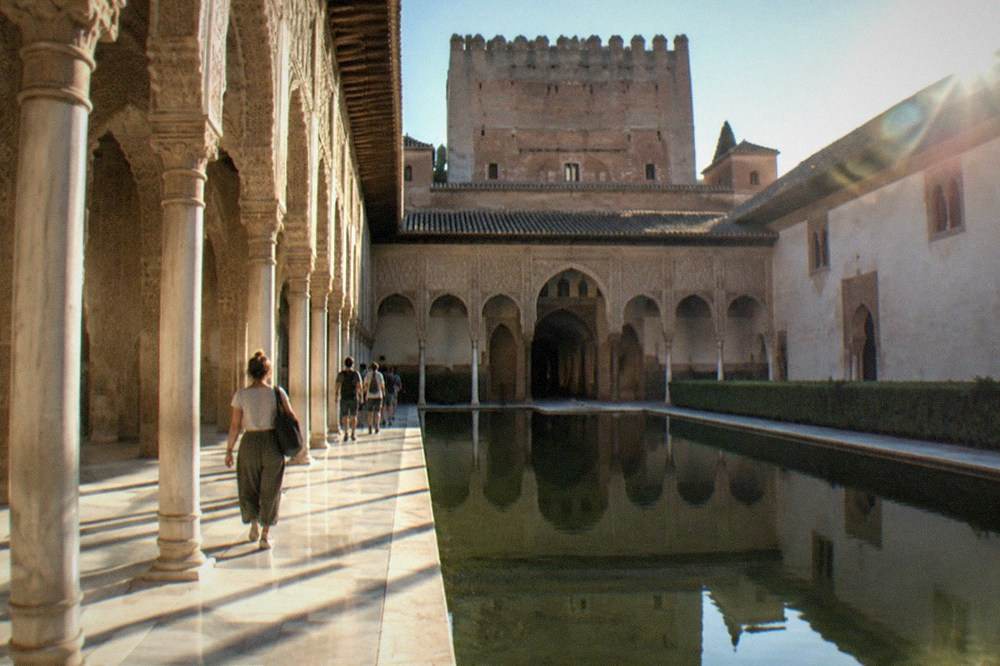
What About Granada's Festivals And Events?
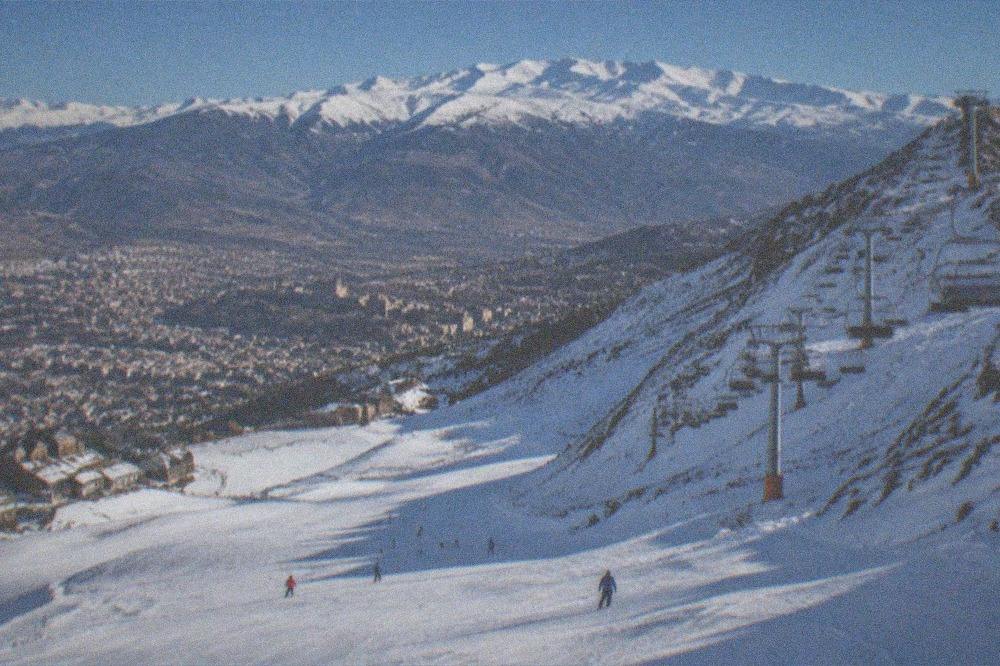
Granada's three fixed calendar anchors are Semana Santa (29 March-5 April in 2026, 21-28 March in 2027), Cruces de Mayo (1-3 May in 2026, 3 May in 2027) and Corpus Christi (main procession around 4 June 2026, 27 May in 2027), and all three are magnificent to witness and punishing to book around, with Alhambra tickets for Easter week the hardest of the year. The Sierra Nevada ski season, typically late November to early April weather dependent, opens a fourth, winter window.
Semana Santa is the one that reshapes the whole city. Processions run through the nights of Holy Week, streets in the old centre close to traffic, and hotel prices in the Albaicin and around the Cathedral climb steeply. The reward is one of Spain's great Holy Weeks, with the silence-and-candlelight processions of Holy Thursday and Friday among the most affecting anywhere. The Semana Santa In Granada Guide covers the viewing spots.
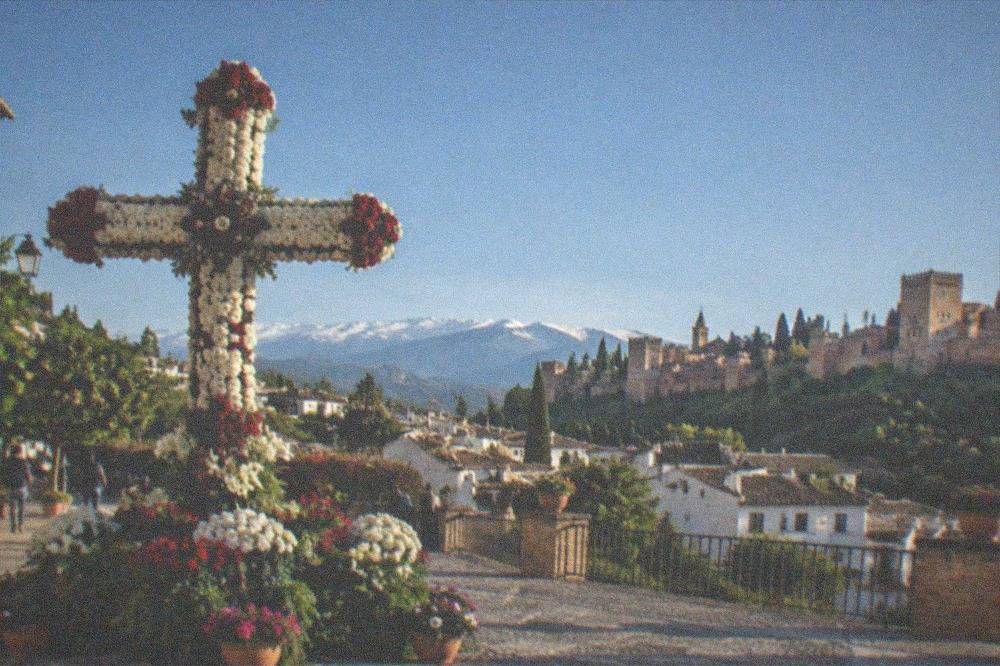
Cruces de Mayo is smaller and friendlier: neighbourhood crosses decorated with flowers, casetas with sherry and dancing in the Albaicin and Realejo, and a local-holiday atmosphere rather than a tourist crush. Corpus Christi adds a full fairground week, with the main Thursday procession in 2026 falling around 4 June and fair activity roughly 30 May to 6 June.
| Festival | 2026 Dates | 2027 Dates | Booking Impact |
|---|---|---|---|
| Semana Santa | 29 Mar - 5 Apr | 21 - 28 Mar | Highest of the year, book 3+ months out |
| Cruces de Mayo | 1 - 3 May | 3 May | High, coincides with peak spring |
| Corpus Christi | ~30 May - 6 Jun | 27 May | Moderate-high, fairground week |
| Sierra Nevada ski season | Typically late Nov - early/mid Apr | Same pattern, weather dependent | Ski buses and gear rentals fill weekends |
One caution on the ski season: the 2026-2027 opening and closing dates are not yet officially published on sierranevada.es, and a third-party projection of around 13 November 2026 is not a confirmed date. The pattern is late November to early or mid-April, weather dependent, and the official site's live snow report is the only source to trust for this season's dates. If a combined city-and-ski trip is the plan, staying in Granada and skiing above it works best in the January-to-February depth of the season.
Is Summer Too Hot For Granada?
Summer is hot but workable if you structure days around it: AEMET's normals show June at 31.0C, July at 34.8C and August at 34.2C average highs, with lows of 13.6C to 15.7C and almost no rain (11mm, 2mm and 4mm respectively). The heat is dry rather than humid, mornings before 11:00 and evenings after 20:00 stay comfortable, and August thins the local crowd because it is Granada's own holiday month.
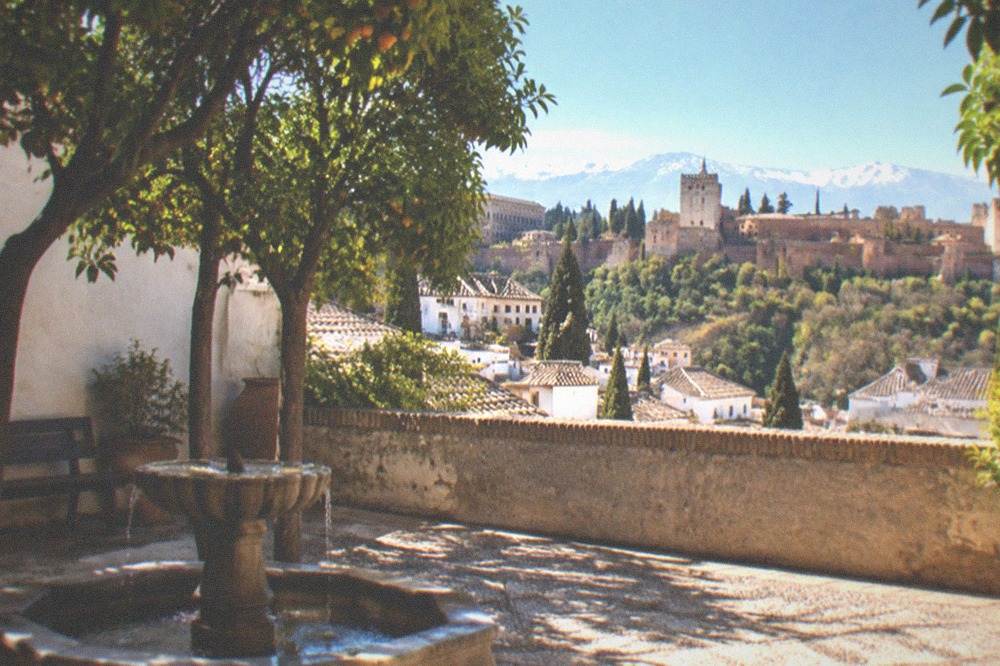
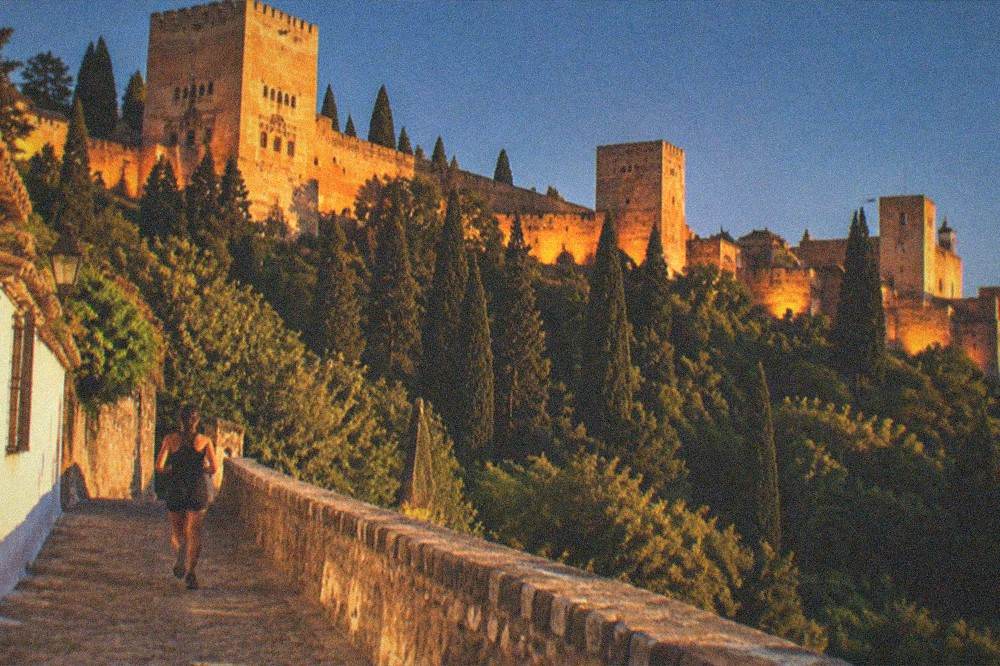
The honest comparison is with Seville and Cordoba, which run hotter still; Granada's altitude gives it slightly kinder afternoons and genuinely cool nights. The practical summer pattern is a split day: Alhambra or Albaicin walking in the morning, a long shaded lunch inside the cave-cool bars of the old town through the peak hours, then the hammam or the Cathedral in late afternoon and the Mirador de San Nicolas after sunset, when the Alhambra across the valley is lit and the air has dropped 15 degrees from the afternoon high.
Two summer-specific warnings are worth the space. The Alhambra's unshaded sections, above all the Alcazaba ramparts and the long Generalife water stair area, concentrate the midday heat, so a 13:00 Nasrid slot in July is a genuinely bad idea for anyone sensitive to heat. And the night visit becomes more attractive in summer precisely because it starts at 22:00, by which point AEMET's data implies the city has fallen back toward the low 20s.
For the evenings, the Flamenco In Granada Guide covers the cave shows of Sacromonte, which run every night of the year and are at their atmospheric best on a hot summer evening, and the Hammams In Granada Guide explains the bath houses that Granadians themselves have used to survive July afternoons since Nasrid times.
What Should You Pack For Each Season In Granada?
Pack for a diurnal swing, not a season average: even August nights average 15.5C and January afternoons 13.0C, so layers beat a single wardrobe choice in every month of the year. Summer needs sun protection and a light layer for air-conditioned interiors and post-sunset viewpoint hours; winter needs a real coat for evenings and mornings, waterproofs for November-December (54mm and 56mm of rain), and shoes with grip for wet Albaicin cobbles.
The cobbles deserve their own sentence. The Albaicin's lanes are polished stone laid at steep angles, and damp stone in January is the most common cause of a spoiled afternoon in this city. The same advice applies to the Sacromonte paths, which are unpaved in stretches. Comfortable shoes with tread matter more here than in almost any other Spanish city break.
| Season | Daytime Typical | Evening Typical | What To Bring |
|---|---|---|---|
| Spring (Apr - May) | 20.6 - 25.0C highs | 6.0 - 9.4C lows | Layers, light jacket, compact umbrella |
| Summer (Jun - Aug) | 31.0 - 34.8C highs | 13.6 - 15.7C lows | Sun hat, high-SPF sunscreen, refillable bottle, light evening layer |
| Autumn (Sep - Oct) | 23.2 - 29.4C highs | 8.7 - 12.8C lows | Layers, umbrella from October (40mm) |
| Winter (Nov - Mar) | 13.0 - 17.0C highs | 0.0 - 4.2C lows | Proper coat, waterproof, shoes with grip, warm hat for viewpoint nights |
One seasonal packing item is easy to forget: the Alhambra day runs until 20:00 in summer, and there is little shade in the queue zones, so a bottle is as important as a camera. In winter the opposite applies, the last outdoor hour of an 08:30-18:00 day is cold on the Generalife terraces, and the coat you did not bring will be the memory of the visit.
Best Time To Visit Granada By Travel Style
For Alhambra-first trips the best window is mid-April to mid-June with tickets booked at the three-month release; for a budget trip it is January or November, when hotel rates drop and last-minute Alhambra tickets are realistic; for a ski-and-city combination it is late December to February, when the Sierra Nevada season is at full depth and AEMET's Granada normals still show 13.0-13.4C afternoon highs in town; and for festival travellers the fixed anchors are Easter, early May and early June.
Budget travellers get the clearest win from the low season. Winter is when the free tapa custom, still widely upheld in traditional bars though never guaranteed at every venue, does the most work per euro, because a drink and a plate indoors is exactly what a 0.0C January evening calls for. The Granada Card, at EUR 60 for 72 hours, EUR 55 for 48 hours, EUR 50 for the 24-hour night-Palaces variant and EUR 13 for children (prices effective 13 November 2025), pays for itself fastest on a dense shoulder-season itinerary; the Granada Card Guide runs the arithmetic.
Families and heat-sensitive travellers should anchor on April, May and October, splitting the Alhambra across the cooler hours of the day rather than attempting the whole complex at midday. Day-trippers have their own calculus: Cordoba is a long but feasible day out, and a guided option such as the Cordoba day trip from Granada, an 11-hour tour with pricing on the operator's live listing, , works best in spring or autumn when the Mezquita city is not at its summer peak either.
| Travel Style | Best Window | Why |
|---|---|---|
| Alhambra-first | Mid-April to mid-June | Long hours (to 20:00), spring gardens, snow on the Sierra |
| Budget | January, November | Lowest rates, last-minute tickets realistic |
| Ski plus city | Late Dec - Feb | Full Sierra Nevada season, mild town afternoons |
| Festivals | Easter, 1-3 May, early June | The three fixed anchors of the Granada year |
| Heat-avoider | April, May, October | Highs 20.6-25.0C, low rain, full opening hours |
Where you stay also shifts with the season: the Where To Stay In Granada Guide explains why the Albaicin is magical in May and demanding in a January rain spell, and the Parador De Granada Guide covers the hotel inside the Alhambra grounds itself, whose garden rooms are at their finest in spring.
Common Questions About The Best Time To Visit Granada
What is the best month to visit Granada?
May is the strongest single month: AEMET's normals show 25.0C average highs, 9.4C lows and only 28mm of rain, the Alhambra runs its full 08:30-20:00 summer hours, and the Sierra Nevada still carries snow for the classic viewpoint backdrop. April and October are close behind, with the caveat that Alhambra tickets for all three months should be booked at the roughly three-month release mark.
Is Granada too hot in July and August?
Hot but manageable. Average highs reach 34.8C in July and 34.2C in August, with almost no rain, but the heat is dry and nights cool to 15.5-15.7C. Structure days around it: sights in the morning, a long shaded lunch, and viewpoints after sunset. The Alhambra night visit, which starts at 22:00 in summer, is the heat-avoider's route into the Nasrid Palaces.
When is Granada's rainy season?
Rain concentrates from October through January, per AEMET's normals: 40mm in October, 54mm in November, 56mm in December and 42mm in January, against just 2mm in July. When it rains it is often heavy, so waterproof shoes matter more here than an umbrella, especially on the Albaicin's polished stone lanes.
Does it ever snow in Granada?
Snow in the city itself is rare and rarely settles; the average January low of 0.0C means frosty mornings, not snowdrifts. What Granada does reliably offer in winter is the view: the Sierra Nevada's snowpack sits on the horizon from roughly November into spring, and the ski resort there typically runs late November to early or mid-April, weather dependent, with this season's exact dates published on the official resort site.
When should I book Alhambra tickets for my travel dates?
As soon as your dates are fixed, and no later than the three-month release window. The General ticket at EUR 22.27 routinely sells out one to two months ahead in spring and autumn, online sales close at 23:59 the day before the visit date, and there are no reliable same-day online sales. Easter week and the first half of May are the tightest windows of the year.
Is winter a good time to visit Granada?
Yes, with adjustments. January and February offer the year's best hotel rates and last-minute Alhambra availability, afternoon highs of 13.0-15.4C are pleasant for walking, and the low winter sun flatters the Nasrid stucco. The trade-offs are 0.0-1.7C nights, the Alhambra's shorter 08:30-18:00 hours, and the wettest months of the year in November and December.
The short version stands: pick May if you can, October if May is gone, and book the Alhambra the day your flights are confirmed in either case.