Semana Santa Granada
Holy Week transforms Granada for seven days of processions, and this guide covers the dates, the routes, the viewing spots and the practical details that decide whether the week is magical or exhausting.
Short answer
Semana Santa in Granada runs roughly 29 March to 5 April in 2026 and 21 to 28 March in 2027, with processions daily through the historic centre, the Albaicin and the Realejo. The Alhambra stays open but tickets sell out far ahead, so book everything early.
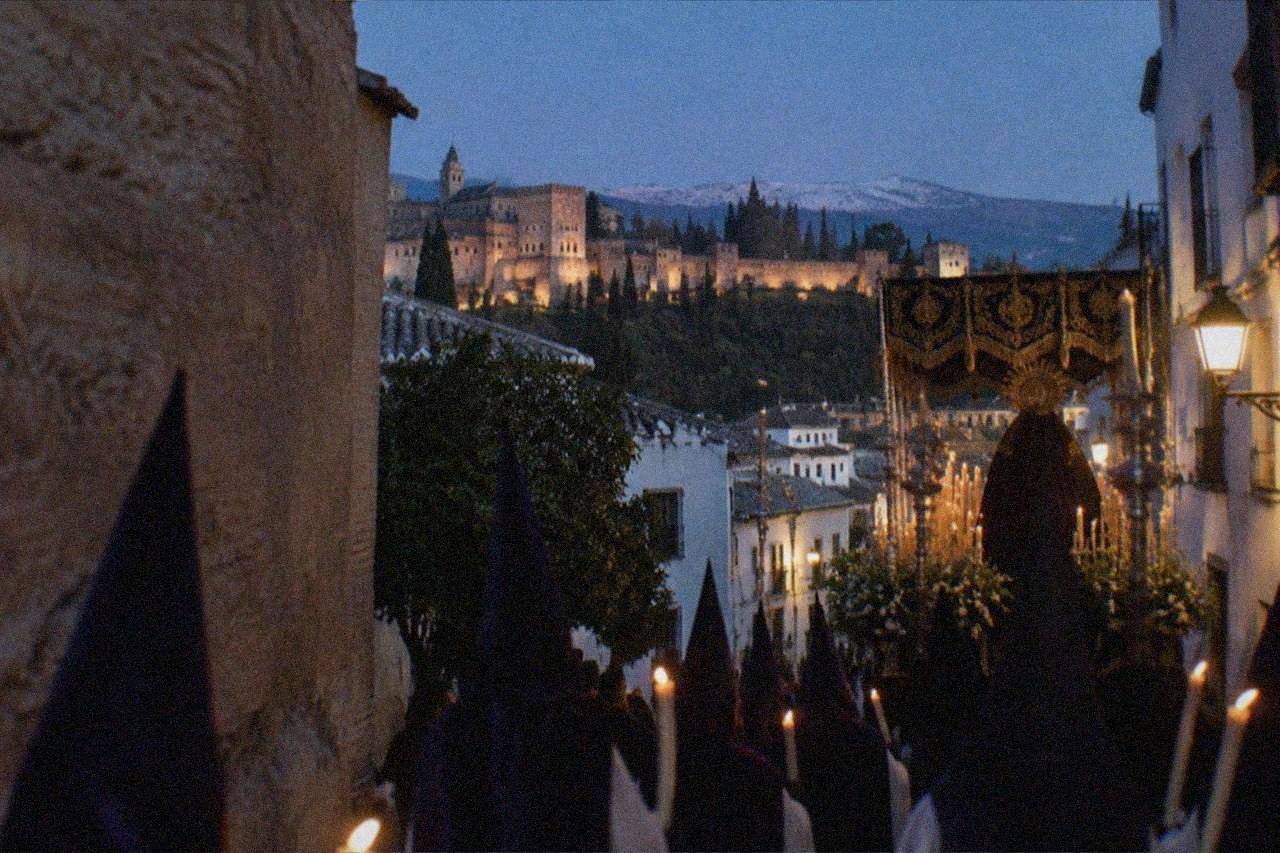
Granada's Holy Week is not a performance put on for visitors. It is a week in which the city's brotherhoods, the cofradias, carry carved floats through streets their families have lived in for generations, and the whole urban rhythm changes around them. The processions of Semana Santa in Granada are quieter and less internationally famous than Seville's, which is exactly why many people who see both prefer Granada's version: the routes climb through the Albaicin, pass under the walls of the Alhambra and finish at dawn, and the crowds are thick but not impossible. This guide covers the confirmed 2026 and 2027 dates, which processions matter most, where to stand, what happens to opening hours, and how to plan the rest of a trip around the week.
When Is Semana Santa In Granada?
Semana Santa in Granada falls approximately 29 March to 5 April in 2026 and approximately 21 to 28 March in 2027, with processions on every day of the week and the heaviest schedule from Holy Wednesday through the early hours of Easter Sunday. The dates float each year because they follow the lunar church calendar, so the week can land anywhere from mid-March to late April. Local calendars published by Granada's newspapers and the city tourism office carry the definitive procession schedule each year.
The week builds day by day. Palm Sunday opens with blessing processions, the middle days belong to the smaller and often older brotherhoods, and the intensity peaks from Holy Wednesday onward. The most famous single event is the Silencio procession on Maundy Thursday, which leaves at midnight and moves through the centre in complete darkness and silence, and the Malaga-style grandeur some visitors expect is absent here by design.
Two practical points follow from the floating dates. First, the week collides differently with Easter school holidays each year, so hotel demand shifts: in 2026 the week overlaps early April, in 2027 it sits fully in March. Second, spring weather in Granada is genuinely pleasant, with AEMET's normals for March showing an average high of 19.0C and April 20.6C, but nights are cold, averaging 3.8C and 6.0C respectively, and several processions happen in the small hours. A warm layer is not optional.
| Year | Approximate Semana Santa dates | Peak days | Notes |
|---|---|---|---|
| 2026 | 29 March - 5 April | Holy Wednesday to Easter Sunday | Overlaps early-April school holidays |
| 2027 | 21 - 28 March | Holy Wednesday to Easter Sunday | 27 May 2027 is a separate local holiday, Corpus Christi |
Which Processions Should You Watch In Granada?
The five processions most worth planning around are the Silencio on the night of Maundy Thursday, the Santo Entierro on Good Friday afternoon, the Angustias brotherhood through the Realejo, the Albaicin's Cristo de la Fe processions climbing from Carrera del Darro, and the early-morning Encuentro on Easter Sunday, when two floats meet as the sun rises. Each has a different character, from candlelit silence to open street celebration, and the first four can be watched without any ticket or reservation.
The Silencio is the one people describe afterwards. It leaves at midnight, all street lighting along the route is switched off, and the only light is candle flame. Nobody speaks; the only sounds are footsteps and the occasional drum. Arrive early, because the front rows along Calle Reyes Catolicos and the cathedral area fill an hour or more before the float passes.
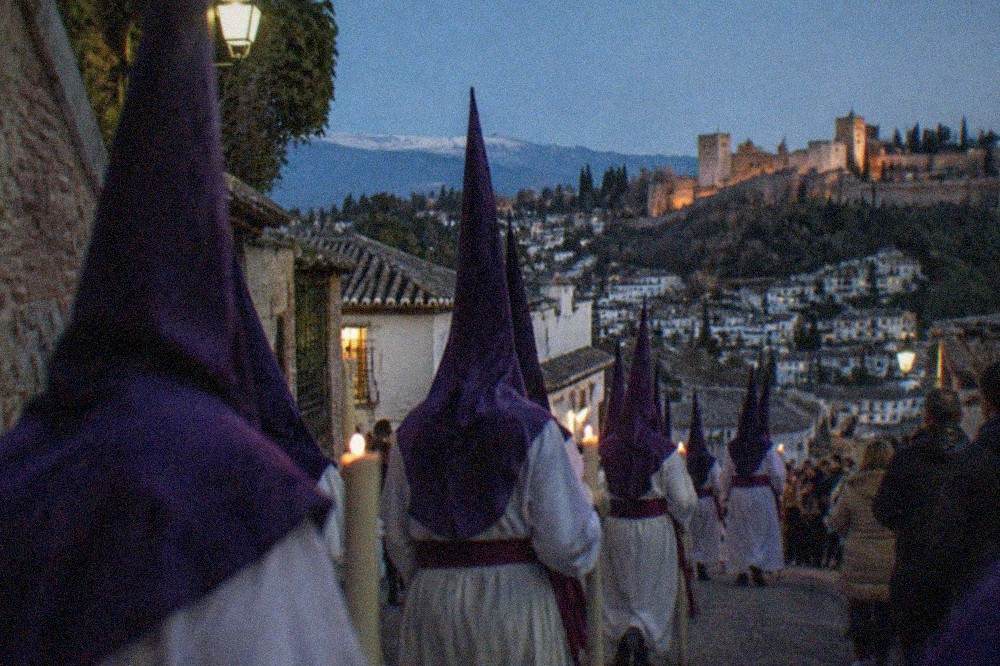
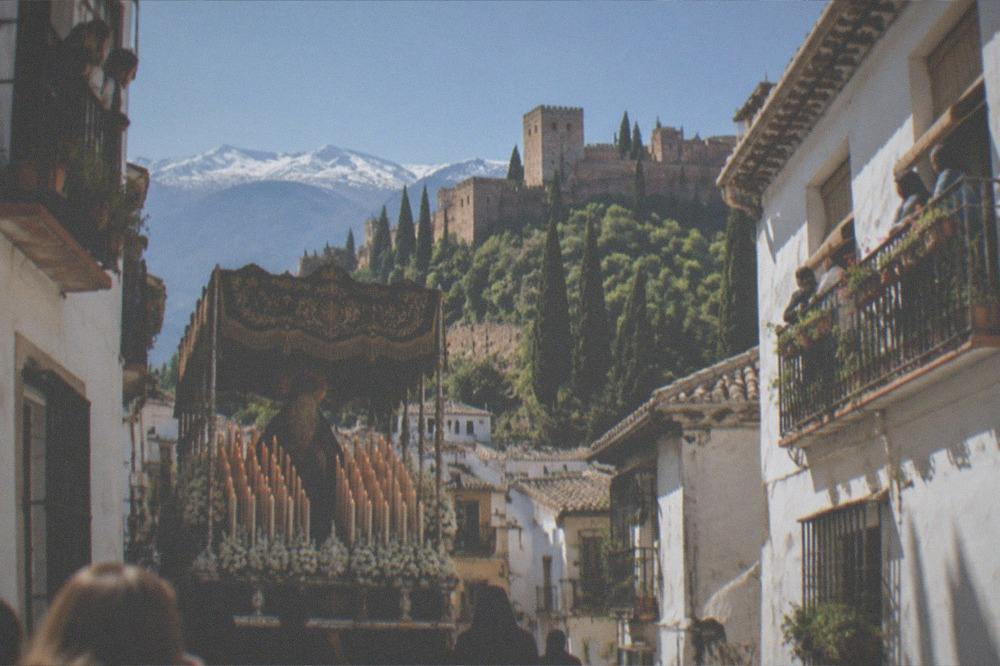
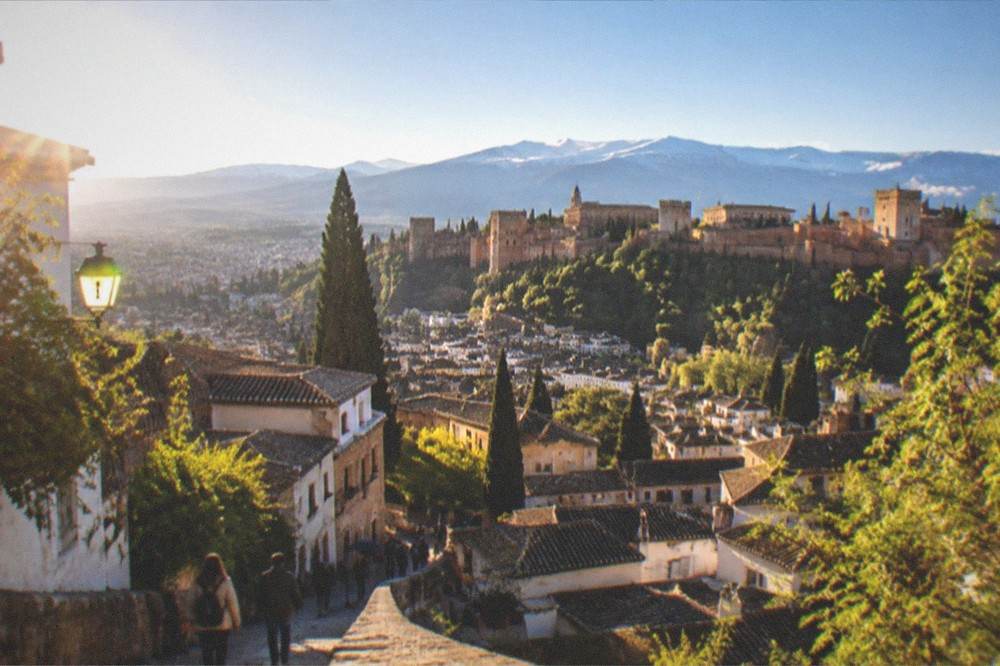
The Albaicin processions are Granada's signature. Floats carried up the cobbled hills from the lower Carrera del Darro, with the Alhambra lit above, give the quarter its most photogenic hour of the year, and residents watch from doorways rather than barricades. The Santo Entierro on Good Friday is the largest and most formal, a full funeral procession with Roman soldiers and mourning figures, moving slowly through the centre in late afternoon.
| Procession | Day and time | Character | Best viewing area |
|---|---|---|---|
| Silencio | Maundy Thursday, from midnight | Total silence, candles only | City centre, Calle Reyes Catolicos area |
| Santo Entierro | Good Friday, afternoon | Largest and most formal | Gran Via and cathedral routes |
| Angustias | Holy Week, Realejo route | Neighbourhood devotion | Realejo streets near Campo del Principe |
| Cristo de la Fe | Holy Week, Albaicin | Hill climb with Alhambra backdrop | Carrera del Darro and Albaicin lanes |
| Encuentro | Easter Sunday, dawn | Joyful, two floats meet | Around the cathedral at first light |
If the old quarters are what draw you, a guided walk of the Albaicin and Sacromonte gives the geography context that processions alone do not, and the route the brotherhoods take makes far more sense once you know the street layout. Check availability on the operator's live listing if you want that context before the week begins, or read the site's Albaicin neighbourhood guide for the quarter's layout.
Where Are The Best Spots To Watch The Granada Processions?
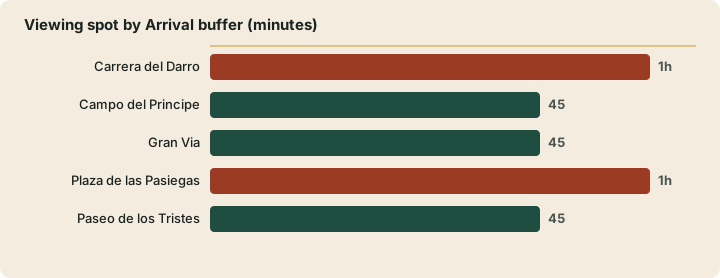
The best viewing spots are the Carrera del Darro for the Albaicin hill climbs, the Campo del Principe in the Realejo for an intimate neighbourhood atmosphere, the tree-lined Gran Via for the big central processions, and the Plaza de las Pasiegas in front of the cathedral for the moment each float enters or leaves the church. Arriving 45 to 60 minutes early is enough for most routes, but the Silencio needs longer because the darkness draws bigger crowds.
Carrera del Darro is the most dramatic setting in the city at any time of year, and during Holy Week the low riverside street becomes a natural amphitheatre. The float crews, the costaleros, work hardest on these cobbles and the slope, and you see the effort close up. The trade-off is that the street is narrow, so pick your spot and stay put.
The Campo del Principe, a small square in the Realejo at the foot of the Alhambra's wooded hill, hosts the Good Friday evening ceremony of the Cristo de los Gitanos, and the atmosphere is local rather than touristic. Families bring chairs out of their houses. In the centre, the stretch of Gran Via between the cathedral and Puerta Real carries nearly every major procession at some point, which makes it the efficient choice if you only have one evening.
| Viewing spot | District | What you see | Arrival buffer |
|---|---|---|---|
| Carrera del Darro | Albaicin boundary | Hill climbs, Alhambra backdrop | 60 minutes |
| Campo del Principe | Realejo | Good Friday evening ceremony | 45 minutes |
| Gran Via | Centre | Nearly all major routes | 45 minutes |
| Plaza de las Pasiegas | Centre | Floats entering and leaving the cathedral | 60 minutes |
| Paseo de los Tristes | Albaicin boundary | Processions crossing the river valley | 45 minutes |
Knowing the lanes before the crowds fill them is the single biggest advantage you can give yourself, and a private walk of the two old quarters in the days before the processions start is the most reliable way to build that map.
The same operator runs evening departures, which pair well with a first look at the processions from the Gran Via once the walk ends. Whichever option fits your dates, book the walking slot for the start of the week so the street knowledge pays off on the peak nights.
Is The Alhambra Open During Semana Santa?
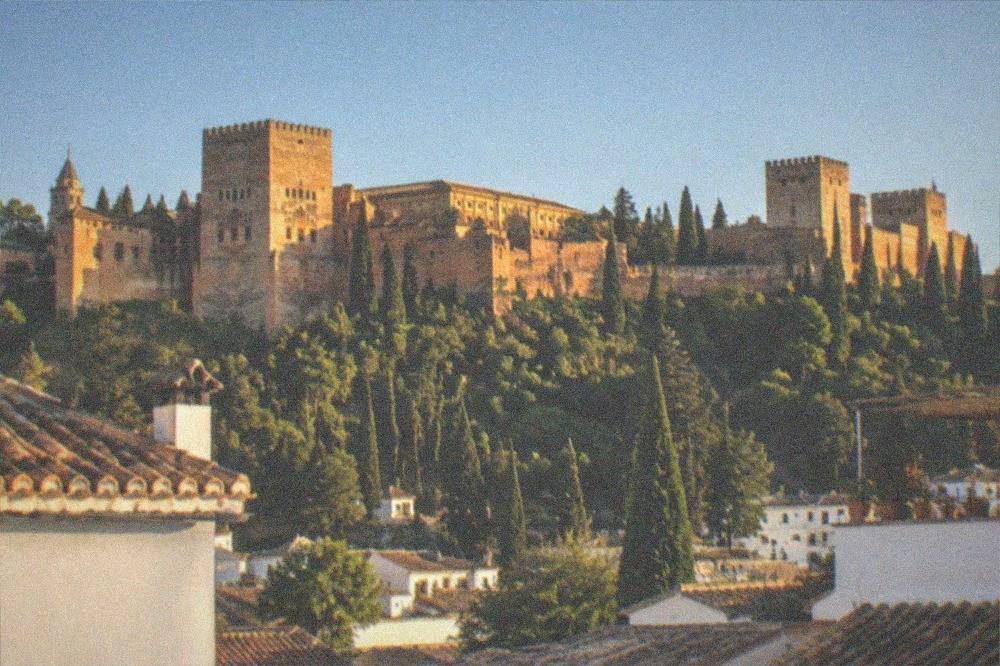
The Alhambra stays open through Semana Santa, including Holy Thursday and Good Friday, and only closes on 25 December and 1 January, so Holy Week is one of its busiest periods rather than a closed one. The General ticket costs EUR 22.27 at the live official price and routinely sells out one to two or more months ahead in peak season, and Holy Week is peak season, so anyone planning a Holy Week Alhambra visit needs to book roughly three months out, when tickets release.
The Patronato de la Alhambra's own ticket page states that online sales close at 23:59 the day before the visit date, and there are no reliable same-day online sales. Daily capacity is approximately 6,600 to 7,000 visitors, with the Nasrid Palaces capped at roughly 300 people per half-hour timed slot, and the nominative tickets carry that half-hour window strictly enforced, with photo ID checked at entry.
One Holy Week nuance matters: the night visits. From 15 October to 31 March the night Nasrid Palaces visit runs Friday and Saturday, 20:00 to 21:30, which means early-Holy-Week Fridays and Saturdays in 2027 (late March) can offer a night Alhambra visit, but in 2026 the week falls in the 1 April to 14 October window, when night visits run Tuesday to Saturday at 22:00 to 23:30. Check the official hours page for the exact dates of your year, and see the site's Alhambra night visit guide for how it works.
If tickets through the official channel are gone, a guided tour with tickets bundled is the realistic fallback, and the Alhambra tours guide compares the options. The Alhambra, Generalife and Albaicin share one UNESCO World Heritage inscription, granted in 1984 and extended in 1994, which is worth knowing because the whole hill-and-quarter landscape is protected as a unit.
What Are The Cathedral And Royal Chapel Hours During Holy Week?
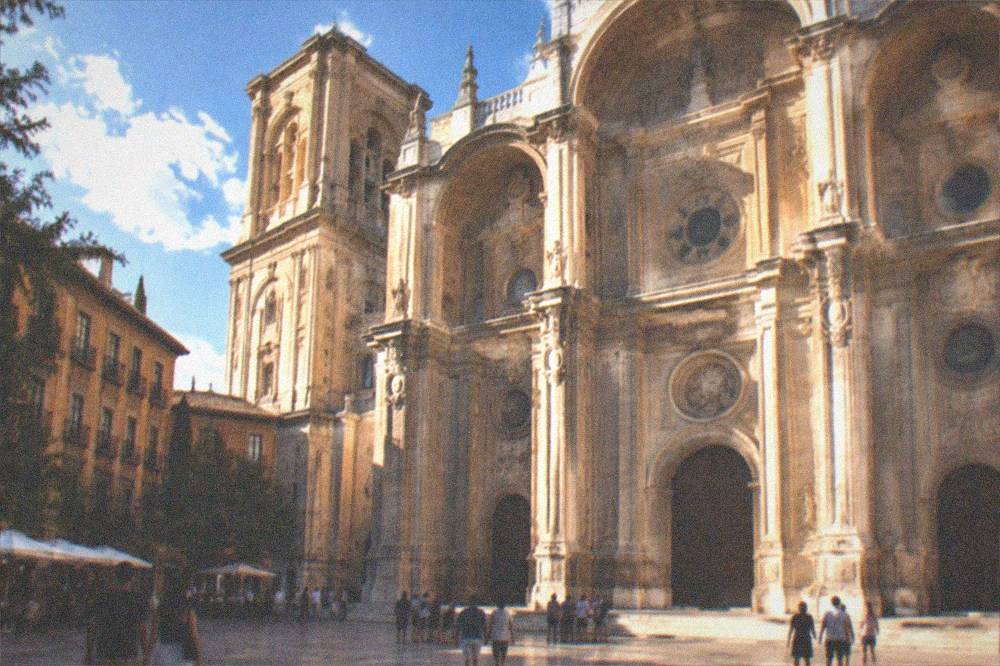
Granada Cathedral restrictions during Holy Week are severe: the cultural-visit schedule that normally runs roughly 10:00 to 20:15 Monday to Saturday gives way to worship services, and the Royal Chapel similarly suspends or shortens tourist entry around Maundy Thursday and Good Friday, with the Royal Chapel closed entirely on Good Friday every year. Entry prices outside the closure days are EUR 10 individual at the Cathedral during the 2026 Kerygma exhibition, running 8 May to 28 Nov 2026, and EUR 7 individual at the Royal Chapel.
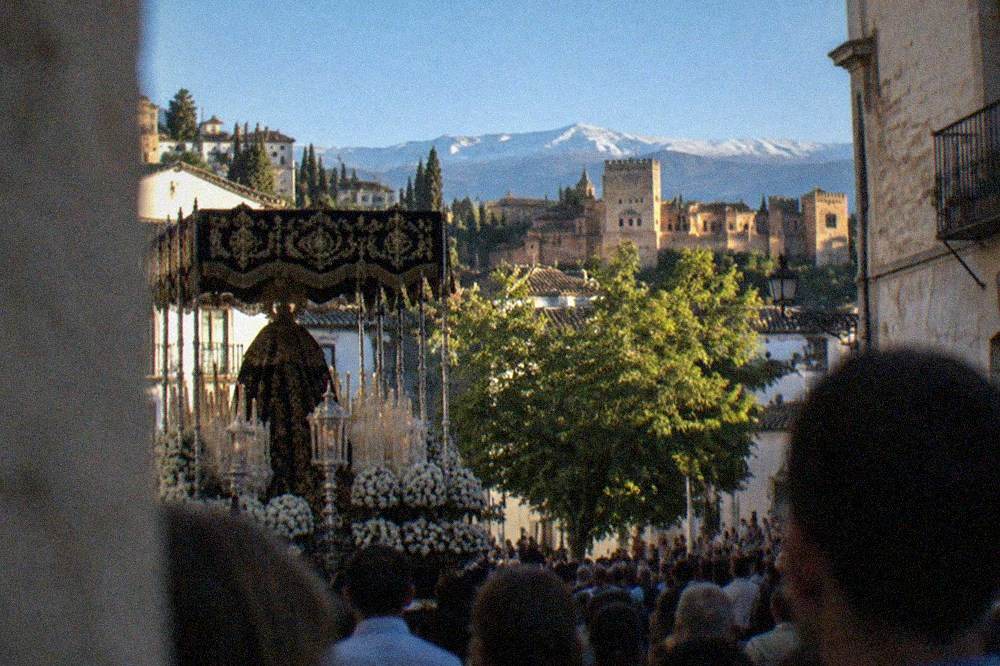
Both monuments sit at the physical heart of the processions, which is the reason for the disruption. The cathedral is the terminus for many routes, and the Plaza de las Pasiegas in front of it is where floats enter and leave, so the building is in liturgical use rather than tourist use for much of the week. Confirm hours on the official ticket site before planning an interior visit on any day from Holy Wednesday onward. The wider set of guides lives on Things To Do In Granada.
The Royal Chapel, where the Catholic Monarchs Ferdinand and Isabella are buried, normally opens 10:00 to 18:30 Monday to Saturday and 11:30 to 18:30 on Sundays, with reduced rates at EUR 5 for eligible visitors. Its Good Friday closure is fixed, and it also closes 25 December and 1 January. The city pass pages on this site explain how the Granada Card covers both monuments, at EUR 60 for 72 hours or EUR 55 for 48 hours, tiers effective 13 November 2025.
| Monument | Normal individual price | Holy Week impact |
|---|---|---|
| Granada Cathedral | EUR 10 during Kerygma exhibition (to 28 Nov 2026), then EUR 7 | Cultural visits suspended around services |
| Royal Chapel | EUR 7 (reduced EUR 5) | Closed Good Friday; shortened hours likely |
| Alhambra | EUR 22.27 General | Open all week, sells out early |
Where Should You Stay In Granada For Semana Santa?
The best bases for Holy Week are the area around Puerta Real and Gran Via for direct access to the central processions, the lower Albaicin for the hill-climb routes and views, and the Realejo for the Campo del Principe ceremonies. The historic centre's narrow streets mean some hotel access is disrupted on procession nights, so a stay slightly outside the old core trades atmosphere for sleep. Booking six months ahead is realistic, since Holy Week is one of Granada's two annual demand spikes alongside Corpus Christi.
The trade-off to understand is noise and movement. Streets on procession routes are closed to traffic, sometimes for hours, and hotels deep in the old centre can be reached only on foot on the heaviest nights. That is part of the experience for many visitors and an ordeal for others. The where to stay in Granada guide breaks the districts down in detail, and the Parador de Granada guide covers the one hotel inside the Alhambra grounds itself, which must be booked far ahead at the best of times and is doubly scarce in Holy Week.
For families and anyone wanting quieter nights, the modern belt around the train station side of the city keeps you a short walk or bus ride from the routes without the barricades at the door. Public transport runs through the week, though central stops are diverted on procession evenings, and the metro's north-south line does not reach either the Alhambra or the old Albaicin lanes, so plan the last stretch on foot.
| Area | Holy Week advantage | Main drawback |
|---|---|---|
| Puerta Real / Gran Via | Central routes at the door | Loudest, busiest nights |
| Lower Albaicin | Hill climbs, riverside views | Steep lanes, limited vehicle access |
| Realejo | Campo del Principe ceremonies | Procession-night street closures |
| Station district | Quiet, easy transit links | 15-25 minutes' walk to the centre |
What Should You Eat During Holy Week In Granada?
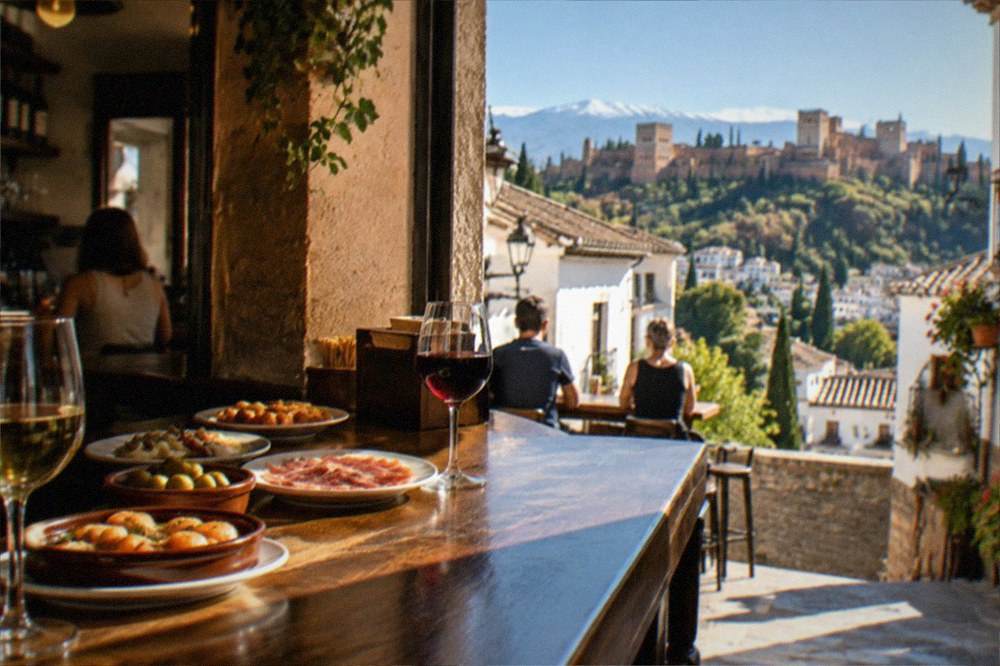
Holy Week eating in Granada means two things above all: free tapas with your drink in the traditional bars, a custom widely upheld across the city in 2026 though not a legal guarantee at every venue, and seasonal dishes such as potaje de vigilia, a cod and chickpea stew eaten on meatless days, plus torrijas, the honey-soaked fried bread that appears in bakeries everywhere during the week. Restaurant kitchens keep normal hours for the most part, with Good Friday the day most likely to shift schedules.
The tapas custom is Granada's signature and it works hardest during festival weeks, when bars fill between processions. The way it typically works is that a first drink arrives with a small plate, and further rounds often bring better portions. Some venues have adjusted sizes or drink pricing, so treat it as a strong local tradition rather than a promise, and read the site's tapas in Granada guide for how to play it well.
The vigia dishes are the culinary heart of the week. Meatless Friday cooking means cod, chickpeas and spinach appear on menus that normally push Iberian pork, and Granada's versions are serious rather than token. Bakeries stack torrijas in the window from the start of Lent, and by Holy Week the city smells of cinnamon and fried dough. The best restaurants in Granada guide covers where to eat year-round, and the Granada tours overview links the food tour options if you want the tapas culture explained over an evening.
| Holy Week food | What it is | Where to find it |
|---|---|---|
| Potaje de vigilia | Cod, chickpea and spinach stew | Traditional bars and restaurants |
| Torrijas | Fried bread soaked in milk and honey | Bakeries citywide |
| Free tapas | Small plate with each drink | Traditional Granada bars |
| Bacalao dishes | Salt cod preparations | Old-town and Realejo kitchens |
Can You Take Day Trips From Granada During Semana Santa?
Day trips from Granada during Holy Week are entirely feasible on the quieter days of the week, with Ronda, the Alpujarras villages and the Sierra Nevada all reachable on organised tours, but Holy Thursday and Good Friday are days to stay in the city because the Silencio and Santo Entierro processions are the week's unrepeatable events. The Alpujarras full-day tour runs about 8 hours and Ronda about 8 to 10 hours, so either consumes a whole day that must be chosen deliberately.
The logic is simple: processions happen every day, but the peak nights are few. Monday and Tuesday of Holy Week are the natural day-trip slots, with lighter schedules in the city and the same spring weather inland. The Sierra Nevada's ski season dates for 2026-2027 are not officially confirmed, so treat late November to early or mid-April as the typical weather-dependent pattern and check the official resort site, but a late-March Holy Week can coincide with spring skiing, and the mountain villages of the Alpujarras are in bloom rather than snow at valley level by then.
Ronda works as a contrast: a cliff-edge town two mountain ranges away, with a small-group tour from Granada running 8 to 10 hours. The best time to visit Granada guide compares the seasons in full, and the Alpujarras and Ronda pages on this site cover each destination in depth.
The Ronda option is the one to lock in first if a day away appeals, because small-group departures on festival-week Mondays are limited and the operator's live listing shows current availability.
What Should You Pack And Know Before Semana Santa In Granada?
Pack for two climates in one day: AEMET's Granada normals show March days averaging 19.0C with nights at 3.8C and April days at 20.6C with nights at 6.0C, so a warm layer for night processions is essential, along with flat shoes for cobbles, and a small cushion or folded newspaper if you plan to stand for the long central routes. Bring your passport everywhere, since Alhambra tickets are nominative and ID is checked at entry.
The cold is the detail that surprises people. Granada sits at the foot of the Sierra Nevada, and spring nights drop close to freezing in March, which the candlelit processions make beautiful and the unprepared make miserable. Flat shoes matter more than warmth on the Albaicin routes, where cobbles and slopes punish anything with a heel. Cash still helps in older bars even as card acceptance spreads.
Getting in and out during the week needs slightly more slack than usual. The Granada airport guide covers the Alsa Linea 245 bus, EUR 3.10 one way and roughly 40 to 45 minutes to the centre, and the Madrid and Seville rail pages cover high-speed arrivals, with the Madrid AVE taking roughly 3h20 to 3h35. Central streets close to traffic on procession evenings, so allow extra time for any departure on Holy Thursday or Good Friday.
| Month | Avg high C | Avg low C | Rainfall mm | Night procession reality |
|---|---|---|---|---|
| March | 19.0 | 3.8 | 32 | Cold nights, warm afternoons |
| April | 20.6 | 6.0 | 36 | Cool nights, occasional rain |
Common Questions About Semana Santa In Granada
When is Semana Santa in Granada?
Approximately 29 March to 5 April in 2026 and approximately 21 to 28 March in 2027, with the heaviest processions from Holy Wednesday through Easter Sunday morning.
Is Semana Santa in Granada worth visiting?
Yes, if you want processions in a compact, walkable city where routes climb through the Albaicin past the Alhambra. Granada's Holy Week is smaller and quieter than Seville's, which many visitors find makes it easier to watch and more atmospheric.
Is the Alhambra open during Semana Santa?
The Alhambra is open through Holy Week and closes only on 25 December and 1 January. Tickets sell out one to two or more months ahead in peak season, so book roughly three months out when tickets release.
Do you need tickets to watch the processions?
No, all street processions are free to watch from public space. Some towns sell grandstand seats for the biggest routes, but in Granada the tradition is standing room along the streets and squares.
What should you wear for night processions?
Warm layers and flat shoes. March nights average 3.8C in Granada and April nights 6.0C, and the Silencio procession runs from midnight in open streets.
Are restaurants and tapas bars open during Holy Week?
Most stay open, and the free-tapa custom is widely upheld in traditional bars, though it is a local practice rather than a guarantee at every venue. Good Friday is the day most likely to bring adjusted hours.
Granada's Holy Week rewards planning: book the Alhambra the day tickets release, sleep within walking distance of the routes, keep the peak nights free for the Silencio and the Santo Entierro, and spend the quiet Monday on a mountain or a coastal road, and the week becomes the version of Spain that people remember for years.