Best Restaurants In Granada
Granada feeds its visitors well, and it does so across a handful of distinct districts, a famous free-tapas custom, and a short list of local dishes that most first-time visitors never order. This guide covers where to eat, what to order, and how to plan around the city's dining rhythm.
Short answer
Eat in the Realejo and the Albaicin for atmosphere, order local dishes such as tortilla del Sacromonte and habas con jamon rather than the tourist menus, and treat the free tapa with a drink as the fastest way to sample the city's kitchen without committing to a full sit-down meal.
Granada runs on a simple food logic that takes most visitors a day or two to decode: the city's best eating is not concentrated in one restaurant row but spread across the Realejo, the Albaicin, the old centre around the Cathedral, and a strip of neighbourhood bars that never appear on a first page of search results. The Patronato de la Alhambra counted 2,726,861 visitors to the monument in 2025, and a large share of those people eat dinner within a fifteen-minute walk of their hotel, which is exactly why the streets nearest the Alhambra and the Plaza Nueva are the most uneven places to eat in the city. This guide from Things To Do In Granada lays out the districts, the dishes worth ordering, the free tapa custom that shapes every evening, and a realistic way to plan a food-focused day, including how a guided tapas and wine walk fits into the picture.
Where Should You Eat In Granada?
The four districts that matter for eating are the Realejo, the Albaicin, the old centre around the Cathedral and Calle Navas, and Sacromonte, and each one serves a different kind of meal: the Realejo for casual neighbourhood tapas, the Albaicin for slow dinners with a view, the centre for quick sit-down lunches, and Sacromonte for flamenco-plus-dinner cave venues. Picking the right district for the right meal does more for a dinner in Granada than picking any single restaurant, because the neighbourhood determines the price level, the pace, and how far the kitchen has drifted toward tourist menus.
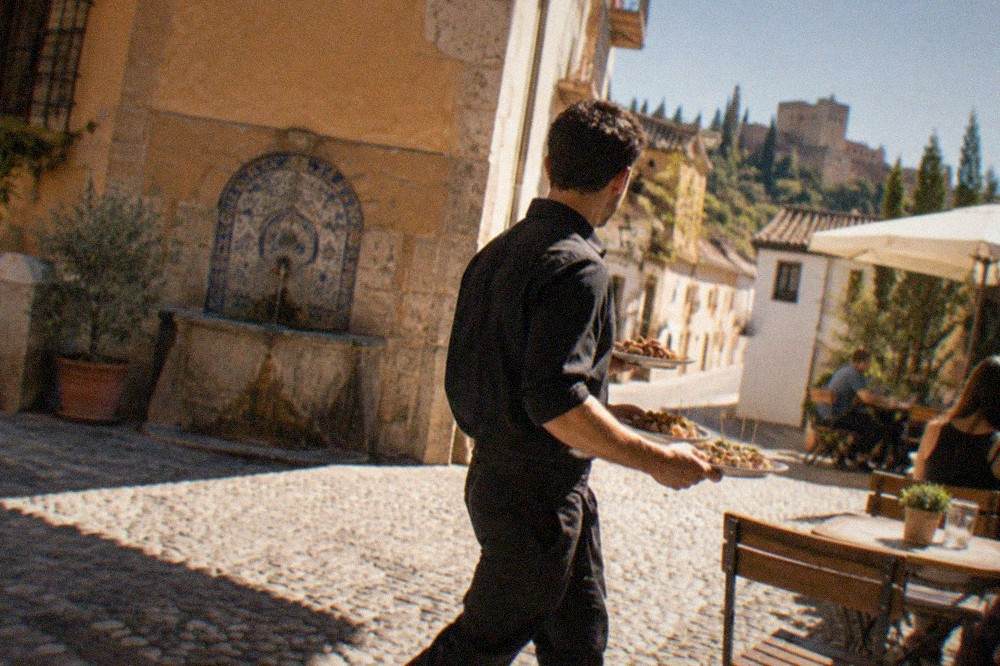
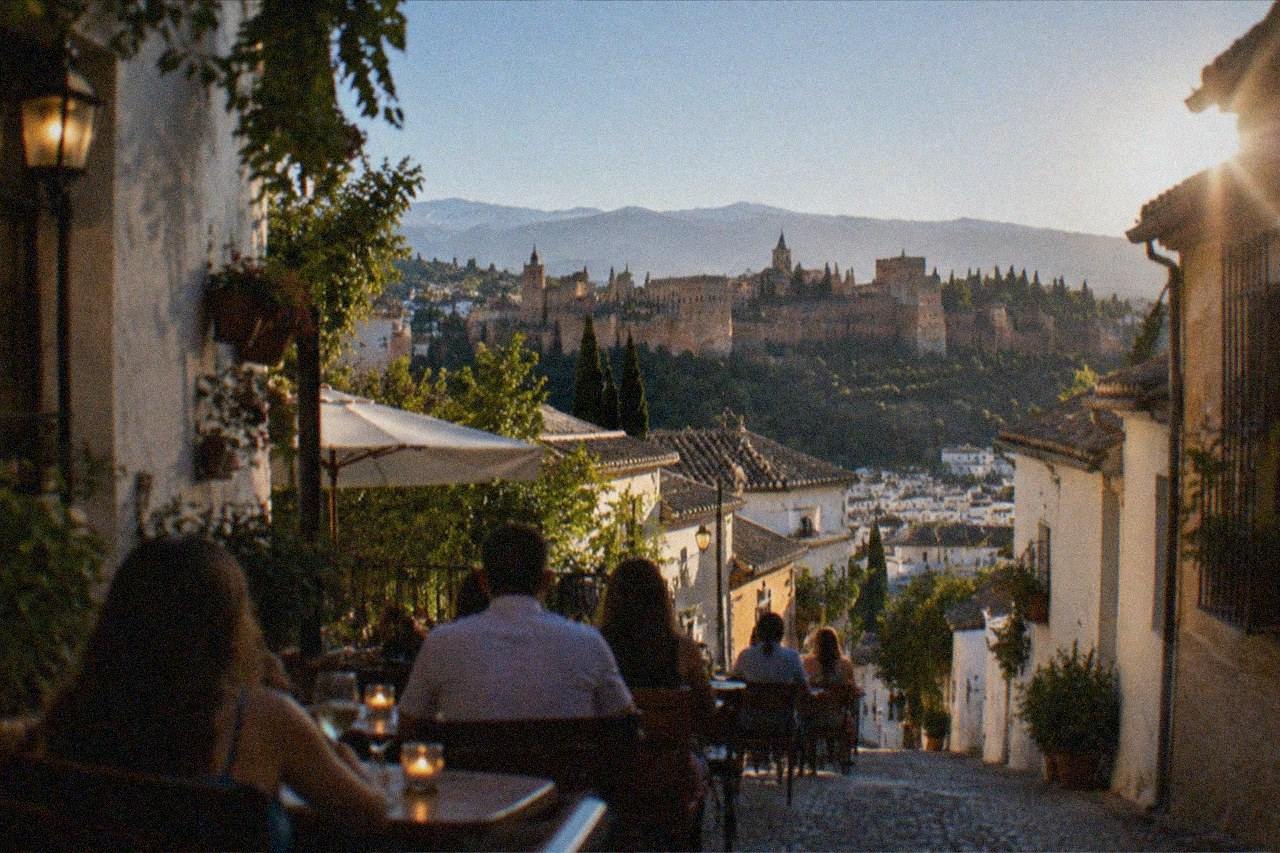
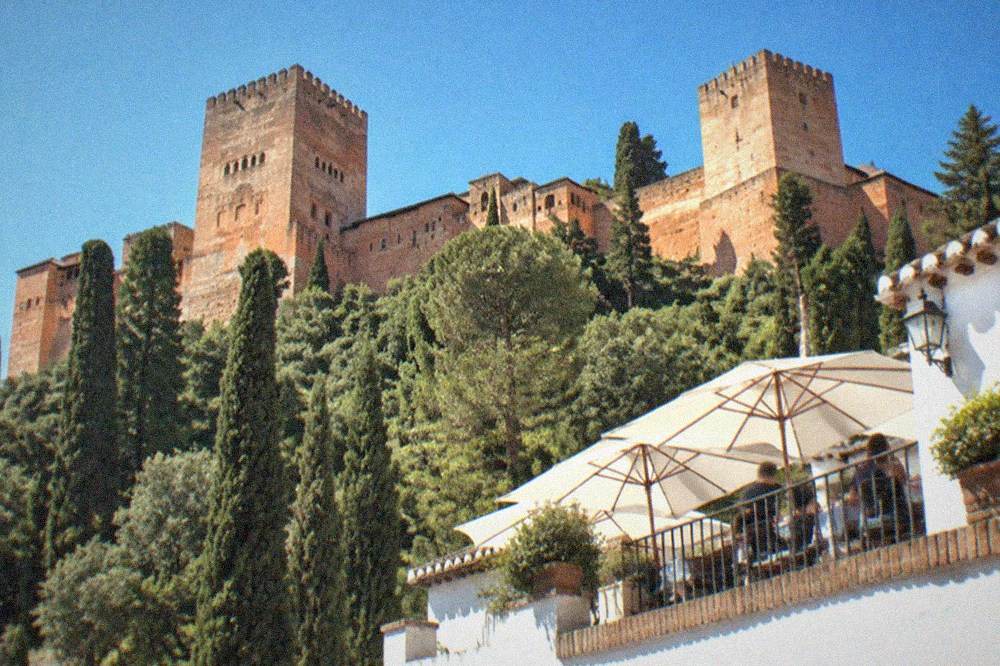
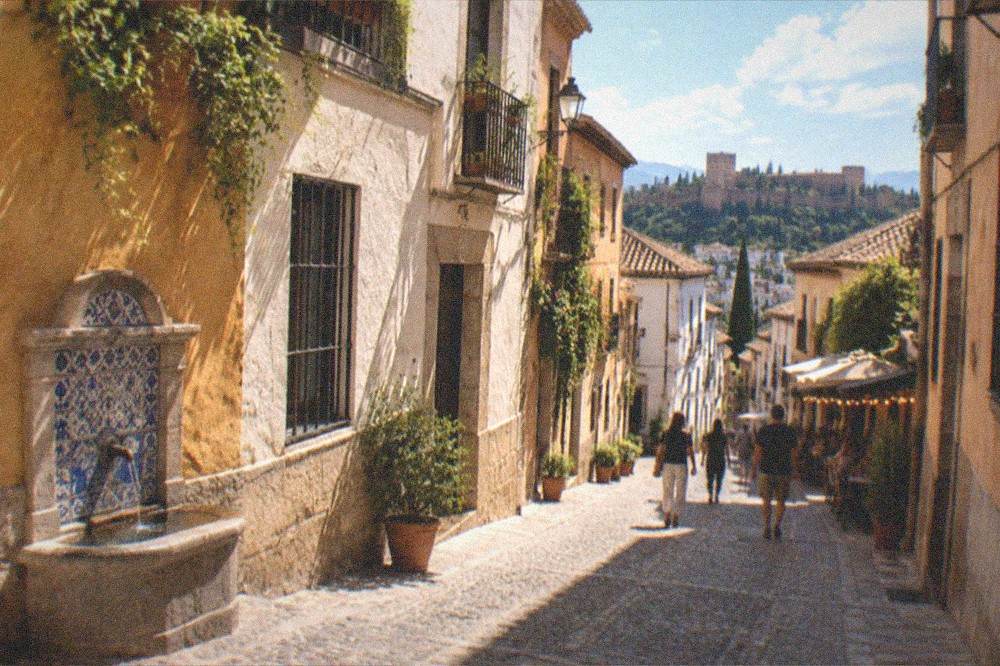
The Realejo, the old Jewish quarter on the slope below the Alhambra, is where Granadinos themselves go for a round of tapas on a Thursday or Friday night. The bars here are small, the menus are short, and the kitchens cook the local canon rather than a pan-Spanish greatest-hits list. The Albaicin, the UNESCO-listed Moorish quarter inscribed as an extension of the Alhambra listing in 1994, trades convenience for setting: dinner on a Carmen terrace here comes with the floodlit Alhambra as a backdrop, and prices reflect it.
| District | Best for | Typical setting | Watch out for |
|---|---|---|---|
| Realejo | Neighbourhood tapas rounds | Small bars, street tables | Limited late-night kitchens |
| Albaicin | Slow dinners, terrace views | Carmen terraces, Moorish patios | Higher prices, hills |
| Old centre (Calle Navas, Cathedral) | Quick lunches, ration plates | Sit-down tabernas, close tables | Tourist menus near Plaza Nueva |
| Sacromonte | Dinner plus flamenco | Cave venues in the hillside | Show-and-dinner bundles vary in quality |
| Zaidin and Ronda districts | Where locals actually live and eat | Unglamorous neighbourhood bars | Almost no English spoken |
The old centre deserves one honest warning. The streets immediately around the Plaza Nueva and the lower end of the Carrera del Darro carry the highest tourist traffic in the city, and the menus with photographs outside the door are the ones to walk past. Two streets in, the food improves sharply. A guided walk helps here more than in most cities: the Sacromonte and Albaycin neighbourhoods walking tour and the private Albaicin and Sacromonte exclusive walk both thread the two hill quarters with a local guide who can point at doors. For a deeper look at the quarter itself, see our Albaicin district guide, which covers where to sleep as well as where to eat.
What Dishes Should You Order In Granada?
Order the dishes that exist almost nowhere else in Spain: tortilla del Sacromonte, the omelette made with offal and peas that gives the cave district its name, habas con jamon, broad beans with cured ham, piononos, the small layered cream pastry from nearby Santa Fe, and remojon granadino, the salt-cod and orange salad. Add a plate of Morujo or Alpujarreno cured meat, a plato Alpujarrano of eggs, chorizo and blood sausage, and a sacromonte-style kidney stew, and you have eaten the city's actual canon rather than the international tapas list that travels everywhere.
The reason to order this way is practical, not romantic. Granada's kitchen is one of the most regionally specific in Andalusia, built on the vegetables of the fertile vega around the city, the pork of the Alpujarras to the south, and the Arab-era sweets that survived the centuries. A restaurant cooking tortilla del Sacromonte is a restaurant cooking for a local clientele, because almost no visitor orders it, and that single ordering decision is a better quality signal than any online rating.
| Dish | What it is | When to order it |
|---|---|---|
| Tortilla del Sacromonte | Omelette with offal, peas and brains, the district's signature | Spring, when broad beans are in season |
| Habas con jamon | Fresh broad beans stewed with cured ham | Spring tapa, best in the Realejo |
| Plato Alpujarreno | Fried eggs, chorizo, blood sausage, sometimes ham and peppers | Hearty lunch after a hill walk |
| Remojon granadino | Salt cod, orange, olives and onion salad | Warm months, as a starter |
| Piononos | Small layered cream-soaked pastries from Santa Fe | Dessert or breakfast, with coffee |
| Morcilla and Morujo platter | Cured sausages of the Granada highlands | Any time, as a ration plate to share |
Dessert deserves a separate sentence, because most visitors meet only the flan. Granada's Arab-era pastry tradition is still alive in the convents and the old-town sweet shops, and the pionono, invented in Santa Fe a short drive out of the city, is the one to ask for by name. The food and tapas background in our tapas guide goes deeper on how the free tapa shapes what kitchens actually cook.
How Does The Free Tapas Custom Work In Granada?
In many traditional Granada bars, ordering a drink brings a complimentary small tapa with it, and the tapa often grows larger or better with each subsequent round, a custom that is widely upheld as local practice in 2026 but is not a legal guarantee, so treat it as the norm in neighbourhood bars and never as a promise in every venue. Recent local reporting from July 2026 confirms the tradition remains part of the city's identity, while also noting that some venues have adjusted portion sizes or drink pricing, which is exactly why knowing which bars still do it properly matters more than it used to.
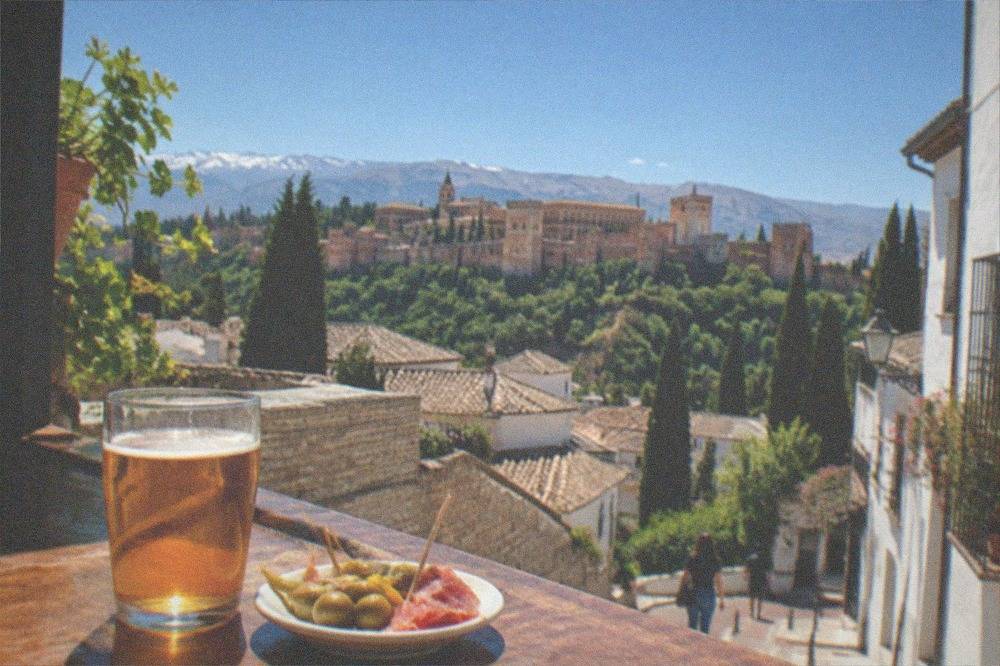
The mechanics are simple once you have seen them once. You order a drink, the kitchen sends out whatever the house is cooking that day, and you eat it standing at the counter or at a barrel-top table. The tapa is not chosen by the customer, and that is the point: it is the kitchen showing you what it can do. A common local pattern is to move between two or three bars in an evening, one drink and one tapa in each, which turns a modest spend into a full meal and gives you three kitchens instead of one.
| Tapas custom | What actually happens |
|---|---|
| The drink order | A beer, tinto de verano or soft drink arrives with a small free plate |
| Second and third rounds | The tapa often improves or grows in traditional bars |
| Choosing the tapa | Usually not possible, the kitchen decides |
| Standing vs sitting | Standing at the counter is normal, terrace tables sometimes cost more |
| Where it works best | Neighbourhood bars in the Realejo, Zaidin and the Albaicin |
| Where to lower expectations | Plaza-facing terraces and purely tourist streets |
The honest caveat from the 2026 reporting is worth repeating at the table: some venues have trimmed portions or nudged drink prices upward, so a bar that was generous last year may be less so this year. The fastest way to find the bars that still do the custom properly is to follow a local. The Granada Tapas and Wine Small Group Tour, from $78 per person and rated 4.9 from 933 reviews on the operator's live listing, exists almost entirely for this reason.
That evening run through the bars is also the moment where a food-focused visit to Granada either clicks or falls flat, because the custom rewards people who already know which streets to work. Everything else on the eating calendar, from the spring dishes to the festival streets, builds on getting that first evening right.
Which Food And Tapas Tours In Granada Are Worth Booking?
The tapas and wine small-group walk is the clear food-first pick at from $78 per person with a 4.9 rating from 933 reviews, and the Granada Walking Food Tour at from $81 per person rated 4.9 from 590 reviews is the closest alternative, while the free GuruWalk tip-based tours cost nothing upfront and cover the old town's food streets without including any food. All three answer different questions: the paid walks guarantee you sit and eat, while the free walks guarantee you learn the geography.
| Tour | Kind | Price | Rating | Length |
|---|---|---|---|---|
| Granada Tapas and Wine Small Group Tour | Food and wine | From $78 per person | 4.9 from 933 reviews | 3h30m |
| Granada: Walking Food Tour | Food and wine | From $81 per person | 4.9 from 590 reviews | 3.5 hours |
| Free Tour Fall in Love with Granada (GuruWalk) | Free walking tour | Free, tip based | 4.92 from 567 reviews | Walking route |
| Albaicin and Sacromonte free tour (GuruWalk) | Free walking tour | Free, tip based | 4.99 from 913 reviews | Walking route |
The GuruWalk free tours deserve a plain-language explanation, because they are the one tour type where the platform must be named for honesty's sake: GuruWalk walks are free to join and the individual guide is paid by tip at the end, and no price belongs in print because there is none. The free walks are excellent for orientation and for finding the streets where the tapas bars cluster, but they do not include food, so treat them as the scouting mission and the paid food walk as the meal.
Timing matters more than tour choice. Granada's kitchens open late by northern European standards, with the tapas run typically starting in the early evening and dinner service not really moving until nine or later, so a food tour that starts too early fights the city's own rhythm rather than riding it. Book the food walk for your first evening, not your last, and use what the guide tells you for the rest of the stay.
Where Do Locals Eat In Granada?
Locals eat in the neighbourhood bars of the Realejo and the Zaidin, at the counter rather than at a terrace table, ordering the daily menu at lunch and tapas rounds in the evening, and the single biggest behavioural difference from visitors is that Granadinos rarely eat dinner before nine o'clock. Copy the pattern rather than the postcode: stand at the counter, order what the kitchen sends, and let the free tapa decide your first course.
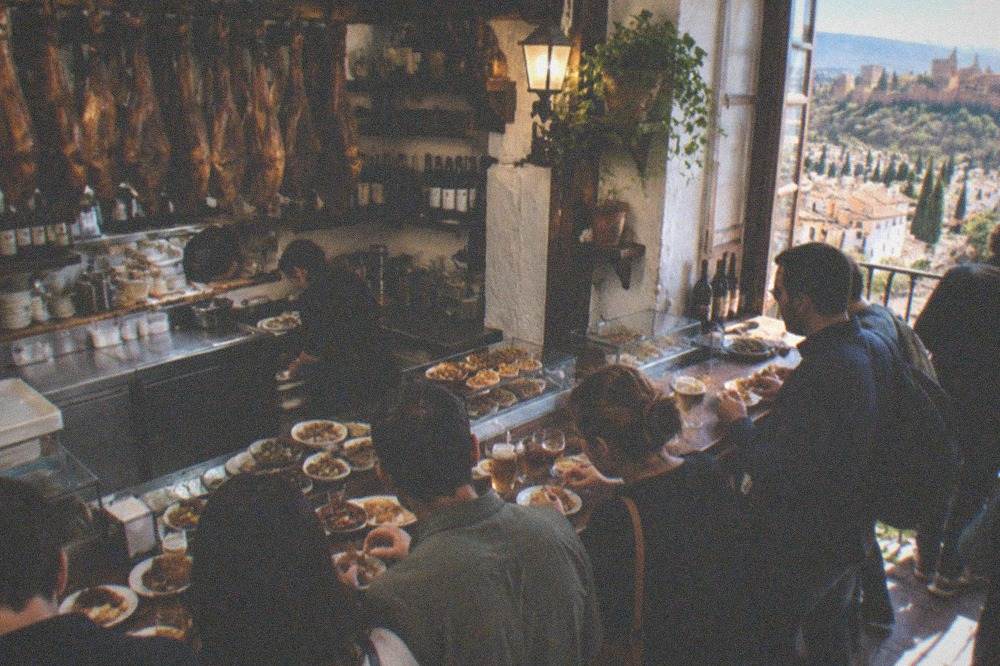
Lunch is the meal the city takes seriously. The menu del dia, a fixed multi-course lunch at a set price, is still the backbone of weekday eating for people who work in the centre, and it is the cheapest full meal a visitor will find in Granada outside the free-tapas run. The kitchens that cook a serious menu del dia for a local clientele are the same kitchens that cook well at night, so a good lunch is a reliable audition for a good dinner.
Two practical warnings from the city's own rhythm. First, Sunday evening is the quietest restaurant window of the week in many neighbourhood quarters, with some kitchens dark or running a reduced card, so plan the big Sunday meal at midday instead. Second, the tourist streets around the Plaza Nueva and the lower Carrera del Darro run on visitor hours, which is precisely why they are open when the better kitchens are not, and why an open door there is not the recommendation it appears to be. Our guide to what not to miss in Granada beyond the restaurants covers how to fill the hours between meals.
When Is The Best Time Of Year To Eat Out In Granada?
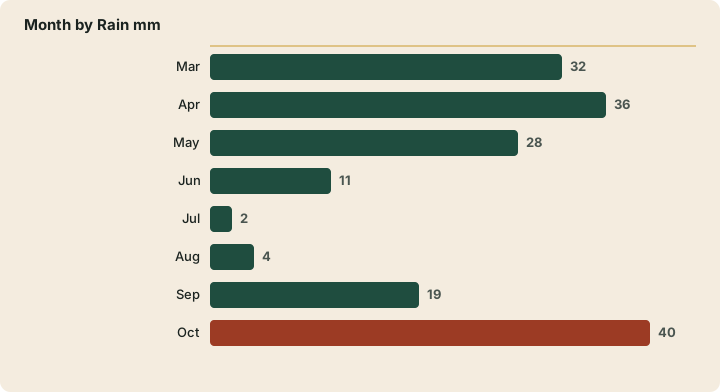
The best eating months are April, May, June, September and October, when AEMET's climate data for Granada shows average highs of 20.6C to 31.0C and rainfall of just 11 to 36mm, which puts terrace season in full swing without the July and August peaks of 34.8C and 34.2C, while the free tapa custom moves indoors from November's 54mm of rain. The food does not change with the seasons as much as the setting does, but the two spring dishes, habas con jamon and tortilla del Sacromonte, are genuinely better in season.
| Month | Avg high C | Avg low C | Rain mm | Terrace verdict |
|---|---|---|---|---|
| Mar | 19.0 | 3.8 | 32 | Good, cool evenings |
| Apr | 20.6 | 6.0 | 36 | Excellent |
| May | 25.0 | 9.4 | 28 | Excellent, Cruces de Mayo |
| Jun | 31.0 | 13.6 | 11 | Hot at midday, perfect nights |
| Jul | 34.8 | 15.7 | 2 | Eat late, eat inside |
| Aug | 34.2 | 15.5 | 4 | Eat late, eat inside |
| Sep | 29.4 | 12.8 | 19 | Excellent |
| Oct | 23.2 | 8.7 | 40 | Very good |
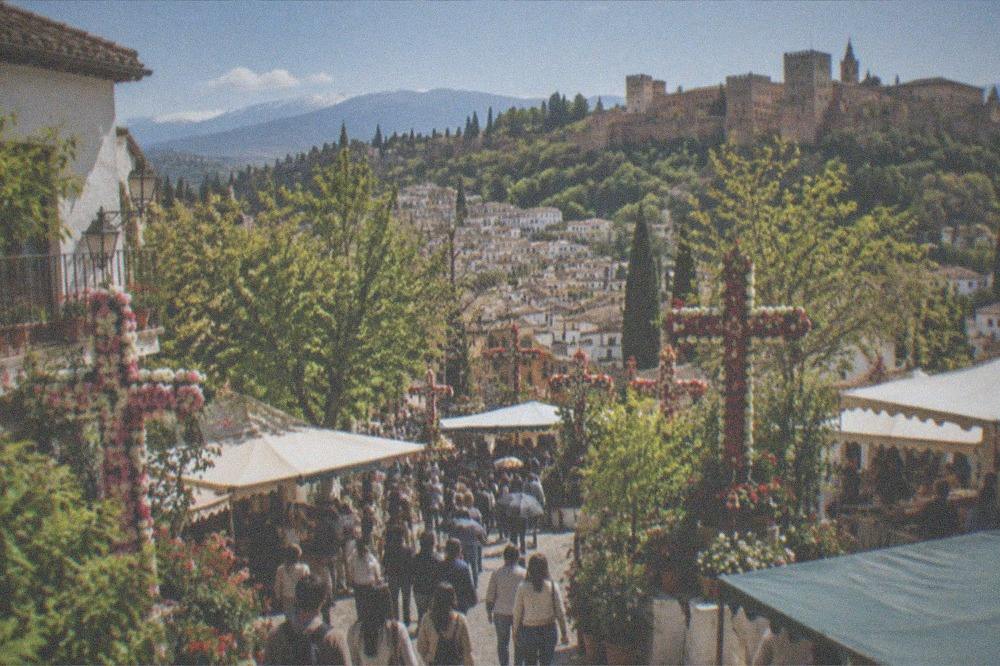
The festival calendar changes the eating more than the weather does. Cruces de Mayo runs 1-3 May in 2026 and falls on 3 May in 2027, and the crosses, the casetas and the street drinking put the whole city outdoors around food. Corpus Christi in 2026 brings its main Thursday procession around 4 June with fairground activities roughly 30 May to 6 June, and the fair is as much an eating event as a religious one. Semana Santa, approximately 29 March to 5 April in 2026 and 21 to 28 March in 2027, fills the centre with processions that close streets at night, which moves dinner plans as much as it moves traffic. Our best time to visit Granada guide puts the whole calendar in one place.
How Do You Plan A Food-Focused Day In Granada?
Plan the day around three eating moments: a morning coffee with a pionono in the old centre, the fixed-price menu del dia at midday when kitchens cook hardest for locals, and a moving tapas run through the Realejo in the evening, with the Alhambra or the Albaicin filling the gaps between meals. The Alhambra slot dictates everything, because the Nasrid Palaces entry is a strictly enforced half-hour window on a nominative ticket, and the General ticket at EUR 22.27 routinely sells out one to two months or more ahead in peak season.
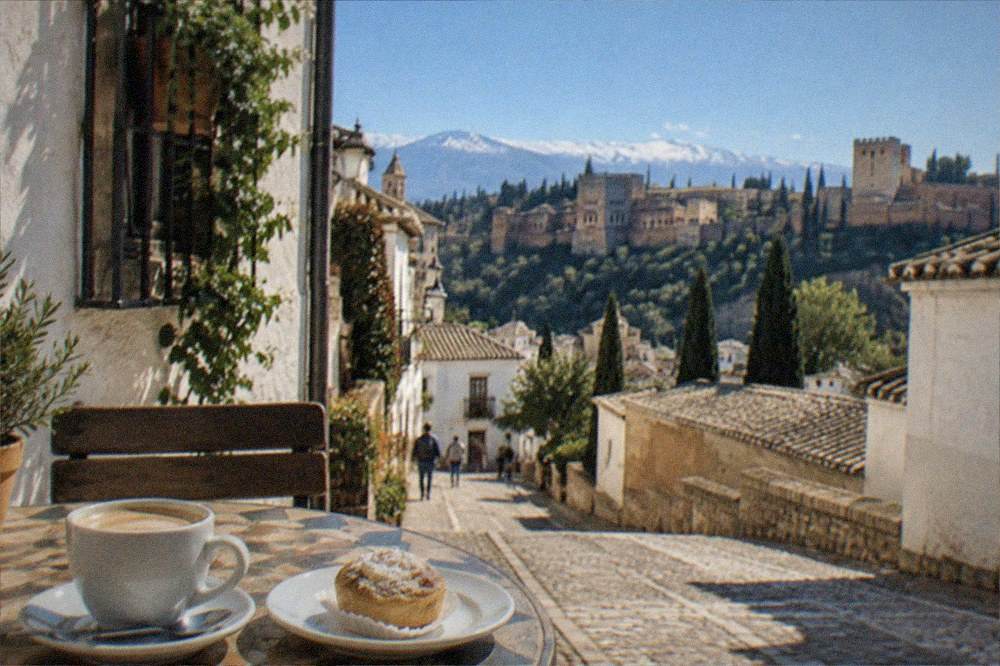
The practical sequence works like this. If your Nasrid Palaces window falls in the morning, eat in the old centre afterwards, at a proper lunch hour, and spend the afternoon walking off the meal in the Albaicin before the evening tapas run. If the window falls in the afternoon, take the fixed-price lunch first and let the monument slot carry you to dinner. Online sales for the Alhambra close at 23:59 the day before the visit date and there are no reliable same-day online sales, so the restaurant plan should be built around a ticket you already hold. Our Alhambra tickets guide covers the full booking mechanics.
A day or two of eating in the city also earns a coastal contrast. The Nerja & Frigiliana Day Trip from Granada, from $157 per person and rated 4.7 from 32 reviews on the operator's live listing, reaches the Mediterranean coast and the white village above it in a seven-hour loop, and a fish lunch by the sea is a fair reward after three days of inland pork and beans.
Common Questions About Restaurants In Granada
Are tapas free in Granada?
In many traditional bars, yes: a drink order typically comes with a complimentary small tapa, and the portion often improves with further rounds. The custom is widely upheld local practice as of 2026, not a legal guarantee, and some venues have adjusted portions or drink pricing, so it works best in neighbourhood bars rather than tourist-facing terraces.
What food is Granada famous for?
Tortilla del Sacromonte, habas con jamon, plato Alpujarreno, remojon granadino and piononos are the city's signature dishes. The kitchen draws on the vegetable farms of the vega, the cured meats of the Alpujarras, and an Arab-era pastry tradition that survives in the convents and sweet shops of the old town.
What time do people eat dinner in Granada?
Late. The tapas run typically begins in the early evening and sit-down dinner does not get going until nine o'clock or later, which is why kitchens that open at six are usually cooking for visitors rather than locals. The fixed-price midday menu del dia is the meal locals take most seriously.
Which district is best for eating out in Granada?
The Realejo for neighbourhood tapas, the Albaicin for slow terrace dinners with a view of the Alhambra, the streets around Calle Navas and the Cathedral for quick sit-down lunches, and Sacromonte for cave venues that pair dinner with flamenco. Avoid the photographed menus on the streets directly around Plaza Nueva.
Is a food tour in Granada worth it?
For a first visit, usually yes. The paid food walks, from $78 per person for the tapas and wine small-group tour rated 4.9 from 933 reviews, take you straight to bars that still do the free tapa properly, and the GuruWalk free tip-based tours cover the same streets without including food, so they work as a free scouting option instead.
Where do locals eat in Granada?
In the neighbourhood bars of the Realejo and the Zaidin, standing at the counter, ordering the daily lunch menu at midday and tapas rounds in the evening, rarely sitting down for dinner before nine. Copying the pattern matters more than copying the exact address, because the kitchens that cook for locals at lunch are the same ones that cook well at night.