Free Tapas Granada
Granada is one of the last cities in Spain where a drink order still typically arrives with a free plate of food. Here is how the custom works, where it holds strongest, and what has changed.
Short answer
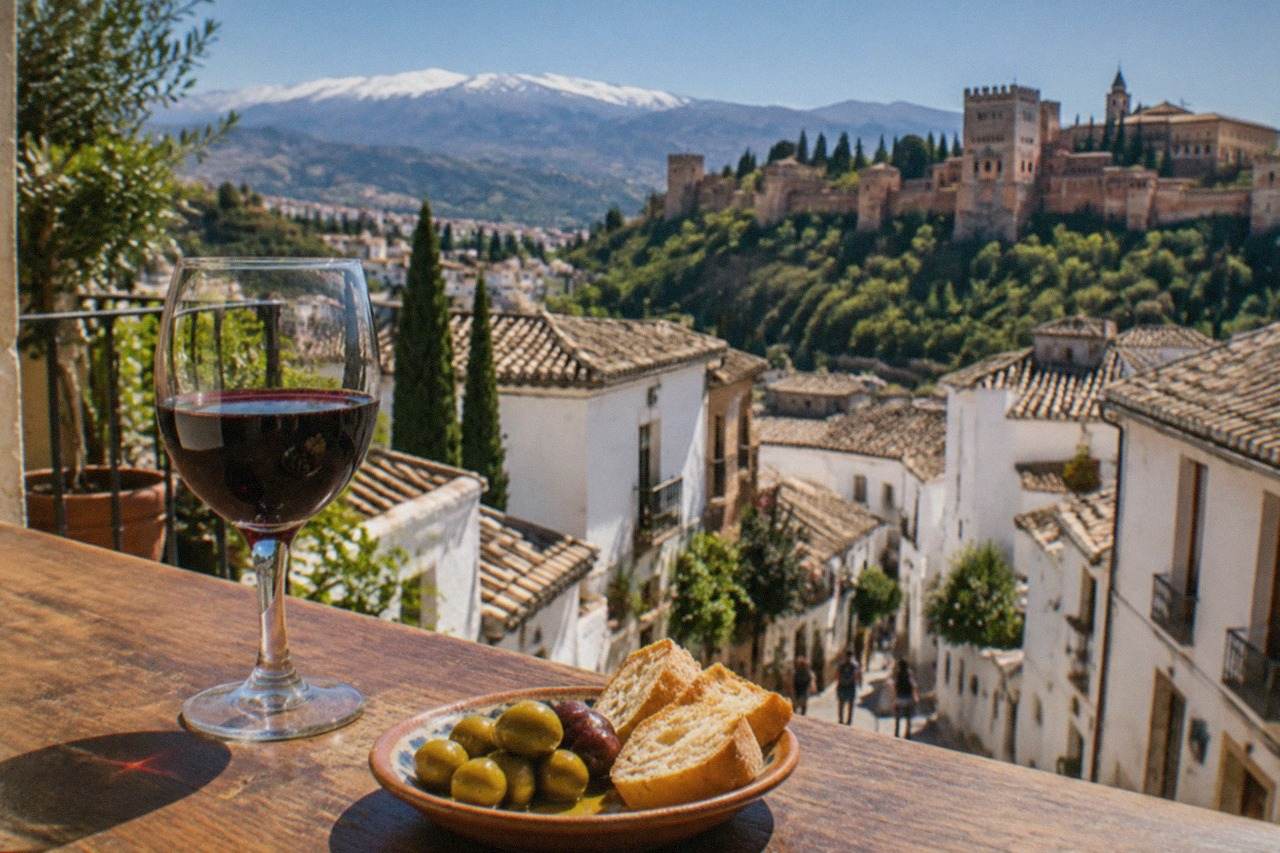
Yes, many traditional Granada bars still serve a complimentary tapa with each drink order in 2026. It is a widely upheld local custom rather than a guarantee, strongest in the Albaicin, Realejo and city-centre barrio bars, and it is not a legal requirement.
Granada holds a distinction almost nowhere else in Spain can still claim: in many of its traditional bars, ordering a drink typically brings a small plate of food to the counter at no extra charge. The Patronato de la Alhambra may fill the hillside, but the free tapa fills the neighbourhood bar, and July 2026 reporting by Cadena Ser confirmed the custom is still alive and still argued about. It is a practice, not a law. Some venues have trimmed portions or nudged drink prices, and no bar is obliged to participate. This guide explains how the ritual actually works, where it survives best, and how to read a Granada bar counter like a local.
Does Granada Still Do Free Tapas?
Yes, the free tapa with a drink remains standard practice in many traditional Granada bars as of 2026. A drink order typically arrives with a complimentary small plate, and the portions often grow with subsequent rounds. It is not a legal requirement, and some venues have adjusted portion size or pricing, but the custom is widely upheld as part of local identity rather than a tourist-facing promotion.
That last distinction matters. The free tapa is not a deal invented for visitors; it is how neighbourhood bars in the Albaicin, the Realejo and the streets around the Gran Vía have operated for generations. Cadena Ser's July 2026 report on the tradition described it as a live part of the city's identity, while acknowledging the pressure some bars face on margins. What that means in practice: the custom is common, genuinely free in the sense that you pay only for the drink, and uneven, because every bar decides its own portion and its own drink pricing.
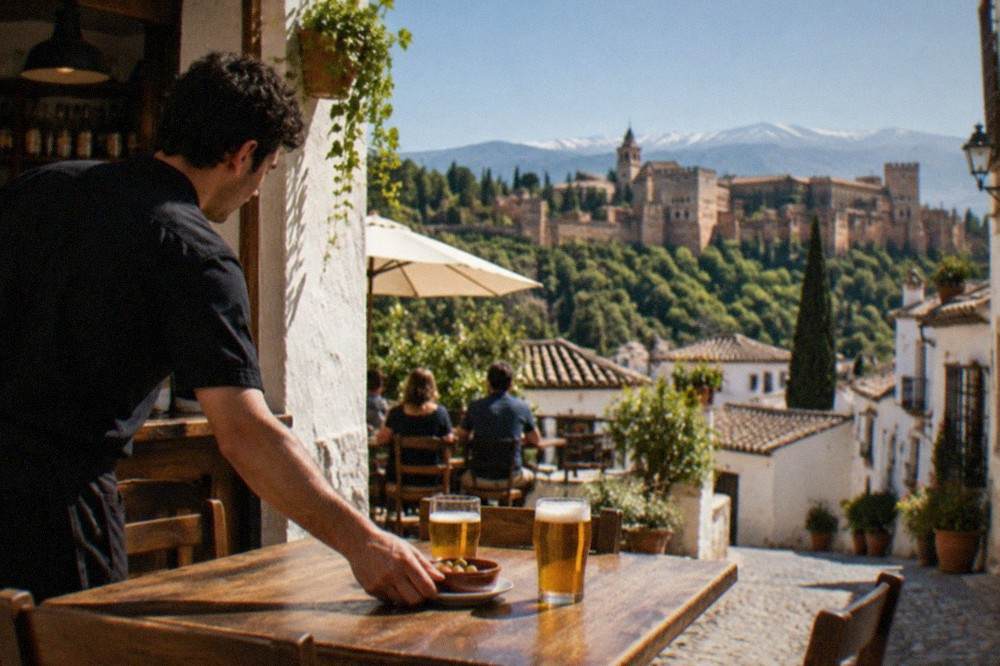
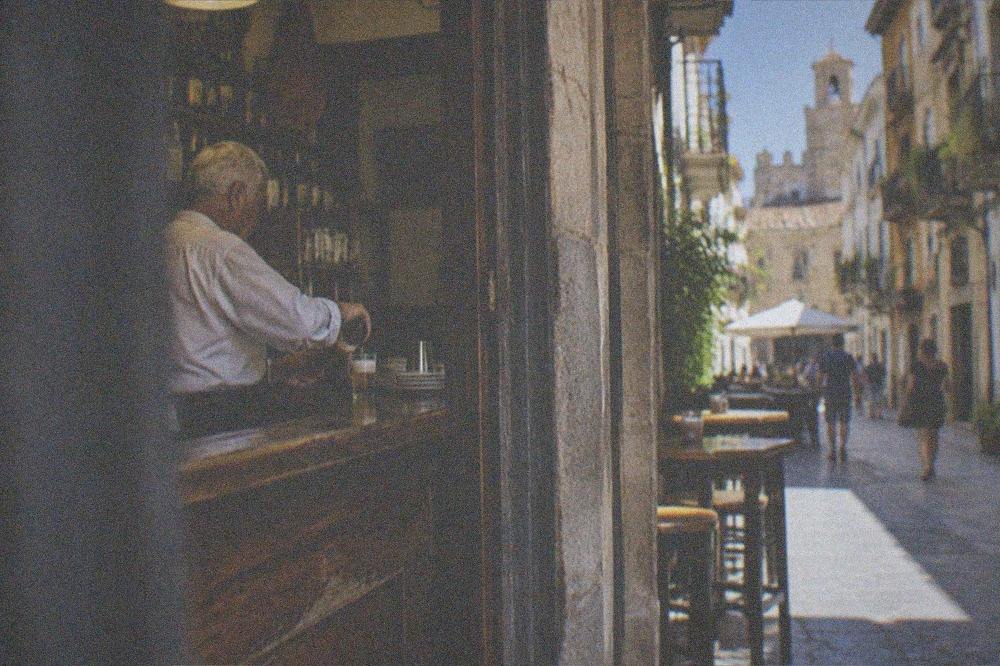
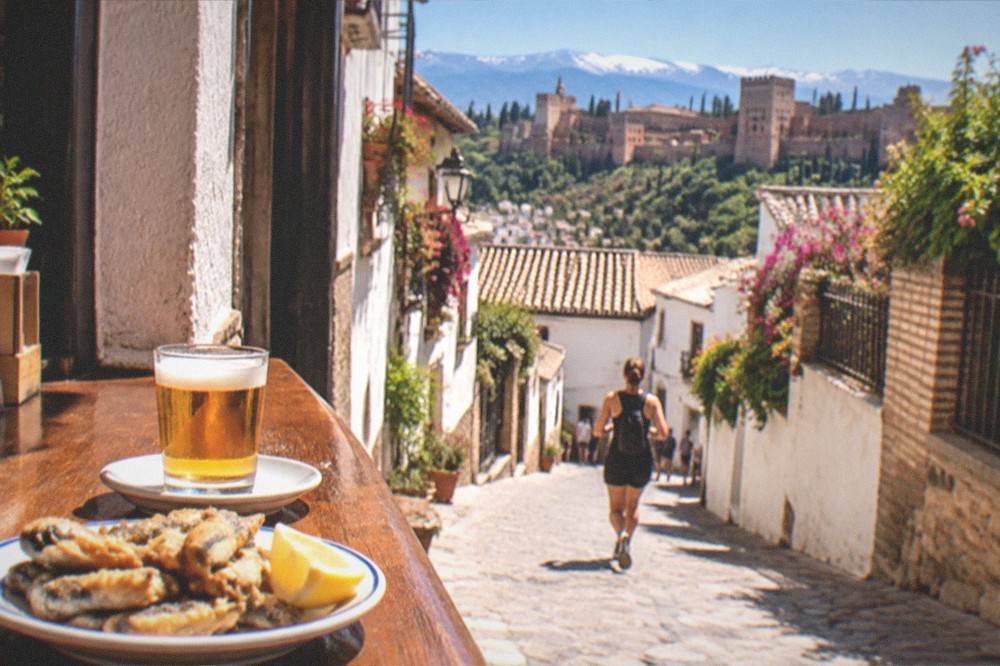
The mechanics are simple once you have seen them once. You order a caña (small beer), a tinto de verano or a glass of wine at the bar. The barman pours the drink and sets down a plate: perhaps a montadito, a spoonful of ensaladilla, a slice of tortilla, or a few fried fish. Order a second round and the plate often changes and often grows. Locals read the escalation as a signal: a bar that rewards loyalty with better food is a bar worth returning to.
For a fuller treatment of the city's food culture beyond the free plate, the companion guide to tapas in Granada covers the dishes worth ordering by name, and the direct question does Granada still do free tapas? gets a short answer on its own page.
How Does The Free Tapas Custom In Granada Actually Work?
The custom works on a simple exchange: you pay only for the drink, and the bar serves a small tapa alongside it unasked. There is no coupon, no minimum spend and no menu to choose from in most traditional bars; the kitchen decides what the round gets. Portions commonly improve with each additional drink, and sitting at a table instead of standing at the bar sometimes changes what arrives, or whether anything arrives at all.
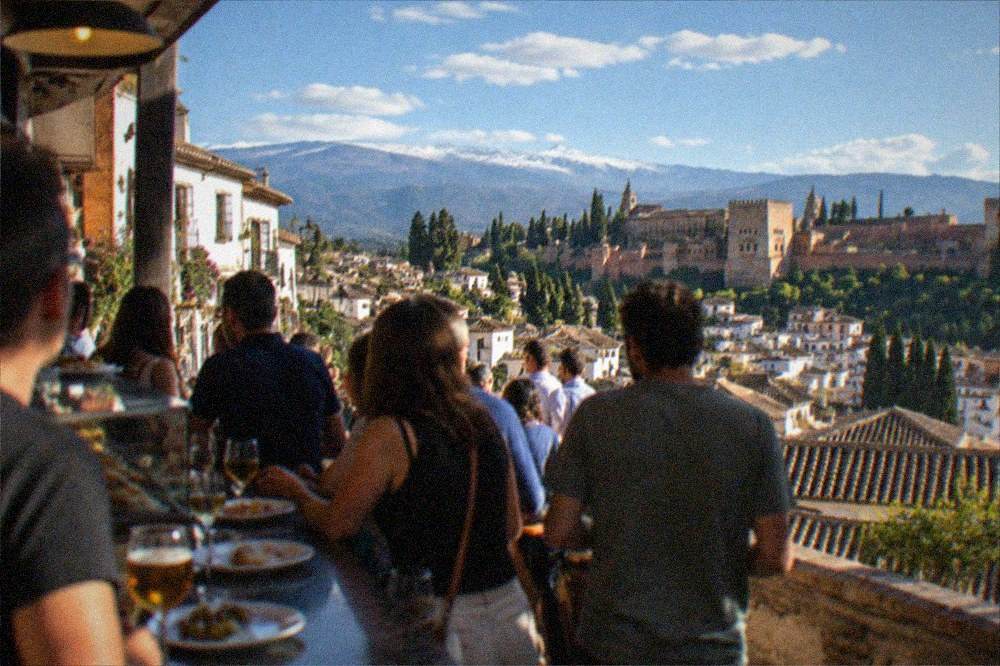
The counter-versus-table distinction is the detail that catches most first-time visitors out. In many traditional spots the free tapa is a bar-counter ritual: stand at the bar, order, eat what lands in front of you. Take a table on the terrace and the economics shift, because table service costs the bar more per customer. Some venues serve the free tapa at tables too, others switch to a paid ración menu or a small cover charge. Nothing is hidden; it is just a different arrangement, and asking "¿hay tapa con la consumición?" settles it in one sentence.
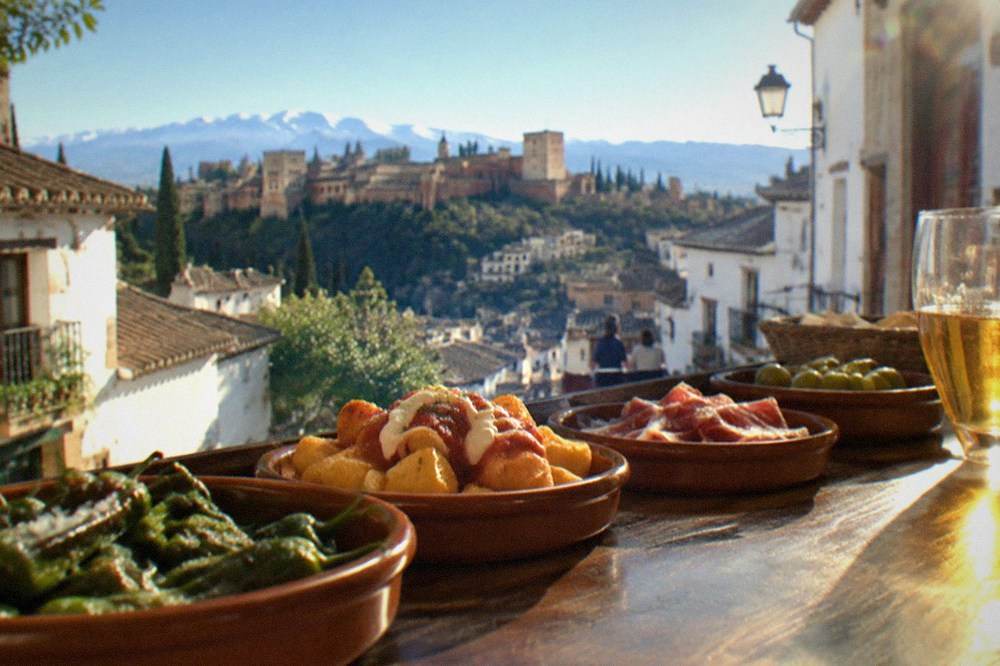
What arrives varies by bar and by kitchen. The plate is small by design, a taste rather than a meal, and the classic Granada pattern is that the tapa improves as the tab grows: a first round of olives, a second round of croquetas, a third round of something from the plancha. Regulars treat this as the bar's quiet handshake. A bar that serves a generous third-round plate is telling you something about how it values its neighbourhood.
The table below sets out the practical rules of engagement as they stand in 2026, based on how the custom is described in current local reporting.
| Situation | What typically happens | What to expect |
|---|---|---|
| Drink ordered at the bar counter | Complimentary tapa served with the drink | The default arrangement in traditional bars |
| Second and third drinks | Tapas often change and grow | Escalating portions are a good sign |
| Table or terrace seating | Practice varies by venue | Some bars keep the custom, others switch to paid dishes |
| Tourist-heavy thoroughfares | Custom less consistent | Check before sitting down |
| Non-alcoholic drinks | Varies by bar | Many serve a tapa with soft drinks too, ask first |
One habit worth borrowing from locals: do not ask for a specific free tapa unless the bar displays a choice. The kitchen decides. Requesting a swap can read as a breach of the unspoken contract, and the friendliest bars are the ones where you take what the round brings.
Where Are The Best Free Tapas Bars In Granada?
The strongest concentrations of free-tapas bars are the Albaicin, the Realejo and the blocks around Calle Navas and the city centre, with Sacromonte holding a smaller, more scattered scene. The Albaicin's narrow lanes hold the most atmospheric counter bars, the Realejo mixes student-priced drinks with generous kitchens, and Calle Navas remains the most famous single street for the custom, though its popularity has made quality uneven.
Calle Navas deserves its reputation with a caveat. The pedestrian street a short walk from Plaza del Carmen is lined end to end with bars, and the sheer density makes it the easiest place in the city to bar-hop on foot. The flip side of that fame is that a tourist-facing minority has trimmed portions or raised drink prices, which is precisely the adjustment local reporting flagged in 2026. The answer is not to avoid the street but to treat it as a tasting route: one drink and one tapa per bar, moving on when the exchange feels thin.
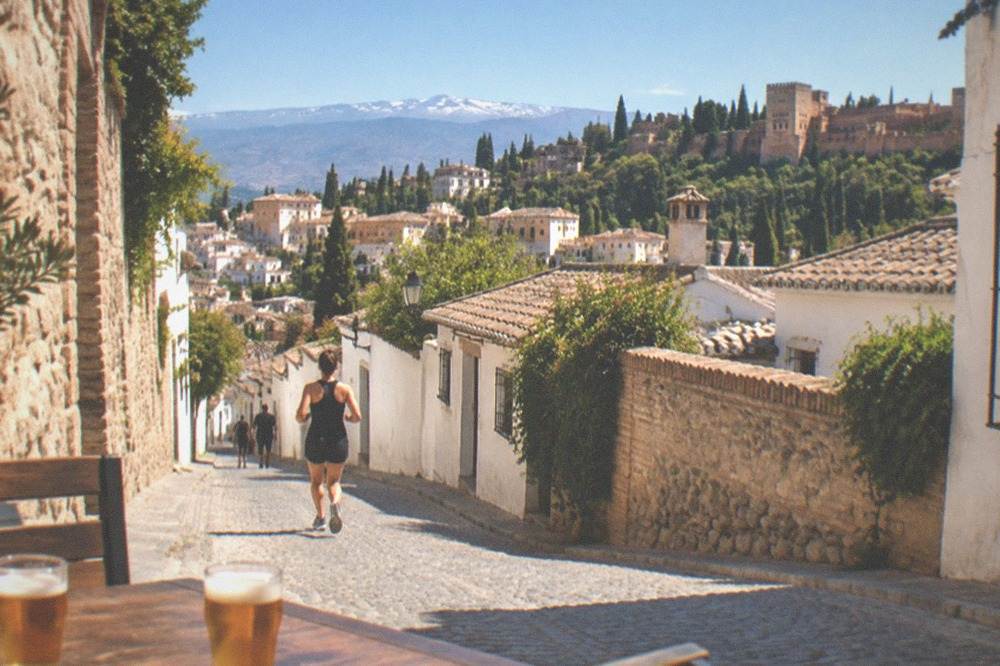
The Albaicin works differently. The bars scattered through the old Muslim quarter, many within sight of the route toward the Mirador de San Nicolas, are smaller, older and more tied to their neighbourhood. Portions here are a matter of local pride, and the walk between bars is half the point: whitewashed lanes, carmens behind low walls, the Alhambra lit up across the ravine. The Realejo, the old Jewish quarter below the Alhambra's western flank, runs younger and cheaper, with a student population that keeps drink prices honest and kitchens competitive.
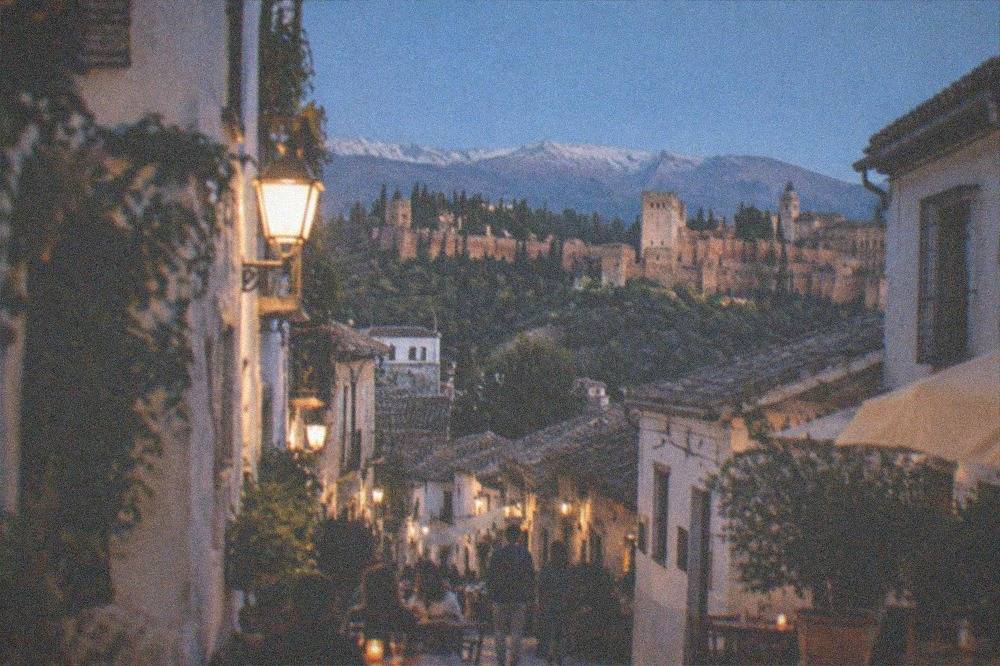
Sacromonte, the cave quarter, leans more toward flamenco venues than tapas counters, but a handful of neighbourhood bars along the Camino del Sacromonte keep the custom, and pairing a cave show with a pre-show round or two is a classic Granada evening. The guide to flamenco in Granada covers the show side of that plan.
| Neighbourhood | Character of the scene | Best for |
|---|---|---|
| Albaicin | Small counter bars, historic lanes, hilltop views | Atmosphere and generous kitchens |
| Realejo | Student prices, lively evenings | Cheap drinks and competitive tapas |
| Calle Navas and centre | Dense pedestrian strip of bars | Easy bar-hopping on foot |
| Sacromonte | Scattered bars near cave flamenco venues | Pairing tapas with a show |
| Gran Via area | Mixed traditional and modern bars | A reliable middle path |
The direct question what is the famous tapas street in Granada? has its own short answer if you want the Calle Navas story in isolation.
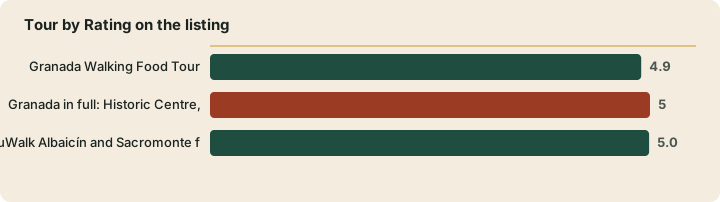
A guided route saves the guesswork, and two of them stand out for this kind of evening. The Granada Walking Food Tour moves through several of these neighbourhoods with a local choosing the stops, from $81 per person per its listing, rated 4.9 from 590 reviews over about 3.5 hours. For a fuller sweep of the old town, Granada in full: Historic Centre, Albaicín & Sacromonte covers the ground between the bar districts, from $23 per person and rated 5 from 28 reviews.
What Should You Order To Get The Best Free Tapas In Granada?
Order a caña, a small draft beer, or a tinto de verano, and you are ordering the drinks most traditional bars pair with their best tapas. Wine by the glass, a fino or a soft drink also typically trigger the custom in participating venues. What matters more than the drink is the venue: a bar with a visible kitchen, a handwritten tapa board and a local crowd is far more likely to serve a proper plate than a bar with a photographed menu in six languages.
The caña is the workhorse. It is small, cheap and quick to pour, which is exactly why bars like serving it: the tapa economics work when the drink turns over fast. A doble (double) buys you goodwill. Tinto de verano, wine cut with lemon soda, is the summer default and carries the same entitlement to a tapa. A glass of house red or white works too, and in many bars so does a soft drink or a non-alcoholic beer, though the custom is least consistent there, so it is worth asking.
Reading the bar matters more than reading the menu. Signs of a serious tapas kitchen: a chalkboard listing the day's tapas, staff eating their own dinner at the end of the counter, a queue of locals standing rather than sitting, and a kitchen you can hear working. Warning signs: laminated multilingual menus with photographs, a host touting from the doorway, and drinks priced well above the neighbourhood norm, because in the adjusted 2026 economy a high drink price is sometimes how a bar quietly exits the free-tapa contract.
| Drink order | Typical price band vs a caña | How reliably it earns a free tapa |
|---|---|---|
| Caña (small draft beer) | Baseline | The most reliable trigger |
| Doble (large beer) | Above baseline | Reliable, and often a better plate |
| Tinto de verano | Around baseline | Reliable in traditional bars |
| House wine by the glass | Around baseline | Reliable |
| Fino or sherry | Around baseline | Reliable in older bodegas |
| Soft drinks | Around baseline | Least consistent, ask first |
The price column is deliberately relative. Drink prices in Granada bars are set by each venue and shift with the season, and this site does not print a single figure as if it were a fact of nature. What holds true is the relationship: the drink funds the tapa, so venues that keep the custom keep drink prices at a level that supports it.
How Has The Free Tapas Custom Changed In Granada?
The custom has narrowed rather than died: as of 2026 it remains standard practice in many traditional bars, but it is no longer near-universal, and some venues have reduced portion sizes or raised drink prices to keep the economics working. Cadena Ser's July 2026 reporting framed the tradition as under real commercial pressure while still widely upheld, which is why this guide describes it as a living custom, never a guarantee.
The pressure is arithmetic. Ingredient costs rise faster than locals will tolerate drink prices rising, and a bar serving a free plate with every caña absorbs that gap on every round. The responses vary: some bars serve slightly smaller tapas, some raised drink prices by a few cents, some scaled the escalation so only later rounds get the generous plates, and a minority dropped the custom entirely, usually the venues closest to the heaviest tourist footfall where one-time customers replaced regulars. Other pages covering the same trip are gathered on Things To Do In Granada.
None of that is a reason to skip the ritual. The bars that have kept the custom most faithfully are precisely the ones that depend on their neighbourhood, and finding them is part of the pleasure. What it does mean is that the old backpacker folklore, the claim that you can dine for the price of three beers anywhere in the city, needs retiring. In the right bars, three drinks still produce a respectable plate progression. In the wrong ones, they produce three drinks.
Can You Still Eat Cheaply In Granada On The Tapas Custom?
Yes, a tapas-crawl evening in the right neighbourhood bars remains one of the cheapest ways to eat out in Granada, because you pay only for drinks while the food arrives with them. It is not free dining: three or four drinks at typical neighbourhood prices is a real spend, and bars that have adjusted their economics may serve smaller plates than the folklore promises. As a budget strategy it works best across several bars rather than one.
The technique is the ronda, the moving round. Instead of settling at one bar and drinking four cañas there, you take one drink and its tapa at each of four bars. The spend is the same or slightly higher, the food is more varied, and you see four kitchens' answers to the same question. Locals plan these routes loosely around a neighbourhood: a Realejo circuit, an Albaicin climb, a Calle Navas sweep. The granada on a budget angle on this, plus the wider list of free things to do in Granada, pairs well with a low-spend evening.
Timing changes the experience. Early evening, before the Spanish dinner hour, the bars are quieter and the counter staff have time to talk. After 21:00 the good bars fill, the kitchens hit their stride, and the escalation of tapas becomes more theatrical. Weekend nights in the Realejo can mean standing room only, which is itself a signal: a bar full of locals standing up is a bar upholding the custom.
| Strategy | How it works | Trade-off |
|---|---|---|
| The moving ronda | One drink and tapa per bar, several bars | Slightly higher spend, much better variety |
| Settling at one bar | Several rounds in the same venue | Best escalation, less variety |
| Counter vs table | Stand at the bar for the classic ritual | Tables are comfier but less reliable |
| Early evening start | Arrive before the dinner rush | Quieter, but kitchens less busy |
| Late evening start | Arrive after 21:00 | Full atmosphere, standing room |
Which Granada Tours Pair Well With A Tapas Evening?
The strongest pairing is a food-focused walk followed by an independent bar-hop: the Granada Walking Food Tour covers the eating ground with a local guide, the Granada in full historic-centre tour links the Albaicin and Sacromonte bar districts into one route, and the GuruWalk Albaicin and Sacromonte free tour, tip-based and led by a local guide, is the zero-cost way to learn the geography before spending anything on drinks.
The GuruWalk free tour deserves its own explanation because its economics are different. It is free to join and tip-based, so the honest framing is that you pay what you think the walk was worth at the end, and this site never prints a price for one. GuruWalk's Albaicín and Sacromonte free tour, rated 4.99 from 913 reviews, walks the two quarters where the tapas custom runs deepest, and knowing the lanes before dark makes the evening bar-hop far easier to navigate.
The paid options split by intent. The Granada Walking Food Tour is the one to pick if eating is the point: about 3.5 hours, from $81 per person per the listing, rated 4.9 from 590 reviews, and structured around stops a local would choose. Granada in full: Historic Centre, Albaicín & Sacromonte, from $23 per person and rated 5 from 28 reviews, is the budget geography lesson, sweeping the historic centre, Albaicin and Sacromonte so you can plan your own evening afterward.
| Tour | Type | Duration | Rating on the listing |
|---|---|---|---|
| Granada Walking Food Tour | Guided food walk | About 3.5 hours | 4.9 from 590 reviews |
| Granada in full: Historic Centre, Albaicín & Sacromonte | Historic walking tour | Half-day walk | 5 from 28 reviews |
| GuruWalk Albaicín and Sacromonte free tour | Free, tip-based walk | About 2-3 hours | 4.99 from 913 reviews |
What Etiquette Should You Follow In Granada Tapas Bars?
Follow the counter code: stand at the bar, order one drink at a time, accept the tapa the kitchen sends without substitutions, and keep the pace to the room rather than rushing rounds. Say a word of thanks on the way out, pay when asked rather than demanding the bill mid-crowd, and never treat the free plate as an entitlement to complain about, because the custom survives on goodwill in both directions.
The payment rhythm surprises visitors. In most traditional bars you do not pay as you go; you run a tab by feel and settle when you leave, or when the barman asks. This is trust economics, the same trust that produces the free tapa in the first place. Handing over coins for every single caña is not wrong, but it marks you as an outsider, and in a packed bar it slows the line for everyone.
Small behaviours carry weight. Greet the room on entry, a quick buenos días or buenas, because a neighbourhood bar is a social space first. Do not spread bags across the counter. If the bar is full, finish and move on rather than nursing a single drink for an hour. And when the escalation produces a genuinely good plate, say so: the kitchen hears it, and regulars are made in exactly these moments.
Common Questions About Free Tapas In Granada
Does Granada still do free tapas?
Yes, as of 2026 the free tapa with a drink remains standard practice in many traditional Granada bars, per July 2026 local reporting. It is a widely upheld custom, not a legal requirement, and some venues have adjusted portion size or drink pricing, so it is not guaranteed at every bar.
Do you get free tapas sitting at a table in Granada?
It depends on the venue. In many traditional bars the free tapa is a counter ritual, and table or terrace service may switch to paid dishes or a cover charge instead. Ask "¿hay tapa con la consumición?" before sitting down.
Do you have to order alcohol to get a free tapa?
No, not necessarily. A caña or tinto de verano is the most reliable trigger, but many participating bars also serve a tapa with soft drinks or non-alcoholic beer. The custom is least consistent with non-alcoholic orders, so it is worth asking first.
Can you choose your free tapa in Granada?
Usually not. In most traditional bars the kitchen decides what each round receives, and the tapa often changes and improves with successive drinks. Some bars display a chalkboard with a choice, but requesting substitutions elsewhere can be seen as breaking the unspoken contract.
Where is the best area in Granada for free tapas?
The densest free-tapas territory is the Albaicin for atmosphere and generous kitchens, the Realejo for student-priced drinks, and the Calle Navas pedestrian strip for easy bar-hopping. Sacromonte has a smaller, scattered scene near the flamenco caves.
Is the free tapa in Granada really free?
You pay only for the drink, and the plate arrives with it at no listed charge. The economics are built into the drink price, which is why bars that have raised drink prices have sometimes quietly adjusted the custom too. It is a fair exchange, not a giveaway.
The custom is Granada in miniature: generous, informal, older than the tourists and still adapting to them. Walk the counter route the way locals do, one drink and one plate at a time, and the city feeds you back.