What Is The Famous Tapas Street In Granada?
Calle Navas is the tapas street most Granada guidebooks point to. Here is what to expect there, how the free tapa custom works, and which rival streets locals actually prefer.
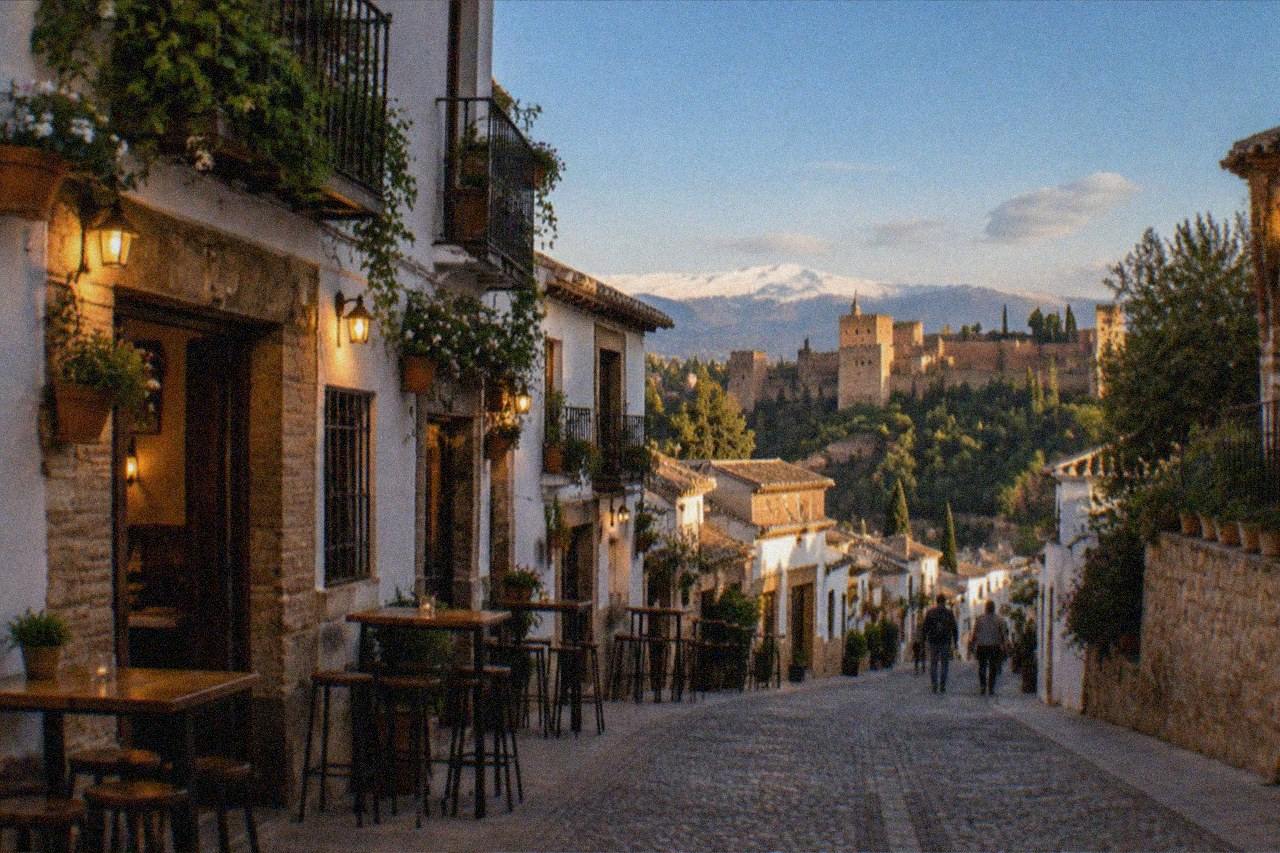
The one street in Granada that has built its whole identity around going out for tapas is Calle Navas. It is a short, narrow, largely pedestrian street in the city centre, close to Puerta Real and the Cathedral, and it is packed along both sides with small bars whose tables spill out onto the pavement from early evening until late. Granada's tapas reputation rests on something bigger than any single street, the custom of a complimentary small plate arriving with a drink order, but if the question is which one street carries the famous label, the answer that comes back, from guidebooks and from locals asked to name a single place, is Calle Navas. This page explains what that street actually delivers, how the free tapa custom works in 2026, and which rival bar streets in the Albaicin, the Realejo and around the university deserve the same evening.
What Is The Famous Tapas Street In Granada?
The famous tapas street in Granada is Calle Navas, a narrow, mostly pedestrian street in the city centre a few minutes' walk from Puerta Real and the Cathedral, lined on both sides with small tapas bars that fill up from early evening. It is the one street where going out for tapas is the entire point of the visit, and it is the name locals and guidebooks give when asked to name a single tapas street.
It is short enough to walk end to end in a few minutes, which is exactly how it is meant to be used.
Calle Navas works because of density. Where other Granada bar streets mix restaurants, shops and nightlife of every kind, Calle Navas is almost entirely given over to small tapas bars, many of them long-established, serving the traditional small plates that Granada is known for. The street's position matters too. It sits just south of the Cathedral and the Royal Chapel, which puts it within a short walk of the main hotel zone around Puerta Real, so it has become the default first-night destination for visitors who want the tapas experience without climbing the hill streets of the Albaicin.
The tapas custom that makes a street like this worth planning around is still standard practice in many traditional Granada bars as of 2026. A drink order typically comes with a complimentary small tapa, and in many bars the portions scale up with further rounds. It is not a legal requirement, and some venues have adjusted portion size or pricing, so treat it as a widely upheld local tradition rather than a guarantee at every counter. The tapas culture of Granada is explained in detail elsewhere on this site, including how the free tapas custom varies from bar to bar.
How Does The Free Tapa Custom In Granada Actually Work?
In many traditional Granada bars, ordering a drink brings a complimentary small tapa with it, at no extra charge, and the portions often improve with each subsequent round at the same bar. The custom is a widely upheld local tradition rather than a legal requirement, and as of 2026 some venues have adjusted portion size or drink pricing, so it cannot be promised at every counter. The standard rhythm is one drink and one tapa per person per bar, then move on to the next bar.
The mechanics are simple. You order a drink, a beer, a tinto de verano, a glass of wine, and a small plate arrives with it or shortly after. In busy traditional bars the tapa is often chosen by the house rather than by the customer, which is part of the point. You eat what the kitchen is making that evening. In many places the second or third round at the same table earns a noticeably bigger or better plate, a deliberate incentive to stay, though plenty of locals treat the opposite rule as the sport of the night: one drink everywhere and keep moving.
Two practical notes shape the experience. First, the custom is strongest in traditional, counter-service, standing-room bars, and weakest in sit-down restaurants with full menus, where the tapa is often replaced by a small appetiser on a paid bill. Second, the custom is not uniform across the city even where it is upheld. The Albaicin, the Realejo and the streets around the university each have their own bar culture, and the answer to does Granada still do free tapas is yes in 2026, with the caveats above.
| Situation | What typically happens | What it means for you |
|---|---|---|
| Standing at the counter of a traditional bar | A complimentary tapa arrives with the drink | The classic Granada experience, cheapest way to eat |
| Staying for a second round at the same bar | The tapa often gets bigger or better | Worth committing to a bar you like |
| Sitting at a table in a restaurant-style venue | A small appetiser may appear on a paid bill | Check the bill, the free custom is weakest here |
| Ordering only food without a drink | No free tapa, the custom is tied to the drink | The tapa is a companion to the drink, not a side dish |
What Other Bar Streets In Granada Rival Calle Navas?
Calle Navas has the famous label, but it is not the only bar street worth an evening in Granada. Calle Elvira, running north from Puerta Real toward the Albaicin, mixes tapas bars with student nightlife, the Realejo district below the Alhambra has a more local, wine-bar character, and the Albaicin's lanes pair tapas with the best views of the lit-up palace. A visitor who only walks Calle Navas gets the concentrated version of the custom and misses the neighbourhood versions many locals rate higher.
Calle Elvira is the closest rival in the centre. It is longer than Calle Navas, more mixed in character, and skews younger, especially on weekends, because of the students who keep the northern end of the street busy until very late. The tapas bars here sit alongside music bars and international venues, so the evening is less focused on the plate-for-a-drink ritual and more on a full night out that includes it.
The Realejo, the old Jewish quarter spreading below the Alhambra's walls, is where the custom takes on a quieter form. Small squares and short streets hold bars with a more local crowd, and the district's gradient means several terraces look across the city. The Albaicin, meanwhile, offers the most atmospheric version of all: the lanes around the lower slopes hold small bars whose terraces face the Alhambra, and an evening that combines the Albaicin neighbourhood with a couple of tapas stops is, for many visitors, the best food-and-view combination the city offers. The Sacromonte district adds cave venues and flamenco to the same night, and a guided neighbourhood walk ends conveniently close to several of these bar streets.
Is A Guided Tapas Tour Of Granada Worth It?
A guided tapas tour is worth it for visitors who want the free-tapa custom decoded on their first night, because the custom's unwritten rules, which bars honour it generously, when to stay and when to move, are exactly the local knowledge a guide carries. The Granada Tapas and Wine Small Group Tour runs about 3.5 hours, is rated 4.9 from 933 reviews on the operator's live listing, and starts from $78 per person.
Two or three evenings of self-guided bar-hopping achieve the same thing more slowly.
The case for a tour is not access, the bars are open to everyone, but efficiency and interpretation. A good guide knows which kitchens are worth the stop on a given evening, explains what each regional plate is, and handles the ordering in bars where the tapa is chosen by the house and the menu is oral rather than printed. For a first night in the city, that removes the small frictions that stop visitors using the custom confidently: which counter to stand at, how to signal you are finished, how the escalating-portion rhythm works.
The case against is simple economics. The custom itself makes eating in Granada cheap, and a self-guided crawl costs a fraction of a tour price. The middle path many visitors take is one guided evening to learn the ropes, then self-guided nights after. The tapas and wine small-group experience is the tour most often used for exactly that first-night orientation. Check availability
What Should You Eat And Drink On A Tapas Evening In Granada?
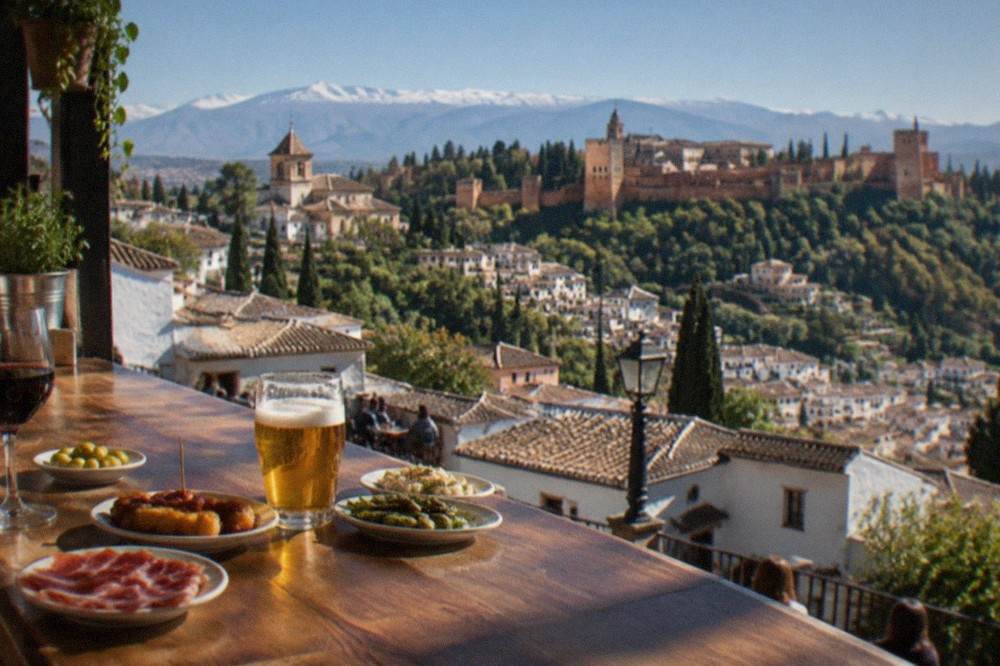
A tapas evening in Granada should work through the city's own regional plates rather than generic Spanish tapas: the dishes Granada is famous for include its take on broad beans with ham, fried fish from the nearby coast, and the Albaicin's North African-influenced plates, all paired with a small beer or a glass of local wine. Because the tapa in a traditional bar is chosen by the house, the practical advice is to order the drink, accept the plate, and let the kitchen decide the menu.
The drink side of the equation has its own local vocabulary. A caña is a small beer, the default tapas drink, a doble is its larger version, and a tinto de verano, red wine cut with soda, is the warm-weather alternative. Granada province also produces wine on the Alpujarras slopes to the south, and some bars in the Realejo pour these by the glass. The food side is covered in detail in what food Granada is famous for.
Timing matters more than most visitors expect. Granada's evening runs late by northern European standards, and the bar streets fill from around 20:30 or 21:00 onward. Arriving much earlier means finding bars in their quiet, kitchen-warming phase, which some travellers prefer for the space and the conversation, and which the AEMET climate data supports as the sensible option in July and August, when the average high sits at 34.8C and 34.2C respectively. The full month-by-month picture, including the mild shoulder seasons of May (25.0C average high) and October (23.2C), is in the guide to the best month to visit Granada.
| Part of the evening | What to order | What typically arrives with it |
|---|---|---|
| First bar | A caña, small beer | A small tapa chosen by the house |
| Second bar | A glass of local wine | A different tapa, often the bar's speciality |
| Third bar, same as first | A second round | A larger or better plate, the custom's reward for returning |
| Late stop | A tinto de verano | A lighter plate as the kitchens slow down |
Common Questions About Tapas Streets In Granada
What is the famous tapas street in Granada?
Calle Navas is the famous tapas street, a narrow, mostly pedestrian street in the city centre a few minutes from Puerta Real and the Cathedral, lined with small tapas bars. It is the one street where going out for tapas is the entire point of the visit.
Is Calle Navas the best place for tapas in Granada?
It is the most concentrated and the most convenient, especially for a first night, but many locals rate the Realejo and the Albaicin's bar lanes higher for atmosphere and for the quality of the free tapa. Calle Navas is the safe, central, easy answer, not the only good one.
Are tapas really free in Granada?
In many traditional bars, yes: a drink order typically comes with a complimentary small plate as of 2026, often scaling up with further rounds. It is a widely upheld local custom rather than a legal requirement, and some venues have adjusted portion size or pricing, so it is not guaranteed at every bar.
What time do the tapas bars on Calle Navas get busy?
The bar streets of central Granada fill from around 20:30 to 21:00 onward, in line with the city's generally late evening rhythm. Earlier arrivals find quieter bars and easier counters, at the cost of some of the street's atmosphere.
Can you walk to Calle Navas from the Alhambra?
Yes, Calle Navas sits in the flat city centre a few minutes from Puerta Real, so it is a natural end point after descending from the Alhambra hill. It is also within a short walk of the Cathedral and the Royal Chapel, which makes it easy to combine with a day of sightseeing.
Is one evening enough for tapas in Granada?
One evening on Calle Navas gives you the concentrated version of the custom, but the neighbourhood bar scenes of the Realejo and the Albaicin each deserve their own night. Most visitors with two or three days do one guided or central evening first, then explore the hill districts at their own pace.
The three picks above cover the natural companions to a tapas evening: the tapas and wine walk itself, a guided wander through the Albaicin and Sacromonte bar streets, and the skip-the-line Alhambra tour that fills the daylight hours before dinner. Each has its own page with dates, current prices and the full itinerary.
Calle Navas answers the question, but the honest advice, as the editors of Things To Do In Granada put it, is to treat the famous street as the first stop rather than the whole story. It gives you the custom in its densest, easiest form, one bar after another within a few minutes' walk, and the Albaicin, the Realejo and Calle Elvira give you the versions the locals argue about. Whichever you choose, the rule of the evening stays the same: one drink, one free tapa, then move on, and let the kitchens of Granada decide the rest of the menu.