What Is The Best Month To Visit Granada, Spain?
The best month to visit Granada, Spain, month by month: AEMET climate data, Alhambra crowd patterns, festival dates and a clear recommendation for every travel style.
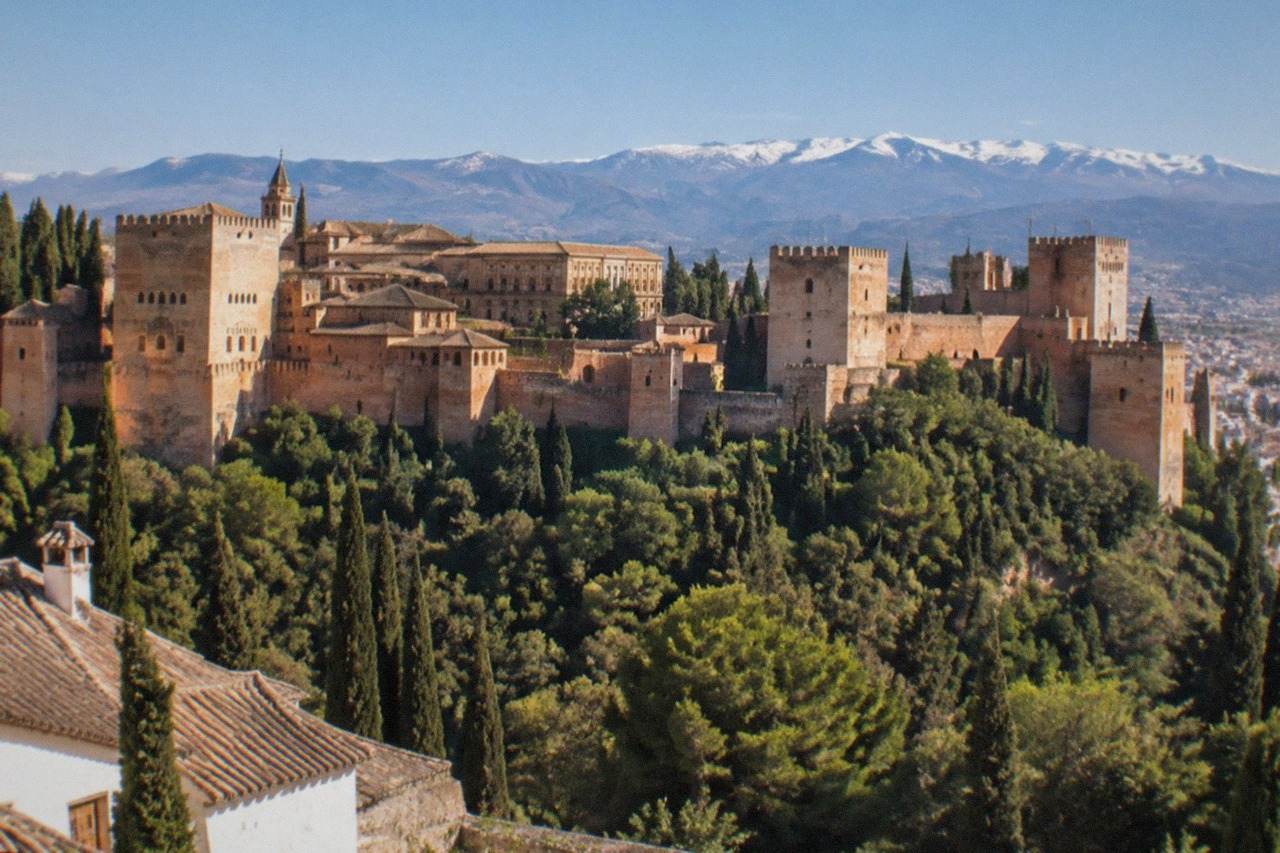
Granada welcomed 2,726,861 visitors to the Alhambra alone in 2025, according to the Patronato de la Alhambra's own annual report, a figure close to the monument's annual capacity ceiling of roughly 2.763 million. That number is not spread evenly. It surges in spring, dips into a July and August furnace that AEMET's climate data puts at average highs of 34.8C and 34.2C, and settles again in October, when the average high falls to a comfortable 23.2C and the light across the Albaicin turns low and golden. The best month, on the numbers, is October, with May a very close second. But the honest answer depends on what you are coming for, and this page breaks it down month by month using only official climate and ticketing data.
What Is The Best Month To Visit Granada, Spain?
October is the best month to visit Granada for most travellers, combining an average high of 23.2C with just 40mm of rain, fewer Alhambra crowds than spring, and evening temperatures that still feel summery at an average low of 8.7C. May is the strongest alternative, at 25.0C high and 9.4C low with 28mm of rain, but it sits inside peak ticket-selling season. If festivals matter more than weather, Semana Santa and Cruces de Mayo are the dates locals plan around.
The reasoning behind that recommendation comes down to a trade-off the raw climate table does not show. Granada's weather is genuinely excellent from April through October, so the deciding factors are crowd levels, Alhambra ticket availability and what is happening in the streets. The Patronato de la Alhambra's booking rules release tickets roughly three months in advance and close online sales at 23:59 the day before the visit date, with the General ticket routinely selling out one to two months or more ahead in peak season. A month with perfect weather but no Nasrid Palaces tickets left is a worse month than a slightly cooler one where you can actually get in.
October threads that needle. The Alhambra's own opening hours reflect the shift: the summer schedule of 08:30-20:00 runs only until 14 October, after which the complex moves to its winter hours of 08:30-18:00, and the visitor rhythm slows with it. AEMET's 1981-2010 normals for the Granada Aeropuerto station, the official record, show October averaging 23.2C during the day and 8.7C at night with 40mm of rain across the month. You can sit outside at dinner on Carrera del Darro without a heater or a fan.
| Month | Avg high C | Avg low C | Rain mm | Verdict |
|---|---|---|---|---|
| Jan | 13.0 | 0.0 | 42 | Quiet, cold nights, snow on the Sierra Nevada |
| Feb | 15.4 | 1.6 | 38 | Cold but dry, low crowds |
| Mar | 19.0 | 3.8 | 32 | Mild, Semana Santa some years |
| Apr | 20.6 | 6.0 | 36 | Excellent, but peak ticket demand |
| May | 25.0 | 9.4 | 28 | Excellent, Cruces de Mayo, peak demand |
| Jun | 31.0 | 13.6 | 11 | Hot, dry, manageable crowds |
| Jul | 34.8 | 15.7 | 2 | Very hot, lowest rain, siesta essential |
| Aug | 34.2 | 15.5 | 4 | Very hot, locals leave, tourist peak |
| Sep | 29.4 | 12.8 | 19 | Warm, crowds easing |
| Oct | 23.2 | 8.7 | 40 | Best overall balance |
| Nov | 17.0 | 4.2 | 54 | Cool, wetter, quiet |
| Dec | 13.4 | 1.7 | 56 | Cold, festive, fewest queues |
Those figures are AEMET's official normals for the Granada Aeropuerto station, covering the 1981-2010 period, and they are the only monthly numbers this site treats as citable. One nuance the table hides: Granada sits at the foot of the Sierra Nevada, and winter visitors regularly see snow on the mountains from viewpoints like the Mirador de San Nicolas while the city itself stays above freezing during the day.
How Hot Does Granada Actually Get In Summer?
Granada is one of the hottest cities in Spain in July and August, with AEMET's official normals showing average highs of 34.8C and 34.2C and average overnight lows that barely drop below 15.5C, though rainfall almost disappears, at just 2mm in July and 4mm in August. That heat is amplified by the Albaicin's unshaded cobbled climbs and the Alhambra's sun-baked terraces, where there is little escape between midday and late afternoon.
The dryness is the saving grace. Unlike coastal Andalusia, where humidity makes summer nights sticky, Granada's summer heat is a desert heat: AEMET records an annual total of roughly 365mm of rainfall, and almost none of it falls between June and August, with 11mm in June, 2mm in July and 4mm in August. Locals structure their days around it. The serious sightseeing happens before 13:00, the middle of the afternoon belongs to a long lunch or a shuttered room, and the city re-emerges after 20:00, when the Alhambra's summer night visits run from 22:00 to 23:30 between April and October.
That makes summer the season where indoor and water-based escapes earn their keep, and Granada has one of the best in Andalusia. The Arabian baths at Hammam Al Andalus run 90-minute sessions in a restored Nasrid-era bathhouse a few minutes from Plaza Nueva, with cold, warm and hot pools, steam rooms and tea service, and the experience is rated 4.4 from 704 reviews on the operator's live listing. It is also the single most pleasant place in the city centre to be at 16:00 in August.
If you do travel in high summer, book the Alhambra's earliest Nasrid Palaces slot available. The Patronato caps the palaces at roughly 300 visitors per 30-minute window, and the complex opens at 08:30, so a morning slot means touring the Mexuar and the Court of the Lions before the stone starts radiating the day's heat back at you.
Which Months Have The Best Weather And The Fewest Crowds?
May and October best combine AEMET-verified comfort with manageable crowd levels: May averages 25.0C highs, 9.4C lows and 28mm of rain, and October averages 23.2C highs, 8.7C lows and 40mm of rain. September, at 29.4C high and 12.8C low with only 19mm of rain, is the dark-horse pick, warm enough for terrace evenings but past the August crush. April is equally lovely at 20.6C and 6.0C, but it sits deep inside the Alhambra's peak ticket-selling window.
The crowd question is really an Alhambra question, because that is where scarcity bites hardest. Daily capacity across the whole complex runs at approximately 6,600 to 7,000 visitors, and the Patronato releases tickets about three months ahead. A May trip planned in March may already find the General ticket, officially priced at EUR 22.27, sold out for the date you wanted. The same trip planned for late October, when school holidays across Europe have ended, faces materially better availability. This is why the best time to visit Granada question and the ticket question are really the same question, and it is also why the answer to what if Alhambra tickets are sold out matters to so many travellers.
There is a second, quieter shoulder that almost no first-time visitor considers: late February. AEMET puts February at an average high of 15.4C, a low of 1.6C and 38mm of rain, which means crisp, bright, often sunny days and genuinely empty palace rooms. The Alhambra's night visits to the Nasrid Palaces run on Fridays and Saturdays in the 15 October-31 March season, from 20:00 to 21:30, and seeing the palaces by night with a fraction of the daytime footfall is one of the most underrated experiences the city offers. The trade-off is the cold: pack for near-freezing evenings. The rest of the planning pages sit on Things To Do In Granada.
| Season | Months | Weather character | Crowd level | Alhambra ticket pressure |
|---|---|---|---|---|
| Spring | Mar-May | Mild to warm, occasional rain | High and rising | Highest, sell-outs 1-2+ months out |
| Summer | Jun-Aug | Very hot, almost no rain | High, city quieter midday | Moderate but slots go early |
| Autumn | Sep-Nov | Warm cooling to cool | Dropping after August | Easing from September |
| Winter | Dec-Feb | Cold nights, mild days | Lowest of the year | Lowest, most dates available |
One more planning note: the free-tapa custom that makes Granada's bar scene famous is a year-round pleasure, not a seasonal one. As of 2026 it remains standard practice in many traditional bars, a drink order typically arriving with a complimentary small plate, though it is a widely upheld local custom rather than a guarantee at every venue, as covered in detail in does Granada still do free tapas.
Should You Time Your Trip Around Granada's Festivals?
Yes, if you can, because Granada's festival calendar is strong enough to build a trip around: Semana Santa runs approximately 29 March to 5 April in 2026 and 21 to 28 March in 2027, Cruces de Mayo falls on 1-3 May in 2026 and 3 May in 2027, and Corpus Christi brings its fair and main procession around 4 June in 2026 and 27 May in 2027.
These dates transform the city with nightly processions, decorated crosses and packed plazas, but they also mean peak hotel prices and peak Alhambra demand.
Semana Santa is the most dramatic of the three. Brotherhoods carry enormous, candle-lit floats through the Realejo, the old town and up into the Albaicin from Palm Sunday to Easter Sunday, and the streets fill with locals rather than tourists, which changes the character of the city entirely. The weather in late March and early April, averaging 19.0C high and 3.8C low in a typical year, is good procession weather: cool evenings that suit candles and heavy thrones. Book accommodation early, because the whole city fills.
Cruces de Mayo is the local favourite, a weekend of flower-decked crosses, casetas and sevillanas in neighbourhood courtyards across the Albaicin, the Realejo and the city centre. Corpus Christi in late May or early June adds a full fairground, the Feria, alongside the religious procession, and it is the closest thing Granada has to its own April Fair. If you want to see the city celebrating for itself rather than performing for visitors, these are your dates, and the Semana Santa in Granada guide covers the processional calendar in detail.
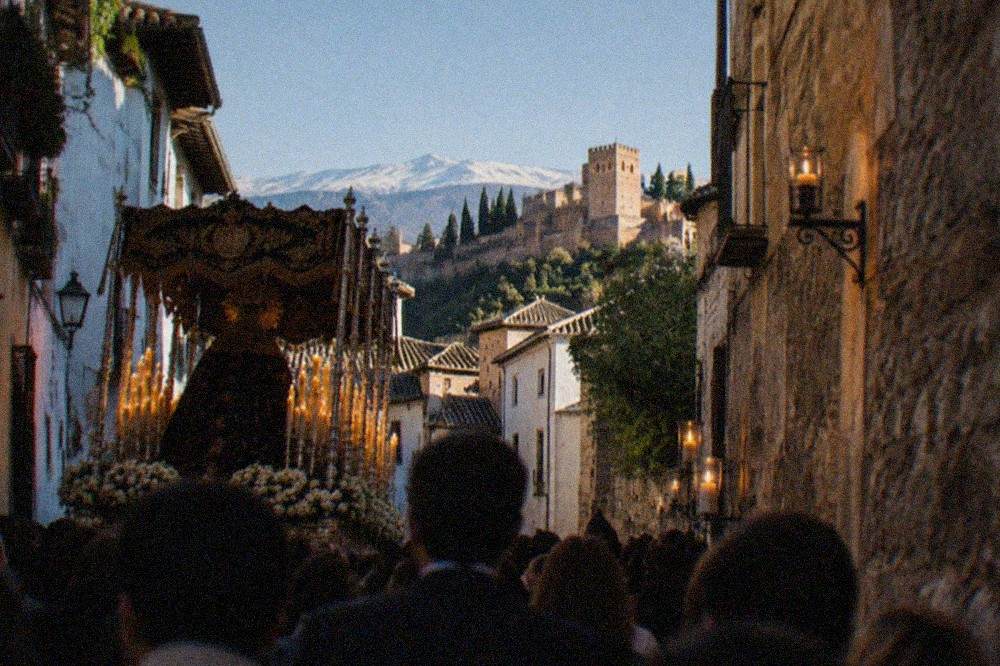
The counterargument is practical. Festival dates sit inside the Alhambra's busiest window, and the sell-out reality described above applies with extra force. If you come for Semana Santa, lock in Nasrid Palaces tickets the day they release, roughly three months ahead, and treat the ticket calendar as the first thing you plan, before the flights.
Is Winter A Bad Time To Visit Granada?
Winter is not a bad time to visit Granada, it is a different one: AEMET's normals show December averaging 13.4C high and 1.7C low with 56mm of rain and January 13.0C high and 0.0C low with 42mm, meaning mild, often sunny days and genuinely cold, sometimes freezing nights. Alhambra availability is at its best, queues are at their shortest, and the Sierra Nevada, typically open from late November to early or mid-April weather permitting, sits close enough to combine skiing with palace visits.
That combination, a morning on the slopes and an evening in a tapas bar, is something almost no other European city can offer, and the Sierra Nevada skiing guide covers the practicalities. The resort's exact 2026-2027 season dates had not been officially published at research time, so treat late November to early or mid-April as the typical pattern and check the resort's own site for this season's confirmation rather than any third-party projection.
Inside the city, winter rewards a different rhythm. The Alhambra's daytime hours run 08:30-18:00 in the 15 October-31 March season, which suits a full morning in the complex followed by a long lunch. The Cathedral's cultural visits continue through winter, priced at EUR 10 individual during the Kerygma exhibition period that runs to 28 November 2026 and EUR 7 from 29 November 2026, and the Royal Chapel, at EUR 7 individual and EUR 5 reduced, holds the tombs of the Catholic Monarchs in a building cold enough to feel genuinely medieval. The trade-off is the rain: November and December, at 54mm and 56mm, are the wettest months in AEMET's table, though much of that falls in short bursts between bright days.
For travellers counting euros, winter is also the cheapest season, and the Granada on a budget guide explains where the savings actually are. Fewer visitors means walk-up access to monuments that need prebooking in April, lower hotel rates, and a city that belongs to the people who live in it.
Common Questions About The Best Time To Visit Granada
What is the best month to visit Granada, Spain?
October is the best single month for most travellers, averaging 23.2C high, 8.7C low and 40mm of rain per AEMET's official data, with Alhambra crowds well past their spring peak. May, at 25.0C high and 28mm of rain, is the best alternative if you can secure Alhambra tickets early.
What is the hottest month in Granada?
July, with an average high of 34.8C, an average low of 15.7C and just 2mm of rain, per AEMET's 1981-2010 normals for the Granada Aeropuerto station. August is nearly identical at 34.2C high.
What is the rainiest month in Granada?
December, with 56mm of rain on average, followed by November at 54mm. Even so, Granada is a dry city overall, with roughly 365mm of rainfall across the entire year.
Is Granada too hot in August?
It is very hot, 34.2C average high, but the heat is dry rather than humid, and almost no rain falls. Sightseeing before 13:00, a long midday break and evening activity is the local pattern, and the Alhambra's night visits run at 22:00 in the summer season.
When is the Alhambra least crowded?
November through February, outside the festival dates and Christmas week. Alhambra capacity runs at roughly 6,600-7,000 visitors per day with the Nasrid Palaces capped at about 300 per half-hour slot, and demand is far below those ceilings in winter.
Does it snow in Granada?
Rarely in the city itself, but regularly on the Sierra Nevada just to the southeast, whose ski season typically runs late November to early or mid-April. Winter visitors often see snow on the peaks from the Mirador de San Nicolas while the city sits at 13C.
Whichever month you choose, the decision that actually shapes the trip is the Alhambra ticket: book the day sales open for your date, carry the passport the nominative ticket requires, and the rest of the calendar takes care of itself.