What Traditional Food Should I Try In Granada?
The traditional Granada foods worth ordering, from habas con jamón and tortilla del Sacromonte to piononos and free tapas, with where to eat them and how the local custom works.
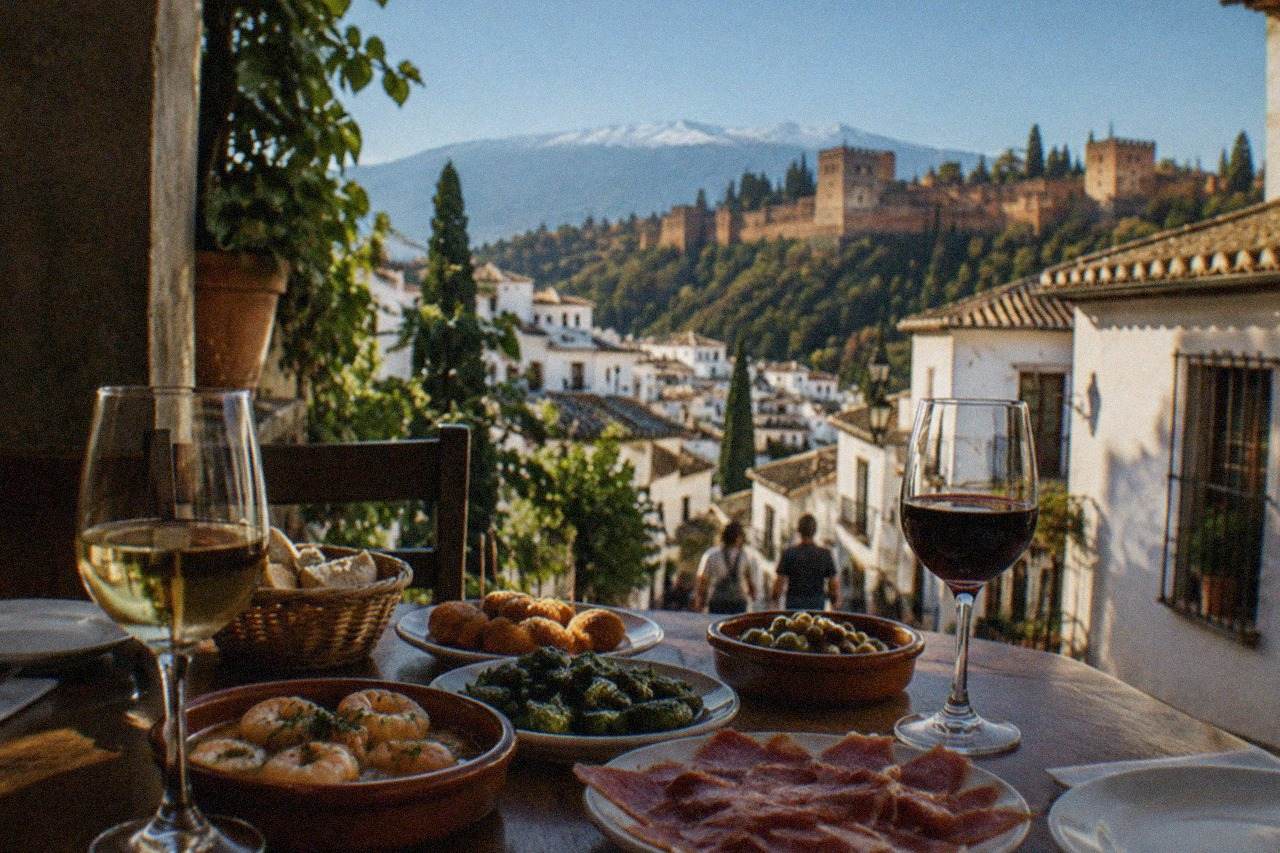
Granada sits between the Sierra Nevada and the olive groves of the Vega, and its kitchen carries both: mountain pork and river trout on one side, Moorish seasonings, honey and almonds on the other. The city's most famous eating institution is not a restaurant at all but a custom, the free tapa that arrives with a drink order in many traditional bars, a practice July 2026 reporting confirms is still widely upheld even as some venues adjust portions or prices. Order correctly and a round of drinks becomes a moving feast across the old town.
What Traditional Food Should I Try In Granada?
The five dishes most tied to Granada itself are tortilla del Sacromonte, habas con jamón, piononos, remojón granadino and plato alpujarreño, and the free tapa that comes with a drink is the local way to taste several of them in one evening. Tortilla del Sacromonte is the city's signature plate, a thick omelette of eggs, potatoes, brains and ham that traces to the Sacromonte abbey. Piononos, small cream-soaked sponge pastries from the nearby town of Santa Fe, are the dessert Granada claims as its own.
Start with the tortilla del Sacromonte, because no other Andalusian city makes it the way Granada does. The dish is named for the Sacromonte quarter and its abbey, and it traditionally combines egg, potato, ham and, in its full historic version, calf brains and testicles, ingredients the abbey's festival kitchen once cooked in quantity. Many bars today serve a gentler version without the offal, so ask before you order if that matters to you.
Habas con jamón, broad beans stewed with cured ham, is spring cooking from the Vega, the irrigated plain that has fed the city since Moorish times. Remojón granadino is the province's orange and salt-cod salad, dressed with olive oil and black olives, sharp and bright against the region's heavier plates. Plato alpujarreño, a mountain plate of fried potatoes, egg, cured ham, chorizo and blood sausage, comes from the Alpujarras villages on the Sierra's southern flanks and appears on menus across the city.
For sweets, piononos are non-negotiable: a small cylindrical sponge soaked in a syrup and crowned with a burnished cream, named for Pope Pius IX ("Pío Nono") and made in Santa Fe, a short bus ride from the centre. The full picture of what the province is known for, including the cheeses, the oils and the festival foods, is covered in What Food Is Granada Famous For, and the wider eating scene has its own guide at Granada Food: What To Eat And Where.
| Dish | What It Is | Where It Belongs |
|---|---|---|
| Tortilla del Sacromonte | Thick omelette with egg, potato, ham and, traditionally, brains | Sacromonte's festival dish, served citywide |
| Habas con jamón | Broad beans stewed with cured ham | Spring dish from the Vega farmland |
| Remojón granadino | Salt cod and orange salad with olives and oil | Province-wide, strongest in rural Granada |
| Plato alpujarreño | Fried potatoes, egg, ham, chorizo, blood sausage | Mountain cooking from the Alpujarras |
| Piononos | Syrup-soaked sponge with toasted cream topping | Santa Fe, sold across Granada |
Which Savoury Dishes And Tapas Should You Order First?
Order a drink first, not a plate: in many traditional Granada bars the tapa arrives with the drink and the kitchen decides what it is, so the fastest route to the city's cooking is a bar crawl of cañas and glasses of tinto de verano. If you are choosing from a menu, aim for habas con jamón in spring, a fried-fish plate from the coast, and the local revuelto, scrambled eggs with whatever the season offers, from wild asparagus to gulas.
The custom matters as much as the food. A drink order in many traditional bars typically comes with a complimentary small tapa, and the portions often scale up with subsequent rounds, a pattern confirmed as still standard practice in 2026. It is a widely upheld local tradition rather than a legal guarantee, and some venues have adjusted portion size or pricing, so treat it as the norm rather than a certainty at every counter. The mechanics, the etiquette and the best streets for it are laid out in Does Granada Still Do Free Tapas?.
Beyond the tapas, look for the coast on the menu. Granada province touches the Mediterranean at a short, undeveloped stretch, and fried fish, anchovies from nearby waters and espetos, sardines grilled on cane skewers, appear in the city's bars. Gazpacho and its thicker cousin salmorejo are Andalusian rather than specifically Granadan, but the hot summers make them a daily fixture from June to September, when AEMET's normals show average highs of 31.0C in June and 34.8C in July.
A guided food walk solves the hardest part, which is knowing which doorway on which street hides the good kitchen. A local guide who already knows the bartenders and the kitchen schedules turns a guessing game into a straight line from one good counter to the next, and the operator's live listing carries the current price and departure details.
Where Should You Eat Traditional Food In Granada?
Eat in the bars around the Realejo and the lower Albaicin for the free-tapas tradition, on Calle Navas near the city centre for the sit-down versions of the classic dishes, and in the Sacromonte caves if you want the tortilla del Sacromonte in the quarter that gave it its name. The Realejo, Granada's old Jewish quarter, has the densest strip of small bars where the tapa custom is still at its most intact.
Calle Navas, a narrow pedestrian street off the city centre, is the traditional answer for an ordered meal: several decades-old bars serve the full range of the city's cooking, from plato alpujarreño to fried fish, at prices that have kept the street popular with residents rather than only visitors. The Albaicin's lanes around Carrera del Darro and the Mirador de San Nicolas mix tourist terraces with genuinely old kitchens, and the walk between them is one of the city's best. The rest of the planning pages sit on Things To Do In Granada.
The Sacromonte does double duty: its cave restaurants serve the quarter's namesake tortilla, and many of them add flamenco, which makes dinner a two-course evening of food and music. The trade-off is that the tourist-oriented caves cluster around the show venues, so the food is better a street or two away from the biggest stages. For how to split a short visit between eating and everything else, What Not To Miss In Granada covers the wider checklist.
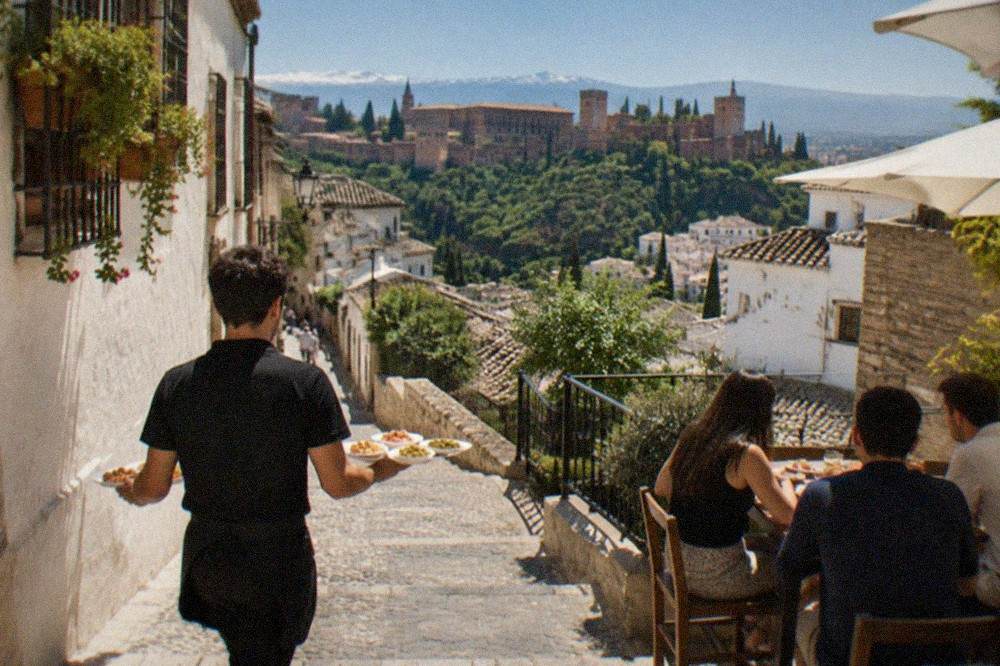
If you would rather have someone open the doors for you, the Granada: Walking Food Tour runs 3.5 hours through the old town's kitchens and bars, rated 4.9 from 590 reviews, from $81 per person on the operator's live listing. It is the one product in the roster built entirely around the traditional plates on this page, and it pairs naturally with an evening in the Realejo afterwards.
The same operator's listing covers dietary notes and group size, so check the live page before booking if you have restrictions. For travellers who prefer to plan the eating independently, the sunset walking tour and the Sierra Nevada day trip in the picks below cover the city and the mountain food country around it, and both leave room for a long dinner.
What Sweets And Drinks Should You Try In Granada?
Beyond piononos, order cuajada de carnaval and torta real Alfacara, and drink the province's wines from the Contraviesa slopes and the local molasses-sweet café con leche variations. Cuajada de carnaval is a fried sweet of the Carnival season, and the Alfacara torta is an almond-and-honey cake from the villages of the Sierra's foothills, sold in the city's convent bakeries, several of which still sell sweets made to centuries-old recipes as a living tradition.
Granada's convent sweets are a quiet institution: monasteries in and around the old town sell handmade almond pastries, and buying them supports communities whose recipes predate the tourist city by centuries. Honey from the Alpujarras and chestnuts from the Sierra's lower slopes appear in autumn, and the combination of almond, honey and cinnamon in so many local desserts is the clearest culinary fingerprint of the city's Moorish past.
For drinks, the province grows wine on the Contraviesa slopes of the Alpujarras, reds made mostly from the local romé grape, and they appear on short lists in the traditional bars even if Rioja dominates the mainstream menus. Rum from Motril, the provincial coast town, is the standard local spirit, and the hot chocolate that accompanies the churros at any of the city's old churrerías is thick enough to stand a spoon in.
| Sweet Or Drink | What It Is | When To Have It |
|---|---|---|
| Piononos | Syrup-soaked sponge with cream topping, from Santa Fe | Any day, with coffee |
| Convent almond pastries | Handmade almond, honey and cinnamon sweets | Year-round from monastery bakeries |
| Cuajada de carnaval | Fried Carnival-season sweet | Around Carnival, before Lent |
| Contraviesa red wine | Local romé-grape wine from the Alpujarras slopes | With plato alpujarreño |
| Motril rum with caña | Local rum served alongside beer, the "peto" | Evenings, as a bar ritual |
How Does The Free Tapas Custom Actually Work In Granada?
You order a drink, a small plate arrives with it at no extra charge, and each subsequent round at the same bar typically brings a different, often larger tapa; the custom is a widely upheld local tradition rather than a legal right, and it works best in the traditional bars of the Realejo and the Albaicin rather than in tourist terraces. Moving between two or three bars, one drink each, is the local pattern, and it turns a modest drinks bill into a full meal.
The 2026 reporting on the custom is unusually clear on one point: the tradition is part of local identity and remains standard in many traditional bars, but it is not universal and some venues have adjusted portion size or raised drink prices to cover it. The practical consequence is simple. If a bar does not bring a tapa with the first drink, that is the bar's policy, not a sign the custom has died citywide, so pay up and move on to the next counter.
Budget around the drinks, not the food. The tapas themselves are where the city's traditional cooking shows up in miniature: a spoon of habas con jamón, a wedge of tortilla, a plate of fried peppers. A guided tapas and wine walk compresses the learning curve considerably if your time is short, and the sunset walk and the Sierra Nevada day trip round out a short stay with the city and the mountain food country around it.
Common Questions About Granada Food
What traditional food should I try in Granada?
Tortilla del Sacromonte, habas con jamón, remojón granadino, plato alpujarreño and piononos are the plates most specific to the city and province, and the free tapa custom is the cheapest way to sample several of them in a single evening.
Is the free tapa in Granada guaranteed?
No. It is a widely upheld local tradition in many traditional bars, confirmed as still standard practice in 2026, but it is not a legal requirement and some venues have adjusted portions or pricing.
What is tortilla del Sacromonte made of?
Traditionally eggs, potatoes, ham and calf brains, named for the Sacromonte quarter and its abbey festival. Many bars serve a version without the offal, so ask before ordering.
What sweet is Granada famous for?
The pionono, a small syrup-soaked sponge with a toasted cream topping, made in nearby Santa Fe and sold across the city, alongside handmade almond pastries from Granada's convent bakeries.
Where do locals eat in Granada?
Traditional bars in the Realejo and the lower Albaicin, and the decades-old kitchens on and around Calle Navas near the city centre, are where the free-tapas custom and the classic dishes are most intact.
Eat the way the city eats: a drink, a tapa, a short walk, and repeat. The tortilla, the beans, the piononos and the free plate on the counter are the whole of Granada's food story in one evening, and the bars that keep the custom are, as of 2026, still doing it better than anywhere else in Spain.