Arab Baths Granada
El Banuelo is a working survivor from the Ziri era, roughly a thousand years old and one of the oldest Islamic buildings still standing in Spain, tucked at the foot of the Albaicin along the Carrera del Darro.
Short answer
El Banuelo is a Ziri-era Arab hammam on the Carrera del Darro in Granada, one of the oldest surviving Islamic buildings in Spain. It is a small monument, usually visited in under half an hour, and it is included in the Granada Card's monument list.
El Banuelo stands at the bottom of the Albaicin hill, right on the Carrera del Darro, and it is old in a way almost nothing else in Granada is. The Alhambra you see today is largely Nasrid, the cathedral is Renaissance, but this small bathhouse was already running when the Ziri dynasty held the city, a thousand years ago. The Patronato de la Alhambra's own monument listings count it among the oldest Islamic buildings surviving anywhere in Spain. The Things To Do In Granada editors rank it as one of the city's genuine surprises precisely because most visitors walk the Carrera del Darro, look up at the Alhambra, and never realise what is behind the plain doorway beside the Darro river.
What Is El Banuelo, Granada's Arab Bathhouse?
El Banuelo is a Ziri-era Arab hammam built when the Ziri dynasty held Granada, sitting on the Carrera del Darro at the foot of the Albaicin, and it is one of the oldest Islamic buildings still standing in Spain. Unlike the Alhambra, which was largely rebuilt by the Nasrids, El Banuelo's brick vaults and horseshoe arches survive from the original construction, which makes it the oldest intact monument of Islamic Granada.
A hammam like this one was not a luxury in Ziri Granada. It was infrastructure, as ordinary and as necessary as the bridge it sits beside. The bath follows the classic sequence of Islamic bathhouses: a cool room, a warm room and a hot room, with the boiler and the wood store at the back, usually against the hillside so the smoke could vent without chimneys spoiling the vaults. Bathhouses also served as social spaces, somewhere to talk, do business and groom before Friday prayers, and a city quarter was not considered complete without one.
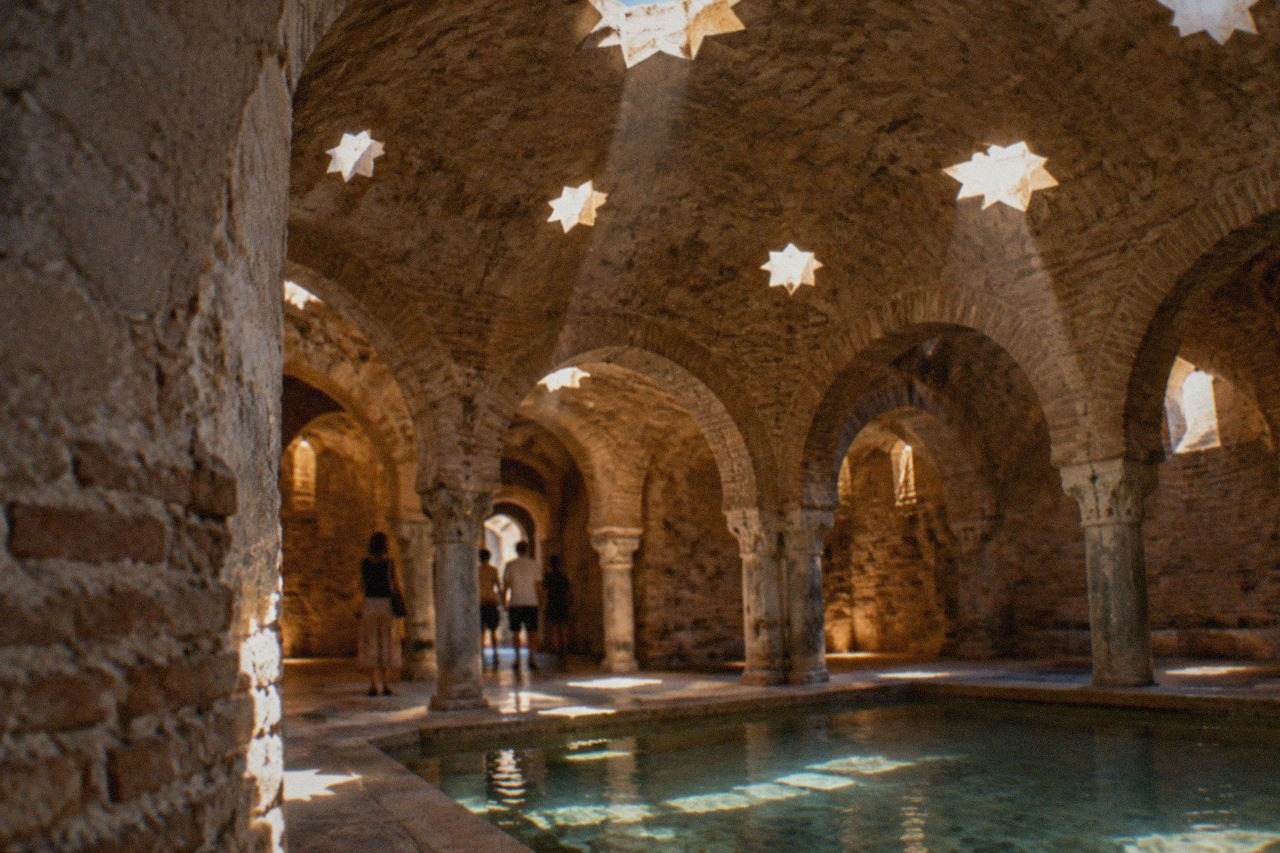
What you actually see today is the skeleton of that machine. The building is small, a few linked chambers, and the visit is short. The reward is in the detail: the vaulted ceilings are pierced by small octagonal skylights, each capped with a lens-shaped glass or stone plug, and the light falls through them in exactly the same pattern it did a millennium ago. Those skylights are the signature of the Andalusi hammam, and El Banuelo's are among the finest still in place in Spain.
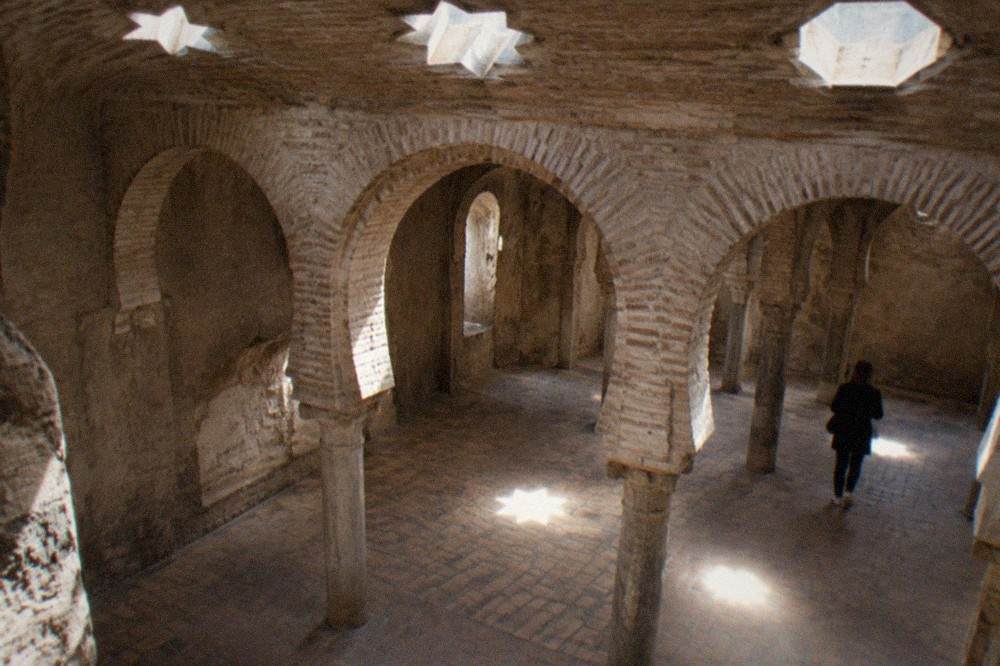
The building's survival is an accident of use. When Granada fell to the Catholic Monarchs, most of the city's dozens of bathhouses closed, and many were demolished or converted. El Banuelo, sometimes recorded historically as the Baño del Nogal, the Walnut Bath, kept a roof over its head because it was repurposed, at various points as a tannery, a bakery's oven room and private housing. The practical reuse that nearly erased its identity is exactly what preserved its vaults.
How Old Are The Arab Baths In Granada?
El Banuelo dates from the Ziri era, roughly a thousand years before the present day. That makes it older than the Alhambra's Nasrid palaces by around three centuries and older than Granada Cathedral by about five. It is, in the plainest terms, the oldest surviving Islamic monument in the city and among the very oldest in Spain, a building that was already ancient when the Catholic Monarchs arrived.
To put that age in context: when El Banuelo was built, the Alhambra hill was a modest fortress, not a palace complex. The Nasrid dynasty that built the palaces most visitors come to see did not take Granada until long after El Banuelo was standing, and the Comares and Lions palaces came later still. The Alhambra you photograph from the Mirador de San Nicolas is a later layer of the same city, and El Banuelo is the earlier one, still in place, still on its original street.
| Granada monument | Era of the surviving fabric | Dynasty or era |
|---|---|---|
| El Banuelo | Ziri taifa period | Ziri dynasty |
| Alcazaba of the Alhambra | Nasrid period | Nasrid |
| Nasrid Palaces | Nasrid period | Nasrid |
| Granada Cathedral | Renaissance | Renaissance Spain |
| Royal Chapel | Renaissance | Catholic Monarchs era |
The Ziri period in Granada was the taifa era, when the caliphate of Cordoba had fragmented and city-states ruled themselves. The Ziris, a Berber dynasty, made Granada their capital, and the bathhouse belongs to that first flush of Granada as an independent royal city. Few buildings from that period survived the centuries of rebuilding that followed, which is why heritage bodies treat El Banuelo with a weight its modest size does not advertise.
How Do You Visit El Banuelo And What Does It Cost?
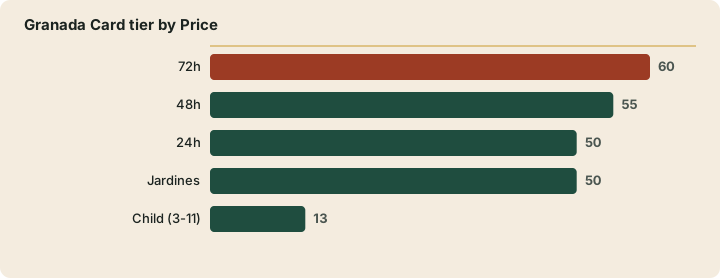
El Banuelo is listed among the monuments included in the Granada Card, per the official turismo.granada.org pass page, alongside other Albaicin monuments such as the Corral del Carbon and Dar al-Horra, so cardholders enter as part of their pass. The Granada Card tiers are 72h EUR 60, 48h EUR 55, 24h EUR 50 and Jardines EUR 50, children 3-11 at EUR 13. Standalone entry terms and current opening hours are set by the managing body and should be confirmed before visiting.
The honest practical answer is that El Banuelo is a small, occasionally restricted site. It has had periods of closure for conservation work in the past, and visiting arrangements have changed more than once, so the one thing not to do is build a tight itinerary around a specific arrival time without checking the current situation. The turismo.granada.org Granada Card page, which lists El Banuelo among its included Albaicin monuments, is the right place to verify what the pass covers at the time of travel.
| Granada Card tier | Price | Alhambra access included |
|---|---|---|
| 72h | EUR 60 | Daytime General: Alcazaba, Nasrid Palaces, Generalife |
| 48h | EUR 55 | Daytime General: Alcazaba, Nasrid Palaces, Generalife |
| 24h | EUR 50 | Night Nasrid Palaces only |
| Jardines | EUR 50 | Daytime Alcazaba and Generalife |
| Child (3-11) | EUR 13 | Depends on accompanying adult tier |
The card's Albaicin monument list is where El Banuelo earns its keep for most visitors. If you are already buying a 72h or 48h card for the Alhambra and the Cathedral, the bathhouse becomes a free stop on a walk you were doing anyway, and the same card covers the Royal Chapel and Granada Cathedral, whose own entry is EUR 10 during the 2026 Kerygma exhibition and EUR 7 from 29 November 2026. Note the Alhambra portion of the card cannot be split across days once activated.
What Do You Actually See Inside El Banuelo?
Inside El Banuelo you see three linked bath chambers with brick barrel vaults, horseshoe arches, marble-lined pools and the star-shaped skylights the Andalusi builders cut into the ceilings, all in a space you can walk in about fifteen minutes. The layout follows the standard hammam sequence of cold, warm and hot rooms, with the water channels and some original marble slabbing still visible. It is an architecture visit, not an activity: you look, you do not bathe.
The rooms are small and low, and that is the point. The vaults rest on columns that were almost certainly recycled from earlier Roman or Visigothic buildings, a common Andalusi practice, and the marble edging of the pools survives in patches. The light comes almost entirely from above. Each vault is pierced by eight or so small octagonal openings, and the pattern of light dots on the floor shifts through the day, which is why photographers who know the site time their visit around the sun rather than the crowds.
| Feature in El Banuelo | What it is | Where to look |
|---|---|---|
| Octagonal skylights | Light and ventilation holes in the vaults, originally glazed | All three chamber ceilings |
| Horseshoe arches | Brick arches on reused stone columns | Between chambers |
| Marble pool edging | Remains of the bathing basins | Floor level in the side rooms |
| Brick barrel vaults | The structural roofs of the bath rooms | Throughout |
| Water channel remains | Feed and drainage traces of the original system | Floor channels |
The atmosphere is the opposite of the Alhambra's polished showpieces. There is no plasterwork cascade of muqarnas here, no gilded ceilings, and comparing it with the Nasrid Palaces misses the point. El Banuelo is a working building that happened to survive, and its beauty is structural: geometry, light and brick. Visitors who enjoy it tend to be the ones who have read a little beforehand, because the monument itself explains nothing at any length.
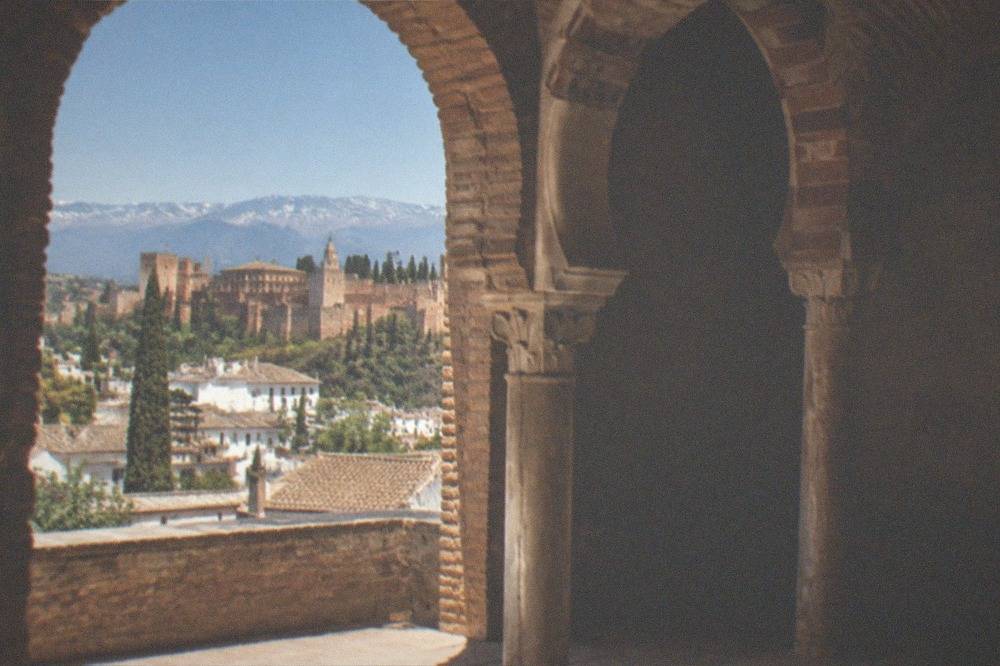
Can You Still Bathe In An Arab Bath In Granada?
You cannot bathe at El Banuelo, which is a protected monument with no water in its pools, but you can bathe in a modern Andalusi-style hammam in Granada, and the city has two well-known options: the Hammam Al Andalus near the Plaza Nueva end of things, and the Palacio Nazari Hammam, whose 90-minute session is bookable from $51 per person and rated 4.6 from 1,180 reviews on the operator's live listing. These are contemporary bathhouses in the tradition of the original ones, not survivors.
The distinction matters because search results for "arab baths granada" mix the two completely. El Banuelo is a museum piece you look at in fifteen minutes. The modern hammams are commercial spas where you book a timed slot, soak in hot, warm and cold pools, and usually get a massage option. The Hammam Al Andalus experience is bookable from $97.55 per person and rated 4.4 from 704 reviews, per its listing. Neither is a continuation of the other in a literal sense, but both descend from the same bathing culture, and the modern rooms reuse the same cold-warm-hot logic you can still read in El Banuelo's floor plan. The wider set of guides lives on Things To Do In Granada.
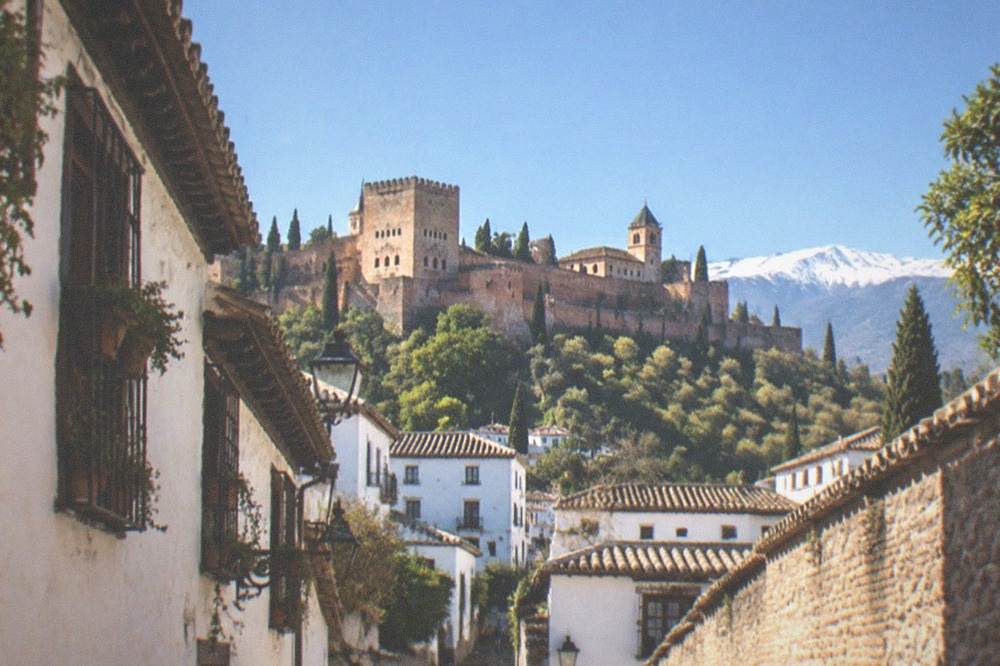
If your interest is the historical side, do both in one day: walk El Banuelo in the late morning, then book an evening hammam session after a day on your feet. The Palacio Nazari session runs 90 minutes, which is the standard length for the city's hammams, and the listing states free cancellation terms, so check the operator's live listing for the current policy before locking a time. That day-and-evening pairing is, in the editors' view, the single best way to understand what a bathhouse meant to this city.
How Does El Banuelo Fit Into An Albaicin Walk?
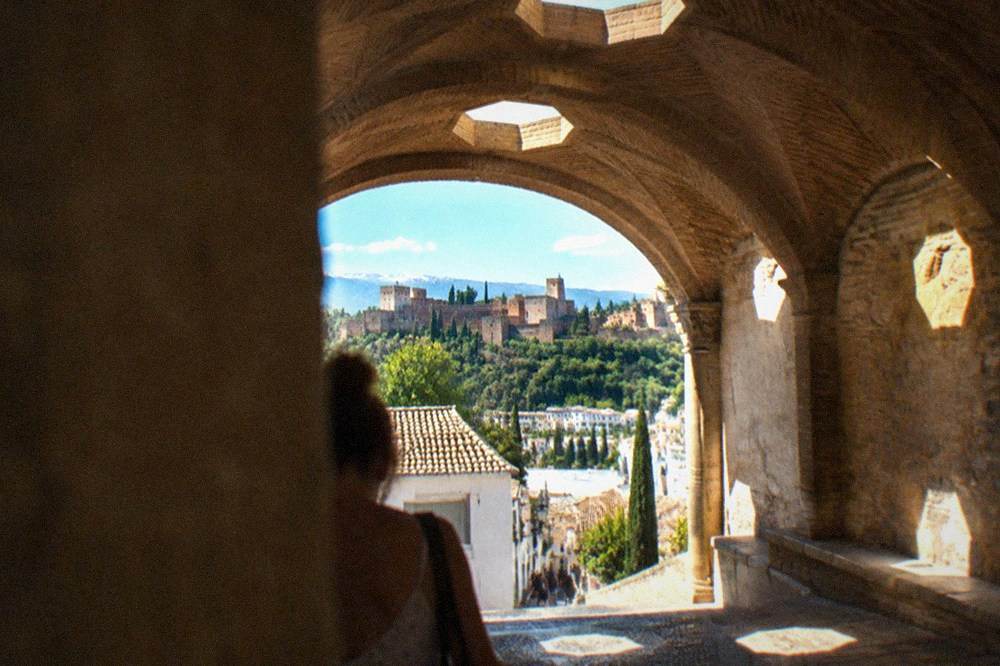
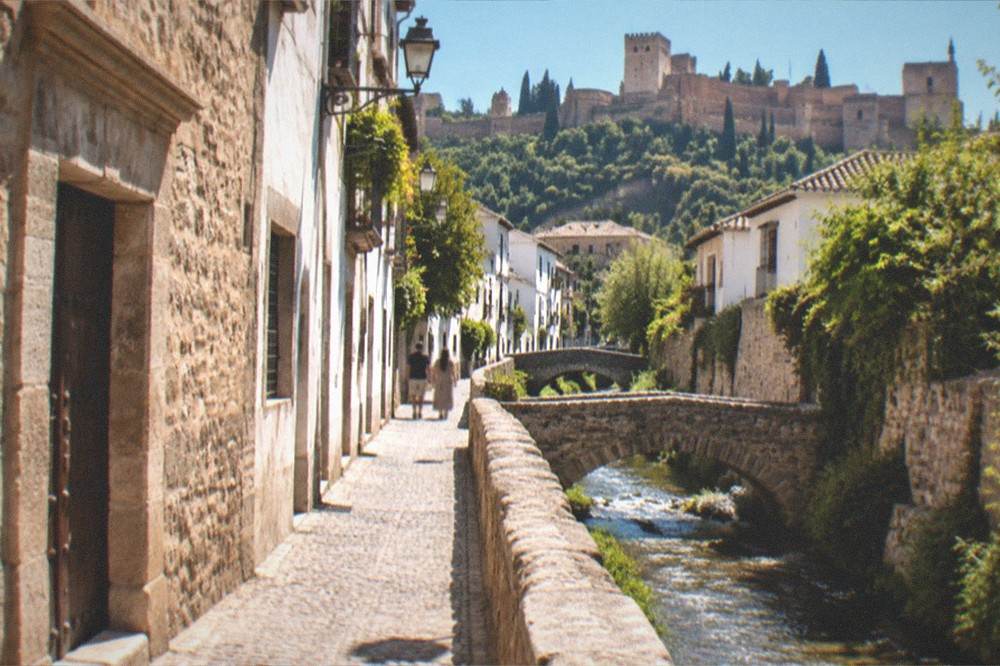
El Banuelo sits at the bottom of the Albaicin, on the Carrera del Darro directly opposite the Darro river, which makes it a natural first or last stop on the classic walk between Plaza Nueva, the Carrera del Darro, the Paseo de los Tristes and the Mirador de San Nicolas. Most walkers pass its doorway within the first ten minutes of the climb without noticing it. Budget fifteen to thirty minutes inside, then continue up through the Albaicin's lanes toward the viewpoint.
The standard route is well worn and worth following. Start at Plaza Nueva, walk the Carrera del Darro along the river, and El Banuelo's entrance is on the Albaicin side of the street, a few minutes in. From there the lane climbs into the Albaicin quarter itself, past the church of San Cristobal and up to the Mirador de San Nicolas for the classic Alhambra view. A guided sunset version of exactly this walk, the Albaicin and Sacromonte sunset tour, runs about 2.5 hours and is bookable from $17 per person, rated 4.9 from 3,533 reviews on its listing.
| Stop on the classic Albaicin walk | What it is | Rough role in the walk |
|---|---|---|
| Plaza Nueva | The flat, busy starting square | Start, transport links |
| Carrera del Darro | The riverside lane below the Alhambra | Scenic approach, El Banuelo here |
| El Banuelo | Ziri-era bathhouse monument | Short cultural stop |
| Paseo de los Tristes | Café-lined promenade at the top of the lane | Break, Alhambra views |
| Mirador de San Nicolas | The famous Alhambra viewpoint | Sunset highlight |
| Sacromonte caves | Flamenco cave quarter above | Optional extension |
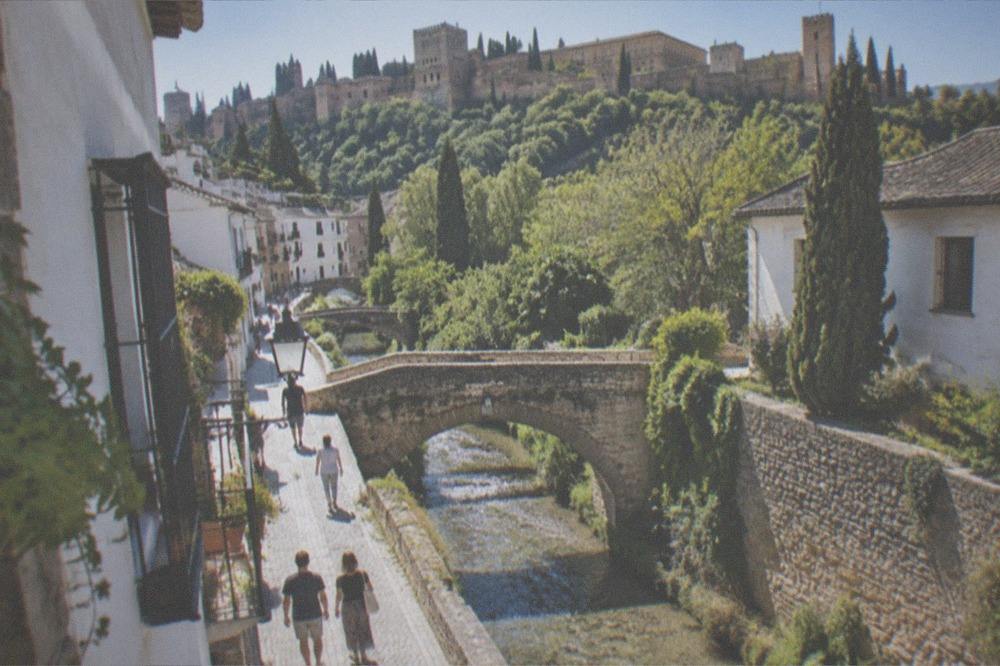
The Albaicin, together with the Alhambra and Generalife, forms one UNESCO World Heritage inscription, added in 1984 and extended in 1994 to include the quarter, and El Banuelo is one of the physical reasons the extension made sense. Walking from the bathhouse up through the Moorish street plan is the clearest demonstration of why this hillside is listed. If you have a full day rather than an afternoon, the one day in Granada itinerary slots the Carrera del Darro and Albaicin into the afternoon after a morning Alhambra entry, which is the order most first-time visitors should take.
What Other Arab Baths Survived In Granada?
El Banuelo is the only substantial medieval hammam in Granada that survives as a visitable monument, but its heritage reaches further through the Granada Card's Albaicin list, which includes the Corral del Carbon and Dar al-Horra, and through the Alhambra itself, where the Comares Palace contains the royal bath of the Nasrids. Beyond the city, Andalusi bathhouses survive in Cordoba, Seville's nearer regions and across Andalusia, but in Granada the count of intact, open-to-visit medieval baths is effectively one.
Granada at its medieval peak was full of bathhouses, and the historical record describes dozens serving the city's quarters. Almost all were lost after the Catholic conquest through demolition, conversion or simple neglect. What remains in visitable form is thin, and that scarcity is precisely why a modest building on the Carrera del Darro carries the heritage weight it does. The Alhambra's own bath, attached to the Comares complex, is the other place in the city where you can stand inside a medieval Andalusi bathing space, on a different scale and in far more decorated form.
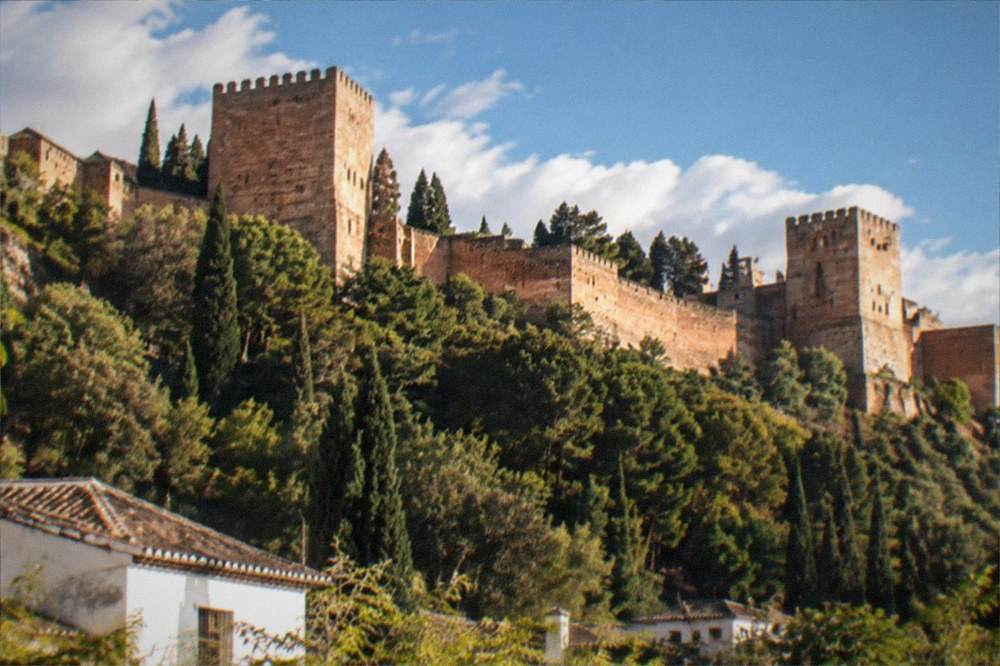
For visitors planning around the Alhambra itself, remember the sell-out reality: the General ticket is EUR 22.27 on the live official pages, daily capacity runs roughly 6,600 to 7,000 visitors, and the General ticket routinely sells out one to two months or more ahead in peak season, with online sales closing at 23:59 the day before the visit. A bathhouse-themed Granada day therefore needs Alhambra tickets sorted well in advance, and the Alhambra's timed Nasrid Palaces entry window is strictly enforced with ID checks, since tickets are nominative.
Is El Banuelo Worth Visiting Compared With The Alhambra?
El Banuelo is worth visiting if you have any interest in history, architecture or photography, and it costs you well under an hour, but it is not a substitute for the Alhambra. The Alhambra is a multi-hour palace complex requiring tickets booked weeks or months ahead; El Banuelo is a single small building you can see on a spontaneous riverside walk. The two answer different questions, and the visitors who rate El Banuelo highly are the ones who arrive knowing what it is.
The comparison fails in both directions. Someone who only sees El Banuelo and skips the Alhambra has missed the single greatest monument in Spain; someone who only sees the Alhambra has missed the city's oldest building. The honest framing is sequencing: the Alhambra needs planning, a timed Nasrid Palaces slot and usually a full morning, while El Banuelo needs fifteen spare minutes on a walk you were already taking. If Alhambra tickets are sold out for your dates, which happens routinely one to two months ahead in peak season, El Banuelo plus the Albaicin plus a modern hammam session is a genuinely satisfying consolation day built around the same bathing heritage.
| Question | El Banuelo | The Alhambra |
|---|---|---|
| What it is | Ziri-era hammam monument | Nasrid palace complex |
| Time needed | 15-30 minutes | Half a day or more |
| Booking pressure | Low, check current hours | Sells out 1-2+ months ahead in peak |
| Best for | History and photography fans | Essentially everyone |
| Entry route | Carrera del Darro, on foot | Timed entry, ID checked |
Common Questions About The Arab Baths In Granada
Are the Arab baths in Granada free to enter?
El Banuelo is not a free-roam site; it is included in the Granada Card's monument list per the official turismo.granada.org pass page, and standalone entry terms are set by the managing body. Check the current arrangement before visiting, as this small monument has had limited and changeable visiting windows.
Can you bathe in El Banuelo?
No. El Banuelo is a protected Ziri-era monument with no water in its pools. For an actual bath in the Andalusi tradition, Granada has modern hammams, including the Palacio Nazari Hammam and the Hammam Al Andalus, both bookable by timed session.
How old is El Banuelo?
El Banuelo dates from the Ziri era, roughly a thousand years ago, making it around three centuries older than the Nasrid palaces of the Alhambra and one of the oldest Islamic buildings surviving in Spain.
Where is El Banuelo located?
It stands on the Carrera del Darro at the foot of the Albaicin, on the river side of the lane a few minutes' walk from Plaza Nueva, opposite the Darro river below the Alhambra.
Is El Banuelo included in the Granada Card?
Yes. The official turismo.granada.org Granada Card page lists El Banuelo among the included Albaicin monuments, alongside the Corral del Carbon and Dar al-Horra. Card tiers are EUR 60 for 72h, EUR 55 for 48h, EUR 50 for the 24h and Jardines variants, and EUR 13 for children aged 3-11.
How long does a visit to El Banuelo take?
Fifteen to thirty minutes covers the whole monument comfortably. It is a small building of three linked chambers, best treated as a short stop on a longer Carrera del Darro and Albaicin walk rather than a destination in itself.
Granada keeps its oldest building in plain sight on its most walked street, and El Banuelo asks nothing of the visitor except a quarter hour and a little curiosity. Walk the Carrera del Darro, step through the plain doorway, look up at the light coming through a thousand-year-old ceiling, and you will understand this city more completely than the Alhambra alone can ever explain.