Which City Is Better To Visit, Córdoba, Granada, Or Seville?
A practical comparison of Granada, Córdoba and Seville: headline monuments, ticket prices, climate, trip length and day-trip logistics, so you can pick the Andalusian city that fits your trip.

Three cities anchor most trips to Andalusia, and travellers keep asking the same question because the honest answer is genuinely conditional. Granada holds the Alhambra, a monument that drew 2,726,861 visitors in 2025 according to the Patronato de la Alhambra y Generalife's annual report, close to the site's own capacity ceiling. Córdoba counters with the Mezquita, Seville with the largest Gothic cathedral in the world and a festival calendar that fills the streets. This site covers Granada, so the comparison below leans on verified Granada figures and treats the other two honestly rather than pretending all three are interchangeable. The short version: Granada wins on the single most extraordinary monument and on setting, Seville wins on scale and street life, and Córdoba wins if your time is short.
Which City Is Better To Visit, Córdoba, Granada, Or Seville?
Granada is the better single-city visit if the Alhambra is your priority, because no other Andalusian monument matches it and the city around it, the Albaicin, Sacromonte and the free-tapa tradition, is distinctive enough to fill two or three days. Seville is better if you want the biggest city experience, with more monuments, more nightlife and more festival weight. Córdoba is the best choice for a short stay of one or two days built around one astonishing building.
That is the shape of the decision, but the details matter. The Alhambra is not a monument you can treat casually: the official General ticket costs EUR 22.27 through the Patronato de la Alhambra's own ticket page, daily capacity runs to roughly 6,600-7,000 visitors, and the Nasrid Palaces inside it admit only about 300 people per half-hour slot. In peak season the General ticket routinely sells out one to two months ahead. That scarcity is itself an argument for basing yourself in Granada rather than treating it as a drive-by, because a sold-out Alhambra can hollow out a short visit.
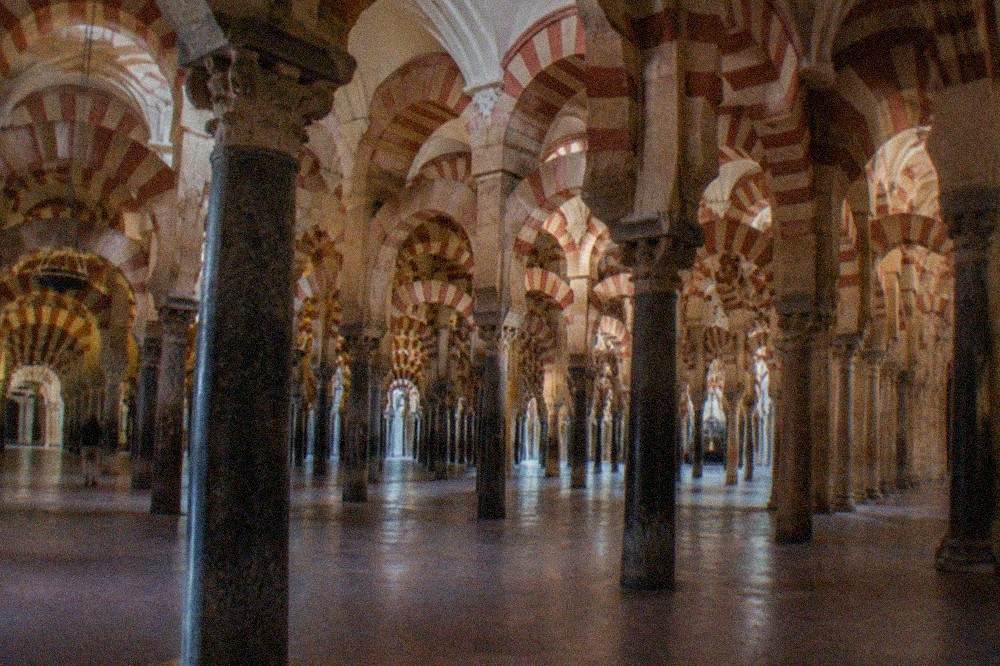
Seville's appeal is breadth. It is the regional capital, it carries the Alcázar, the cathedral and the Giralda, and its Holy Week and April fair are among Spain's best-known festivals. The trade-off is that Seville is the most demanding of the three in terms of distance: a Seville tour from Granada runs about 12 hours, and the two cities are far enough apart that a day trip eats an entire day. Córdoba sits between them in every sense, compact enough to walk end to end and dominated by the Mezquita's forest of columns.
How Much Time Does Each Andalusian City Need?
Granada needs two full days at minimum, with the Alhambra booked in advance and a second day for the Albaicin, Sacromonte and the historic centre; trying it in one rushed day risks missing the Nasrid Palaces entirely if tickets are gone. Seville needs two to three days because its monument list is long and spread out. Córdoba can be done justice in one long day, or two relaxed days with the Alcazar and the flower-patio quarter included.
The Alhambra alone justifies Granada's minimum. A complete daytime visit covers the Nasrid Palaces, the Alcazaba and the Generalife, and the official day-visit hours run 08:30-18:00 in the 15 October to 31 March season and 08:30-20:00 from 1 April to 14 October. Add the walk up through the woods or the bus to the hill, and the monument consumes half a day on its own. The rest of the city is not filler: the Albaicin's lanes, the Mirador de San Nicolas view across to the palace, and the Sacromonte cave quarter each earn an evening. Our guide to how many days in Granada is enough breaks the pacing down day by day.
Córdoba's compactness is its superpower for short trips. The historic centre is walkable, and the city's single great monument sits at one edge of it, so one day delivers the core experience without the logistics burden of a bigger city. Seville is the opposite: its monuments are scattered across a large historic district, and the cathedral precinct alone can absorb a morning. A useful planning rule is that Seville rewards the most days and tolerates the least rushing, while Córdoba rewards efficiency.
| City | Realistic minimum | Comfortable stay | Main constraint |
|---|---|---|---|
| Granada | 2 days | 3 days | Alhambra tickets sell out 1-2+ months ahead in peak season |
| Córdoba | 1 day | 2 days | Very compact, little logistical risk |
| Seville | 2 days | 3 days | Largest city, most ground to cover |
What Makes Granada Different From Córdoba And Seville?
Granada's differences are the Alhambra's scarcity, the free-tapa custom, and the physical setting: the city sits below the Sierra Nevada, so snow-capped peaks are visible from the streets in winter, something neither Córdoba nor Seville offers. It is also the only one of the three where the headline monument requires booking weeks ahead, and the only one where a drink in many traditional bars still comes with a complimentary small tapa.
The tapa custom is worth dwelling on because it changes the shape of an evening. In many traditional Granada bars, ordering a drink brings a small free plate, and portions often scale up over successive rounds. This is local practice rather than a legal guarantee, and 2026 reporting confirms some venues have adjusted portion sizes or pricing, but the tradition remains widely upheld as part of the city's identity. Seville has its own bar culture, but the free-tapa-with-a-drink norm is the Granada signature. Our page on free tapas in Granada covers how it works in practice.
The setting matters too. AEMET's climate normals for the Granada Aeropuerto station show January nights averaging 0.0C while July days average 34.8C, a continental swing you feel more sharply than on the coast, and in winter the Sierra Nevada above the city carries visible snow. That same mountain range gives Granada a fourth season of activity the other two cities lack: hiking in the warmer months, and a ski resort whose season typically runs late November to early or mid-April, weather dependent, with the exact dates confirmed only on the official resort site each year. The full index of guides sits on Things To Do In Granada.
Then there is the monument question. The Alhambra and Generalife entered the UNESCO World Heritage list in 1984, with the Albaicin added in 1994, a single inscription covering palace and old quarter together. That pairing of a Nasrid palace with a Moorish street plan across the valley is unique among the three cities. Córdoba's Mezquita is a single overwhelming interior; Seville's Alcázar and cathedral are a compound of Christian and Islamic layers. Granada is the only one where the palace, the gardens and the opposing hillside viewpoint all belong to one coherent landscape.
| Month | Granada avg high C | Granada avg low C | Granada rainfall mm |
|---|---|---|---|
| January | 13.0 | 0.0 | 42 |
| April | 20.6 | 6.0 | 36 |
| July | 34.8 | 15.7 | 2 |
| October | 23.2 | 8.7 | 40 |
The table above, drawn from AEMET's 1981-2010 normals, shows why shoulder seasons suit Granada: April and October sit in the low-to-mid twenties by day with modest rain, while July is genuinely hot and nearly rain-free. If your trip window is fixed to midsummer, plan Alhambra entry for the morning slot and treat the Albaicin as an evening walk.
Can You Day Trip Between Granada, Córdoba And Seville?
Yes, with different levels of comfort: Córdoba works well as a day trip from Granada, with guided excursions running around 11 hours, while Seville is possible but punishing as a day trip at roughly 12 hours door to door, and the reverse direction from Seville to Granada carries the added risk that Alhambra tickets for your chosen date may already be sold out. Ronda, a smaller alternative, sits closer to Granada at 8-10 hours round trip by tour.
The asymmetry is the point most guides skip. A day trip into Granada is hostage to Alhambra availability, because tickets release about three months ahead and close online at 23:59 the day before, with no reliable same-day sales. A day trip out of Granada has no such constraint: you are the one choosing the date, and Córdoba's Mezquita does not impose the same timed-slot scarcity on the Granada visitor. For travellers based in Granada, that makes the outbound day trip the lower-stress option. Our page on taking a day trip from Granada to Córdoba covers the logistics, and the broader day trips from Granada guide lists the full set of destinations within range.
Seville deserves more than a day trip if you can give it one. The city's monument list, the Alcázar, the cathedral and the Giralda, the Santa Cruz quarter and the riverside, is a two-day programme done properly. If your total Andalusian time is a week, the strongest structure is usually two or three nights in Granada, two or three in Seville, and Córdoba slotted either as a stop between them or as a day excursion from one base. Travellers weighing just the two big names can compare them in detail in our Granada versus Seville guide, and the Cordoba pairing in Granada versus Córdoba.
If you would rather not self-drive or interpret Spanish rail timetables, a small-group excursion handles the transfer, the guide and the timed entry in one booking. The Cordoba Day Trip from Granada runs from $163 per person for a full 11-hour day, with no rating published on the listing at research time, so check the operator's live listing for current availability. Check availability
Which City Suits Which Kind Of Traveller?
Choose Granada for the single most extraordinary monument in the region plus mountain access and the tapa tradition; choose Seville for the grandest urban experience, the biggest festivals and the longest monument list; choose Córdoba for a short, intense, walkable visit built around one masterpiece. Families, tight schedules and summer travellers each tilt differently, and the deciding factor is usually how much Alhambra-planning you are willing to do in advance.
For a first Andalusian trip of four or five days, Granada plus Seville with Córdoba as a connector is the classic structure, and it works because the three cities complement rather than duplicate each other. Granada's strengths are concentrated: one palace complex, one viewpoint city, one mountain backdrop. Seville's are distributed across a large, lively centre. Córdoba's are compressed into a small area, which makes it the best value per hour of any of the three.
Budget behaves differently in each. Granada's headline costs are the Alhambra at EUR 22.27 General, the Cathedral at EUR 10 during the 2026 Kerygma exhibition (dropping to EUR 7 from 29 November 2026) and the Royal Chapel at EUR 7, but the Granada Card can bundle these: the 72-hour version costs EUR 60 and includes Alhambra access, the Cathedral, the Royal Chapel, further monuments and nine urban bus trips. Whether that pays off depends on your pace, and our is the Granada Card worth it analysis runs the numbers. The free-tapa custom also quietly lowers nightly food costs in Granada compared with cities where every plate is priced.
| Traveller type | Best fit | Why |
|---|---|---|
| One-week first timer | Granada + Seville, Córdoba between | Covers all three headline monuments without rushing |
| Short weekend trip | Córdoba | Compact, walkable, one masterpiece |
| Hiker or skier | Granada | Sierra Nevada hiking and ski access from the city |
| Festival traveller | Seville, with Granada for Holy Week | Seville's scale; Granada's Semana Santa runs 29 March-5 April 2026 |
| Traveller who books late | Córdoba or Seville | Alhambra may already be sold out for near dates |
Common Questions About Choosing Between Granada, Córdoba And Seville
Which city is better to visit, Córdoba, Granada, or Seville?
Granada if the Alhambra is your priority and you can book ahead, Seville if you want the biggest city and the most street life, Córdoba if your time is short. All three are worth visiting, and a week lets you combine them.
Can you see all three cities in one trip?
Yes. A common structure is two or three nights in Granada, two or three in Seville, and Córdoba visited either as a stop en route or as a day trip from one base. Book Alhambra tickets first, since they sell out furthest ahead.
Is the Alhambra harder to visit than Seville's or Córdoba's monuments?
Yes, in planning terms. The General ticket costs EUR 22.27, sells out one to two months ahead in peak season, releases about three months in advance and closes online at 23:59 the day before the visit. The Nasrid Palaces entry is a strict half-hour timed slot with ID checks.
Is Granada cheaper than Seville or Córdoba?
Granada's tapa custom, where many traditional bars include a small free plate with each drink, keeps evening food costs low. Monument entry is comparable across the three; the Alhambra at EUR 22.27 is the largest single ticket, and the 72-hour Granada Card at EUR 60 can offset it if you visit enough included sites.
Which city has the best weather?
All three are hot in summer. AEMET's normals show Granada averaging 34.8C highs in July but only 2mm of rain, with cold winter nights at 0.0C in January. Granada's continental swing is the widest of the three, and its Sierra Nevada backdrop gives it winter snow the others lack.
Can Seville be a day trip from Granada?
It is possible but long, around 12 hours for a guided tour, and it compresses a city that really deserves two days. Córdoba is the more comfortable day-trip target from Granada at roughly 11 hours with a compact walkable centre.
The verdict, stated plainly: no single ranking fits every traveller, but Granada is the strongest answer when the Alhambra is the reason for the trip, and the earlier you book those tickets, the more of the city you get to enjoy around them.