Which Is Nicer, Malaga Or Granada?
A clear, fact-based comparison of Malaga and Granada for travellers choosing between the two Andalusian cities, covering sights, food, costs, weather and travel times.
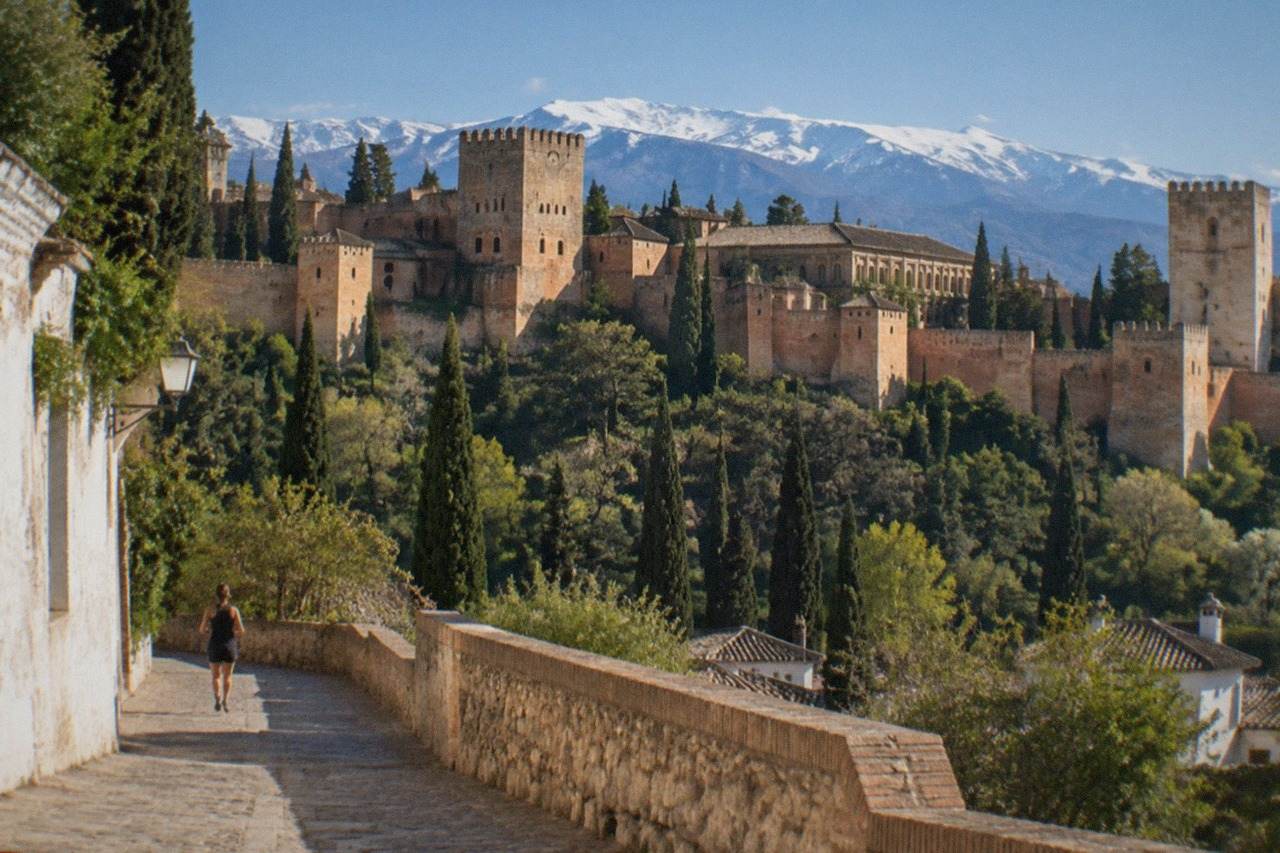
Granada and Malaga sit barely an hour apart by road and rail, yet they answer two different travel questions. Granada is a hill-and-palace city of roughly 2.7 million Alhambra visitors a year, a free-tapa tradition and a UNESCO World Heritage listing that covers the Alhambra, the Generalife and the Albaicin in a single inscription from 1984, extended in 1994. Malaga is a coastal port city with beaches, Picasso connections and a much larger airport. "Nicer" depends almost entirely on which of those two trips you are actually trying to take, and this page compares them on the things that decide it: sights, food, cost, weather and the logistics of doing both.
Which Is Nicer, Malaga Or Granada?
Granada is the nicer city for a short first visit built around one extraordinary monument: the Alhambra, the Albaicin and the free tapa culture give it an intensity Malaga cannot match in two or three days. Malaga is nicer for a longer, slower stay built on beaches, museums and easier flights. Most travellers with four days or fewer get more from Granada; travellers who want sea and sun get more from Malaga. The two cities combine easily, so the choice is rarely final.
The comparison is not close on headline sights. The Alhambra alone drew 2,726,861 visitors in 2025 according to the Patronato de la Alhambra's own annual report, a figure close to the monument's annual capacity ceiling of roughly 2.763 million, and demand like that exists because there is simply nothing else like the Nasrid Palaces in Spain. Malaga's strengths are real but different: a walkable old centre, the Alcazaba and Gibralfaro fortifications, Picasso connections and a seafront that Granada entirely lacks, since Granada is an inland city whose coast is a bus or car ride away.
That difference shapes the whole trip. A Granada visit is vertical and concentrated, with the Alhambra on its hill, the Albaicin on the opposite slope and the Carrera del Darro running along the river between them. A Malaga visit is horizontal and spread out, mixing a historic core with a modern seafront promenade. Neither is objectively nicer; one is a palace city, the other a beach city. For more on how the two stack up, the Granada vs Malaga comparison guide breaks the matchup down district by district, and the day trips to Malaga from Granada page covers the coastal option from the Granada side.
Which City Has The Better Sights?
Granada wins on sights, and it is not a narrow win: the Alhambra, the Generalife gardens, the Alcazaba, the Albaicin quarter and the Sacromonte cave district form a single UNESCO-listed historic landscape, while Malaga's Alcazaba, cathedral and Picasso museums are enjoyable but individually less singular. The one caveat is access: the Alhambra sells out roughly one to two months ahead in peak season, so Granada's best sight requires planning that Malaga's sights do not.
The Alhambra's own ticket page lists the live official prices: EUR 22.27 for the General daytime ticket covering the Nasrid Palaces, the Alcazaba and the Generalife, EUR 12.73 for the gardens, Generalife and Alcazaba only, EUR 12.73 for the night visit to the Nasrid Palaces and EUR 8.48 for the night gardens. A July 2025 press release announced lower figures, but the live official pages still show these prices, so these are the ones to budget from. Daily capacity runs at roughly 6,600 to 7,000 visitors, with the Nasrid Palaces capped at about 300 people per half-hour timed slot, and online sales close at 23:59 the day before the visit. Walk-up tickets are not a reliable plan.
Malaga's sightseeing is lower-friction. You can decide to visit the Alcazaba on the morning you arrive and simply do it, which is genuinely valuable for travellers who dislike booking months ahead. What Malaga cannot offer is the concentrated density of Granada's hillside complex, where a single day can move from a fortress, to a Nasrid palace, to a hillside garden estate, to a viewpoint over the whole city at the Mirador de San Nicolas.
| Granada monument | Live official price | Notes |
|---|---|---|
| Alhambra General (day) | EUR 22.27 | Nasrid Palaces, Alcazaba, Generalife; sells out 1-2+ months ahead in peak season |
| Alhambra gardens, Generalife and Alcazaba only | EUR 12.73 | Daytime, no Nasrid Palaces |
| Alhambra night visit, Nasrid Palaces | EUR 12.73 | Timed half-hour entry, photo ID required |
| Granada Cathedral | EUR 10 | Kerygma exhibition rate, 8 May to 28 Nov 2026; EUR 7 from 29 Nov 2026 |
| Royal Chapel | EUR 7 | EUR 5 reduced; under 12 free |
The contrast in planning burden is the real trade-off. Granada rewards the traveller who books the Alhambra first and builds the trip around it, and the how many days in Granada is enough page helps size that stay. Malaga rewards spontaneity. If booking three months ahead sounds like homework rather than part of the fun, that is a point for Malaga, and it is worth saying plainly.
Which City Is Better For Food And Tapas?
Granada is the better food city for the tapas ritual specifically, because the complimentary small tapa served with a drink remains standard practice in many traditional Granada bars as of 2026, a custom Malaga does not share in the same form, while Malaga wins on seafood since it is a working port with fresh catch on the seafront. Granada's classic dishes are inland Andalusian: habas con jamon, tortilla del Sacromonte and piononos, eaten in cave bars and plaza-side taverns.
The tapas point deserves precision, because it is Granada's most famous culinary claim. The custom is a widely upheld local practice rather than a legal guarantee: a drink order in many traditional bars typically arrives with a complimentary small plate, sometimes scaling up with further rounds, though some venues have adjusted portions or pricing. Treating it as a guaranteed free buffet at every bar will disappoint; treating it as the normal rhythm of a Granada evening will not. July 2026 reporting confirms the tradition is still widely upheld as part of local identity. The what food is Granada famous for page lists the dishes worth ordering by name.
Malaga's food identity is the opposite of Granada's: fried fish, espetos of sardines grilled on the beach, and a seafood culture that comes directly from having a fishing port in the city. Granada's seafood is transported inland, so a fried-fish platter by the Mediterranean is a Malaga experience that Granada cannot replicate. Neither city is a poor choice for eating, but the food scenes point in different directions, and travellers who plan their trips around meals should choose the menu, not the city.

Which Is Easier To Reach, And Can You Visit Both?
Both cities are easy to reach and easy to combine: Malaga has the larger airport with far more international flights, while Granada's airport is small with the Alsa Linea 245 bus into the centre at EUR 3.10 taking 40 to 45 minutes, and once you are on the ground Malaga and Granada are close enough that travellers routinely day-trip between them by train or road. Doing both in one trip is usually better than choosing.
The airport difference matters more than any sight or dish. Malaga serves as the main air gateway to the Costa del Sol, which is why so many Granada itineraries actually begin there. Granada's own airport is a short hop from the city centre but with a thinner route network, so many travellers fly into Malaga and travel on. The day trip to the Alhambra from Malaga page answers the most common version of the combined-trip question, with the same sell-out warning applying: an Alhambra day trip only works if the ticket was secured well ahead.
One transport mistake to avoid in Granada itself: the Metro de Granada does not reach the airport and does not reach the Alhambra. It runs north to south through the city and metro area, and the Alhambra is reached by the LAC/C34 hillclimb bus line, by taxi or on foot. Visitors transferring from Malaga sometimes assume a metro connection exists; it does not.
Which City Has Better Weather?
Granada has the more dramatic seasonal swing, with AEMET's 1981-2010 normals for Granada Aeropuerto showing July average highs of 34.8C against January lows of 0.0C and a dry, hot summer with just 2mm of July rain, while Malaga's coastal climate stays milder in both directions, rarely freezing in winter and rarely reaching Granada's summer peaks. Granada is the better city for crisp winter sightseeing with snow on the Sierra Nevada; Malaga is the better city for a beach month.
The AEMET figures are worth reading closely, because Granada's climate surprises people expecting generic southern Spain. January nights average 0.0C, which is freezing, and December nights average 1.7C with 56mm of rain. July and August average highs of 34.8C and 34.2C with almost no rain. That is a continental inland pattern, not a Mediterranean one, and it means Granada in January is a coat city where snow sits visibly on the Sierra Nevada above town, while Malaga in January is a mild seaside city.
| Month | Granada avg high C | Granada avg low C | Granada rainfall mm |
|---|---|---|---|
| January | 13.0 | 0.0 | 42 |
| April | 20.6 | 6.0 | 36 |
| July | 34.8 | 15.7 | 2 |
| October | 23.2 | 8.7 | 40 |
The practical reading: for a summer trip, Malaga's sea breeze makes the heat more bearable and gives you a beach as an escape valve, while Granada in July is genuinely hot for climbing to the Alhambra and the Albaicin. For spring and autumn, Granada's 19C to 25C average highs are close to ideal for walking-intensive sightseeing, which is why those months dominate most recommended-date lists for the city.
Which Is Better For A Short Trip, Granada Or Malaga?
For a trip of two to four days, Granada gives a higher density of singular experiences per day, because the Alhambra, the Albaicin, Sacromonte and the tapas bars sit within walking distance of each other, whereas Malaga rewards a slower pace with its beach and museum mix spread along the seafront. For a single day, Granada is the stronger stop provided the Alhambra ticket was booked in advance; Malaga is the safer single-day stop for travellers who could not plan ahead.
This is where the sell-out reality bites hardest. A last-minute one-day stop in Granada without an Alhambra ticket is a pleasant but diminished visit, since the city's defining monument is closed to you, and same-day online sales are not reliably available. A last-minute day in Malaga loses nothing comparable, because its main sights do not run on a scarce timed inventory. Travellers who book ahead should not let this sway them: the Alhambra is worth planning a trip around, and the what if Alhambra tickets are sold out page lists the fallbacks, including the gardens-only ticket and the night visits, which sometimes outlast daytime availability.
For longer stays the calculus shifts. A week in Malaga fills easily with beach days, day trips along the coast and a relaxed pace, while a week based in Granada pushes you outward into the mountains, which is exactly what the surrounding region is for. The Alpujarras villages, the hiking at Los Cahorros and the Sierra Nevada all sit within day-trip range of the city.
Granada's mountain hinterland is the quiet argument in its favour that Malaga cannot answer. The Alpujarras, the whitewashed villages on the southern flanks of the Sierra Nevada, are a full-day guided trip from the city, and the Sierra Nevada itself offers hiking in summer and a ski season that typically runs late November to early or mid-April, weather dependent, with the official 2026-2027 dates not yet confirmed on the resort's own site. A beach is Malaga's hinterland; a high mountain range is Granada's. Travellers who want both landscapes in one trip can base in Granada and reach the Mediterranean coast as a day trip, which is a flexibility that surprises first-time visitors.
Common Questions About Malaga Or Granada
Which is nicer, Malaga or Granada?
For a short, sightseeing-intensive trip, Granada is nicer thanks to the Alhambra, the Albaicin and the free-tapa tradition, provided the Alhambra ticket is booked roughly one to two months ahead in peak season. For a longer, beach-focused stay with easier flights, Malaga is nicer. Many travellers combine both, since the two cities are close enough to day-trip between.
Is the Alhambra worth choosing Granada over Malaga?
The Alhambra received 2,726,861 visitors in 2025 per the Patronato's annual report, close to its annual capacity ceiling, and it is the single most singular monument in either city. If it is available on your dates, it alone justifies choosing Granada for a short trip. If tickets are sold out and no fallback fits, Malaga becomes the more reliable choice.
Is Granada more expensive than Malaga?
Granada's headline sight is the biggest single cost: the Alhambra General ticket is EUR 22.27 at the live official price, with the Granada Card at EUR 60 for 72 hours covering the Alhambra plus Cathedral, Royal Chapel and transport. Offsetting that, many traditional Granada bars serve a complimentary tapa with each drink, which lowers the cost of an evening out relative to paying separately for food, as you would in Malaga.
Can you visit Granada and Malaga in the same trip?
Yes, and it is the recommended solution. Malaga's larger airport makes it the usual entry point, and the two cities are close enough that travellers move between them by train or road and day-trip in either direction. Booking the Alhambra in advance is the one non-negotiable piece of planning on a combined itinerary.
Which city is better in summer?
Malaga. AEMET's normals show Granada averaging July highs of 34.8C with only 2mm of rain, and Granada's sightseeing is uphill walking with no beach escape. Malaga's coastal climate is milder and its seafront gives you somewhere to cool off. Granada is at its best in spring and autumn, when average highs sit between 19C and 25C.
Which city is better without a car?
Both work without a car, but for different reasons. Malaga's airport and seafront make arrival and beach days simple, while Granada's core sights, the Alhambra, the Albaicin and Sacromonte, are linked by footpaths and the LAC/C34 hillclimb bus, and its mountain day trips run as guided tours. Note that the Metro de Granada serves neither the airport nor the Alhambra.
The verdict, stated plainly: choose Granada for the palace, the hills and the tapas, choose Malaga for the sea, the sun and the simpler logistics, and if the calendar allows, book the Alhambra first and do both. For planning either half of that combined trip, Things To Do In Granada covers the Alhambra ticket system, the tapas map and the mountain day trips in detail.