Which Is Nicer, Seville Or Granada?
A side-by-side comparison of Seville and Granada: sights, food, flamenco, crowds and trip length, to help you pick the Andalusian city that fits your trip.
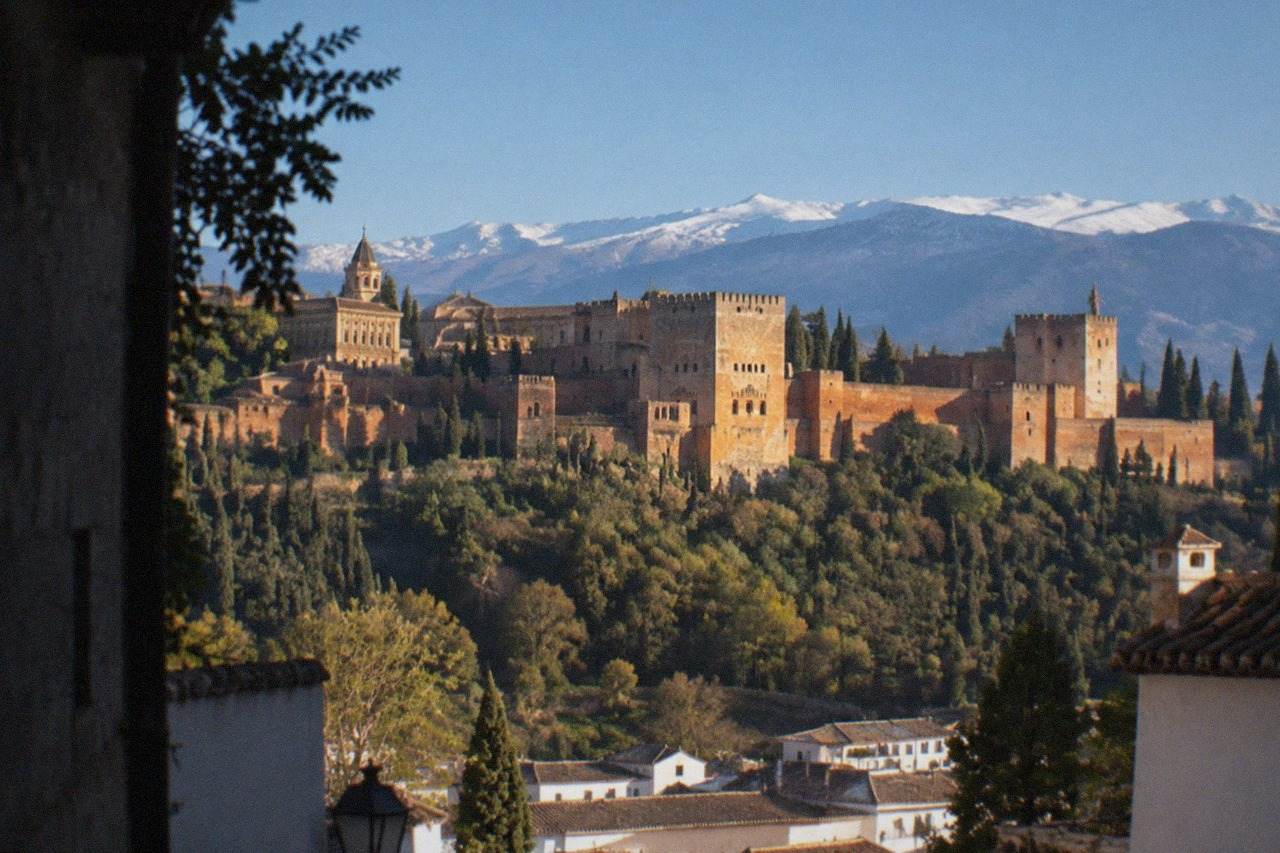
The Alhambra received 2,726,861 visitors in 2025, close to the Patronato's own annual capacity ceiling of roughly 2.763 million, and that single number explains most of what follows. Granada is a mid-sized city organised around one unmissable monument, while Seville is a large regional capital with its weight spread across a cathedral, a royal palace complex and a bar-and-festival culture that fills several days without any single headline sight. Neither city is "nicer" in the abstract. The honest answer depends on how long you have, whether you can get an Alhambra ticket before it sells out, and whether your ideal evening is a free tapa in a cramped bar or a long restaurant table on a plaza. This site covers Granada, so the comparison below leans on what the primary sources actually say about each city rather than on received wisdom, and Things To Do In Granada exists precisely to make that kind of call easier.
Which Is Nicer, Seville Or Granada?
Granada is the better choice if the Alhambra is the reason you are going and you can book ahead, since its General ticket costs EUR 22.27 and routinely sells out one to two months or more before peak-season dates. Seville is the better choice for a longer, wider trip, because it spreads a comparable weight of history, food and flamenco across a bigger city where no single timed entry gates your whole visit. Many travellers with four or more days do both.
That framing matters because the two cities are usually sold as interchangeable, and they are not. Granada's entire visitor economy bends around one hilltop complex: the Alhambra, Generalife and Alcazaba, inscribed together as one UNESCO World Heritage listing in 1984 and extended in 1994 to include the Albaicin quarter across the valley. If the Nasrid Palaces slot is sold out, and in spring and autumn it often is, the shape of a Granada trip changes completely. Seville has no equivalent chokepoint. Its cathedral and royal palace complex are busy, but neither operates on Granada's model of roughly 6,600 to 7,000 visitors a day with the Nasrid Palaces capped at about 300 people per half-hour timed slot.
The practical difference shows up in how you plan. A Granada trip starts with the ticket calendar, working backwards: tickets release roughly three months ahead, online sales close at 23:59 the day before the visit date, and there are no reliable same-day online sales. A Seville trip starts with neighbourhoods and evenings, and the monuments slot in around them. If booking three months ahead sounds like a chore rather than a thrill, that alone answers the question.
Which City Has The Bigger Headline Sights?
Granada wins on the single sight: the Alhambra's Nasrid Palaces, Alcazaba and Generalife form the most complete Islamic palace complex surviving in Western Europe, and no building in Seville matches it for interiors. Seville wins on depth and variety, pairing the largest Gothic cathedral in the world with the Alcazar royal palace and the Archive of the Indies, three heavyweight monuments within a few minutes' walk of each other.
Inside the Alhambra, the contrast is one of intimacy against scale. The Nasrid Palaces work because of their detail: courtyards, plasterwork and water channels at a domestic scale, which is exactly why entry is capped at roughly 300 people per half-hour window. The ticket is nominative, photo ID is checked at entry, and the half-hour window printed on it for the Nasrid Palaces is strictly enforced, while the rest of the complex can be visited at any point during the same ticket's date. The General EUR 22.27 ticket covers the complete daytime visit; a Gardens, Generalife and Alcazaba-only daytime ticket costs EUR 12.73 for anyone who cannot get a Nasrid Palaces slot.
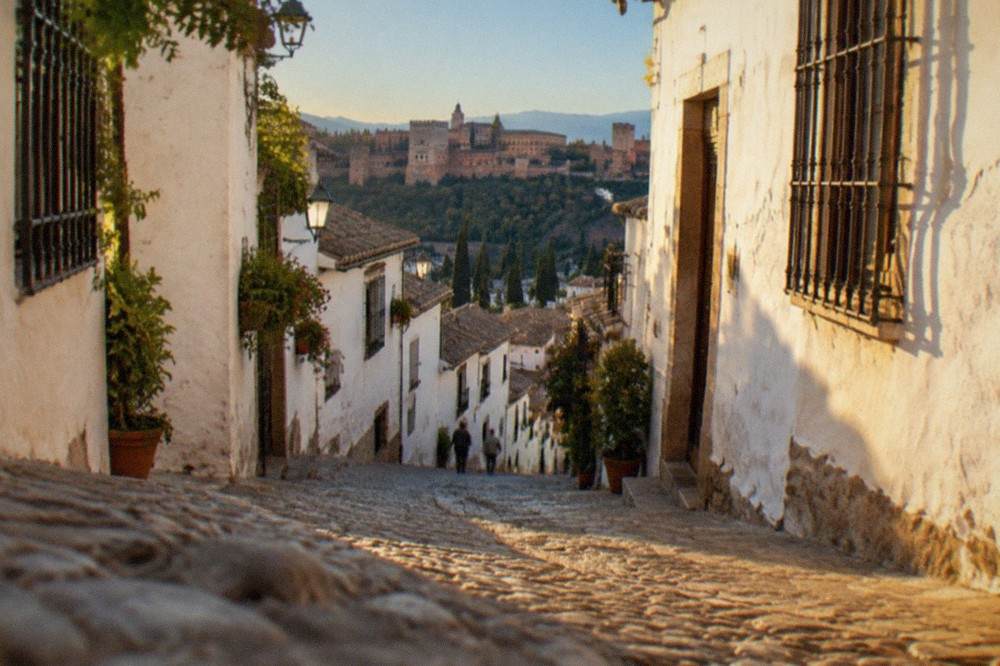
Granada's second tier is stronger than visitors expect, which is the city's quiet advantage. The Granada Cathedral charges EUR 10 per individual during the 2026 Kerygma exhibition, which runs from 8 May to 28 November 2026, then drops to EUR 7 from 29 November 2026. The adjacent Royal Chapel, where the Catholic Monarchs are buried, costs EUR 7 individual or EUR 5 reduced. Add the Mirador de San Nicolas viewpoint, the Carrera del Darro riverside walk and the Albaicin's winding streets, and a Granada visit fills three days without straining. For a deeper look at the palace complex itself, the Alhambra guide breaks down each section in detail.
Seville's counterweight is concentration. Its cathedral, royal palace and archive sit together as one UNESCO ensemble, and the city layers baroque churches, plazas and riverfront on top. Neither city's monuments can be "done" in a rushed afternoon, but Seville tolerates improvisation far better. Granada punishes it: arrive in peak season without an Alhambra booking and the headline sight is simply closed to you, a scenario covered in what to do if Alhambra tickets are sold out.
Which Is Better For Food And Free Tapas?
Granada wins this one clearly, because the free-tapa-with-a-drink tradition remains standard practice in many traditional Granada bars as of 2026: order a drink and a complimentary small plate typically arrives, often scaling up with further rounds. Seville's food culture is excellent but runs on restaurant and bar menus, so an evening of grazing costs meaningfully more there than the equivalent crawl through Granada.
The tapas custom in Granada is not a legal requirement, and 2026 reporting notes some venues have adjusted portion sizes or drink pricing, but it remains widely upheld as part of local identity. That changes the economics of a night out. A route through three or four traditional bars in the Realejo or around the Granada old town can cost little more than the drinks themselves, which is why budget travellers consistently rate Granada above almost every other Spanish city. The tradition is covered in more depth in does Granada still do free tapas.
Seville's answer is quality rather than freebies. Its restaurant scene is larger and more varied, its plazas fill with long restaurant evenings, and its orange-scented streets are built for sitting down rather than standing at a bar counter. If your ideal meal is a two-hour table on a plaza, Seville is the nicer city for it. If you want maximum atmosphere per euro and the small-plates crawl as a way of life, Granada has no serious rival in the region.
Which City Is Better For Flamenco?
Granada is the better city for flamenco's roots, since the Sacromonte cave tradition, flamenco performed in whitewashed cave houses carved into the hillside, exists nowhere else, and a cave show such as the Los Amayas performance in Sacromonte is rated 4.7 from 1,706 reviews. Seville is the better city for flamenco as polished theatre, with a deeper roster of professional tablao shows and a stronger claim as the art form's formal capital.
The two cities genuinely offer different art forms under the same name. In Granada, the Sacromonte caves deliver a raw, small-room experience, often with a drink included, at prices from around $28 for the Los Amayas cave show or $35 for a cave-restaurant show with food. The zambra, the local cave-dance tradition with its own family lineage, is Granada-specific and ties flamenco to the city's gitano history. The trade-off is intimacy over virtuosity: these are small venues, not concert productions. The direct comparison continues in which is better for a flamenco show, Granada or Seville.
Seville's flamenco is where the professional circuit lives: bigger stages, bigger names and a formal tradition that many performers train through. If seeing the most technically accomplished dancing matters more than the setting, Seville delivers. If you want to understand where the sound came from, in the neighbourhood that produced it, Granada does something Seville cannot replicate.
How Many Days Does Each City Need?
Granada needs two full days minimum: one for the Alhambra complex, which takes about three hours at a comfortable pace, and one for the Albaicin, Sacromonte, cathedral quarter and tapas bars. Seville needs three to four days to cover its cathedral, royal palace, barrio Santa Cruz, Triana and plaza evenings without rushing. With five days total, the strongest itinerary is two in Granada and three in Seville, or the reverse with a day trip between them.
The Alhambra is the fixed cost in any Granada plan. Its day visit runs 08:30 to 18:00 between 15 October and 31 March, and 08:30 to 20:00 between 1 April and 14 October, so it consumes half a day at minimum and pairs badly with another major sight on the same morning. The how many days in Granada is enough breakdown concludes that two days is the realistic floor and three is comfortable, with the third absorbing the Albaicin's miradores and the hammam quarter at leisure.
| Trip length | Best base | What it buys you |
|---|---|---|
| 2 days | Granada | Alhambra slot plus Albaicin, cathedral and one tapas evening |
| 3 days | Seville | Cathedral, royal palace, Santa Cruz and Triana without rushing |
| 4-5 days | Both | Two days Granada, then train to Seville for two to three days |
| 5+ days | Granada | Adds the Alpujarras, Sierra Nevada or a Cordoba or Seville day trip |
Seville also works as a day trip from Granada, though it is a long one: the Seville tour with Alcazar, Cathedral and Giralda from Granada runs about 12 hours and starts from $247.95 per person, rated 4 from 14 reviews. The reverse, Granada as a day trip from Seville, is covered in can Seville be a day trip from Granada, and it is feasible only with a pre-booked Alhambra ticket, since same-day sales cannot be relied on.
What About Weather And Crowds?
Granada is hotter in summer and colder in winter than coastal Andalusian cities, because it sits inland at altitude with the Sierra Nevada in view: AEMET's 1981-2010 normals for Granada Aeropuerto show July averaging 34.8C highs and January averaging 0C lows, with July's rainfall at just 2mm. Seville is famously extreme in summer too, but Granada's winter edge, freezing nights in January, makes it a genuinely four-season city, which matters for packing and for evening plans.
The AEMET table gives Granada a real spring and autumn: May averages 25.0C highs with 28mm of rain, October 23.2C with 40mm, both comfortable walking months. November and December are the wettest at 54mm and 56mm. Snow is visible on the Sierra Nevada from the city in winter, which is part of Granada's appeal and, for hikers and skiers, a whole second itinerary. Note that the resort's 2026-2027 season dates are not yet officially confirmed, typically late November to early or mid-April, weather dependent, so check the official site before planning around a specific date.
| Month | Granada avg high C | Granada avg low C | Rain mm |
|---|---|---|---|
| January | 13.0 | 0.0 | 42 |
| April | 20.6 | 6.0 | 36 |
| July | 34.8 | 15.7 | 2 |
| October | 23.2 | 8.7 | 40 |
Crowds follow the calendar in both cities, but Granada's are harder to dodge because of the ticket bottleneck. Semana Santa fills both, with Granada's 2026 processions running approximately 29 March to 5 April, and both cities see a spring peak. The comparison of months, including the shoulder seasons, is worked through in what is the best month to visit Granada Spain.
Which City Should You Actually Pick?
Pick Granada if your trip is two to three days, the Alhambra is your priority, you can book tickets around three months ahead, and you want free tapas, cave flamenco and mountain views on top. Pick Seville if you have four or more days, you would rather not plan around a timed ticket, and you want a bigger city with more varied evenings.
With a week, do both: the pairing is the single best itinerary in Andalusia, and the Granada versus Seville guide maps the combined route.
For travellers basing themselves in Granada, the city's reach is a real asset: the Alpujarras mountain villages, the Sierra Nevada trail country and the cave village of Guadix are all within a day's return. The Alpujarra mountain villages tour from Granada runs a full day from $81 per person, rated 4.6 from 344 reviews, and pairs well with a second day on the Los Cahorros gorge hike or the high Sierra Nevada route, which climbs to around 3,000 metres over roughly five hours of walking.
That mountain dimension is the one thing Seville simply cannot offer. From Granada, a morning in the Alpujarras' whitewashed villages or a high-altitude hike can sit alongside the Alhambra in the same itinerary, which is why the city rewards the longer stay even though its headline sight can be seen in a single morning slot.
Common Questions About Seville Or Granada
Which is nicer, Seville or Granada?
Granada is nicer for a short, monument-focused trip built around the Alhambra, while Seville is nicer for a longer, more varied city break. If you can only pick one and you can secure an Alhambra ticket in time, Granada delivers the single most memorable sight in Andalusia.
Can you visit both Seville and Granada on one trip?
Yes, and with four or more days it is the recommended approach. A common split is two days in Granada and two or three in Seville, travelling between the two by train. Book the Alhambra slot first and plan the rest of the itinerary around it.
Is the Alhambra harder to book than Seville's cathedral?
Yes. The Alhambra caps the Nasrid Palaces at roughly 300 visitors per half-hour slot and the General ticket routinely sells out one to two months or more ahead in peak season, with online sales closing at 23:59 the day before the visit. Seville's cathedral is busy but does not operate a comparable sell-out regime.
Which city is cheaper to visit?
Granada is generally cheaper, largely because of the free tapas tradition: a drink in many traditional bars comes with a complimentary small plate. Seville's food culture leans more on paid restaurant meals, which adds up over several evenings.
Which city is better for a day trip?
Both work as day trips from the other, but Seville as a day trip from Granada is a long one, roughly 12 hours on a guided tour. Granada as a day trip from Seville only works with a pre-booked Alhambra ticket, since same-day sales cannot be relied on.
Which city has better flamenco?
Granada offers the unique Sacromonte cave tradition in small, atmospheric venues. Seville offers the stronger professional circuit with bigger stages and more polished productions. Choose Granada for roots and intimacy, Seville for virtuosity.