Which Is Better For A Flamenco Show, Granada Or Seville?
Granada's cave flamenco in Sacromonte versus Seville's grand tablaos: how the two cities differ, what tickets cost, and which show suits which traveller.
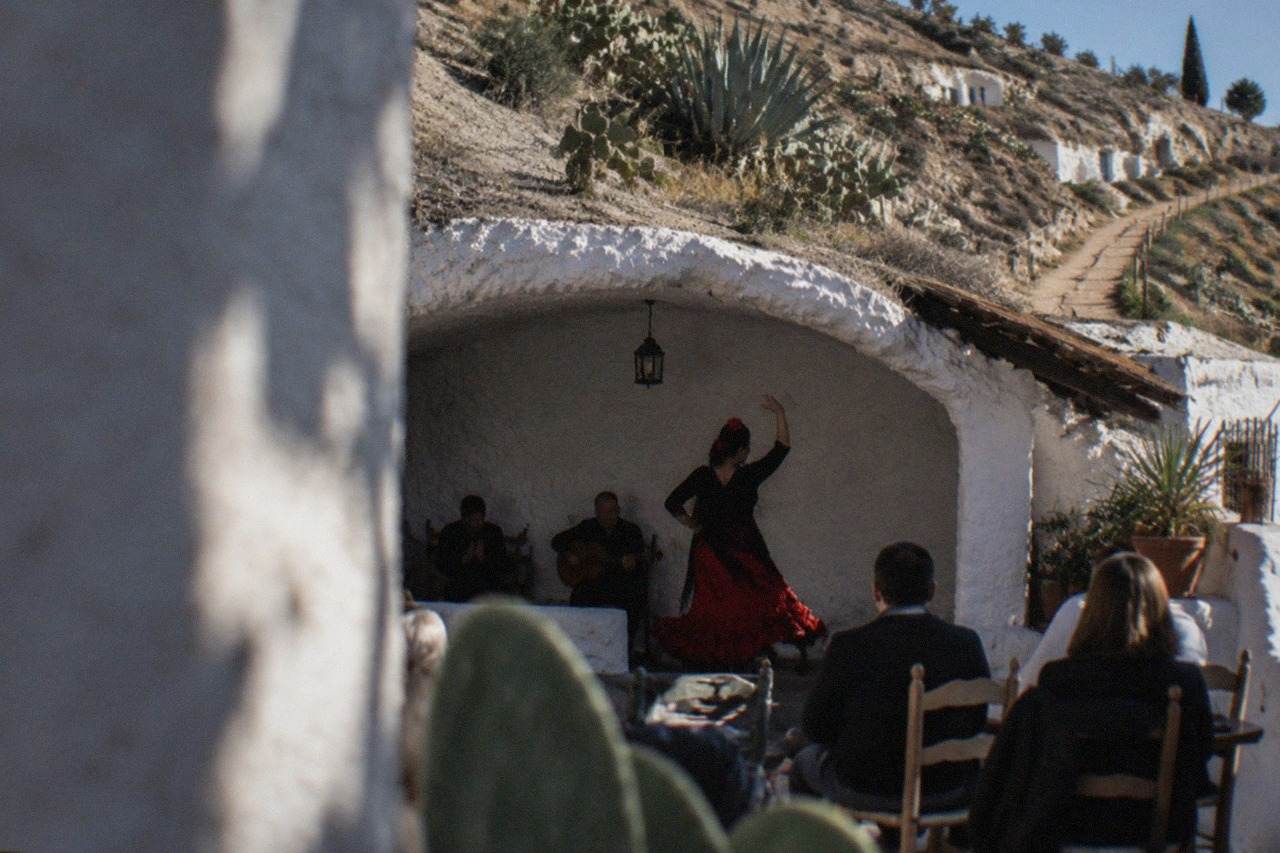
Flamenco is the music of Andalusia, and Granada and Seville are its two most famous stages. The Patronato de la Alhambra counted 2,726,861 visitors to the Alhambra in 2025, and a large share of those travellers finish their day asking the same question: where should the flamenco night happen? The two cities answer differently. Granada's signature is the zambra, a Granada-specific style performed in the cave houses of Sacromonte, often a short walk from the Alhambra viewpoints. Seville's is the grand tablao, a polished theatrical format in bigger rooms with bigger casts. This page from Things To Do In Granada compares them on venue, price, atmosphere and convenience, and names the situations in which each city wins.
Which Is Better For A Flamenco Show, Granada Or Seville?
Granada is the better choice for a raw, intimate flamenco night in a historic cave venue, with shows from $28 per person and venues clustered in walkable Sacromonte, while Seville is the better choice for large-scale, theatrical flamenco with bigger casts and grander rooms. Neither is objectively superior: the right answer depends on whether the priority is atmosphere and authenticity or spectacle and production values.
The honest framing is that the two cities are not selling the same product at different prices. Granada's flamenco tradition is the zambra, a form that grew out of the Gitano families who settled in the cave houses of Sacromonte, and it is still performed in those caves today. The performance is usually small: a handful of musicians, a singer, one or two dancers, and an audience sitting close enough to see the sweat. Seville, by contrast, is the commercial capital of the art form, home to the large tablaos where whole troupes perform choreographed programmes for bigger houses. Travellers who want more context on Granada's scene can start with the site's guide to flamenco in Granada, and the broader city comparison lives at Granada versus Seville.
There is also a practical asymmetry that matters more than most visitors expect. In Granada, the main cave venues sit on the hill above the Darro river, minutes from the Mirador de San Nicolas and the Albaicin lanes, so a show slots easily into an evening that already includes the sunset viewpoint. In Seville, the major tablaos sit in and around the historic centre, which is bigger and flatter, so the show tends to be a planned destination rather than something you drift into. Neither pattern is better, but they reward different travel styles.
What Makes Granada's Cave Flamenco Different?
Granada's flamenco is defined by the Sacromonte caves: small whitewashed rooms carved into the hillside, where the zambra style developed among Gitano families and is still performed nightly in venues that hold a few dozen people at prices from $28 per person. The Los Amayas cave show, rated 4.7 from 1,706 reviews, is the most-booked example, and the whole experience is closer, louder and more physical than a theatre show.
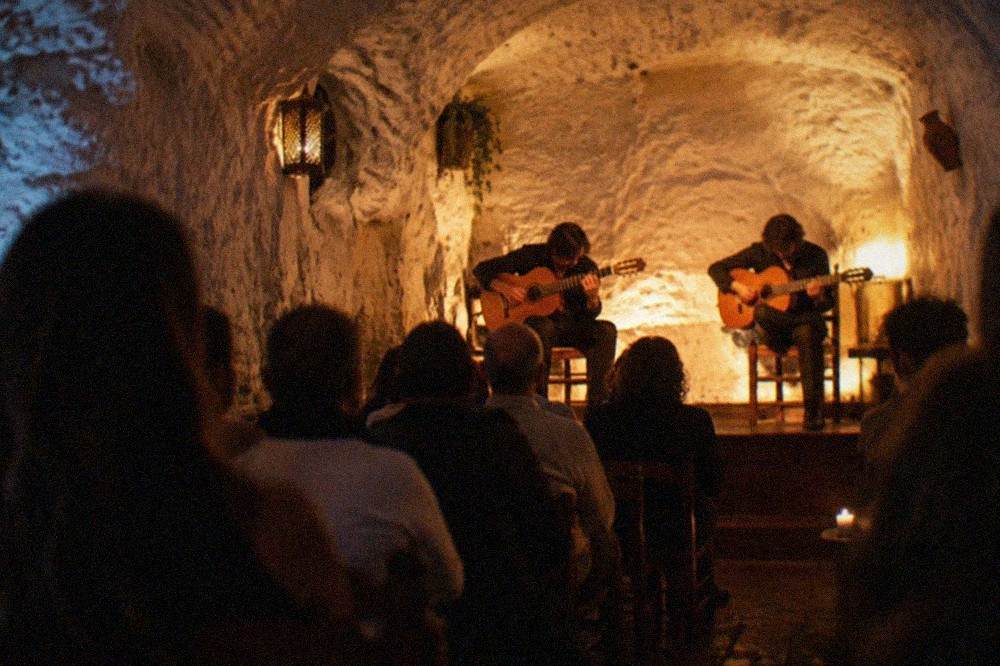
The cave is not a gimmick in Granada, it is the original venue. The zambra was recognised as a distinct Granada tradition long before flamenco became a tourist industry, and the families who perform in Sacromonte today are continuing a practice tied to that specific hill. What that means in practice: the ceilings are low, the dancer is sometimes an arm's length from the front row, and the footwork resonates through the floor and the rock. The site's page on flamenco in the Sacromonte caves covers the venue question in detail, and the Sacromonte cave flamenco guide explains what to expect inside.
The trade-off is production scale. A cave show usually runs a compact set, around 60 to 90 minutes depending on the listing, with a small cast. There is no orchestra, no staged lighting rig, sometimes barely a stage. Travellers who arrive expecting a Seville-style spectacle sometimes leave disappointed, while travellers who want to feel the performance in their chest tend to call it the highlight of their trip. The listing for the Los Amayas show describes a performance by a single family troupe in a historic cave, which is the format in its purest form.
One practical note on combining plans: the Alhambra is the other half of most Granada evenings, and it is not a walk-up attraction. The official General ticket costs EUR 22.27 and the complex routinely sells out one to two months or more ahead in peak season, with online sales closing at 23:59 the day before the visit date. Anyone planning an Alhambra-plus-flamenco day should secure the palace ticket first and treat the cave show as the flexible half of the itinerary, since cave shows run nightly and can often be booked closer to the date.
What Makes Seville's Flamenco Scene Different?
Seville's flamenco is bigger, more theatrical and more institutional: the city hosts the large tablaos where full troupes perform staged programmes in grand rooms, and it functions as the professional heart of the art form, which means higher production values, larger casts and a more polished, less raw experience than a Granada cave. It is the better choice for travellers who want spectacle.
Seville's claim is scale and professionalism. The big tablaos run shows with multiple dancers, a full cuadro of singers and guitarists, and lighting and staging closer to what a concert venue offers. For a traveller whose image of flamenco is a sweeping choreographed number with a cast of six, Seville delivers that reliably, night after night. The city also functions as a career destination for performers, so the casting depth is real. The sibling question Seville or Granada covers the broader city trade-offs.
What Seville gives up in exchange is intimacy. The front row of a large tablao is still several metres from the dancers, the room may hold a hundred or more people, and the programme is built to be repeatable for a changing nightly audience. That is not a criticism, it is a format. But it explains why the answer to this page's question keeps circling back to what kind of evening the traveller wants: a close, rough-edged performance in a cave, or a staged show in a grand room.
How Do Prices And Formats Compare?
In Granada, a cave flamenco ticket starts at $28 per person for the Los Amayas show, with a cave show plus dinner option from $35 per person, while Seville's larger tablaos generally sit at higher price points for their standard performances. Both cities offer shows nightly, but Granada's venues are clustered in one walkable district and Seville's are spread across a bigger centre.
The figures the site can verify all come from the Granada side of the ledger, so this page prints those and stays qualitative about Seville rather than inventing numbers. The Los Amayas cave show in Sacromonte is listed from $28 per person and rated 4.7 from 1,706 reviews. A cave-restaurant format, dinner combined with the performance, is listed from $35 per person and rated 4.4 from 686 reviews. For Seville, check the operator's live listing for the current price of any specific tablao, since Seville show pricing is not part of this site's verified fact pack.
| Granada flamenco option | Format | Listed price | Rating |
|---|---|---|---|
| Los Amayas cave show, Sacromonte | Cave performance, small family troupe | From $28 per person | 4.7 from 1,706 reviews |
| Flamenco show in a cave restaurant | Show with dinner in a cave venue | From $35 per person | 4.4 from 686 reviews |
The format difference is worth as much as the price difference. A Granada cave show is short, intense and easy to add to an evening that already includes the Albaicin sunset walk, since the caves sit on the same hill as the Mirador de San Nicolas. A Seville tablao night is more of a production: a booked table, a longer programme, and a night built around the show itself. Travellers doing both cities on one trip often report the same pattern: the Seville show impressed them more as a spectacle, the Granada cave show stayed with them longer as a memory.
Which Should You Choose For Your Trip?
Choose Granada if the evening is about atmosphere, proximity and a venue with genuine history, since the Sacromonte caves deliver all three from $28 per person and sit minutes from the Alhambra viewpoints. Choose Seville if the evening is about spectacle, staging and the biggest names in the art form. If the trip only includes one of the two cities, see flamenco in the city you are already in, because both are authentic and a missed show is worse than a different one.
For most travellers the decision is already made by the itinerary. A Granada trip almost always includes the Alhambra, and the cave shows are the natural companion piece: the same hillside, the same Moorish-and-Gitano history, and a short walk between them. Anyone weighing the two cities as destinations can read which is nicer, Seville or Granada before committing to both.
There is a third answer that deserves stating plainly: the best flamenco show is the one that fits the rest of the day. In Granada that usually means an Alhambra morning, an Albaicin sunset at the Mirador de San Nicolas, and a cave show afterwards, all within a couple of square kilometres. The site's page on the best flamenco show in Granada ranks the Granada options in detail.
How Do You Book A Flamenco Night Around An Alhambra Day?
Book the Alhambra ticket first, because the General ticket at EUR 22.27 sells out one to two months or more ahead in peak season and online sales close at 23:59 the day before, then book the flamenco cave show once the palace slot is fixed, since cave shows run nightly and can usually be reserved closer to the date. The Alhambra is the scarce resource, the show is the flexible one.
The sequencing matters more than most first-time visitors realise. Alhambra tickets are nominative and the Nasrid Palaces entry carries a strict half-hour window, so the palace dictates the shape of the day. A guided Alhambra option such as the 3-hour Nasrid Palaces and Generalife tour, listed from $60 per person and rated 4.7 from 1,394 reviews, locks in a morning or afternoon, and the cave show can then be slotted into the remaining evening. The fuller comparison of tour options lives on this site's planning pages.
| Planning item | Granada reality | Action |
|---|---|---|
| Alhambra General ticket | EUR 22.27, sells out 1-2+ months ahead in peak season | Book first, up to ~3 months ahead |
| Nasrid Palaces entry | Timed half-hour slot, photo ID checked | Plan the day around the printed window |
| Cave flamenco show | From $28 per person, runs nightly | Book after the palace slot is fixed |
| Alhambra day visit hours | 08:30-18:00 (15 Oct-31 Mar) or 08:30-20:00 (1 Apr-14 Oct) | An evening show fits either window |
Common Questions About Flamenco In Granada And Seville
Which is better for a flamenco show, Granada or Seville?
Granada is better for an intimate, atmospheric cave show in the Sacromonte tradition, with tickets from $28 per person. Seville is better for large, theatrical tablao performances with bigger casts and higher production values. Both are authentic; the choice depends on whether you want proximity or spectacle.
Is Granada's cave flamenco authentic?
Yes. The zambra performed in the Sacromonte caves is a Granada-specific tradition that predates the tourist flamenco industry, and the families performing there today continue that practice. The venues are the original cave houses, not purpose-built theatres.
How much does a flamenco show cost in Granada?
The Los Amayas cave show in Sacromonte is listed from $28 per person, and a cave show combined with dinner at a cave restaurant is listed from $35 per person. Check the operator's live listing for current prices and availability.
Can you see flamenco in the Sacromonte caves?
Yes, cave venues in Sacromonte host flamenco performances nightly, and the district is a short uphill walk from the Mirador de San Nicolas in the Albaicin. The site's page on the Sacromonte cave shows covers venues and formats in detail.
Should I see flamenco in both Granada and Seville?
If the itinerary includes both cities, yes, because the formats are different enough that the two shows do not duplicate each other. If the trip only includes one city, see flamenco there rather than treating it as something to save for the other.
The short version: Granada wins on atmosphere, venue and price floor, Seville wins on scale and spectacle, and the traveller who books the Alhambra first and the cave show second will find the Granada evening assembles itself almost without effort.