Is Alhambra In Granada Worth Visiting?
Is the Alhambra in Granada worth visiting? A direct answer built on official Patronato figures, sell-out data and what the ticket actually includes.
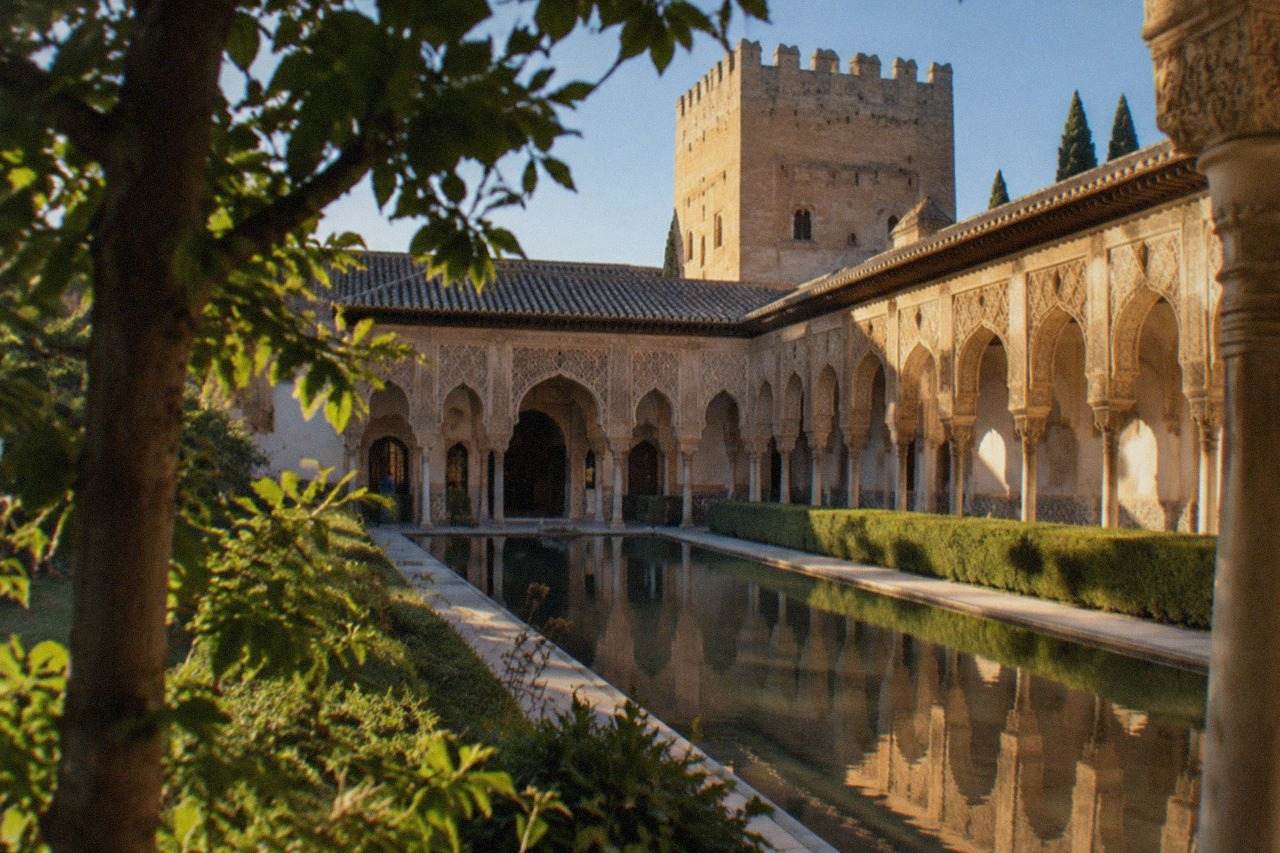
The Alhambra received 2,726,861 visitors in 2025, according to the Patronato de la Alhambra y Generalife's own annual report, and that number sits close to the monument's annual capacity ceiling of roughly 2.763 million. In other words, the institution that runs the place is turning people away at the margin. That is the most objective evidence available for the question this page exists to answer, and it points one way: the overwhelming majority of people who make the trip consider it worth the trouble. The honest answer still has nuance, because the Alhambra is not one experience but several ticket types at several prices, and a badly chosen ticket can sour a visit that a well chosen one would have made unforgettable.
Is Alhambra In Granada Worth Visiting?
Yes, for the large majority of travellers the Alhambra is worth visiting, and the evidence is unusually hard to argue with: 2,726,861 people passed through in 2025, near the Patronato's own annual capacity limit, and the General ticket still sells out one to two months ahead in peak season. It is a UNESCO World Heritage Site, inscribed in 1984, and its Nasrid Palaces hold some of the finest surviving Islamic palace architecture in Europe. The real question is which ticket to buy and when.
The case for the Alhambra rests on what is physically there. The Nasrid Palaces are the last and most complete surviving palace complex of al-Andalus, with the Court of the Lions and the Hall of the Two Sisters among the most photographed interiors on the continent. The Generalife, the Nasrid summer estate, sits above the main complex with gardens laid out around water channels that still run today. The Alcazaba, the fortress core, offers the oldest structures on the hill and the best views over the city from the Torre de la Vela. UNESCO inscribed the Alhambra and Generalife in 1984 and extended the listing in 1994 to include the Albaicin across the valley, which tells you something about how the site is valued as a single cultural landscape.
The case against, such as it is, comes down to logistics rather than the monument itself. Tickets are nominative, photo ID is checked at entry, and the Nasrid Palaces slot printed on your ticket is a strict half-hour window that is genuinely enforced. Daily capacity runs at roughly 6,600 to 7,000 visitors, with the Palaces capped at about 300 people per half-hour slot, so in summer the courtyards are shared with a crowd. Anyone who arrives expecting an empty palace will be disappointed; anyone prepared for a timed, busy, magnificent monument will not be.
For a fuller picture of what the monument contains, the five key facts about the Alhambra are worth reading before you commit to a ticket type.
What Does An Alhambra Ticket Actually Cost And Include?
The official General ticket costs EUR 22.27 and covers the complete daytime visit: the Nasrid Palaces, the Alcazaba and the Generalife, with the Nasrid Palaces entry locked to a specific half-hour window. A Gardens, Generalife and Alcazaba-only daytime ticket costs EUR 12.73, a night visit to the Nasrid Palaces costs EUR 12.73, and a night visit to the Gardens and Generalife costs EUR 8.48. Children under 12 enter free but still need a ticket for entry control.
Those prices come from the Patronato's own ticket pages, which is the only source worth trusting here. One caution: a July 2025 press release announced lower prices effective 1 August 2025, General at EUR 21, but the live official pages still show the higher figures above, likely including fees. Check the live price at booking time rather than trusting either number second-hand.
What the ticket buys matters as much as the figure. The General ticket is the only standard daytime option that includes the Nasrid Palaces, and the Palaces are the reason most people come. The cheaper EUR 12.73 daytime ticket covers the Alcazaba, the Generalife and the gardens but not the Palaces, which is a real saving for visitors whose interest is mainly the gardens and views. The Dobla de Oro variant at EUR 30.48 bundles the Alhambra with several Andalusi monuments elsewhere in the city, including sites in the Albaicin, which suits a longer stay.
| Official ticket type | Price (EUR) | What it includes |
|---|---|---|
| General, daytime | 22.27 | Nasrid Palaces (timed slot), Alcazaba, Generalife |
| Gardens, Generalife and Alcazaba, daytime | 12.73 | Alcazaba, Generalife and gardens, no Nasrid Palaces |
| Night visit, Nasrid Palaces | 12.73 | Nasrid Palaces only, evening hours |
| Night visit, Gardens and Generalife | 8.48 | Gardens and Generalife only, evening hours |
| Dobla de Oro General | 30.48 | Alhambra plus Andalusi monuments in the city |
| Children under 12 | Free | Ticket still required for entry control |
If the ticketing options feel like a maze, the breakdown of which ticket is best for the Alhambra goes deeper, and the question of how much time you need to see the Alhambra matters just as much when you are planning a day around a fixed entry window.
Who Should Think Twice Before Visiting The Alhambra?
Visitors who cannot plan ahead are the one group for whom the Alhambra may genuinely not be worth it, because the General ticket routinely sells out one to two months or more in advance in peak season, tickets are released roughly three months ahead, and online sales close at 23:59 the day before the visit with no reliable same-day online option. Someone arriving in Granada with no pre-booked ticket in April, May, September or around holidays may find nothing available at all.
That sell-out reality is the single most important planning fact on this page, and it is why the question "is it worth it" has a different answer for a planner and a spontaneous traveller. For the planner, the Alhambra is among the best value major monuments in Europe at EUR 22.27 for a half-day visit. For the spontaneous traveller, the honest fallback options are the night visits, which tend to last longer against sell-out, or the gardens-only daytime ticket, and even those are not guaranteed. The page on what to do if Alhambra tickets are sold out covers the realistic rescue options.
A few other profiles should also pause. Visitors with serious mobility limitations face a hilltop complex with steep sections, cobbled paths and stairs in the Alcazaba and parts of the Palaces. Travellers who dislike crowds should target the first entry slots of the day or the night visit rather than a midsummer afternoon: with roughly 6,600 to 7,000 visitors per day, the peak hours are busy everywhere. And anyone who believes the Alhambra is "just another castle" should read up on what most tourists do not know about the Alhambra first, because the site rewards preparation in a way few monuments do.
For everyone else, the verdict is straightforward. The Alhambra is worth it, and the difference between a good visit and a great one is almost entirely a matter of which ticket, which slot and how much context you bring.
A guide handles the timed-entry gate and the route between the three sections, which matters most on a first visit when the palace layout is unfamiliar and the clock is unforgiving.
Does The Time Of Day Or Season Change The Answer?
Yes, meaningfully. AEMET's climate normals for Granada show July averaging 34.8C and just 2mm of rain, while January averages 13.0C with freezing nights, so the shoulder months of April, May, October and early November combine comfortable temperatures with the lowest crowd pressure outside the holidays. The Alhambra's own hours reflect this: daytime visits run 08:30 to 20:00 from 1 April to 14 October and 08:30 to 18:00 from 15 October to 31 March.
Granada's climate is more extreme than coastal Andalusia because of its altitude and its position beside the Sierra Nevada, and the Alhambra is a hilltop site with limited shade in the gardens and almost none in the Alcazaba. A July afternoon visit means heat, glare and the largest crowds of the year. The first morning slots are cooler and quieter, and the night visits, which run Tue-Sat in the warmer half of the year and Fri-Sat in the colder half, offer the Nasrid Palaces under controlled evening lighting with a fraction of the daytime numbers.
| Month | Avg high C | Avg low C | Rainfall mm |
|---|---|---|---|
| January | 13.0 | 0.0 | 42 |
| April | 20.6 | 6.0 | 36 |
| July | 34.8 | 15.7 | 2 |
| October | 23.2 | 8.7 | 40 |
The table above is drawn from AEMET's 1981-2010 normals for the Granada Aeropuerto station, the official reference series. Winter visits have their own argument: snow is visible on the Sierra Nevada from the city in winter, and the Generalife gardens are at their quietest. The trade-off is the 18:00 closing time, which compresses the day. For a fuller weighing of seasons and slots, the assessment of whether the Alhambra at night is worth it goes into detail.
One planning note specific to this site: because the Nasrid Palaces window is strictly enforced and the rest of the complex is visitable outside it, a late-afternoon Palaces slot lets you tour the Alcazaba and gardens first and finish in the Palaces near closing, which many planners use to dodge the midday crush.
What Do You Actually Get For The Effort?
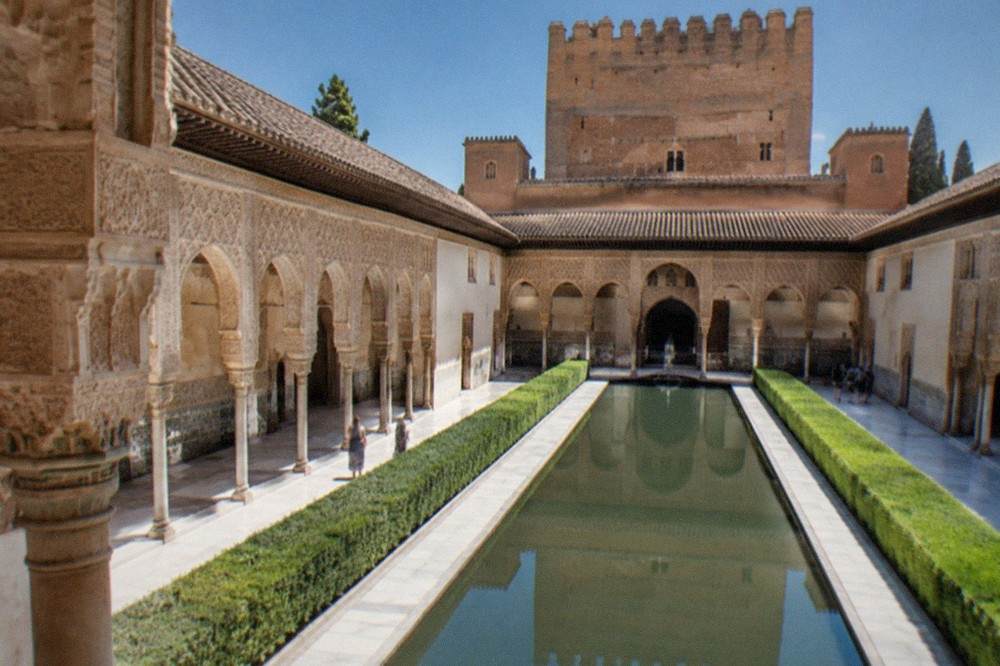
You get the most complete surviving Nasrid palace complex in existence, a hilltop fortress, the summer estate and gardens of the Generalife, and the Court of the Lions, all within one walkable enclosure above Granada. The Alhambra and Generalife were inscribed by UNESCO in 1984 and the listing was extended in 1994 to include the Albaicin opposite, formally recognising the two hills as a single cultural landscape. Few sites anywhere carry that combination of architecture, gardens and setting.
The interiors are the headline. The Nasrid Palaces preserve plasterwork, carved wood and tile mosaic of a quality and completeness that has no real rival among surviving Islamic palaces in Europe, and the inscription programme that runs through the whole complex is itself part of that story. The surviving palace core is Nasrid work, with the Palace of Charles V added after the Christian conquest.
Beyond the walls, the Alhambra reframes the rest of the city. The view from the Mirador de San Nicolas in the Albaicin, directly across the valley, is the classic complement to a visit, and many travellers end their Alhambra day there at sunset. If the monument itself is booked solid or you want to build a fuller Granada plan, what else to do in Granada other than the Alhambra and the broader verdict on whether Granada is worth visiting cover the rest of the city.
For anyone wondering whether a guide adds or subtracts, the answer on whether a guided Alhambra tour is worth it lays out the trade-offs, as does Things To Do In Granada in its wider coverage of the site.
The numbers above are the reason this page's answer is a confident yes rather than a shrug. A monument running at its capacity ceiling, with tickets that vanish months ahead, is one where the market has already voted.
Common Questions About The Alhambra In Granada
Is Alhambra in Granada worth visiting?
Yes, for most travellers. The monument drew 2,726,861 visitors in 2025, nearly its annual capacity limit, and the General ticket at EUR 22.27 covers the Nasrid Palaces, Alcazaba and Generalife. It is worth it for anyone who books ahead; the main group who should think twice are unplanned travellers, since tickets sell out one to two months ahead in peak season.
Can I visit the Alhambra for free?
Children under 12 enter free but still need a ticket, and there is no free general access to the monument. Budget on paying for a ticket like almost everyone else.
Is the Generalife part of the Alhambra?
Yes, the Generalife is the Nasrid summer estate within the same hilltop complex and is included in the General ticket.
How far ahead should I book Alhambra tickets?
Tickets are released roughly three months in advance, and the General ticket routinely sells out one to two months or more ahead in spring, autumn and holiday periods. Book as early as your dates allow, and note that online sales close at 23:59 the day before the visit.
Is the Alhambra better during the day or at night?
Both work, but they are different experiences. The daytime General ticket covers everything; the night visits, EUR 12.73 for the Nasrid Palaces and EUR 8.48 for the gardens, offer smaller numbers and controlled lighting but cover only part of the complex.
Is the Albaicin worth visiting alongside the Alhambra?
Yes, and UNESCO treats the two hills as one cultural landscape, having extended the 1984 Alhambra listing to the Albaicin in 1994. The Mirador de San Nicolas view of the Alhambra at sunset is the classic end to a visit day.