Is Granada English Speaking?
Is Granada English speaking? A practical answer on English levels in Granada, Spain: where visitors manage fine without Spanish, where a few phrases matter, and how to prepare.
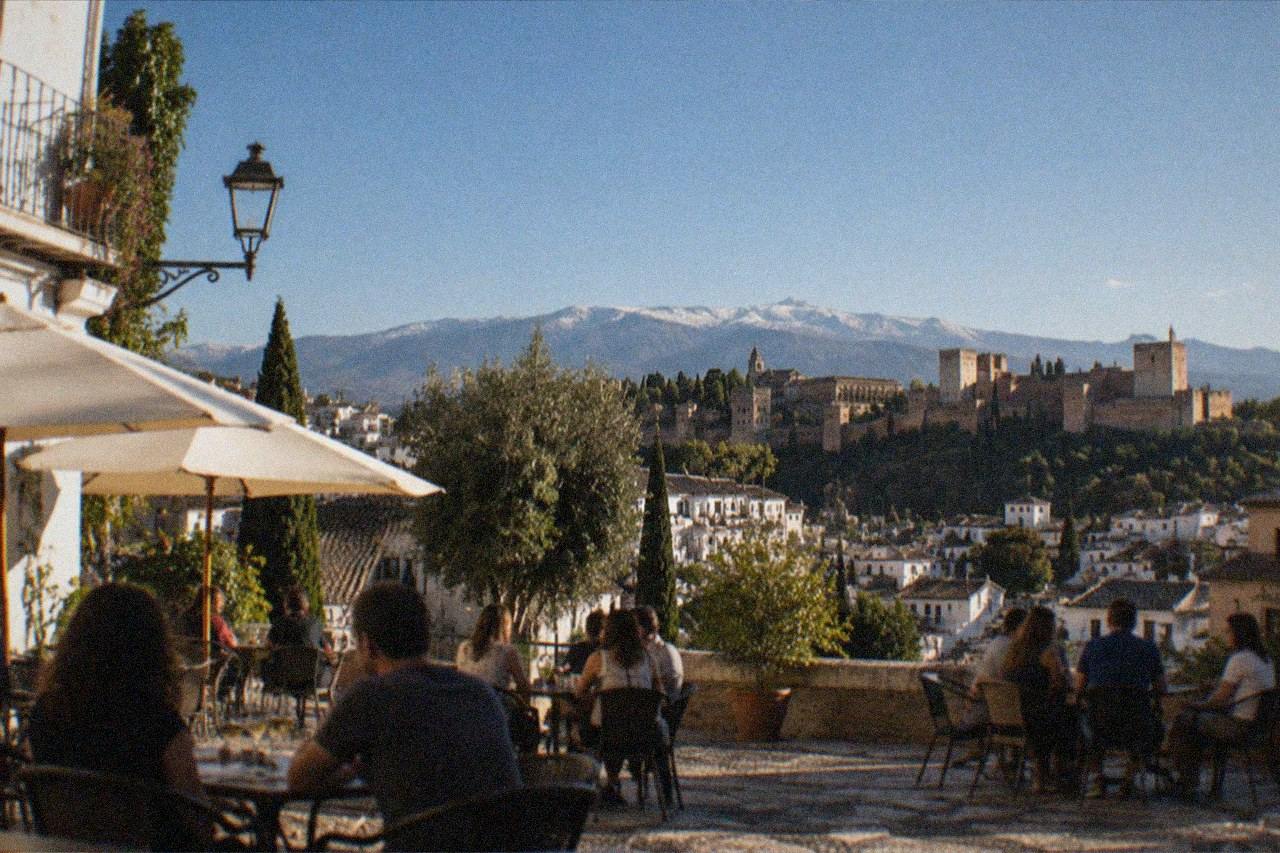
Granada receives well over two million visitors a year at the Alhambra alone, and the official 2025 figure from the Patronato's annual report was 2,726,861, close to the monument's own annual capacity ceiling of roughly 2.763 million. A city that busy has adapted to foreign visitors, but adaptation is uneven. The question of whether you can get by in English has a real answer, and it depends heavily on which Granada you are standing in at the time.
Is Granada English Speaking?
Granada is partially English speaking, and the split is predictable rather than random. Hotel front desks, Alhambra ticketing, guided tours, airport transfer staff and restaurants on the main visitor routes generally handle English well, a legacy of the city's huge student population and decades of tourism. In traditional tapas bars, local shops, markets, taxis and on city buses, English thins out sharply and Spanish, sometimes Andalusian-accented and fast, is the working language. Visitors who stay on the tourist grid manage fine in English alone.
The reason Granada punches above its weight for English is its university. The University of Granada is one of Spain's largest and draws a large international student body, so a meaningful slice of the young adult population has functional or fluent English. Erasmus students, language schools and a steady flow of seasonal tourism workers all push the same direction. The result is a city where a barista in the Realejo or a server on Plaza Nueva will often switch to English unprompted the moment an accent appears.
Step outside that bubble and the picture changes. Granada is a working Andalusian city of ordinary errands, family-run shops and neighbourhood bars, and in those settings English is genuinely scarce, especially among older residents. This is not hostility, far from it, but it does mean a menu in a backstreet mesón may have no English version and the person cooking may have no English at all. A handful of Spanish words, above all a greeting, changes those interactions completely.
For the practical side of a first visit, the what not to miss in Granada rundown covers the sights themselves, and most of them sit inside the English-friendly zone described above.
Where English Works Well In Granada?
English works well in every tourism-facing layer of the city: Alhambra operations, the official guided-tour sector, hotels from budget upward, the airport bus, main-route restaurants, flamenco venues aimed at visitors and the tapas streets around Plaza Nueva and Calle Navas. The Alhambra's own ticketing and signage operate bilingually, and the guided-tour market is overwhelmingly English-led because that is where the demand is. A visitor who books tours and stays central can complete a full Granada itinerary without a word of Spanish.
The Alhambra is the clearest example. The Patronato's own ticket pages run in English, the monument's signage is bilingual, and the commercial tour market that has grown around it, which is substantial given the sell-out reality of General tickets, runs primarily in English. With the Nasrid Palaces capped at roughly 300 people per half-hour slot and online sales closing at 23:59 the day before a visit, most foreign visitors arrive holding a pre-booked product, and those products are overwhelmingly English-language. The Alhambra tours guide goes into which formats suit which traveller.
| Situation | Typical English level | What helps |
|---|---|---|
| Alhambra entry and signage | Strong, bilingual official material | Book ahead; tickets sell out 1-2+ months ahead in peak season |
| Guided tours (Alhambra, Albaicin, tapas) | Strong; most departures run in English | Reserve online before arrival |
| Hotels and hostels central | Strong at reception | Ask for an English-speaking shift at check-in |
| Restaurants on Plaza Nueva, Calle Navas | Good; English menus common | Menus del día often translated |
| Traditional neighbourhood tapas bars | Weak to none | Learn "una caña" and "otra tapa, por favor" |
| City buses and taxis | Limited; drivers rarely fluent | Have your stop or address written down |
| Alsa airport bus, Linea 245 | Adequate for tickets and stops | EUR 3.10 flat fare, pay on board |
One structural point worth knowing: the metro does not serve either the airport or the Alhambra, so the transport situations where English is weakest, local buses and taxis, are exactly the ones a visitor cannot route around with a metro line. The airport connection is the Alsa Linea 245 bus, about 40-45 minutes, and the Alhambra is reached by the hillclimb bus lines or on foot.
Where English Fails In Granada, And What To Do About It?
English fails in the ordinary, non-tourist layer of the city: neighbourhood tapas bars off the main drags, small grocery shops, markets, city bus drivers and most taxi drivers, and anywhere an interaction is local rather than commercial-tourist. It also fails with older residents across the board. The fix is small and cheap: a greeting, please and thank you, numbers up to twenty, a few dish names, plus a translation app's camera mode for handwritten menus covers nearly every gap a visitor will actually hit.
The tapas custom is the classic collision point. In many traditional Granada bars a drink order comes with a complimentary small tapa, a widely upheld local practice rather than a legal guarantee, and the whole transaction, ordering, asking what the tapa is, asking for the next round, runs in Spanish at speed. Nobody is being difficult; the bar simply serves locals all day. The does Granada still do free tapas? page covers how the custom works and where it holds firmest. A single word, "tapita" or a pointed finger at the counter, plus "por favor", resolves nearly all of it.
Pharmacies are a special case worth flagging. Central pharmacies near the Cathedral often have English-speaking staff, but a neighbourhood farmacia may not, and this is one setting where a translation app genuinely matters, because precision counts. Write symptoms down rather than mime them. More of these guides are collected on Things To Do In Granada.
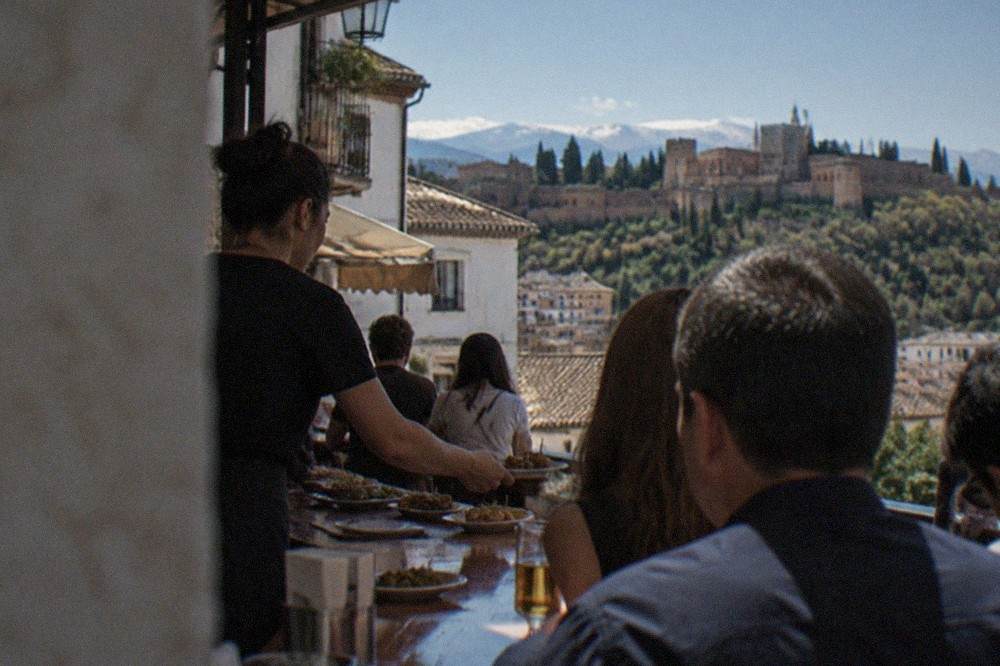
A useful framing: the further a place is from the Alhambra's orbit, the more Spanish it runs on. Sacromonte's flamenco caves split in two, the visitor-oriented cuevas with printed English materials, and the family-run ones where the show speaks for itself and the bar does not. The which is the best flamenco show in Granada? comparison includes both types.
Is A Guided Tour In English Worth It In Granada?
An English-language guided tour is worth it in Granada mainly at the Alhambra, where the monument is dense with history that signage alone does not convey, where tickets are nominative, timed and scarce, and where a guide handles both the language and the logistics at once. Elsewhere, the Albaicin and Sacromonte walks benefit from guiding for navigation and context, while tapas tours add a translator who orders for the table. Travellers confident in English-only travel get the most value from tours precisely where their Spanish is weakest.
The economics are simple. A General Alhambra ticket is EUR 22.27 at the live official price, and the small-group guided products bundle entry with an English-speaking guide who manages the half-hour Nasrid Palaces window, the walking distances and the narrative. Given that the General ticket routinely sells out one to two months or more ahead in peak season, a guided product with entry included also solves availability, not just language. The trade-offs between guided and independent visits are laid out in the Alhambra tickets guide.
For the neighbourhoods, a guided walk is less about language and more about not getting lost: the Albaicin's lanes are unlabelled and disorienting, and a guide turns a maze into a route. The Alhambra, Generalife and Albaicin share one UNESCO World Heritage listing, inscribed in 1984 and extended in 1994, so the two sides of the city the visitor crosses between are historically one story, and a good English-language guide tells it as one.
How Much Spanish Should You Learn Before Visiting Granada?
Learn roughly twenty words, not a course. The highest-value Spanish for Granada is a greeting (buenos días, buenas tardes), por favor and gracias, the numbers one to ten, una caña and una copa for drinks, la cuenta for the bill, and ¿cuánto cuesta? for anything with a price. That is enough for every non-English setting a visitor will enter, because the tourist-facing layer already speaks English and the local layer responds warmly to any attempt at Spanish.
Andalusian Spanish has its own reputation: syllables dropped at the ends of words, a fast rhythm, and a final -s that often vanishes, so "more or less" is a fair description of what a learner's textbook Spanish meets on the ground. Do not let that discourage the effort. Granadinos are used to students and tourists, and the social reward for trying is immediate, a better tapa, a better table, a better answer to a question about which bus goes where.
| Phrase | What it does for you |
|---|---|
| Buenos días / buenas tardes | Opens every interaction; skipping it reads as rude |
| Por favor, gracias | The two words locals notice most |
| Una caña, una copa | Order beer or wine in any tapas bar |
| La cuenta, por favor | Get the bill; bars rarely bring it unasked |
| ¿Cuánto cuesta? | Ask any price anywhere |
| Los números 1-10 | Prices, rounds, bus stops, table sizes |
| Perdón / disculpe | Get attention politely on a crowded terrace |
| No entiendo, ¿más despacio? | Ask for slower speech instead of English |
The practical layer beyond words is thin: a translation app with camera mode for menus, your hotel's address written down for taxi returns, and Google Maps offline for the Albaicin. That combination, twenty words plus an app, closes essentially the entire gap between English-speaking Granada and Spanish-speaking Granada.
Common Questions About English In Granada
Is Granada English speaking?
Partially. The tourism-facing layer, hotels, Alhambra operations, guided tours, main-route restaurants and the airport bus, works well in English, helped by the city's large university population. Traditional tapas bars, local shops, markets, buses and taxis run on Spanish, and older residents often speak no English. Visitors on the standard tourist route manage in English; visitors exploring neighbourhoods need a few Spanish words.
Do Alhambra staff speak English?
The Alhambra's ticketing pages and in-monument signage operate bilingually, and the commercial tour market around it runs overwhelmingly in English. The Nasrid Palaces entry slots are strictly timed and tickets are nominative with photo ID checks, so most of the interaction a visitor has is with a pre-booked English-language product rather than with a ticket window.
Can you order food in English in Granada?
On the central restaurant streets, including Plaza Nueva and Calle Navas, yes, often with translated menus. In traditional tapas bars, no, or barely. Since a drink in many traditional bars comes with a complimentary small tapa as a widely upheld local custom, the ordering exchange is fast and informal, and a few words of Spanish plus pointing at the counter covers it.
Is English enough for a first trip to Granada?
Yes, with two caveats. Book Alhambra entry or a guided tour well ahead, since General tickets routinely sell out one to two months or more in advance in peak season, and carry your hotel address written down for taxis and buses, which are the weakest English environments in the city.
Which parts of Granada are hardest without Spanish?
Neighbourhood tapas bars away from the centre, municipal markets, small shops, city bus journeys and taxi rides, and any interaction with older residents. The metro does not serve the airport or the Alhambra, so these local-transport settings cannot be avoided with a metro line the way they might in other cities.
The honest summary: Granada is one of the easier Andalusian cities for an English-only visitor, because its student population and its Alhambra-scale tourism have built a thick English layer exactly where visitors spend their time. Learn the twenty words, book the Alhambra early, and the language question stops being a question at all.