Is 3 Days In Granada Too Many?
Three days is not too many for Granada: the Alhambra alone takes a full half-day, and the Albaicin, Sacromonte, tapas bars and day trips fill the rest. Here is how to spend three days well.
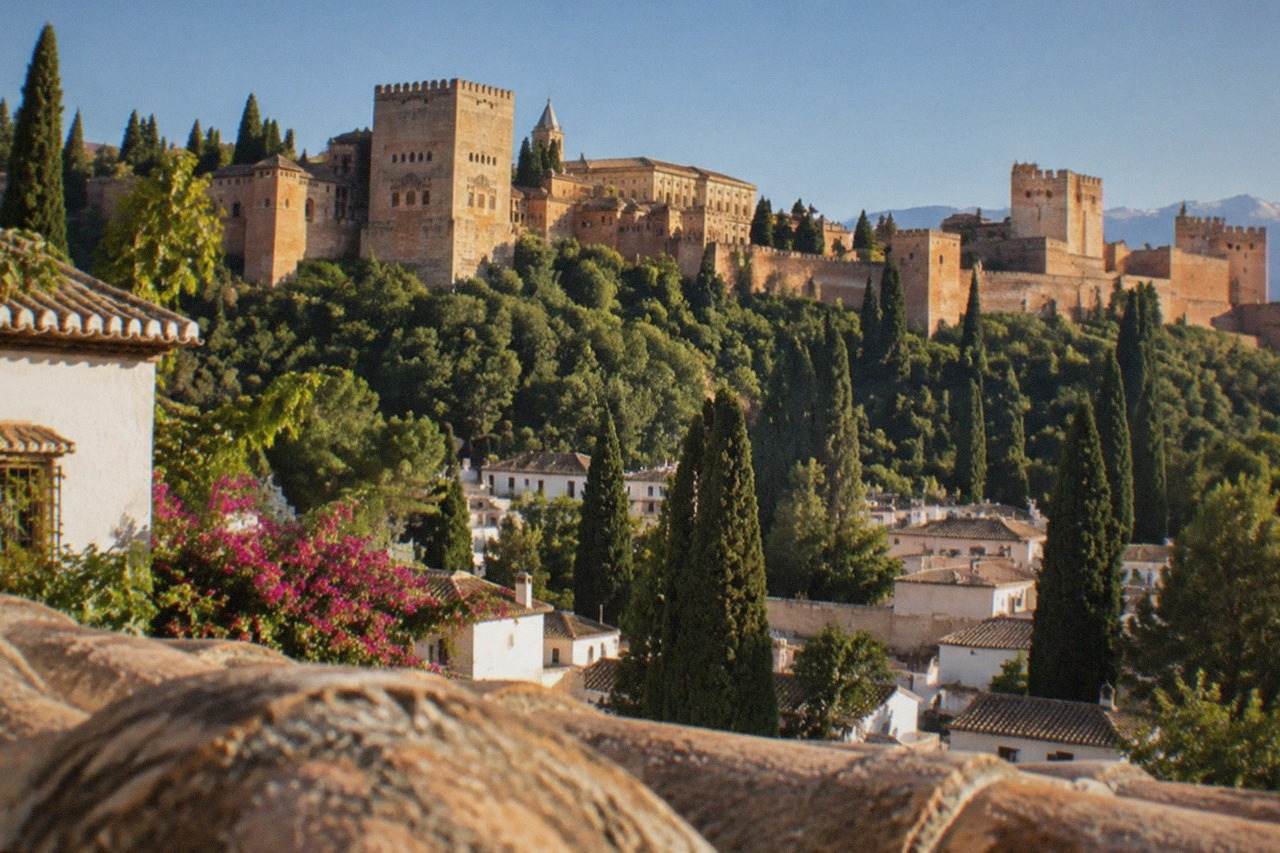
Granada received 2,726,861 visitors at the Alhambra alone in 2025, according to the Patronato de la Alhambra y Generalife's annual report, and that figure counts only the hilltop monument, not the cathedral, the Albaicin or the cave flamenco shows of Sacromonte. The question of whether three days is too many is really a question about how much of the city a visitor actually wants to touch. The short answer is no, and the longer answer depends on one thing above all: the Alhambra's ticket calendar, which sells out one to two months or more ahead in peak season. This page, from the Things To Do In Granada editorial desk, lays out what three days realistically holds, when two days is enough, and when three still is not.
Is 3 Days In Granada Too Many?
No, three days is not too many for Granada, it is the comfortable minimum for the city's core sights. The Alhambra takes a half-day on its own with a timed Nasrid Palaces slot, the Albaicin and Sacromonte take another half-day on foot, and the cathedral, Royal Chapel, tapas route and a hammam fill the rest. Visitors who cut to two days routinely report missing at least one of these.
The reason three days works is pacing rather than volume. Granada's main sights sit on two hills facing each other, the Alhambra on one side and the Albaicin on the other, and the streets between them are steep, cobbled and slow to walk. A day that tries to combine the Alhambra, the Albaicin, the cathedral quarter and an evening flamenco show ends in a blur of hills and bus rides. Three days lets each hillside get its own morning or afternoon.
The UNESCO framing supports the case for slowing down. The Alhambra, Generalife and Albaicin were inscribed together as one World Heritage listing in 1984, extended in 1994 to include the whole Albaicin quarter, so a third of what UNESCO protects here is not a monument you ticket but a neighbourhood you walk. That neighbourhood deserves hours, not a photo stop.
What Can You Realistically Fit Into Three Days In Granada?
A realistic three-day plan gives day one to the Alhambra and Generalife, day two to the cathedral, Royal Chapel, Alcaiceria and an evening in Sacromonte, and day three to the Albaicin, Carrera del Darro, a hammam and a tapas crawl. Anything more ambitious than that, such as adding a Sierra Nevada or Cordoba day trip, turns three days into a sprint.
Day one belongs to the Alhambra because the ticket dictates the schedule. The Nasrid Palaces entry window printed on each ticket is a strict half-hour slot, roughly 300 people per slot against a daily complex-wide cap of about 6,600 to 7,000 visitors, and photo ID is checked at the gate because tickets are nominative. The rest of the complex, the Alcazaba and the Generalife, can be visited outside that window on the same ticket date, so the practical shape of day one is a morning arrival, the full complex loop, and an afternoon back down in the city. The three-day itinerary breaks this down hour by hour.
Day two is the flat-city day. The Granada Cathedral charges EUR 10 for individuals during the 2026 Kerygma exhibition, which runs 8 May to 28 November 2026, dropping to EUR 7 from 29 November 2026, and the Royal Chapel next door charges EUR 7 individual, EUR 5 reduced. Both sit within a five-minute walk of the Alcaiceria, the old silk-market lane, and the Carrera del Darro riverside walk starts nearby. An evening cave flamenco show in Sacromonte closes the day, and the what not to miss guide ranks the candidates.
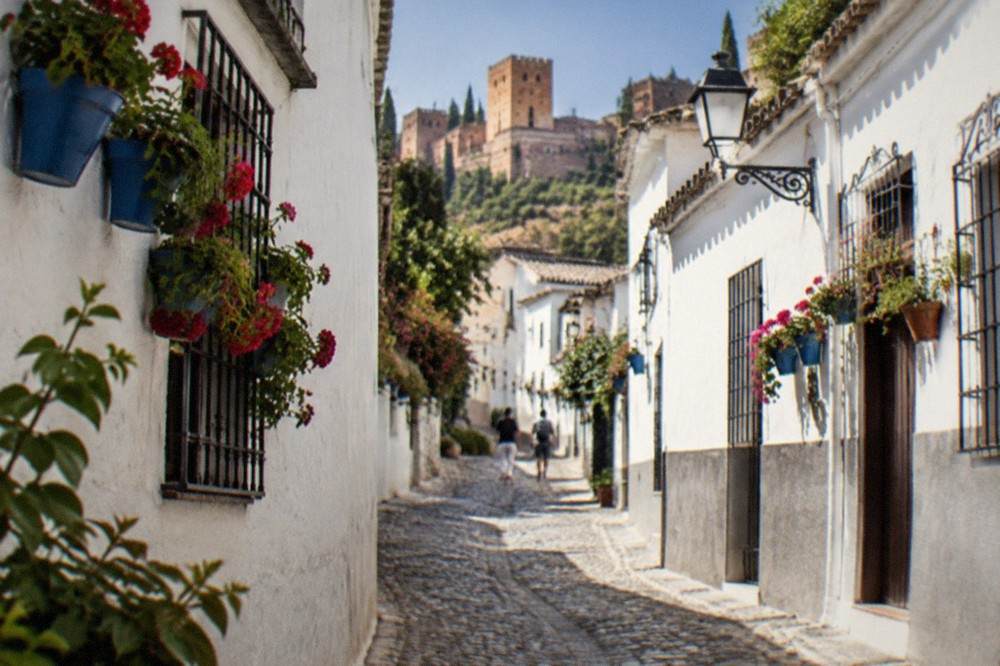
Day three is the Albaicin and the unwinding. The Mirador de San Nicolas viewpoint, the Dar al-Horra palace and the El Banuelo bathhouse sit in a quarter whose lanes reward aimlessness, and a hammam session in the afternoon is the traditional counterweight to two days of hills. The tapas custom seals the evening: in many traditional Granada bars a drink order still comes with a complimentary small tapa, a widely upheld local practice rather than a legal guarantee, as the free tapas page explains.
| Day | Focus | Key sights | Evening |
|---|---|---|---|
| Day 1 | Alhambra hill | Nasrid Palaces, Alcazaba, Generalife | Carrera del Darro walk |
| Day 2 | Old town | Cathedral, Royal Chapel, Alcaiceria | Sacromonte cave flamenco |
| Day 3 | Albaicin | Mirador de San Nicolas, El Banuelo, Dar al-Horra | Tapas route and hammam |
How Does The Alhambra Shape A Three-Day Granada Itinerary?
The Alhambra shapes the whole itinerary because its ticket is scarce, timed and date-locked: the General ticket costs EUR 22.27, sells out one to two months or more ahead in peak season, releases roughly three months in advance, and online sales close at 23:59 the day before the visit. The Alhambra booking, not the hotel, is the first thing to fix when planning three days.
The live official prices from the Patronato's own ticket page are: General EUR 22.27, Gardens/Generalife/Alcazaba-only EUR 12.73, night Nasrid Palaces EUR 12.73, night Gardens and Generalife EUR 8.48, and the Dobla de Oro combined ticket at EUR 30.48. A July 2025 press release announced lower figures, but the live official pages still show these higher ones, so the live price at booking time is the only one to trust. Under-12s enter free but still need a ticket for entry control.
Because the Nasrid Palaces slot is a fixed half hour on a fixed date, the Alhambra effectively anchors day one of any three-day plan. Visitors arriving without a booking sometimes find nothing left, which is why the sold-out tickets answer matters as a contingency read before travel. A guided small-group tour with tickets bundled is the common workaround when direct inventory has gone, and it is worth weighing against the question of which ticket type suits each visitor best.
For the Alhambra itself, the small-group skip-the-line tour including the Nasrid Palaces is the listing that most reliably covers the full complex with a guide, since it is rated 4.7 from 3,338 reviews and runs about three hours. There is also an inline option to Check availability next to the tour's own page, which is the honest way to see today's price rather than a cached one.
What Do You Do In Granada On Day Three?
Day three in Granada belongs to the Albaicin, the viewpoints and the food: the Mirador de San Nicolas at sunset, the El Banuelo and Dar al-Horra monuments, a long lunch of plato alpujarreno or habas con jamon, and an evening tapas route through the Realejo or the city centre. This is the day that makes three days feel right rather than padded.
The Albaicin is the part of Granada that rewards a slow third day precisely because it has no single ticket or gate. Its monuments do have prices, several of them folded into the Granada Card, which since 13 November 2025 costs EUR 60 for 72 hours, EUR 55 for 48 hours, EUR 50 for the 24-hour night-Palaces variant and EUR 50 for the Jardines variant, with children aged 3 to 11 at EUR 13. A three-day visitor is exactly the buyer the 72-hour card was designed for, and whether the card pays off depends on how many of those monuments the plan actually includes.
Food fills the gaps. Granada is famous for its free-tapa custom and for dishes such as tortilla del Sacromonte and piononos, and the what food is Granada famous for page maps the specialities. A guided tapas and wine walk is the efficient version of day three's evening, and a walking food tour rated 4.9 from 590 reviews at writing time is one structured option.
When Are Three Days In Granada Actually Too Many?
Three days is genuinely too many only for a visitor whose sole target is the Alhambra and who has no interest in neighbourhoods, food or viewpoints, in which case two days covers the monument plus the cathedral quarter comfortably. It is also too many for a winter short break built around rain, when November averages 54mm and December 56mm of rainfall per AEMET's normals.
The two-day version of Granada is legitimate, and the is 2 days in Granada enough page makes that case: Alhambra on day one, old town and a flamenco show on day two, done. The two-day itinerary shows the compressed shape. What two days cannot absorb is the Albaicin at leisure, a hammam, a proper tapas crawl, or any buffer for the Alhambra's sell-out risk.
Weather matters more than most guides admit. AEMET's climate normals for the Granada Aeropuerto station show July and August averaging highs of 34.8C and 34.2C, which makes midday hill-climbing punishing and pushes everything useful into early morning and evening, stretching a two-day plan into three. Conversely, the same table shows January nights at an average low of 0.0C, so winter visitors lose the sunset-viewpoint hours that fill a summer day three.
| Month | Avg high C | Avg low C | Rainfall mm | Effect on a 3-day plan |
|---|---|---|---|---|
| January | 13.0 | 0.0 | 42 | Cold evenings, fewer viewpoint hours |
| April | 20.6 | 6.0 | 36 | Peak conditions, peak Alhambra demand |
| July | 34.8 | 15.7 | 2 | Midday heat stretches days out |
| November | 17.0 | 4.2 | 54 | Rain risk, indoor-heavy plan advised |
The third scenario is the visitor using Granada as a base. Three days in the city is not too many but it is arguably too few for that plan, since the Alpujarras, Cordoba, Ronda and the Sierra Nevada all sit in verified day-trip range and each consumes a full day. The how many days in Granada is enough page handles the longer end of that calculation.
Common Questions About Three Days In Granada
Is 3 days in Granada too many?
No. Three days covers the Alhambra, the Albaicin, the cathedral quarter, Sacromonte flamenco and a tapas route at a humane pace. Two days is the workable minimum, but three is where Granada stops feeling rushed.
Is 2 days in Granada enough?
Yes, for the Alhambra plus the old town and one evening show. Two days cannot absorb the Albaicin at leisure, a hammam or any buffer against Alhambra ticket sell-outs, which is why three is the safer booking.
Can you see the Alhambra and the Albaicin on the same day?
You can, but it makes for a hard day of hills. Most three-day plans put the Alhambra on its own day and give the Albaicin a separate afternoon or a sunset visit to the Mirador de San Nicolas.
Should you book Alhambra tickets before booking a hotel?
Effectively, yes. The General ticket sells out one to two months or more ahead in peak season and releases roughly three months in advance, so the Alhambra date should anchor the whole trip, hotel included.
Is the Granada Card worth it for three days?
Often, yes. The 72-hour tier at EUR 60 includes the daytime General Alhambra access, the cathedral, the Royal Chapel and several Albaicin monuments, which is close to the full three-day sight list, though the Alhambra slot must still be reserved and cannot be split across days.
What is the best month for a three-day Granada trip?
April, May, late September and October balance AEMET's mild temperatures against manageable Alhambra demand. July and August average highs above 34C, and November and December carry the highest rainfall of the year.
Three days in Granada is not a padded itinerary, it is the length at which the city's two hills, its tapas custom and its sell-out-prone Alhambra all fit without tripping over each other. Book the Alhambra first, give the Albaicin its own afternoon, and the third day will fill itself.