3 Days In Granada
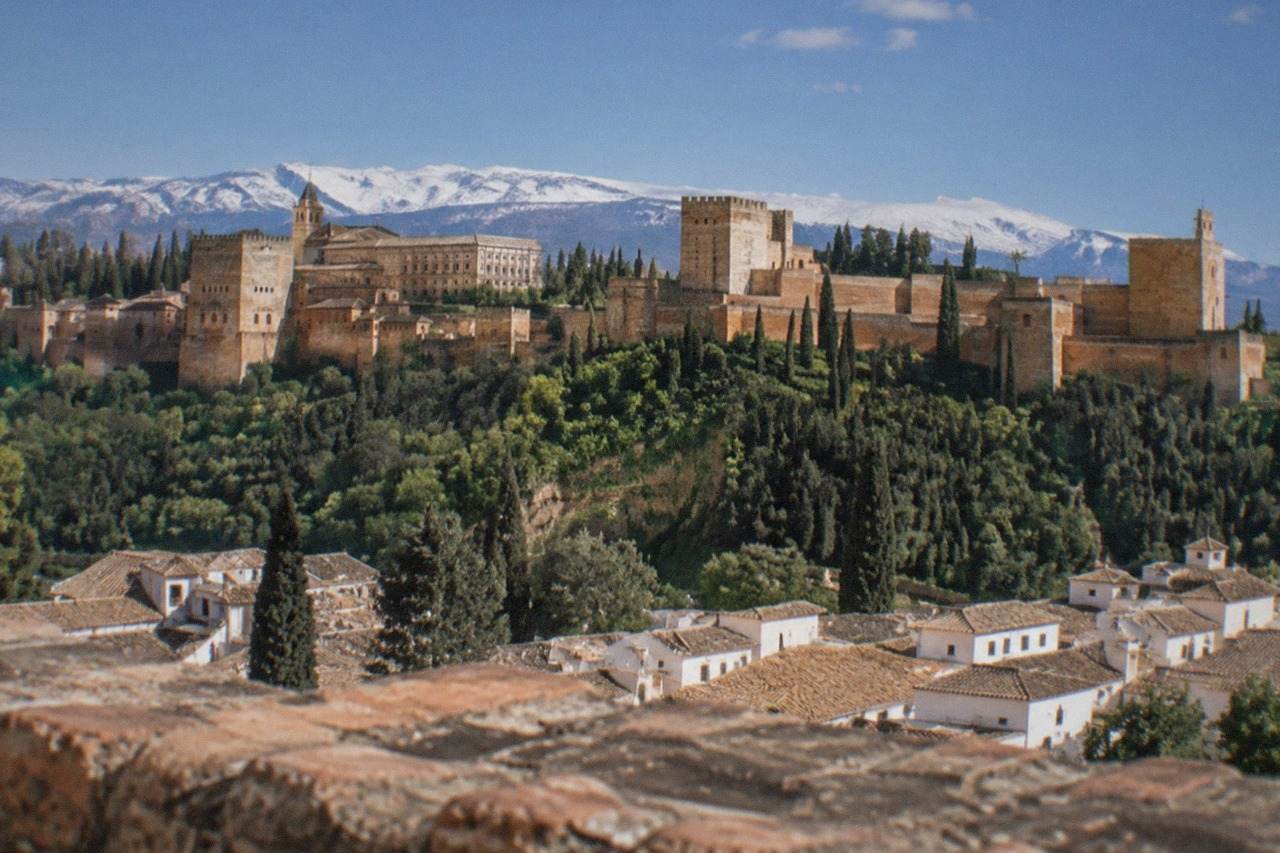
Three days is the sweet spot for Granada: enough time for the Alhambra without rushing it, the old Moorish quarters at sunset, the Cathedral and Royal Chapel, and still room for a day trip to the coast or the mountains.
Short answer
Spend Day 1 on the Alhambra and Generalife, Day 2 in the Albaicin, Carrera del Darro and Sacromonte with an evening flamenco show, and Day 3 in the historic centre around the Cathedral, Royal Chapel and Alcaiceria, with an optional half-day trip to Nerja and Frigiliana or the Alpujarras if you would rather leave the city.
The Alhambra received 2,726,861 visitors in 2025, close to the Patronato's own annual capacity ceiling of roughly 2.763 million, and the General ticket routinely sells out one to two months or more ahead in peak season. That single fact shapes any honest three-day plan for Granada: the Alhambra is not something you slot into an afternoon when you arrive, it is the anchor you book before you book anything else. Around it, the city is compact and walkable, with the Albaicin, Sacromonte and the historic centre all within a steep but short stroll of one another. This itinerary spreads the must-sees across three days so nothing is rushed, prices and hours below come from the official sources, and there is a day-trip option for Day 3 if you have already covered the centre.
What Does The Perfect 3 Days In Granada Look Like?
The strongest three-day split is Alhambra and Generalife on Day 1, the Albaicin, Carrera del Darro and Sacromonte with evening flamenco on Day 2, and the Cathedral, Royal Chapel and Alcaiceria in the historic centre on Day 3, with an optional day trip to Nerja and Frigiliana or the Alpujarras swapped in for the afternoon of Day 3. This order front-loads the one attraction that sells out and leaves the walkable, ticket-free quarters for the days after.
The logic is about risk, not preference. The Alhambra's Nasrid Palaces admit roughly 300 people per 30-minute slot and online sales close at 23:59 the day before your visit date, so it is the only piece of this itinerary that can genuinely become unavailable. Everything else, the viewpoints, the tapas bars, the Cathedral, can be done in almost any order. Putting the Alhambra first also means that if a ticket problem forces a reshuffle, you still have two full days to recover.
Day 2 is the walking day, and it is a hard one on the legs. The Albaicin climbs steadily from the Darro valley and Sacromonte climbs again beyond it, so comfortable shoes matter more here than anywhere else in the city. Day 3 is deliberately the gentlest: flat historic-centre streets, a couple of monumental interiors, and shopping or a day trip depending on your energy.
| Day | Morning | Afternoon | Evening |
|---|---|---|---|
| Day 1 | Alhambra: Alcazaba and Nasrid Palaces | Generalife gardens, return through the centre | Tapas around Calle Navas |
| Day 2 | Albaicin lanes and Mirador de San Nicolas | Carrera del Darro, then climb to Sacromonte | Cave flamenco show in Sacromonte |
| Day 3 | Granada Cathedral and Royal Chapel | Alcaiceria and Realejo, or Nerja and Frigiliana trip | Hammam session or farewell tapas |
If you are still deciding how long to stay, the question how many days in Granada is enough has its own answer, and there is a shorter plan in the two days in Granada itinerary if your dates are tighter.
How Do You Do Day 1 Around The Alhambra?
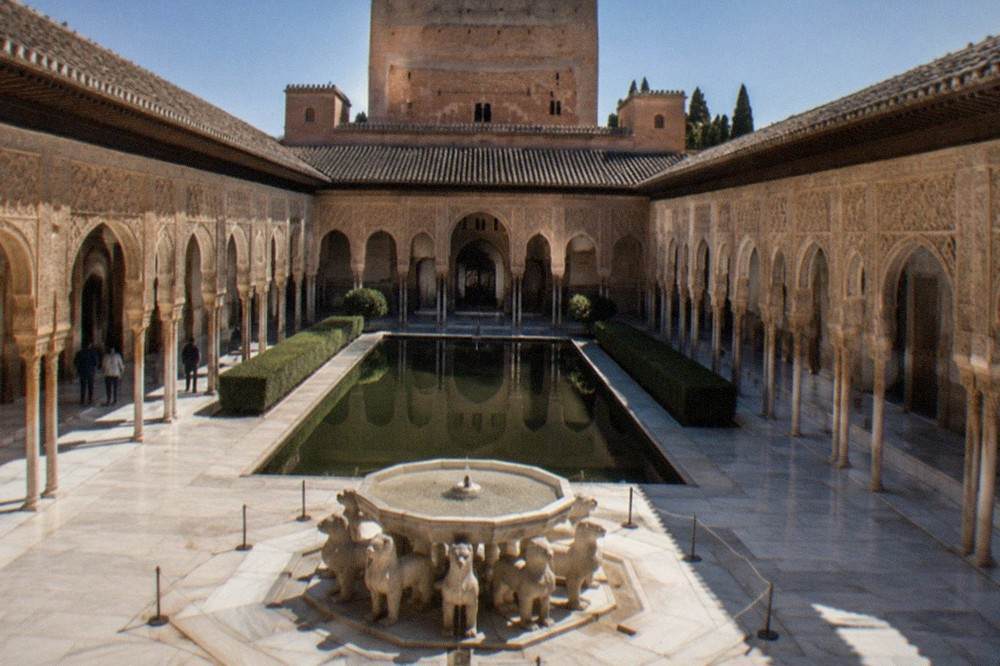
Book the Alhambra General ticket, currently EUR 22.27 on the official ticket seller's live pages, for a morning Nasrid Palaces slot, enter through the Puerta de la Justicia side, do the Alcazaba first if your slot is later, then walk the Nasrid Palaces in your assigned half-hour window and finish with the Generalife gardens and its water staircases, leaving three to four hours total for the whole complex.
The General ticket covers the complete daytime visit: Nasrid Palaces, Alcazaba and Generalife. The live official prices are EUR 22.27 for the General ticket, EUR 12.73 for a Gardens, Generalife and Alcazaba-only daytime ticket, EUR 12.73 for the night Nasrid Palaces visit and EUR 8.48 for the night Gardens and Generalife visit. A July 2025 press release announced lower prices effective 1 August 2025, but the live official ticket pages still show the higher figures, so treat the number at booking time as the truth and do not rely on the press figures.
Two rules matter more than the price. First, tickets are nominative: photo ID is checked at entry, so the name on the ticket must match the passport you carry. Second, the half-hour Nasrid Palaces window printed on your ticket is strictly enforced, while the rest of the complex can be visited at any point during opening hours on your ticket date. Daytime hours are 08:30 to 18:00 from 15 October to 31 March and 08:30 to 20:00 from 1 April to 14 October, and the complex closes only on 25 December and 1 January.
| Alhambra ticket type | Official price | What it covers |
|---|---|---|
| General (day) | EUR 22.27 | Nasrid Palaces, Alcazaba, Generalife |
| Gardens, Generalife and Alcazaba (day) | EUR 12.73 | Everything except the Nasrid Palaces |
| Night visit, Nasrid Palaces | EUR 12.73 | Nasrid Palaces after dark, Fri-Sat in winter |
| Night visit, Gardens and Generalife | EUR 8.48 | Gardens and Generalife after dark, seasonal |
| Dobla de Oro General | EUR 30.48 | Alhambra plus Andalusi monuments in the city |
| Children under 12 | Free | Ticket still required for entry control |
Because the General ticket sells out so far ahead, many travellers let a guided tour handle the ticket. The Skip The Line Alhambra and Generalife Guided Tour bundles entry with a guide and runs about three hours, and there is more on that choice in the Alhambra tours guide, which compares the guided options against buying direct.
After the Generalife, walk down the Cuesta de los Chinos into the centre and eat late, the Spanish way. Calle Navas, a short street of tapas bars near the town hall, is the classic first-night choice: a drink in many traditional Granada bars comes with a complimentary small tapa, a custom that remains widely upheld local practice in 2026, though it is not a guarantee at every venue and some bars have adjusted portions or pricing.
How Do You Spend Day 2 In The Albaicin And Sacromonte?
Day 2 belongs to the Moorish quarters on the hill across the Darro river: start at Plaza Nueva, walk up through the Albaicin's lanes to the Mirador de San Nicolas for the classic Alhambra view, drop back down to the Carrera del Darro beside the river, then climb into Sacromonte in the late afternoon for its cave houses and an evening flamenco show, with the whole day doable on foot in about four to five hours of actual walking.
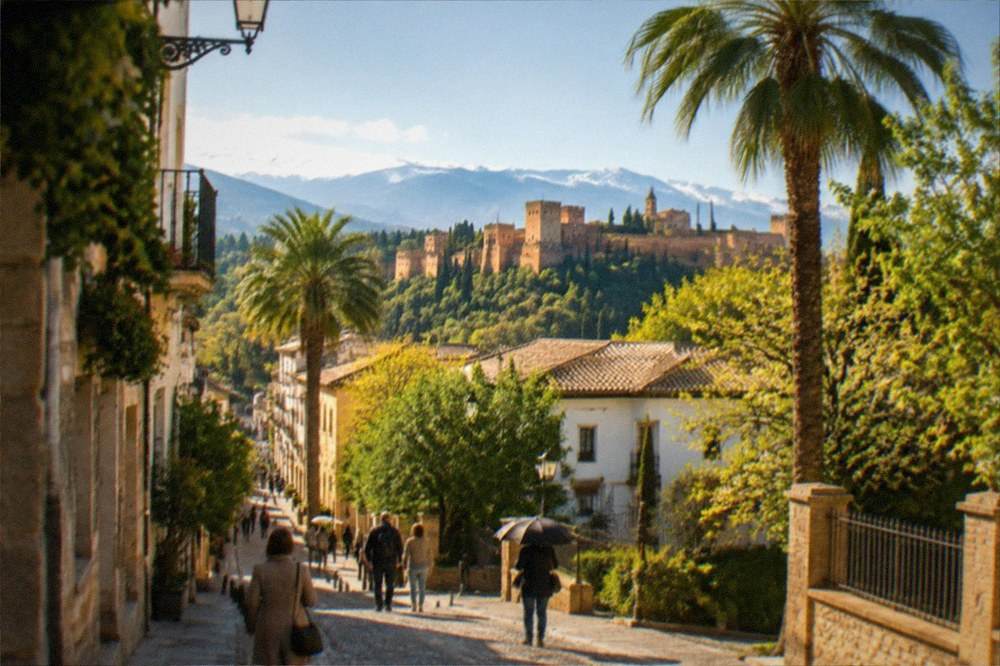
The Albaicin is the old Moorish quarter, and together with the Alhambra and Generalife it forms one UNESCO World Heritage listing, inscribed in 1984 and extended in 1994 to include this hill. That is worth knowing because it explains the quarter's protected, tangled character: narrow lanes, cármenes (walled villas with gardens), and sudden openings onto views. The Mirador de San Nicolas is the famous one, a plaza-facing terrace where the Alhambra sits directly opposite you with the Sierra Nevada behind, and late afternoon is when the light does the most for it.
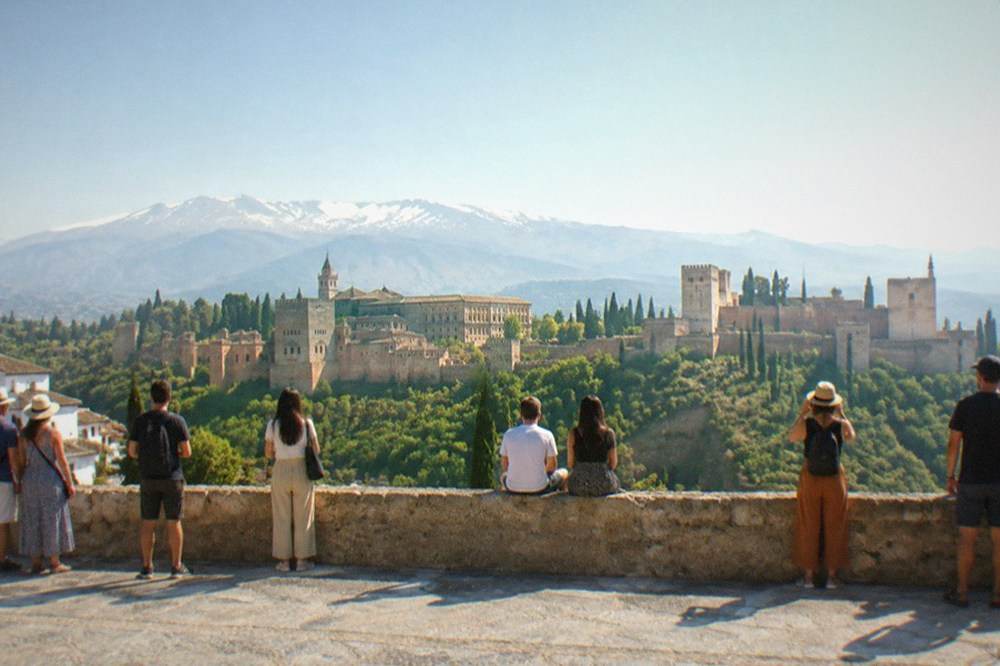
From the mirador, the smart route is downhill. Drop through the lanes to the Carrera del Darro, the riverside street that runs along the Darro between the two hills, passing the stone bridge of Puente de Piedra and, visible across the water, the El Bañuelo Arab baths. The Carrera del Darro deserves its slow walk; it is the most photographed stretch of street in the city and flat, which your legs will appreciate after the climb.
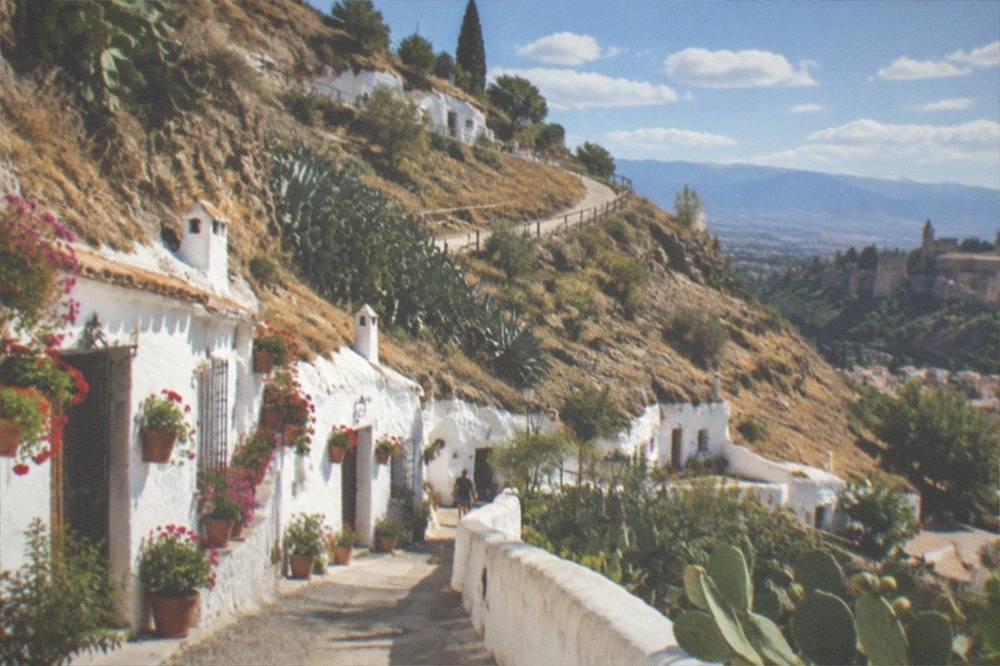
Sacromonte is the third act. The neighbourhood of cave houses dug into the hill, historically home to Granada's Roma community and the cradle of the zambras, Granada's own form of flamenco, sits above the Albaicin and is reached by a steady uphill road. The Sacromonte Abbey anchors one end and the Sacromonte cave museum explains how people actually lived, and still live, in the caves. Come for sunset, stay for a show: cave flamenco in Sacromonte is the city's signature evening, and the flamenco in Granada guide covers where to see it.
A guided walk turns this day from a navigation exercise into a story. The Granada Albaicín & Sacromonte Exclusive Walk Tour covers both quarters in about two and a half hours, and the free option is the GuruWalk Albaicín and Sacromonte free tour, a tip-based walk rated 4.99 from 913 reviews, where you pay the guide what you choose at the end.
How Do You Spend Day 3 In The Historic Centre?
Day 3 is the flat, civilised day: the Granada Cathedral and the adjoining Royal Chapel in the morning, the Alcaiceria's Moroccan-style market lanes and the Realejo quarter after lunch, and either a hammam session or a farewell tapas crawl in the evening, with the Cathedral at EUR 10 individual entry during the 2026 Kerygma exhibition and the Royal Chapel at EUR 7.
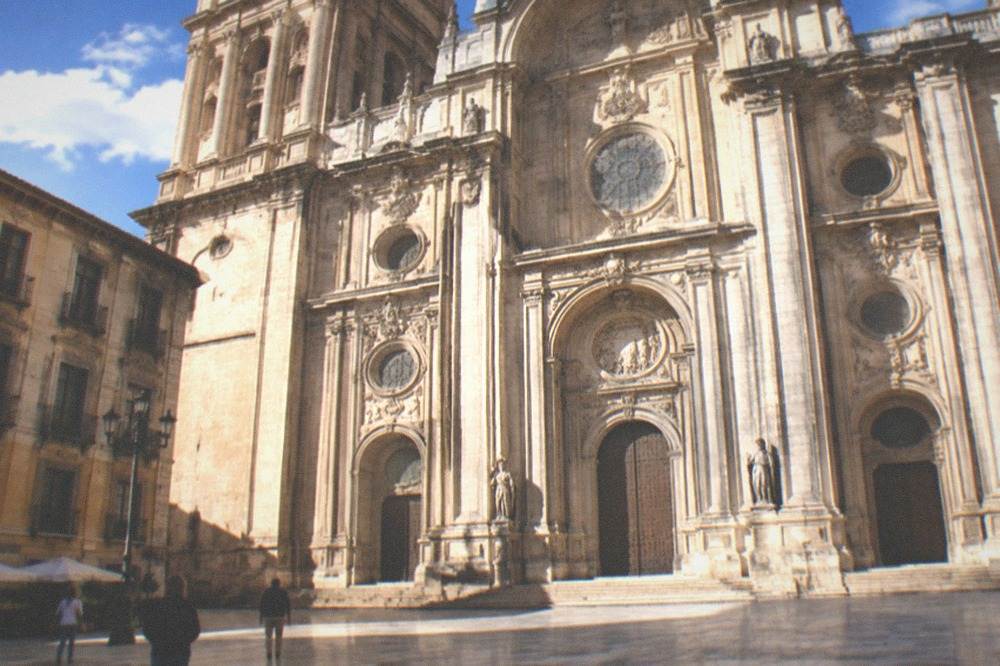
The Cathedral is the great Renaissance building of Andalusia, and its entry price is currently tiered by date. During the Kerygma exhibition, which runs 8 May to 28 November 2026, individual entry is EUR 10 with a reduced rate of EUR 8; from 29 November 2026 it drops to EUR 7 individual and EUR 5 reduced, with under-12s free throughout. Cultural-visit hours run Monday to Saturday from about 10:00 to 20:15 and Sunday from about 15:00 to 18:15, outside worship times.
The Royal Chapel next door is where the Catholic Monarchs chose to be buried, Ferdinand and Isabella, along with Juana la Loca and Philip the Fair, and it is a smaller, darker, more intimate interior than the Cathedral. Entry is EUR 7 individual, EUR 5 reduced, under-12s free, open Monday to Saturday 10:00 to 18:30 and Sunday from 11:30. Doing both in one morning is comfortable, and the Royal Chapel page has the full detail.
| Historic centre sight | Entry price | Hours (approx.) |
|---|---|---|
| Granada Cathedral (to 28 Nov 2026) | EUR 10 / reduced EUR 8 | Mon-Sat 10:00-20:15, Sun 15:00-18:15 |
| Granada Cathedral (from 29 Nov 2026) | EUR 7 / reduced EUR 5 | Same cultural-visit hours |
| Royal Chapel | EUR 7 / reduced EUR 5 | Mon-Sat 10:00-18:30, Sun 11:30-18:30 |
| Alcaiceria | Free to browse | Shops, daytime hours |
| El Bañuelo Arab baths | Via Alhambra-related tickets | Daytime |
The Alcaiceria, the reconstructed silk-market lane off the Cathedral square, is where Granada's Moorish trading past is most visible, a covered alley of lamps, tea sets and inlaid woodwork. The Alcaiceria guide covers what is worth buying and what is tourist filler. The Realejo, the old Jewish quarter on the slope below the Alhambra, is the quietest of the three hill quarters and the best one for street art and unpretentious lunch spots.
For the evening, the hammam is Granada's other great inheritance from al-Andalus. The Hammam Al Ándalus runs sessions in an ornate bathhouse near the Cathedral, and booking ahead is the norm because sessions are small and timed. Alternatively, spend the last evening doing nothing more ambitious than the free-tapas circuit, moving from bar to bar in the centre and letting each drink arrive with its plate.
Should You Swap Day 3 For A Day Trip From Granada?
If the city centre holds less appeal than the coast or the mountains, swap Day 3's afternoon, or the whole day, for a trip to Nerja and Frigiliana on the Costa del Sol or the Alpujarras mountain villages, both reachable as organised small-group day tours from Granada, with Nerja and Frigiliana about seven hours door to door on a guided tour and the Alpujarras a full-day outing.
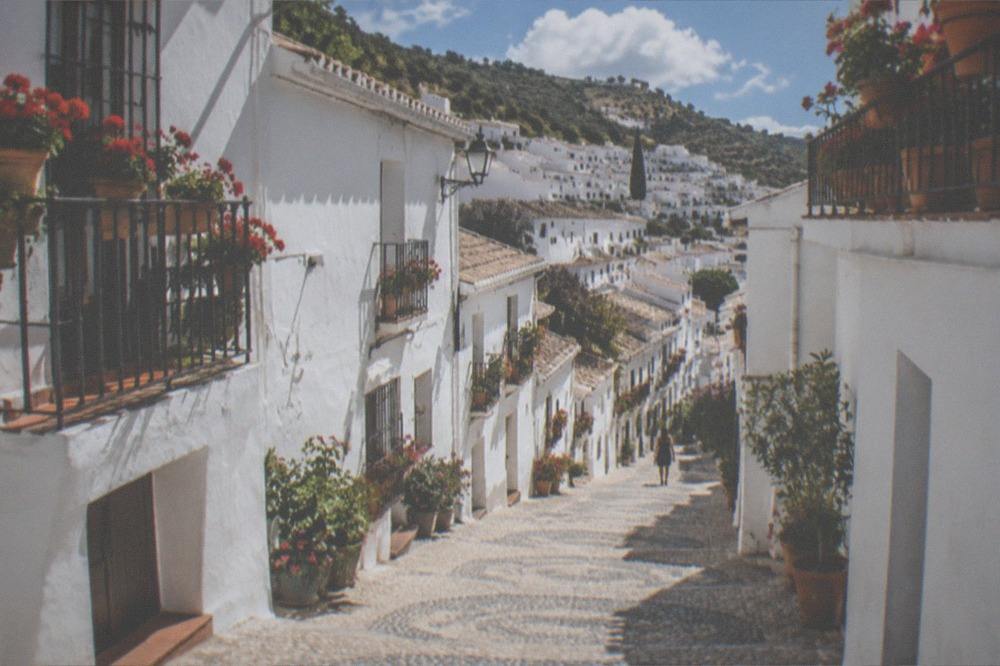
Granada is unusual among Andalusian cities for how much sits within a day's reach. The verified day-trip destinations are Cordoba, Seville, Ronda, Nerja, Frigiliana, Malaga, Guadix, the Alpujarras, Los Cahorros and Sierra Nevada. On a three-day first visit, the city itself should dominate, but a coast-and-whitewashed-village combination works well on Day 3 if you have already covered the Cathedral quarter on a previous trip or plan to see it on your departure morning.
The Nerja & Frigiliana Day Trip runs with a maximum of eight people, about seven hours, and pairs the Balcón de Europa seafront with the hill village of Frigiliana. The Alpujarras tours spend the day in the whitewashed villages on the southern flanks of the Sierra Nevada. If you are travelling with children, the Granada with kids itinerary weighs which of these works for families.
| Day trip from Granada | Character | Tour length |
|---|---|---|
| Nerja and Frigiliana | Coast plus hill village, max 8 people | About 7 hours |
| Alpujarras villages | Mountain villages, optional lunch | Full day, about 8 hours |
| Cordoba | Mezquita and historic centre | About 11 hours |
| Seville | Alcazar, Cathedral and Giralda | About 12 hours |
| Sierra Nevada hiking | Mountain trails, guided | Full day |
| Los Cahorros | Gorges, bridges and waterfalls hike | About 4 hours |
The full menu of options, including the trade-offs between the big-city trips and the mountain ones, is in the day trips from Granada guide. Be realistic about scale: Cordoba and Seville are long days out and deserve more than a squeezed half-day if the monuments matter to you, which is why this itinerary keeps them out of a first three-day visit and concentrates on what is actually in the city.
How Much Does 3 Days In Granada Cost?
Counting only the monument entries in this itinerary, an adult pays EUR 22.27 for the Alhambra General ticket, EUR 10 for the Cathedral during the 2026 Kerygma exhibition and EUR 7 for the Royal Chapel, before food, transport and any tour, and the Granada Card, from EUR 50 to EUR 60 for adults depending on tier, bundles most of these together with transport if you want the arithmetic done for you.
The Granada Card's current tiers, effective 13 November 2025, are EUR 60 for 72 hours, EUR 55 for 48 hours, EUR 50 for the 24-hour night-Palaces variant and EUR 50 for the Jardines gardens-only variant, with children aged 3 to 11 at EUR 13. Depending on tier it includes Alhambra access, the Cathedral, Royal Chapel, Sacromonte Abbey, the Science Park, several Albaicin monuments and transport: nine urban bus trips plus one full tourist-train loop. The Alhambra portion cannot be split across days once activated, and validity runs two to four days from first use, tied to your booked Alhambra slot. Whether it pays off depends on how many of the included museums you will genuinely visit, a calculation the is the Granada Card worth it answer works through.
| Granada Card tier | Price | Alhambra access included |
|---|---|---|
| 72 hours | EUR 60 | Daytime General: Alcazaba, Nasrid Palaces, Generalife |
| 48 hours | EUR 55 | Daytime General: Alcazaba, Nasrid Palaces, Generalife |
| 24 hours (night Palaces) | EUR 50 | Night Nasrid Palaces only |
| Jardines | EUR 50 | Daytime Alcazaba and Generalife |
| Child (3-11) | EUR 13 | Same as adult tier purchased |
Food is where Granada stays gentle on the wallet. The free tapa with a drink remains standard practice in many traditional bars as of 2026, so an evening of moving between three bars, one drink at each, often arrives with three small plates included in the price of the drinks. It is not a legal requirement and some venues have adjusted portions or pricing, but the custom is widely upheld and is part of why the city surprises travellers who expect big-city Andalusian prices.
When Is The Best Time Of Year For A 3-Day Visit?
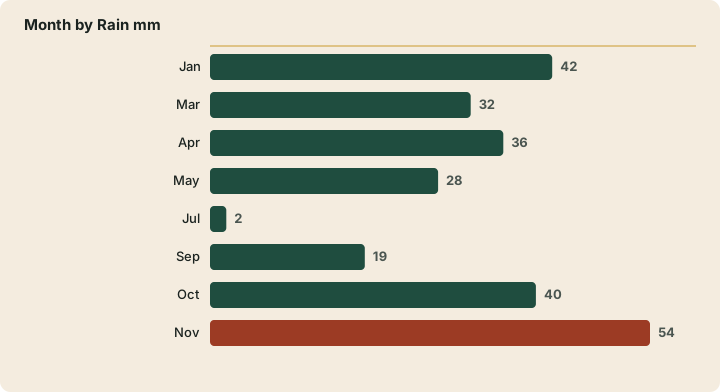
The best months for this itinerary are April, May, late September and October, when AEMET's climate normals for Granada show average highs of 20.6 to 25.0 degrees in spring and 23.2 to 29.4 degrees in early autumn with 19 to 36mm of monthly rain, while July and August average 34.8 and 34.2 degree highs with almost no rain, and winter days sit near 13 to 15 degrees with cold nights at or near zero.
Granada's climate is more continental than its Andalusian neighbours because of its altitude and its position against the Sierra Nevada. July is both the hottest and driest month, an average high of 34.8 degrees and just 2mm of rain, and August is barely different. Winter is genuinely cold at night: January's average low is 0.0 degrees, and snow sits on the Sierra Nevada above the city, which is exactly what makes the Mirador de San Nicolas view so striking in the cold months.
| Month | Avg high C | Avg low C | Rain mm | Fit for this itinerary |
|---|---|---|---|---|
| Jan | 13.0 | 0.0 | 42 | Cold nights, snow on the peaks, thin crowds |
| Mar | 19.0 | 3.8 | 32 | Good walking weather |
| Apr | 20.6 | 6.0 | 36 | Excellent, book Alhambra early |
| May | 25.0 | 9.4 | 28 | Excellent, Cruces de Mayo falls 1-3 May in 2026 |
| Jul | 34.8 | 15.7 | 2 | Very hot for the hill walking on Day 2 |
| Sep | 29.4 | 12.8 | 19 | Warm but workable |
| Oct | 23.2 | 8.7 | 40 | Excellent light for the viewpoints |
| Nov | 17.0 | 4.2 | 54 | Quieter, wetter, Alhambra hours shorten |
Festival dates can make or break a visit. Semana Santa runs approximately 29 March to 5 April in 2026 and 21 to 28 March in 2027, with processions filling the centre each evening; Corpus Christi brings its fair around 4 June in 2026; Cruces de Mayo fills the city with decorated crosses on 1 to 3 May in 2026. All three are spectacular and all three make the city busier, so the Alhambra ticket rule bites hardest in those weeks. The month-by-month detail is in what is the best month to visit Granada Spain.
What Should You Know Before Starting This Itinerary?
Four practical facts govern the plan: the Alhambra's General ticket sells out one to two months or more ahead in peak season with online sales closing at 23:59 the day before, the Nasrid Palaces entry window on your ticket is a strictly enforced half hour with ID checks, the Metro de Granada serves neither the airport nor the Alhambra, and the airport connection is the Alsa Linea 245 bus at EUR 3.10 one way taking roughly 40 to 45 minutes.
The transport point catches out a lot of first-time visitors. The metro runs north to south through the city and metropolitan area and does not reach the airport or the Alhambra. From Granada Airport (GRX), the official Alsa Linea 245 bus, the Gran-Aero route, costs EUR 3.10 one way, less with the regional Consorcio card, and takes about 40 to 45 minutes into the centre, running roughly every 30 to 60 minutes at peak times. For the Alhambra itself, the LAC and C34 hillclimb bus lines or a taxi are the practical options, and the Granada airport guide covers arrival logistics in full.
Book your Alhambra slot before you book your hotel. Tickets are released roughly three months ahead, and in spring, autumn and festival weeks the General ticket can be gone long before your dates. If the direct sale shows nothing, the what if Alhambra tickets are sold out answer lists the legitimate fallbacks, and a guided tour with tickets bundled is the most reliable one. Never count on same-day online sales: there are none, reliably.
Finally, pace the hills. Day 2 of this itinerary is the steepest walking most visitors do in Spain, and the reward for doing it slowly is that every pause lands you at a viewpoint or a bar. That is the real rhythm of the city, and it is why the editors behind Things To Do In Granada keep recommending three days rather than two: not because the list of monuments demands it, but because the city only opens up when you are not hurrying through it.
Common Questions About 3 Days In Granada
Is 3 days in Granada too many?
No. Three days lets you see the Alhambra properly, walk the Albaicin and Sacromonte without rushing, cover the Cathedral and Royal Chapel, and still have room for a day trip. The full reasoning is on the is 3 days in Granada too many page.
How many days in Granada is enough?
Two days covers the essentials; three is the comfortable standard for a first visit that includes the Alhambra, both hill quarters and the historic centre without cutting anything.
Can I see the Alhambra and the Albaicin on the same day?
Yes, but it is a heavy day of walking and climbing. This itinerary deliberately splits them, the Alhambra on Day 1 and the Albaicin on Day 2, because the Alhambra alone takes three to four hours and the Albaicin is a steep quarter best enjoyed unhurried.
Do I need to book the Alhambra before I travel?
Yes. The General ticket routinely sells out one to two months or more ahead in peak season, tickets are released roughly three months in advance, and online sales close at 23:59 the day before your visit date. Book before you book anything else.
Is a day trip worth it on a 3-day visit?
Only if you have been to Granada before or are happy to trade the Cathedral quarter for the coast or the mountains. First-time visitors get more from the city itself; the Nerja and Frigiliana or Alpujarras trips suit a return visit or a fourth day.
Is 2 days in Granada enough?
It is workable, the is 2 days in Granada enough answer and the two-day itinerary cover the trimmed plan, but you will be choosing between Sacromonte and the historic centre on the second afternoon. Three days removes that trade-off.