Which Is Nicer, Granada Or Córdoba?
A practical comparison of Granada and Córdoba: the Alhambra against the Mezquita, prices, food, day-trip logistics and which city fits which trip.

Two of Andalusia's most visited cities sit barely an hour and a half apart by train, and both trade on the same inheritance: the architecture of al-Andalus, the Muslim state that ruled southern Spain for centuries. Granada holds the Alhambra, the palace-fortress that closed that era and drew 2,726,861 visitors in 2025 according to the Patronato de la Alhambra's own annual report. Córdoba holds the Mezquita, the great mosque-cathedral of what was once the largest city in Western Europe. Choosing between them is really a choice between a hill city with a monumental palace and a river city with one astonishing building, and the honest answer depends on how many nights you have and what you want from a Spanish city after the sightseeing ends.
Which Is Nicer, Granada Or Córdoba?
Granada is the better choice for most travellers with two or more nights, because the Alhambra, the Albaicin and Sacromonte give the city a depth Córdoba cannot match in a short stay, and the free-tapa tradition makes evenings cheaper and more social. Córdoba wins for a single intense day: the Mezquita is the single most extraordinary enclosed space in Andalusia, and the historic quarter around it is compact enough to cover on foot in a few hours. Neither city is a bad pick. The real question is whether your trip has room for one base or two stops, and this site's own take, written from Granada's side of the fence but with Córdoba's numbers on the table, is that Granada rewards the longer stay while Córdoba rewards the focused one.
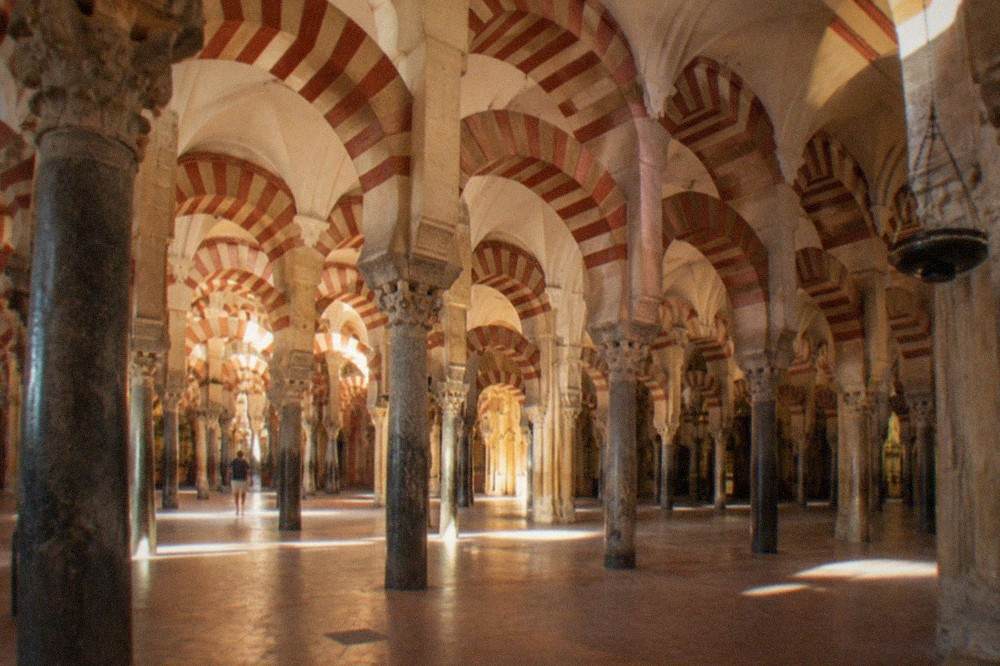
The comparison is not close on scale. The Alhambra complex, the Generalife and the Albaicin were inscribed together as one UNESCO World Heritage listing in 1984, extended in 1994, and the monument alone runs to roughly 6,600-7,000 visitors a day at capacity, with the Nasrid Palaces capped at about 300 people per half-hour slot. The Mezquita is smaller in footprint and, for many visitors, more powerful in a single glance: a forest of columns and double arches that no photograph quite prepares you for. Granada spreads its impact across a hilltop, a hillside quarter of white lanes, and a cave district; Córdoba concentrates nearly all of it inside one building and the patio courtyards around it.
Timing matters more than taste. The Alhambra's General ticket, at EUR 22.27 on the live official ticket pages, routinely sells out one to two months or more ahead in spring and autumn, and online sales close at 23:59 the day before the visit, so a Granada trip needs the palace booked before anything else. The Mezquita also sells timed entries but has historically been easier to secure a few days out, though check the live listing for your dates either way. A traveller who cannot get an Alhambra slot for their chosen dates has a genuinely different decision on their hands, and what to do when Alhambra tickets are sold out is worth reading before you commit.
What Does Each City Do Best?
Granada does atmosphere best: hillside viewpoints, cave flamenco in Sacromonte, a Nasrid palace complex with gardens, and a bar culture where a drink typically arrives with a complimentary tapa, a custom 2026 reporting confirms is still widely upheld in traditional bars. Córdoba does a single monument best: the Mezquita's columned hall, plus the flowering patios of its old quarter, are the strongest one-day concentration of Islamic-era architecture anywhere in Spain. In Granada you spend your days walking between things; in Córdoba you spend your day inside one thing and then drift.
Granada's advantage is verticality and variety. The Mirador de San Nicolas looks across a valley at the Alhambra with the Sierra Nevada behind it, and at sunset the view is the single most photographed scene in the city. The Albaicin's lanes below the viewpoint are a UNESCO extension in their own right, and Sacromonte's cave houses still host flamenco in spaces carved into the hill. The city also answers the "what else" question well: the Cathedral and Royal Chapel sit a short walk from the old Arab market street, and the hammam tradition survives in working bathhouses. If the palace is booked, what else to do in Granada other than the Alhambra is a longer list than many visitors expect.
Córdoba's advantage is density. The historic centre is flat, walkable and small; the Mezquita, the Roman bridge, the Calleja de las Flores and the judería all sit within a few minutes of one another. In May, the patio festival fills private courtyards with flowers, and the city's single-day experience is arguably better than Granada's, simply because nothing requires a bus ride or a hill climb. What Córdoba lacks is the second and third evening: nightlife is quieter, the tapas-with-a-drink custom is not the institution it is in Granada, and most visitors' itineraries run dry after the second day.
How Do Granada And Córdoba Compare On Prices And Time?
Entry prices are close: the Alhambra General ticket costs EUR 22.27 on the live official pages, while Córdoba's Mezquita entry is priced separately on its own ticketing site, so check the live figure at booking time. Granada's Cathedral costs EUR 10 during the 2026 Kerygma exhibition, dropping to EUR 7 from 29 November 2026, and the Royal Chapel is EUR 7. Neither city is expensive to eat in, but Granada's tapa custom stretches a drinks budget noticeably further.
The table below pulls together the figures this site has verified for Granada alongside what a Córdoba day actually involves. Treat anything not listed here as "check the live listing" rather than a number. The rest of the planning pages sit on Things To Do In Granada.
| Item | Granada | Córdoba |
|---|---|---|
| Headline monument | Alhambra General, EUR 22.27 (live official price) | Mezquita, priced on the monument's own ticketing site, verify at booking |
| Cathedral entry | EUR 10 during Kerygma (to 28 Nov 2026), EUR 7 after | Cathedral entry combined options on site, verify at booking |
| Royal Chapel entry | EUR 7 individual, EUR 5 reduced | Not applicable |
| Tapas with a drink | Widely upheld custom in traditional bars, not guaranteed everywhere | Custom exists but is not the local institution |
| Monument booking lead time | Alhambra often sells out 1-2+ months ahead in peak season | Mezquita timed entry, generally shorter lead, verify for your dates |
| Comfortable stay length | 2-3 nights | 1 night, or a long day trip |
Time budgets differ as much as money. Granada's own sightseeing sprawls: the Alhambra alone deserves around three hours, and the Albaicin and Sacromonte add a half-day of walking on top, which is why how many days in Granada is enough usually lands on two or three. Córdoba compresses into a single full day with ease, and the city is a stop on the Madrid-Seville high-speed line, which is why so many travellers see it as a station break rather than a base.
Can You See Both Cities On One Trip?
Yes, comfortably: the two cities are close enough that a day trip between them is a normal, well-trodden plan, and basing yourself in Granada with a Córdoba day, or the reverse, is how most travellers resolve the choice. A Córdoba day trip from Granada is a long day, roughly 11 hours door to door on an organised tour, but the train connection means a self-guided version is equally practical. The decision to pick one city is usually a decision about nights, not about access.
The organised option is the simpler one. A guided Córdoba day trip from Granada handles the early start and the Mezquita timing, and the comparison in which is better, Córdoba or the Alhambra covers the trade-off if you are choosing between monuments rather than cities. The three-way question, which city is better to visit, Córdoba, Granada or Seville, is the right framing if your trip covers all of Andalusia, because then the answer is usually Seville and Granada as bases with Córdoba as a stop between them.
Which City Suits Which Traveller?
Choose Granada if you have two or more nights, want evening atmosphere as strong as the daytime sights, and can book the Alhambra ahead; choose Córdoba if you have one day, one night at most, or a trip already anchored on Seville or Madrid. Granada suits travellers who like viewpoints, hills and long dinners; Córdoba suits travellers who want one overwhelming monument and an easy, flat walk afterwards. Families, photographers and anyone drawn to flamenco tilt Granada; anyone with mobility concerns, tight timing or a May patio-festival window tilts Córdoba.
A few profiles make the split concrete. A couple on a four-night Andalusian trip should sleep in Granada and day-trip to Córdoba, because the Alhambra, the sunset at the Mirador de San Nicolas and the cave flamenco all need evening and morning hours. A solo traveller racing between Madrid and Seville by train should break the journey in Córdoba, see the Mezquita, and keep moving. A first-time visitor to Spain who can only pick one southern city should weigh palaces-and-mountains against mosque-and-patios and decide which trip they actually want.
Food is a genuine differentiator, not a tiebreaker. Granada's complimentary tapa tradition means an evening of bar-hopping costs little more than the drinks, and what food is Granada famous for is a list you eat your way through rather than read. Córdoba's kitchen has its own signature dishes, salmorejo above all, but the eating culture is conventional restaurant dining rather than the moving feast Granada offers. For budget travellers, that difference compounds over two or three nights.
If Granada wins your nights, the city also makes a better springboard. The Sierra Nevada is visible from the streets, the Alpujarras villages sit a day trip away, and the coast at Nerja and Frigiliana is reachable on a small-group excursion, which is where the related option below comes in.
Common Questions About Granada And Córdoba
Which is nicer, Granada or Córdoba?
For two or more nights, Granada: the Alhambra, the Albaicin and the tapas culture give it more depth. For a single day, Córdoba, because the Mezquita and the old quarter pack more into fewer hours.
Is the Alhambra or the Mezquita the better monument?
The Alhambra is larger, more varied and needs about three hours; the Mezquita is more concentrated and delivers its full impact in under two. If you love gardens and palatial interiors, pick the Alhambra; if you love a single overwhelming interior space, pick the Mezquita.
Can you day-trip between Granada and Córdoba?
Yes. Organised day trips run from Granada to Córdoba, and the rail link makes a self-guided version practical. It is a long day either way, so start early.
Is Córdoba cheaper than Granada?
Entry prices are broadly similar; the Alhambra General ticket is EUR 22.27 on the live official pages. Where Granada comes out cheaper is food and drink, because the complimentary tapa custom, widely upheld in traditional bars, covers much of an evening's eating.
How many days do you need for Granada?
Two nights is the practical minimum with the Alhambra booked, and three lets you add Sacromonte, the Realejo and a day trip. Book the Alhambra first, since it often sells out one to two months ahead in peak season.
Do you need to book the Mezquita in advance?
Timed entry applies and peak dates do fill, though typically with less lead time than the Alhambra. Check the monument's own ticketing site for your dates rather than assuming walk-up entry.
The verdict, in one line: sleep in Granada, and give Córdoba the best single day of your trip. If the calendar only allows one of them, the Alhambra's sell-out calendar should make the decision for you, so check ticket availability for your dates before anything else gets booked.