Alhambra History
The Alhambra was built by the Nasrid rulers of the Emirate of Granada, became a Christian royal site after the conquest of the city, fell into long neglect, and was revived in the romantic era, entering UNESCO's World Heritage list in 1984.
Short answer
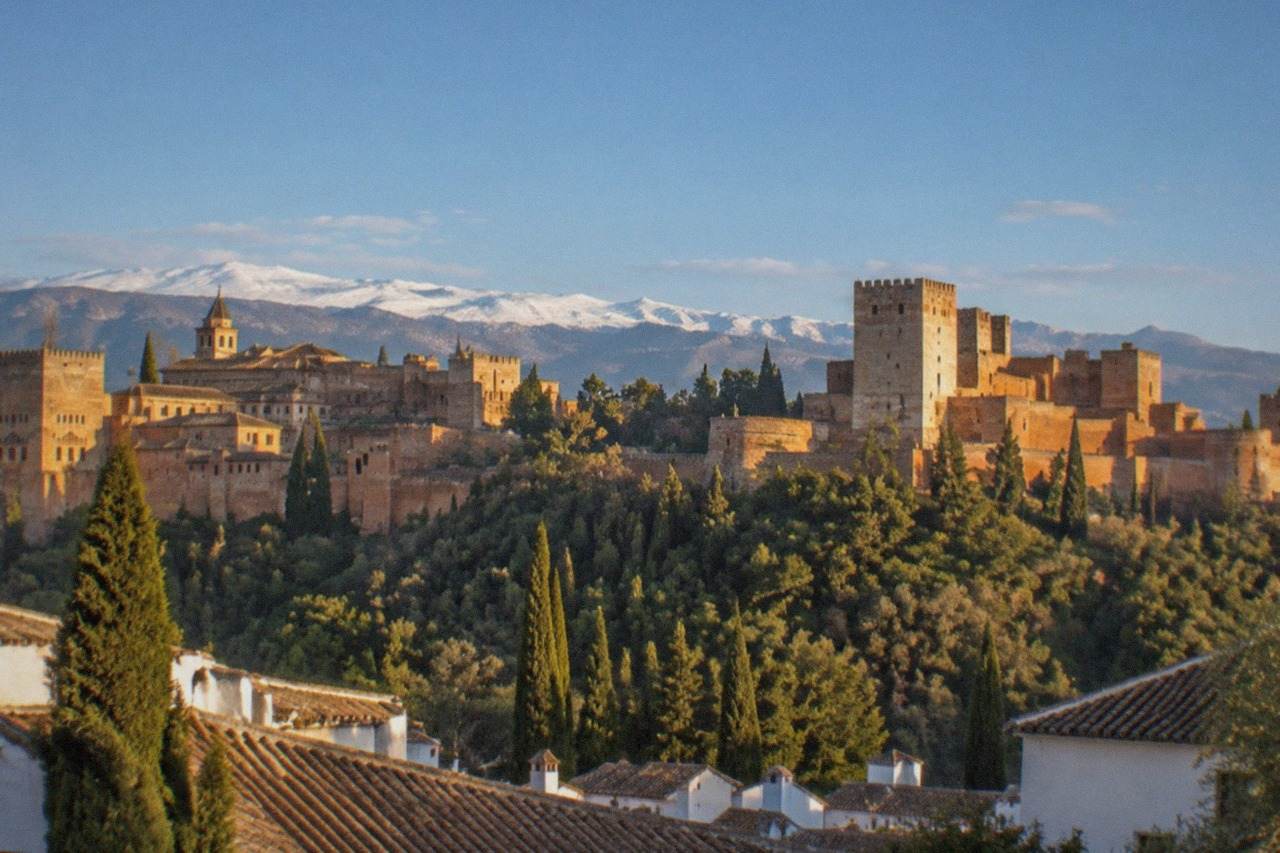
The Alhambra is a palace and fortress complex on a hill above Granada, built mainly by the Nasrid dynasty, the last Muslim rulers in what is now Spain. After the Christian conquest of the city it passed to the Spanish crown, survived long neglect, and has been a UNESCO World Heritage Site since 1984, with the Albaicin added in 1994.
The Alhambra stands on a red hill above Granada, and its name comes from that very colour. The Patronato de la Alhambra, the body that manages the monument today, records 2,726,861 visitors in 2025, a figure close to the site's own annual capacity ceiling of roughly 2.763 million. That popularity is the end of a long and unlikely story: a fortress built by a dynasty in retreat became, after long stretches of squatters, wars and near demolition, one of Spain's most visited monuments and a UNESCO World Heritage Site. This guide from the Things To Do In Granada editors traces that history from the Nasrid emirs to the modern ticket queue, with the verified practical facts you need if the story makes you want to see the place for yourself.
Who Built The Alhambra, And When?
The Alhambra was built primarily by the Nasrid dynasty, the last Muslim ruling house in what is now Spain, between the founding of the emirate of Granada and the end of Muslim rule in the city. Its oldest surviving part, the Alcazaba fortress, came first, and the palaces and gardens were added by successive emirs over more than two and a half centuries of continuous building. Later Christian kings added their own layers on top.
The Nasrids were not conquerors on the rise. They were what remained of Al-Andalus, the Muslim society that had once governed most of the peninsula, compressed into a mountain-ringed emirate in the far south after the Christian kingdoms took everything else. Granada survived as a client state, paying tribute and playing its powerful neighbours against each other, and the Alhambra was designed as much for display as for defence. A citadel that could signal to visiting envoys that this small court still commanded wealth, craft and learning.
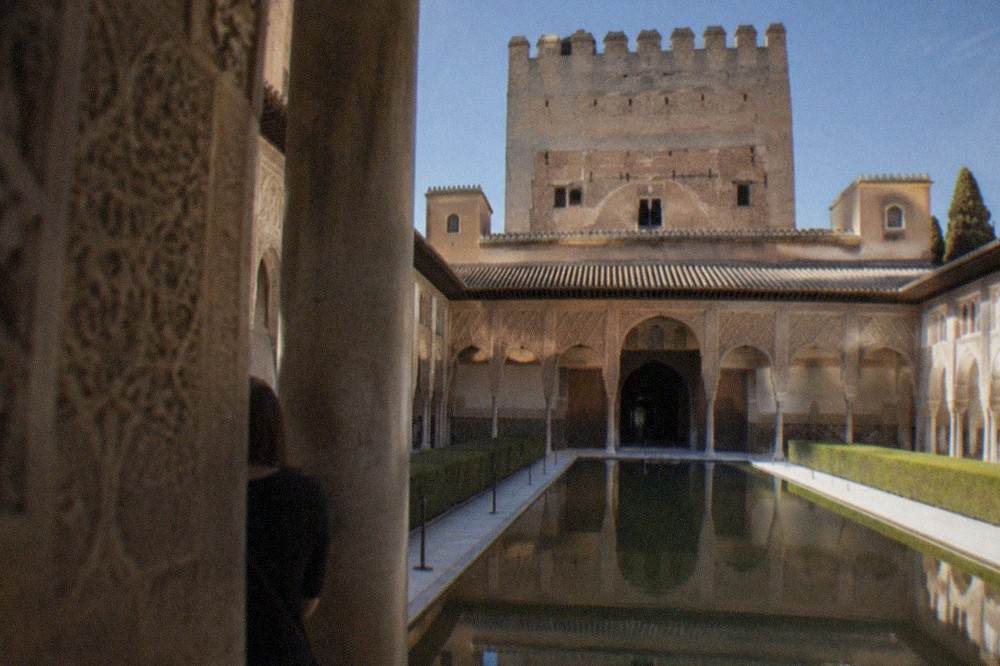
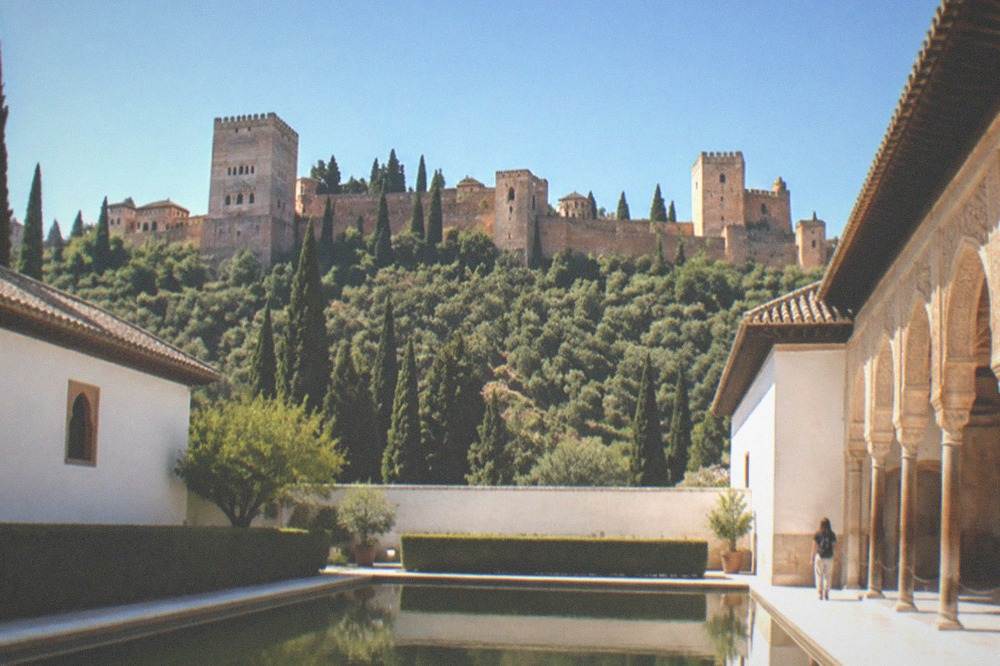
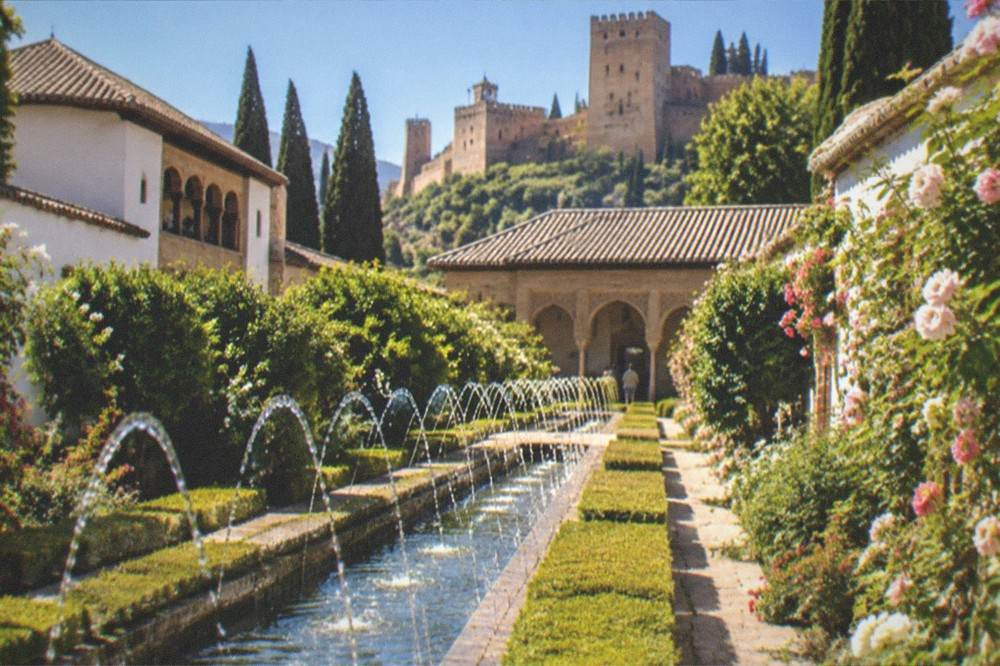
The complex was never one building project. Each emir extended, redecorated or rebuilt. The Alcazaba, the military core at the western tip of the hill, protected the site and gave it its watchtowers. The palaces that followed, above all the Comares and Lions palaces at the heart of what visitors now call the Nasrid Palaces, were courtyard buildings of water, light and inscribed plasterwork. The Generalife, on a neighbouring slope, served as the rulers' rural retreat, a summer place of orchards and water channels set apart from the politics of the citadel. Whether the Muslims built the Alhambra is a question our dedicated answer page settles in full: did the Muslims build the Alhambra.
The inscriptions that cover the palace walls are central to the story. The Nasrid motto appears repeatedly, and one phrase is repeated so often that it has become one of the monument's most famous details, something our article on the phrase repeated 9000 times in the Alhambra covers in full. The plasterwork was never merely decoration: it was a statement of legitimacy, piety and permanence by a dynasty that knew how fragile its position was.
What Does The Name Alhambra Mean?
The name Alhambra comes from the Arabic for "the red one", and it refers to the reddish colour of the hill's clay and the walls built from it. The red tone is visible today in the same ramparts, especially in late afternoon light. It is a description of the building material itself, not a symbolic or religious title, and the full story of the name is covered in our dedicated answer page on the meaning of Alhambra in English.
The reddish rammed earth and rubble masonry of the walls was practical as well as distinctive: it used the material the hill itself provided. But the colour took on a second life in the popular imagination, and later romantic writers made the "red castle" image central to the Alhambra's fame. That fame is one reason the site survived when so much of Nasrid Granada's other architecture did not.
The name also distinguishes the monument from the city below it. Granada as a city has its own history, its cathedral and Royal Chapel and the old quarters of the Albaicin and Sacromonte, and the Alhambra is only its most famous piece. The main Alhambra attraction guide covers the complex as it stands today, while this page stays on the timeline.
What Are The Main Parts Of The Alhambra Complex?
The Alhambra complex has four main historical components: the Alcazaba, the military fortress at the western edge; the Nasrid Palaces, the royal residential palaces at the centre; the Generalife, the hillside gardens and summer estate; and the Palace of Charles V, a Renaissance palace built inside the complex after the Christian conquest. A modern visitor moves between all four, and each answers a different chapter of the site's history.
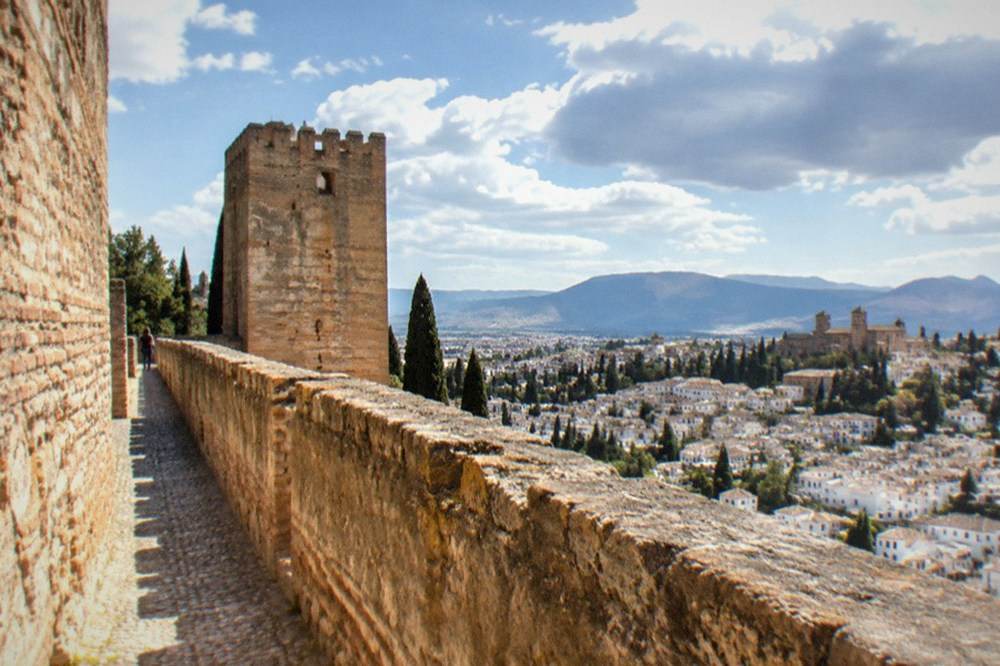
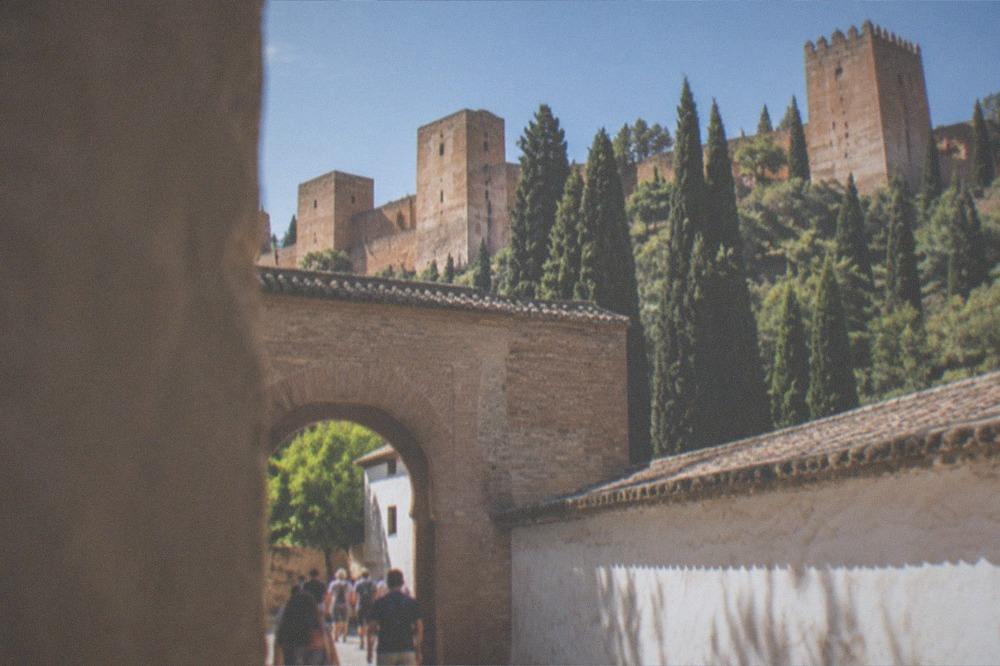
The Alcazaba is the oldest surviving part and the reason the hill was fortified at all. Its towers, including the Torre de la Vela, gave the Nasrids control of the city and the plain beyond. The Alcazaba guide covers what you actually see there, from the watchtower views to the foundations of soldiers' quarters.
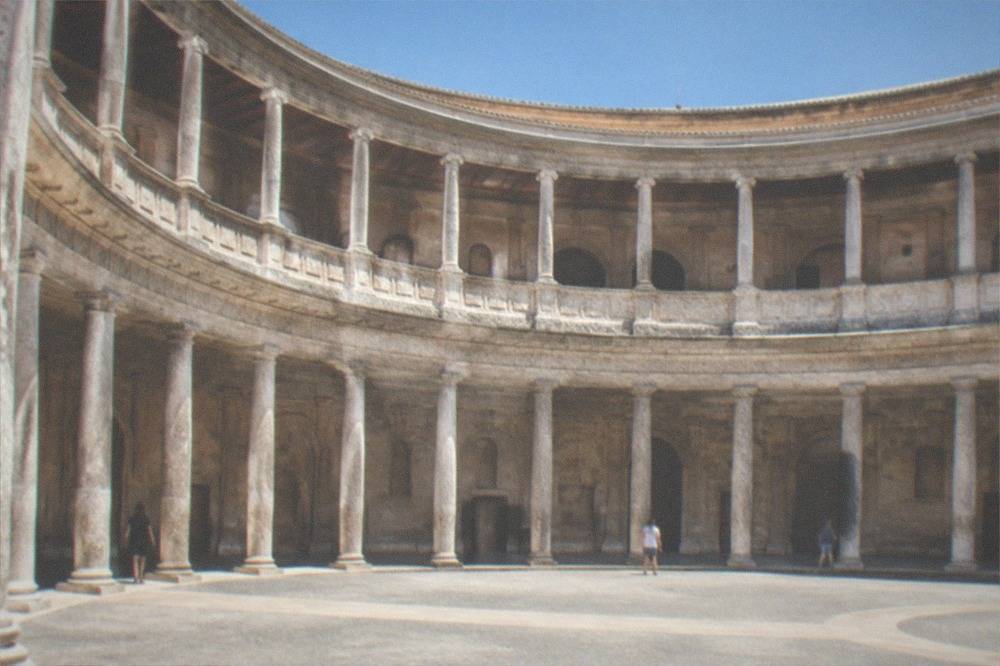
The Nasrid Palaces are the artistic peak of the complex and the part with the strictest visiting rules today. The Generalife, with its water gardens, sits across a ravine and was conceived as an escape from court life. The Palace of Charles V, built for the Habsburg emperor, is the Christian chapter: a vast square Renaissance palace with a circular courtyard dropped into the middle of a Muslim citadel, a building that stood roofless and unfinished for generations and was only completed in the modern era.
| Part of the complex | What it is | Era of origin |
|---|---|---|
| Alcazaba | Fortress and watchtowers at the western tip of the hill | Earliest surviving part, Nasrid military core |
| Nasrid Palaces | Royal palaces: Comares and Lions palaces, plus associated halls | Nasrid era, built by successive emirs |
| Generalife | Country estate and water gardens on the neighbouring slope | Nasrid era, rebuilt and altered later |
| Palace of Charles V | Renaissance imperial palace with circular courtyard | Christian era, unfinished for generations |
| Mexuar, Partal and towers | Administrative hall, mid-complex palace and defensive towers | Various Nasrid building campaigns |
How Did The Christian Conquest Change The Alhambra?
When the Catholic Monarchs, Ferdinand and Isabella, took Granada after a long siege, the Alhambra passed from Nasrid rule to the Castilian crown without being stormed or destroyed. The last Nasrid ruler handed over the city, and the site became a royal Christian possession, with the Catholic Monarchs themselves later buried in the city below at the Royal Chapel. The conquest ended Muslim rule in Spain and opened the Alhambra's Christian chapter.
The transition was unusually gentle for a fortress of this importance. The terms of surrender allowed Granada's Muslim population a period of tolerated practice, though that tolerance was later revoked and the population eventually expelled or converted, a turn that emptied the Albaicin of much of its original society. The palaces were used by the new rulers: Isabella and Ferdinand stayed in them, and Charles V later chose the site for his own palace, an extraordinary vote of confidence in a conquered building.
But royal attention moved away from Granada as Spain's centre of gravity shifted north. The court settled in Madrid, and the Alhambra became an administrative backwater: barracks, a powder store, and quarters for squatters. Explosives were at one point stored within the walls, and retreating Napoleonic troops at the end of that occupation blew up parts of the complex, destroying towers that were only partly rebuilt afterwards. The delicate Nasrid plasterwork survived fires, neglect and occupation more by luck than policy.
How Did Washington Irving Save The Alhambra?
The American writer Washington Irving lived in the then-decaying Alhambra and published "Tales of the Alhambra", a book that made the monument famous across Europe and America and is credited with starting the movement to preserve it. His descriptions of the palaces, then occupied by beggars and gypsies in his telling, turned the site into a romantic destination, and the book is still sold at the Alhambra today.
Irving's account worked because it arrived at exactly the right moment. Romanticism had made ruins fashionable, and the Alhambra offered ruins with a view. Travellers followed his route, and the Spanish authorities slowly followed the travellers. Restorations began, and the Alhambra was eventually declared a national monument of Spain, which put its legal protection on a formal footing. Our Tales of the Alhambra guide goes deeper into the book and its consequences.
The restoration debate has never fully ended. Every generation of conservators has to decide how much to rebuild, how much to stabilise and how much to leave raw, and the modern Patronato de la Alhambra y Generalife, the joint state and regional body that now runs the site, manages both the monument and the flow of visitors through it. The scale of that task is visible in the numbers: roughly 6,600 to 7,000 visitors per day, with the Nasrid Palaces capped at about 300 people per half-hour slot.
When Did The Alhambra Become A UNESCO World Heritage Site?
The Alhambra and the Generalife were inscribed on the UNESCO World Heritage list in 1984, and the listing was extended in 1994 to include the Albaicin, the historic Muslim quarter on the hill opposite. It is one single World Heritage listing for Granada's monumental landscape, not two separate inscriptions, and UNESCO cites the Alhambra as an exceptional example of medieval Muslim royal architecture and of the interaction between Islamic and Christian traditions.
The 1984 inscription recognised the palace complex itself. The 1994 extension recognised the wider setting: the Albaicin's street plan, its carmenes (walled houses with gardens) and its views across to the Alhambra are treated as one heritage landscape, which is why development on the hillside between them is so tightly controlled. The listing also explains a rule every visitor runs into: you cannot photograph or drone the site freely for commercial purposes, and even restoration work follows strict international conservation standards.
The UNESCO listing sits alongside another protection: the site's own capacity ceiling. The Patronato's annual limit of roughly 2.763 million visitors is a conservation tool as much as a ticketing rule, and the 2025 figure of 2,726,861 visitors shows how close the site now runs to its own maximum. History is, in a very literal sense, rationed here.
| Date | Verified milestone in the Alhambra's modern history |
|---|---|
| 1984 | UNESCO World Heritage inscription of the Alhambra and Generalife |
| 1994 | UNESCO listing extended to include the Albaicin |
| 2025 | 2,726,861 recorded visitors, near the annual capacity ceiling of about 2.763 million |
| 2025 | New Granada Card pricing tiers take effect from 13 November 2025 |
What Do Most Tourists Not Know About The Alhambra's History?
Most visitors do not realise that the Alhambra they walk through is substantially a reconstruction story as well as a medieval one, that parts of the complex were blown up by retreating Napoleonic troops, and that the monument spent long stretches as housing for squatters and soldiers rather than as a palace. The gap between the romantic building in the visitor's mind and the documented, damaged, repaired structure on the hill is the real story of the site.
A few examples make the point. The Torre de la Vela's bell has a tradition of being rung, a custom tied to the Christian conquest, and the tower's views over the vega, the fertile plain around Granada, were the reason the fortress existed at all. The Palace of Charles V, which many visitors assume must be a modern intrusion, was an imperial Renaissance project, and its circular courtyard was an architectural experiment that stood incomplete for generations. The parador inside the complex, now a state hotel, occupies a convent founded on the site by the Catholic Monarchs.
The inscriptions tell a quieter history. Visitors who read about the repeated Nasrid motto and the endless carved blessings are looking at a building that was designed to be read, and our article on what most tourists don't know about the Alhambra collects the details that most often surprise first-time visitors, from the water engineering to the survival of the plasterwork.
How Do You Visit The Alhambra Today?
You visit the Alhambra with a timed, nominative ticket bought in advance: the official General ticket costs EUR 22.27 and covers the Nasrid Palaces, Alcazaba and Generalife in one day visit, with gardens-only tickets at EUR 12.73 and night visits at EUR 12.73 for the palaces and EUR 8.48 for the gardens. Tickets are released roughly three months ahead, online sales close at 23:59 the day before, and the General ticket routinely sells out one to two months or more ahead in peak season.
The Nasrid Palaces entry is the strict part. Your ticket carries a specific half-hour window for the palaces only, photo ID is checked at the gate because tickets are nominative, and arriving late for that window can mean losing the palaces entirely. The rest of the complex, the Alcazaba and the Generalife, can be visited at any point during opening hours on your ticket date. The Alhambra tickets guide walks through every ticket type, and our answer on which ticket is best for the Alhambra helps you choose between them.
| Official ticket type | Price (EUR) | What it covers |
|---|---|---|
| Alhambra General | 22.27 | Nasrid Palaces, Alcazaba and Generalife, day visit |
| Gardens, Generalife and Alcazaba | 12.73 | Day visit without the Nasrid Palaces |
| Night visit, Nasrid Palaces | 12.73 | Evening entry to the palaces only |
| Night visit, Gardens and Generalife | 8.48 | Evening entry to the gardens |
| Dobla de Oro General | 30.48 | Alhambra plus Andalusi monuments in the city |
| Children under 12 | Free | Ticket still required for entry control |
Opening hours follow the seasons. The day visit runs 08:30 to 18:00 from 15 October to 31 March and 08:30 to 20:00 from 1 April to 14 October, with the site closed only on 25 December and 1 January. Night visits run on limited days of the week, Fridays and Saturdays in the winter half of the year and Tuesdays to Saturdays in the summer half, and the Alhambra night visit guide explains what the palaces are like after dark and how the timing differs from the day ticket.
| Visit | Season | Hours | Days |
|---|---|---|---|
| Day visit, monumental complex | 15 Oct to 31 Mar | 08:30 to 18:00 | Every day |
| Day visit, monumental complex | 1 Apr to 14 Oct | 08:30 to 20:00 | Every day |
| Night visit, Nasrid Palaces | 15 Oct to 31 Mar | 20:00 to 21:30 | Fri and Sat |
| Night visit, Nasrid Palaces | 1 Apr to 14 Oct | 22:00 to 23:30 | Tue to Sat |
| Night gardens | Seasonal windows | Varies, check official page | Tue to Sat or Fri and Sat |
If tickets are gone for your dates, the situation is recoverable but not comfortable. Our answer on what to do if Alhambra tickets are sold out sets out the realistic options, and the answer on getting tickets on the day explains why same-day online sales are not a reliable plan. Guided and skip-the-line products bundle entry with a guide, which is one way to reach the site when direct sales are exhausted, and the Alhambra tours guide compares the main formats, from audioguide tickets to small-group and private tours. One option costs nothing at all: the grounds around the walls can be walked freely, and our piece on visiting the Alhambra for free covers exactly which parts that includes.
How Does The Albaicin Fit Into The Alhambra's Story?
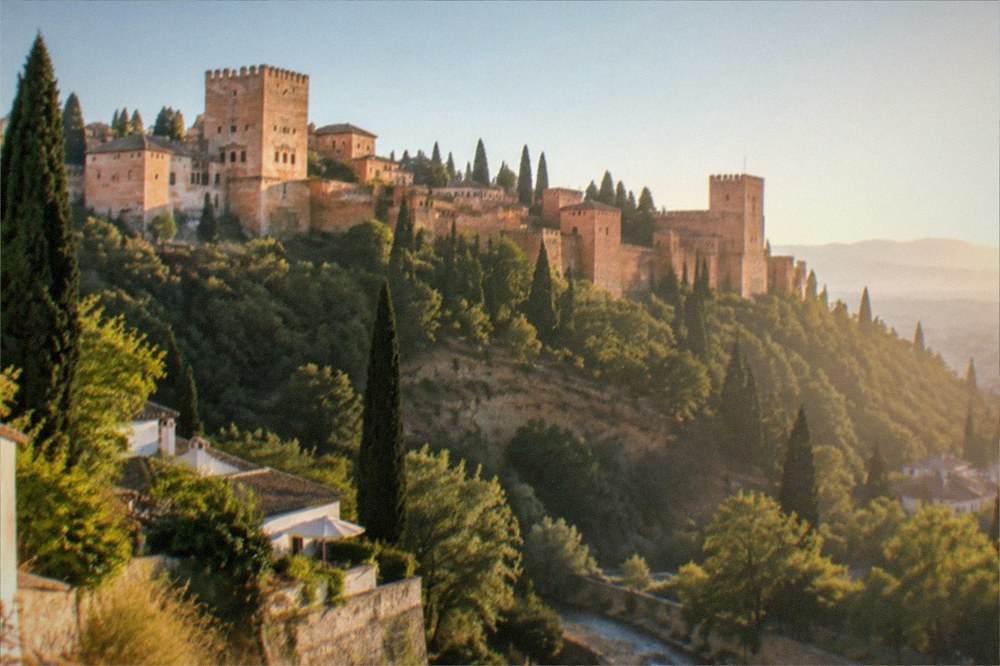
The Albaicin, the hill opposite the Alhambra, was the residential quarter of Muslim Granada and is part of the same UNESCO World Heritage listing, extended to include it in 1994. The two hills face each other across the valley of the Darro river, and the view of the Alhambra from the Mirador de San Nicolas in the Albaicin is the single most famous vantage point in the city, a panorama that has been photographed for generations of travellers.
Historically the pairing matters. The Albaicin was where much of Granada's population lived while the Alhambra housed the court, and after the Christian conquest it was the neighbourhood most affected by the expulsion and conversion of Granada's Muslim population. The surviving street plan, the narrow lanes and walled carmenes, is the reason UNESCO extended the listing: the heritage value lies in the relationship between the two hills, not just in the palace buildings.
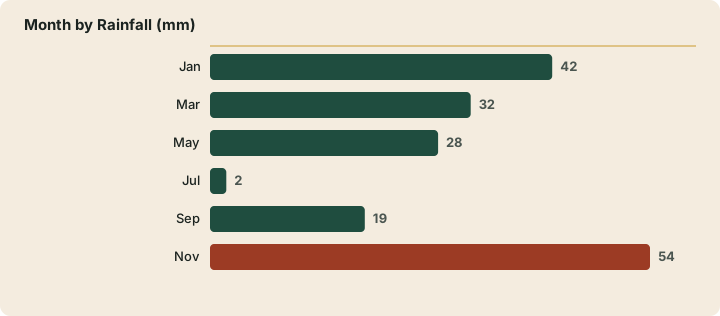
The Alhambra's water system also connected the hills. The acequia real, the royal irrigation channel, carried water from the Darro to the complex, and the same hydraulic engineering that feeds the Generalife's fountains is part of why the site could sustain gardens on a dry summer hillside. Granada's climate, with July averaging a high of 34.8C and just 2mm of rain in an average July, made that engineering essential rather than decorative.
| Month | Avg high (C) | Avg low (C) | Rainfall (mm) |
|---|---|---|---|
| Jan | 13.0 | 0.0 | 42 |
| Mar | 19.0 | 3.8 | 32 |
| May | 25.0 | 9.4 | 28 |
| Jul | 34.8 | 15.7 | 2 |
| Sep | 29.4 | 12.8 | 19 |
| Nov | 17.0 | 4.2 | 54 |
Those AEMET figures, from the 1981-2010 normals for the Granada Aeropuerto station, also explain the rhythm of a visit. Spring and autumn are the comfortable seasons, summer afternoons are hot on an unshaded hilltop, and winter days are often mild enough to tour outdoors, with snow sometimes visible on the Sierra Nevada from the terraces.
Is The Alhambra Worth The Planning It Now Demands?
Yes: the Alhambra is the reason most travellers come to Granada at all, and the combination of the Nasrid Palaces, the Alcazaba views and the Generalife gardens justifies booking months ahead, but only if you understand the rules first, because the timed Nasrid Palaces window, the sell-out reality and the nominative ID checks catch out thousands of visitors every year. The planning burden is real, and it is the price of a monument running at capacity.
For a sense of the practical alternatives, the Granada Card bundles Alhambra entry with the Cathedral, the Royal Chapel and other monuments: the 72-hour card costs EUR 60, the 48-hour EUR 55, the 24-hour night-palaces variant EUR 50, the Jardines variant EUR 50, and the child card EUR 13, prices effective 13 November 2025. Whether the card beats individual tickets depends on how many of the included monuments you will genuinely visit, and the Alhambra portion cannot be split across days once activated.
| Granada Card tier | Price (EUR) | Alhambra access included |
|---|---|---|
| 72 hours | 60 | Daytime General visit: Nasrid Palaces, Alcazaba, Generalife |
| 48 hours | 55 | Daytime General visit: Nasrid Palaces, Alcazaba, Generalife |
| 24 hours | 50 | Night visit to the Nasrid Palaces only |
| Jardines | 50 | Daytime Alcazaba and Generalife, no palaces |
| Child (age 3 to 11) | 13 | Same access as the accompanying adult tier |
The history also rewards the surrounding city. Granada has far more than the Alhambra, and our piece on what else to do in Granada other than the Alhambra lists the cathedral quarter, the tapas bars of the old town and the cave flamenco of Sacromonte. If you want to go deeper into the region's Andalusi past, the mountain villages of the Alpujarras, the last stronghold of Granada's Muslim population after the conquest, make a full-day trip that is itself a chapter of the same story.
The Alpujarras tour is a full-day outing, roughly eight hours, rated 4.6 from 144 reviews on the operator's live listing, and it pairs well with a second or third day in the city once the Alhambra itself is booked. That is the practical shape of most good Granada trips: the palace first, because the ticket calendar dictates the dates, then the city and the mountains around whatever slots you manage to secure.
Common Questions About Alhambra History
Did the Muslims build the Alhambra?
Yes. The Alhambra was built by the Nasrid dynasty, the last Muslim rulers in what is now Spain, from the founding of the emirate of Granada until the end of Muslim rule in the city. The Alcazaba, the Nasrid Palaces and the Generalife are all Nasrid work, though the Palace of Charles V was added later by a Christian emperor.
What does the name Alhambra mean in English?
The name comes from the Arabic for "the red one" and refers to the reddish colour of the hill's clay and the walls built from it. It describes the building material, not a symbolic title.
What phrase is repeated 9000 times in the Alhambra?
The Nasrid motto, "There is no victor but God", is repeated across the palace inscriptions, and one phrase appears so often that it has become one of the monument's signature details. The full explanation is in our dedicated answer page on the repeated phrase.
When did the Alhambra become a UNESCO World Heritage Site?
The Alhambra and Generalife were inscribed in 1984, and the listing was extended in 1994 to include the Albaicin. It is one single listing for Granada's monumental landscape, not two separate inscriptions.
Was the Alhambra ever destroyed or abandoned?
Partly. After the court moved away from Granada the complex served as barracks and housing, retreating Napoleonic troops blew up part of it, and it was only declared a national monument after Washington Irving's book helped make its preservation a public cause.
How old is the Alhambra?
The fortress core predates the great palaces, the palaces were built by successive Nasrid emirs, and the Generalife is Nasrid as well, so the medieval parts are very old indeed, with later Christian additions and modern restorations layered on top.