Tales Of The Alhambra
Washington Irving slept inside the Alhambra and turned its legends into one of the most influential travel books ever written. This guide explains what the book says, which corners of the palace it made famous, and how to visit them today.
Short answer
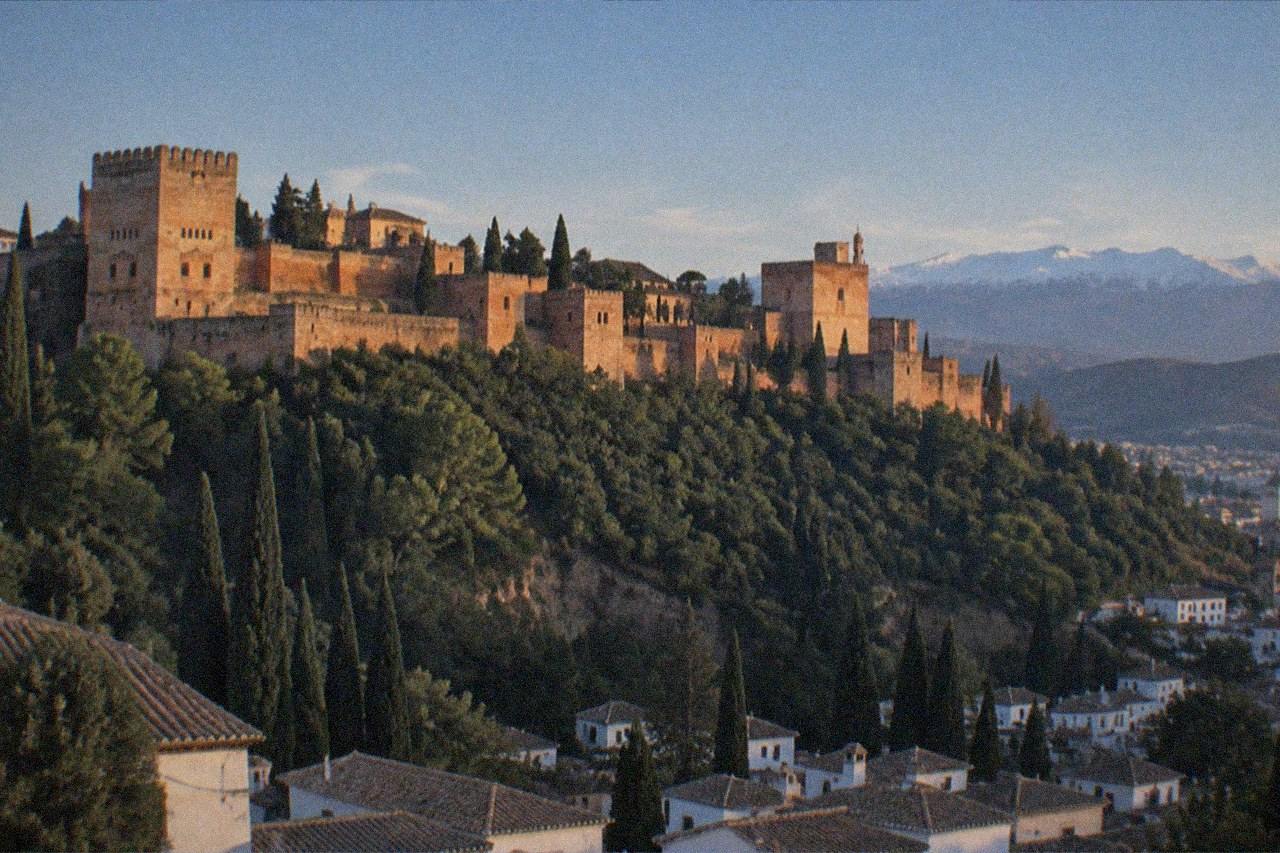
Tales of the Alhambra is Washington Irving's collection of sketches and legends written during a stay inside the Alhambra itself. It is the book most responsible for the romantic image of Granada's Nasrid palace, and several rooms, towers and legends it describes can still be identified on a modern visit.
An American diplomat named Washington Irving once talked his way into rooms inside the Alhambra and lived there for months, sketching the palace, its people and its stories. The book that came out of that stay did more than any other single text to fix the Alhambra in the world's imagination as a romantic ruin perched above Granada. Before Irving, the complex was neglected, occupied by squatters and soldiers; after him, it became a destination. The Alhambra, Generalife and Albaicin were inscribed together as a UNESCO World Heritage listing in 1984, extended in 1994 to include the Albaicin quarter, and the palace drew 2,726,861 visitors in 2025 according to the Patronato de la Alhambra's annual report. This guide from Things To Do In Granada walks through what the book actually contains, which legends still attach to which rooms, and how to see Irving's Alhambra on a modern visit, where tickets sell out months ahead and every practical rule is enforced.
What Is Tales Of The Alhambra?
Tales of the Alhambra is a mixed collection of travel sketches and rewritten folk legends, assembled by Washington Irving after he lodged inside the Alhambra itself and published soon after his stay. It is part travelogue, part storybook: the frame is Irving's life in the empty palace, and the tales are legends of Moorish Granada, hidden treasure, doomed princes and spirits that he collected from local informants and reworked in English.
The book was an immediate success and has stayed in print ever since, making it one of the most influential travel books ever written about Spain.
Irving arrived in Granada at a moment when the palace was not yet a monument in any modern sense. He described himself wandering through courts and halls that were partly inhabited, partly abandoned, with the sound of the city below. The sketches record daily life in and around the complex, the people he met there, and the atmosphere of a building that had been falling out of use since the Catholic Monarchs took the city.
The legends are the heart of the book's afterlife. Irving did not invent his stories from nothing: he took oral traditions circulating in Granada and in Spanish sources, and shaped them into narratives that readers of his era could enjoy. That act of shaping is why the book is read as literature rather than folklore, and why some of the "legends of the Alhambra" that tourists hear today are really Irving's versions, filtered back into local telling.
For background on the palace itself, our Alhambra history guide covers the Nasrid dynasty and the centuries after the conquest, and the main Alhambra attraction page gives the full practical picture.
Where Did Washington Irving Stay Inside The Alhambra?
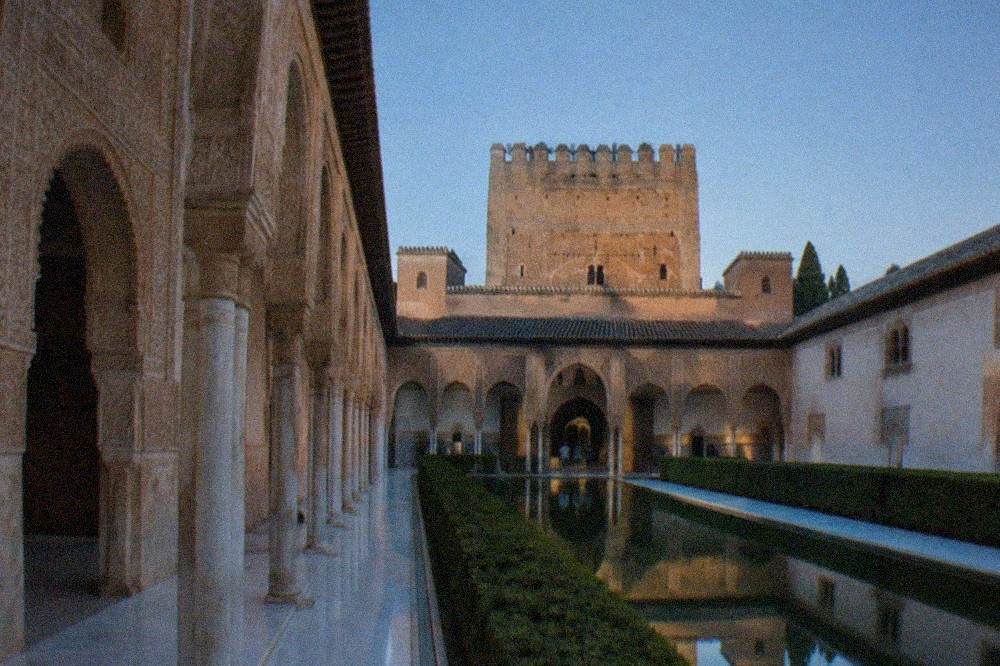
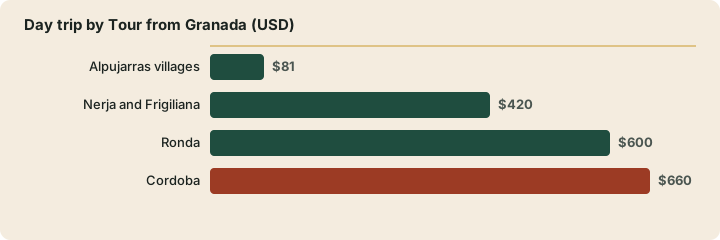
Irving slept in the Emperor's Chambers, rooms built for Charles V that sit right on the Nasrid Palaces visitor route, and his account of living among the halls at night is what gives the book its unusual intimacy. He described eating, writing and wandering inside the walls after dark, at a time when visitors rarely did any of those things. The rooms he occupied are marked on the site today, and a plaque inside the complex identifies the quarters linked to his stay.
The practical detail matters for a modern visitor, because the Alhambra Irving describes is not the Alhambra you can visit in the same way. Today the complex is a ticketed, timed monument: the official Patronato de la Alhambra ticket page lists a General ticket at EUR 22.27 covering the Nasrid Palaces, Alcazaba and Generalife in one daytime visit, with a Gardens, Generalife and Alcazaba-only ticket at EUR 12.73. Nobody lodges in the halls anymore, and the Alhambra night visit is a separate, ticketed experience with its own seasonal windows.
Irving's after-dark wanderings do survive in one form: the night visit to the Nasrid Palaces, which the official hours page schedules at 22:00-23:30 between April and mid-October on Tuesday to Saturday, and 20:00-21:30 on Friday and Saturday in the winter window. The Alhambra tickets guide explains the current pricing and release system in detail.
Which Legends From The Book Can You Match To Real Places?
Several of the book's best-known tales attach to identifiable spots in the complex, including the Hall of the Two Sisters in the Nasrid Palaces, the Tower of the Princesses, the gardens of the Generalife and the Torre de la Vela of the Alcazaba, and a visitor with a decent map can stand in most of them. Irving's legends of buried treasure, enchanted princesses and the last sigh of the Moor are tied to specific towers, courts and gardens rather than to vague atmosphere.
The palace rewards reading with your feet: the stories are more vivid when you know which room you are standing in.
The table below pairs the book's most famous tales with the physical locations a modern visitor can find. Locations are identified from the palace's own layout as described in Irving's narrative.
| Tale in the book | Setting | Where to find it today |
|---|---|---|
| The legend of the three beautiful princesses | Tower of the Princesses (Torre de las Infantas) | Northern edge of the Nasrid Palaces, on the General ticket |
| The story of Prince Ahmed al Kamel and the dove | Gardens and pavilions of the Generalife | Generalife, reached on the same General ticket |
| Legends of hidden Moorish treasure | Wells, vaults and disused chambers across the complex | Scattered; the Alcazaba's towers and vaults are the most atmospheric |
| The Moor's last sigh | Boabdil's departure from Granada | Traditionally placed on the road south out of the city, looking back at the Alhambra |
| Irving's own night wanderings | Courts and halls of the palace at night | Night visit to the Nasrid Palaces, EUR 12.73, seasonal schedule |
The Hall of the Two Sisters, with its mirrored stucco and fountain basin, is one of the rooms Irving lingered over, and it sits inside the timed-entry zone of the Nasrid Palaces. That timing rule is strict: tickets are nominative, photo ID is checked at entry, and the half-hour window printed on your ticket for the Nasrid Palaces specifically is enforced, while the rest of the complex can be visited more freely on the same date. The Alcazaba attraction page covers the fortress towers where several treasure legends are set.
How Did Tales Of The Alhambra Change The Palace's Fate?
The book transformed the Alhambra from a semi-ruined, partly occupied building into an international symbol of romantic Spain, and its popularity fed directly into the early movement to preserve the complex. Irving's readers in America, Britain and beyond arrived in Granada asking for the palace he described, and that attention helped push the Spanish state toward restoration and protection decades before the UNESCO inscription of 1984. Without the book, the palace's survival into the modern era in recoverable form is far less certain.
The numbers show where that trajectory ended. The Patronato de la Alhambra's 2025 annual report counts 2,726,861 visitors, close to the Patronato's own annual capacity ceiling of roughly 2.763 million, and daily entry is capped at approximately 6,600-7,000 visitors, with the Nasrid Palaces limited to around 300 people per 30-minute slot. A building that once had squatters in its halls now manages crowd flow in half-hour increments.
Preservation also means rules. The General ticket routinely sells out one to two months or more ahead in peak season, which surprises readers who assume a famous monument keeps tickets on the shelf. Our Alhambra tours guide compares the guided options that include tickets, which is one way around the sell-out problem, and the Alhambra map guide helps you plan the walking route between the Alcazaba, palaces and Generalife before you arrive.
What Do Most Visitors Not Know About The Book's Stories?
Most visitors do not realise that many of the legends they associate with the Alhambra are Irving's literary reworkings rather than authentic Moorish originals, and that the book mixes first-person reportage with freely invented scenes so fluently that readers have taken invented details as historical fact for generations. Irving also wrote at a moment when the palace's future was genuinely uncertain, which gives his romanticism a practical edge: he was arguing, in effect, that the building deserved to survive.
Knowing where the reportage ends and the storytelling begins changes how you read every plaque in the complex.
A few examples of the gap between book and building:
| What the book suggests | What the record supports |
|---|---|
| A palace full of hidden treasure waiting to be found | Old treasure legends were common across Andalusia; no documented Alhambra hoard from Irving's era exists |
| Spirits and enchanted occupants of the halls | Literary device drawn from oral legend, not a claim about the palace's history |
| Irving living alone in a silent palace | The complex was partly inhabited; his own sketches describe servants, soldiers and other residents |
| The legends as ancient Moorish tradition | Several tales trace to Spanish and local sources Irving adapted, some heavily |
The same caution applies to modern myths. Visitors regularly arrive convinced that the Alhambra appeared in Game of Thrones, which it did not, a misconception our Game of Thrones answer page addresses directly. The five facts about the Alhambra answer is a good quick grounding, and the meaning of the name Alhambra explains the "red one" origin that Irving himself retold.
Can You Follow Irving's Route On A Modern Visit?
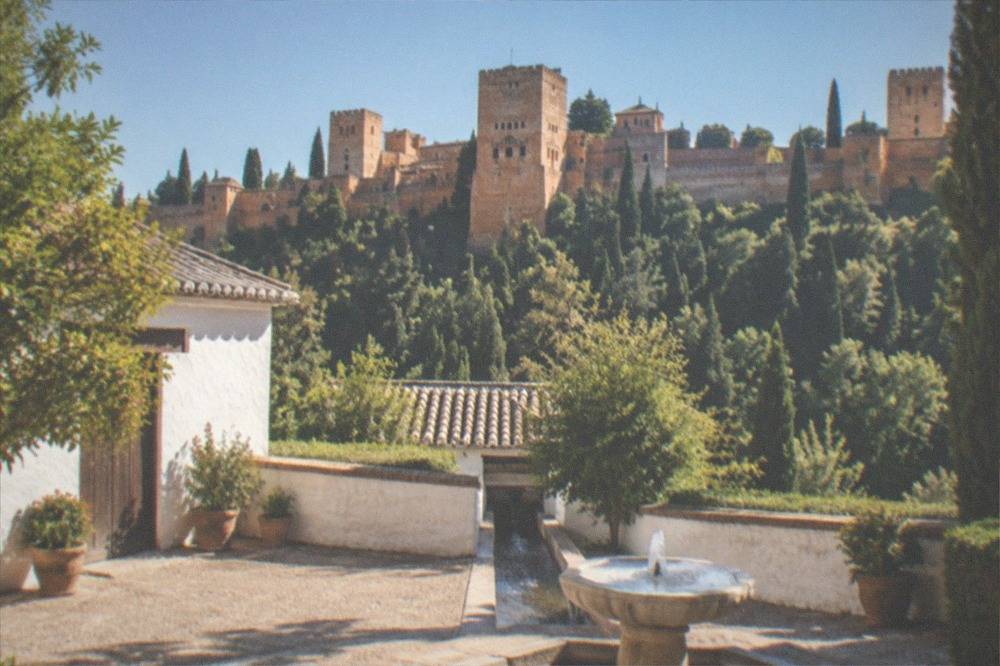
Yes, in a modified form: the core of Irving's Alhambra, the Alcazaba, the Nasrid Palaces and the Generalife with its water stairway, is exactly the circuit covered by the General ticket, and the main change is that everything is now timed, ticketed and capped rather than free-roaming. A realistic route is the Alcazaba first for the view from the Torre de la Vela, then the Nasrid Palaces inside your printed half-hour window, then the walk to the Generalife gardens, in roughly three to four hours depending on pace.
What you cannot reproduce is the solitude.
The official hours give you the frame: day visits run 08:30-18:00 from mid-October to the end of March and 08:30-20:00 from April to mid-October, with the complex closed only on 25 December and 1 January. How long you need depends on how much of Irving's detail you want to absorb; our how much time do I need to see the Alhambra answer breaks the timing down by ticket type.
A planning table for matching the book's settings to a visit:
| Book setting | Ticket needed | Best time of day |
|---|---|---|
| Torre de la Vela and the Alcazaba walls | General or Gardens-only | Morning, before the palace crowds |
| Nasrid Palaces halls | General (timed slot) | Your assigned half-hour window, arrive early |
| Generalife gardens and water stairway | General or Gardens-only | Late morning or early evening light |
| Night atmosphere Irving describes | Night visit ticket, EUR 12.73 palaces / EUR 8.48 gardens | Seasonal schedule, check the official page |
For the practical side of buying, the official site to buy Alhambra tickets answer names the Patronato's own ticketing domain, and the best ticket for the Alhambra answer compares the General, gardens-only, night and combined Dobla de Oro options at EUR 30.48.
Which Alhambra Tour Suits A Tales-Of-The-Alhambra Reader Best?
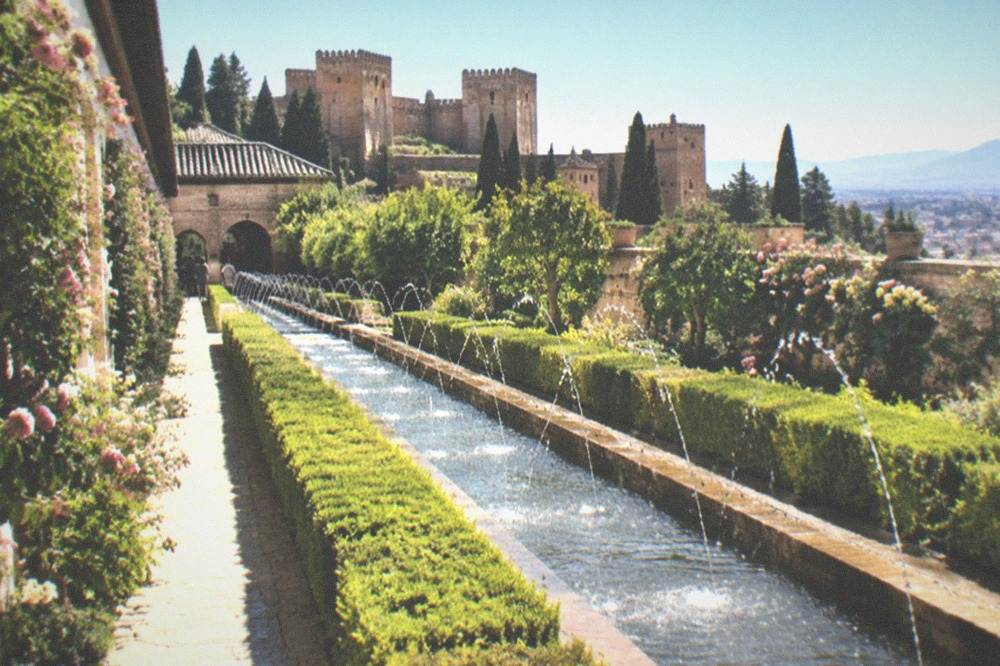
A private or small-group guided tour with tickets included is the best fit for someone arriving with the book in mind, because the legends are the one part of the Alhambra that a good guide adds far more than a plaque can, and because tours with tickets bundled sidestep the sell-out risk that ruins most spontaneous plans.
The Alhambra, Nasrid Palaces, Generalife and Alcazaba private tour runs about three hours from $220.65 per person, rated 4.9 from 208 reviews on the operator's live listing, and is the most direct match for a reader who wants the stories attached to the rooms.
A private guide can pace the visit around the book's key settings rather than the standard route. For a lower-cost alternative, the Alhambra and Nasrid Palaces tour with tickets runs from $56 per person, rated 4.7 from 23,689 reviews, and the three-hour Nasrid Palaces and Generalife option from $60, rated 4.7 from 1,394 reviews. Entry-only tickets with audioguide, from $32 or $48 depending on the package, suit readers who prefer to carry the book itself and walk alone.
For help choosing, the Alhambra tours guide lays out the trade-offs between guided, audioguide and entry-only options, and the sold-out tickets answer covers what to do when the date you wanted is gone.
How Does The Book Connect The Alhambra To The Rest Of Granada?
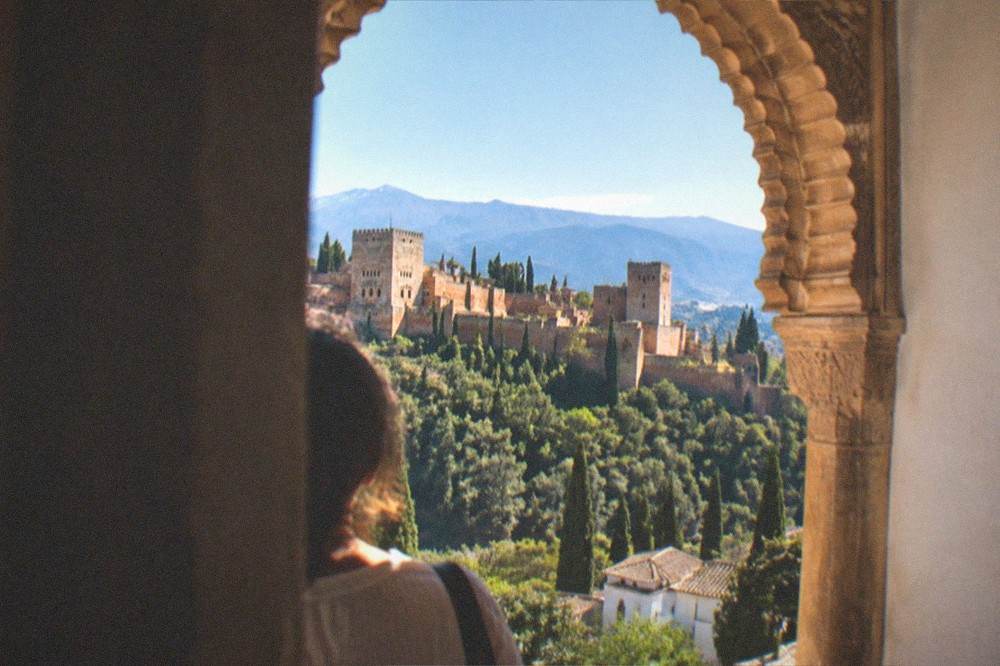
Irving's Granada is not just the palace: the book constantly looks down at the city, the Darro valley and the Albaicin from the heights, and the view from the Mirador de San Nicolas across at the red walls is the single most famous vantage point in his footsteps, best reached on foot through the old Muslim quarter.
The Albaicin was added to the same UNESCO listing in 1994 as an extension of the 1984 Alhambra and Generalife inscription, which means the whole landscape the book describes is protected as one heritage site. Reading the book with the city in view, not just the walls, is the full experience.
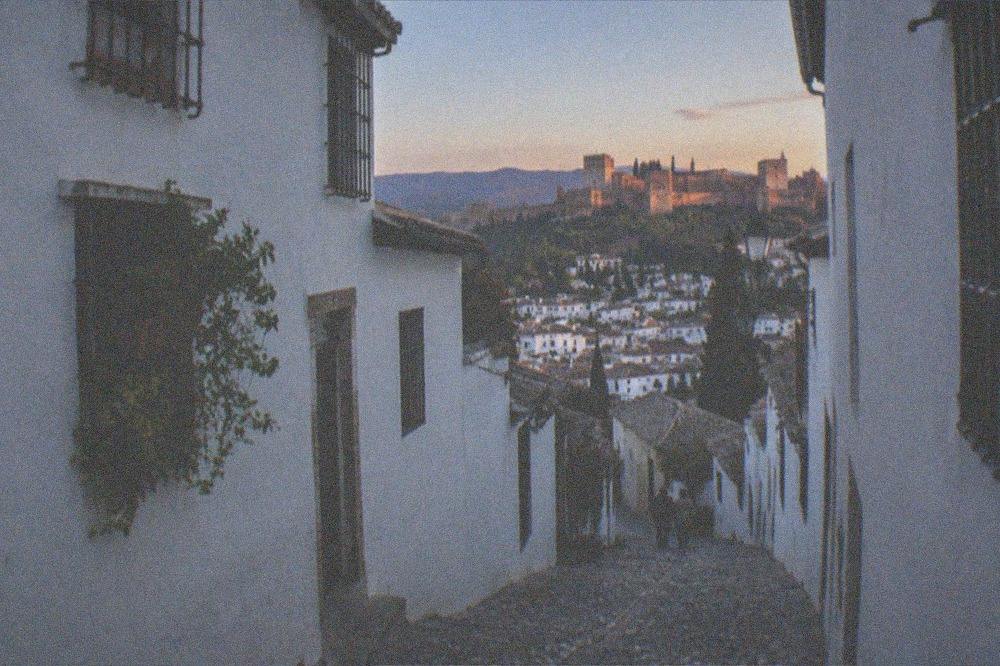
The sunset walk through the Albaicin and Sacromonte captures that second half of Irving's Granada. The Albaicin and Sacromonte guided sunset walking tour runs about two and a half hours from $17 per person, rated 4.9 from 3,533 reviews, and ends at the classic viewpoint hour. Irving's descriptions of the palace seen from across the valley, glowing at dusk, are exactly the scene that viewpoint still delivers every clear evening.
Irving also looked outward, toward the mountains and the sea, and modern visitors do the same. The whitewashed villages of the Alpujarras, the coastal towns of Nerja and Frigiliana, and the gorge city of Ronda all extend the same layered Andalusian story into terrain the palace itself cannot show you.
Where Does The Story Continue Beyond The City Walls?
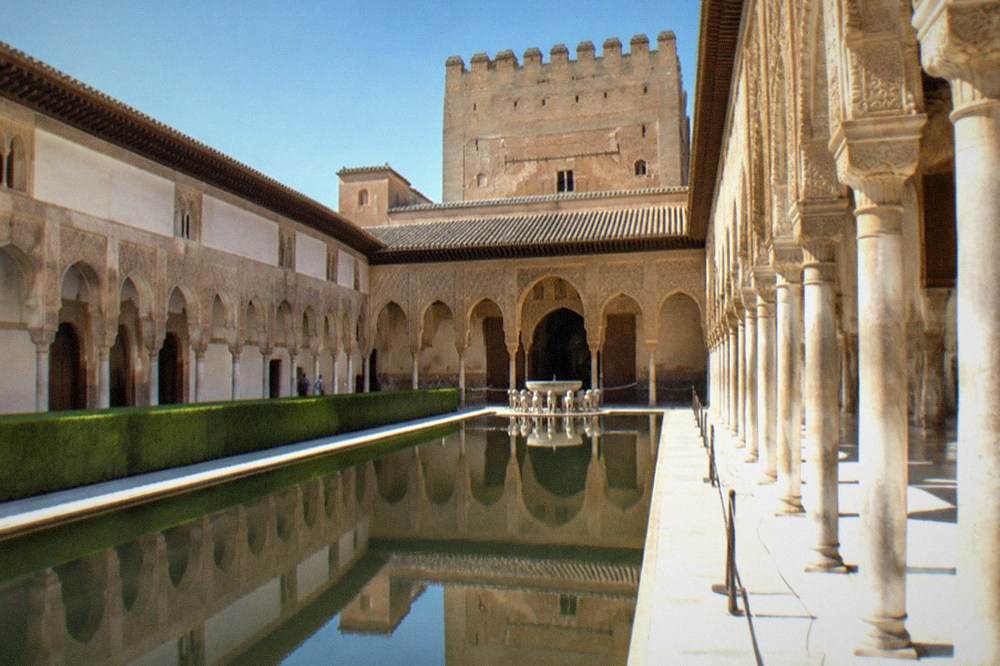
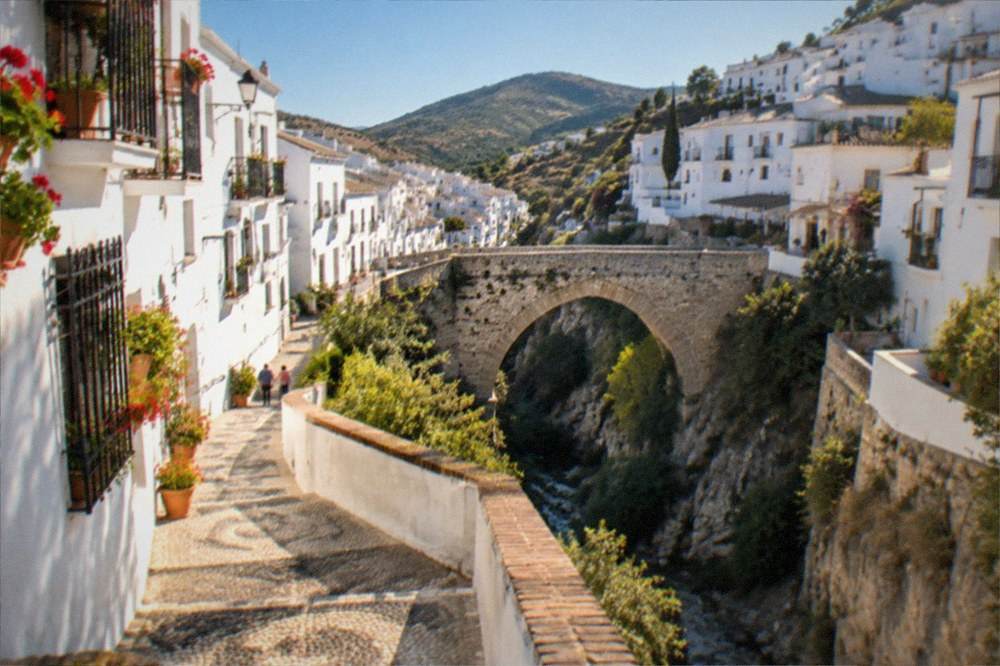
The book's most famous closing image, the last Moorish king looking back at Granada from the road south, points directly at the landscapes beyond the city, and the same corridor Irving's readers imagined is now the route of Granada's most popular day trips: the Alpujarras mountain villages on the southern slopes of the Sierra Nevada, the whitewashed coastal towns of Nerja and Frigiliana, and the gorge town of Ronda further west. These trips extend the same story of Andalusia's layered past into terrain the palace cannot show you.
They are also the natural plan-B when Alhambra tickets for your dates have sold out.
A comparison of the most relevant day trips for a reader extending the book's themes:
| Day trip | What it adds to the story | Tour from Granada |
|---|---|---|
| Alpujarras villages | The mountain world the Nasrid world retreated into after the fall of Granada | Full-day tours from $81 or $99 per person depending on operator |
| Nerja and Frigiliana | The sea the book's exiles sailed toward, plus Moorish village streets | Small-group day trip from $157, about 7 hours |
| Ronda | Dramatic gorge city with its own Moorish bridge and legends | Small-group tour from $167, 8-10 hours |
| Cordoba | The Mezquita and the caliphate that preceded Granada's rise | Day trip from $163, about 11 hours |
The Nerja and Frigiliana day trip suits the book's mood best: a maximum of eight travellers, skip-the-line entry at the Nerja caves, and a rated 4.7 from 32 reviews on the operator's live listing.
Back in the city, the what else to do in Granada other than the Alhambra answer rounds out an itinerary once the palace day is planned.
Is The Alhambra Still Worth Visiting For The Book Alone?
Yes, and arguably more so than for the architecture alone, because the book gives the palace a narrative layer that survives the crowds: the same halls that Irving described in near solitude are now capped at roughly 300 people per half-hour in the Nasrid Palaces, but the legends he attached to them are unchanged, and a reader who arrives knowing the tales experiences the Court of the Lions or the Hall of the Two Sisters differently from a visitor who does not.
The 2025 figure of 2,726,861 visitors, near the annual capacity ceiling, shows how many people now share the experience Irving had almost alone.
The practical reality is that the solitude is gone but the substance is not. Read the book before you go, buy tickets the moment your dates release, roughly three months ahead, and pick a tour that includes entry if the official allocation has already gone. The can I get Alhambra tickets on the day answer explains why that rarely works, and the can I visit the Alhambra for free answer addresses the budget question honestly.
For the deeper dives, the did the Muslims build the Alhambra answer covers the Nasrid builders, the phrase repeated 9000 times answer decodes the famous carved inscription, and the what tourists don't know about the Alhambra answer collects the details that surprise even repeat visitors.
Common Questions About Tales Of The Alhambra
What is Tales of the Alhambra about?
It is Washington Irving's book of travel sketches and legends written during his stay inside the Alhambra, mixing first-person description of the palace with retold folk tales of Moorish Granada.
Did Washington Irving really live in the Alhambra?
Yes. Irving lodged in rooms inside the complex, at a time when parts of the palace were still inhabited and not yet a protected monument, and the quarters linked to his stay are marked on the site today.
Are the legends in the book true?
They are literary reworkings of oral and written traditions, not documented history. Irving adapted stories circulating in Granada and Spain, and several details readers take as fact are his own invention.
Can you visit the places described in Tales of the Alhambra?
Most of them. The Nasrid Palaces, Alcazaba and Generalife are all covered by the General ticket, currently EUR 22.27 on the official Patronato pages, though the timed Nasrid Palaces entry window is strictly enforced and tickets often sell out months ahead.
Why is the book still important for visitors?
It is the main reason the Alhambra entered the romantic imagination of Irving's era, which helped drive the preservation movement that eventually produced the 1984 UNESCO inscription, extended to the Albaicin in 1994.
Should I read the book before visiting Granada?
It is the single best preparation for the palace, because it attaches stories to specific rooms and towers that a modern visit otherwise reduces to architecture, and it costs nothing to read given how continuously it has stayed in print.