Does It Ever Snow In Granada, Spain?
Snow in the city of Granada is rare but real, usually a brief January or February event, while the Sierra Nevada above the city holds snow for months. Here is what the climate record actually shows.
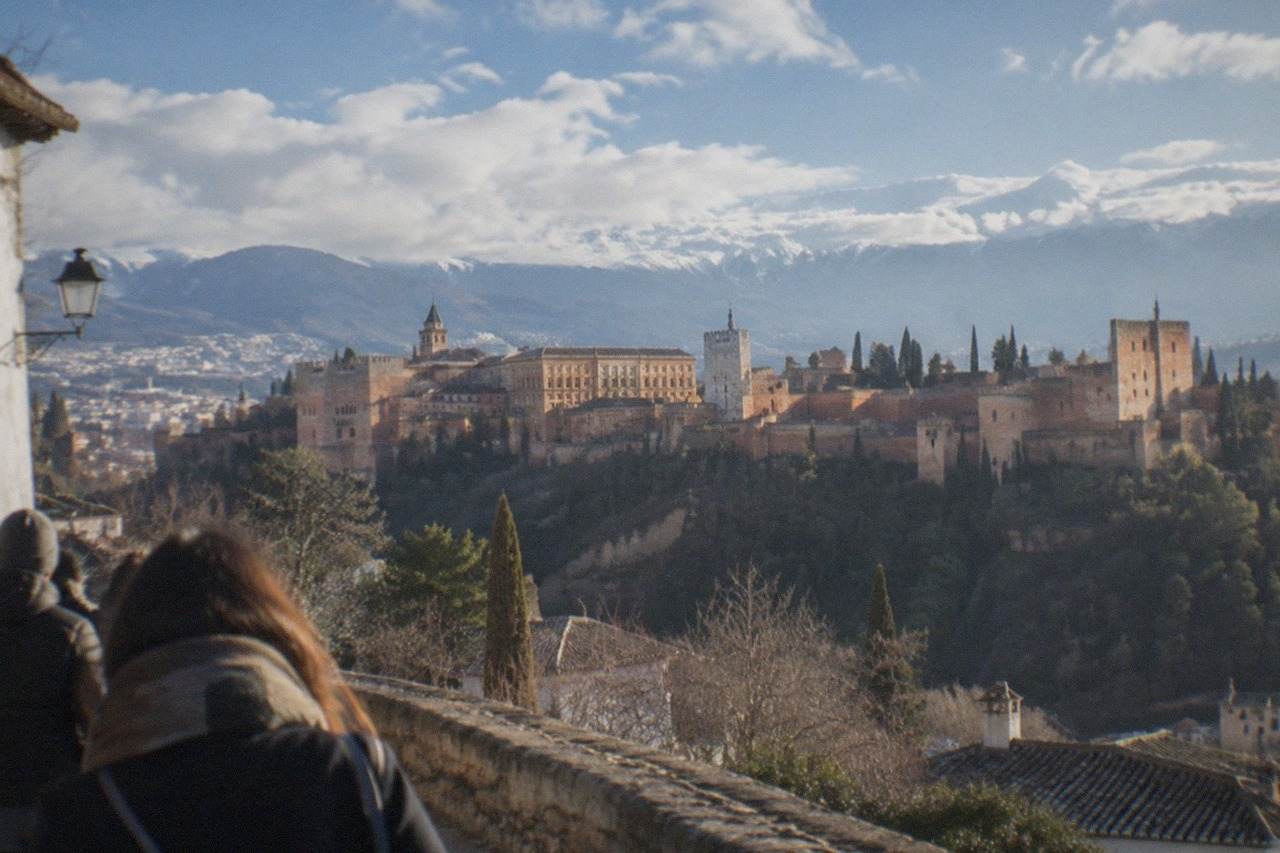
Granada occupies one of the strangest climate positions of any mid-sized European tourist city. The streets sit at roughly 680 metres above sea level on a fertile plain, and less than 40 kilometres to the southeast the ground rises to Mulhacen, the highest peak on the Iberian Peninsula. The result is a city that bakes in July yet watches snow settle on the rooftops of the Albaicin once every few winters, and a mountain range above it that holds snow for most of the year. The question of whether it snows here is therefore less simple than it looks, and the honest answer depends on which Granada you mean: the one at street level or the one at 3,000 metres.
Does It Ever Snow In Granada, Spain?
Yes, it snows in Granada, but rarely in the city itself. Snowfall at street level happens on average roughly once every one to three winters, usually between December and February, and it rarely lies for more than a day before the Andalusian sun clears it. AEMET's climate normals for the Granada Aeropuerto station show January nights averaging 0.0C, so the city sits right at the freezing line, while the Sierra Nevada above it holds deep snow for roughly half the year.
The distinction matters because visitors routinely conflate the two. Someone booking a January trip imagining a snowy city will usually be disappointed, and someone assuming winter Granada is warm because it is in Andalusia will be surprised by how sharp the evenings feel. The city's winter is genuinely cold by southern Spanish standards. AEMET's 1981-2010 normals for Granada Aeropuerto put January's average low at exactly 0.0C and February's at 1.6C, with December at 1.7C. Those are night-time averages, which means a meaningful number of winter nights drop below freezing.
When snow does fall in the city, it is usually a short-lived event. A few centimetres settle, the schools in the hills close, social media fills with photographs of the Alhambra's towers edged in white, and within 24 to 48 hours it has largely melted. The mountains are a different story entirely. The Sierra Nevada ski resort, Pradollano, sits at over 2,100 metres with lifts running far higher, and its season typically runs from late November to early or mid-April, weather and snow dependent. The resort's exact 2026-2027 opening and closing dates had not been officially published, so check the official sierranevada.es pages for the confirmed dates for any specific season rather than trusting a projected date from a third-party site.
How Cold Does Granada Actually Get In Winter?
Granada's coldest month is January, with an average high of 13.0C, an average low of 0.0C and 42mm of rain, according to AEMET's 1981-2010 normals for the Granada Aeropuerto station. December and February are close behind, with lows of 1.7C and 1.6C respectively. Daytime winter temperatures are mild, but nights regularly touch or pass freezing, which is what makes the occasional snowfall possible.
The table below shows the full winter half of the year from AEMET's official normals. These are long-period averages for the airport station, which sits on the Vega plain a short drive from the city centre, and they are the only figures worth quoting for a specific month.
| Month | Average High (C) | Average Low (C) | Rainfall (mm) |
|---|---|---|---|
| Oct | 23.2 | 8.7 | 40 |
| Nov | 17.0 | 4.2 | 54 |
| Dec | 13.4 | 1.7 | 56 |
| Jan | 13.0 | 0.0 | 42 |
| Feb | 15.4 | 1.6 | 38 |
| Mar | 19.0 | 3.8 | 32 |
Two patterns in that data explain the snow situation. First, the gap between day and night is enormous in winter: a January day averages 13.0C while the average night sits at the freezing point, a 13-degree swing that is characteristic of high inland plains. Second, winter is the wet half of the year, with December (56mm) and November (54mm) the rainiest months, so the moisture is present. When a cold snap and a wet front arrive together, the precipitation that would normally fall as rain falls as snow instead.
The summer half of the year is irrelevant to the snow question in the city but not on the peaks. July averages 34.8C and just 2mm of rain at the airport, yet even in high summer a few patches of stubborn snow can survive in the highest north-facing hollows of the Sierra Nevada. Locals will tell you the white caps on the range are visible from the city on clear days across much of the year, which is part of why the question gets asked so often: a visitor landing in May sees snow on the horizon and reasonably wonders what that means for their packing list.
A cold-weather trip to Granada rewards a different kind of planning than a summer one, and the winter calendar has real advantages. The Alhambra's General ticket routinely sells out one to two months or more ahead in spring and autumn, but winter availability, outside the Semana Santa window and the festive holidays, is meaningfully easier, and the Nasrid Palaces under a grey sky with the fountains running are still the Nasrid Palaces. The city's tapas custom also earns its keep in winter, since a hot drink-and-tapa circuit through the old town bars is exactly what a 0C evening calls for. If you are weighing winter against other seasons, the best month to visit Granada question has a fuller answer, and the how many days in Granada is enough question changes shape in winter too, when daylight runs short.
Can You See Snow In Granada Without Leaving The City?
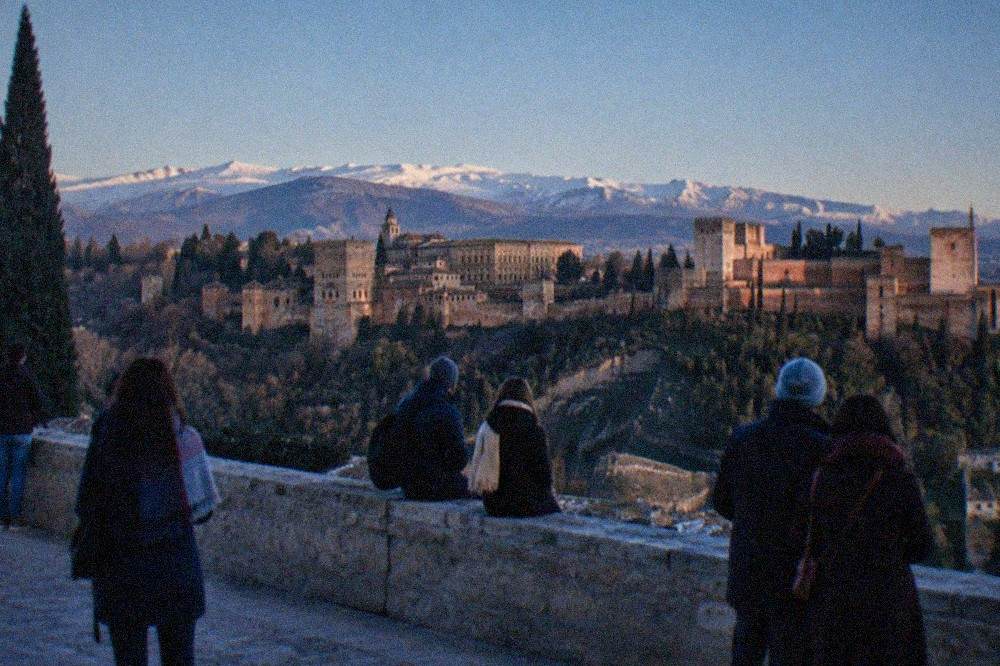
Yes, and this is the answer most visitors actually want. On clear winter days, and often well into spring, the snow-covered peaks of the Sierra Nevada are visible from viewpoints across Granada, most famously from the Mirador de San Nicolas in the Albaicin, where the white range rises directly behind the Alhambra's silhouette. You do not need to travel anywhere or buy a ticket to see snow from Granada, you simply need a clear evening and a west-facing terrace.
This is the practical sweet spot for a winter or early-spring visit. The city stays walkable and mostly mild by day, while the postcard view over the Alhambra gains a white backdrop that summer visitors never get. The Mirador de San Nicolas faces the sunset, so late afternoon into dusk is when the light does the most with the combination: the palace walls catching the last orange, the mountains holding cold blue shadow. A guided walk through the Albaicin and Sacromonte neighbourhoods reaches this viewpoint as a natural high point, and doing it with a guide adds the layer most first-time visitors miss, the story of the Moorish quarter's layout and the cave dwellings that still line the Sacromonte hill. More of these guides are collected on Things To Do In Granada.
The other snow-adjacent experience inside the city is the hammam. Cold weather is the traditional context for Andalusi bathing culture in the first place, and Granada has two well-regarded options. The Arabian Baths Experience at Hammam Al Andalus runs 90-minute circuits of hot, warm and cold pools with steam and massage options, in a restored bathhouse a few minutes from the Cathedral, and the Palacio Nazari Hammam offers a comparable traditional bath at a lower starting price. On a January evening after a day of walking hills, a hot pool under a starred ceiling is not a tourist gimmick, it is the historically correct response to Granada's winter.
Can You Ski Or Hike In The Sierra Nevada From Granada?
Yes, both. The Sierra Nevada ski resort at Pradollano is the southernmost ski station in Europe and is close enough to Granada for day trips, with a season that typically runs late November to early or mid-April depending on snow. In the warmer months the same range is a hiking destination, including guided walks to around 3,000 metres, and the Los Cahorros gorge route in the lower Sierra Nevada is a year-round option.
The skiing question deserves the careful answer. The resort's 2026-2027 opening and closing dates had not been published on the official sierranevada.es site; the site was showing only the advance ski-pass discount window running 15 September to 15 October 2026. The historical pattern is a late-November opening and an early-to-mid-April close, and one third-party projection suggested a mid-November 2026 start, but that is a projection, not a confirmed date. Anyone planning a ski day trip around specific dates should check the official resort pages first. Getting there is straightforward: the resort is a short drive from the city, and it is genuinely possible to stay in Granada and ski, which is one of the city's more unusual selling points.
Hiking is the less weather-dependent half of the range's appeal. The Los Cahorros route in Monachil, on the Sierra Nevada's lower western flank, strings together a hanging footbridge, narrow gorge passages, caves and waterfalls on a circuit of roughly four hours, and guided versions run from around $52 per person. Higher up, guided hiking adventures reach up to 3,000 metres with roughly five hours of walking, priced from around $67 per person, and on a clear day those routes put you above the snow line even in early summer. Both are listed on the operator's live listing with current ratings of 4.9 from over a thousand reviews for Los Cahorros and 4.9 from 420 for the high-Sierra walk.
One transport point worth stating plainly because visitors get it wrong: the Metro de Granada does not reach the Sierra Nevada, the airport or the Alhambra. The metro runs north-south through the city and its metropolitan area only. Mountain excursions run by road, whether on an organised tour, a ski-resort bus or a hire car, and the Alhambra itself is reached by the hillclimb bus lines or on foot.
When Is The Best Time Of Year To See Snow Around Granada?
For snow visible from the city, January and February are the strongest months: the Sierra Nevada is at its whitest and the city's own nights sit at or below freezing, giving you the best odds of both a snowy backdrop and, occasionally, snow on the streets. For snow you can stand on, the safest window is January to March, when the ski resort is in full operation and the snowpack is deepest, with late-season skiing often possible into early April.
Early winter is a gamble on both fronts. December offers the festive atmosphere and the deepest atmosphere of the season, and the mountains are usually white by mid-month, but the ski season's early weeks depend on snowfall and snowmaking, and the city itself is more likely to deliver frost than snow. By late March and April the equation flips: the resort is typically still running on a mature base while the city is firmly into spring, with average highs of 19.0C in March and 20.6C in April, so an April visitor can legitimately swim in a city-centre hammam in the afternoon and stand on a piste the same weekend.
Spring deserves a special mention for photographers. The combination of green Vega fields, blossom in the lower valleys and heavy snow on the high peaks is at its best from March into May, and the light at the Mirador de San Nicolas in that season is what makes the classic Granada postcard. If your real goal is the picture rather than the piste, aim for a clear day between February and April, check that the western sky will be clean, and get to the Albaicin an hour before sunset.
For travellers building a full cold-weather itinerary, the winter city rewards the same core list as any season plus a few additions: the Alhambra (booked well ahead even in winter, since the Nasrid Palaces slots are capped at roughly 300 people per half hour), the Cathedral and Royal Chapel, the Albaicin and Sacromonte walks, and the hammams. The what not to miss in Granada rundown covers the full list, and the question of why Granada is so famous is worth reading before a first trip, since the answer is almost entirely visible from a snowy-mountain viewpoint.
Common Questions About Snow In Granada
Does it ever snow in Granada, Spain?
Yes, but rarely at street level. Snow falls in the city itself roughly once every one to three winters, usually between December and February, and normally melts within a day or two. The Sierra Nevada above the city, by contrast, holds snow for roughly half the year.
How cold does Granada get in winter?
According to AEMET's 1981-2010 climate normals for the Granada Aeropuerto station, January averages a high of 13.0C and a low of 0.0C, making it the coldest month. Nights regularly touch or drop below freezing from December through February, while daytime temperatures remain mild.
Can you see snow from the city of Granada?
Yes. On clear days from roughly November through April, and often into May, the snow-covered Sierra Nevada peaks are visible from viewpoints across the city, most famously the Mirador de San Nicolas, where the white range rises directly behind the Alhambra.
When does the Sierra Nevada ski season start?
The typical pattern is a late-November opening running to early or mid-April, weather and snow dependent. The exact 2026-2027 dates were not officially published at research time, so check the official resort site for the confirmed season dates before planning a ski day trip.
Is Granada a good winter destination even without snow in the streets?
Yes. Winter brings the year's smallest crowds outside the holidays, easier Alhambra availability than the peak spring and autumn windows, working tapas bars, and the snow-backed mountain views that summer visitors never see. Pack warm layers for the evenings.
Does it ever snow on the Alhambra itself?
Occasionally. A light dusting on the Alhambra's towers happens every few winters and typically lasts less than a day or two, and when it coincides with a visit it produces one of the rarest and most photographed sights in Andalusia.
The short version: plan for a cold, clear, mostly snow-free city with a white mountain range standing over it, and you will be dressed correctly for what Granada's winter actually delivers.