Why Is Granada So Famous?
Granada is famous for the Alhambra, free tapas, flamenco caves and the last Muslim kingdom in Spain. Here is what makes the city so celebrated.
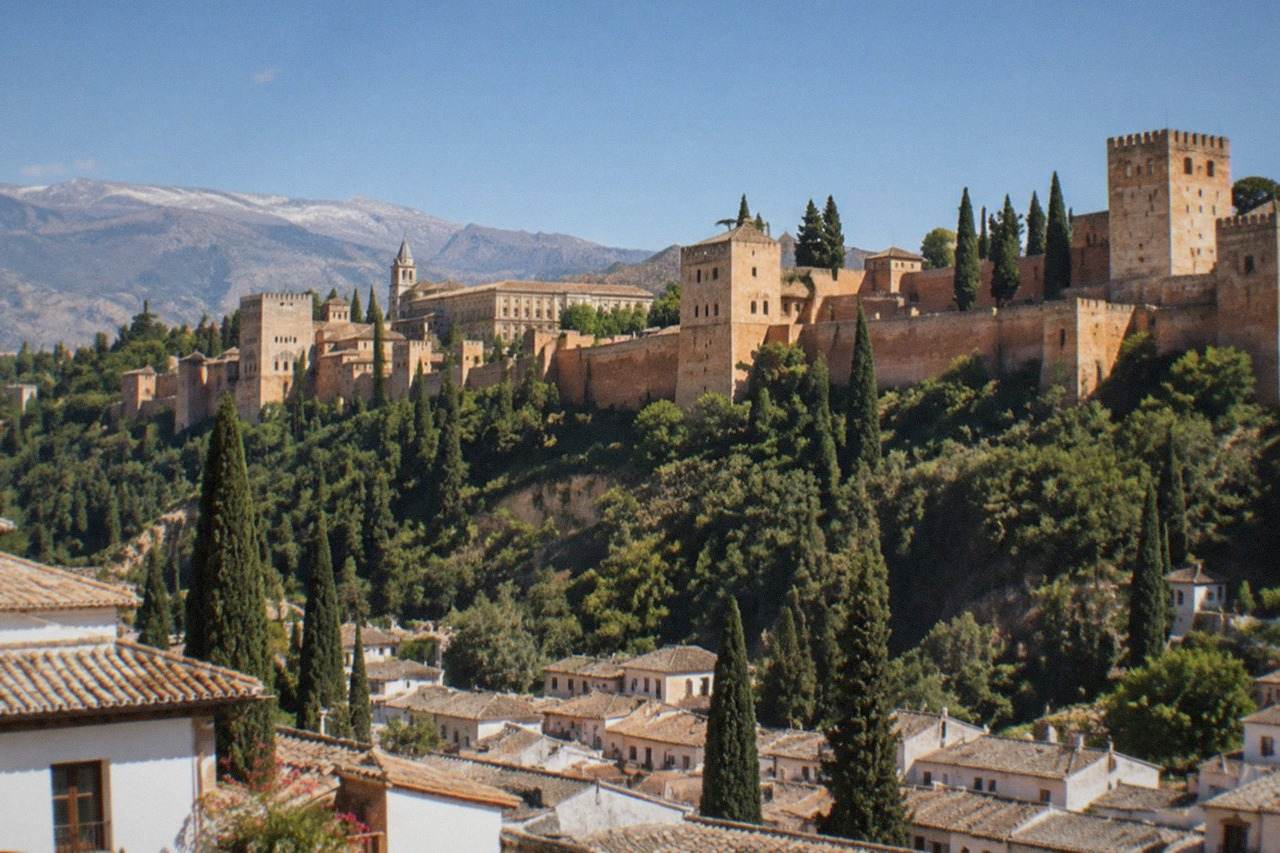
Granada drew 2,726,861 visitors to the Alhambra alone in 2025, according to the Patronato de la Alhambra y Generalife's own annual report, a figure that lands within a whisker of the monument's annual capacity ceiling of roughly 2.763 million. That is the scale of the draw. A mid-sized Andalusian city at the foot of the Sierra Nevada, with a metro system that runs north to south and stops well short of both the airport and the famous hilltop palace, pulls a world-class crowd anyway. The reasons are specific and they stack: a UNESCO-listed palace, the last Muslim kingdom on the Iberian Peninsula, a tapas custom that survives in 2026, flamenco born in caves, and a setting where snow-capped peaks sit above a hot dry summer city.
Why Is Granada So Famous?
Granada is famous first for the Alhambra, a Nasrid palace complex that is one of Spain's most visited monuments and a UNESCO World Heritage Site since 1984, and second for being the last Muslim kingdom in Iberia, which fell at the end of the medieval period. Around that core sit the Albaicin, free tapas with a drink, flamenco in the Sacromonte caves and the Sierra Nevada skyline, a combination no other Andalusian city can match.
The UNESCO framing matters more than most first-time visitors realise. The Alhambra, the Generalife and the Albaicin are one single World Heritage inscription, listed in 1984 and extended in 1994 to include the Albaicin quarter across the valley. That is not two separate honours but one listing covering both hills that face each other across the Darro river. The palace on one side, the old Muslim residential quarter on the other, and the irrigated gardens between them: the citation recognises the whole stage, not just the headliner.
Then there is the history. Granada was the Emirate of Granada, the last independent Muslim state on the Iberian Peninsula, and it outlasted every other Andalusian city by a wide margin. That late survival is why its Islamic architecture reached a final, refined flowering here rather than anywhere else, and it is why the famous things to see in the city are largely the products of that last-moment confidence. For the deeper background, our page on whether the Muslims built the Alhambra works through who actually constructed the monument.
What Makes The Alhambra Such A Big Deal?
The Alhambra is the best-preserved medieval Muslim palace complex in Western Europe, and it operates at near capacity: roughly 6,600 to 7,000 visitors per day, with the Nasrid Palaces capped at around 300 people per half-hour slot. The General ticket costs EUR 22.27 on the official pages and routinely sells out one to two months or more ahead in peak season.
The palace is not one building but a sequence: the Alcazaba fortress, the Nasrid Palaces, the Palace of Charles V and the Generalife gardens, all threaded through a walled hill. The Nasrid Palaces carry the fame. Their plasterwork, muqarnas honeycomb ceilings and the Court of the Lions are the images that travel, and one phrase is repeated across their walls so often that visitors ask about it by name. A single carved invocation appears thousands of times through the decoration, a fact covered in detail on our page about the phrase repeated 9,000 times in the Alhambra.
The practical reality follows from the fame. Daily capacity of approximately 6,600-7,000 visitors, Nasrid Palaces slots of roughly 300 people per 30 minutes, tickets released about three months in advance, online sales closing at 23:59 the day before the visit. There are no reliable same-day online sales, and the Patronato's own ticket page lists the live prices: EUR 22.27 for the General daytime ticket, EUR 12.73 for gardens-only or night Nasrid Palaces, EUR 8.48 for the night gardens. If the date is gone, the options are on our page about what to do if Alhambra tickets are sold out.
The palace sells itself, but the way most people now see it has changed. A ticket with an audioguide suits independent visitors; a guided tour with tickets bundled answers the two problems at once, since the guide service and the sell-out risk are handled together. The listing for the flagship guided option shows a 4.7 rating from 23,689 reviews, which tells its own story about demand.
Is The Free Tapas Tradition Part Of Granada's Fame?
Yes. Granada is one of the very few Spanish cities where ordering a drink in many traditional bars still brings a complimentary small tapa, a custom reported as widely upheld local practice as of 2026, though it is not a legal requirement and some venues have adjusted portions or pricing. It is a genuine part of what the city is known for, alongside the Alhambra itself.
This is the fame that operates at street level. A caña or a tinto de verano arrives with a small plate, often scaling up with further rounds in the traditional spots. July 2026 reporting in the Spanish press confirms the custom remains part of local identity while also noting the pressure it is under: some bars have trimmed portions or nudged drink prices. The honest framing is "widely upheld local practice", not a guarantee in every venue. Our pages on whether Granada still does free tapas and on the famous tapas street cover where the tradition holds strongest.
Are The Albaicin And Sacromonte Famous Too?
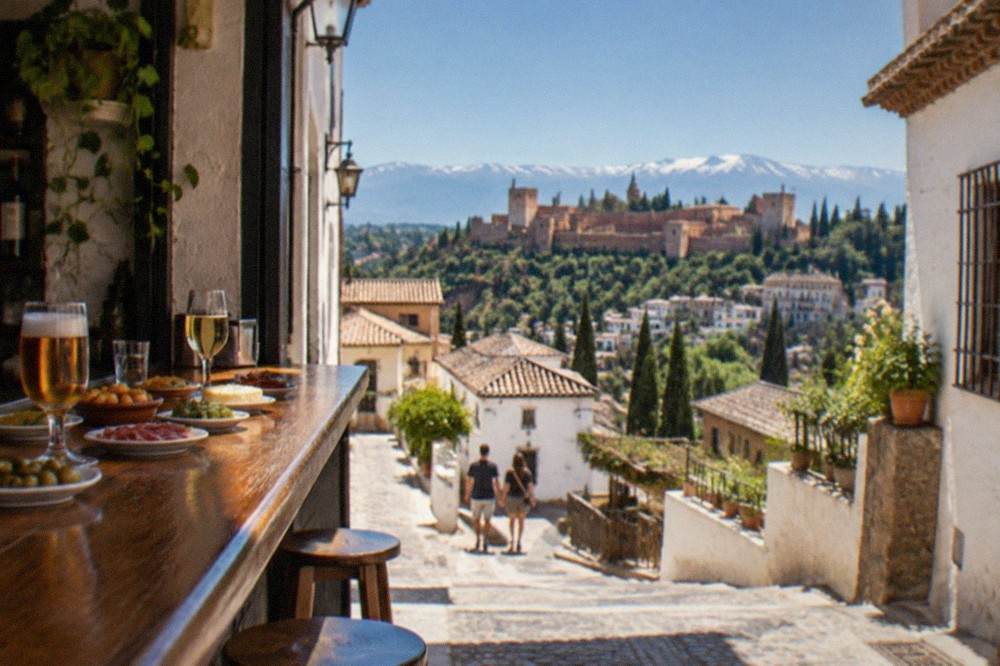
They are. The Albaicin, the old Muslim quarter facing the Alhambra across the Darro valley, is included in the same UNESCO World Heritage listing as the palace itself, extended in 1994, and the Sacromonte caves above it are famous as the birthplace of Granada's zambras, flamenco performances held in cave homes where some families still live and perform today.
The Mirador de San Nicolas, the viewpoint at the Albaicin's western edge, is the single most photographed vantage point in the city: the Alhambra framed against the Sierra Nevada. Below it, the Carrera del Darro runs the river valley between the two hills. Across the hillside, Sacromonte's cave dwellings hold a flamenco tradition distinct from the tablao shows of Seville or Madrid, and questions about whether the caves are worth visiting and whether people still live in them come up constantly because the answer surprises people: yes, some do.
How Do The Sierra Nevada And The Climate Shape Granada's Fame?
Granada is famous for a climate AEMET's data shows as sharply continental for Andalusia: July averages a high of 34.8C with just 2mm of rain, while January nights average 0.0C, and the Sierra Nevada's snow is visible from the city in winter. The mountains give the city its ski access and its hiking, all within one of Europe's most southerly ski regions.
The AEMET normals for Granada Aeropuerto, 1981-2010, give the honest picture: hot dry summers, cold nights in winter, and moderate rainfall concentrated between October and December. The contrast is the selling point. In the same week you can stand in a T-shirt in the city and look up at snow on the peaks. The ski resort typically runs late November to early or mid-April, weather dependent; its 2026-2027 dates are not yet officially confirmed on sierranevada.es, so check the official site before planning a ski day. Hiking options such as the Los Cahorros gorge route sit in the same range.
| Month | Avg high (C) | Avg low (C) | Rainfall (mm) |
|---|---|---|---|
| January | 13.0 | 0.0 | 42 |
| April | 20.6 | 6.0 | 36 |
| July | 34.8 | 15.7 | 2 |
| October | 23.2 | 8.7 | 40 |
The table above is the AEMET 1981-2010 data for the airport station, and it explains two things at once: why summer visitors complain about the heat, and why the city's terraces and miradors are at their best in the shoulder months. Our guide to the best month to visit Granada works through the same numbers in detail.
How Does Granada's Food Add To Its Reputation?
Granada's food fame rests on free tapas, its position in Andalusian cooking and specific local dishes, with the city's name itself linked to the pomegranate, granada in Spanish, a fruit that appears on manhole covers and in the local gastronomy. Traditional plates include the plato alpujarreno from the mountain villages to the south and the habit of eating late, standing up, moving from bar to bar.
The pomegranate connection is the emblem: the fruit is the city's symbol, stamped on pavements across the centre. The eating culture is the substance. A tapas crawl in the Realejo or around the old town costs the price of the drinks, with the food arriving alongside. For the specifics, our pages on what food Granada is famous for and what traditional food to try in Granada list the dishes and where the custom holds.
What Should You Actually Do With The Fame?
Plan around the sell-out attractions and the rest of the city follows easily: book the Alhambra as early as possible, ideally the day tickets release roughly three months ahead, give the city at least two to three days, and use the evenings for the Albaicin viewpoints, the tapas bars and a cave flamenco show in Sacromonte, which together are the experiences that made Granada famous in the first place.
The practical layer is where the famous city either works or frustrates. The Alhambra is the constraint: with the General ticket selling out one to two months or more ahead in spring and autumn, it sets the calendar for everything else. Our itineraries for one day, two days and three days in Granada sequence the rest around it, and our page on how many days in Granada is enough works through the trade-offs honestly. For the evenings, the choice among flamenco shows is covered in our guide to the best flamenco show in Granada, and the comparison with Seville matters if you are splitting a trip between the two.
For the Alhambra itself, the guided option with tickets included is the listing to check first: the operator's live listing shows current availability, and the tour pairs the entry with a guide who can read the plasterwork that made the monument famous. Check availability as soon as travel dates are fixed, because the ticket inside the tour is subject to the same slot scarcity as the official box office. Whatever the season, Things To Do In Granada keeps the full picture of the city's famous sights, food and day trips in one place.
Common Questions About Why Granada Is Famous
Why is Granada so famous?
Granada is famous for the Alhambra, the best-preserved medieval Muslim palace complex in Western Europe and a UNESCO World Heritage Site since 1984, for being the last Muslim kingdom in Iberia, for free tapas with drinks, for flamenco in the Sacromonte caves and for the Sierra Nevada rising behind the city.
Is the Alhambra the main reason people visit Granada?
It is the biggest single draw: the Patronato's annual report shows 2,726,861 visitors in 2025, close to the monument's annual capacity ceiling of about 2.763 million. But the Albaicin, the tapas custom and the flamenco tradition keep many visitors in the city for several days beyond the palace visit.
Is Granada famous for free tapas?
Yes. Many traditional Granada bars still bring a complimentary small tapa with a drink order, a custom reported as widely upheld as of 2026. It is local practice rather than a legal guarantee, and some venues have adjusted portions or pricing.
What is Granada's symbol?
The pomegranate, granada in Spanish, is the city's symbol and appears on pavements and official imagery across the centre.
Is Granada a UNESCO World Heritage city?
The Alhambra, Generalife and Albaicin share one UNESCO World Heritage inscription, listed in 1984 and extended in 1994 to include the Albaicin quarter. It is a single listing covering both hills, not two separate ones.
Granada's fame is not one thing but a stack: a palace at capacity, a kingdom that outlasted its rivals, a bar culture that still feeds you, and mountains that hold snow above a hot summer city. Book the Alhambra early, walk the hills in the evening, and the rest of what made the city famous arrives on its own.