Is Granada, Spain Worth Visiting?
A direct answer to whether Granada is worth visiting, with verified Alhambra prices, sell-out realities, free tapas, climate data and what the city offers beyond the famous palace.
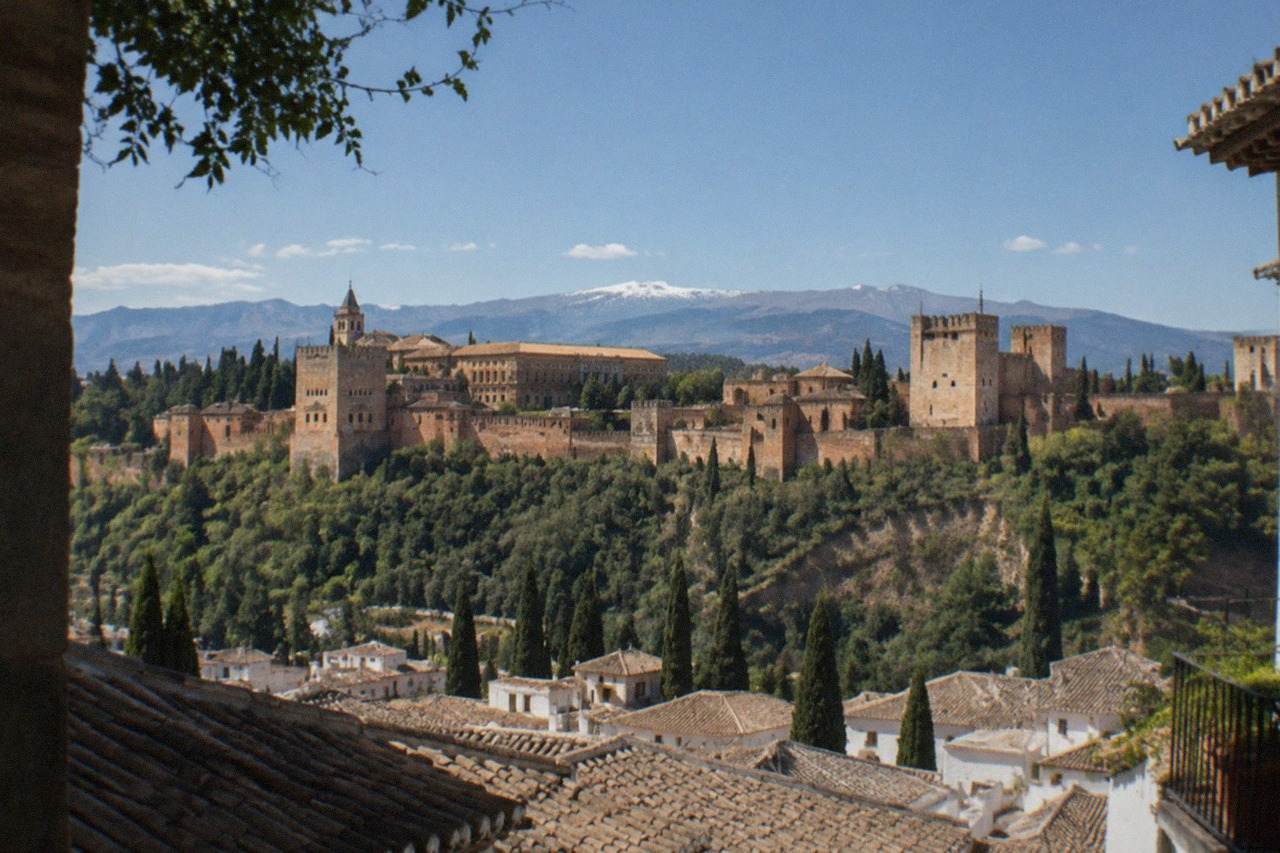
Granada drew 2,726,861 visitors to the Alhambra in 2025, according to the Patronato de la Alhambra y Generalife's annual report, a figure that sits close to the monument's own annual capacity ceiling of roughly 2.763 million. That number answers the question before any opinion can. A city does not run one of Europe's most visited monuments at near capacity for decades unless it delivers something people cannot get elsewhere. What follows is the honest case, built on verified prices, climate data and visitor figures rather than impressions, so the decision can rest on what the city actually is rather than on what a brochure says. The full range of coverage, from ticketing mechanics to food and day trips, sits across Things To Do In Granada and its answer pages.
Is Granada, Spain Worth Visiting?
Yes, Granada is worth visiting for almost every traveller type, and the reason is measurable: a single city holds a UNESCO World Heritage palace complex inscribed in 1984, a medieval Moorish quarter added to that listing in 1994, cave flamenco, free tapas culture and a ski resort within day-trip range. The Alhambra's 2025 visitor count of 2,726,861, near its legal capacity ceiling, shows sustained demand at a scale few European cities of similar size can match.
The Alhambra is the anchor, and it is not a vague "must-see". The Patronato's own ticket page lists a General daytime ticket at EUR 22.27 covering the Nasrid Palaces, the Alcazaba and the Generalife, with a Gardens, Generalife and Alcazaba-only option at EUR 12.73 and night visits at EUR 12.73 for the Palaces and EUR 8.48 for the gardens. Those are official figures from the monument's own seller, not estimates.
What makes the city more than a one-monument stop is the layering. The Albaicin, the Moorish district across the valley, was added to the UNESCO listing in 1994, ten years after the Alhambra and Generalife were inscribed in 1984, which means the World Heritage designation covers a living urban landscape, not just a ticketed site. Sacromonte's cave dwellings, the Realejo's street art, the Cathedral and Royal Chapel in the old town, and the Carrera del Darro riverside walk all sit within roughly a compact, walkable core.
For anyone weighing the trip against a rival Andalusian city, the comparisons this site has verified are worth reading side by side, starting with Seville or Granada, which breaks down the two cities on monuments, size, pace and cost.
What Makes Granada Different From Other Spanish Cities?
Granada is the only European city where a fully preserved Nasrid palace complex, the Alhambra, faces a surviving medieval Moorish district, the Albaicin, across a single river valley, a pairing UNESCO recognised by extending the 1984 Alhambra listing to include the quarter in 1994. Add cave-dwelling flamenco in Sacromonte, a free tapa with most drink orders in traditional bars, and the Sierra Nevada visible from the streets, and the city offers a concentration of experiences no verified rival in this build matches.
The Alhambra is not a ruin. It is the most complete surviving palace complex of al-Andalus, and the Nasrid Palaces inside it still carry their carved plasterwork, courtyards and the inscriptions that make the building a primary historical document. The site's own history rewards reading before a visit, including details that first-time visitors almost never encounter, from the repeated inscriptions in the Palaces to the water engineering that still feeds the gardens.
The tapas custom deserves its own mention because it is genuinely unusual in Spain in 2026. In many traditional Granada bars, a drink order comes with a complimentary small plate, often scaling up with further rounds. It is a widely upheld local practice rather than a legal guarantee, and some venues have adjusted portions or pricing, but it materially lowers the cost of eating out compared with cities where every plate is ordered and priced separately.
The climate shapes the visit too. AEMET's normals for Granada Aeropuerto show July averaging a high of 34.8C with just 2mm of rain, while January averages a high of 13.0C and a low of 0.0C. That is a hotter summer and a colder winter than coastal Andalusia, a trade-off worth knowing before booking.
What Does Granada Cost, And What Could Go Wrong?
The verified costs are modest for a city of this stature: the Alhambra General ticket is EUR 22.27, the Cathedral EUR 10 during the 2026 Kerygma exhibition and EUR 7 from 29 Nov 2026, the Royal Chapel EUR 7, and free tapas cut food budgets in traditional bars. The main risk is not money but planning: Alhambra General tickets routinely sell out 1-2 months ahead in peak season, and there are no reliable same-day online sales.
Every figure in that answer comes from an official source. The Cathedral's two-tier pricing matters for 2026 visitors: the EUR 10 individual rate runs only until 28 November 2026, dropping to EUR 7 from 29 November, per the official ticket site. The Royal Chapel holds steady at EUR 7 individual and EUR 5 reduced.
| Monument or experience | Official price (EUR) | Notes |
|---|---|---|
| Alhambra General (day) | 22.27 | Nasrid Palaces, Alcazaba, Generalife; under 12 free |
| Alhambra Gardens, Generalife and Alcazaba | 12.73 | Daytime, no Nasrid Palaces |
| Alhambra night visit, Nasrid Palaces | 12.73 | Limited days, seasonal |
| Granada Cathedral (to 28 Nov 2026) | 10 | Kerygma exhibition rate |
| Granada Cathedral (from 29 Nov 2026) | 7 | Post-exhibition rate |
| Royal Chapel | 7 | Reduced EUR 5 |
The sell-out risk is the one thing that can genuinely spoil a trip. The Patronato releases tickets roughly three months in advance, and online sales close at 23:59 the day before the visit date. Nasrid Palaces tickets are nominative, photo ID is checked at entry, and the half-hour entry window printed on the ticket is strictly enforced. The full playbook for a late or failed booking is laid out in what to do if Alhambra tickets are sold out.
How Many Days Does Granada Need?
Three days is the sweet spot most itineraries point to: one full day for the Alhambra complex, a second for the Albaicin, Sacromonte and the viewpoints, and a third for the old town, the Cathedral, the Royal Chapel and the food scene, with an optional fourth for a day trip. Two days works but forces a choice between the palace and the neighbourhoods, and one day covers the Alhambra and little else at any relaxed pace.
The Alhambra alone justifies most of a day. The day visit runs 08:30-18:00 in the October-to-March season and 08:30-20:00 from April to mid-October, and the General ticket covers three distinct zones that each take time. The Nasrid Palaces entry window is fixed to a half-hour slot, so the rest of the complex has to be built around it.
The neighbourhoods reward slower time. The Albaicin's lanes climb to the Mirador de San Nicolas for the classic Alhambra view, and Sacromonte's cave quarter sits just beyond it. Whether the caves themselves merit the walk is a question with its own answer on this site, and the quarter as a whole rewards an evening rather than a rushed hour.
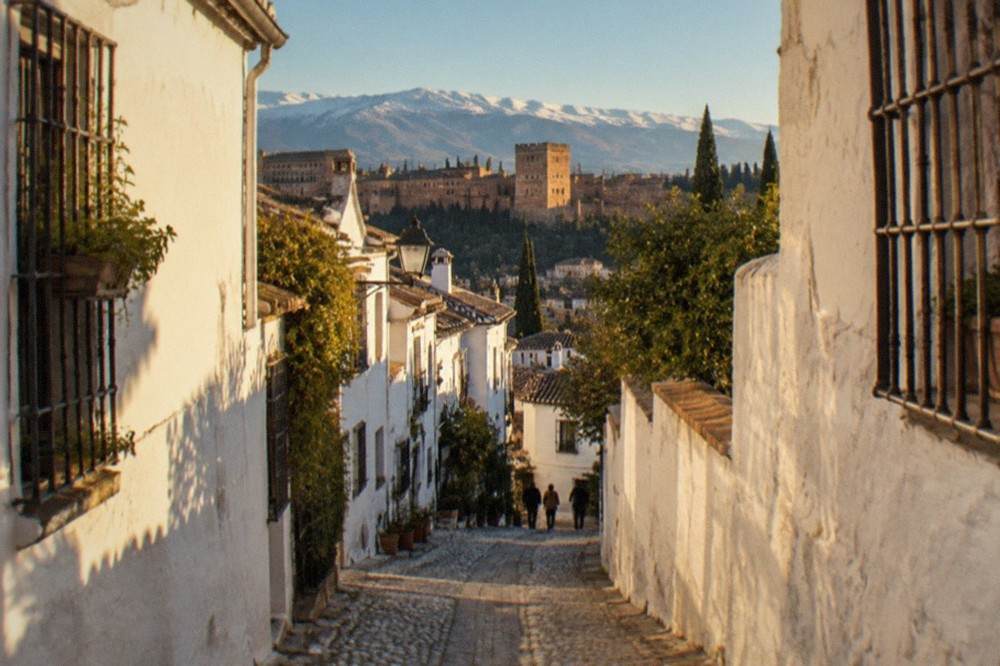
For the length-of-stay question in full, including the two-day and three-day arguments, see how many days in Granada is enough. The one-day and three-day itineraries on this site give hour-by-hour versions of both.
When Is The Best Time To Visit Granada?
Spring and autumn are the best windows: AEMET's normals show May at a 25.0C high with 28mm of rain and October at 23.2C with 40mm, comfortably between the July peak of 34.8C and the January low of 0.0C. Semana Santa and the Corpus Christi fair add festival weight to late March and early June respectively, but both also bring crowds and the Alhambra sells out furthest ahead around them.
The summer heat is real, not a rumour. July averages 34.8C by day and barely cools to 15.7C at night, with 2mm of rain for the whole month. The Alhambra's summer day visit runs until 20:00, which allows an evening entry, but the Nasrid Palaces themselves are un-airconditioned historic rooms.
Winter has its own case: January nights average 0.0C, among the coldest of any major Andalusian city, but snow on the Sierra Nevada is visible from the streets, the Alhambra is quieter, and the night visit runs Friday and Saturday evenings. The month-by-month breakdown, including the festival calendar, is in what is the best month to visit Granada, Spain.
| Season | Avg high / low (C) | Rainfall (mm) | What it means for a visit |
|---|---|---|---|
| Spring (Mar-May) | 19.0-25.0 / 3.8-9.4 | 28-36 per month | Best balance of weather and full opening hours |
| Summer (Jun-Aug) | 31.0-34.8 / 13.6-15.7 | 2-11 per month | Hot; Alhambra day visit runs to 20:00 |
| Autumn (Sep-Nov) | 17.0-29.4 / 4.2-12.8 | 19-54 per month | Warm September, wetter November |
| Winter (Dec-Feb) | 13.0-15.4 / 0.0-1.7 | 38-56 per month | Cold nights, snow on the Sierra Nevada, fewer crowds |
What Is There To Do In Granada Beyond The Alhambra?
Plenty: the Albaicin and Sacromonte walking routes, cave flamenco shows, the hammam bathhouses, the Cathedral and Royal Chapel, the tapas and food scene centred on the old town, and day trips to the Alpujarras, Cordoba, Seville, Ronda, Nerja and Frigiliana, all of which this site has verified. The Alhambra is the headline, but a full itinerary can run two or three days before it repeats anything.
The hammams deserve a specific mention because they are a direct descendant of the city's Andalusi bathing tradition. The traditional bath experience pairs naturally with an Alhambra day, and the question of whether the best-known one merits its price is answered in is Hammam Al Andalus worth it.
Flamenco in Sacromonte is performed in actual caves, some still inhabited, which is a setting Seville and Cordoba cannot replicate. The food scene has its own dedicated coverage on this site, from the dishes Granada is famous for to the traditional plates worth ordering on a first visit.
Day trips extend the stay if the city itself is not enough. The Alpujarras mountain villages, the Guadix cave houses, the Monachil gorge at Los Cahorros and the Sierra Nevada ski resort are all inside day-trip range, and whether the mountain villages justify the drive has its own dedicated answer page.
Common Questions About Visiting Granada
Is Granada, Spain worth visiting?
Yes. The Alhambra alone, a UNESCO World Heritage palace complex that drew 2,726,861 visitors in 2025, justifies the trip, and the Albaicin, Sacromonte, free tapas culture and day-trip range add several more days of verified things to do.
Is the Alhambra enough on its own to justify the trip?
For most visitors, yes. The General ticket covers the Nasrid Palaces, the Alcazaba and the Generalife at EUR 22.27 official price, and the complex fills most of a day at a relaxed pace.
Is Granada expensive?
No, by major European city standards. The Alhambra is EUR 22.27, the Cathedral EUR 10 during the 2026 Kerygma exhibition, and free tapas with drink orders in traditional bars keeps food costs low, though tapas are local custom rather than a guarantee.
How many days do I need in Granada?
Three days is the sweet spot: one for the Alhambra, one for the Albaicin and Sacromonte, one for the old town and food. Two days works with tight planning, and day trips to the Alpujarras or Cordoba can extend the stay.
What is the biggest risk of visiting Granada?
Alhambra sell-outs. General tickets routinely sell out 1-2 months ahead in peak season, online sales close at 23:59 the day before, and there are no reliable same-day online sales, so the palace must be booked first and the rest of the trip built around it.
When should I not visit Granada?
July and August if heat is a problem, since AEMET's normals show July at a 34.8C average high, and the Alhambra's historic rooms have no air conditioning. Late autumn weekends are also wetter, with November averaging 54mm of rain.
The verdict, then, is not a matter of taste but of arithmetic. A city whose single monument runs at near-capacity year after year, whose UNESCO listing covers an entire living district, and whose verified costs sit well below most northern European city breaks, earns the trip for anyone who can book the Alhambra far enough ahead. Plan the palace first, everything else falls into place around it.