What Area Of Granada Is Best To Stay In?
The best area to stay in Granada depends on what you want: the Albaicin for views, the Realejo for quiet, the old town for walkability. This guide compares every district with real prices and trade-offs.
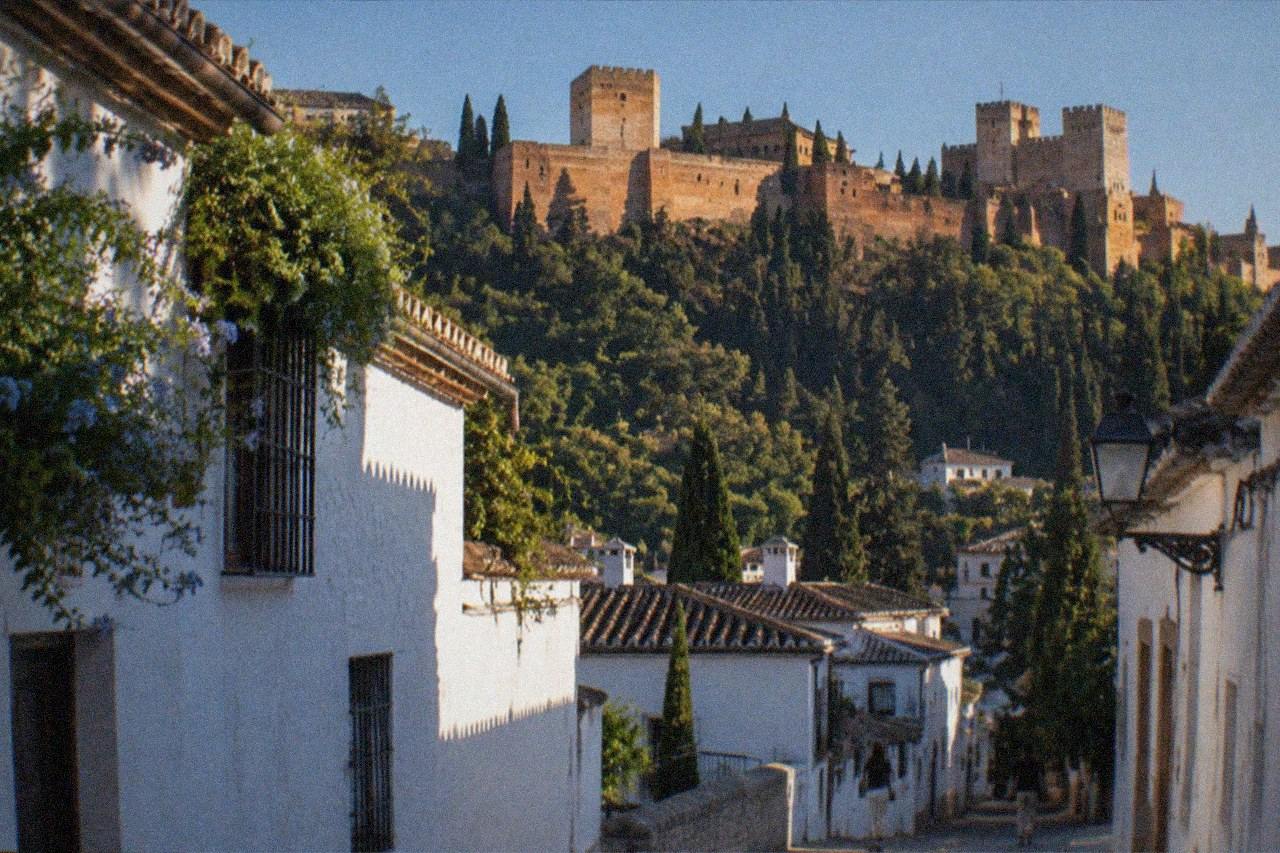
Granada packs a palace complex that drew 2,726,861 visitors in 2025, a UNESCO listing that covers the Alhambra, Generalife and Albaicin together, and a tapas culture that still hands out free plates with drinks, into a city you can cross on foot in under an hour. That compactness is exactly why the district question matters more here than in Seville or Malaga. Two streets in one direction put you under the Alhambra walls; two streets the other way and you are climbing cobbled hills with a suitcase. The Patronato de la Alhambra's own ticket pages show a General ticket at EUR 22.27, and those tickets routinely sell out one to two months ahead in peak season, so most visitors book the Alhambra first and pick a hotel second. This page answers the district question district by district, with the trade-offs that actually shape a stay.
What Area Of Granada Is Best To Stay In?
For a first visit of two to three nights, the area around Plaza Nueva and the lower old town is the best base: flat, central, walking distance to the Alhambra, the Cathedral, the Albaicin and the tapas streets, with the LAC and C34 bus stops for the Alhambra hillclimb close by. For views and atmosphere over convenience, the Albaicin wins. For quiet and local life at lower prices, the Realejo wins. Families and longer stays should look at the modern centre around Puerta Real.
The honest answer is that Granada rewards centrality more than most cities because its two headline attractions sit at opposite ends of a small historic core. The Alhambra sits on its hill to the east, the Albaicin spreads across the hill opposite, and the Cathedral, Royal Chapel and tapas districts fill the flat ground between them. AEMET's climate data for the Granada Aeropuerto station shows July average highs of 34.8C and January lows of 0.0C, and that matters for district choice: the hillside quarters involve real climbs, which feel different in summer heat than on a February morning with snow on the Sierra Nevada.
Noise is the second factor that decides it. The streets immediately around Calle Navas and Plaza Nueva stay loud until two in the morning in high season, while the upper Realejo and the far edge of the Albaicin go quiet by eleven. A first-timer who books a cheap room on a tapas street and sleeps badly will blame the city, not the postcode, which is why the detailed breakdown below exists. For a fuller treatment of each district's hotels, see where to stay in Granada, and for how long to give the city, how many days in Granada is enough covers the pacing question.
Is The Albaicin The Best District To Stay In Granada?
The Albaicin is the best district to stay in Granada if your priority is the postcard version of the city: whitewashed lanes, the Mirador de San Nicolas sunset view of the Alhambra, cave flamenco in Sacromonte on the same hillside, and the Carrera del Darro riverside walk at the bottom. It is not the best district if you want flat streets, easy taxi access or silence at night, because the quarter is a maze of slopes, steps and dead ends where many streets are too narrow for cars.
The Albaicin is the oldest continuously inhabited part of Granada and part of the same UNESCO inscription as the Alhambra, extended in 1994. Staying here means waking up inside the monument rather than looking at it. The trade-offs are physical and practical. Luggage gets carried up cobbled lanes, taxis reach only the main arteries like Calle Elvira and the roads near the Mirador de San Nicolas, and the lower streets around Calle Caldereria, the tea-house street, stay busy late.
What you get in exchange is the strongest sense of place in the city. The view from the Mirador de San Nicolas at sunset, with the Alhambra floodlit against the Sierra Nevada, is the single most photographed scene in Granada, and living five minutes from it beats visiting it. The Carrera del Darro, the riverside lane between the quarter and the Alhambra's wooded hill, is one of the most beautiful short walks in Andalusia. A guided sunset walk is the standard way to learn the quarter quickly, and the same route doubles as a scouting trip before you commit to a hotel.
The Albaicin also has the city's clearest internal split. The lower edge, near Plaza Nueva and the Darro, is convenient and comparatively busy. The upper slopes toward Sacromonte are quieter, more atmospheric and harder to reach with bags. Sacromonte itself, the cave quarter east of the Albaicin, is a genuine option for a one- or two-night stay with a flamenco focus, but it is the least practical base in the city for anything else, and the Sacromonte cave museum and the abbey are the main daytime draws. If a view room in the Albaicin fits the budget, it is the stay most visitors remember; if the itinerary is Alhambra, Cathedral, tapas and a day trip, the flat old town serves that plan better.
Is The Old Town Around Plaza Nueva The Best Base In Granada?
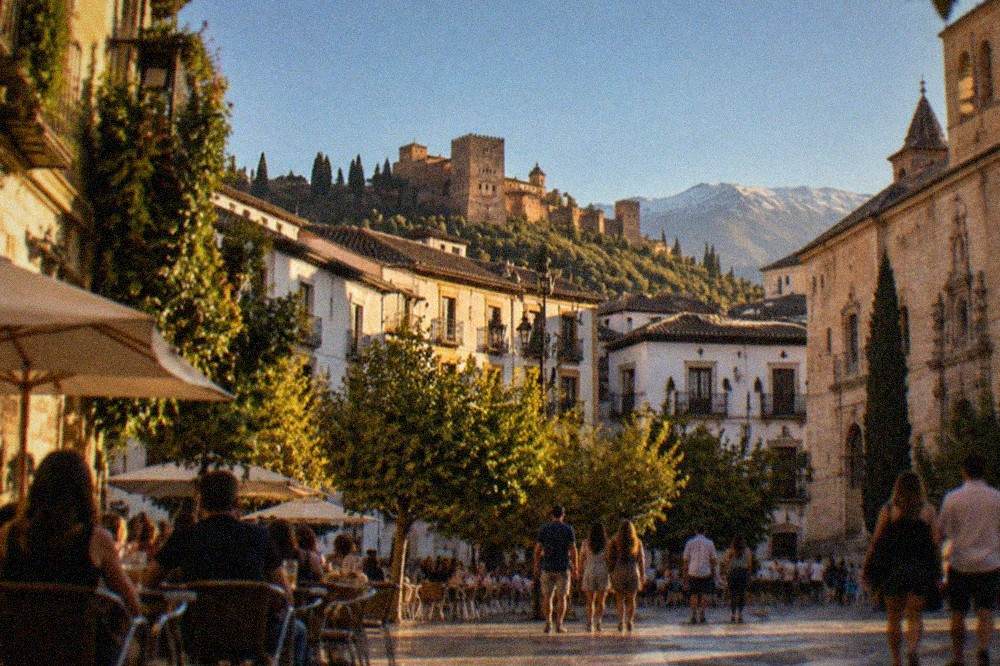
The streets around Plaza Nueva, the Cathedral and Calle Navas form the best all-round base in Granada for a first visit: everything inside the historic core is within a fifteen-minute walk, the Alhambra footpath starts at the end of Plaza Nueva, the LAC and C34 buses to the Alhambra gate stop nearby, and the district is flat, which no other central option can claim. The cost is noise, since this is the loudest part of the city at night.
This is the recommendation the numbers behind most trips point to. The Alhambra's official pages put the day visit at 08:30 to 20:00 from 1 April to 14 October, and the entrance pavilion is a steep but direct twenty-odd minute walk up from Plaza Nueva, or a short ride on the hillclimb bus. The Cathedral's ticket site lists EUR 10 individual entry during the 2026 Kerygma exhibition, dropping to EUR 7 from 29 November 2026, and the Royal Chapel next door charges EUR 7, so the two biggest monuments after the Alhambra are literally around the corner. The free-tapa tradition still holds in many traditional bars across this district, which makes dinner logistics almost effortless.
The district's weakness is that it never fully sleeps. Calle Navas and the lanes off it are the tapas spine of the centre, and rooms facing those streets hear it. The fix is simple and worth the premium: book a room facing an interior courtyard or a side street one block back. Granada's hotel stock in this zone includes plenty of patio buildings, and an interior-facing room in the old town is quieter than a street-facing room almost anywhere else in the centre. For first-time visitors, where to stay in Granada for first-timers works through this same trade-off in more detail.
Is The Realejo A Better Place To Stay Than The Old Town?
The Realejo, the quarter south of the Alhambra hill across the Darro valley, is a better place to stay than the old town for visitors who want central Granada at lower prices and quieter nights: it is still a ten-to-fifteen-minute walk to Plaza Nueva, it has the Campo del Principe square as a local nightlife hub, and its steep lanes keep most tourist traffic out. It is a worse choice for anyone with mobility issues, since it is nearly as hilly as the Albaicin.
The Realejo is Granada's old Jewish quarter, and it delivers the hillside character of the Albaicin with fewer tourists and generally cheaper rooms. The Campo del Principe, the quarter's main square, has the traditional Granada evening the postcards promise: terrace bars, families out late, the Alhambra's walls visible above the trees. Because the Alhambra hill rises directly east of the Realejo, some upper streets have direct palace views without Albaicin prices. Other pages covering the same trip are gathered on Things To Do In Granada.
The catch is geometry. The Realejo sits on its own slope, so reaching the Alhambra entrance pavilion still means descending to the valley and climbing again, or taking a bus or taxi around. The quarter's lower edge blends into the modern centre near Puerta Real, and that lower band is the practical sweet spot: flat enough to walk, quiet enough to sleep, cheap enough to extend a stay by two nights. AEMET's normals show October average highs of 23.2C and May highs of 25.0C with only 28mm of rain, so shoulder-season visitors walk everywhere, and the Realejo's lanes are pleasant for exactly that.
Which Granada District Suits Families And Longer Stays?
For families and stays of four nights or more, the modern centre around Puerta Real and Acera del Darro, plus the flat band of the Realejo's lower edge, is the best area: wide pavements, direct LAC bus connections, the Science Park within the Granada Card's inclusions, supermarkets and pharmacies on normal streets, and hotel rooms that are genuinely larger than the historic-core conversions. It sacrifices atmosphere for logistics, which is the right trade when travelling with children.
Longer stays change the calculus. A two-night break can absorb a fourth-floor walk-up with a view; a week with a family cannot. The modern centre is where Granada behaves like a normal Spanish city, with apartment hotels, regular restaurants and the transport spine. The Granada Card is worth knowing here: turismo.granada.org's pricing page lists the 72-hour card at EUR 60 and the 48-hour at EUR 55, child cards at EUR 13, both including daytime Alhambra access, the Cathedral, the Royal Chapel, the Science Park and nine urban bus trips. The Alhambra portion cannot be split across days, and since the General ticket alone sells out one to two months ahead in spring and autumn, the card should be bought at the same lead time as a standalone ticket.
One transport fact shapes every district decision and is worth repeating because visitors get it wrong constantly: the Metro de Granada does not reach the Alhambra and does not serve the airport. The metro runs north-south through the city and metro area, useful for the bus station direction and the northern districts, irrelevant for the hill. From the airport, the Alsa Linea 245 bus costs EUR 3.10 and takes roughly 40 to 45 minutes to the centre. Nobody needs a car to stay in any central district, and parking in the Albaicin is close to impossible.
What Does Each Granada Area Cost And Trade Off?
Across Granada's central districts, the practical ranking is: old town for convenience and noise, Albaicin for views and effort, Realejo for value and quiet, modern centre for families and logistics, Sacromonte for atmosphere only. Rooms in the Albaicin and old town carry the highest rates, the upper Realejo and the modern centre the lowest, and the differences between districts are smaller than the differences within them, because a street-facing room versus a courtyard room in the same hotel can matter more than the postcode.
The table below is the honest summary of everything above, district by district:
| District | Best for | Main drawback | Walk to Alhambra entrance | Night noise |
|---|---|---|---|---|
| Old town (Plaza Nueva, Cathedral) | First visits, no-car trips, tapas on the doorstep | Loudest streets in the city, highest rates | Steep footpath from Plaza Nueva, or LAC/C34 bus | High until late |
| Albaicin | Views, Moorish lanes, Mirador de San Nicolas, sunset atmosphere | Slopes, steps, limited taxi access, luggage hauling | Cross the Darro valley and climb, or bus around | Moderate, lower lanes busier |
| Realejo | Value, quiet, local squares like Campo del Principe | Hilly in its upper part, fewer sights inside the quarter | Descend and climb again, or short taxi | Low to moderate |
| Modern centre (Puerta Real) | Families, longer stays, apartments | Least atmospheric of the central options | Bus or a long flat-plus-hill walk | Low |
| Sacromonte | Cave stays, flamenco focus, one or two nights | Least practical base in the city, isolated at night | Taxi or a long walk via the Albaicin | Low, but isolated |
Budget behaviour follows a pattern worth stating plainly. Granada is not an expensive city by western European standards, and the free-tapa custom, still widely upheld in traditional bars though not guaranteed everywhere, cuts dinner costs sharply for anyone who drinks even moderately. Where visitors overspend is location premiums: a view room in the Albaicin can cost double a courtyard room two streets away. The money is better spent on the Alhambra ticket itself, since the official General ticket at EUR 22.27 is the cheapest full experience in the city relative to what it buys, and it is the one element of a Granada trip that genuinely runs out.
For anyone pairing Granada with the coast or with Ronda, the district choice barely changes: all central districts sit within a few minutes of the bus station connections and the day-trip departure points. The what not to miss in Granada rundown works from any of these bases.
One final note on timing the booking itself. The Alhambra releases tickets roughly three months in advance, and the district you choose has no effect on that clock: a room in the Realejo and a room in the Albaicin both leave you standing at the same sold-out ticket page if you wait too long. Book the timed Nasrid Palaces slot first, then pick the postcode around it. A sunset walking tour of the Albaicin and Sacromonte, the related tour below, is a good way to see both hillside quarters before committing to either.
Common Questions About The Best Area To Stay In Granada
What area of Granada is best to stay in?
For a first visit, the flat old town around Plaza Nueva and the Cathedral is the best area: everything central is walkable, the Alhambra footpath and the LAC/C34 hillclimb bus start there, and the noise is manageable with a courtyard-facing room. For views over convenience, choose the Albaicin; for value and quiet, the Realejo.
Is the Albaicin too hilly for a hotel stay?
The Albaicin is a real hillside quarter with steps, slopes and lanes too narrow for cars, so it is a poor fit for mobility issues or heavy luggage. Taxis reach the main arteries such as Calle Elvira but not most of the lanes. Visitors who accept the climb get the Mirador de San Nicolas sunset view and the strongest atmosphere in the city in return.
Which Granada district is quietest at night?
The upper Realejo and the modern centre around Puerta Real are the quietest central districts, with the upper Albaicin close behind. The streets around Calle Navas and Plaza Nueva are the loudest, since they hold most of the centre's tapas bars and stay active until two in the morning in high season.
Does the metro help with getting to the Alhambra from any district?
No. The Metro de Granada runs north-south through the city and metro area and serves neither the Alhambra nor the airport. The Alhambra is reached on foot, by the LAC or C34 hillclimb bus, or by taxi, regardless of where you stay.
Where should families stay in Granada?
The modern centre around Puerta Real and the lower, flatter edge of the Realejo suit families best: wider streets, larger rooms and apartments, direct bus connections, and the Science Park, included in the Granada Card, within easy reach. The 72-hour Granada Card at EUR 60, with child cards at EUR 13, covers the Alhambra, the Cathedral, the Royal Chapel and nine urban bus trips.
Is it better to stay near the Alhambra itself?
Only a handful of properties sit near the Alhambra walls, including the Parador inside the complex, and the surrounding area is quiet and thin on restaurants once the monument closes. Most visitors are better placed in the old town or Albaicin, both of which face the Alhambra and keep dinner, tapas and evening life within walking distance.
The district decision in Granada is a short-list problem, not a puzzle: pick the old town for a first trip, the Albaicin for the view, the Realejo for value, and book the Alhambra tickets before anything else, because the room will still be there next month and the timed Nasrid Palaces slot may not be.