What To Buy From Granada, Spain?
What to buy from Granada, Spain: the ceramics, crafts, food and drink worth carrying home, where to shop for them, and what to skip.
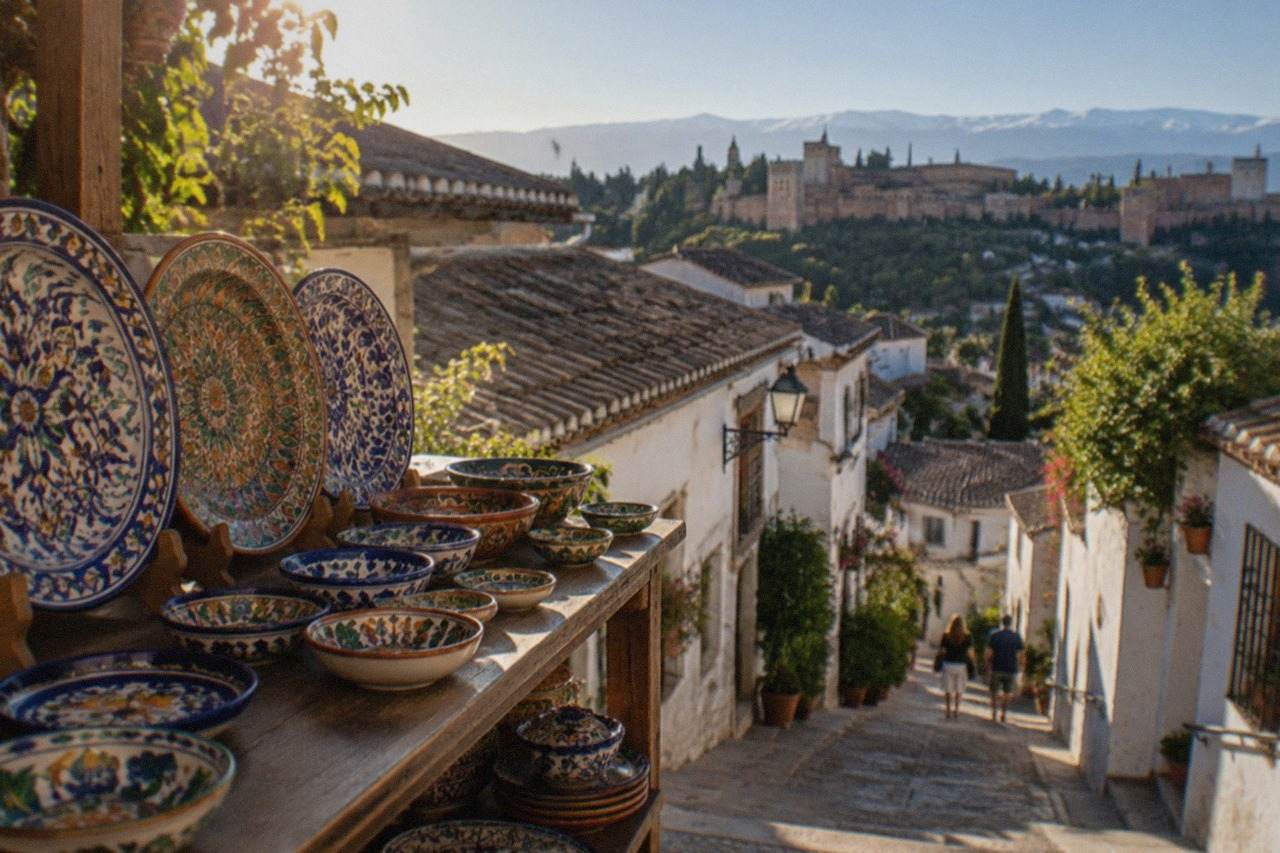
Granada has been making things with its hands for longer than most European cities have existed. The Nasrid craftsmen who decorated the Alhambra worked in tile, carved plaster and inlaid wood, and descendants of those trades still operate workshops across the Albaicin and the Realejo. That lineage is what separates shopping here from shopping in a generic resort town: the best things to buy in Granada are made within a few kilometres of where they are sold, and several of them cannot reasonably be found anywhere else. This page lays out what is worth carrying home, where to buy it, and what to leave on the shelf.
What To Buy From Granada, Spain?
The five buys that consistently justify suitcase space are Fajalauza ceramics from Granada's own pottery tradition, taracea marquetry boxes and trays made in the city's workshops, leather goods from the Albaicin's tannery lineage, local olive oil and mountain honey from the Alpujarras, and spice blends plus tinned goods from the markets around the old town. Prices vary by shop, so treat any figure as a starting point and check the shop itself before buying.
Those five categories cover the whole spread of Granada shopping, from a five-euro tin of paprika to a hand-cut marquetry chest that costs as much as a flight home. The rest of this page takes each one in turn, adds the places to find them, and flags the tourist-trap versions to walk past. If you are still building the rest of your itinerary, our overview of what not to miss in Granada slots the shops into the bigger sightseeing picture.
Where To Find Granada's Best Souvenirs And Local Crafts?
The Albaicin and the streets immediately around the Calle de la Alhambra and Plaza Nueva hold the densest cluster of genuine craft shops in the city, with the Realejo and the Carrera del Darro adding smaller workshops and the Alcaiceria, the old silk market site, specialising in Moorish-style souvenirs. The Alcaiceria sits on the site of Granada's historic Nasrid silk bazaar, rebuilt as a covered lane of small stalls that trades on that heritage today.
The Albaicin is the strongest single hunting ground. Its lanes hold pottery studios where the green and blue Fajalauza glazes are painted by hand, small leather workshops, and shops selling marquetry boxes inlaid with bone, shell and woods in the taracea technique that arrived with Andalusi craftsmen and survived here when it faded elsewhere. The Realejo, Granada's old Jewish quarter on the slope opposite the Alhambra, is quieter and holds a scatter of artist studios and independent shops aimed less at tourists.
The Alcaiceria, a short walk from the Cathedral, is the most atmospheric and the most variable. Genuine craft sits alongside mass-produced scarves and plastic Alhambras in adjacent stalls, so pick pieces up and look at the underside: hand-thrown ceramics carry an unglazed base ring and slight irregularities, and real taracea has visible individual inlay pieces rather than a printed surface. A useful parallel is food shopping, which we cover separately in what food Granada is famous for: the same real-versus-tourist split applies to spice shops and tinned goods.
What Food And Drink Should You Bring Home From Granada?
Olive oil from the Granada province, honey from the Alpujarras and Sierra Nevada foothills, paprika and spice blends from the old-town markets, tinned fish and conservas, and Piononos, the small cream-filled pastries native to nearby Santa Fe, are the edible souvenirs with the strongest local identity. Olive oil travels well in sealed tins, honey in jars, and Piononos are best eaten within days, so buy them late in the trip.
Olive oil is the practical winner. Granada's province produces olive oil with its own protected designation, and shops in the old town sell it in tins and bottles at prices that vary by shop and harvest year, so check the label and the shelf rather than trusting a round number from a guide. Mountain honey from the Alpujarras, the valley villages on the Sierra Nevada's southern flanks, comes in several varieties including thyme and rosemary, and the same shops usually stock it.
Spice shops around the Alcaiceria and the markets sell the blends behind much of Andalusian cooking, plus saffron at prices worth comparing carefully against what you would pay at home. Conservas, the Spanish tinned seafood tradition, make genuinely good gifts: a tin of good anchovies or octopus weighs little and keeps indefinitely. The table below groups the main edible buys by what they cost relative to each other and how far they travel.
| Edible souvenir | Local source area | Travels well | Best bought |
|---|---|---|---|
| Olive oil (protected designation) | Granada province groves | Yes, sealed tin | Any point in the trip |
| Alpujarras mountain honey | Alpujarras villages | Yes, jar | Any point in the trip |
| Paprika and spice blends | Old-town spice shops | Yes, sealed packets | Any point in the trip |
| Conservas (tinned fish and seafood) | Andalusian producers | Yes, tins | Any point in the trip |
| Piononos pastries | Santa Fe, near Granada | Poorly, perishable | Final days of the trip |
| Local breads and sweets | City bakeries | Poorly, perishable | Final days of the trip |
What Can You Buy Inside Or Around The Alhambra?
The Alhambra's own shops sell books, reproductions and design-led pieces tied directly to the monument, and the streets on the hill below, notably the Calzada del Genil approach and the Carrera del Darro, hold more craft shops and galleries, but the monument itself is not a shopping destination and its shops are an add-on to a visit rather than a reason to go. Buy books and prints at the Alhambra, ceramics in the Albaicin.
The distinction matters because the Alhambra visit itself needs planning. The Patronato de la Alhambra's own ticket page lists the live prices: EUR 22.27 for the General daytime ticket covering the Nasrid Palaces, the Alcazaba and the Generalife, EUR 12.73 for gardens-only variants, and EUR 12.73 for the night visit to the Nasrid Palaces. A July 2025 press release announced lower figures, but the live official pages still show these prices, so use what the ticket site shows at booking time. The General ticket routinely sells out one to two months or more ahead in peak season, tickets release roughly three months in advance, and online sales close at 23:59 the day before the visit date. Nobody should plan an Alhambra day around buying gifts there and assume a ticket will appear on the day. More of these guides are collected on Things To Do In Granada.
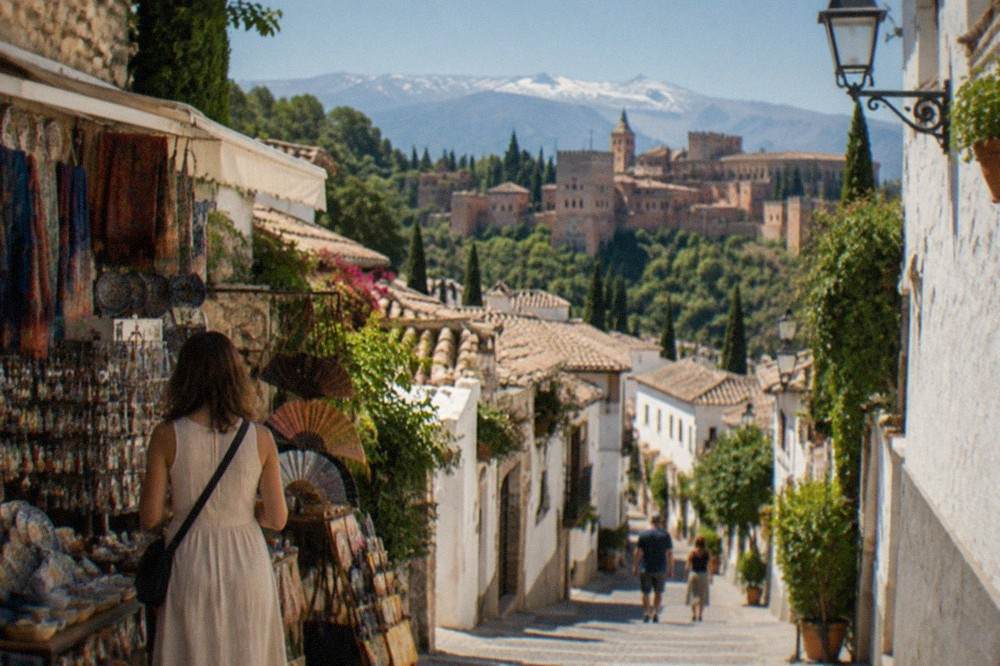
What the Alhambra shops do well is the printed and reproduced: serious history books, quality prints of the monument's geometry, and jewellery or objects that quote specific Nasrid motifs. If a piece in a city shop claims an Alhambra design, compare it against what the monument's own shops stock. For the ticketing side in detail, our page on the official site to buy Alhambra tickets covers the booking mechanics, and the question of which Alhambra ticket is best covers the choice between variants.
What Are The Best Non-Souvenir Splurges In Granada?
Beyond objects, the purchases worth making in Granada are experiences tied to the city's traditions: an Arabian baths session in the hammam tradition that survived the Reconquista era, a flamenco show in a Sacromonte cave, a guided sunset walk through the Albaicin, and a meal built around the free-tapa custom that still holds in many traditional bars. These cost more than a souvenir and outlast every one of them.
The hammam is the most direct heir to the city's Andalusi past. Granada has working Arab-style baths, and the Arabian Baths Experience at Granada's Hammam Al Ándalus runs 90-minute sessions from $97.55 per person, rated 4.4 from 704 reviews on the operator's live listing. The Palacio Nazarí Hammam offers a comparable traditional bath from $51 per person, rated 4.6 from 1,180 reviews. If you prefer to earn the soak, the Albaicín and Sacromonte guided sunset walking tour runs about 2.5 hours from $17 per person, rated 4.9 from 3,533 reviews, and ends near some of the best shopping lanes in the city.
Flamenco in a Sacromonte cave is the other purchase with real local roots, from $28 per person for the Los Amayas cave show, rated 4.7 from 1,706 reviews, to the cave-restaurant shows at $35 per person. The tapas custom deserves a line too: a drink order in many traditional Granada bars typically comes with a complimentary small tapa, a widely upheld local practice rather than a guarantee at every venue, and it makes an evening of bar-hopping one of the cheapest good nights out in Andalusia. Whether the Granada Card pays off against all this is a fair question, and our page on whether the Granada Card is worth it works through the tiers, currently EUR 60 for 72 hours, EUR 55 for 48 hours and EUR 50 for the night-Palaces and gardens variants, child EUR 13, effective 13 November 2025.
What Should You Not Buy In Granada?
Skip the mass-produced items that dominate the stalls nearest the Cathedral and the Plaza Nueva: printed "taracea" with no visible inlay pieces, identical ceramics with no base ring or workshop mark, plastic Alhambra models, generic flamenco dresses made for photos rather than wear, and saffron sold at prices too low to be saffron. If a stall takes cards only reluctantly and prices nothing, that hesitation is usually information.
The fakes follow patterns you can check in thirty seconds. Real taracea, the marquetry technique, is built from hundreds of tiny individual pieces of wood, bone and shell set by hand, so run a finger across the surface: genuine inlay has micro-texture, printed imitation does not. Fajalauza pottery, the green-and-blue glazed ware named after the historic Fajalauza gate where potters clustered, is hand-painted, so no two pieces are identical and the brushwork shows under the glaze. Saffron is the classic trap, since real saffron is expensive everywhere; a "saffron" price that looks like a bargain is usually safflower or worse.
Timing matters as much as taste. The Alhambra and the Generalife were inscribed together as a UNESCO World Heritage listing in 1984, extended in 1994 to include the Albaicin, one listing rather than two, and the genuine craft traditions around the monument predate that inscription by centuries. Buying from a workshop rather than a stall is the simplest way to pay for that lineage instead of a print run. The most useful single habit: buy the ceramics and the marquetry early in the trip, wrap them in clothing, and leave the perishables for the last day.
Common Questions About Shopping In Granada
What to buy from Granada, Spain?
Fajalauza ceramics, taracea marquetry, leather goods, local olive oil and Alpujarras honey, spice blends and conservas, plus experience purchases such as a hammam session or a Sacromonte cave flamenco show. Prices vary shop to shop, so check each shop directly.
Is Fajalauza pottery still made in Granada?
Yes, workshops in and around the Albaicin still hand-paint Fajalauza ware in the traditional green and blue glazes. Look for an unglazed base ring, visible brushwork and slight irregularities that mark a hand-thrown piece rather than a factory copy.
Where is the best place to buy souvenirs in Granada?
The Albaicin has the densest cluster of genuine craft workshops, the Alcaiceria offers the most atmospheric stalls with the widest quality spread, and the Realejo adds quieter independent shops. Compare pieces across two or three shops before committing.
Can you buy things at the Alhambra?
Yes, the monument has its own shops selling books, prints and design-led reproductions tied to the site, but the Alhambra is not a shopping destination. Remember the General ticket routinely sells out one to two months or more ahead in peak season and online sales close at 23:59 the day before, so book the visit first.
What food souvenirs travel best from Granada?
Sealed tins of olive oil, jars of Alpujarras honey, spice packets and tinned conservas travel well and keep indefinitely. Piononos and other pastries are perishable and best bought in the final days of your trip.
Are souvenirs in Granada expensive?
They range widely, from a few euros for spice packets to serious money for hand-cut taracea chests. The reliable rule is that a workshop price reflects hours of hand work, while a stall price near the Cathedral usually reflects a print run. Check each shop's own pricing rather than trusting guide figures.