Where Do Locals Eat In Granada, Spain?
Where locals actually eat in Granada: the neighbourhoods, the free tapas custom, the dishes they order and the hours they keep, reported from primary local sources.
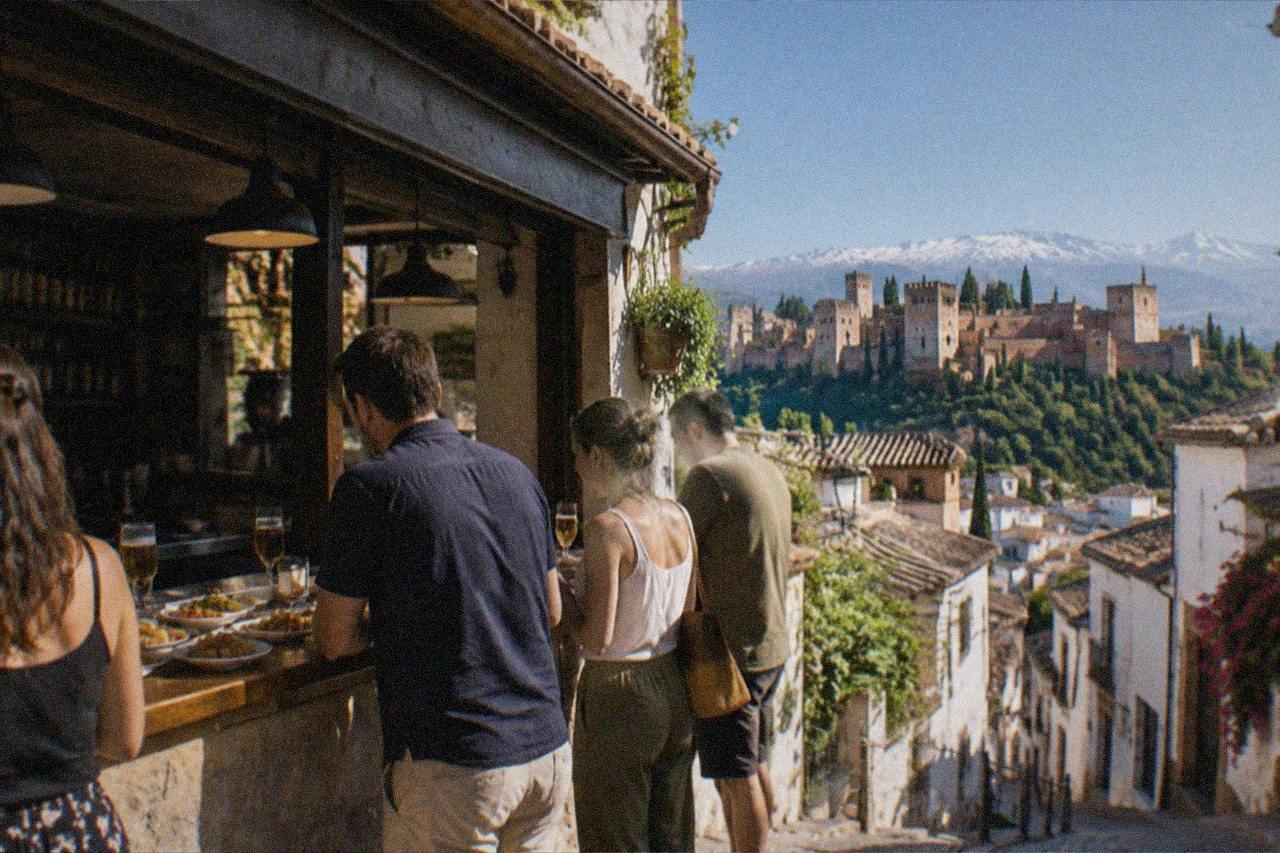
Granada's residents do not eat where the guidebooks point. The city's own tourism data shows the overwhelming majority of its 2.7 million annual Alhambra visitors concentrate in a thin corridor between the monument and the Carrera del Darro, and locals simply cook, snack and dine everywhere else. The Realejo, the lower Albaicin, the streets around the university, the Mercado de San Agustin fringe: these are the places where a drink still arrives with a small plate on top, a custom July 2026 reporting on Cadena SER confirmed remains widely upheld across the city's traditional bars. Understanding that geography, and the free tapas habit that drives it, is the difference between eating well in Granada and eating expensively.
Where Do Locals Eat In Granada, Spain?
Locals in Granada eat mainly in the Realejo, the lower Albaicin, the area around the Cathedral's side streets, and the student-heavy zone near the university, favouring small neighbourhood bars over restaurants. A drink in most traditional bars comes with a complimentary tapa, so residents move between several bars in an evening rather than sitting down in one. The habit is called tapeo, and it is the organising principle of eating out in the city.
The first thing to understand is that Granada is one of the last cities in Spain where the free tapa is still standard practice. A 2026 report on the custom described it as widely upheld local tradition rather than a guarantee: a drink order typically arrives with a small complimentary plate, and portions often grow with subsequent rounds. Some venues have adjusted size or pricing, so it is a custom to expect, not a right to demand.
The second thing is movement. Tapeo means bar-hopping. Locals rarely commit to one venue for a whole evening; they take one drink and its tapa at each stop, then move on. This is why the question of where locals eat has a different shape than in most cities. It is less about a shortlist of restaurants and more about which streets hold a dense cluster of good bars within a short walk of home.
That density clusters in the residential quarters. The Realejo, Granada's old Jewish quarter, is where many locals live and where its bar scene stays grounded. The lower slopes of the Albaicin mix old tapas institutions with neighbourhood grocery stores. Around the Plaza de la Universidad and the streets running toward Calle Pedro Antonio de Alarcon, the student population keeps prices honest and kitchens open late. The streets immediately facing the Alhambra and the Carrera del Darro, by contrast, are where visitors concentrate, and locals largely leave them to the crowds.
Which Granada Neighbourhoods Do Locals Actually Eat In?
The four neighbourhoods where Granada's residents eat most are the Realejo, the lower Albaicin around Calle Elvira, the university zone around Plaza de la Universidad, and the residential blocks off Calle Recogidas and Calle Pedro Antonio de Alarcon. Each has its own character: the Realejo for traditional bars, Elvira for mixed tapas crawls, the university zone for late, cheap eating, and Recogidas for everyday neighbourhood dining.
The Realejo is the city's most-loved eating quarter among residents, and it is a short walk from the centre without being on the main visitor drag. Its bars skew traditional: counter service, a short chalkboard list of tapas, and a clientele that includes the people who actually live in the district. The neighbourhood climbs the hill opposite the Alhambra, so a tapas crawl here ends with a view over toward the Alcazaba if you pick the right terrace.
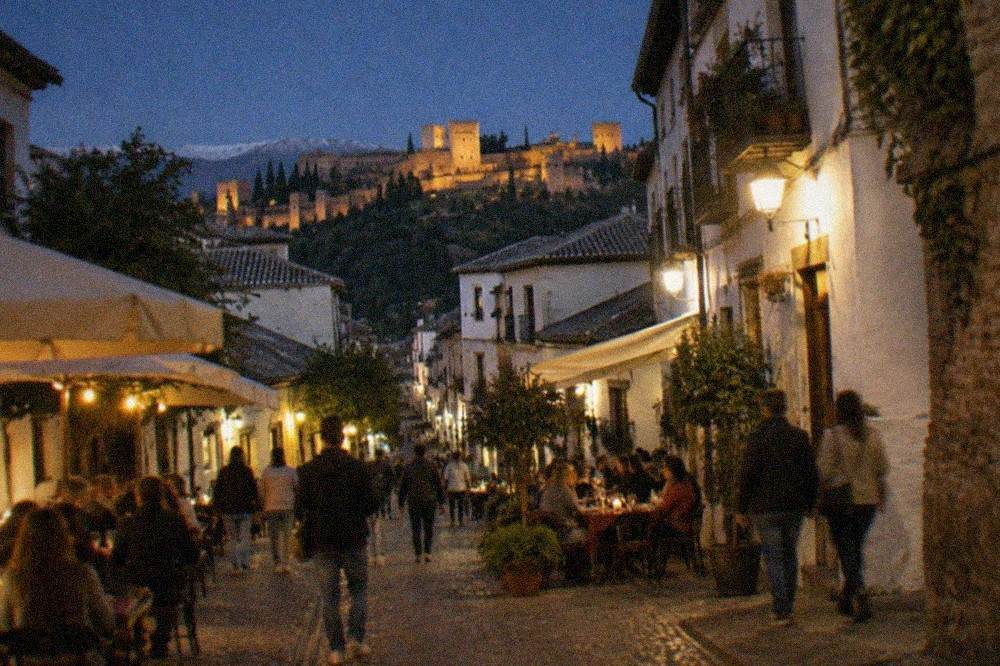
Calle Elvira and the lower Albaicin form the classic tapeo corridor. Elvira runs north from Gran Via toward the old Moorish quarter, lined with bars that range from old-school counter spots to modern small-plate rooms. Because this street also draws visitors, the trick locals use is simple: the bars a block off Elvira, in either direction, keep the same quality with fewer queues. The Albaicin itself, a UNESCO-listed quarter since the 1994 extension of the city's 1984 inscription, holds cave-bar venues and small squares where eating spills outdoors.
The university zone keeps the latest kitchens. Granada's large student population means bars around the Plaza de la Universidad and along the roads toward the Facultad de Derecho serve well into the night, and prices stay low because the customers would walk out otherwise. Further out along Calle Recogidas and Calle Pedro Antonio de Alarcon, the eating is unglamorous and consistent: neighbourhood bars, rotisserie chicken counters, and the everyday restaurants that feed the city's residents rather than its two-week visitors.
| Neighbourhood | Typical Venue Style | What Locals Order | Best Time To Go |
|---|---|---|---|
| Realejo | Traditional counter bars, terraces on the hill | Salt cod dishes, montaditos, local beer | Evening tapeo, sunset onward |
| Lower Albaicin and Calle Elvira | Mixed old and modern tapas bars | Pork skewers, fried fish, vermouth | Early evening before the crowds |
| University zone | Cheap, late-opening student bars | Loaded tostas, raciones to share | Late evening and night |
| Recogidas and Pedro Antonio | Everyday neighbourhood restaurants | Roast chicken, stews, set menus | Lunch and family dinners |
If you want to eat the way the city eats rather than the way a weekend visitor eats, pick one of these four zones and commit to it for an evening. A guided option exists too: the Granada Walking Food Tour, rated 4.9 from 590 reviews, routes participants through the local food scene over 3.5 hours, and the Granada in Full Historic Centre walk pairs the old quarters with their eating stops.
How Does The Free Tapas Custom Decide Where Locals Eat?
The free tapa custom is the single biggest factor in local dining choices: because every drink in a traditional bar arrives with a small complimentary plate, residents judge bars on the quality of what comes free with the order rather than the menu price. A bar known for generous, well-cooked tapas fills with regulars, and a bar that serves something forgettable empties, whatever its drinks list looks like.
This is the mechanism to understand. In most cities a bar competes on its kitchen menu. In Granada, the competition happens in the gap between the price of a beer and the plate that lands beside it. Locals share intelligence about which bars are "serving well" at any given moment, and that reputation shifts over time as kitchens change hands. The custom is not a legal requirement, and 2026 reporting confirmed some venues have trimmed portions or adjusted drink prices, but it remains the norm across the city's traditional bars.
It also explains local ordering behaviour. A group of residents out for an evening will order drinks, not mains. The tapas that arrive with each round are the meal. If the group is still hungry after two or three bars, someone orders a racion, a full plate to share, at whichever stop earned it. Sitting down to a three-course restaurant dinner is a different occasion entirely, reserved for family lunches and celebrations rather than a normal night out.
For visitors, the practical translation is this: budget per drink, not per meal. Ask what tapa comes with each drink, because bars often offer a choice. Move between two or three venues in an evening, the way the city does. And read the room: a bar full of locals at 9pm on a Tuesday is the most reliable review system in Granada. The question of whether the custom survives citywide is covered in detail in does Granada still do free tapas, and the dishes worth ordering are listed in what traditional food to try in Granada.
Where Do Locals Eat On Sundays And Special Occasions?
For Sunday family lunches and celebrations, Granada's residents leave the tapas bars and sit down: roast meat restaurants in the hills around the city, long lunch spots in the Realejo and the Albaicin, and the eating houses near the Sierra Nevada foothills become the destination. The occasion changes the format, from standing and drinking to a long afternoon at a table, but the neighbourhood logic still holds.
Sunday is the day the city's restaurants earn their keep. Families gather for a proper lunch, often in the direction of the countryside, and the drive out toward the Sierra Nevada or the villages of the Alpujarras ends at restaurants specialising in slow-cooked meats and stews. Within the city, the same instinct plays out in the Realejo and the old town, where restaurants serving long multi-course almuerzos fill with multi-generational tables from midday onward.
The dish that belongs to the occasion in Granada is the tortilla del Sacromonte, an omelette built on offal and vegetables that takes its name from the Sacromonte cave district, and the sweet counterpart is the pionono, a small cream-soaked sponge associated with the nearby town of Santa Fe and served in pastry shops across the city. Habas con jamon, broad beans with ham, is another local plate that appears on family tables in season. None of these are visitor foods; they are the dishes the city cooks for itself.
The other special-occasion habit is the evening that ends somewhere warm. A long tapeo through the old quarters followed by a traditional bath is a Granada pairing that goes back centuries, and the hammam tradition the city is famous for survives today in working bathhouses. The Palacio Nazari Hammam, rated 4.6 from 1,180 reviews, is the option most consistent with that history, a 90-minute circuit of hot, warm and cold pools in a Nasrid-inspired building.
After a heavy Sunday lunch, locals walk. The Mirador de San Nicolas and the lanes of the Albaicin fill with families strolling off a long meal, and the walk from the Realejo across to the viewpoints takes in the same streets the eating happens on. The best viewpoint in Granada question covers that circuit in detail.
When Do Locals Actually Eat In Granada?
Granada's residents eat on a late Spanish schedule: lunch is the main meal of the day, taken between mid-afternoon hours, and dinner rarely begins before nine in the evening, with tapas crawls running later still. Bars are busiest in the evening, kitchens in residential neighbourhoods stay open until midnight or beyond, and the free tapa makes the evening crawl cheaper than a restaurant.
The timing catches many visitors out. A kitchen that a northern European would expect to serve at 7pm is often only warming up, and the bars that are heaving at midnight are the ones full of locals, not stragglers. The city's student population pushes everything later still; in the university zone, an evening that starts at 10pm is unremarkable.
The rhythm also shapes what is on offer. Mid-morning, the city eats churros and pastries. Lunch is a proper sit-down affair, often a fixed-price menu del dia in neighbourhood restaurants, and this is the cheapest full meal a visitor will find. Evening belongs to tapeo. Late at night, the options narrow to the student zones and the bars that never really close their kitchens.
| Time Of Day | What The City Is Doing | Where It Happens |
|---|---|---|
| Mid-morning | Coffee, churros, small pastries | Cafes around the Cathedral and Gran Via |
| Midday to mid-afternoon | Long family lunch, fixed-price menus | Neighbourhood restaurants citywide |
| Early evening | First drinks and tapas of the crawl | Realejo, Calle Elvira, lower Albaicin |
| Late evening | Full tapeo, bars at capacity | All four local eating neighbourhoods |
| Night | Student bars, late kitchens | University zone, Calle Pedro Antonio |
What Should Visitors Know Before Following The Locals?
Visitors should know three things before eating like a local in Granada: the free tapa is a custom rather than a guarantee, the best-value full meal is the midday menu rather than an evening restaurant, and the tourist strip around the Carrera del Darro is the one place locals systematically avoid. Beyond that, standing at the bar is normal, ordering only a drink is normal, and moving on after one round is expected.
The Carrera del Darro deserves its own warning. It is one of the most beautiful streets in Spain, running along the river between the Alhambra hill and the Albaicin, and precisely because of that it is where the city's visitor pressure concentrates. Locals walk it, admire it, and eat elsewhere. The same principle applies to the immediate surroundings of the Cathedral's front face: the side streets and the parallel roads hold the better kitchens at better prices.
Practicalities help too. A tapa is small by design; it is a taste, not a meal, and a group ordering drinks across three bars will eat well without ever seeing a menu. If a bar offers a choice of tapas with each drink, take it, because the kitchen's speciality is usually in that list. And if you are planning the wider trip around food, the pieces on what Granada is famous for and how many days in Granada is enough cover the rest of the calendar.
The editors at Things To Do In Granada report this city from primary sources rather than a single visit, and the eating picture above follows the same rule: the tapas custom as described in 2026 reporting, the neighbourhoods as the city's own tourism materials present them, and the occasions as the city's residents keep them.
Common Questions About Where Locals Eat In Granada
Where do locals eat in Granada, Spain?
In their own neighbourhoods: the Realejo, the lower Albaicin and Calle Elvira, the university zone, and the residential streets off Calle Recogidas and Calle Pedro Antonio de Alarcon. They move between small bars rather than committing to one restaurant, because each drink in a traditional bar arrives with a complimentary tapa.
Is the free tapa really free in Granada?
In many traditional bars, yes: a drink order typically comes with a small complimentary plate, and portions often grow with further rounds. July 2026 reporting confirmed the custom remains widely upheld, though it is local practice rather than a legal guarantee, and some venues have adjusted portions or pricing.
Do locals avoid the Carrera del Darro?
Largely, yes. The street is spectacular and worth walking, but it concentrates the city's visitor traffic, so residents eat in the parallel streets and the surrounding neighbourhoods where prices and quality stay aimed at people who live there.
What time do people eat dinner in Granada?
Later than most of Europe. Lunch is the main meal, taken across the mid-afternoon, and evening tapeo picks up from around eight or nine, running well past midnight in the student zone around Plaza de la Universidad.
What dishes should I order to eat like a local?
Look for tortilla del Sacromonte, habas con jamon in season, salt cod preparations, and piononos for dessert, a sponge specialty of nearby Santa Fe served in the city's pastry shops. If a bar offers a choice of tapas with your drink, ask for the house speciality.