Shopping In Granada
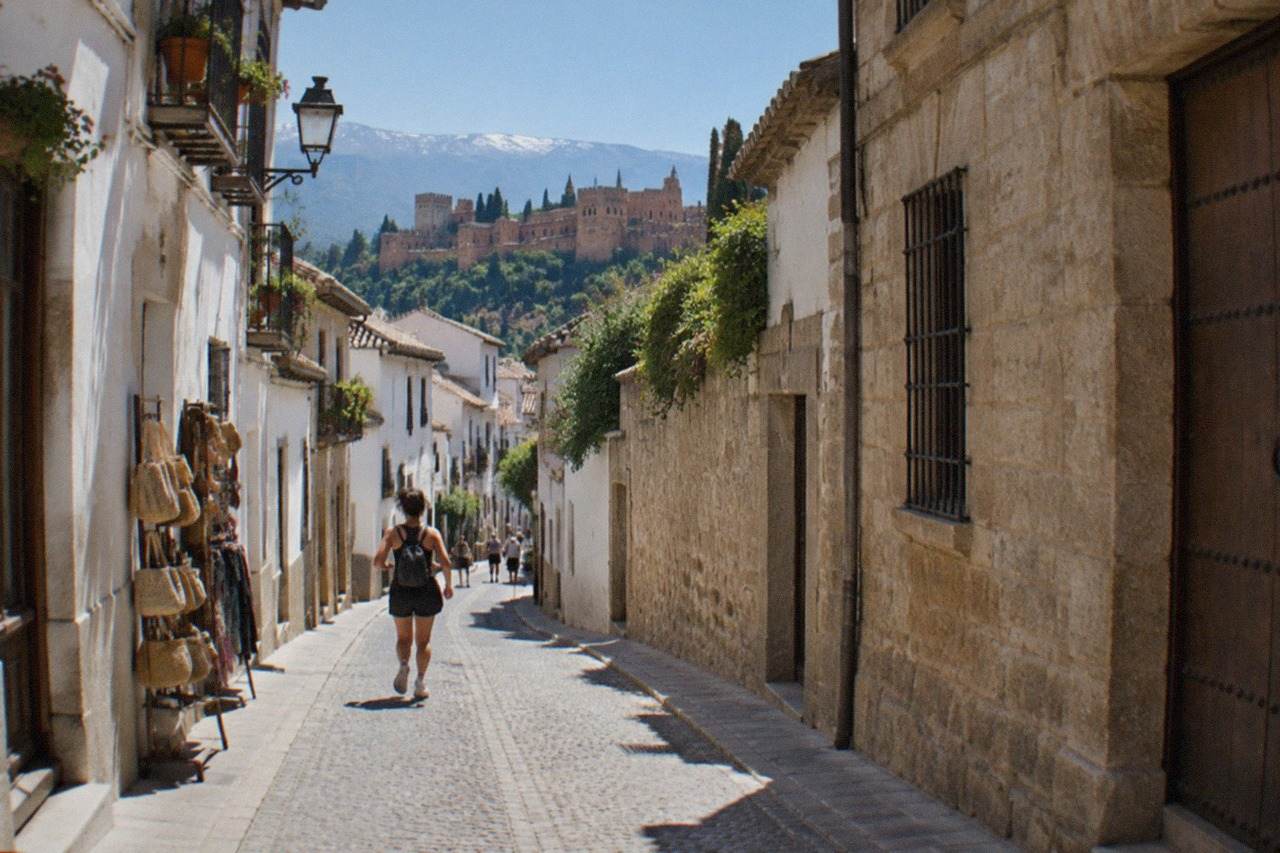
Granada's shopping is unusually concentrated: the Moorish-style Alcaiceria sits two minutes from the Cathedral, the Albaicin's ceramic workshops cluster below the Mirador de San Nicolas, and almost everything worth buying here, from Fajalauza pottery to taracea inlay boxes, is made in the province rather than imported.
Short answer
Shop the Alcaiceria near the Cathedral for Moorish-style scarves, lamps and souvenirs, head into the Albaicin for Fajalauza ceramics and Granada-made crafts, and use Calle Mesones and the streets around Puerta Real for mainstream Spanish retail. Small shops typically close mid-afternoon and reopen in the evening, Saturday is the busiest day, and the Alcaiceria trades every day.
Granada is a small city that punches far above its weight for shoppers, and the reason is historical: this was the last Muslim kingdom on the Iberian peninsula, and its craft traditions, ceramics, wood inlay, leather and lamp-making, never stopped being produced here. The Alcaiceria, the old silk market lane that once served the Nasrid court, still trades a two-minute walk from the Cathedral. The Albaicin holds working ceramic studios turning out the green-and-blue Fajalauza ware that has been made in Granada for centuries. And the modern retail core around Puerta Real and Calle Mesones sits in the middle of it all, walkable from anywhere in the old town.
This guide from the Things To Do In Granada editors covers what to buy, where to buy it, when shops are open, and how to fold a shopping day into an itinerary that also includes the Alhambra, whose tickets need booking well ahead, see How To Book Alhambra Tickets for the current official prices and sell-out reality.
What Should You Buy In Granada?
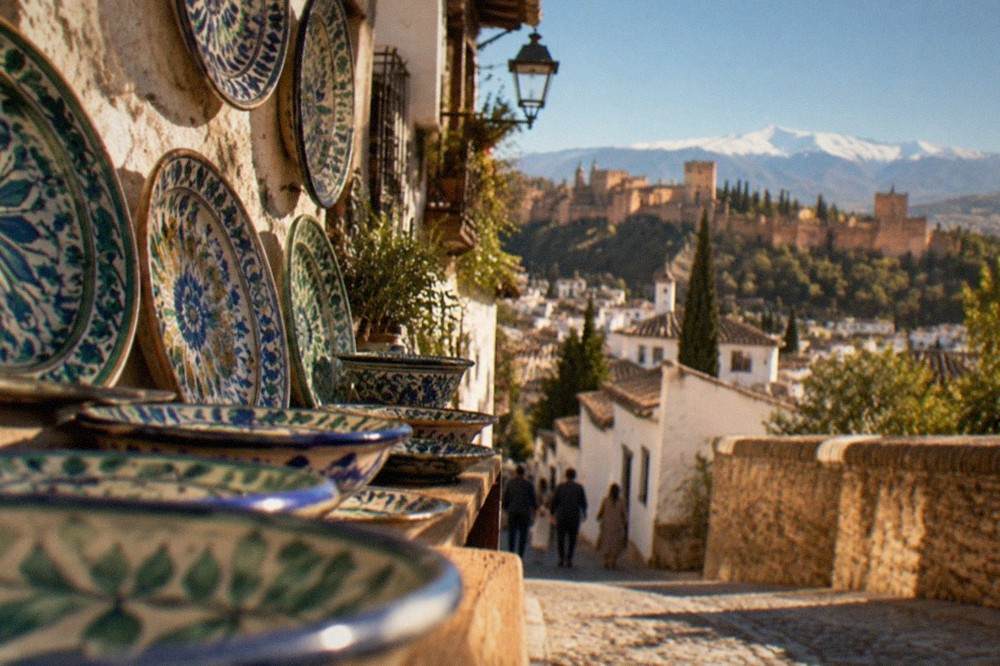
The three things genuinely made in Granada rather than imported are Fajalauza ceramics, the green-and-blue glazed pottery produced in the city since the Nasrid era, taracea or taraceado, the intricate wood-and-bone inlay work used for boxes, chessboards and trays, and Granada-style lamps and lanterns in pierced tin and coloured glass. Add locally made leather goods, guitars from the city's instrument workshops, and food souvenirs such as olive oil, Alpujarras honey and jamon from the province.
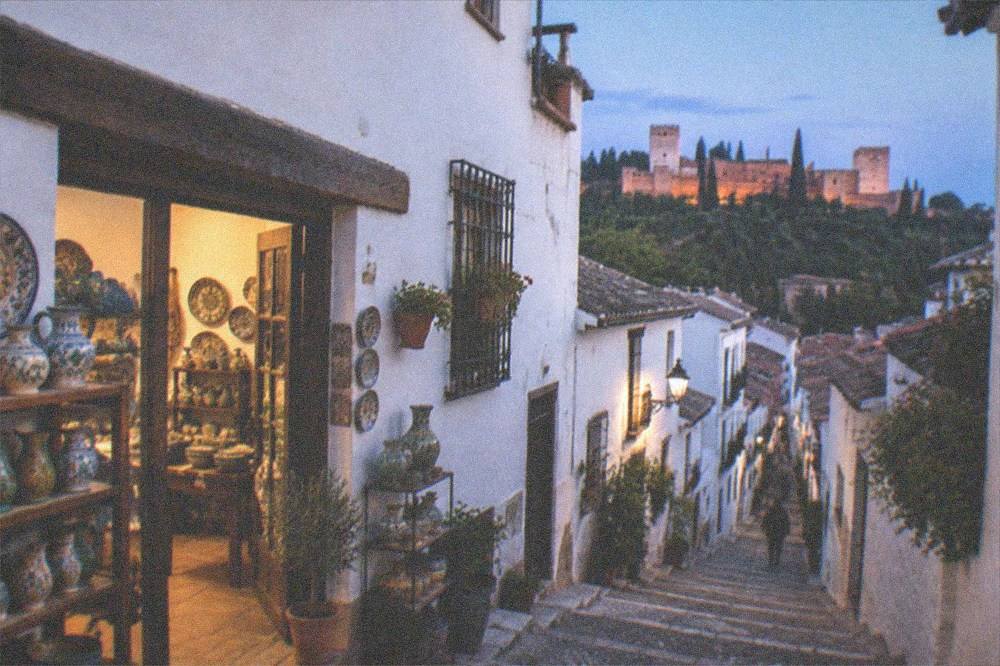
Fajalauza ware is the signature. The name comes from the old Fajalauza gate on the Albaicin hill, near where the potteries clustered, and the classic pattern is a green or blue bird-and-leaf motif on white glaze. Plates, tiles, bowls and azulejos all come out of the same tradition, and the Albaicin shops closest to the workshops sell the real thing rather than the mass-produced copies that circulate in the tourist lanes.
Taracea is the other craft with deep local roots. Artisans fit tiny polygons of different woods, bone and sometimes silver thread into geometric surfaces, a technique carried over from Nasrid Granada and still taught in the city. A small inlay box is one of the few souvenirs here that is hard to buy anywhere else in Spain.
For food, the province supplies the raw material. Alpujarras honey, olive oil from the Granada countryside and the sweet Pionono pastries associated with nearby Santa Fe all travel reasonably well, and vacuum-packed jamon solves the customs question for most travellers. Ask in the shop rather than assuming; packing rules differ by destination.
Where Do You Go Shopping In Granada?
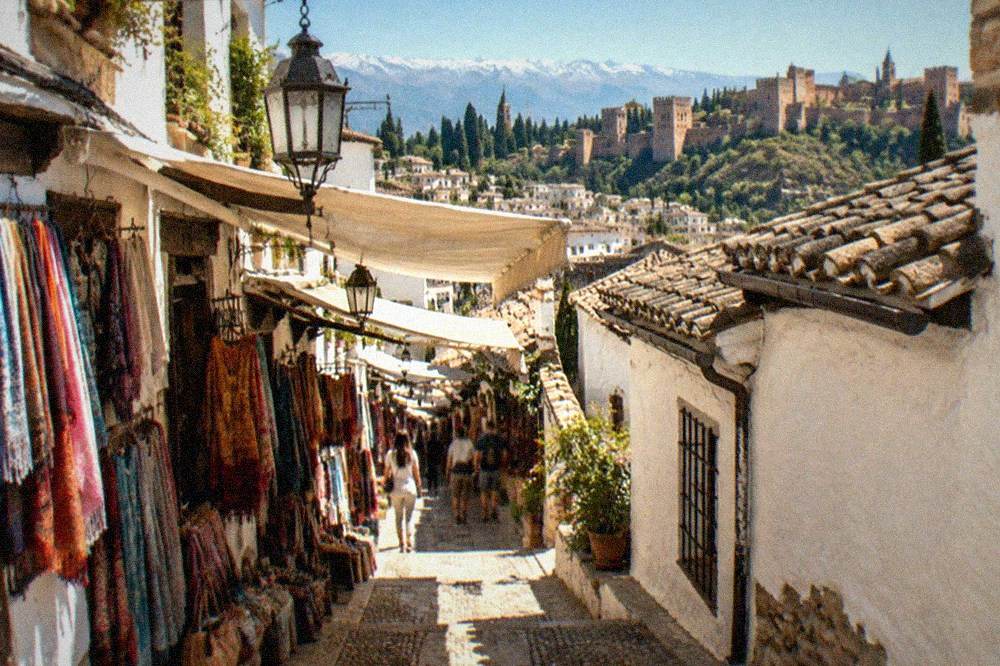
The Alcaiceria, the reconstructed Moorish-style market lane on Calle Oficios beside the Cathedral, is the symbolic heart of shopping in Granada, but the real buying happens in four zones: the Alcaiceria and the streets immediately around it for souvenirs and crafts, Calle Mesones and the Puerta Real area for mainstream fashion and Spanish chains, the Albaicin for ceramics workshops and independent studios, and the Realejo, the old Jewish quarter turned graffiti-art district, for small alternative boutiques.
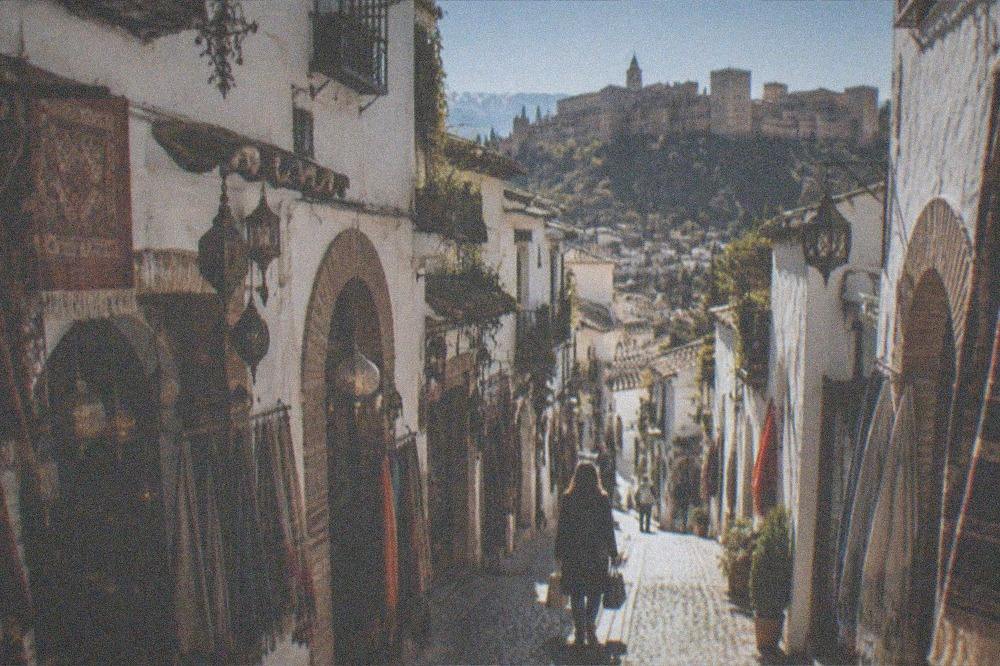
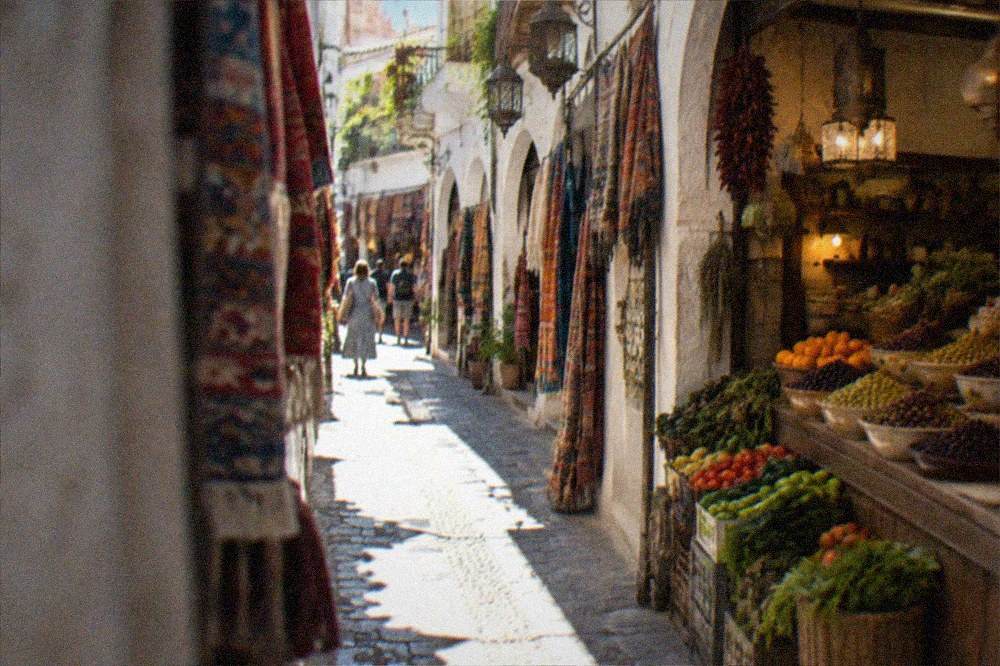
Each zone has a distinct character, and they are all within a 20-to-30-minute walk of each other. The Alcaiceria is intense, narrow and aimed squarely at visitors: lamps, scarves, inlay boxes, tea sets and jewellery. Bargaining is accepted in some stalls, gently and mainly on multi-item purchases, though fixed prices are increasingly the norm.
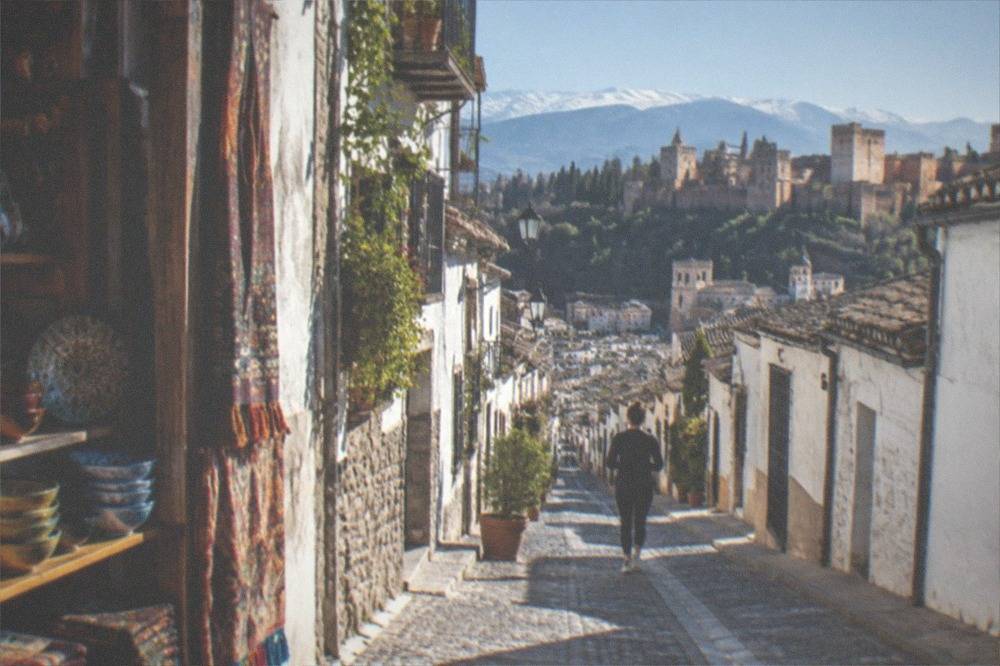
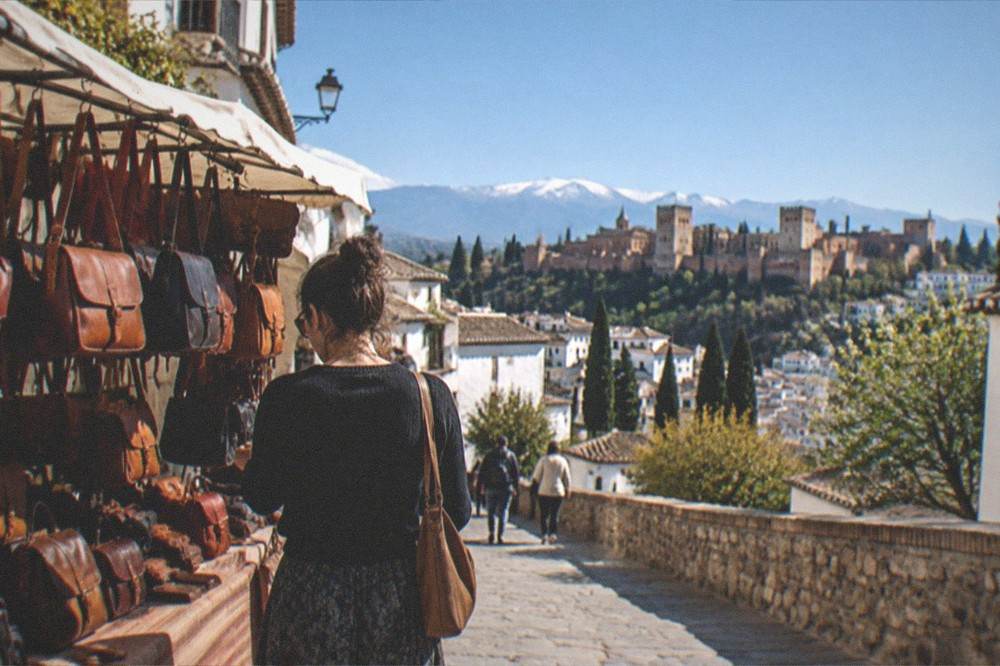
The Albaicin, the hillside quarter facing the Alhambra across the valley, is where the ceramics studios are. Shopping here pairs naturally with the walk up to the Mirador de San Nicolas, the viewpoint that frames the Alhambra against the Sierra Nevada, and the streets around it hold the densest cluster of genuine craft shops in the city.
The Realejo sits below the Alhambra on the other side. It is quieter, more local, and its shops lean toward vintage, design and streetwear rather than souvenirs. For mainstream shopping, Calle Mesones, running from Puerta Real toward the Cathedral, carries the Spanish high-street brands, and the department stores around Puerta Real anchor the modern retail core.
A guided walk is the most efficient way to learn this geography before you shop on your own. The Granada in full: Historic Centre, Albaicín & Sacromonte tour covers all three old quarters in one outing, from $23 per person and rated 5 from 28 reviews on the operator's live listing, and there is a free, tip-based GuruWalk equivalent, Granada in full, Historic center, Albaicín and Sacromonte Free Tour, rated 4.96 from 538 reviews, if you would rather pay what you think the walk was worth.
Is The Alcaiceria Worth Visiting For Shopping In Granada?
Yes, the Alcaiceria is worth a visit even if you buy nothing, because it is a reconstructed fragment of Granada's medieval silk market, rebuilt in the Nasrid style after a fire destroyed the original, and it compresses the city's entire souvenir offer into one narrow lane beside the Cathedral. It is best treated as a browsing and comparison stop: see the lamps, inlay work and scarves here, then check prices against the Albaicin workshops before committing to the larger purchases.
The lane runs off Calle Oficios, and its full name, Alcaiceria de Granada, refers to the "alcayceria", the licensed silk market of Muslim Granada, which in Nasrid times was far larger and traded under the crown's protection. What stands today is a romantic reconstruction, and shopkeepers are usually honest about that if you ask.
Two practical notes. First, the Alcaiceria is at its calmest in the morning, before the Cathedral crowds spill over around midday. Second, the Granada Cathedral and the Royal Chapel sit on the same block, so the whole area can be done in one sweep: the Alcaiceria's shops, the Cathedral's interior and the Royal Chapel, where the Catholic Monarchs lie buried, are separated by a couple of minutes' walking.
The current official entry prices for those two monuments, from the official ticketing site, are worth knowing before you plan that sweep:
| Monument | Period | Individual price | Reduced price | Under 12 |
|---|---|---|---|---|
| Granada Cathedral | 8 May - 28 Nov 2026 (Kerygma exhibition) | EUR 10 | EUR 8 | Free |
| Granada Cathedral | From 29 Nov 2026 | EUR 7 | EUR 5 | Free |
| Royal Chapel (Capilla Real) | Current | EUR 7 | EUR 5 | Free |
If a guided orientation of the old city sounds useful before you set out on foot, the Granada in full: Historic Centre, Albaicín & Sacromonte tour runs daily and covers the ground efficiently.
When Are Shops Open In Granada?
Most small and family-run shops in Granada still follow the Spanish split day: open roughly from mid-morning until early afternoon, closed for the siesta break in the mid-afternoon, then reopened from early evening until around 21:00, while the chain stores around Puerta Real and Calle Mesones increasingly run continuous hours, typically until 21:00 or 22:00, and the Alcaiceria and souvenir shops trade every day of the week including Sunday, since visitor demand keeps them open.
The split day catches a lot of visitors out. If you arrive at an Albaicin ceramics studio at 17:00, there is a real chance the shutter is down until 18:00 or so. The fix is to sequence your day the way locals do: monuments and viewpoints in the morning, lunch, then shops in the late afternoon and evening, when the city cools down and the streets refill.
Saturday is the busiest shopping day of the Spanish week, and many family businesses close or shorten hours on Sunday, with the exception of the tourist-facing lanes around the Cathedral, which stay open because that is where the visitors are. Public holidays are a different matter: on 1 May, local holidays such as Cruces de Mayo (1-3 May in 2026, 3 May in 2027) and Corpus Christi (with the main procession around 4 June in 2026 and 27 May in 2027), expect reduced hours even in the centre.
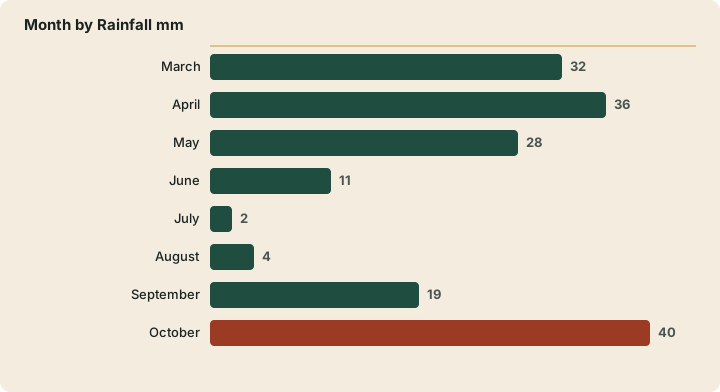
The weather shapes the experience too. AEMET's climate normals for the Granada Aeropuerto station show the shopping months clearly:
| Month | Avg high C | Avg low C | Rainfall mm | Shopping conditions |
|---|---|---|---|---|
| March | 19.0 | 3.8 | 32 | Comfortable, occasional rain |
| April | 20.6 | 6.0 | 36 | Mild, spring crowds building |
| May | 25.0 | 9.4 | 28 | Warm, dry, peak strolling weather |
| June | 31.0 | 13.6 | 11 | Hot afternoons, shop mornings |
| July | 34.8 | 15.7 | 2 | Very hot, indoor shops midday |
| August | 34.2 | 15.5 | 4 | Very hot, many locals away |
| September | 29.4 | 12.8 | 19 | Warm, quieter after summer |
| October | 23.2 | 8.7 | 40 | Pleasant, rain returning |
July and August afternoons are for air-conditioned stores, not for hauling shopping bags up the Albaicin's cuestas. The Granada Weather guide has the full month-by-month picture, and The Best Time To Visit Granada ranks the seasons overall.
How Do You Plan A Shopping Day Around The Alhambra?
Book your Alhambra ticket first and build the shopping around it, because the General ticket costs EUR 22.27 at the current official price, sells out one to two months or more ahead in peak season, and carries a strictly enforced half-hour entry window for the Nasrid Palaces, so the monument fixes your schedule while the shops flex around it: visit the Alcaiceria and the centre before your slot or after you come down from the hill, and save the Albaicin workshops for the golden hour before sunset.
The Alhambra's daily capacity is roughly 6,600 to 7,000 visitors, with about 300 people per half-hour slot in the Nasrid Palaces, and online sales close at 23:59 the day before the visit date, so same-day online buying is not a reliable plan. Tickets are nominative, photo ID is checked, and the rest of the complex can be visited outside your Palaces window on the same ticket date.
The current official ticket menu, from the Patronato de la Alhambra's own ticket pages:
| Alhambra ticket type | Official price | What it covers |
|---|---|---|
| General (day) | EUR 22.27 | Nasrid Palaces, Alcazaba, Generalife |
| Gardens, Generalife and Alcazaba (day) | EUR 12.73 | Everything except the Nasrid Palaces |
| Night visit, Nasrid Palaces | EUR 12.73 | Nasrid Palaces after dark |
| Night visit, Gardens and Generalife | EUR 8.48 | Gardens and Generalife after dark |
| Dobla de Oro General | EUR 30.48 | Alhambra plus Andalusi monuments in the city |
A note on those figures: a July 2025 press release announced lower prices effective 1 August 2025, but the live official ticket pages still show the higher figures above, so treat the live page as the truth at booking time. Children under 12 enter free but still need a ticket for entry control.
The Granada Card can bundle the monument with other sights, and its tiers matter if you are shopping-heavy, since the pass includes urban bus trips and a tourist-train loop that saves your legs:
| Granada Card tier | Price (from 13 Nov 2025) | Alhambra inclusion |
|---|---|---|
| 72 hours | EUR 60 | Daytime General: Alcazaba, Nasrid Palaces, Generalife |
| 48 hours | EUR 55 | Daytime General: same three sites |
| 24 hours (night Palaces) | EUR 50 | Night Nasrid Palaces only |
| Jardines | EUR 50 | Daytime Alcazaba and Generalife only |
| Child (age 3-11) | EUR 13 | Same as the accompanying adult tier |
The Alhambra portion cannot be split across days once activated, so the card's clock starts with your monument slot. The Granada Card guide breaks down whether it pays off, and Alhambra Tours compares the guided options, including the Alhambra: Nasrid Palaces & Generalife Gardens 3-Hour Tour, from $60 per person and rated 4.7 from 1,394 reviews on the operator's live listing, which handles ticket procurement for you. Check availability
Where Do Locals Shop In Granada?
Locals shop away from the three tourist quarters: the chain and department-store core around Puerta Real and along Calle Mesones for clothing and everyday goods, the residential shopping streets further out in Zaidin and Ronda districts for groceries and services, and the city's markets for food, with the central market halls supplying the fruit, vegetable, fish and meat trade that keeps Granada's restaurants and tapas bars stocked.
The visitor-facing lanes and the local retail geography barely overlap, which is exactly why both are worth seeing. A morning in a Granada market hall is a shopping experience in the Spanish sense, buying food, tasting olives, watching the counter trade, and it pairs naturally with the free-tapa custom: in many traditional Granada bars a drink order still comes with a complimentary small tapa, a widely upheld local practice rather than a guaranteed rule, as 2026 reporting on the tradition confirms.
For the craft end of local shopping, the Albaicin and Realejo studios are where Granadans themselves buy wedding plates and house gifts. If you want the neighbourhood context around those purchases, the Sacromonte and Albaycin Neighbourhoods Walking Tour, from $50 per person and rated 4.6 from 141 reviews on the operator's live listing, walks both quarters with a guide, as does the free, tip-based GuruWalk Albaicín and Sacromonte free tour, rated 4.99 from 913 reviews, where the guide works for tips and no price is charged up front.
Is Shopping In Granada Expensive?
Granada sits at the affordable end of Spain's tourist cities for souvenirs and crafts, with genuine Fajalauza ceramics and tarcea inlay work priced well below what comparable artisan goods cost in Madrid or Barcelona, food and tapas cheap by northern European standards, and the main budget risks being the mass-produced souvenir lanes around the Cathedral, where near-identical lamps and scarves are sold at whatever the visitor will pay, so the honest answer is that comparison shopping within a few streets saves real money.
The practical approach: set a rough budget before you enter the Alcaiceria, note the price of a specific item there, then check the same item type in an Albaicin workshop before buying. Workshop pieces cost more per unit but carry the maker's name and, often, the studio's story; market-lane pieces are cheaper and rarely local. Neither choice is wrong, but they are different products.
Getting to the shopping costs almost nothing. The metro fare with a reloadable card is around EUR 0.49 per trip, though note the Metro de Granada runs north-south through the city and serves neither the airport nor the Alhambra, and the airport bus into town, Alsa's Linea 245, costs EUR 3.10 one way and takes roughly 40 to 45 minutes. The Granada Airport guide covers that transfer in detail.
For tax-free shopping, non-EU visitors can reclaim Spanish VAT on qualifying purchases, but the paperwork is done per shop at the till, so ask before paying rather than after, and keep receipts together. Shops that handle refunds regularly will know the process; tiny workshops may not, which is another reason to make your big artisan purchases at established studios.
Can You Combine Shopping In Granada With A Day Trip?
Yes, and the classic pairing is Granada's craft quarters in the morning with a guided day trip to Cordoba, whose own souk-adjacent old quarter and leather-and-silver traditions complement rather than duplicate Granada's, with the Cordoba Day Trip from Granada running about 11 hours from $163 per person, though with no rating published on the listing yet, and the Alpujarras mountain-villages tours offering the alternative: honey, textiles and woven goods bought at the source in the villages that produce them.
Cordoba's day trip works because the two cities' crafts genuinely differ. Granada gives you Fajalauza ceramics and tarcea inlay; Cordoba's old quarter gives you a different leather tradition and silversmithing, plus the Mezquita. The tour handles the transport, which matters because the rail and bus connections between the two cities eat most of a day if you arrange them yourself.
| Day trip from Granada | Tour | Duration | Price | Rating on the listing |
|---|---|---|---|---|
| Cordoba | Cordoba Day Trip from Granada | 11 hours | from $163 | No rating published |
| Alpujarras villages | Las Alpujarras Full-Day Tour with Optional Lunch | 8 hours | from $99 | 4.6 from 144 reviews |
| Alpujarras villages | From Granada: Alpujarra Mountain Villages Tour | Full day | from $81 | 4.6 from 344 reviews |
| Seville | Seville Tour with Alcazar, Cathedral and Giralda | 12 hours | from $247.95 | 4 from 14 reviews |
The Alpujarras option is the shopper's sleeper pick. The region's honey, jarapa woven rugs and textiles are sold in the villages themselves, at prices and provenances the city shops cannot match, and the mountain drive is half the reason to go. The Alpujarras guide covers the region in depth, and Day Trips From Granada ranks all the options.
Common Questions About Shopping In Granada
What should you buy in Granada?
Fajalauza ceramics, the green-and-blue glazed pottery made in Granada since the Nasrid era, tarcea wood-and-bone inlay boxes, Granada-style pierced-tin lamps, locally made leather goods, and food souvenirs such as Alpujarras honey, olive oil and jamon. These are the products genuinely made in the province rather than imported for the tourist trade.
Where is the main shopping area in Granada?
The Alcaiceria, the reconstructed Moorish market lane beside the Cathedral, is the historic core, while Calle Mesones and the streets around Puerta Real carry the mainstream retail. The Albaicin holds the ceramics workshops and independent studios, and the Realejo has the small alternative boutiques.
Are shops in Granada open on Sunday?
The tourist-facing shops around the Cathedral and in the Alcaiceria typically open on Sundays because visitor demand keeps them trading, but many family-run businesses elsewhere close or shorten hours on Sundays, and public holidays such as Cruces de Mayo and Corpus Christi bring reduced hours even in the centre.
Do shops in Granada close for siesta?
Many small and family-run shops still follow the split day, closing for a mid-afternoon break and reopening in the evening until around 21:00, while the chain stores around Puerta Real increasingly run continuous hours. Plan craft-studio visits for the morning or the late afternoon.
Is the Alcaiceria in Granada the original market?
No. The original Nasrid-era silk market was much larger and was largely destroyed by fire; today's Alcaiceria is a reconstruction in the Nasrid style, which is worth visiting for its atmosphere and its dense concentration of souvenir and craft stalls.
Can you bargain in Granada's shops?
Gentle bargaining is accepted in some Alcaiceria stalls, mainly on multi-item purchases, but fixed prices are increasingly the norm, and it is not the custom in the Albaicin workshops or the chain stores. Comparing prices between the market lanes and the workshops before a big purchase saves more than haggling does.