Guadix Cave Houses
An hour or so inland from Granada, the hillside town of Guadix holds one of Europe's largest surviving cave-dwelling districts, a sprawl of homes carved into the clay where thousands of people still live underground.
Short answer
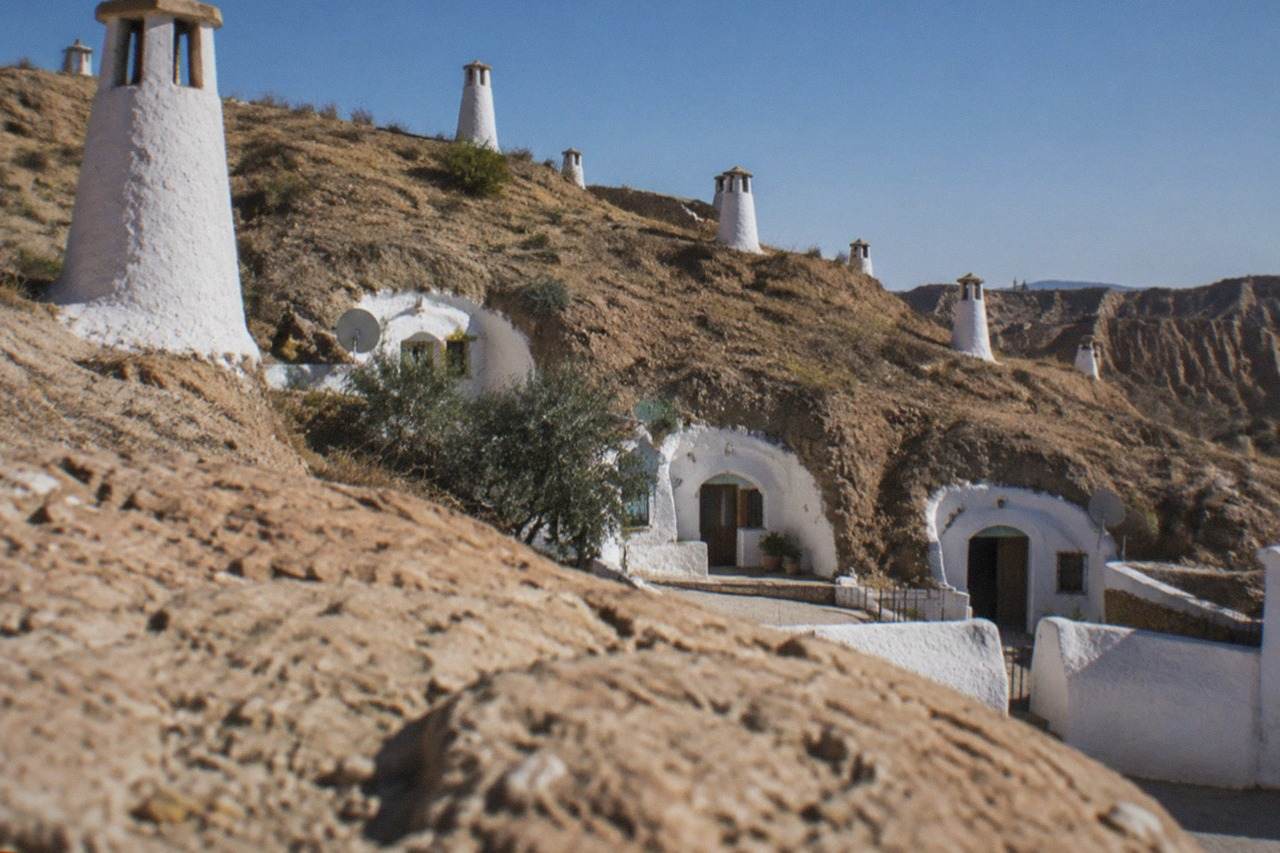
The Guadix cave houses are a working residential district of homes carved into the clay hillsides around the town of Guadix, east of Granada in Andalusia. Unlike Granada's Sacromonte caves, which are largely museums and flamenco venues today, Guadix's Barrio de Cuevas remains a lived-in neighbourhood you can walk through on a day trip from Granada.
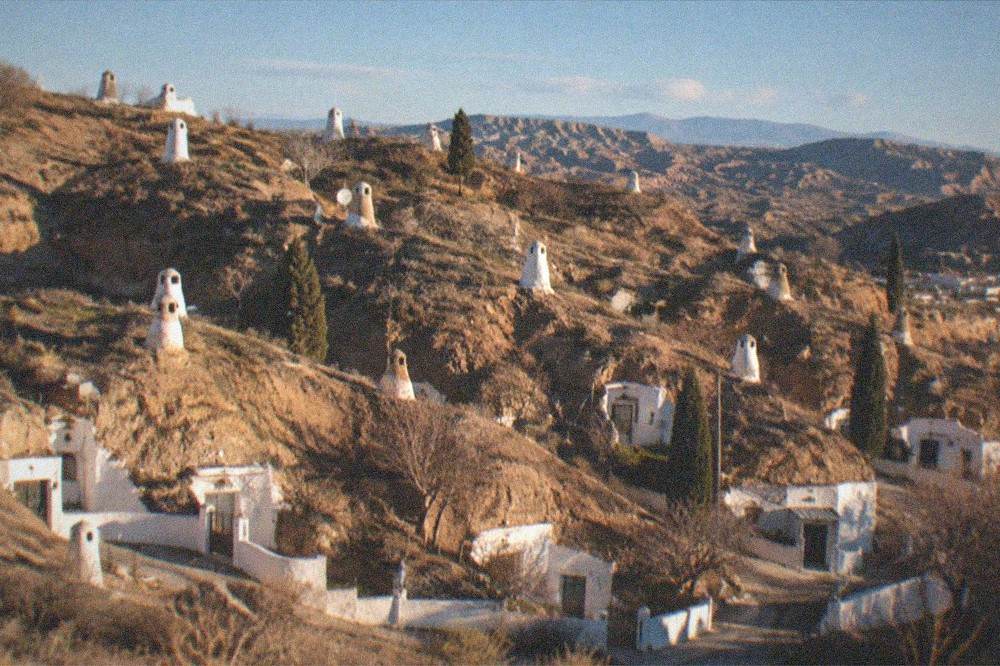
East of Granada, where the Sierra Nevada foothills flatten into a high plateau of ochre clay, the town of Guadix has been living underground for centuries. Its Barrio de Cuevas, a district of cave houses dug straight into the hillside, is among the largest inhabited cave-dwelling quarters in Europe, and unlike most cave attractions in Spain it is not a reconstruction or a theme park. People here were born in these rooms, raise children in them, and paint their chimneys white so the skyline looks like a field of candles. For visitors based in Granada it makes one of the region's most distinctive day trips, a landscape that feels closer to Cappadocia than to Andalusia, and a useful counterpoint to the cave quarter Granada keeps in its own Sacromonte hill.
This guide from the Things To Do In Granada editors covers what the Guadix cave houses actually are, how to reach them from Granada, what to do once you are there, how they compare with the Sacromonte caves most visitors already know, and how to fold the trip into a wider eastern-Andalusia itinerary.
What Are The Guadix Cave Houses?
The Guadix cave houses, known locally as casas cueva, are homes hand-dug into the soft clay and sediment hills that surround the town of Guadix, roughly an hour's drive east of Granada. The district, called the Barrio de Cuevas de Guadix, grew as housing for farm labourers and is still a normal residential neighbourhood today, with a cave museum, viewpoints, and a scattering of cave restaurants and guesthouses. The houses keep a near-constant interior temperature year round, which is the main reason families never abandoned them.
The geology explains everything. The hills around Guadix are made of compacted clay and fine sediment that is soft enough to excavate with hand tools yet stable enough to hold a vaulted room indefinitely, and dry enough that damp is rarely a problem in a region where annual rainfall is low. Dig into the hillside, finish the walls with a coat of lime, cut a chimney for the kitchen, and you have a dwelling that needs no heating in winter and no air conditioning in summer. That thermal logic is why the cave houses survived when shanty housing elsewhere in Andalusia was replaced: they are simply better suited to the local climate than many conventional buildings.
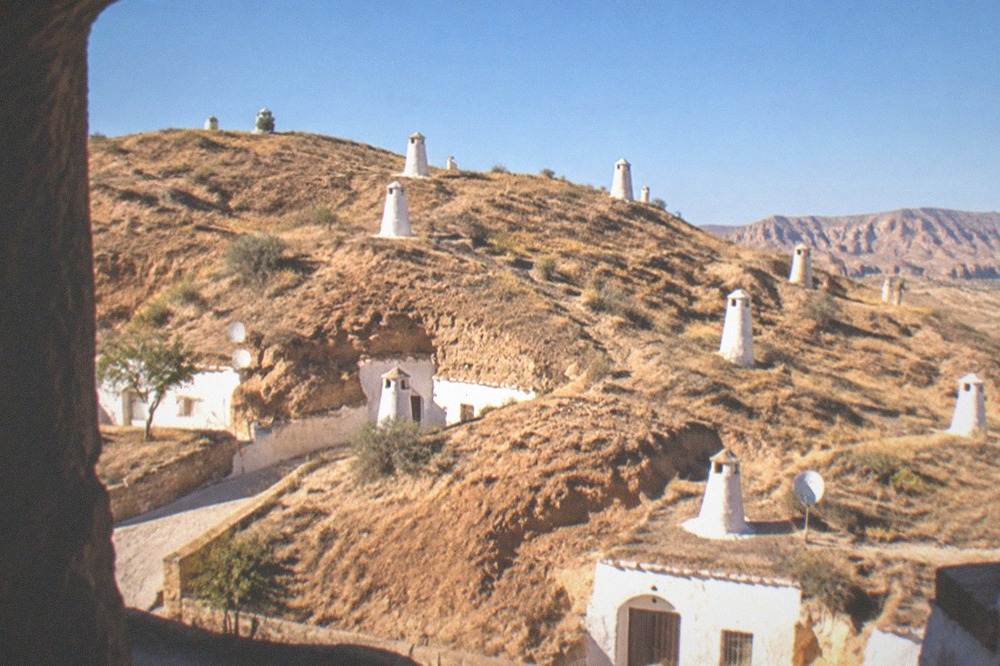
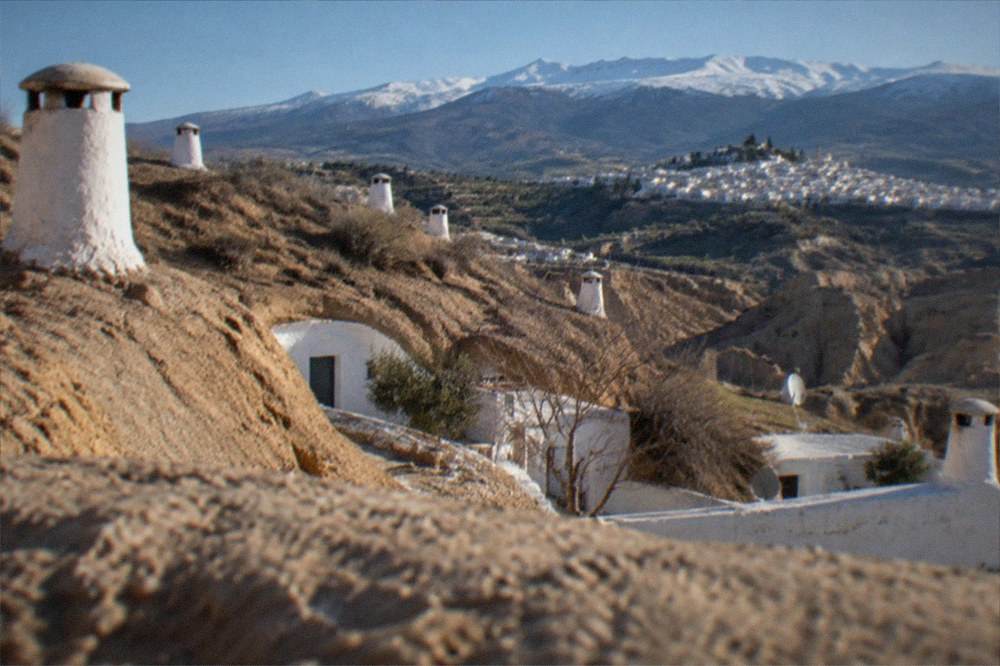
The district is also visually unlike anything else in Spain. Because the houses are carved into the ground rather than built on it, the visible skyline is not roofs but chimneys, dozens of whitewashed stacks pushing up through the earth at all angles. Doors sit at ground level where the hill has been cut away, and streets thread between the excavated faces. The classic postcard view, the one repeated on every Andalusia calendar, comes from the Mirador de la Magdalena, a viewpoint on the church plaza that looks across the whole cave quarter with the Sierra Nevada rising behind it.
What surprises most first-time visitors is that this is not a heritage site with a ticket gate. The Barrio de Cuevas is a living neighbourhood, and the people watering plants at their cave doors or driving scooters down the lanes are residents going about their day. The main formal attraction inside the district is a cave house museum, a furnished casa cueva that shows how a family actually lived in these rooms, from the kitchen hearth to the bedroom alcoves. You walk in, you see the whole domestic arrangement, and you come out understanding the district rather than just photographing it.
How Do You Get To Guadix From Granada?
Guadix sits east of Granada on the main motorway that links Granada with Almeria across the high plateau, and the practical options are rental car, regional train, or intercity bus. There is no high-speed rail connection and no airport at Guadix, so every route runs through Granada itself. Driving is the most flexible choice because the cave district, the viewpoints, and the surrounding badlands are spread out, while the train and bus both drop you within walking distance of the historic centre.
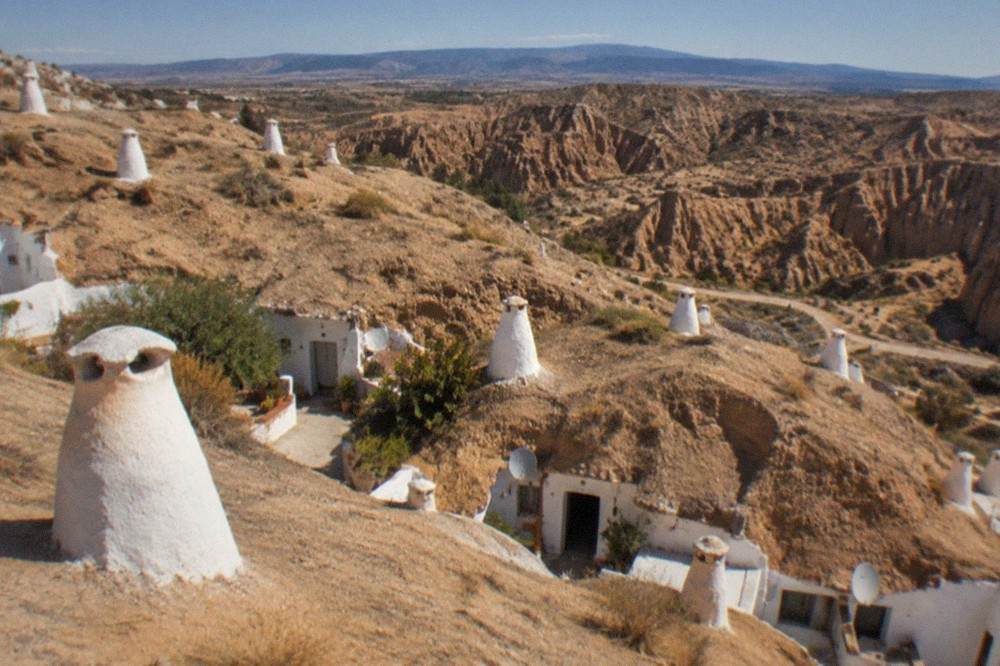
The drive is the version most visitors choose, and it is a genuinely scenic one. The motorway climbs out of the Granada basin and crosses the semi-desert plateau that locals call the Hoya de Guadix, a landscape of eroded clay badlands, dry ravines, and bare hills that turns startlingly red in the late afternoon. Because the area is agricultural rather than touristic, services are thin once you leave the Granada ring road, so fill the tank and carry water. Check current timetables for the train and bus before you travel, because frequencies on regional routes in this corridor change with the seasons and neither runs late into the evening.
If you are arriving in Granada from Madrid first, the practical pattern is the AVE and then a rental car or bus onward. The Renfe AVE Madrid-Granada service runs direct with a typical journey time of roughly 3h20 to 3h35, and advance promotional fares from around EUR 29-35 one way, though that range comes from ticket-comparison sites rather than Renfe's own fare page, so treat it as indicative and re-verify when you book. Our Granada train station guide covers the arrival side, and the car rental guide explains why driving is the standard choice for this part of Andalusia.
One point worth repeating because it catches people out: the Metro de Granada does not help you here, or anywhere on this route. The metro runs north-south through the city and its metropolitan area only, and neither the airport nor any eastern intercity connection touches it. For more on the eastern options generally, see the day trips from Granada guide.
If you would rather have someone else handle the plateau roads, a guided day trip is the low-stress alternative, and the operators below cover the region's signature experiences.
What Can You See In The Guadix Cave District?
The core sights are the cave house museum, the Mirador de la Magdalena viewpoint over the chimneys, the walkable lanes of the Barrio de Cuevas themselves, and the town's Alcazaba and cathedral in the historic centre a short stroll away. Most visitors spend half a day on the cave district and another hour or two in the old town, which is enough to see everything at a relaxed pace. Entry to the neighbourhood itself is free, since it is a residential area, with fees only at the museum.
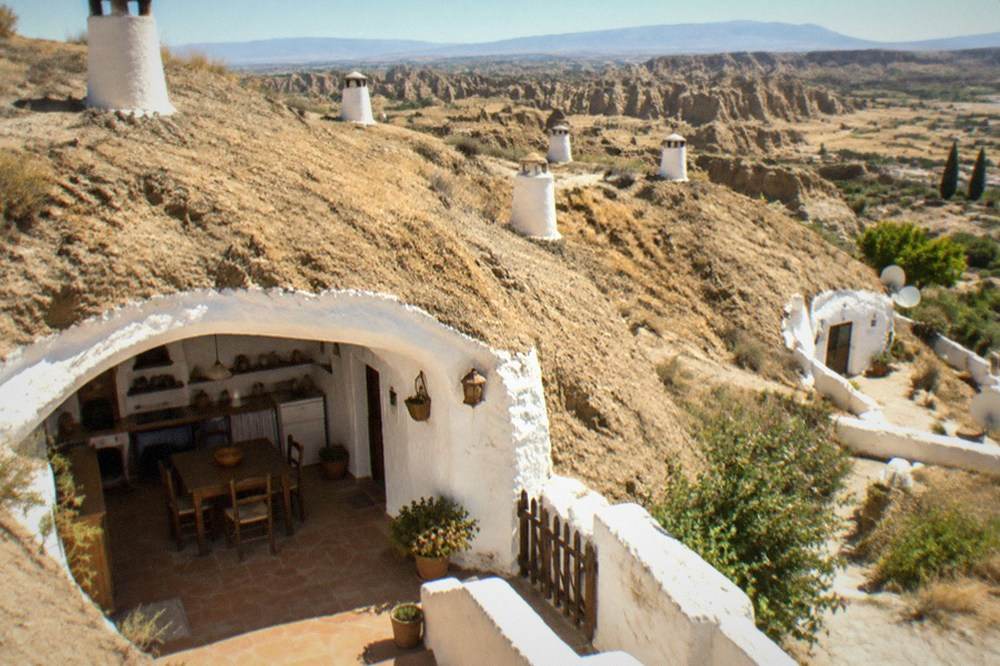
Start at the museum cave house. It is the single best orientation stop, because a furnished casa cueva answers questions the street view cannot: how a family cooked, where they slept, how light and air reach rooms with no windows. The interiors are exactly as described above, vaulted, lime-washed, and cool, and the museum's arrangement makes the thermal logic of the whole district obvious within minutes. From there, simply walk. The lanes of the Barrio de Cuevas climb gently, and every turn gives another chimney stack, another carved doorway, another garden patch scratched into the hillside.
The Mirador de la Magdalena, beside the Ermita de la Magdalena chapel at the top of the district, is the viewpoint everyone heads for, and it earns the walk. The whole cave quarter spreads below with the Sierra Nevada behind, and at golden hour the clay turns the colour of terracotta. Bring a wide lens or a phone panorama; the view is the reason most photographers make the trip. Be respectful with the camera on the lanes themselves: these are people's homes, so ask before photographing anyone at their door.
Down in the town proper, Guadix keeps a compact historic centre that most cave-bound visitors underrate. The Alcazaba, a Moorish fortress on its own hill, guards the old medina and gives a second, different panorama over the cave district and the plains. The cathedral anchors the main square, and the tapas bars around it serve the plain-cooking food of the plateau: stews, game, and the longaniza sausage the comarca is known for. Granada's free-tapa custom, described in our free tapas in Granada guide, does not automatically apply this far out, so treat any complimentary plate as a bonus rather than an expectation.
For context on the cave-dwelling tradition closer to your base, Granada's own Sacromonte cave museum makes an excellent before-or-after visit.
How Do The Guadix Cave Houses Compare With Granada's Sacromonte Caves?
Guadix's caves are a large, fully residential district where thousands of people still live underground, while Granada's Sacromonte caves are a much smaller quarter that has shifted from housing to flamenco venues, museums, and guesthouses. Guadix gives you the working, everyday version of cave life at scale, with badland scenery around it, whereas Sacromonte gives you the cultural version, cave flamenco and Roma heritage, within walking distance of the Alhambra. They are complements, not substitutes.
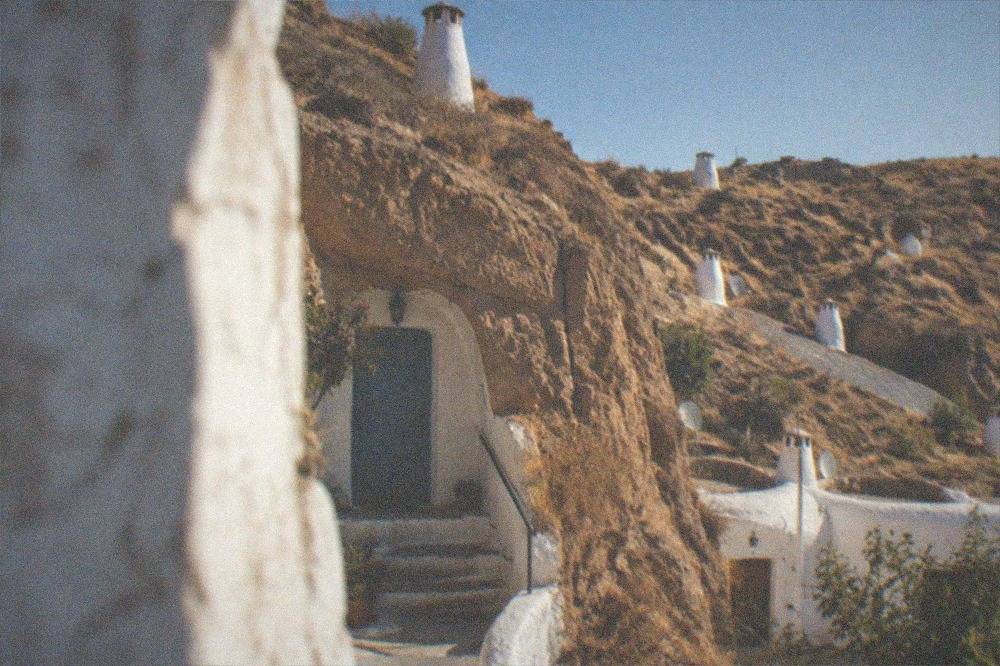
The comparison matters because most visitors meet Granada's caves first and assume Guadix is more of the same. It is not. Sacromonte's caves sit on a Granada hillside facing the Alhambra across the Darro valley, and over the last century their function has inverted: where families once lived in them, the majority now host zambra flamenco shows, museum visits, and cave accommodation. Our Sacromonte guide and the Sacromonte cave flamenco guide cover that quarter in detail. The living-quarter feel survives in patches, but the economy is now cultural.
Guadix went the other way. Its cave district is too large and too far from a tourist honeypot to have converted wholesale, so it remains what it always was: a neighbourhood. The scale is the other difference. Sacromonte is a single hill you cross in twenty minutes; the Barrio de Cuevas de Guadix spreads across several hillsides, and the viewpoints look over a horizon of chimneys rather than a palace. Add the surrounding badlands, which have no equivalent in Granada, and the two experiences feel like different worlds even though the underlying building technique is the same.
| Cave district | Location | Character today | Best for |
|---|---|---|---|
| Barrio de Cuevas, Guadix | High plateau east of Granada | Largely residential, cave museum, viewpoints | Scale, photography, authentic daily life |
| Sacromonte, Granada | Hill facing the Alhambra | Flamenco caves, museum, cave guesthouses | Zambra shows, Roma heritage, sunset views |
| Albaicin, Granada | Hill opposite the Alhambra | Traditional houses, Moorish street plan, miradores | Old-quarter walking, Alhambra viewpoints |
The practical read: if your time in Granada is short, do Sacromonte in the evening for the flamenco and save Guadix for a day when you can rent a car. If cave architecture is the reason you came to Andalusia at all, do both, Sacromonte for the culture and Guadix for the living district, and consider a guided walk of Granada's cave quarter first so the Guadix visit has context.
When Is The Best Time Of Year To Visit The Guadix Cave Houses?
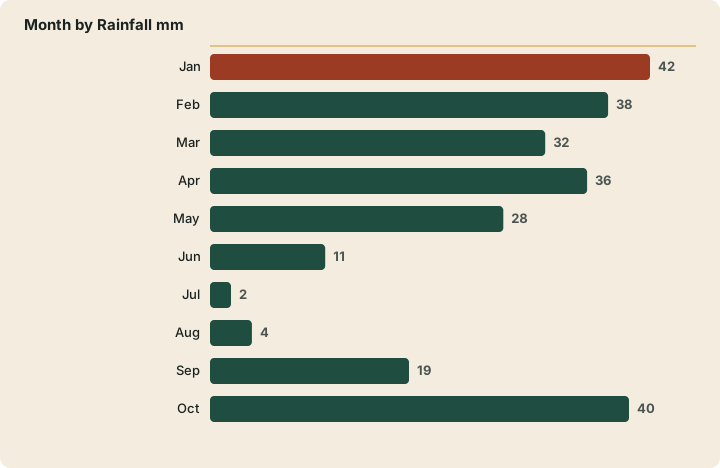
The best months for Guadix are April, May, September, and October, when the plateau is warm enough for walking but not the furnace it becomes in July and August, when average highs at the nearest measured station, Granada Aeropuerto, run 34.8C and 34.2C. Winter visits work too, since the cave houses hold their famous steady temperature and the badlands are striking under low light, but January nights average 0.0C on the plateau. Midsummer midday is the one window to avoid.
The climate data behind that advice comes from AEMET, Spain's national weather agency, measured at the Granada Aeropuerto station for the 1981-2010 period. Guadix sits on a neighboring stretch of the same high inland plateau, which shares the continental pattern: hot, dry summers and cold nights in winter, with the main rainfall concentrated from October onwards. The month-by-month picture for the Granada basin looks like this:
| Month | Avg high C | Avg low C | Rainfall mm |
|---|---|---|---|
| Jan | 13.0 | 0.0 | 42 |
| Feb | 15.4 | 1.6 | 38 |
| Mar | 19.0 | 3.8 | 32 |
| Apr | 20.6 | 6.0 | 36 |
| May | 25.0 | 9.4 | 28 |
| Jun | 31.0 | 13.6 | 11 |
| Jul | 34.8 | 15.7 | 2 |
| Aug | 34.2 | 15.5 | 4 |
| Sep | 29.4 | 12.8 | 19 |
| Oct | 23.2 | 8.7 | 40 |
| Nov | 17.0 | 4.2 | 54 |
| Dec | 13.4 | 1.7 | 56 |
Two planning notes follow from the table. First, the plateau's dryness is real: July averages just 2mm of rain, so shade and water matter far more than rain gear in summer. Second, spring and autumn carry the most comfortable walking temperatures but also the region's festival calendar, which cuts both ways. Granada's Semana Santa runs approximately 29 March to 5 April in 2026 and 21 to 28 March in 2027, and Corpus Christi falls around 4 June 2026, dates covered in our best time to visit Granada guide. Those weeks make the city lively but accommodation tighter, so book the Guadix day around them rather than through them if you value quiet.
Can You Stay Overnight In A Cave House In Guadix?
Yes, a number of cave houses in and around the Barrio de Cuevas operate as guesthouses and holiday rentals, and staying the night is the best way to experience the district's main trick, the constant interior temperature, at first hand. Availability is limited compared with a city, since these are small family operations, so book ahead rather than arriving on spec. Prices vary by season and property, so check the live rate on the listing rather than trusting a published figure.
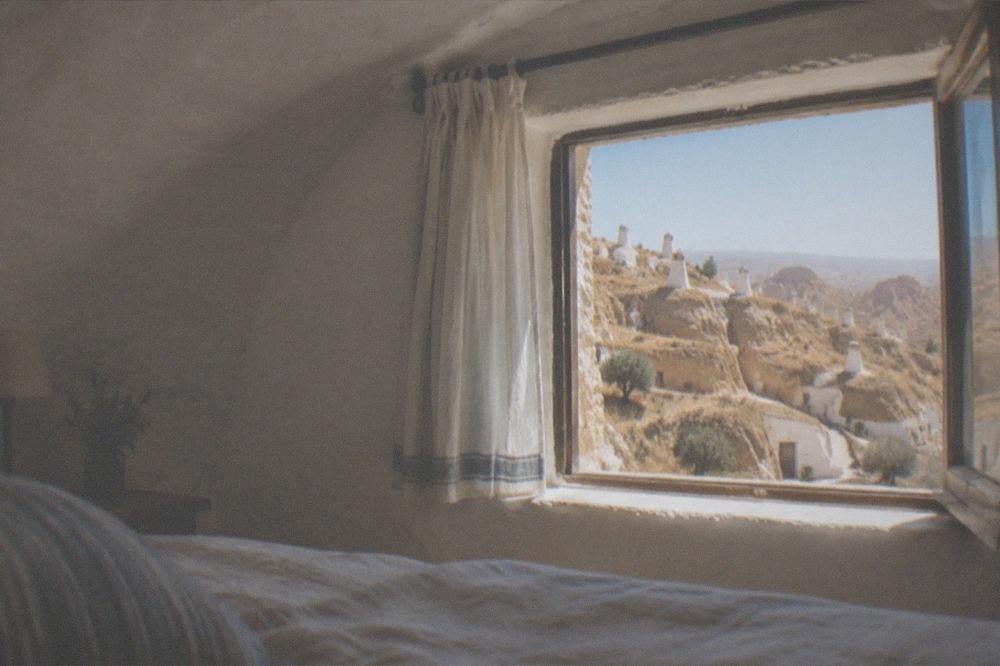
The overnight version of the trip has a rhythm of its own. Day-trippers see the chimneys in flat midday light and leave; overnight guests get the district at dusk, when the kitchen chimneys start smoking and the lanes empty of everyone but residents, and at dawn, when the low sun rakes across the badlands and the clay glows. Photographers in particular gain from the extra hours, because the two best light windows, early and late, are exactly the windows a day trip from Granada tends to miss.
The practical caveats are the ones that apply to any small-town stay in this part of Andalusia. Restaurant hours run late and lunch-heavy, so plan dinner before the kitchens close or eat with the locals at 21:00. Winter nights on the plateau are genuinely cold, and while the cave itself holds a steady temperature, the walk between car, cave, and dinner is not insulated, so pack for the season. And because the guesthouses are small operations, the check-in arrangements are often personal, a phone call, a door on a lane, rather than a hotel desk, so read the listing's instructions before you set out.
For a comparison point closer to Granada, cave accommodation also exists in Sacromonte, covered in our where to stay in Granada guide, and the Albaicin guide covers the traditional non-cave alternative across the valley.
What Else Can You Combine With A Guadix Day Trip From Granada?
The strongest pairings are the Alpujarras mountain villages to the south, the Sierra Nevada hiking country above them, and, for a longer loop, the desert badlands that continue east toward Almeria. All sit on the same eastern side of the province, so a single rental-car day can cover Guadix plus one of them, or you can split them across two days. The Alpujarras villages and the Los Cahorros gorge are the two most common add-ons booked from Granada.
The Alpujarras, the string of whitewashed villages on the Sierra Nevada's southern flank, make the most natural companion because the drive between the plateau and the mountain valleys is itself the attraction. Our Alpujarras guide covers the villages, and the region's guided options give a sense of the price range:
| Day trip from Granada | Kind of day | From (per person) | Rating | Duration |
|---|---|---|---|---|
| Las Alpujarras Full-Day Tour with Optional Lunch | Mountain villages | $99 | 4.6 from 144 reviews | 8 hours |
| Alpujarra Mountain Villages Tour | Mountain villages | $81 | 4.6 from 344 reviews | Full day |
| Sierra Nevada Hiking Adventure, Up To 3,000 Meters | High hiking | $67 | 4.9 from 420 reviews | ~5 hours walking |
| Los Cahorros, Bridges, Caves & Waterfalls | Gorge hike | $52 | 4.9 from 1,046 reviews | ~4 hours |
Hikers have the two best value options on that list. The Los Cahorros gorge walk strings together hanging bridges, cave passages, and waterfalls in the Monachil valley just outside Granada, and the high Sierra Nevada route climbs toward 3,000 meters on trails that start barely half an hour from the city. Both are half-day commitments, which leaves room for a Guadix morning or afternoon if you are energetic, though most people prefer them as separate days.
If your Granada stay is long enough for several eastern excursions, the wider day-trip menu looks like this, and note that the guided options toward Cordoba and Seville run in the opposite direction, west rather than east:
| Direction from Granada | Destination | Guided option from | Typical duration |
|---|---|---|---|
| East | Guadix cave houses | Self-guided or rental car | Half to full day |
| South | Alpujarras villages | $81-$99 | Full day |
| Local | Los Cahorros gorge | $52 | ~4 hours |
| Local | Sierra Nevada high hiking | $67 | ~5 hours walking |
| West | Cordoba | $163 | 11 hours |
| West | Seville | $247.95 | 12 hours |
| South | Ronda | $167 | 8-10 hours |
| Coast | Nerja and Frigiliana | $157 | 7 hours |
The Cordoba and Seville pages cover the western pairings in depth. The honest planning advice: Guadix is the only one of these you can genuinely do in half a day, which makes it the flexible piece of an itinerary, the slot you fill when a second Alhambra morning falls through or the coast weather turns.
That flexibility is worth a word on tickets, because most Guadix itineraries still hang on an Alhambra visit first. The Alhambra's General ticket, which includes the Nasrid Palaces, Alcazaba, and Generalife, costs EUR 22.27 on the official ticket pages, with a gardens-only daytime option at EUR 12.73 and the night Nasrid Palaces visit at EUR 12.73. Daily capacity runs to roughly 6,600-7,000 visitors with the Nasrid Palaces capped near 300 per half-hour slot, so the General ticket routinely sells out one to two months ahead in peak season, and online sales close at 23:59 the day before your visit date. Book the palace first, then build the Guadix day around it.
Common Questions About Guadix Cave Houses
Do people still live in the Guadix cave houses?
Yes. The Barrio de Cuevas de Guadix is a functioning residential neighbourhood, not a heritage reconstruction, and families continue to live in the casas cueva, which stay cool in summer and warm in winter thanks to the insulating clay. That is the key difference from Granada's Sacromonte, where most caves now host flamenco shows and museums rather than residents.
How far is Guadix from Granada?
Guadix lies east of Granada on the main Granada-Almeria motorway, and is commonly treated as a half-day or full-day trip from the city. Exact driving times vary with traffic and your starting point, so check your route planner on the day rather than relying on a fixed figure, and note that there is no high-speed rail link: regional train, bus, or car are the options.
Is Guadix worth visiting if you have already seen Sacromonte in Granada?
For most travellers, yes. Sacromonte shows the cultural side of cave dwelling, flamenco and heritage, at small scale, while Guadix shows the everyday residential side across several hillsides, with badland scenery and viewpoints Granada cannot match. If your interest in caves is architectural or photographic rather than musical, Guadix is the stronger stop.
Can you go inside a cave house in Guadix?
Yes, via the cave house museum in the Barrio de Cuevas, a furnished casa cueva that shows the full domestic layout, and via the cave guesthouses, several of which welcome visitors or rent rooms overnight. The residential lanes themselves are open to walk, but individual homes are private, so enter only the museum, guesthouses, or restaurants.
What is the best time of day to photograph the Guadix cave district?
Early morning and late afternoon. The low sun rakes across the clay and makes the badlands and chimney stacks glow, and at dusk the kitchen chimneys begin smoking, which is the classic shot. Midday light is flat and the unshaded lanes are hot, especially in July and August when average highs in the Granada basin reach 34.8C and 34.2C per AEMET's normals.
Can you visit Guadix without a car?
Yes, with planning. Regional train and intercity bus services connect Granada with Guadix and drop you within reach of the historic centre and the cave district, both of which are walkable. Frequencies on these regional routes change with the season and do not run late, so check current timetables before committing, and treat the surrounding badlands viewpoints as car territory.
Guadix is the day trip that most Granada visitors never hear about until they arrive, and it rewards the small effort of getting there with something the city cannot offer: cave houses as a living, working neighbourhood, on a landscape that looks borrowed from another continent. Walk the lanes politely, take the viewpoint at golden hour, and you will understand why the families of the Barrio de Cuevas never saw any reason to move out.