Is Granada Safe
Granada is one of Andalusia's most-visited cities and, by the standards of major European tourist destinations, a calm one. This guide covers the real risks: pickpocketing in the old town, the parts of the Albaicin and Sacromonte that deserve a little more care after dark, and the transport habits that keep a visit trouble-free.
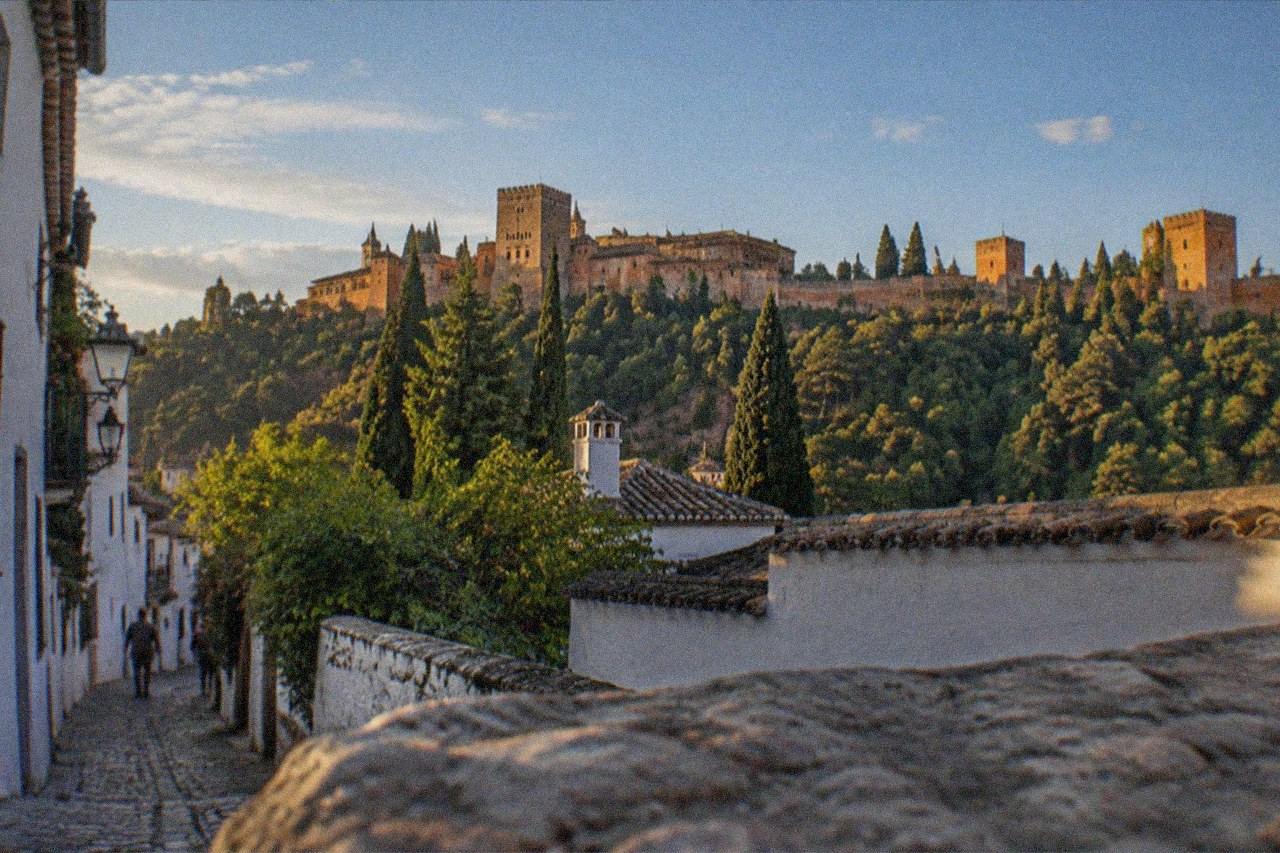
Short answer
Yes, Granada is widely considered a safe city for visitors. Violent crime against tourists is rare, the main risk is opportunistic pickpocketing in crowded areas like the Albaicin, Carrera del Darro and around the Cathedral, and standard city precautions cover almost every situation a traveller will meet.
Granada received 2,726,861 visitors to the Alhambra alone in 2025, according to the Patronato de la Alhambra y Generalife's annual report, and the city absorbed them without becoming a place travellers describe as unsafe. The Alhambra, Generalife and Albaicin have been a single UNESCO World Heritage listing since 1984, extended in 1994, and the old quarters that earned that status are walkable, inhabited and busy late into the night. That does not mean a visitor should switch off entirely. Granada is a mid-sized Andalusian city with a large student population, a steady stream of tourists and the petty theft that comes with both, and the hillside lanes of the Albaicin and Sacromonte reward a little route-planning after dark. This guide, from the Things To Do In Granada editorial desk, sets out what the risks actually are, neighbourhood by neighbourhood, and what habits keep them off your trip.
Is Granada Safe For Tourists?
Yes, Granada is a safe city for tourists by any normal European standard. Violent crime against visitors is rare, Spanish cities consistently rank among the safer destinations in Europe, and the risks a traveller in Granada actually faces are petty: pickpocketing in crowds, phone-snatching in the old town, and the occasional overcharged taxi. Common sense, a zipped bag and a little care after dark cover nearly every realistic scenario.
The city's layout helps. The historic centre, the Realejo and the lower Albaicin are compact and walkable, and Granada's famous late-evening culture means the central streets stay populated well past midnight, especially around tapas bars and the Calle Navas area. A street with people on it at 23:00 is a different safety proposition from an empty one, and Granada has plenty of the former.
The student population matters too. Granada's universities draw tens of thousands of young people, and the nightlife districts that serve them are busy, policed and used to outsiders. The incidents that do occur are overwhelmingly opportunistic rather than targeted: an unattended bag on a terrace chair, a phone on a cafe table, a wallet in a back pocket on a crowded bus.
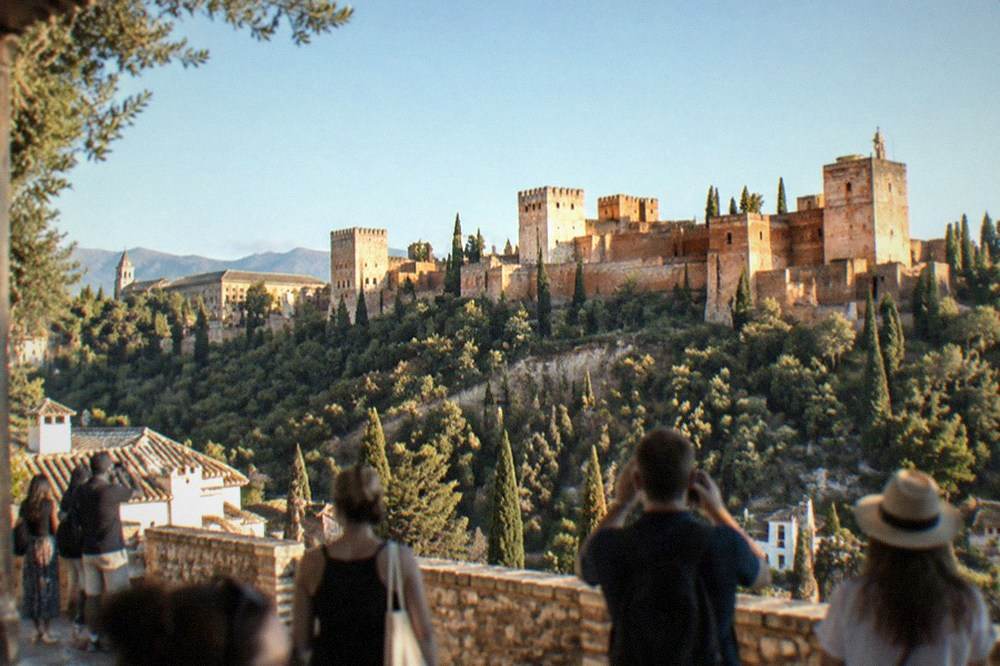
That said, "safe" is not "risk-free", and the two areas where visitors most often let their guard down are the crowded viewpoints at sunset and the walk back down from them. The Mirador de San Nicolas is the classic case: everyone is facing the Alhambra, many are holding phones up, and the crowd is exactly what a pickpocket wants. Treat any viewpoint gathering the way you would treat a packed metro carriage.
Which Areas Of Granada Need Extra Care After Dark?
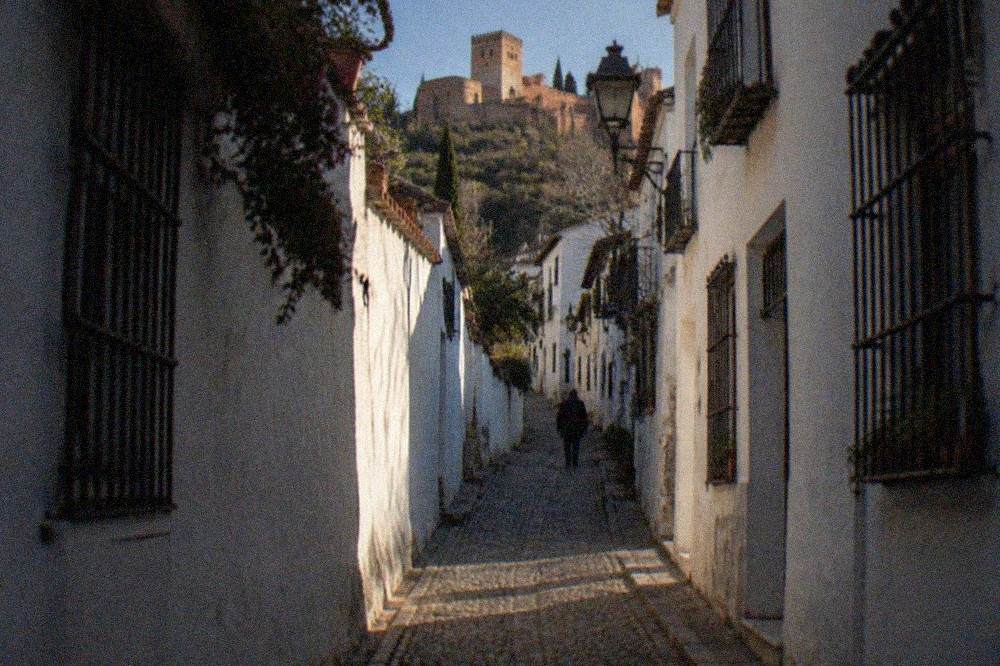
The central tourist core, including Puerta Real, Calle Navas, the Cathedral area and the lower Carrera del Darro, stays busy and unremarkable late into the night. The upper Albaicin and the lanes above the Mirador de San Nicolas, plus the less-trafficked parts of Sacromonte away from the cave-show streets, are the zones where visitors report feeling less comfortable after dark: they are dimly lit, steep and quickly empty of other people. Walking down with a group or taking a taxi or bus up are the standard precautions.
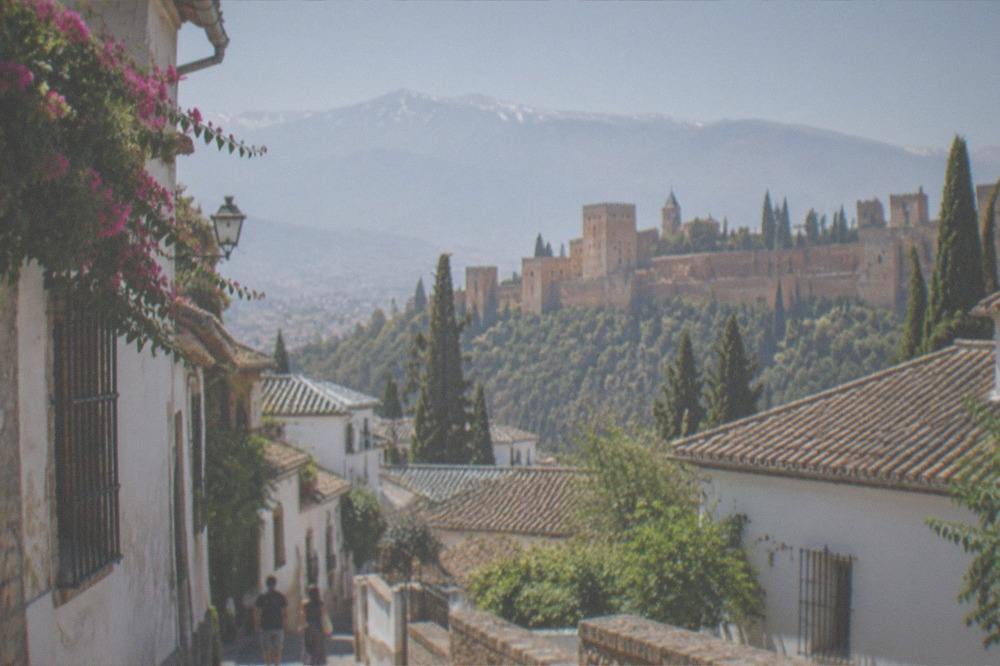
The distinction is not that these neighbourhoods are dangerous, it is that they are quiet, hilly and unfamiliar. The Albaicin is a living medieval quarter with narrow lanes, dead ends and cobbles that are slick after rain; a wrong turn at 01:00 feels very different from the same wrong turn at 13:00. The answer is not to avoid the quarter, it is to time it: go up for the sunset, come down while the streets still have people on them, and read our dedicated page on Albaicin safety at night for a fuller treatment.
Sacromonte deserves a similar note. The streets around the cave flamenco venues are busy on show nights, and the guided options in our Granada flamenco guide put you on the well-worn route. Between the venues, though, the hillside lanes thin out fast, and the walk back to the centre is longer than most people expect. A taxi from the bottom of the Camino del Sacromonte costs little and removes the whole question.
A guided walk solves most of this without any planning at all. The Albaicin and Sacromonte sunset walking tour keeps you on the sensible routes with a local who knows which lanes to take and which to skip, and it ends at the best hour rather than the worst one.
The table below is a plain-language summary of how the main visitor areas feel after dark. It is a planning aid, not a crime statistic: no official body publishes per-neighbourhood incident maps for Granada in the research pack behind this site.
| Area | Evening character | After-dark takeaway |
|---|---|---|
| Historic centre / Cathedral | Tapas bars, families, crowds until late | Normal city caution |
| Calle Navas and Reyes Catolicos | Dense tapas street, busy to midnight | Watch bags in crowds |
| Carrera del Darro (lower) | Populated riverside walk, frequent passers-by | Fine late; keep phone secured |
| Mirador de San Nicolas | Sunset crowds, then rapid thinning | Leave with the crowd, not after it |
| Upper Albaicin lanes | Dim, steep, quickly quiet | Taxi or bus after dark |
| Sacromonte between venues | Isolated stretches away from show streets | Taxi down after a show |
Is Pickpocketing A Problem In Granada?
Yes, opportunistic theft is the single most likely crime a visitor to Granada will encounter, exactly as it is in Seville, Malaga, Barcelona or any other heavily visited Spanish city. The hotspots are predictable: the crowded terraces around the Mirador de San Nicolas at sunset, the Carrera del Darro, the queues and shuttle crowds around the Alhambra, and packed tapas bars where bags hang on chair backs. Phones and wallets are the targets; violence is almost never part of it.
The pattern is classic distraction theft. In a viewpoint crowd everyone is looking at the Alhambra and holding a phone up to photograph it, which means the phone is out of the pocket and the owner is not watching it. In a tapas bar, the free-tapa tradition means tables turn slowly, drinks arrive, conversation flows, and a bag hooked over a chair back is out of sight for an hour. Granada's tapas culture, where a drink order typically comes with a complimentary small plate in many traditional bars, is one of the city's great pleasures, and it deserves a bag on your lap rather than the chair.
The Alhambra deserves a specific note because of the sheer density of people. The Patronato de la Alhambra caps the complex at roughly 6,600-7,000 visitors a day, with the Nasrid Palaces limited to about 300 people per half-hour slot, which means the entry queues and the shuttle-bus stops are the most crowded, most distracted places in the city. Tickets are nominative and photo ID is checked at the Nasrid Palaces entry, so keep your passport somewhere more secure than an open jacket pocket while you queue.
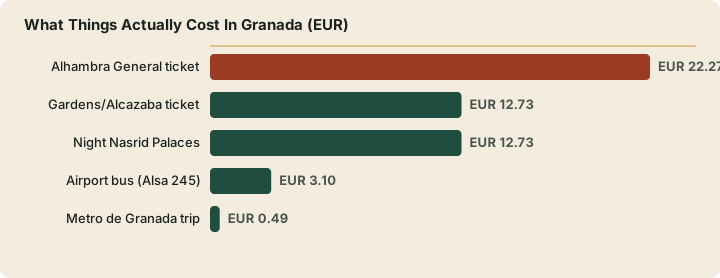
If you are still choosing how to visit the complex, our pages on Alhambra tickets and Alhambra tours cover the booking mechanics, including the fact that the General ticket at EUR 22.27 routinely sells out one to two months ahead in peak season and online sales close at 23:59 the day before the visit.
How Safe Is Granada At Night?
Night-time Granada is, for most visitors, one of the safest-feeling cities in Andalusia, because the local rhythm keeps the central streets populated until very late. Dinner starts around 21:00, tapas rounds run later, and the student nightlife around Pedro Antonio de Alarcon and Plaza Nueva runs past 02:00. The realistic risks after dark are the same as by day, pickpocketing and phone-snatching, plus the two hillside quarters discussed above, where the issue is emptiness and dim lighting rather than crime itself.
The one genuinely hazardous thing most visitors do at night in Granada is underestimating the terrain. The Albaicin and Sacromonte are steep, the cobbles are worn smooth, and AEMET's climate data shows why this matters: Granada averages January lows of 0.0C and December lows of 1.7C, so winter nights are genuinely cold, and rain, 42mm in January and 56mm in December, makes the stones slick. A fall on wet cobbles is a far more likely source of injury in Granada than an altercation with anyone.
Practical habits that locals use: take the bus or a taxi up the hill and walk down, not the reverse; keep to the lit, populated descents like the Calle Elvira corridor or the lower Carrera del Darro; and if a night out has run long, treat a taxi as part of the night's budget rather than an extravagance. Granada taxis are metered, and the fare from Sacromonte to the centre is short.
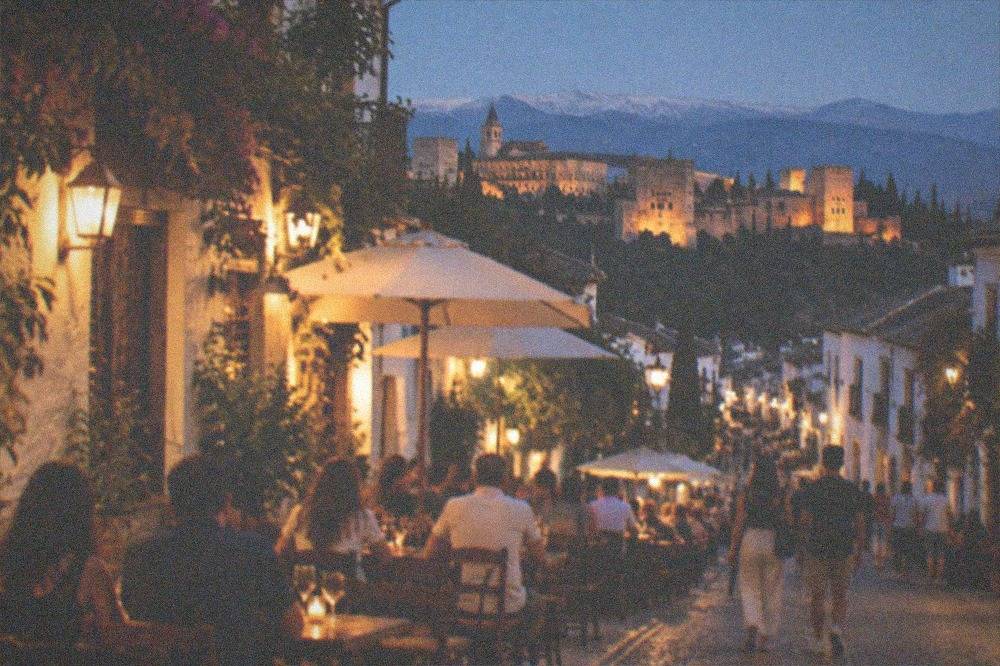
The evening food-and-drink scene is also where a guided option earns its keep, since the guide picks the venues and the route between them. The Granada Tapas and Wine Small Group Tour is one such option: Check availability.
Is Granada Safe For Solo Travellers And Women?
Yes, solo travel in Granada is normal and unremarkable, and the city's social culture works in a solo visitor's favour: eating alone at a tapas bar counter is ordinary local behaviour, the central streets stay populated late, and harassment reports are no worse than in comparable Spanish cities. The standard solo-traveller adjustments apply, and the hillside quarters after midnight are the one place where joining a group or taking a taxi is worth the few euros.
Granada's tapas-bar layout is actually friendlier to solo travellers than most cities' restaurant scenes. Bars are standing-room or counter culture, plates are small and shared spaces invite conversation, and a woman eating alone at a bar in the Realejo or on Calle Navas will be one of several doing exactly that. The city's large student population means solo young travellers are not a curiosity.
The adjustments that matter are the same ones as anywhere: keep the phone out of the back pocket; tell someone where you are going if you are heading into the upper lanes at night; and prefer populated descents after dark. The free-walking-tour scene is a good solo-traveller hack for the first day, since it combines orientation with company. GuruWalk's Albaicin and Sacromonte free tour, tip-based and rated 4.99 from 913 reviews, is one such option, and it covers exactly the quarters where a first-day orientation pays off.
For women travelling alone, the reports that reach travel forums about Granada are overwhelmingly about catcalling in the nightlife districts rather than anything more serious, and the advice is the standard Spanish-city playbook: the same streets that feel fine at 22:00 deserve a taxi at 03:00. Our page on safety for American travellers covers the US-visitor angle in more detail.
What Scams Should You Watch For In Granada?
The scams worth knowing in Granada are the standard Spanish tourist set, and none of them are elaborate: the overcharged or unmetered taxi from the airport, fake petition and bracelet approaches in the Cathedral square, the "closed hotel" or "closed attraction" routine from an unofficial guide, and inflated-menu tourist traps on the most famous streets. None involve violence, and every one is defeated by the same habits: metered taxis, official ticket channels, and a menu with prices before you sit down.
The Alhambra is the one place where the "unofficial channel" scam has real teeth, because demand exceeds supply. The General ticket sells out one to two months ahead in peak season, tickets release roughly three months in advance, and online sales close at 23:59 the day before, with no reliable same-day online sales. That scarcity is exactly what a reseller exploits. The Patronato's own ticket page is the only official channel, and the live official prices are General EUR 22.27, Gardens/Generalife/Alcazaba EUR 12.73, and night Nasrid Palaces EUR 12.73; a "cheap Alhambra ticket" offered on a street corner is neither cheap nor a ticket. Our guide to the official Alhambra ticket site spells this out.
| Scam pattern | Where it appears | Simple defence |
|---|---|---|
| Unmetered taxi overcharge | Airport rank, late-night ranks | Only metered taxis; agree nothing else |
| Fake petition / bracelet | Cathedral square, Puerta Real | Keep walking, hands and bag secure |
| "It's sold out, but I can..." | Alhambra approaches, Puerta Real | Book via the official ticket page |
| Menu without prices | Highest-footfall old-town streets | Ask for the priced menu first |
| Bogus "guide" at viewpoints | Mirador de San Nicolas | Book tours through vetted listings |
The tapas tradition needs one honesty note here, because it gets misrepresented as a scam in both directions. A free tapa with a drink is a widely upheld local custom in many traditional Granada bars, not a legal guarantee, and some venues have adjusted portions or drink pricing. A bar that charges for its tapa is not scamming you; it has simply opted out of the custom. Our free tapas in Granada page covers how the custom actually works.
Is Granada's Public Transport Safe?
Yes, Granada's buses, the metro and the airport connection are all safe to use, with the single caveat that applies in every Spanish city: crowded vehicles are where pickpockets work, and the airport bus and the Alhambra shuttle are the two routes where visitors are most distracted by luggage and timing. One structural fact matters for planning: the Metro de Granada does not serve either the airport or the Alhambra, so no itinerary should assume a metro ride to either.
The airport link is the Alsa Linea 245 bus, the Gran-Aero route, at EUR 3.10 one-way and roughly 40-45 minutes to the centre. It is an ordinary scheduled service, and the safety consideration is simply luggage discipline: the airport bus is a favourite hunting ground in every city because passengers are tired, loaded and unfamiliar. Keep the day-bag in front of you and the passport out of the suitcase pocket you cannot see.
Inside the city, the metro runs north-south through Granada and its metro area, and the per-trip fare with the reloadable card is about EUR 0.49. It does not reach the Alhambra, which is served by the LAC/C34 hillclimb bus lines, and it does not reach the airport at all. Both facts trip up visitors who assume the metro map matches the tourist map; it does not, and the hill bus or a taxi is the real answer from stops such as Recogidas. Our Granada airport guide covers the arrival side in full.
| Transport option | Serves | Fare basis | After-dark note |
|---|---|---|---|
| Alsa Linea 245 airport bus | Airport to city centre | EUR 3.10 one-way | Timetables thin late; check last service |
| Metro de Granada | North-south city and metro area | Approx. EUR 0.49 with card | Does not serve airport or Alhambra |
| LAC / C34 hill bus | City centre to Alhambra hill | Standard urban fare | Frequent in daytime hours |
| Urban taxi | Anywhere in the city | Metered | Agree nothing off-meter |
Taxis are metered and safe, and the one rule worth stating plainly is that the only bad taxi experience reported with any consistency is the unmetered "agreed price" from the airport. If a driver proposes a flat fare at the rank, the answer is the next taxi in the line.
Is Granada Safe For Families And Children?
Yes, Granada is a comfortable family city: the historic core is walkable, the parks and the Science Park museum give children real space, tapas culture means children are visible and welcome in bars and restaurants in the early evening, and the main safety concerns for families are terrain and heat rather than crime. Steep cobbles, summer temperatures that average 34.8C highs in July, and the Alhambra's timed-entry discipline are the three things that actually need managing.
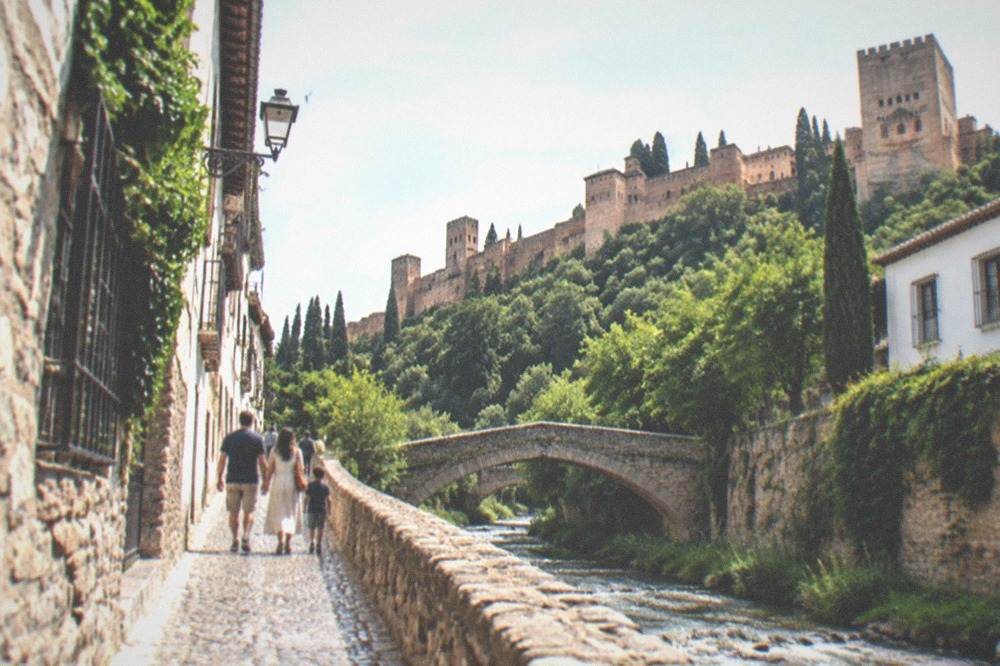
The terrain point is worth repeating for families because it compounds: a pushchair on Albaicin cobbles is hard work, and a tired child on a steep descent at 21:00 is where small accidents happen. The flatter circuit, Cathedral to Calle Navas to Puerta Real, is the family-friendly spine of the city, and the riverside Carrera del Darro is a gentle, popular walk with the Alhambra overhead.
Heat is the other real risk. AEMET's normals show July at 34.8C average high and August at 34.2C, with June already at 31.0C, and the Andalusian summer sun on stone streets is fiercer than the numbers suggest to northern visitors. Water, shade breaks and the Spanish timetable, doing the outdoor sightseeing before noon and after 18:00, are the standard defences; our Granada weather and best time to visit pages give the month-by-month picture.
What Should You Do In An Emergency In Granada?
The standard European emergency arrangements apply across Spain, including Granada: a single pan-European emergency number connects callers to police, fire and medical services, with English-speaking operators available, and hotel front desks will dial it for you if your Spanish is limited. For a lost or stolen passport, contact your country's consulate, and for a lost or stolen bank card, the blocking number is on your bank's website or app rather than in any local directory.
Pharmacies (farmacias), marked with a green cross, are the first stop for minor medical issues and open on rotation at night.
Reporting a theft matters for insurance even when recovery is unlikely, and the police stations in Granada's city centre handle tourist reports routinely; ask for a denuncia, the formal report your insurer will want. Most hotels will call ahead and explain the process, which speeds things up considerably.
For health care, EU visitors use the European Health Insurance Card arrangement, and non-EU visitors should travel with insurance, as everywhere in Spain. The tap water in Granada is drinkable, the food safety standards are the EU norm, and the most common tourist health complaints are sunburn, dehydration and blisters from the hills, in that order.
Does Where You Stay In Granada Affect Safety?
Yes, and more than in flat cities, because Granada's neighbourhoods differ sharply in night-time character: the historic centre and Realejo are flat-to-gentle, busy and convenient; the lower Albaicin is atmospheric and fine with basic care; the upper Albaicin and Sacromonte are beautiful but steep and quiet after midnight, which makes a late arrival with luggage a real consideration. Choosing a base you can walk home to comfortably at 23:00 is the single biggest safety decision in Granada.
The practical calculus is simple. If your evenings will end late, staying in or near the centre, around Plaza Nueva, Puerta Real or the Cathedral, means every walk home is populated and flat. If you choose an Albaicin cave-house or a Sacromonte view apartment, and many people do for the views, budget for taxis on late nights and arrive by taxi with luggage rather than dragging it up the lanes. Our where to stay in Granada guide covers the neighbourhoods in detail.
| Neighbourhood | Terrain | Late-evening feel | Best for |
|---|---|---|---|
| Historic centre | Flat | Busy, well-lit | First visits, late nights |
| Realejo | Gentle slopes | Residential-calm | Families, longer stays |
| Lower Albaicin | Moderate | Atmospheric, moderate foot traffic | View-seekers who plan taxis |
| Upper Albaicin | Steep | Quiet after midnight | Confident walkers, early nights |
| Sacromonte | Very steep | Quiet between venues | Flamenco nights, taxi budget |
What Are The Realistic Risks Versus The Perceived Ones?
The realistic risks in Granada are, in order of likelihood: petty theft in crowds, slips on steep wet cobbles, heat exhaustion in July and August, and transport confusion around the airport and the Alhambra. The perceived risks, violent crime, unsafe nightlife, dangerous taxis, are largely imports from anxieties about big cities that Granada's own character does not match. The city's biggest genuine safety feature is also its biggest draw: the streets stay full of ordinary people until very late.
The numbers back the calm reading. A city that hosted 2.7 million Alhambra visitors in 2025, a figure close to the Patronato's own annual capacity ceiling of roughly 2.763 million, and that did so while remaining a place where families stroll at 22:00, is functioning as a safe destination in any meaningful sense of the word. The risks that fill forum threads, pickpockets at the viewpoint, a phone lifted from a bar table, are real but small, preventable and non-violent.
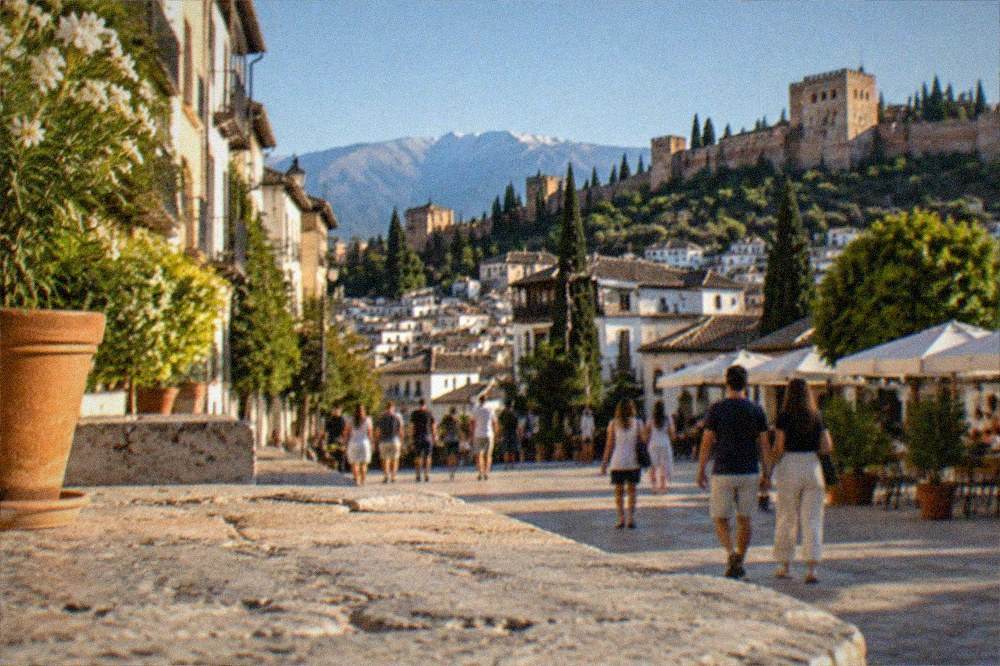
The one risk category worth elevating is terrain plus timing. Granada's hills, its winter nights near freezing, its sudden rain, and its late timetable combine so that the most likely way a trip gets derailed is a twisted ankle on the way down from the Mirador de San Nicolas at midnight in February. Good shoes are a safety item in this city.
More Questions Visitors Ask About Safety In Granada
Yes, and the questions below are the ones that recur on every forum thread about the city, from night-time strolls in the Albaicin to tap water and taxi meters. Each one has a short, honest answer grounded in how Granada actually behaves rather than in generic travel advice, and none of the answers requires special equipment, local knowledge or unusual expense. Read them before a first trip and the practical side of the visit is largely settled.
Is Granada safe at night?
Yes, in the central areas, which stay populated until very late thanks to the local dinner and tapas timetable. The upper Albaicin and the lanes between Sacromonte venues empty out after dark, so the standard advice is to walk those hills down rather than up late, or take a taxi.
Is the Albaicin safe?
The lower Albaicin is a normal, lived-in tourist quarter and fine with ordinary care. The upper lanes are dim, steep and quiet after midnight, which is a lighting and terrain issue more than a crime one. Go for sunset, come down with the crowd.
Is Granada safe for solo female travellers?
Yes. Solo dining at tapas counters is ordinary local behaviour, harassment reports are no worse than in comparable Spanish cities, and the usual late-night taxi habit covers the rest.
Are there areas to avoid in Granada?
No area needs outright avoidance. The places that deserve extra care after dark are the upper Albaicin lanes and the stretches of Sacromonte between the flamenco venues, and only because they are dim, steep and empty rather than because they are hotspots of crime.
Is tap water safe in Granada?
Yes, Granada's tap water is drinkable and meets the same EU standards as the rest of Spain.
Are taxis in Granada safe?
Yes, taxis are metered and safe. The only recurring complaint is an off-meter flat fare proposed at the airport rank; use the metered taxis and the issue disappears.
The honest summary is that Granada asks less of a visitor's vigilance than almost any city of its tourist weight. Bring good shoes, keep the phone out of the back pocket at the viewpoints, book the Alhambra through the official channel well ahead of time, and take the taxi down the hill when the night has run long. Those four habits, plus the weather sense our Granada tours overview and itinerary pages help with, are the whole of the safety brief for this city.